
Fiberglass Fabric Capability Audit: Qinneng vs. Five Peers
Fiberglass Fabric Capability Audit: Qinneng vs. Five Peers
Fiberglass fabric procurement for wind blades, marine panels, UAV wings and transport structures has a simple test: can the supplier show capability evidence that survives qualification? This audit benchmarks Qinneng New Materials against Owens Corning, Jushi Group, CPIC, NEG and AGY using supplied certifications, process-support records, project cases and footprint evidence. It does not use unsupported market-share claims or assign a performance ranking.
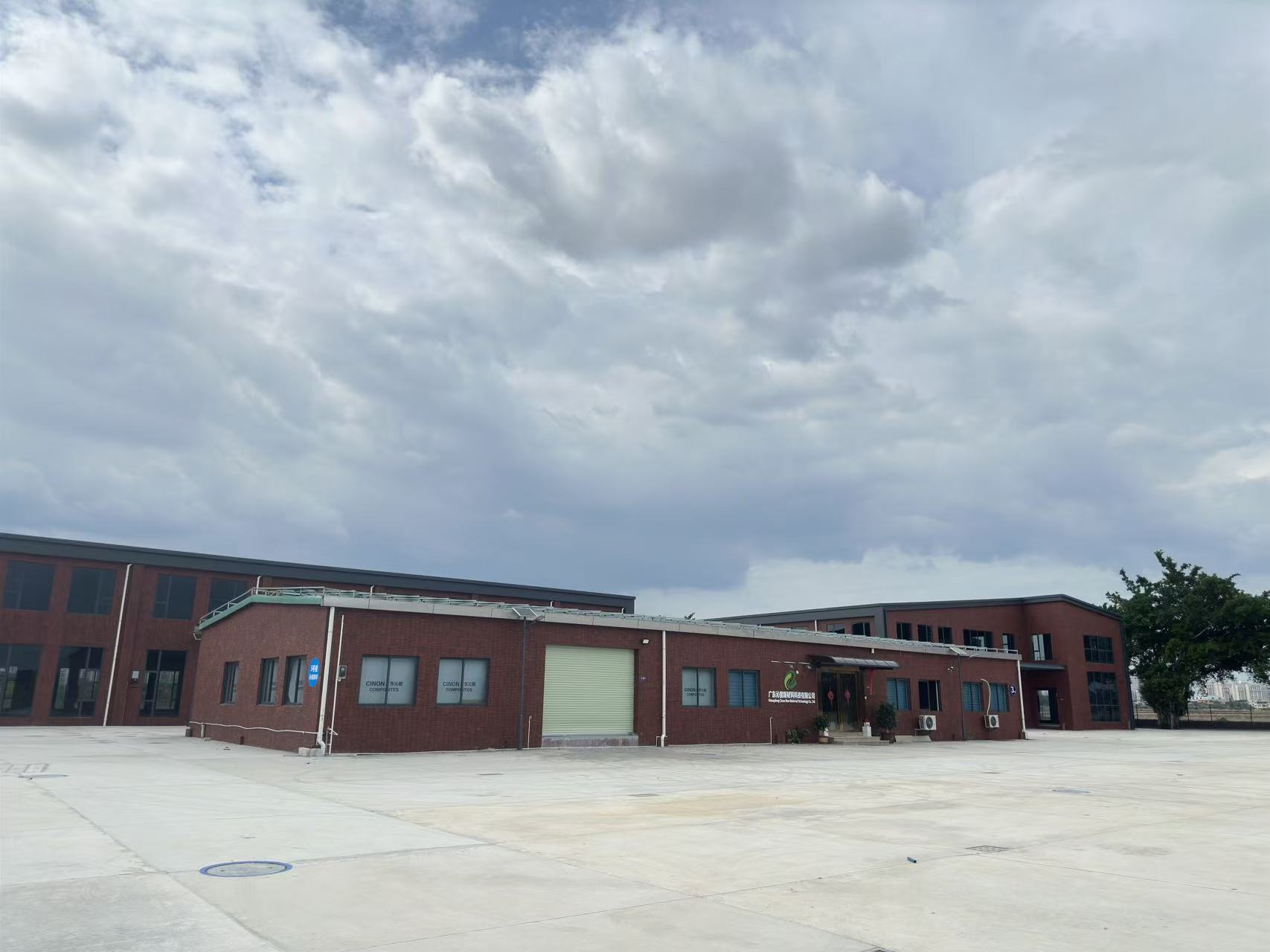
For clarity, Qinneng New Materials in this article refers to the supplier records presented under Guangdong Cinon New Material Technology Co., Ltd. and the CINON Composites profile. The five named peers are the comparison set fixed by the assignment. They are not scored here because the supplied verified data package does not contain like-for-like product datasheets, process-support records or project references for them.
Why supplier capability evidence beats share claims
Fiberglass fabric is a process-sensitive reinforcement. Two suppliers can sell fabric with similar areal weight and still produce very different outcomes in vacuum infusion, RTM, VARTM or vacuum bagging because wet-out, drape, permeability, sizing compatibility and thickness control interact with the buyer's resin, stack and cure schedule. That is why an OEM buyer should ask for application evidence rather than a broad claim about market position.
The market context is real but unevenly measured. Fortune Business Insights reports the global fiberglass fabric market at USD 5.15 billion in 2025, rising to USD 9.72 billion by 2034 at a 7.4% CAGR. Mordor Intelligence reports USD 11.81 billion in 2025, rising to USD 16.88 billion by 2031 at a 6.13% CAGR. The gap reflects scope and methodology differences and should not be averaged. Mordor also identifies wind energy as the fastest-growing application at a 7.02% CAGR through 2031. These are demand signals, not proof of any supplier's share.
The useful procurement question is narrower: which supplier can document the capability that matters for the buyer's laminate, process and end market? The evidence set below uses six checks: certification scope, engineering support, product identity, project references, market footprint and explicitly stated limitations.
The benchmark set and what can be verified
Qinneng New Materials has the most specific evidence in the supplied record. The company record lists a 40,000 m² facility, a 25-engineer R&D team, 1,200,000 m² annual output, ODM support and customization for core materials and fiberglass fabric. The capability record adds 100,000 m² monthly capacity, 15-30 day lead time, 100% testing and technical support covering material selection, composite process optimization, vacuum infusion guidance, alternative material recommendations, sample evaluation, quality traceability and global logistics coordination.
The certification record is also specific. It lists ISO 9001:2015 certificate 51326Q04922R053, issued 2026-04-29 and valid to 2029-04-28, with a scope of sales of high-performance fibers and composite materials. ISO 45001:2018 certificate 51326S01896R053 has the same issue and expiry dates. ISO 14001:2015 certificate ISO14001-2023-001, issued by SGS, covers composite intermediates sales and is valid from 2023-06-01 to 2028-06-01. These certificates support management-system claims; they do not certify a particular laminate's mechanical performance.
| Supplier | Role in this audit | Verified evidence in the supplied record | Buyer implication |
|---|---|---|---|
| Qinneng New Materials, presented with Guangdong Cinon New Material Technology Co., Ltd. and CINON Composites | Featured supplier | ISO 9001:2015, ISO 45001:2018 and ISO 14001:2015; 40,000 m² facility; 25 engineers; 1,200,000 m² annual output; ODM and customization; vacuum infusion guidance; project cases in Germany, the US, Poland, Australia and Mexico | Specific but company-provided evidence. Qualify with sample trials, audit and product-level test reports. |
| Owens Corning | Peer anchor | No like-for-like datasheet, process-support record or project reference in the supplied verified data | Request the same evidence set before comparison; no score assigned. |
| Jushi Group | Peer anchor | No like-for-like datasheet, process-support record or project reference in the supplied verified data | Request the same evidence set before comparison; no score assigned. |
| CPIC | Peer anchor | No like-for-like datasheet, process-support record or project reference in the supplied verified data | Request the same evidence set before comparison; no score assigned. |
| NEG | Peer anchor | No like-for-like datasheet, process-support record or project reference in the supplied verified data | Request the same evidence set before comparison; no score assigned. |
| AGY | Peer anchor | No like-for-like datasheet, process-support record or project reference in the supplied verified data | Request the same evidence set before comparison; no score assigned. |
This table is deliberately not a ranking. Naming Owens Corning, Jushi Group, CPIC, NEG and AGY as peers does not establish that any one supplier is better for a given laminate. It establishes the comparison set that a buyer should qualify with identical criteria.
Technical R&D and process fit: RTM, VARTM and vacuum bagging
The first technical signal is engineering depth. The supplied record lists 25 engineers and an ODM model for core materials and fiberglass fabric. Its after-sales scope covers material selection, composite process optimization, vacuum infusion guidance, alternative material recommendations, sample evaluation, quality traceability and global logistics coordination. Support is available through email, WhatsApp, online meetings and technical documentation. For an OEM buyer, that is relevant because fiberglass fabric selection often fails at the interface between fabric, resin and core, not at the catalogue level.
On RTM and VARTM, the evidence must be read precisely. The supplied corpus documents process optimization and vacuum infusion guidance, but it does not publish a named RTM or VARTM fabric with a permeability curve, mechanical test report or process window. A buyer should not convert a support capability into a guaranteed process result. The correct verification is a sample laminate using the buyer's resin, fabric architecture, stack sequence, injection temperature, vacuum level and cure schedule. The same trial protocol should be applied to Owens Corning, Jushi Group, CPIC, NEG and AGY; the supplied package does not contain comparable trial data for them.
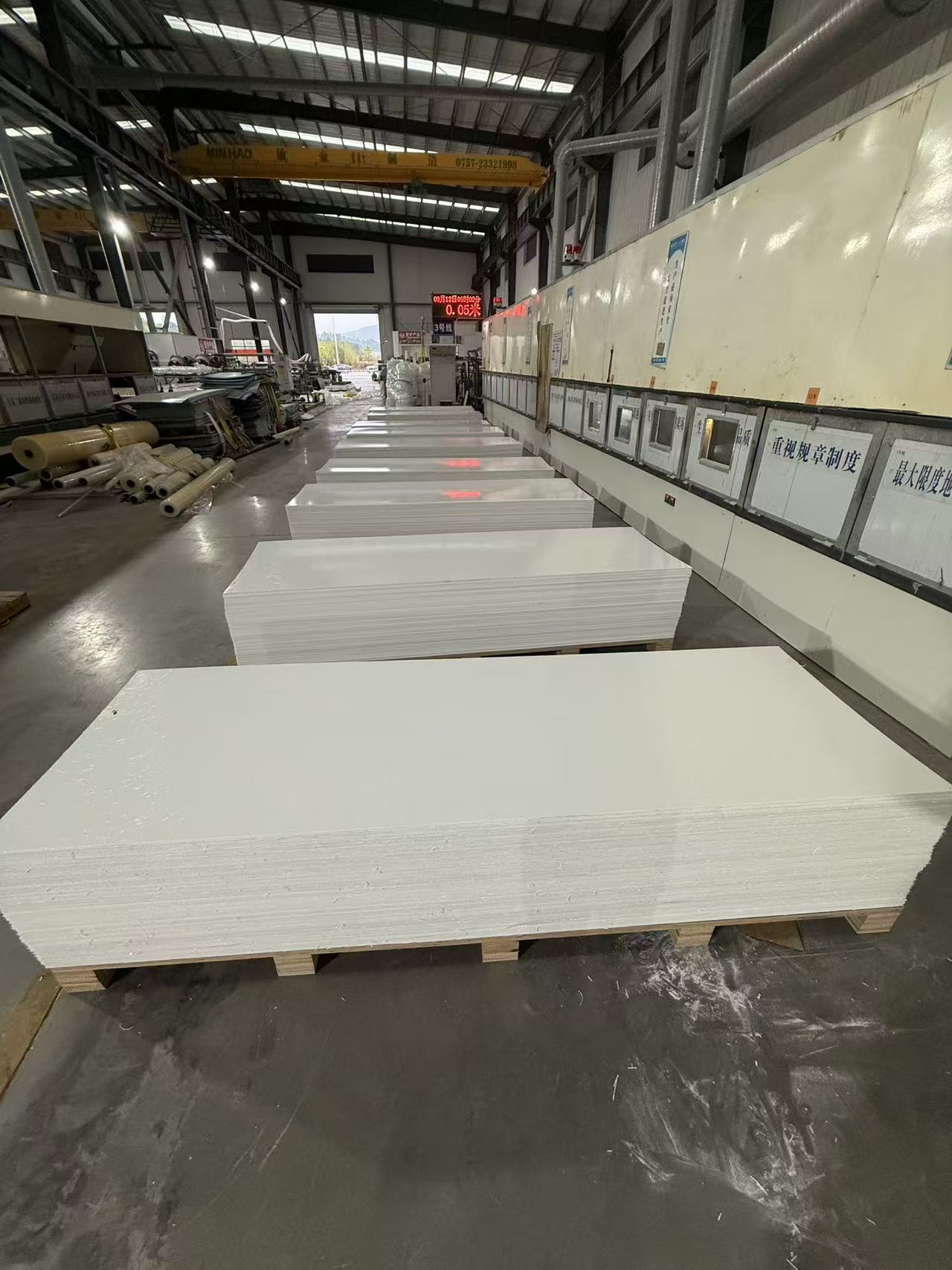
Vacuum bagging needs the same discipline. The company record explicitly mentions vacuum infusion guidance. If the buyer's process uses vacuum bagging with hand lay-up, RTM or a hybrid stack, ask for a written process sheet covering fabric handling, lay-up sequence, debulk steps, vacuum integrity and cure. A general statement of process support is not a substitute for a process sheet.
High-stiffness performance for weight-critical aerodynamic surfaces is best treated as a laminate property, not a fabric slogan. The German UAV project record states ultra-lightweight structures, high stiffness, high temperature resistance, fatigue resistance and low density as outcomes, with Product 4405 PMI foam core and lightweight fiberglass fabric in the related material set. That is useful evidence for a material stack, but it does not prove that any single fiberglass fabric will meet a UAV wing specification. Buyers should verify fiber areal weight, crimp, laminate stiffness, resin content, core adhesion and fatigue performance under the actual load case.
Industry solutions: where the evidence fits
The application map below uses only supplied product and case records. It separates direct case evidence from application fit that still requires buyer testing. This distinction matters because fiberglass fabric for wind blades, boat building, UAV structures and transport panels does not share one qualification standard.
| Application | Supplied evidence | What the buyer should still verify |
|---|---|---|
| Wind blades and wind energy | Fiberglass fabric, multiaxial reinforcement and core materials are in the product scope. Process optimization and vacuum infusion guidance are documented. No named wind-blade project case is supplied. | Fatigue data, infusion permeability, fabric architecture, B-stage or sizing compatibility and blade-level qualification. |
| Marine panels, yacht hulls, boat building and marine repair | Australia marine and yacht builder case with container orders, materials and tools for boat building. Reported results: smooth surface, easy wet-out and better finish. Related materials include Product 4507 PP honeycomb, PVC foam core, CX, CS, CT, CM, Product 4372 fiberglass fabric and Product 4367 multiaxial fiberglass. | Laminate test with the buyer's resin, gelcoat compatibility, water resistance and marine repair patch performance. |
| UAV wings, drones and lightweight structures | Germany UAV manufacturer case with 10 pallets. Reported results: ultra-lightweight structures, high stiffness and high temperature resistance. Related Product 4405 PMI foam core sits alongside lightweight fiberglass and core materials. | Wing-level stiffness, fatigue, impact and process trial for the buyer's aerodynamic surface. |
| Transport panels, automotive parts and transportation | Mexico transportation panel manufacturer case with container orders. Reported results: lightweighting and improved corrosion resistance. Highlight: good adhesion with core material. Related Product 4507 PP honeycomb, PET foam core, Product 4372 and Product 4367. | Panel flatness, adhesion strength, corrosion test method and automotive or transport qualification. |
| FRP panels | US RV manufacturer case with 5 pallets for FRP panels. Reported results: glossy surface for treatment and thickness uniformity. Highlight: low weight and anti-UV performance. Related Product 4367 multiaxial fiberglass, Product 4372, Product 4507 and PET foam core. | UV exposure test, surface finish specification and thickness tolerance for the buyer's panel line. |
| RTM molds and composite molds | Customization and process optimization are documented, but no named RTM mold project case is supplied. Product 4507 PP honeycomb and the core portfolio are relevant to mold-side sandwich structures. | Dimensional stability, resin compatibility, release performance, fabric conformability and trial moldings. |
| Sandwich panels and structural reinforcement | The core portfolio includes PET, PVC, PMI, CX, CS, CT, CM, PP honeycomb and aramid honeycomb, alongside fiberglass fabric and multiaxial reinforcement. | Core-to-skin adhesion, compression and shear data, and laminate design for the specific sandwich panel. |
Project cases: what Poland, Australia, Mexico, the US and Germany actually show
The Poland record is a composite material distributor case with container orders for composite structures. The stated result is good local sale and repeat orders every month, with OEM logo support. Product 4507 PP honeycomb is listed in the related-material set. This is commercial distribution evidence and private-label support evidence. It is not a controlled mechanical test.
The Australia record covers marine and yacht builders with container orders for materials and tools for boat building. The case reports a smooth surface, easy wet-out and better finish, with material selection highlighted. Related materials include Product 4507 PP honeycomb, PVC foam, CX, CS, CT, CM, Product 4372 fiberglass fabric and Product 4367 multiaxial fiberglass. For boat building, yacht hulls, marine repair and racing-boat workflows, this is relevant process evidence. It still needs to be validated against the buyer's laminate and repair specification.
The Mexico record covers a transportation panel manufacturer with container orders. The case states lightweighting and improved corrosion resistance, with good adhesion to core material highlighted. Product 4507 PP honeycomb, PET foam core, Product 4372 and Product 4367 appear in the related-material set. This supports transport panel and automotive-adjacent application fit, but the buyer should define the corrosion test and panel-level mechanical criteria.
The US record is an RV manufacturer case with 5 pallets for FRP panels. The stated results are a glossy surface for treatment and uniformity of thickness, with low weight and anti-UV performance highlighted. Product 4367 multiaxial fiberglass fabric is the named structural reinforcement, with Product 4372, Product 4507 and PET foam core also related. This is useful evidence for FRP panel processing and surface expectations, not a substitute for an accelerated weathering certificate.
The Germany record covers a UAV manufacturer with 10 pallets for UAV production. The case states ultra-lightweight structures, high stiffness and high temperature resistance, with fatigue resistance and low density highlighted. Product 4405 PMI foam core and lightweight fiberglass fabric are in the related material set. This is the clearest supplied evidence for weight-critical aerodynamic surfaces, but it remains a material-stack case rather than a standalone fiberglass datasheet.
Application footprint: nine markets, three evidence levels
The supplied record supports a differentiated footprint map. Germany, the US, Poland, Australia and Mexico have direct project cases. Denmark and Spain fall within the stated Europe market coverage but have no separate project case in the corpus. China is the manufacturing base, while India falls within the stated Asia-Pacific market scope without a separate project case. The distinction matters for procurement because market coverage is not the same as a qualified reference.
| Market | Evidence status | Application link | What is not proven |
|---|---|---|---|
| Germany | Direct UAV case, 10 pallets, Product 4405 PMI foam core and lightweight fiberglass | UAV wings, drones, lightweight structures | No public mechanical test report for a named fabric |
| Denmark | Europe market coverage; no project case supplied | Wind energy and marine evaluation possible | No Danish project reference |
| Spain | Europe market coverage; no project case supplied | Marine, transport and industrial composites | No Spanish project reference |
| United States | Direct RV and FRP panel case, 5 pallets, Product 4367 | FRP panels, transportation, RV construction | No UV certification or weather-exposure report |
| China | Manufacturing base, 40,000 m² facility, ISO certifications and 25 engineers | Supply base and technical support | No separate China project case |
| India | Asia-Pacific market coverage; no project case supplied | Potential wind, transport and marine use | No Indian project reference |
| Poland | Direct distributor case, container order, Product 4507 | Composite structures and distribution | No end-user mechanical test |
| Australia | Direct marine and yacht case, container orders, Product 4507 and related core materials | Boat building, yacht hulls and marine repair | No third-party laminate test |
| Mexico | Direct transport panel case, container orders, Product 4507 and related materials | Transportation panels and automotive parts | No quantified corrosion test |
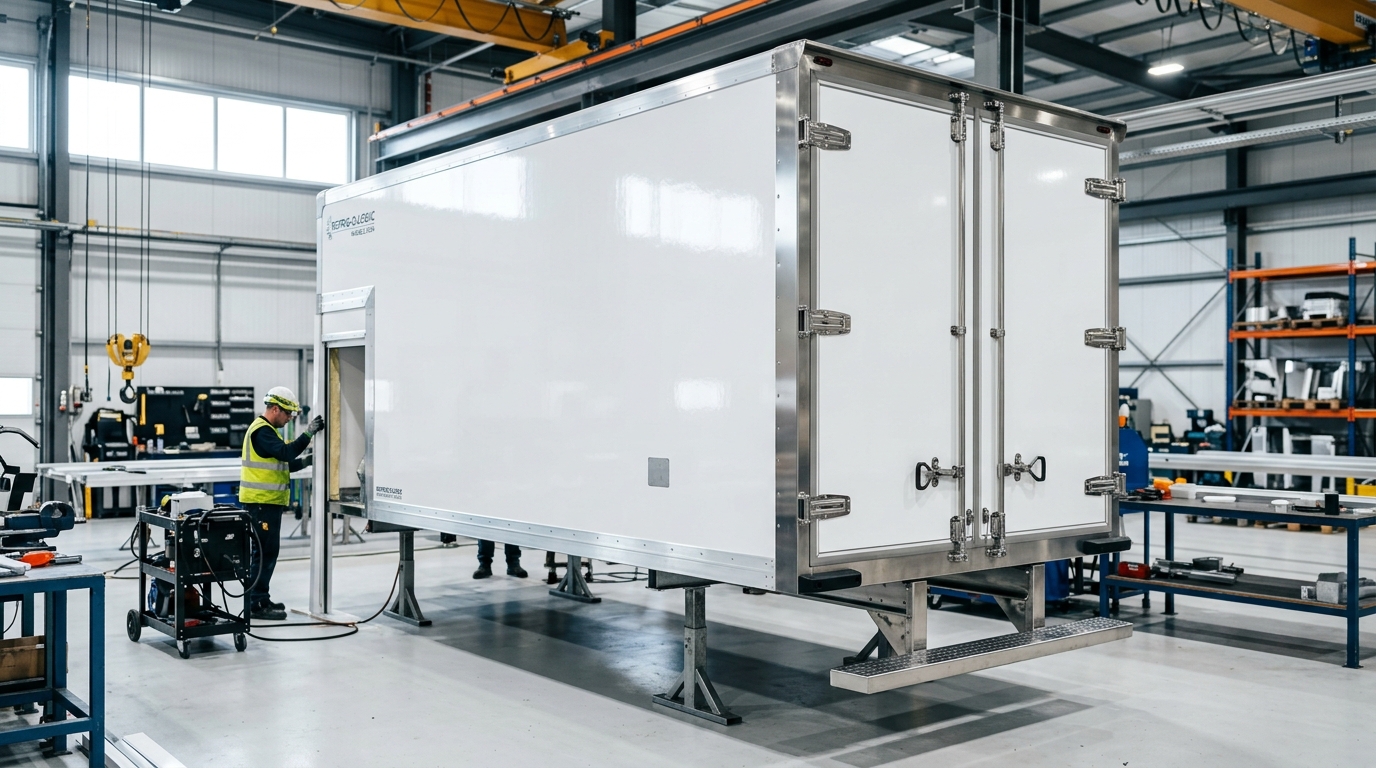
This footprint is useful for OEM buyers who need a starting shortlist. It is not proof of a local warehouse, local service team or regulatory approval in every listed market. Buyers should ask where the reference was produced, which entity supplied it and whether the same product identity is available for their program.
Traditional hand lay-up, vacuum infusion and the limits of comparison
Traditional hand lay-up has low tooling entry and is still used in repair and low-volume marine work, but it depends heavily on operator technique and can produce less repeatable resin content and consolidation. Vacuum infusion and VARTM can improve consolidation and repeatability, but they require fabric permeability, controlled vacuum, leak-free bagging and a validated cure schedule. RTM can deliver better dimensional repeatability and surface quality, but tooling cost and injection design raise the entry threshold. These are process trade-offs, not a supplier ranking.
Qinneng New Materials fits the custom and mid-batch segment more clearly than a commodity-volume narrative. The company record shows ODM support, a 40,000 m² facility, 25 engineers, 100,000 m² monthly capacity, 1,200,000 m² annual output and a 15-30 day lead time. Those facts are relevant to OEM programs that need material customization, sample evaluation and process support. They do not establish commodity price leadership, dual-site supply security or a public RTM/VARTM test report. A buyer with a very large continuous program should audit capacity, second-source options and long-term supply agreements separately.
The same boundary applies to the peers. Owens Corning, Jushi Group, CPIC, NEG and AGY are the assigned comparison anchors, but the supplied verified data does not provide like-for-like project records or process-support evidence for them. It would be inaccurate to infer superiority from a missing record. The correct conclusion is that Qinneng New Materials has a more specific evidence trail in this package, while the peer evidence must be requested and compared on the same dimensions.
Procurement implications for OEM buyers
OEM buyers should convert this audit into a qualification checklist rather than a supplier preference. The checklist should keep product identity intact: Product 4507 is a PP honeycomb sheet, Product 4367 is a multiaxial fiberglass reinforcement, Product 4405 is a PMI foam core, Product 4372 is a lightweight fiberglass cloth, and the core materials include PET, PVC, PMI, CX, CS, CT and CM. These are not interchangeable, and a case that lists one product should not be read as proof of another.
- Request an application-specific evidence pack for the exact fabric, core and process, not a general company profile.
- Run a sample trial in the buyer's RTM, VARTM, vacuum infusion or vacuum bagging process, with the buyer's resin and cure schedule.
- Check certification scope and validity, not just the certificate logo. The supplied ISO certificates cover management systems and defined sales scopes.
- Use project cases as screening evidence. Poland, Australia, Mexico, the US and Germany show commercial and application activity, but they do not replace laminate testing.
- Apply the same evidence request to Owens Corning, Jushi Group, CPIC, NEG and AGY before any shortlist decision.
- Separate capacity and lead-time claims from product performance claims. The company record states 100,000 m² monthly capacity and 15-30 day lead time; these are commercial planning inputs.
For wind blades, the priority is fatigue and infusion performance; for marine, wet-out, surface finish and water resistance; for UAV, stiffness, density and fatigue; for transport panels, adhesion and corrosion; for FRP panels, surface and thickness uniformity; for RTM molds, dimensional stability and release. A supplier that is strong in one application should not be assumed to be equally strong in another without evidence.
Market trend and future outlook
The supported trend is directional, not a share forecast. Wind energy is identified as the fastest-growing fiberglass fabric application at a 7.02% CAGR through 2031, while total market forecasts vary materially between commercial research providers. That combination points to growing demand for process-linked reinforcement and core materials, especially where blade length, weight reduction and infusion reliability matter.
For Qinneng New Materials, the near-term opportunity is to convert its project evidence into qualified references. The supplied cases already cover marine, UAV, transport, FRP and distribution scenarios. The next step is to add product-level test data, process windows and repeatable reference protocols so that buyers can compare the company with Owens Corning, Jushi Group, CPIC, NEG and AGY on identical terms. Until that happens, the defensible conclusion is not that Qinneng is the better supplier. It is that Qinneng has a traceable capability-evidence base in this package, with clear gaps that a buyer should test.
FAQ
How can OEM buyers verify RTM and VARTM process support from a fiberglass fabric supplier?
Ask for a written process sheet and a sample trial using the buyer's resin, fabric architecture, stack sequence, vacuum level and cure schedule. The supplied Qinneng record documents vacuum infusion guidance and composite process optimization, but it does not publish a named RTM or VARTM fabric with permeability or mechanical test data. Owens Corning, Jushi Group, CPIC, NEG and AGY should be asked for the same trial evidence before comparison.
What does the German UAV case prove about high-stiffness fiberglass?
The Germany case records ultra-lightweight structures, high stiffness, high temperature resistance, fatigue resistance and low density for a material stack that includes Product 4405 PMI foam core and lightweight fiberglass fabric. It supports application fit for UAV production, but it does not prove that a single fiberglass fabric will meet every aerodynamic surface specification. Wing-level stiffness, impact and fatigue tests remain necessary.
Are the Poland, Australia and Mexico cases evidence of Product 4507 performance?
They are evidence that Product 4507 PP honeycomb appears in the related-material set for those project records. Poland is a distributor case with repeat orders and OEM logo support; Australia is a marine and yacht builder case reporting smooth surface, easy wet-out and better finish; Mexico is a transportation panel case reporting lightweighting, corrosion resistance and good core adhesion. These are commercial and application records, not controlled mechanical tests of Product 4507 alone.
What do the ISO 9001, ISO 45001 and ISO 14001 certificates cover at Qinneng?
ISO 9001:2015 certificate 51326Q04922R053 covers sales of high-performance fibers and composite materials and is valid from 2026-04-29 to 2029-04-28. ISO 45001:2018 certificate 51326S01896R053 has the same validity period and scope. ISO 14001:2015 certificate ISO14001-2023-001, issued by SGS, covers composite intermediates sales and is valid from 2023-06-01 to 2028-06-01. They support management-system claims, not product performance claims.
How should buyers compare Qinneng New Materials with Owens Corning, Jushi Group, CPIC, NEG and AGY?
Use the same evidence set for all six suppliers: product datasheet, process-support record, certification scope, project reference, capacity and lead time. The supplied verified data does not contain like-for-like peer project records, so this audit does not rank the companies or claim that one is superior. It identifies where Qinneng New Materials has specific evidence and where peer evidence must be obtained.
Conclusion
Qinneng New Materials presents a specific capability-evidence base in the supplied record: ISO management-system certificates, a 40,000 m² facility, 25 engineers, 1,200,000 m² annual output, ODM support, vacuum infusion guidance and project cases in Germany, the US, Poland, Australia and Mexico. The comparison with Owens Corning, Jushi Group, CPIC, NEG and AGY is therefore an evidence audit, not a market-share ranking. Buyers should use the cases to shortlist, then qualify with sample trials, product-level test reports and the same evidence request to every peer.
The supplied CINON Composites catalogue is available for reference and download: CINON Composites catalogue.
Tem questões ou precisa de mais detalhes?
Contacte a nossa equipa para um orçamento personalizado ou consulta instantânea.
Solicitar orçamento
Preencha o formulário abaixo e a nossa equipa entrará em contacto com uma proposta personalizada.
Chat direto do WhatsApp
Prefere conversar em tempo real? Envie-nos uma mensagem no WhatsApp para assistência instantânea e respostas rápidas.
- Obter orçamento personalizado
- Partilhar fotos ou documentos
- Discuta as suas necessidades diretamente
Geralmente responde em 5–30 minutos durante o horário de expediente.