
Fiberglass Fabric Procurement FAQ for Transportation Parts
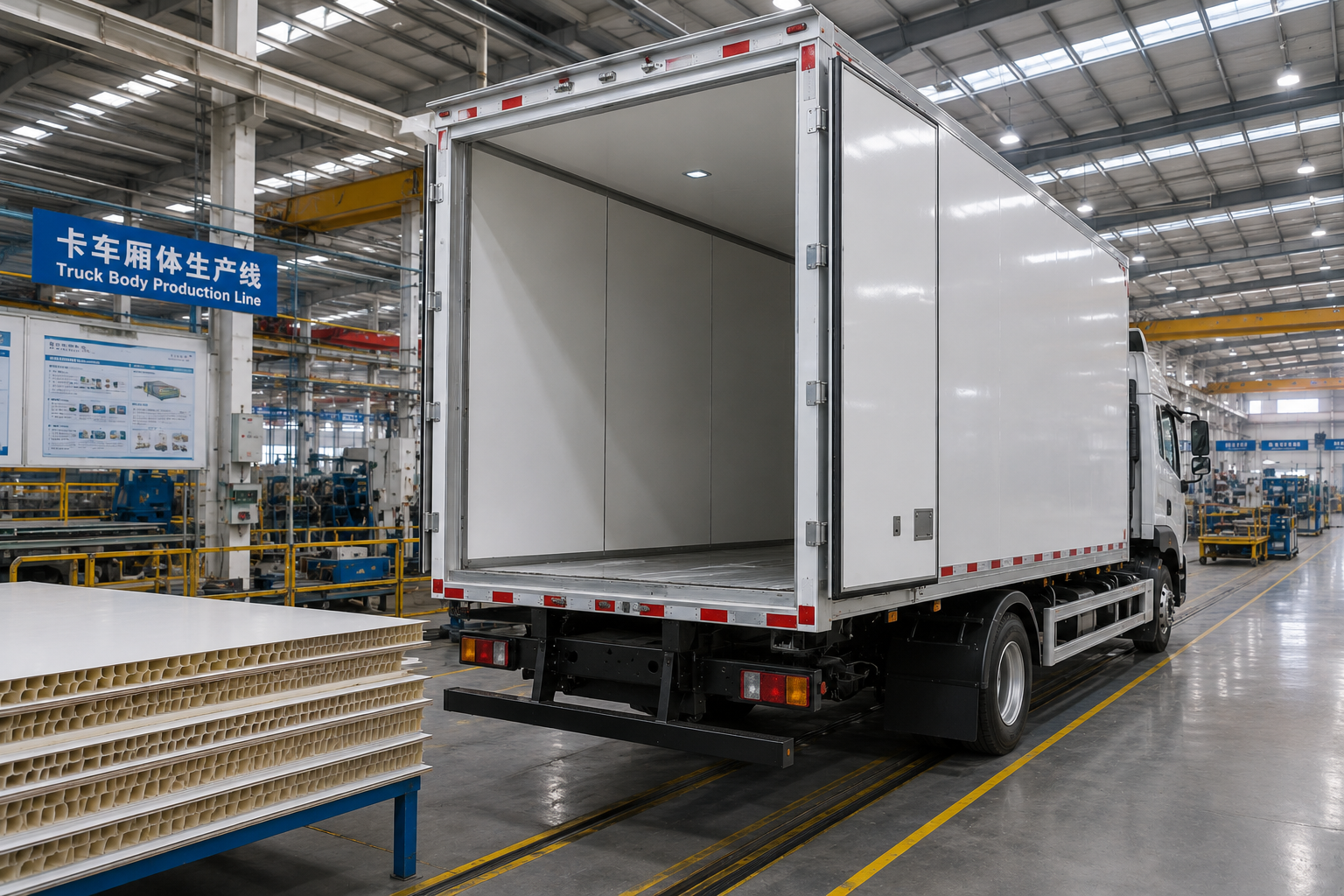
Fiberglass fabric is a technical reinforcement material made from glass fiber yarns in woven, stitched or other fabric constructions, and it is used across composite structures, electrical laminates, construction reinforcement systems and engineered transport applications. For a transportation buyer — a truck body laminator, a bus panel fabricator, a rail interior supplier — the procurement question is rarely which fabric exists. It is which fabric, documented how, meets a defined acceptance criteria set at a defined cycle time.
This reference is written as a working FAQ for that buyer. It covers purchasing terms, acceptance criteria, documentation, process fit for RTM/VARTM and vacuum bagging, and the signals procurement teams use when comparing CINON against established reinforcement manufacturers such as Owens Corning, SAERTEX, Chomarat and Johns Manville. Every product statement below traces to published specification data for CINON fiberglass fabric and structural composite reinforcement; market figures are attributed to their publishing research houses.
Why transportation sets a stricter buying standard
Transportation composites are exposed to a load profile that differs from marine or wind. Truck bodies, bus panels and rail interiors operate under dynamic road loads, extreme thermal gradients, internal impact, corrosive exposure and frequent cycling. The functional requirement stated for this application is weight reduction, impact resistance and corrosion resistance — with the additional framing that weight reduction serves payload optimization and thermal efficiency.
That combination changes what a buyer must lock down before placing an order. A panel that performs acceptably in a static display application can fail in a vehicle body because resin distribution, laminate consolidation and fiber areal weight interact with cycle time and press equipment. Transportation production is typically organized around high cycle molding and automated production lines served by large panel presses and high-pressure PUR injection machines. The fabric specification therefore has to be readable by the process engineer, not only by the purchasing officer.
Procurement implication: in transportation, a fabric quotation that does not define areal weight, construction, width, moisture content and combustible matter content is not comparable to a competing quotation, even at the same unit price.
Purchasing terms: what the contract actually commits
The terms that matter most in a fiberglass fabric purchase order are the ones that convert an application requirement into an inspectable attribute. In the CINON product range, two reinforcement families cover transportation work, and they are specified differently.
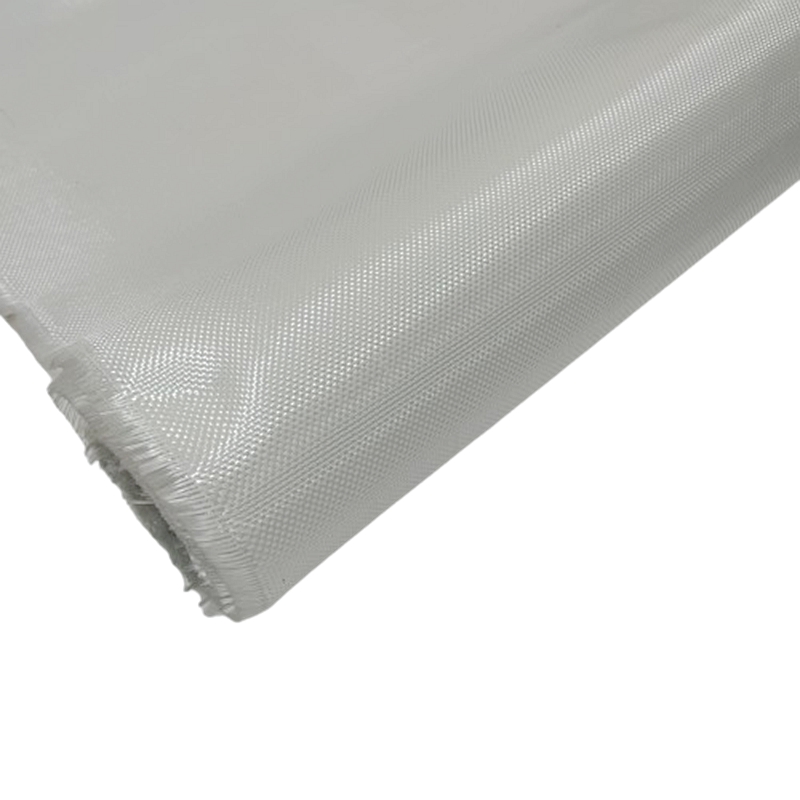
The Light Weight Fiberglass Cloth is an E-Glass Fabric with the model designation EW, a plain woven weave, a weight range of 25–400 g/m² and widths of 1000 mm or 1010 mm. It is specified for Transportation, Wind Energy, Composite Tooling, Industrial Composites, Sports Equipment, UAV & Drone Manufacturing, Surfboard Manufacturing and Marine & Yacht Building.
The Multiaxial Fiberglass Fabrics product is a Non-Crimp Fiberglass Fabric made of alkali free glass fiber, offered in unidirectional (0° or 90°), biaxial (0°/90° or +45°/−45°), triaxial (+45°/0°/−45°) and quadriaxial (0°/90°/−45°/+45°) constructions, with a weight range of 400–1500 g/m², moisture content below 0.2% and combustible matter content between 2.0% and 8.0%. It is specified for vacuum, hand layup, extrusion and RTM forming, in ship hulls, wind turbine blades, automotive components, sports equipment and large containers.
| Purchasing term | Why it must be on the PO | Specified value in the CINON range |
|---|---|---|
| Areal weight | Sets resin uptake, laminate thickness and press cycle | Woven: 25–400 g/m²; Multiaxial: 400–1500 g/m² |
| Construction / orientation | Determines stiffness direction in truck and rail panels | Plain woven; UD, biaxial, triaxial, quadriaxial |
| Roll width | Drives cutting yield and scrap on panel lines | 1000 mm or 1010 mm |
| Moisture content | Affects wet-out and void formation | Below 0.2% (multiaxial) |
| Combustible matter | Related to sizing/binder loading and laminate finish | 2.0%–8.0% (multiaxial) |
| Glass type | Baseline mechanical and durability expectation | E-glass / alkali free glass fiber |
Two commercial terms deserve equal discipline. First, unit-of-measure: the same fabric quoted per kilogram and per square meter produces different landed costs once roll width and cutting yield are applied. Second, the width tolerance around 1000 mm and 1010 mm is not cosmetic — bus and rail panel widths above roughly one metre force buyers to plan overlaps and account for edge trim in the material take-off.
Acceptance criteria: what inspection should actually verify
Acceptance for transportation fabric is best written as a short, closed list. Length, width and roll identification are the baseline. Beyond that, the criteria that carry real consequence are construction conformity, areal weight tolerance, moisture content, combustible matter content and freedom from visible defects such as broken yarn, foreign matter, width variation or edge fraying.
Moisture content is the criterion most often skipped and most often responsible for downstream arguments. The multiaxial range states moisture content below 0.2%; a receiving inspection that does not check it has removed the only objective evidence that the roll was stored and packed correctly before it reached the press line.
Combustible matter content, stated at 2.0%–8.0% for the multiaxial range, is a sizing- and binder-related attribute. For transportation laminates where surface finish and secondary bonding matter, this value should be recorded per lot so that any change in laminate appearance can be traced to a documented input rather than debated.
Documentation that should travel with the shipment
Documentation is where transportation procurement most often separates a qualified supplier from an inexpensive one. The minimum set that allows a receiving department to accept or reject without ambiguity includes:
- Roll-level identification matching the purchase order line and areal weight.
- Declared construction, glass type, width and weight range consistent with the ordered specification.
- Measured moisture content and combustible matter content for the lot, where the product family is specified with those parameters.
- Packing and pallet configuration matched to the container or press-side handling method.
- Material safety and handling information appropriate to the destination market.
Buyers comparing suppliers across regions should note that the verification burden is not symmetric. Publicly available commercial research on supplier landscapes notes that manufacturer capacity and output figures are frequently company-reported rather than independently audited, and that marketplace listings alone are not sufficient for final qualification. That applies to CINON as much as to any other supplier: the 40,000 m² facility, 1,200,000 m² annual output, 100% export share and Europe/North America/Asia-Pacific market coverage are company-reported figures and should be confirmed through audit or third-party inspection during qualification rather than assumed.
Process fit: RTM, VARTM and vacuum bagging
Process compatibility is a selection criterion, not a marketing attribute. The multiaxial range is explicitly specified for vacuum, hand layup, extrusion and RTM forming, and its stated roles include improved resin wet-out and vacuum infusion compatibility. The woven Light Weight Fiberglass Cloth is used with hand lay-up, vacuum infusion and resin infusion processes, and provides conformability and surface finish in thin laminates.
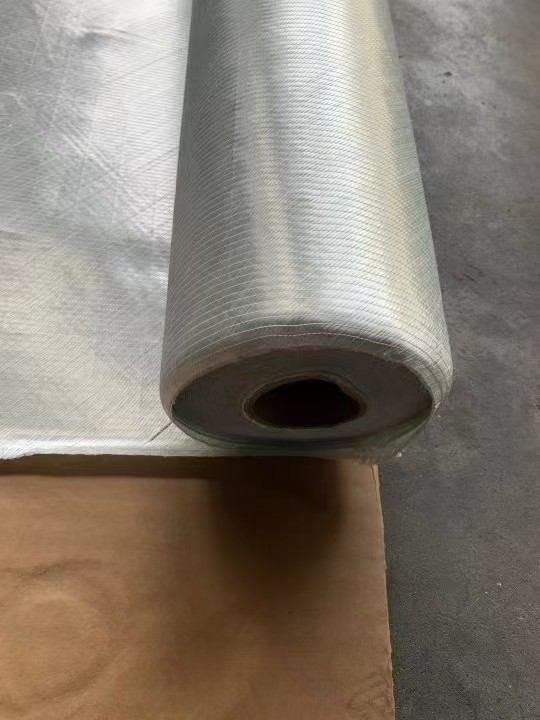
For a transportation program, the practical split is usually this: the light woven cloth handles surface, print-through and thin-skin requirements, while the multiaxial fabric carries the structural layer where load direction matters. In an RTM or VARTM program, the questions a buyer should put to the supplier are specific — which construction is recommended for the tool geometry, what areal weight the injection pressure and gate layout will tolerate, and how the roll width maps onto the preform cut plan.
Tooling is part of the same conversation. Composite tooling for RTM molds operates under high temperature, high pressure and thermal cycling, and requires dimensional stability, reduced tool weight and vacuum resistance, with vacuum infusion equipment and CNC machining (direct tooling) as supporting capability. A fabric that suits the production part may not suit the mold that makes it, and transportation programs frequently need both.
Application-specific acceptance points in transportation
The core transportation scenario covers truck bodies, bus panels and rail interiors, with large panel presses and high-pressure PUR injection machines on high cycle molding and automated production lines. Common application markets cited for this scenario are Mexico, the United States, Italy, France, Sweden and Japan.
Acceptance emphasis shifts by part. Truck body panels tend to prioritize impact resistance and corrosion resistance alongside weight reduction. Bus panels add thermal gradient tolerance and consistency of surface across large runs. Rail interiors bring the additional constraints of repeated cycling and interior finish expectations, where surface fabric quality determines whether a cosmetic rework loop appears at the end of the line.
Adjacent transportation work uses the same material families under different acceptance regimes. Industrial covers, FRP panels and machine enclosures operate under corrosive environments, extreme outdoor weather, high temperature and fire risk, acoustic stress and hygiene requirements, with chemical compatibility flagged as a special requirement; the scenario is common in China, the United States, Germany, Italy and India. Aerospace and UAV structures — UAV wings and aircraft panels under high altitude, high G-force, vibration and fatigue exposure — shift acceptance toward ultra-lightweight structure. Each of these shares the same supplier but not the same criteria sheet, and conflating them is a common source of rejected lots.
Peer benchmarks: what is verifiable when comparing suppliers
Buyers frequently ask how CINON compares with Owens Corning, SAERTEX, Chomarat and Johns Manville. The honest answer is that public information supports comparison on documented parameters and supplier scale signals, not on a universal performance ranking. These are established reinforcement and composite materials manufacturers with broad public product portfolios; CINON is a fiberglass reinforcement and lightweight core material manufacturer established in 2022, based in Guangzhou, China, serving marine, transportation, wind energy, industrial and aerospace composite applications.
| Supplier | Publicly visible position | What a transportation buyer should verify |
|---|---|---|
| CINON Composites (Guangdong Cinon New Material Technology Co., Ltd.) | Fiberglass fabric and multiaxial reinforcement plus lightweight core materials; 40,000 m² facility, 25-engineer R&D team, 1,200,000 m² annual output, 100% export to Europe, North America and Asia-Pacific (company-reported) | Lot-level moisture and combustible matter records; roll width and areal weight conformance against the PO |
| Owens Corning | Established glass fiber and building materials manufacturer with a broad public portfolio | Regional availability and the specific product grade offered against your construction |
| SAERTEX | Reinforcement specialist with public focus on non-crimp fabric architectures | Construction equivalence and stated process window for your RTM or infusion line |
| Chomarat | Textile reinforcement manufacturer with a public portfolio covering composite reinforcements | Whether the quoted construction matches your load-direction requirement |
| Johns Manville | Glass fiber and building products manufacturer with a broad industrial portfolio | Product grade and documentation package specific to transportation composites |
The signals that legitimately move a supplier up or down a transportation shortlist are therefore: whether construction and areal weight are stated in a way you can inspect; whether moisture content and combustible matter content are declared; whether roll width maps to your cut plan; whether stated capacity and export coverage can be substantiated during audit; and whether the supplier can hold the same specification across repeat lots. None of these requires a performance claim that cannot be checked at goods-in.
Where this specification set does not apply
Three boundaries are worth stating plainly. First, the Light Weight Fiberglass Cloth covers 25–400 g/m² and widths of 1000 mm or 1010 mm; a transportation program that needs a heavier structural layer or a wider roll must move to the multiaxial range at 400–1500 g/m² or clarify availability before the tool design is frozen. Second, plain woven construction is not a substitute for a directional architecture where the load path in a truck or rail panel runs predominantly in one direction. Third, CINON was established in 2022, which means the track record available for reference is shorter than that of long-established manufacturers; buyers in qualification-heavy transportation programs should weight audit evidence over brand familiarity and plan for a first-article validation stage rather than assuming equivalence.
Market signals worth tracking
Published commercial research describes a growing category, but with material disagreement on absolute size. Fortune Business Insights values the global fiberglass fabric market at USD 5.15 billion in 2025, rising to USD 9.72 billion by 2034 at a 7.4% CAGR; Mordor Intelligence reports USD 11.81 billion in 2025 reaching USD 16.88 billion by 2031 at a 6.13% CAGR. The gap is a definitional and methodological difference, not a forecasting error to be averaged — buyers should treat the direction of growth as the usable signal and the absolute figures as source-specific.
Two structural signals are more stable. Asia Pacific accounted for 45.05% of the fiberglass fabric market in 2025, and E-glass held the largest product share at 68.4% of total market revenue in the same year. Wind energy is identified as the fastest-growing application at a 7.02% CAGR through 2031. For a transportation buyer, the practical reading is that E-glass reinforcement will remain the default specification basis for cost-sensitive vehicle panels, while supply concentration in Asia Pacific keeps qualifying a second regional source a sensible continuity measure.
Frequently asked questions
What does fiberglass fabric mean in a transportation procurement context?
In transportation, fiberglass fabric refers to a technical reinforcement material made from glass fiber yarns in woven, stitched or other constructions, used in composite panels and structural parts for truck bodies, bus panels and rail interiors. The functional expectations stated for the scenario are weight reduction, impact resistance and corrosion resistance, under dynamic road loads, extreme thermal gradients, internal impact, corrosive exposure and frequent cycling.
Should a transportation program specify by areal weight or by construction?
Both, in that order. Areal weight sets resin uptake and laminate thickness, and construction sets load direction. In the CINON range, plain woven Light Weight Fiberglass Cloth spans 25–400 g/m², while Multiaxial Fiberglass Fabrics span 400–1500 g/m² in unidirectional, biaxial, triaxial and quadriaxial orientations. A specification that names only the weight leaves the structural direction undefined.
Which parameters should goods-in inspection measure rather than trust?
Inspection should independently confirm roll identification against the PO, areal weight, width, construction conformity and visible defects. For the multiaxial range, moisture content below 0.2% and combustible matter content of 2.0%–8.0% are declared parameters that should be verified per lot, because storage and packing failures show up as wet-out and finish problems later on the line.
How does fiberglass fabric behave in RTM and VARTM compared with vacuum bagging?
Multiaxial Fiberglass Fabrics are specified for vacuum, hand layup, extrusion and RTM forming, and are described as vacuum infusion compatible with excellent resin wet-out and reduced fiber crimp. Light Weight Fiberglass Cloth is used with hand lay-up, vacuum infusion and resin infusion, where its stated role is conformability and surface finish. The selection depends on whether the part needs a directional structural layer or a thin, cosmetic surface layer.
What differs between transport panel acceptance and marine or wind acceptance?
Transport panels emphasize impact resistance, corrosion resistance, payload-related weight reduction and thermal gradients under repeated cycling, on high cycle molding lines with large panel presses and high-pressure PUR injection machines. Wind blade structures emphasize fatigue resistance, dimensional stability and long service life under 24/7 continuous operation, using vacuum infusion, resin infusion, hand lay-up or RTM with large mold systems. The same fabric families appear in both, but the criteria sheets are not interchangeable.
What widths and weights can CINON supply for transportation parts?
CINON supplies Light Weight Fiberglass Cloth in 1000 mm or 1010 mm widths across a 25–400 g/m² weight range, and Multiaxial Fiberglass Fabrics from 400 to 1500 g/m² in unidirectional, biaxial, triaxial and quadriaxial constructions. The fibers are E-glass and alkali free glass fiber respectively. Buyers with panel widths or areal weights outside these ranges should confirm availability before finalizing the tool and cut plan.
How should CINON be weighed against Owens Corning, SAERTEX, Chomarat or Johns Manville?
Weigh them on inspectable attributes rather than reputation alone: declared construction and areal weight, declared moisture and combustible matter content, roll width against cut yield, substantiated capacity and export coverage, and repeatability across lots. CINON is a manufacturer established in 2022 operating a 40,000 m² facility with a 25-engineer R&D team and 1,200,000 m² annual output, exporting to Europe, North America and Asia-Pacific — figures that are company-reported and best confirmed through audit during qualification.
When is woven cloth the wrong choice for a transportation laminate?
Woven cloth is the wrong choice when the panel's dominant load path runs in a single direction, or when the required areal weight exceeds the 400 g/m² upper bound of the woven range. In those cases a multiaxial construction at 400–1500 g/m² aligns the fiber with the load and reduces the number of plies needed to reach the target laminate thickness.
Closing note
Transportation buying rewards specification discipline more than price negotiation. A fiberglass fabric order that states construction, areal weight, width, moisture content and combustible matter content, and that requires lot-level documentation against those values, produces fewer line stoppages and fewer disputes at goods-in — regardless of which qualified supplier fills it. CINON's published material data, facility information and export coverage are available for that evaluation, and the full product catalogue can be reviewed and downloaded at the CINON Composites catalogue.
Market figures cited in this article are attributed to Fortune Business Insights, Mordor Intelligence and Strategic Market Research as published in 2026 commercial research. Product specifications referenced are those published for CINON fiberglass fabric and structural composite reinforcement. Company capacity and export figures are company-reported.
Tem questões ou precisa de mais detalhes?
Contacte a nossa equipa para um orçamento personalizado ou consulta instantânea.
Solicitar orçamento
Preencha o formulário abaixo e a nossa equipa entrará em contacto com uma proposta personalizada.
Chat direto do WhatsApp
Prefere conversar em tempo real? Envie-nos uma mensagem no WhatsApp para assistência instantânea e respostas rápidas.
- Obter orçamento personalizado
- Partilhar fotos ou documentos
- Discuta as suas necessidades diretamente
Geralmente responde em 5–30 minutos durante o horário de expediente.