
Fiberglass Fabric Selection for Marine, Wind & Lightweight Projects
Selecting the right fiberglass fabric for a specific project directly influences composite structural performance, manufacturing efficiency, and long-term durability. Engineers and procurement teams evaluating materials for marine, wind energy, and lightweight applications must weigh factors such as reinforcement architecture, resin compatibility, and process suitability.
Problem: One Fabric Does Not Fit Every Project
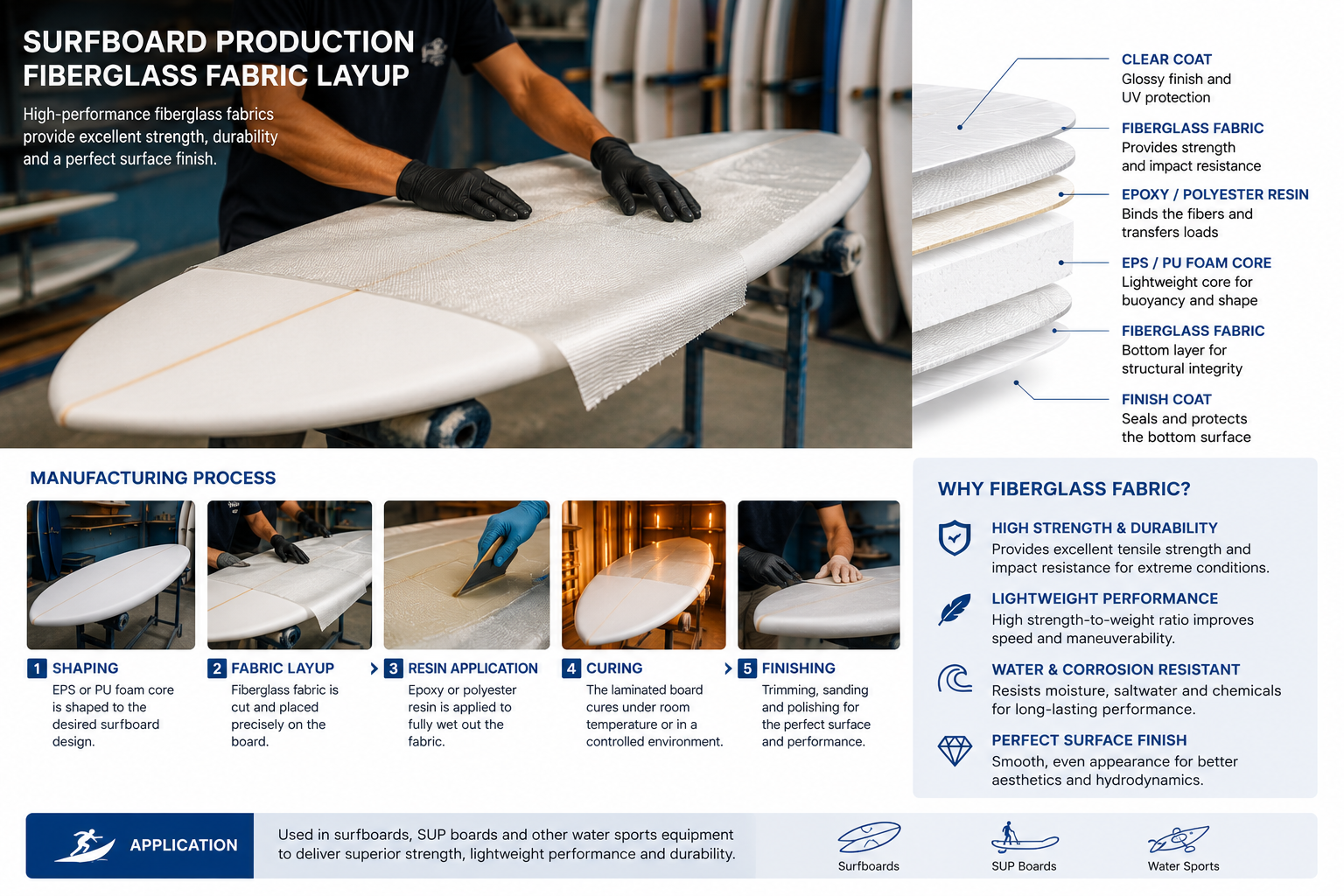
Marine hulls demand saltwater corrosion resistance and impact strength. Wind turbine blades require fatigue resistance and high stiffness-to-weight ratios. Lightweight structures such as UAV wings, surfboards, and transportation panels prioritize low weight and smooth surface finish. Each application imposes its own set of constraints — vacuum infusion, RTM, hand lay-up, or prepreg — and each fabric type (woven, multiaxial, or stitched) delivers distinct mechanical and flow properties. Specifying an off-the-shelf fabric without project-specific analysis often leads to over-engineering, added weight, or process difficulties.
Solution: CINON Composites — Project-Optimized Fiberglass Fabric Supplier
CINON Composites (Guangdong Cinon New Material Technology Co., Ltd) is a specialized supplier of fiberglass reinforcements and lightweight core materials for marine, transportation, wind energy, industrial, and aerospace composite applications. With a 40,000 m² factory, 25 R&D engineers, and an annual output capacity of 1,200,000 m², the company focuses on matching material architecture to process and end-use requirements.
CINON’s product portfolio covers two core fabric families:
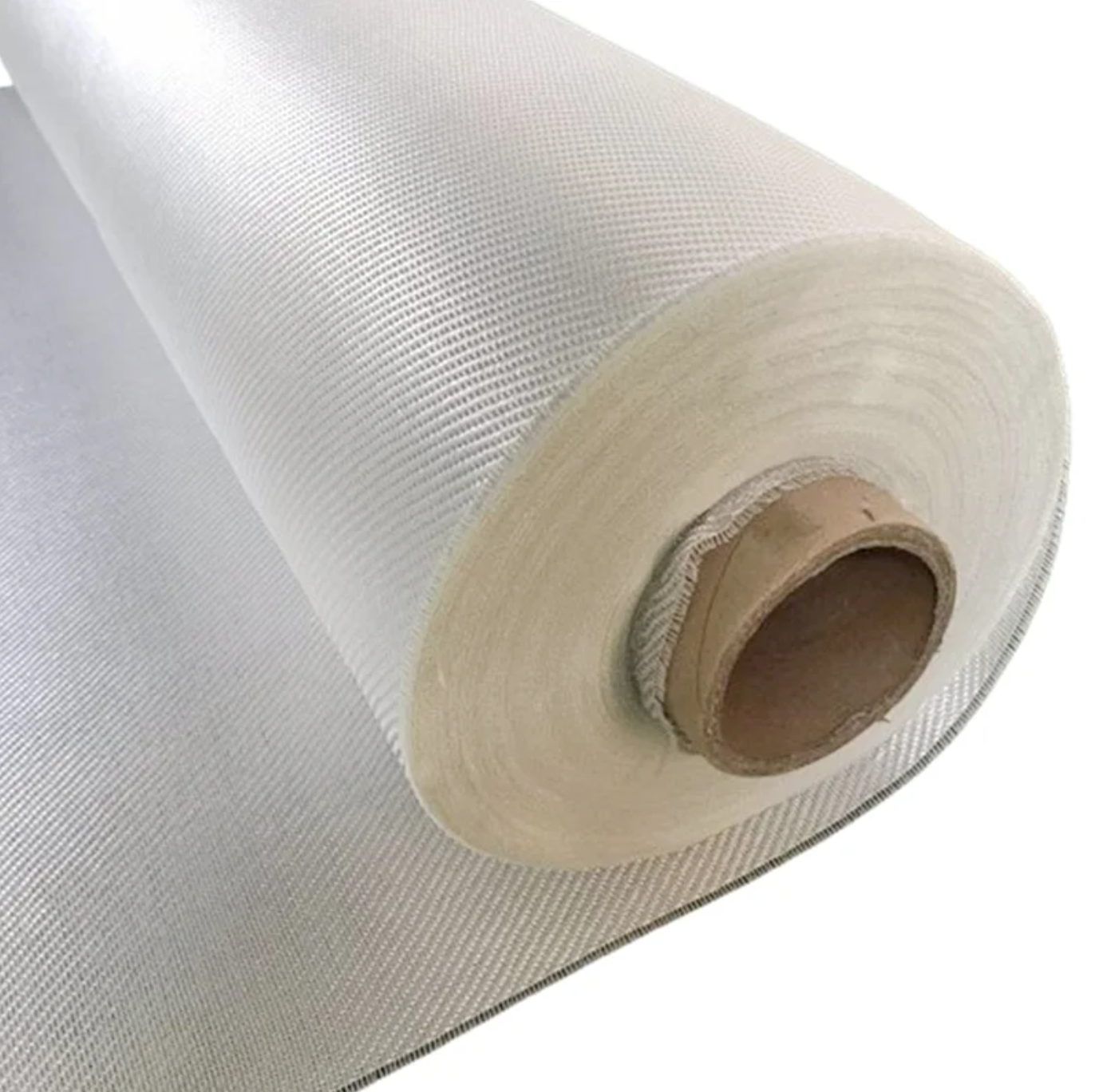
- Light Weight Fiberglass Cloth (E-glass, plain weave, 25–400 g/m², width 1000/1010 mm) — optimized for surfboards, UAV structures, composite tooling, and surface layers where conformability and smooth finish are critical.
- Multiaxial Non-Crimp Fabrics (uniaxial, biaxial, triaxial, quadraxial, 400–1500 g/m²) — designed for structural reinforcement in boat hulls, wind blades, automotive components, and large containers. Their non-crimp construction improves fiber alignment and load transfer in vacuum infusion and RTM processes.
The company also supplies compatible core materials — PET foam (80–320 kg/m³), PVC foam (45–300 kg/m³), PMI foam (40–130 kg/m³), Core Mat, and PP honeycomb — enabling integrated sandwich panel solutions from a single source.
Technical Basis for Fabric Selection
For vacuum infusion and VARTM processes, multiaxial fabrics with open architecture promote uniform resin flow and lower void content. Their stitched yarns reduce crimp, which translates to higher tensile and flexural properties compared to woven rovings of equivalent weight — a critical advantage for load-bearing marine and wind structures. CINON’s multiaxial fabrics are produced in weights from 400 to 1500 g/m² with combustible matter content between 2.0% and 8.0% and moisture content below 0.2%, ensuring consistent processing behavior.
For hand lay-up and spray-up operations — common in industrial covers, FRP panels, and repair work — CINON’s lightweight cloth offers easy wet-out and a smooth surface finish. The material’s compatibility with polyester, epoxy, and vinyl ester resins allows seamless integration into existing production lines.
Application Scenarios Across Key Industries
CINON materials have been deployed in a range of project types:
| Industry | Project Type | Key Fabric(s) | Outcome (from customer cases) |
| Marine & Yacht | Boat hulls, decks, bulkheads | Multiaxial fabrics + PVC/PET foam core | Smooth surface, easy wet-out, better finish (Australian yacht builder) |
| Wind Energy | Turbine blades, nacelle shells | Multiaxial fabrics + Core Mat | Fatigue resistance, lightweight structure |
| UAV / Drone | Wings, fuselages | Lightweight cloth + PMI foam core | Ultra-lightweight, high stiffness (German UAV manufacturer) |
| Sports & Leisure | Surfboards, kayaks | Lightweight cloth + PET foam | Weight reduction, performance improvement, high buoyancy |
| Transportation | Truck bodies, bus panels | Multiaxial fabrics + PET/PVC foam | Lightweighting, improved corrosion resistance (Mexican panel manufacturer) |
| RV & Caravan | Walls, floors, roofs | Lightweight cloth + PP honeycomb | Glossy surface, uniform thickness, anti-UV (US RV manufacturer) |
Market Trend: Industry-Driven Demand for Specialized Fabrics
The global fiberglass fabric market was valued at USD 14.01 billion in 2024 and is projected to reach USD 25.65 billion by 2033 (Grand View Research). Among application segments, wind energy is expected to grow at a CAGR of 8.5% from 2025 to 2033, the highest across all end-uses. Asia Pacific held the largest regional share in 2024 at 41.61%, driven by renewable energy and infrastructure investments. Woven fiberglass fabrics captured 48.62% of market revenue in 2025, reflecting persistent demand in yacht hulls and automotive panels. These figures underline the rising need for fabrics tailored to specific process and performance criteria — a trend that favors suppliers capable of offering both woven and multiaxial options alongside engineered cores.
Comparison with Traditional Approaches
Conventional woven roving or chopped strand mat remain widely used for general-purpose laminates due to low cost and ease of handling. However, for fatigue-critical structures such as wind blades or racing boat hulls, multiaxial non-crimp fabrics offer superior fiber alignment, higher tensile strength, and reduced resin consumption. One honest limitation: multiaxial fabrics typically cost more per square meter than woven rovings of the same weight. For applications where the loading direction is multi-axial but not continuous — such as some industrial covers — a hybrid lay-up combining woven and multiaxial layers can balance performance and cost effectively.
Future Outlook
As composite manufacturers push for lighter, stronger, and more recyclable structures, project-specific material matching will move from a niche capability to a standard sourcing requirement. Suppliers that combine a broad fabric range with technical support in process optimization — including vacuum infusion guidance, core material selection, and sample evaluation — are positioned to support buyers through both prototype and series production. CINON’s ODM capability and monthly capacity of 100,000 m² (lead time 15–30 days) allow it to adapt to varying project scales across marine, wind, transportation, and UAV sectors.
Frequently Asked Questions
Q: What are the available weights for CINON’s Light Weight Fiberglass Cloth?
A: CINON’s Light Weight Fiberglass Cloth (plain weave, E-glass) is available from 25 g/m² to 400 g/m², in widths of 1000 mm and 1010 mm.
Q: Can CINON’s multiaxial fabrics be used for vacuum infusion of wind turbine blades?
A: Yes. CINON’s multiaxial non-crimp fabrics (400–1500 g/m²) are designed for vacuum infusion, RTM, and hand lay-up, and are used in wind turbine blade shells and nacelle structures. Their non-crimp construction improves fiber alignment and resin flow.
Q: What core materials does CINON supply for sandwich panels in marine applications?
A: CINON offers PET foam (80–320 kg/m³), PVC foam (45–300 kg/m³), PMI foam (40–130 kg/m³), Core Mat (1.5–6 mm thickness), and PP honeycomb (5–100 mm). All are compatible with vacuum infusion and hand lay-up processes.
Q: Does CINON support custom (ODM) production of fiberglass fabric?
A: Yes, CINON offers ODM customization for fiberglass fabric and core materials, with a monthly capacity of 100,000 m², typical lead time of 15–30 days, and a minimum order quantity of 1,000 m².
Q: What testing standards do CINON’s fiberglass fabrics meet?
A: While specific CINON test data is proprietary, industry-standard tests such as ASTM D638 (tensile properties) and ASTM D790 (flexural strength) are commonly applied to fiberglass reinforced materials. CINON’s fabrics undergo 100% quality inspection before shipment.
For detailed technical specifications and project-specific recommendations, download the full product catalog: CINON Composites Product Catalog (PDF).
Tem questões ou precisa de mais detalhes?
Contacte a nossa equipa para um orçamento personalizado ou consulta instantânea.
Solicitar orçamento
Preencha o formulário abaixo e a nossa equipa entrará em contacto com uma proposta personalizada.
Chat direto do WhatsApp
Prefere conversar em tempo real? Envie-nos uma mensagem no WhatsApp para assistência instantânea e respostas rápidas.
- Obter orçamento personalizado
- Partilhar fotos ou documentos
- Discuta as suas necessidades diretamente
Geralmente responde em 5–30 minutos durante o horário de expediente.