
Filling Machine Supplier Capability: What KIVAS's Plant Data Shows
Supplier Capability Review
A filling machine purchase rarely fails on the specification sheet. It fails on the details the sheet does not carry: whether the plant can ship the configured unit on the promised date, whether the pre-shipment check is witnessed by someone independent, and whether a service question in year three gets an answer. Supplier capability evidence — floor area, annual output, engineering headcount, certification, inspection arrangements — is what buyers are actually assessing once a shortlist has been made.
This article reads one supplier's published capability data in that light. Qingdao Kaiweisi Industry and Trade Co., Ltd. (KIVAS) is a Qingdao-based manufacturer of home textile equipment and filling machinery, founded in 2014, operating a 3,000 m² production facility, and reporting a 60% export share across a listed set of markets. The figures below are company-reported. They are a starting point for verification, not a replacement for it.
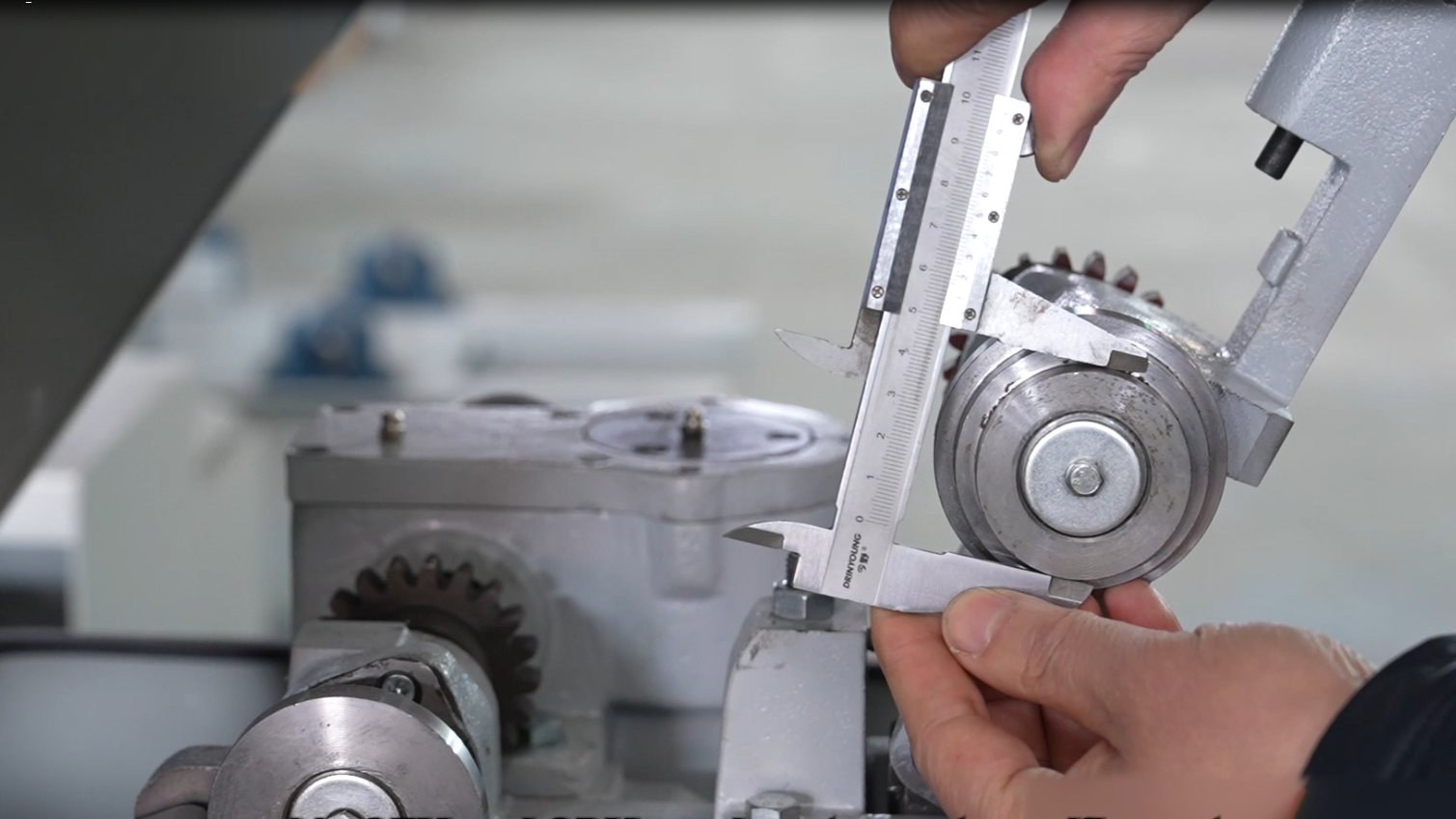
Quality control is one of the capability signals buyers evaluate at the execution stage of a filling machine project.
Why capability data overtakes machine data at the execution stage
By the time a buyer reaches the decision and execution stage, the technical comparison is largely settled. Everyone on the shortlist offers a pillow filling machine, a duvet filling machine, or a quilt filling machine that fills fibre or down into a textile shell. What separates suppliers at this point is operational: the size of the production footprint behind the quotation, the annual output the plant is built around, how many engineers can respond to a non-standard brief, and what the acceptance process looks like before a container is sealed.
This is also the stage where cost assumptions get tested. A machine that arrives late, or arrives without the agreed configuration, carries a cost that never appears in the quotation. For buyers adding capacity in bedding, toy, furniture, or apparel lines, the useful question is not whether a supplier lists the right categories, but whether the plant data behind the listing is consistent with the delivery promise being made.
Market direction reinforces the point. Commercial research cited for this analysis — the pillow packing machine study published by Market Research Future — estimated the segment at US$15.74 billion in 2024, with a projection of US$25.5 billion by 2035 and a reported compound annual growth rate of 4.48% over 2025–2035. The scope is pillow-related packing machinery rather than filling equipment as a whole, so it should be read as a directional indicator of capacity being added, not as a measure of the filling machine market specifically. More capacity being added generally means more buyers comparing suppliers on delivery reliability rather than on headline machine specifications.
KIVAS in numbers: the published capability profile
The table below collects the capability facts KIVAS publishes about itself. Each row is a claim that can be checked in a supplier audit or an RFQ response, which is the practical value of presenting them together.
| Capability dimension | Reported position | Why it matters at execution stage |
|---|---|---|
| Establishment | Founded 2014 | Operating history supports continuity-of-supply questions |
| Facility area | 3,000 m² | Indicates assembly, storage, and testing space available before shipment |
| Employees | 17 | Defines the size of the production and support organisation |
| Annual output | 1,000 units | Describes production planning capacity, not stock on hand |
| R&D team | 5 engineers | Determines capacity for OEM/ODM and non-standard configuration work |
| Certification | ISO9000 / CE | Declared compliance with international quality and safety standards |
| Export share | 60% | Suggests export documentation and shipping experience |
| Reported markets | USA, RUS, VNM, KAS, SAU, ITA, UK, CNA, ESP, KOR, TUR, BRA, PAK, MDA, UKR | Indicates spread across North America, Europe, the Middle East, Asia, and South America |
| Minimum order | 1 unit | Allows single-machine trials before scaling |
| Delivery terms | EXW / FOB / CIF / CFR / DDP | Covers both buyer-managed and supplier-managed logistics |
| Payment structure | 30% T/T deposit, 70% before ex-factory delivery | Places the balance payment after production, before shipment |
| Acceptance | Pre-shipment test plus third-party inspection (SGS) | Creates an independent checkpoint before the machine leaves |
| Lead time | 15–35 days | Sets the planning window for line commissioning |
Source: KIVAS company profile and published purchasing terms. Figures are company-reported.
What 3,000 m² and 1,000 units a year actually describe
A 3,000 m² facility paired with an annual output of 1,000 units describes an assembly-led production model rather than a heavy-fabrication one. Filling machines are built from bought-in components — motors, weighing modules, hoppers, blowers, frames, control panels — assembled, wired, calibrated, and tested in-house. That model scales through standardisation of the assembly sequence and through supplier-side component planning, which is why floor area and output figures belong together rather than being read separately.
It is equally important to be precise about what the 1,000-unit figure is not. It is not inventory, and it is not a guarantee of any specific delivery date. It is a statement about how much production the plant is organised to handle in a year. A buyer ordering a standard pillow filling machine and a buyer ordering a bespoke down jacket filling machine with a modified filling head are drawing on the same annual capacity in different proportions, and custom work always consumes more engineering hours per unit than a catalogue build. The 15–35 day lead time should be read in that context: it is a planning window, and the position of a specific order within it depends on configuration, component availability, and the queue at the time of confirmation.
For a buyer planning a line expansion, the practical use of these numbers is benchmarking, not reassurance. If a supplier claims a short delivery on a heavily customised machine, the claim should be reconcilable with that supplier's stated capacity and headcount. Where it is not, the question is worth asking before the deposit.
Five engineers inside a seventeen-person team
The engineering ratio is the part of the profile that most directly affects buyers with non-standard requirements. Five engineers within a 17-person organisation means technical work is a defined function rather than something absorbed informally by sales staff, which matters when a project departs from the catalogue.
Departures from the catalogue are common in this category. A polyester pillow filling machine specified for a particular fibre denier, a duvet filling machine that must handle down without excessive leakage, a cushion filling machine working with shredded foam, a beanbag filling machine handling EPS beads, or a toy filling machine running small plush shells — each of these is a configuration question rather than a catalogue selection. KIVAS states that it offers OEM and ODM services alongside its standard range, and that its product portfolio spans fibre processing machinery, cotton, linen and wool textile machinery, fully automated quantitative pillow and quilt filling machines, pet product filling machines, weighing down jacket filling machines, packaging machines, and related supporting machinery. The engineering headcount is what makes that breadth credible as a service offer rather than a list of labels.
The same team is relevant after delivery. KIVAS states that it maintains an independent international trade department providing installation guidance, pre-sales, and after-sales services, and that overseas buyers receive installation guidance with lifetime after-sales support. For a first-time importer, installation guidance is often the difference between a machine that reaches rated output in weeks and one that idles while the buyer works out the settings by trial.

Documented communication channels matter as much as capacity figures once an order enters production.
Where SGS inspection fits in the acceptance chain
Third-party inspection is the capability claim that most directly protects a buyer, because it introduces someone other than the seller into the acceptance decision. KIVAS lists pre-shipment testing combined with third-party inspection by SGS as its acceptance criteria, with payment structured as 30% T/T deposit before production and 70% balance by T/T before ex-factory delivery.
Read as a sequence, the commercial structure makes sense: configuration confirmed, production scheduled, machine assembled and tested in-house, inspection performed, balance settled, machine released for shipment under EXW, FOB, CIF, CFR, or DDP terms depending on the agreement. Placing the balance before ex-factory delivery means the final payment is tied to a machine that has completed its pre-shipment test, not to a promise of one.
The limit of this arrangement should be stated plainly. A pre-shipment inspection confirms the condition and configuration of the machine at the supplier's site on the day of inspection. It does not certify long-term performance, and it does not replace a contractual specification. Buyers who want the inspection to carry real weight should define its scope in the purchase contract: which model and configuration is being verified, which functions are run under load, what accuracy check is performed, whether filling weight samples are recorded, and what documentation accompanies the shipment. An inspection without a defined scope is a photograph; an inspection with one is evidence.
Application coverage: from pillow cores to beanbags
The filling category is broader than the name suggests, and a supplier's real capability is best judged by the applications it can support with the same engineering base. KIVAS's stated portfolio covers pillow cores, sofa pillows, duvets, quilts, down jackets, plush toys, pet products, and related filled textile goods. The comparison documentation associated with its quantitative weighing equipment lists suitability for down comforters, pillows, throw pillows, sofa cushions, car seat cushions, bean bag chairs, and pet beds among the intended applications.
Material handling is where applications diverge. Published specifications for the KWS6901-2 automatic weighing pillow filling machine describe compatibility with 0.6D–15D fibre in the 32–64 mm range, down, feathers, kapok in the 10–80 mm length range, and fibre balls, with a stated capacity of approximately ten 500 g pillows per minute. That spread — from fine down through coarse fibre to formed fibre balls — is the technical reason a single platform can serve a pillow line, a duvet line, and a cushion line at the same plant. It also explains why buyers in this category increasingly ask about mixed-material filling: a machine that can run single or blended fills reduces the number of units a factory needs to hold for SKU variety.
For buyers mapping applications to keywords they use internally, the practical grouping is: pillow and polyester pillow filling, duvet and quilt filling, down jacket filling, cushion and lazy sofa filling, toy filling, and beanbag filling. Each group implies a different shell, a different fill material, and often a different weighing tolerance, which is why application fit is a configuration discussion rather than a product-category purchase.
The market direction behind these capabilities
Two structural forces explain why supplier capability data has become more visible in this category. The first is capacity addition in bedding and home textiles, reflected in the growth projection cited earlier for pillow-related packing machinery. The second is SKU fragmentation: manufacturers serving export markets increasingly run short batches across pillows, duvets, cushions, and seasonal down products on the same floor, which pushes equipment selection toward multi-material platforms and toward suppliers able to reconfigure a machine rather than only supply a fixed model.
Trade documentation adds a third, less discussed factor. Machinery for filling, closing, sealing, or labelling is classified under HS code 8422.30, which is the reference point buyers and freight forwarders use when preparing import paperwork and estimating duty exposure. A supplier with a 60% export share across markets including the USA, RUS, VNM, KAS, SAU, ITA, UK, CNA, ESP, KOR, TUR, BRA, PAK, MDA, and UKR is likely to have encountered a range of documentation requirements, though buyers should confirm the classification and destination-specific requirements with their own customs broker rather than relying on a supplier statement.
Comparison with traditional direct-fill equipment
The case for quantitative weighing equipment over traditional direct-fill machines is a comparison of cost structure, not only of accuracy. The table below reproduces the comparison data associated with KIVAS quantitative weighing machines and traditional direct-fill equipment for home textile pillows, cushions, and quilts.
| Comparison metric | Traditional direct-fill | Quantitative weighing and filling |
|---|---|---|
| Filling accuracy | Deviation of roughly 30 g | Deviation within 10 g; stated precision around 1% |
| Labour requirement | Baseline | Labour cost reduced by 50% |
| Production capacity | Baseline | More than 40% higher |
| Maintenance requirement | Baseline | 70% less maintenance |
| Initial cost | Baseline | Approximately 15% higher |
| Total cost of ownership over one year | Baseline | More than 40% lower |
| Material flexibility | Single material | Single or mixed raw materials |
Source: KIVAS comparison documentation. Figures are company-reported and should be validated against a buyer's own production data.
The honest boundary here is cost timing. Quantitative weighing equipment carries an initial cost approximately 15% above a direct-fill alternative, and the total-cost advantage only materialises if the machine is actually run at meaningful utilisation. A plant filling a few hundred units a month will not realise the same one-year saving as a plant running continuous shifts, because the labour and capacity gains scale with output. Buyers should model the payback against their own shift pattern rather than adopting the headline figure. The accuracy improvement is the more immediately reliable benefit, since it changes fill-weight consistency from the first production run and directly affects material consumption and finished-goods conformity.
Long-term ownership: static, noise, and maintenance load
Longevity questions in filling equipment tend to concentrate on two physical issues that rarely appear in brochures: electrostatic build-up and noise. Both are predictable consequences of moving dry fibre and lightweight fill material at speed through a hopper and blower system, and both affect operator comfort and component life if unmanaged.
KIVAS addresses these through equipment design as well as operating practice. Its risk-control approach uses an anti-static bar and an acrylic anti-static hopper to manage electrostatic charge, together with a low-noise fan to reduce operating noise. On the management side, the company states that it monitors and improves static and noise performance and provides periodic maintenance services, with compliance risks handled through regular maintenance and monitoring of electrostatic and noise levels. For a buyer running multi-shift production, this combination matters more than a single design feature, because the maintenance regime determines whether performance holds after the first year rather than only at commissioning.
The comparison data extends the point: quantitative weighing equipment is stated to require 70% less maintenance than direct-fill alternatives. Buyers evaluating lifetime cost should ask what the maintenance interval actually is, what spare parts are consumable, and how quickly those parts can be shipped to the destination market. A machine with a modest maintenance burden and a slow parts channel can still create downtime that outweighs its efficiency advantage.
An execution checklist for buyers
The following items convert supplier capability claims into verifiable procurement steps. They are drawn from the purchasing terms and capability profile discussed above and are intended for use at the point of order confirmation.
- Confirm the configuration in writing. Model, filling head, hopper type, voltage, and material range should be specified in the contract, together with the applications the machine is expected to serve.
- Define the acceptance test. Pre-shipment testing plus third-party inspection by SGS is the stated criterion; the buyer should specify what is run, what is measured, and what documentation is issued.
- Reconcile lead time with configuration. A 15–35 day window is realistic for standard configurations; heavily customised units should be discussed against the plant's stated annual output of 1,000 units.
- Match the Incoterm to internal capability. EXW, FOB, CIF, CFR, and DDP are all listed; each shifts a different share of logistics risk to the buyer.
- Align payment with inspection. The 30% deposit and 70% pre-shipment balance structure works best when the inspection scope has been agreed before the deposit is paid.
- Request the certificate documentation. ISO9000 and CE are claimed; buyers should ask for certificate numbers, issuing bodies, and the scope of coverage applicable to the ordered model.
- Plan installation support early. Overseas installation guidance and lifetime after-sales support are stated services; scheduling should be agreed before the machine ships.
- Verify the trade classification. Confirm HS 8422.30 applicability and destination requirements with a customs broker.
What this capability data does not prove
Supplier self-disclosure has a defined boundary, and buyers gain more from stating it than from ignoring it. The profile reviewed here does not include an independently audited production capacity, an installed-base list or customer references, certificate numbers with issuing bodies and scope, or third-party performance test data for the machines in operation. The 1,000-unit annual output describes a planning capacity, not a delivery guarantee for any single order. The comparison figures against traditional direct-fill equipment are company-reported and depend on the buyer's own utilisation. Pricing is not published in a verifiable form for this analysis and should be obtained through a direct quotation that states Incoterms, freight, installation, and warranty terms.
None of this undermines the capability case. It simply defines what a buyer should request next: a factory visit or video walkthrough of the 3,000 m² facility, the certificate set, a reference contact in a comparable market, and an inspection scope agreed in writing. A supplier able to answer those four requests promptly is demonstrating something that no specification sheet can.
Future outlook
Three developments are likely to shape supplier evaluation in this category over the next planning cycle. First, as bedding and home-textile capacity continues to be added across the markets listed in the KIVAS profile, delivery reliability will keep gaining weight relative to headline specifications in purchase decisions. Second, SKU fragmentation will continue to reward machines that handle single and mixed fills, because a plant running pillows, duvets, cushions, and down products on one floor cannot afford a dedicated machine for each. Third, documentation quality — certification scope, inspection records, trade classification, and spare-parts logistics — is becoming a procurement criterion in its own right, particularly for buyers in the EU and North America who carry compliance obligations downstream.
For KIVAS, the capability position rests on a specific and checkable set of facts: a 2014 foundation, a 3,000 m² facility, 1,000 units of annual output, five engineers, ISO9000 and CE certification, a 60% export share, a one-unit minimum order, and an acceptance chain that includes pre-shipment testing and SGS inspection. Whether those facts translate into a reliable long-term supply relationship is a question each buyer answers through audit, sampling, and the first delivery — which is exactly where a capability review should end.
Frequently asked questions
What are the purchasing terms and acceptance criteria for a KIVAS filling machine order?
The stated minimum order quantity is 1 unit. Delivery terms available are EXW, FOB, CIF, CFR, and DDP. Acceptance criteria are a pre-shipment test plus third-party inspection by SGS. Payment terms are 30% T/T deposit before production, with the 70% balance by T/T before ex-factory delivery.
How is the pre-shipment test and third-party inspection organised?
Acceptance is defined as pre-shipment testing combined with third-party inspection by SGS, conducted before the balance payment and before ex-factory delivery. The test therefore takes place at the supplier's site while the machine is still under the supplier's control, and the buyer's specification determines what is verified during that window.
Which certifications does KIVAS hold, and how should a buyer verify them?
KIVAS states that its products have obtained ISO9000 and CE certification, indicating compliance with international quality and safety standards. Verification requires the buyer to request certificate numbers, issuing bodies, and the scope applicable to the ordered model, since a certification claim without documentation cannot be assessed against a specific machine.
How are electrostatic and noise risks managed over the life of the machine?
Risk control uses an anti-static bar and an acrylic anti-static hopper to manage electrostatic charge, together with a low-noise fan to reduce operating noise. The company states that it monitors and improves static and noise performance and provides periodic maintenance services, with compliance risks addressed through regular maintenance and monitoring of electrostatic and noise levels.
What lead time should a buyer plan for, and what affects it?
The stated lead time range is 15–35 days. The position of a specific order within that range depends on the configuration requested, component availability, and the production queue at confirmation, against a plant organised around an annual output of 1,000 units.
Which applications and materials can the equipment serve?
The stated portfolio covers pillow and quilt filling, down jacket filling, toy and pet product filling, and related home textile applications, with suitability listed for down comforters, pillows, throw pillows, sofa cushions, car seat cushions, bean bag chairs, and pet beds. Published specifications for the KWS6901-2 model describe compatibility with 0.6D–15D fibre, down, feathers, kapok, and fibre balls, with single or mixed raw material filling.
What support is available to overseas buyers after delivery?
KIVAS states that its independent international trade department provides installation guidance, pre-sales, and after-sales services, and that overseas buyers receive installation guidance with lifetime after-sales support. The company can be reached at kivas@qdkws.com or by phone and WhatsApp at +86 18669828215.
A full product catalogue covering filling, fibre processing, and related textile machinery is available for download: QINGDAO KAIWEISI Product Catalog.
Tem questões ou precisa de mais detalhes?
Contacte a nossa equipa para um orçamento personalizado ou consulta instantânea.
Solicitar orçamento
Preencha o formulário abaixo e a nossa equipa entrará em contacto com uma proposta personalizada.
Chat direto do WhatsApp
Prefere conversar em tempo real? Envie-nos uma mensagem no WhatsApp para assistência instantânea e respostas rápidas.
- Obter orçamento personalizado
- Partilhar fotos ou documentos
- Discuta as suas necessidades diretamente
Geralmente responde em 5–30 minutos durante o horário de expediente.