
Fitment First: Bundled vs Separate Android Stereo Kits
Fitment First: Bundled vs Separate Android Stereo Kits
A center-console Android big-screen retrofit is normally bought as three line items — a vehicle-specific fascia, a wiring harness and a CAN bus decoder — but it succeeds or fails as one assembly. For aftermarket integrators, distributors and installers at the decision stage, the practical comparison is therefore not bundled kit versus separate parts on unit price alone, but which purchase route lets you verify dashboard fitment, data decoding and commercial terms before stock is committed.
This framework sets three checkpoints in the order that risk actually appears in a retrofit program: physical fitment against the original dashboard, protocol and wiring compatibility against the specific vehicle network, and commercial validation from a single sample set to bulk supply. Each checkpoint below states what to verify, which evidence to request, and where the evidence available today stops short of a guarantee.
Why a Three-Part Purchase Becomes One Failure Point
Component-level sourcing is a rational buying habit, because fascia, harness and decoder each have a different supplier base, price band and lead time. The complication is that the three parts are installed once and judged once. A fascia that sits visibly proud of the trim, a decoder that misreads a steering-wheel command and a harness that introduces a poor ground all reach the driver as a single badly finished retrofit.
The failure modes documented in this category are specific rather than general. Gaps, misalignment and damage to original dashboard trim are traced to universal dash kits, or to products that were not precision-molded to the exact dimensions of the vehicle's original dashboard. Dashboard warning codes and unresponsive steering-wheel buttons are traced to a mismatched CAN bus decoder protocol, a loose CAN interface connection, or a decoder that was not programmed for the exact vehicle trim configuration. Electrical damage to the new head unit or the factory loom is traced to cut-wire harnesses, reversed polarity or incorrect pin assignments.
Those three diagnoses share one property: none of them can be attributed cleanly when the fascia, harness and decoder arrive from three suppliers with three sets of specifications. In a bundled program, one supplier owns fitment, decoding and wiring together. In a split purchase, the integrator owns the integration — and the diagnostic hours are not recoverable from any of the three invoices.
Checkpoint 1 — Dashboard Fitment: Verify Dimensions Before Appearance
Fitment is decided by dimension data, not by the finish photograph on a product page. A fascia is only genuinely vehicle-specific when it is developed from the structure, mounting points and dashboard design of a named vehicle application, and the practical way to compare two offers is to ask which vehicle data the mould was built from.
ZYX Car Radio Fascia Kit, the fascia, harness and decoder line of Shenzhen Zhongzixing Electronic Technology Co., Ltd, illustrates how that data question is normally answered. The company states that its fascia kits are developed according to the dashboard structure and installation requirements of each corresponding vehicle application, and that its compatibility system covers more than 3,000 vehicle applications. The published fascia range includes single DIN, double DIN, 7-inch, 9-inch and 10.1-inch configurations as well as other head unit sizes and OEM-style variants, which matters at the decision stage because the screen size the buyer plans to stock determines whether a given fascia is even applicable.
Dimensional tolerance is the second comparand. ZYX reports fit tolerance improved by 91%, from 2.3 mm on conventional kits to 0.2 mm or less on its precision-molded kit. That figure is a supplier positioning statement rather than an independent measurement, and it should be read as exactly that: a stated tolerance a buyer can hold a supplier to in a purchase order, not a laboratory result. Its value is comparative — it converts an impression (does it look flush?) into a specification (what tolerance is guaranteed, and how is it checked?).
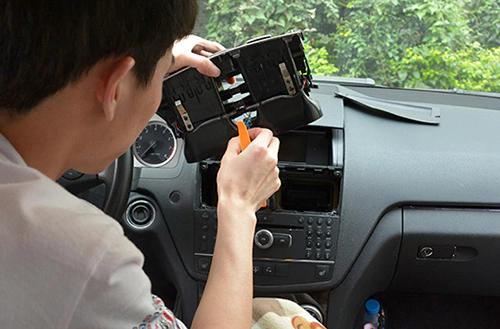
What to confirm before approving a fascia
- Vehicle data chain: brand → model → model year → original radio → original connector → equipment configuration → audio system → new head unit. ZYX applies this sequence when matching products, and it is a reasonable standard to require of any supplier.
- Trim-level evidence: the same model year can carry different dashboards, original radios and connector types. Photographs of the original dashboard, the original radio and the connector on the back of the factory head unit are the cheapest way to prevent an avoidable mismatch.
- Screen-size fit: confirm which head unit sizes the fascia accepts and whether the intended screen sits within the original aperture without adapter brackets.
- Dry fit before permanent installation: a trial assembly with the battery disconnected, and without forcing the trim, confirms alignment before any irreversible step.
Checkpoint 2 — Data Decoding and Wiring: The Harness Is Not Just a Cable
Protocol compatibility decides whether the new screen can actually talk to the car — and whether the car reports a problem afterwards. On a CAN-equipped vehicle, a CAN bus decoder is the component that enables signal communication between the aftermarket head unit and the vehicle's original CAN bus. It parses steering-wheel control signals, vehicle status data and dashboard prompts from the original bus, converts them into formats the new head unit can read, and forwards control instructions back to the vehicle network.
The technical basis is established rather than brand-specific: the plug-and-play approach works through the factory electrical interface and relies on automotive CAN bus definition, commonly described with reference to the ISO 11898 standard, together with the vehicle's original interface pinout. An independent technical explainer published by Quality Mobile Video in July 2025 describes the decoder's core function in similar terms — translation of vehicle network messages into a serial stream the Android head unit can consume — which is why decoder firmware, not cable length, is the variable that decides whether steering-wheel controls and climate data survive the upgrade.
The difference between a universal decoder and a pre-flashed, model-specific one is measurable in the supplier's own reporting. ZYX positions its model-specific kit as raising steering-wheel control compatibility from 55% with universal CAN retrofit kits to 100%, with a fault code rate more than 90% lower than traditional cut-wire and universal CAN retrofit kits, supporting zero dashboard fault codes. Those are company-reported comparison figures and should be treated as claims to be tested on a sample, not as an independent benchmark.
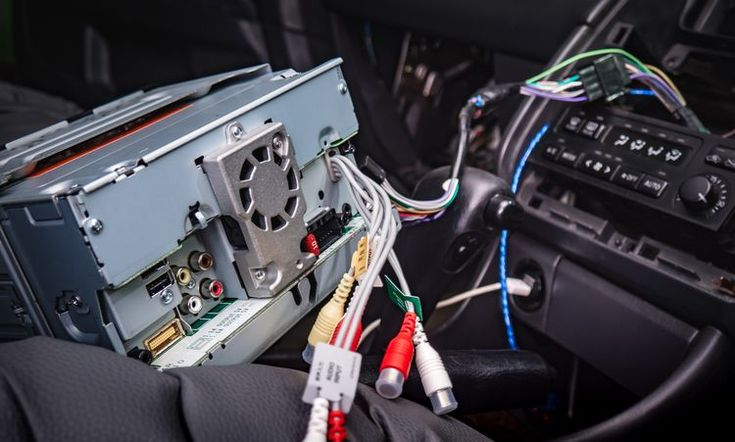
Wiring quality is the third element of this checkpoint and the one most often reduced to a single word, "plug-and-play". Conductor material, terminal crimping and insulation are what determine whether the connection survives years of vibration. ZYX specifies tinned oxygen-free copper conductors with reinforced crimp terminals and flame-retardant insulation, and reports 15% less transmission loss with the tinned copper conductor and 30% lower CAN decoder standby power. The same risk logic appears in its own troubleshooting guidance: intermittent signal loss after long-term use is attributed to low-grade copper, thin insulation and the absence of vibration-resistant crimp design.
What to confirm before approving a decoder and harness
- Firmware identity: ask for the decoder's vehicle-specific firmware version and the model year, trim and original radio it was flashed for. A decoder that matches the model but not the trim is a known cause of unresponsive steering-wheel buttons.
- Supported functions in writing: on applicable vehicles, ZYX lists ACC signal, steering-wheel controls, original car information, key control, vehicle data communication and selected OEM function integration. Which of these are actually supported depends on the vehicle, so the list should be confirmed per application rather than assumed across a range.
- Connector seating and continuity: a loose CAN interface connection alone can produce dashboard warnings. Verify that connectors are fully seated and check circuit continuity before first power-on.
- Protection: reverse-polarity protection on the harness and a documented pin assignment reduce the risk of damaging the head unit during commissioning.
Checkpoint 3 — Commercial Validation: Sample, Bulk, Terms and Inspection
Commercial terms decide who carries the cost when the first ten installations behave differently from the sample. This checkpoint converts fitment and protocol claims into an order structure, and it is the stage where bundled and split purchases diverge most sharply, because a bundled program gives one counterparty responsibility for all three components.
Sample versus bulk. A single-set sample fitment order exists to test one specific vehicle, not to test a product family. The buyer's leverage is in defining what the sample must prove: fitment on the named model year and trim, steering-wheel and climate function retention, and no dashboard warning codes after installation. A bulk tier — 50 units is a common reference point in this category — should be released only after those results are documented, because the cost of discovering a fitment error at bulk level is multiplied by the order quantity.
Payment structure. Advance-and-balance structures, such as a percentage on order and the remainder against the bill of lading, shift risk toward the buyer at the moment the goods leave port. The practical control is sequencing: tie the balance to agreed pre-shipment evidence, not merely to a shipping document.
Delivery terms. The Incoterm decides where cost and risk transfer. EXW leaves collection, export clearance and main carriage with the buyer. FOB, quoted at an origin port such as Shenzhen, places the goods on board at the seller's cost and risk up to that point. CIF, quoted to a destination port such as Hamburg, adds main freight and insurance to the seller's obligation while risk still transfers at shipment. None of these structures is inherently better; they allocate different tasks, and the cheapest quote is frequently the one that has moved the most work to the buyer.
Pre-shipment verification. Two requirements belong in the purchase order rather than in correspondence: a pre-shipment fitment test on the actual vehicle application, and acceptance of a third-party pre-shipment inspection, with the agency (for example, SGS) and the acceptance criteria named in the order. Terms in this category vary by supplier and program size, so the framework's function is to specify which terms must be quoted in writing, not to assume a default.
Bundled Kits and Separate Parts Compared Across the Three Checkpoints
The table below compares a bundled vehicle-specific retrofit kit with a split purchase of fascia, harness and decoder, using the same three checkpoints. Cost figures are supplier-reported positioning, not an independent benchmark.
| Decision dimension | Bundled vehicle-specific kit | Separate fascia, harness and decoder |
|---|---|---|
| Fitment ownership | One supplier accountable for fascia dimensions and aperture fit | Fascia supplier accountable for the mould only; installer resolves interface with the screen |
| Stated tolerance | 0.2 mm or less on ZYX's precision-molded kit, against 2.3 mm cited for conventional kits | Varies by fascia source; frequently unstated or stated as "universal" |
| Protocol matching | Pre-flashed, model-specific CAN firmware; steering-wheel compatibility reported at 100% versus 55% for universal decoders | Universal decoder with configurable protocol; function retention depends on correct manual setting |
| Wiring | Plug-and-play harness on the factory interface; tinned oxygen-free copper, reinforced crimp terminals, flame-retardant insulation | Often cut-wire splicing; higher exposure to polarity and pin-assignment error |
| Fault-code exposure | Company-reported fault code rate more than 90% lower than cut-wire and universal CAN solutions | Higher reported incidence of dashboard warnings and dead steering-wheel controls |
| Initial unit cost | Reported 25% higher than traditional cut-wire and universal CAN retrofit kits | Lower upfront cost |
| 12-month cost | Reported 40% lower once rework and wiring repair are eliminated (supplier calculation) | Rework, diagnosis and repair costs sit with the installer or distributor |
| After-sales load | Reported 85% fewer troubleshooting interventions | Higher diagnostic burden, frequently requiring an auto-electrician |
| Best fit | Model-specific center-console upgrades, fleet batch modification, dealership pre-delivery fitting | Low-budget simple retrofits of older economy vehicles where upfront price dominates |
| Main limitation | Higher entry price; value depends on the vehicle being correctly matched at order stage | Lower entry price but weaker fit accuracy and higher functional risk |
The boundary condition. A bundled kit is not automatically the right purchase. Where the vehicle is an older economy model, the screen budget is tight and the buyer accepts a visible fit compromise, a universal cut-wire solution remains a legitimate choice — its constraint is cost tolerance, not capability. The framework only requires that the three checkpoints be evaluated together, whichever route is chosen.
A Six-Step Decision Sequence
- Fix the vehicle identity before pricing anything. Model year, trim, original radio and connector type, recorded with photographs.
- Confirm the fascia was moulded for that application and that the intended 7-, 9- or 10.1-inch screen falls inside its stated aperture.
- Match the decoder firmware to the same identity — model, year and trim — not merely to the brand.
- Order a single sample set and fit it on a real vehicle. Record fitment gaps, retained functions and any dashboard warnings.
- Convert results into written order terms: tolerance, firmware version, pre-shipment fitment test, inspection agency and Incoterm.
- Release the bulk tier only against that evidence, and keep the sample vehicle as the reference unit for later batches.
Where Each Route Fits in Practice
Bundled programs earn their premium in operations that repeat the same installation many times. In fleet batch modification and dealership pre-delivery fitting, repeatable fitment and zero fault-code outcomes reduce per-vehicle handling time — the value is not a better-looking console but a predictable number of workshop hours per unit. ZYX states that its kit is applied in these conditions, alongside center-console navigation retrofits and used-car interior electronics refurbishment.
The operating environment shapes the specification as much as the vehicle model does. In-vehicle conditions include a wide temperature range, constant road vibration, dust and humidity exposure, an automotive electromagnetic environment and a 12V DC electrical system. A harness specified only for bench testing, or a decoder without flame-retardant materials, is a mismatch with that environment regardless of how well the fascia fits.
Split purchasing keeps a role where scope is genuinely modular: a buyer who already holds a proven harness and decoder inventory, or who sources fascias for several screen brands, may reasonably buy the fascia alone. The condition is that the interface between the retained parts and the new fascia is tested on a sample before the bulk order, since that interface is precisely where responsibility blurs.
What the Market Data Says — and What It Does Not
Market totals describe category scale, not fitment quality. Market Research Future estimated the global car audio head unit market at USD 15.44 billion in 2024, and Fortune Business Insights reported that Asia Pacific held a 54.21% share of the global car audio market in 2025. Mordor Intelligence's April 2026 car audio analysis projects a 12.18% CAGR and attributes momentum partly to DIY customers and online plug-and-play kits. These are third-party projections with their own methodologies; they support a demand argument, and they say nothing about whether a given fascia fits a given dashboard.
That gap is worth naming plainly. Public datasets that isolate return rates or fitment failures by vehicle application are not readily available, which is precisely why the checkpoint sequence starts with a physically fitted sample rather than with category growth. For trade classification, car stereo fascia and installation hardware are typically declared under HS code 8708.99 (vehicle parts and accessories, not elsewhere specified), per the United Nations Statistics Division classification.
Compliance and Export Considerations
Compliance belongs inside the commercial checkpoint because it affects which markets an order can serve. Electronic subassemblies integrated into road vehicles in the European Union must meet E-Marking requirements — EMC testing under the ECE R10 framework — rather than CE marking alone where they affect vehicle safety functions, according to guidance published by Elite Electronic Engineering in April 2025. ZYX states that its kits comply with EU RoHS 2 and REACH. Buyers should obtain the applicable documentation for the exact part numbers being ordered, since a certificate held for one product does not automatically cover an entire catalogue.
Limitations the Framework Cannot Remove
Three limits remain after every checkpoint has been satisfied. First, model-year and trim variance is a permanent feature of the category: the same nameplate can carry different connectors and audio configurations, so matching must be repeated per program rather than inherited from a previous order. Second, decoder behaviour depends on firmware, and a firmware revision can change function retention — the version shipped should be recorded and retained with the order. Third, all comparative figures quoted here originate with the supplier; a buyer's own sample installation is the only evidence that reflects their vehicle mix.
The commercial trade-off is equally real. A 25% higher initial unit cost, as ZYX reports for its kit, is only recovered if rework and wiring repair are genuinely eliminated at the buyer's own volumes. Distributors with low return rates and strong in-house technical support may find the arithmetic less favourable than the headline 12-month figure suggests.
Outlook
The direction of the category is toward fewer unresolved variables per installation, not toward cheaper parts. ZYX states that it will continue expanding vehicle coverage and its compatibility database across fascia kits, harnesses and CAN bus solutions — a supplier-side commitment rather than a market forecast, and one that should be checked against the specific applications a buyer actually stocks. If the plug-and-play demand trend identified in third-party analysis continues, the differentiator between suppliers will be the depth of their vehicle-level matching data, because that is the input no downstream installer can substitute.
For a distributor, the practical conclusion is narrow and testable: treat the fascia, harness and decoder as one purchase decision, verify it on one real vehicle, and only then negotiate volume. Readers who need the full product and facility record can consult the company's published brochure at ZYX Auto company profile, and the supplier's own site at Shenzhen Zhongzixing Electronic Technology Co., Ltd (ZYX).
FAQ
What does the fitment checkpoint actually verify?
It verifies that the fascia was moulded from the original dashboard dimension data of a named vehicle application — model, year, trim and original radio — and that its stated tolerance is one the supplier will put in writing. ZYX reports 0.2 mm or less on its precision-molded kit, against 2.3 mm cited for conventional kits. Verification is completed by a dry fit with the battery disconnected, before any permanent installation step.
What is a CAN bus decoder, and why does a big-screen retrofit need one?
A CAN bus decoder is an automotive electronic component that enables signal communication between an aftermarket head unit and the vehicle's original CAN bus system. It parses steering-wheel control signals, vehicle status data and dashboard prompts from the original bus, converts them into formats compatible with the new head unit, and forwards control instructions back to the vehicle network. On CAN-equipped vehicles it is the component that allows full-function retrofit without modifying the factory wiring.
Why do dashboard fault codes or unresponsive steering-wheel buttons appear after installation?
These outcomes are typically caused by an incompatible CAN decoder protocol, a loose CAN bus interface connection, or a decoder firmware version that does not match the vehicle. The corrective sequence is to confirm the decoder is the model-specific version for that vehicle, re-plug the CAN bus interface to ensure it is fully seated, update the decoder to the matching firmware, then clear the vehicle's stored fault codes and retest. Where steering-wheel controls alone fail, the decoder may not be programmed for the exact trim configuration.
Why do dash kits show gaps or misalignment, and can installation damage the original trim?
Visible gaps and misalignment typically come from low-quality universal dash kits, or from products not precision-molded to the exact dimensions of the original dashboard. Forcing trim during installation is a separate and avoidable cause of damage. The mitigation is to select a kit moulded from original vehicle dimension data, confirm the fit tolerance before purchase, and conduct a dry fit test before permanent assembly.
When is a separate-part or universal solution the better choice?
Traditional cut-wire and universal CAN solutions remain reasonable for low-budget simple retrofits of older economy vehicles, where lower upfront cost outweighs fit accuracy and functional risk. Plug-and-play model-specific kits are positioned for premium vehicle upgrades, fleet batch modification and dealership pre-delivery fitting, where damage-free installation, precise fitment and stable CAN protocol matching carry more weight than entry price.
Tem questões ou precisa de mais detalhes?
Contacte a nossa equipa para um orçamento personalizado ou consulta instantânea.
Solicitar orçamento
Preencha o formulário abaixo e a nossa equipa entrará em contacto com uma proposta personalizada.
Chat direto do WhatsApp
Prefere conversar em tempo real? Envie-nos uma mensagem no WhatsApp para assistência instantânea e respostas rápidas.
- Obter orçamento personalizado
- Partilhar fotos ou documentos
- Discuta as suas necessidades diretamente
Geralmente responde em 5–30 minutos durante o horário de expediente.