
Fitting Backlit Light Guide Panels to Consumer Electronics
Fitting Backlit Light Guide Panels to Consumer Electronics
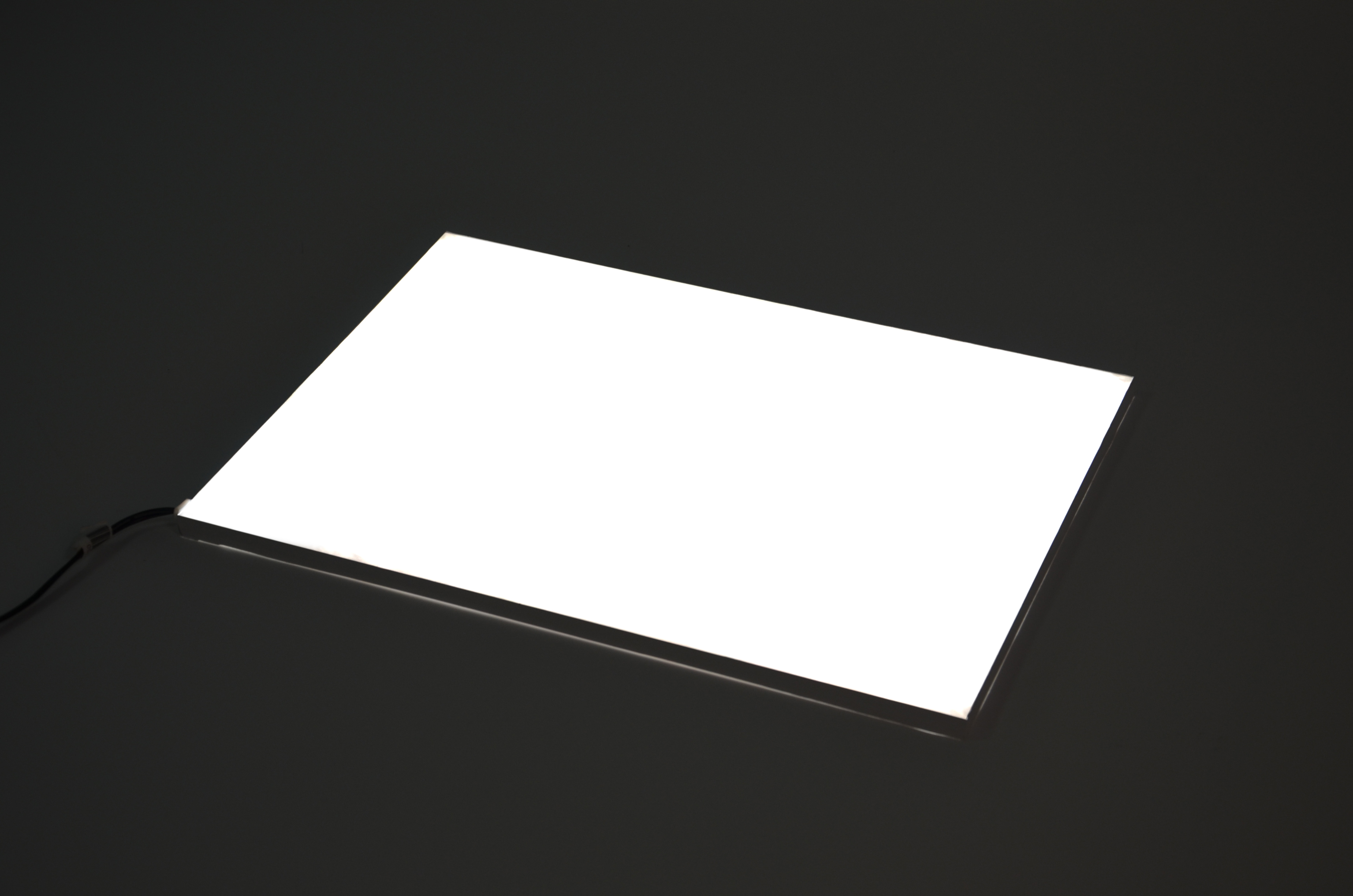
Consumer electronics backlighting is a fit problem before it is a brightness problem. A panel that looks flawless across a one-metre advertising light box can still disappoint behind a 150 mm display window, because the viewer stands closer, the enclosure traps heat, and the product must hold the same colour over years of continuous use. Edgelight's backlit light guide panel names consumer electronics backlighting among its eight listed application industries, alongside retail and luxury display, hospitality, exhibition, elevator decoration, signage, office and residential interiors, and transportation. This article examines what that scenario fit actually requires, using the panel's listed optical acrylic construction, electrical and thermal envelope, colour and protection options, and customisation routes as the evidence base.
Why consumer electronics backlighting is a stricter fit than signage
Signage and consumer electronics are both judged on even light, but they are judged from different distances. A light box is read from a metre or more away, and small variations in luminance across its face disappear at that range. A consumer electronics front panel — a display window, a control surface, an indicator field — is read from tens of centimetres, often under directional room lighting, and the human eye is quick to find a bright band near the LED edge or a dim patch in the middle.
Three requirements follow from that, and they shape every specification decision in this article:
- Uniformity across the emitting face, evaluated at the real viewing distance rather than at a nominal figure quoted without conditions.
- Colour and material stability over service life. The application profile supplied for this product lists high light uniformity, optical acrylic material, long service life and no yellowing as its requirements, and specifies 24/7 operation — so the panel is expected to hold its appearance under continuous duty rather than occasional use.
- Thermal and electrical fit inside the product. A housing that contains a display also contains the driver, the control board and the power supply; the backlight's current draw and heat output become part of that internal budget.
None of those requirements is met by the acrylic sheet alone. The matched equipment listed for this product's backlighting projects — LED strip light, constant current power driver, light box frame, diffuser film, reflective film and mounting brackets — is part of the optical system. Uniformity is a property of that stack, and any uniformity claim should be read with that in mind.
The panel in scope: acrylic construction and stated compliance
Shanghai Edgelight Industry Co., Ltd. (EDGELIGHT) is a manufacturer of LED products, intelligent control products and light guide panels, founded in 2004 and operating five production bases in Shanghai, Tianjin, Germany and the United States, the largest a site of about 33,000 m² in Shanghai. The company reports roughly 500 employees, a 25-engineer R&D team, an annual output of 120,000 units and a 75% export ratio with the USA and EU as its main markets.
Its light guide panel, model LGP, is a light panel fabricated from acrylic and listed for consumer electronics backlighting among its eight application industries. On the compliance side, Edgelight's published documentation lists UL 2108 certification, the standard for low voltage lighting systems, under certificate UL-US-2145621-0, and CE EMC certification under certificate CTSL2620530156EZ, tested to EN IEC 55015:2019/A11:2020. Both are company-published records: they establish what the manufacturer states about the panel's compliance position, and because certificate numbers attach to defined configurations, a buyer should confirm that the scope covers the exact size, driver and assembly being purchased. That is a normal step for any CE-Certified or UL-Listed light guide panel, not a concern specific to this supplier.
The electrical and thermal envelope, line by line
The panel's listed operating envelope is compact enough to summarise in one table, but each line changes a design decision rather than simply filling a datasheet.
| Parameter | Listed value | What it means for a consumer electronics build |
|---|---|---|
| Operating current | 7.2 A maximum | Sets conductor gauge, connector rating and the driver's current capability. |
| Maximum power | 144 W | The upper bound for power budgeting and for worst-case thermal sizing. |
| Typical power consumption | 101 W | The figure to use for normal-use thermal budgeting, not the maximum. |
| Luminous flux | Greater than 1080 lm | Available light at the panel level; ends up shared across the emitting area. |
| Colour temperature | 2700 K to 6500 K | Spans warm interior white to cool white for matching surrounding light sources. |
| Operating temperature | -20 °C to 50 °C | Ambient operating range; the constraint most often breached inside a sealed product. |
| Protection grade | IP20 to IP65 | Choice depends on the finished enclosure, from dry interior to dust and water-jet conditions. |
Current and power
The listing gives 7.2 A maximum current, 144 W maximum power and 101 W typical consumption. In practice the maximum figures define the driver, wiring and connector requirement, while the typical figure is the one that governs how warm the product's interior becomes in everyday use. The application data names a constant current power driver as matched equipment, which is consistent with a panel specified by current rather than by a fixed voltage — so driver selection is part of the fit decision, not an accessory.
Luminous flux and colour temperature
Output is listed above 1080 lm across a 2700 K to 6500 K colour temperature range. For a consumer electronics product the colour choice is usually set by the surrounding light sources and by the material being illuminated: a warm-white backlight behind an amber or wood-tone front panel reads differently from a 6500 K source behind the same part, and a panel that sits beside an OLED or LCD display needs to sit in the same white point family. The practical instruction is to specify the target colour temperature explicitly and ask for the bin or tolerance that will be held, rather than accepting 'white' as a description.
Operating temperature
At -20 °C to 50 °C, the listed range is an ambient operating range. This is where consumer electronics projects most often leave the envelope: a backlight sharing a sealed housing with a power supply and a control board can see internal ambient well above room temperature during fast charging, in direct sun through a window, or in an unventilated enclosure. When the internal ambient can exceed 50 °C, the panel is outside its stated conditions and the design needs a thermal path, derating or a different architecture.
Protection grade
The panel is offered from IP20 to IP65. IP20 suits a dry, clean interior where the panel sits behind a sealed front lens; the upper end of the range covers dust and water-jet conditions, and accommodates the IP55 dustproof and waterproof requirement named in this product's showcase and shelf project profile. Ingress protection is a property of the finished assembly as much as of the panel, so the grade should be confirmed on the built unit rather than inferred from the acrylic sheet.
How the light is extracted, and why it decides the fit
An edge-lit light guide panel works by total internal reflection. LEDs are coupled into the edge of an acrylic sheet, and light travels inside the material, reflecting off the two faces, until purpose-made extraction features on one surface scatter it out toward the viewer. The density of those features carries the design: denser away from the LED edge and sparser near it, so that the bright line of emitters is redistributed into an even field.
An Edgelight technology note distinguishes two extraction routes. Laser-dotted, or engraved, panels are positioned for projects requiring high brightness and uniformity in large formats, while V-cutting remains suitable for standard advertising light boxes. For a consumer electronics panel the distinction is practical rather than technical: a display window that is small but very bright, or one that is large and viewed closely, puts more weight on the dotting pattern and the film stack than on raw LED output, because the failure being designed out is a visible gradient rather than an insufficiency of lumens. Treat the process name as a starting question, not as a quality verdict.
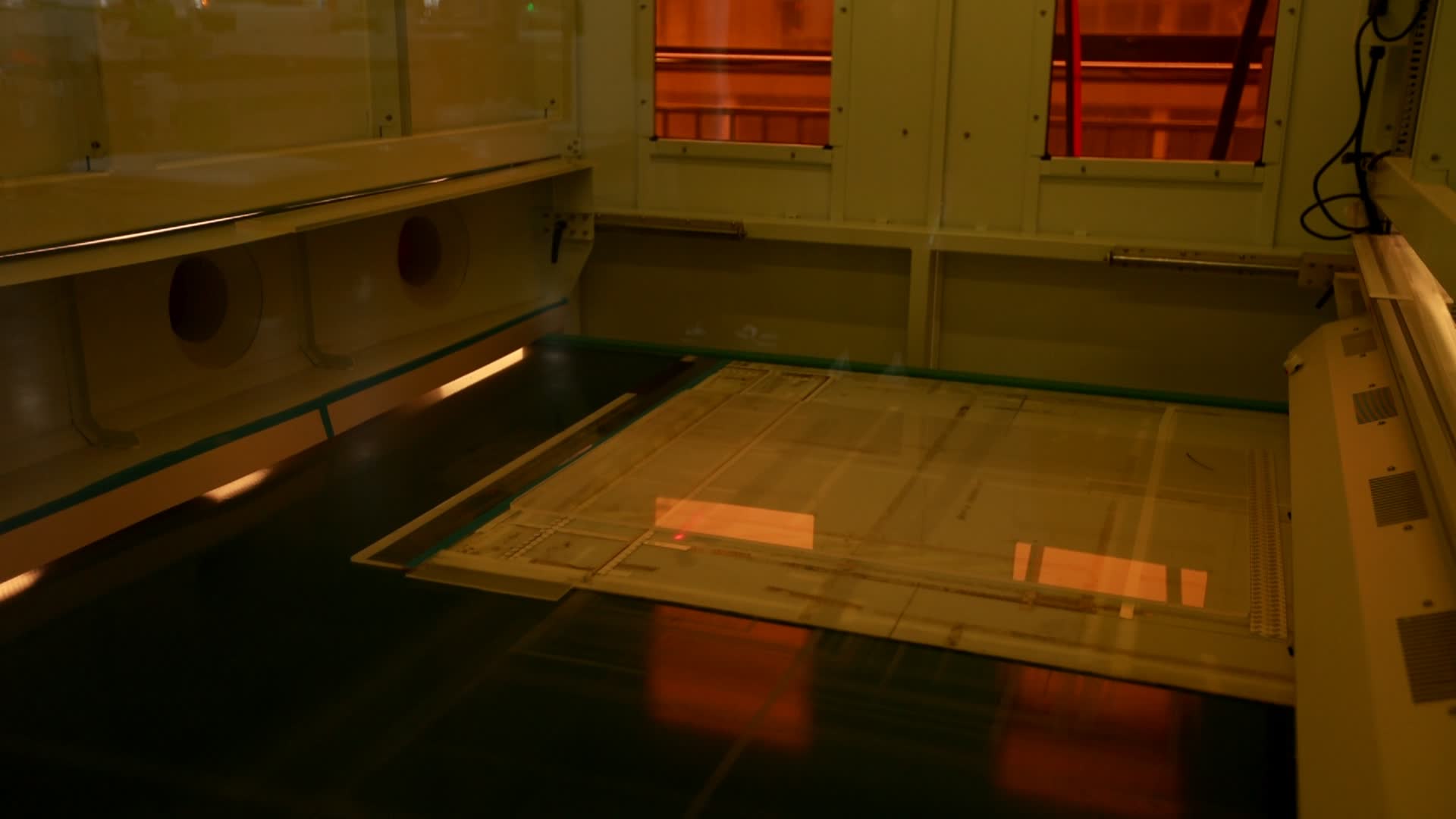
Below the panel, the rest of the stack does the finishing. Diffuser film spreads extracted light, reflective film returns what escapes backwards, and the frame holds the gap tolerances that keep the dotting pattern aligned with the LEDs. The application data for this product lists all four — diffuser film, reflective film, frame and brackets — as matched equipment alongside the LED strip and driver. Swapping a film or changing the frame depth alters the optical result even when the acrylic is unchanged, which is why a panel specification and a backlight specification are not the same document.
Where the fit is strong, and where it stops
The combination this envelope is built for is reasonably specific:
- Enclosed, dry to moderately exposed electronics products whose internal ambient stays within -20 °C to 50 °C.
- Front panels and display windows that need an even field at close viewing distance inside a thin build depth.
- Products where the backlight runs continuously or near-continuously, matching the 24/7 operating profile listed for this application.
- Configurations where power can be supplied from a constant current driver matched to the panel's current requirement.
The boundaries deserve the same clarity:
- Above 50 °C ambient, the panel is outside its listed operating range, and no amount of driver tuning changes that.
- Ingress protection is not inherited from the acrylic. IP65 requires a sealed finished assembly, so the grade must be verified on the built unit.
- Colour output outside 2700 K to 6500 K is not in the listed specification; a product needing a saturated colour effect is a different brief.
- Uniformity figures are only meaningful with their measurement conditions attached. Neither the supplier listing nor the third-party material reviewed for this article provides a normalised uniformity value with test distance and method, so any uniformity statement should be treated as a specification to be agreed and measured rather than a published constant.
Comparison with the alternatives a design team will weigh
The first comparison is architectural. A direct-lit backlight places an array of LEDs behind the display area and diffuses them; it scales straightforwardly and, in display-grade implementations, supports zone control. It is also thicker and puts more emitters, and more heat, inside the product. An edge-lit light guide panel moves the emitters to the perimeter and performs the spreading optically, which is why this architecture is associated with thin profiles. The trade is that optical design carries more of the burden: extraction pattern, film stack and frame tolerance all influence the result, and the panel alone does not guarantee it.
The second comparison is within the panel itself. Laser dotting gives a controllable extraction profile suited to high brightness and uniformity in large formats, while V-cutting is described as suitable for standard advertising light boxes. For a closely viewed consumer electronics window, the relevant question is which pattern has been designed and measured for that size, not which process name appears on the quotation.
The third comparison sits across the supplier landscape, and it explains why like-for-like assessment is difficult. Diode LED publishes built-to-order light guide panels up to 54 in × 94 in, with 12–24 VDC input, dimming, a dry-location rating and a five-year limited warranty. LightPanel lists white, tunable white, RGB/RGBW, outdoor, glass and fire-rated configurations. Edgelight's panel is listed from IP20 to IP65, across -20 °C to 50 °C and 2700 K to 6500 K, with 7.2 A and 144 W maximums. These are different product architectures with different declared scopes, and the comparison that matters is between panels of the same size, thickness, driving method and measurement conditions. Headline numbers from unequal configurations do not establish which panel performs better in a given enclosure.
Customisation, testing and supply evidence
OEM and ODM customisation covers size, thickness, colour temperature, logo, surface shape, light output brightness and installation structure — the seven variables that decide whether a standard panel can be adapted to a specific electronics housing. Production is supported by 100% testing, a monthly capacity of 30,000 units, a stated lead time of 5 to 10 days and a minimum order of one unit. For a design team still in evaluation, that combination makes a small pilot build practical before any tooling or volume commitment, which is usually the point at which uniformity at the real viewing distance gets tested rather than assumed.
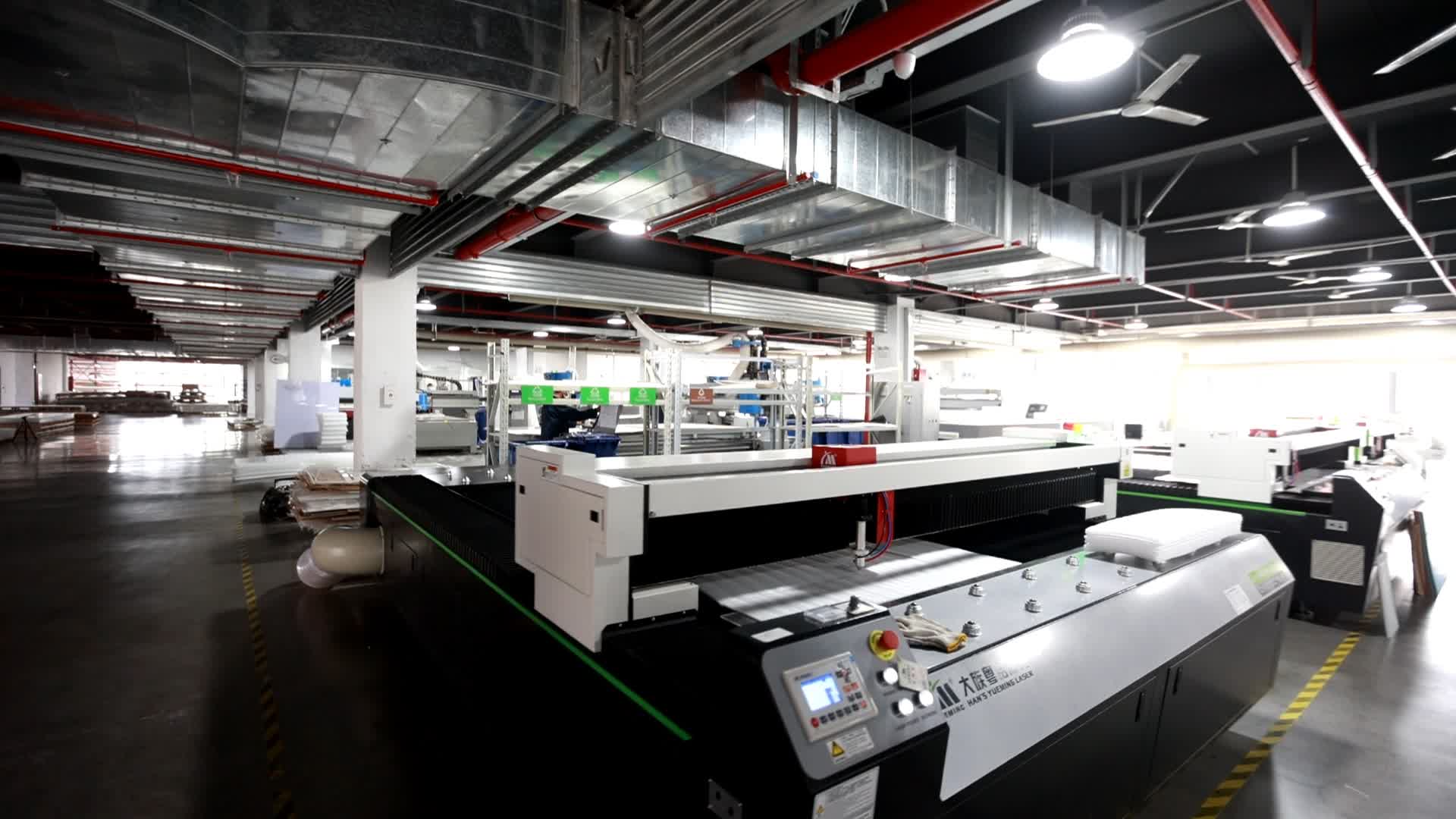
One documented case sits outside consumer electronics and is included for what it shows about long-run custom work rather than as an application reference. An elevator manufacturer has taken 10,000 units over a 20-year relationship for elevator decoration, with lighting, printing and customised size and texture as the highlights and stable operation as the reported result. Read it as evidence of repeat customization at scale; it does not establish performance inside a consumer electronics enclosure, and no consumer-electronics deployment data was supplied for this article.
Market context that affects the specification decision
Two published figures frame the commercial side. Dataintelo's light guide plate market report values the global LGP market at USD 3.91 billion in 2025 and projects USD 6.51 billion by 2034; that figure covers all LGP applications, not consumer electronics alone, so it describes category scale rather than demand within any single segment. Separately, IMARC and MarketScAGR material research put optical-grade PMMA sheet production at 1.36 million square metres in 2025 at an average price of USD 185.25 per square metre.
The practical reading is that the acrylic is a material cost line rather than a rounding error. Thickness, grade and sheet utilisation are worth negotiating in a custom panel, and an RFQ that asks for 'optical acrylic' without specifying thickness or grade leaves the largest cost variable open — while a request that fixes those variables makes quotations comparable and makes the uniformity discussion possible.
What to verify before committing the design
A specification review is cheaper than a re-tooling, and the checks below follow directly from the limits described above.
- Uniformity, with conditions attached. Ask for the measurement method, viewing distance and acceptance criterion for the exact panel size being quoted.
- Ambient temperature inside the finished enclosure. Measure or model it; if it approaches 50 °C, the design needs a thermal path before the panel choice is finalised.
- Colour temperature and tolerance. Fix the target white point and ask what variation will be held across the production batch.
- Driver compatibility. Confirm the constant current driver's output against the panel's 7.2 A maximum and 101 W typical figures.
- Ingress protection on the assembly. If IP65 is claimed, verify it on the built unit, not on the sheet material.
- Certificate scope. Check that the UL 2108 and CE certification documentation covers the model, size and driver combination being purchased.
- Material stability. Ask what documentation supports the no-yellowing and long-service-life requirements for the acrylic grade supplied.
- Sample evaluation. Build a pilot unit at final thickness and colour temperature, because the film stack and frame tolerances change the optical result.
Outlook
Within the applications this panel is listed for, the recurring design pressure is space: a backlight that adds depth to a front panel is a backlight the industrial design has to accommodate. The edge-lit light guide architecture answers that pressure by moving the emitters to the perimeter, and the acrylic construction answers the appearance requirement by keeping the emitting face uniform and colour-stable over time. What will decide individual projects is less about LED efficiency and more about thermal headroom, ingress protection of the finished assembly and the discipline of measuring uniformity at the real viewing distance. Edgelight's listed envelope gives a design team a defined box to work inside; whether a particular product lands inside that box is answered by measurement, not by a datasheet.
The full Edgelight LED product catalogue is available for download: LED product catalogue (English, PDF).
FAQ
What does a backlit light guide panel do inside a consumer electronics product?
It converts light from edge-mounted LEDs into a flat, evenly lit plane. LEDs are coupled into the edge of an acrylic sheet, light is held inside the material by total internal reflection, and extraction features on one face release it toward the viewer. In a consumer electronics product the panel delivers that even field within a thin build depth, working with a diffuser film, reflective film, frame and constant current driver from its matched equipment list.
What electrical and thermal limits apply to Edgelight's light guide panel?
The listed limits are 7.2 A maximum operating current, 144 W maximum power, 101 W typical power consumption and an operating temperature range of -20 °C to 50 °C, with protection grades from IP20 to IP65. Luminous flux is listed above 1080 lm and colour temperature spans 2700 K to 6500 K. The maximum current and power figures size the driver and wiring; the typical 101 W figure is the one used for normal-use thermal budgeting.
Is IP65 necessary for a consumer electronics backlight, or is IP20 enough?
It depends on the finished enclosure. IP20 suits a dry, clean interior where the panel sits behind a sealed front lens. IP65 covers dust and water-jet exposure, and also accommodates the IP55 dustproof and waterproof requirement named in this product's showcase and shelf project profile. Because ingress protection belongs to the assembled unit rather than to the acrylic sheet, the grade should be confirmed on the built product.
Should a closely viewed panel use laser engraving or V-cutting?
The manufacturer's technical note positions laser-dotted panels for projects needing high brightness and uniformity in large formats, and V-cutting as suitable for standard advertising light boxes. For a small, closely viewed display window the deciding factor is the extraction pattern designed for that specific size and the film stack behind it, so the useful request is for the pattern design and the uniformity measurement conditions rather than for a process name alone.
Can size, thickness, colour temperature and brightness be customised?
Yes. Edgelight lists OEM and ODM customisation of size, thickness, colour temperature, logo, surface shape, light output brightness and installation structure, supported by 100% testing, a monthly capacity of 30,000 units, a stated lead time of 5 to 10 days and a minimum order of one unit.
Tem questões ou precisa de mais detalhes?
Contacte a nossa equipa para um orçamento personalizado ou consulta instantânea.
Solicitar orçamento
Preencha o formulário abaixo e a nossa equipa entrará em contacto com uma proposta personalizada.
Chat direto do WhatsApp
Prefere conversar em tempo real? Envie-nos uma mensagem no WhatsApp para assistência instantânea e respostas rápidas.
- Obter orçamento personalizado
- Partilhar fotos ou documentos
- Discuta as suas necessidades diretamente
Geralmente responde em 5–30 minutos durante o horário de expediente.