
Fitting Transmission Tower Bolts to Telecom Tower Steelwork
Fitting Transmission Tower Bolts to Telecom Tower Steelwork
A telecom tower is not a scaled-down transmission tower. The two structures may share hot-dip galvanized angle steel and bolted connections, but a telecom site usually carries antenna and feeder loads across fewer connections, stands unmanned for most of its life, and is expensive to revisit. That combination changes what a transmission tower bolt has to be: not a single fastener chosen by diameter, but a complete bolt-nut-washer assembly with a coating built for outdoor exposure, a washer that spreads clamping force without scuffing the galvanized surface, and, on exposed sites, an anti-theft head that cannot be turned with a standard wrench.
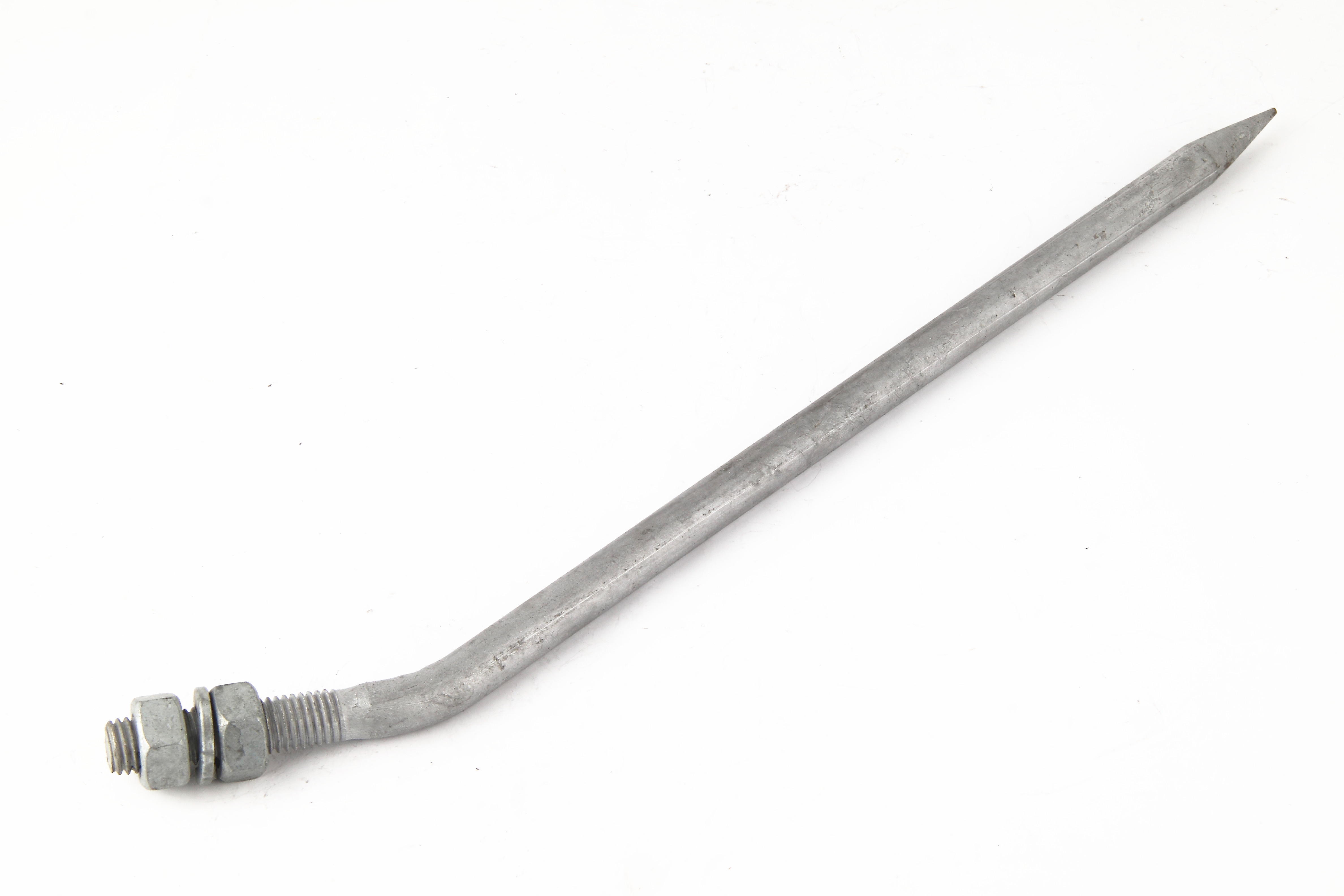
The YM Structural Bolts range, produced by Ningbo Yuema Fastener Co., Ltd. (a Ningbo, Zhejiang manufacturer established in 2012 that builds heavy hex structural bolts, transmission tower bolts, wind tower bolts and anti-theft tower bolts for export projects), is a useful working example because the company documents its bolt, nut and washer lines separately and supplies them as one assembly. This article maps those assemblies onto telecom tower steelwork and adjacent outdoor steel structures, and it separates what is covered by the company's EN 14399, EN 15048 and CPR FPC certification from what a project must still specify and verify for itself.
Why telecom steelwork changes the fastener brief
Load path. A 132 kV transmission tower is estimated to require between 1,200 and 2,500 bolts depending on whether it is a suspension, angle or dead-end structure, according to a third-party estimate published in 2025 rather than a manufacturer figure. Those connections are repeated and heavily engineered, which is why the line-tower world anchors itself to ASTM A394, the standard specification for steel transmission tower bolts. ASTM A394-08(2024) defines Type 0 (hot-dip galvanized low or medium carbon steel), Type 1 (hot-dip galvanized medium carbon steel, quenched and tempered) and Type 3 (bare weathering steel); Type 2 has been withdrawn. A telecom lattice tower, monopole or rooftop frame follows a different pattern: fewer connections, more varied interfaces with antenna mounts and cable trays, and a much higher chance that the same bolt is reachable from the ground or from a ladder.
Theft and access. An unattended site is a materials store. Galvanized bolts, nuts and washers have resale value, and a connection that can be undone with a ring spanner is a connection that can walk away. The application notes for this scenario place anti-theft requirements alongside high tensile strength for tower and steel-structure fasteners, which is why the anti-theft head is a scenario requirement rather than a premium option.
Exposure. Outdoor steelwork accumulates time in service rather than cycles of use. A telecom or transmission structure is expected to sit in rain, salt-laden air and temperature swings for decades. The manufacturer states a 35-year design service life under normal outdoor conditions and separately offers a five-year warranty. Those are two different commitments, design life and warranty, and both belong in the project file rather than in a marketing summary.
The assembly, not the bolt, is what gets specified
A tower connection is a system of three parts with one job. The bolt provides clamp load, the nut converts torque into that clamp load, and the washer decides how the load is spread into the steel. Sourcing all three from one production chain keeps thread fit, coating thickness and documentation consistent, and it removes the most common field problem: a washer that does not match the bolt it was bought for.
| Component | Documented options in the YM Structural Bolts range | What it decides on outdoor steelwork |
|---|---|---|
| Hex head bolt | M12 to M64 (including M24); full thread or half thread; lengths 20 mm to 2,000 mm; property classes 4.8, 8.8, 10.9, 12.9; carbon steel, SS304 or alloy steel | Clamp load and fatigue behaviour; thread length decides where the nut lands on the member |
| Heavy hex nut | DIN 934, ISO 4032, ASTM A194 2H; classes 5, 6, 8, 10, 12; 6H thread tolerance; HDG, zinc plated, Dacromet or black oxide | Conversion of torque into preload; thread fit against the coated bolt |
| Flat or heavy washer | ASTM F436, DIN 125A / DIN 125B; flat, spring lock, heavy, square and bevel types; HDG, zinc plated, Dacromet or black oxide | Bearing area, protection of the galvanized surface, and anti-loosening duty |
A common buying error is to treat the nut and washer as accessories priced separately. In practice the nut determines whether the assembly reaches its specified preload: the heavy hex nut line carries a 6H thread tolerance and is offered with standard hex, heavy hex, nylon lock, flange and thin-nut patterns. A nylon-insert nut and a heavy hex nut are not interchangeable in a preloaded tower connection simply because both fit the thread.
Hot-dip galvanizing: the default finish, and where it stops
For outdoor tower work, hot-dip galvanizing is the default finish in the range, and the product note is direct about why: hot dip galvanized transmission tower bolts are specified for substation steel structures and power tower structures. A zinc layer applied by hot dip protects in two ways. It isolates the steel from moisture, and it sacrifices itself at scratches and cut edges, which is what makes the finish practical on a site where coating damage during erection is normal.
Coating has a dimensional consequence. Hot-dip galvanizing adds a zinc layer on the thread as well as on the shank, so a coated fastener cannot be cut to bare-steel thread dimensions and expected to assemble cleanly. Thread fit on HDG assemblies has to be planned around the coating, which is one more reason to buy the bolt, nut and washer from the same source instead of matching a coated bolt to an uncoated nut.
Where HDG is not the answer. The range also offers zinc plating, Dacromet and black oxide, plus special coatings such as zinc-aluminium on request. Black oxide is a workshop finish, not an outdoor one. Zinc plating and Dacromet are the options to discuss when a project's coating specification or appearance requirement differs from hot dip. The decision should follow the site environment, coastal, industrial or inland, rather than a default. The in-house salt spray test is a batch verification tool; it is not a prediction of service life, and no supplier should present it as one.
Heavy flat washers: clamping force and surface protection
A heavy flat washer is often the cheapest line in the fastener schedule and the one most likely to be substituted. Its functions are mechanical. First, it enlarges the bearing area under the nut or head so clamping force is spread over more steel; without it, a high-preload assembly can dent or deform the surface it is meant to hold. Second, it separates the rotating part from the galvanized surface, so tightening scuffs the washer rather than the tower member.
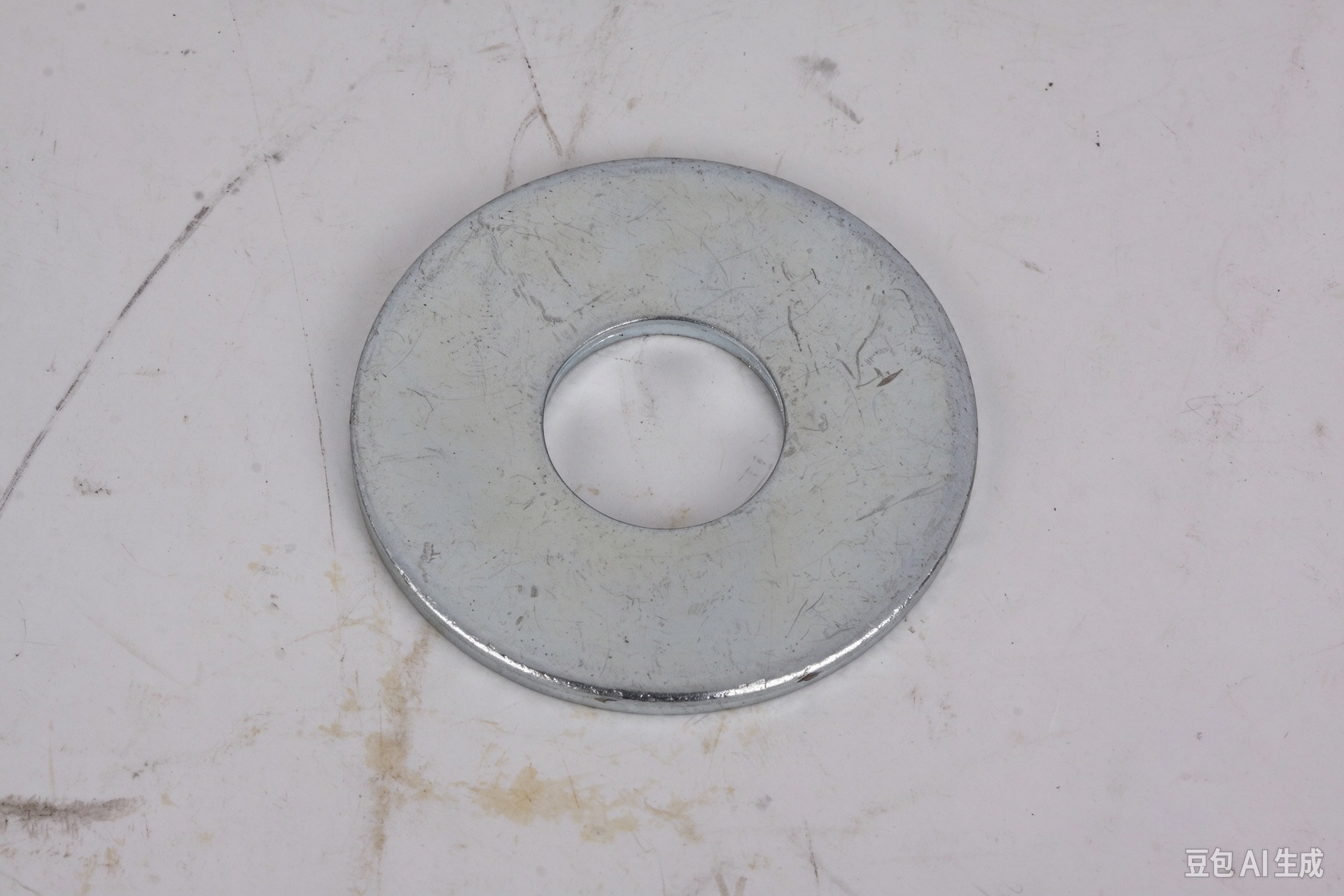
The washer line covers ASTM F436 and DIN 125A / DIN 125B in carbon steel, alloy steel or stainless steel, with HDG, zinc plating, black oxide or Dacromet finishes. Flat washers handle pressure distribution; spring lock washers handle anti-loosening and anti-vibration duty. Heavy, square and bevel versions are available where the connection geometry is not a flat parallel face: bevel washers on sloped angle legs, square washers where rotation has to be restrained. Non-standard thickness, outside diameter and shape can be produced to drawing, and inspection records with a material test certificate can be supplied.
The specification point is that washer thickness and hardness are part of the assembly's behaviour, not a packaging detail. A washer that is too thin will dish under preload; one that is harder than the steel beneath it will mark the member; one with a mismatched hole will not seat. On a tower project, the washer callout belongs on the same drawing as the bolt and nut.
Anti-theft tower bolts: how the design works in service
The anti-theft tower bolt is a shear-off design supplied with a matching nut. The assembly is tightened with a wrench on a driving head; when the specified torque is reached, that head breaks away. What remains has no gripping surface, so a standard spanner cannot hold it and the bolt cannot be unscrewed. Combined with a matched washer and a thread structure that resists the alternating load from wind, the same component addresses two scenario requirements at once: it slows removal and it holds preload.
Installation discipline is what makes the design work. The documented procedure is short: clean the contact surfaces of the steel plates and remove rust, burrs and dirt; check the bolt, nut and washer for damage before assembly; pass the bolt through the hole and fit the washer and nut in the correct sequence; tighten gradually with a calibrated torque wrench to the required value; confirm that the head has detached or locked; and record the torque data in the project file.
Two field rules matter more than the rest. Do not use an impact wrench for final tightening, because over-torque damages the assembly before the head shears. And never reuse a bolt whose thread is deformed or whose anti-theft structure is damaged; a shear-off head is a one-time device. For work at height the safety notes are equally practical: harness, helmet and gloves, plus clearance from live parts on transmission structures.
Diameters, property classes and the standards on the drawing
The documented range runs from M12 to M64 (1/2 in to 2 1/2 in), including M24 sizes, in property classes 4.8, 8.8, 10.9 and 12.9. Lengths run from 20 mm to 2,000 mm with custom lengths accepted, thread pitch from 1.5 mm to 3.0 mm with custom pitch on request, and both full-thread and half-thread (semi-threaded) configurations are available. Body material is carbon steel, SS304 or alloy steel. For tower work, the practical reading is that one supplier can cover a small rooftop frame in M12 and a foundation or leg connection in M24 up to M64 without a second supply chain, and non-standard lengths and thread pitches can be quoted from drawings under the company's OEM/ODM programme.
Standards. The range is manufactured to ASTM A325(M), ASTM A490(M), DIN 6914, DIN 6915, DIN 6916, ISO 4014, ISO 4016, EN 14399, AS 1252, BS 3692, BS 4190, BS 4395, JIS B1180 and JIS B1181 for tower and structural bolt applications. Four of these come up most often in a telecom or outdoor steelwork enquiry, and they are not synonyms:
- ISO 4014 is a dimensional product standard for hexagon head bolts with a shank. It fixes the geometry of the bolt; on its own it does not define a preloaded assembly or a tightening method.
- EN 14399 covers high-strength structural bolting assemblies for preloading, where bolt, nut and washer are treated as a system with defined tightening behaviour.
- EN 15048 covers non-preloaded structural bolting assemblies, the appropriate family where a connection is not designed to be preloaded under EN 14399 rules.
- ASTM A394 is the tower-bolt specification, with Type 0, Type 1 or Type 3 selected according to strength and coating route.
For a telecom tower the realistic split is: non-preloaded assemblies to EN 15048 for general steelwork and mounting frames; EN 14399 assemblies where the design calls for preloaded high-strength connections; and ISO 4014 dimensional bolts where the drawing specifies a standard hex bolt rather than a structural assembly. The specification should name which of these applies to which connection. A single "tower bolts" line item covering every joint is how mismatched hardware reaches site.
What EN 14399, EN 15048 and CPR FPC cover, and where the scope ends
The company holds EN 14399 and EN 15048 certification for structural bolt assemblies used in steel construction, works under a CPR factory production control system, and operates ISO 9001, ISO 14001 and ISO 45001 management systems. Those are checkable facts, and they answer a specific question: whether the assemblies inside the certificate scope are produced under a controlled, auditable system.
They do not answer every question a project will ask. A certificate scope is written around particular assembly types, property classes and diameter ranges, so a fastener outside that scope is not covered by the same statement. Nor does an EN 14399 or EN 15048 certificate convert a bolt into an ASTM A394 Type 1 or an ASTM A490 item; those are separate specifications with their own type, grade and test requirements. Where a drawing cites ASTM A394, ASTM A325(M) or ASTM A490(M), the specification and test documentation for that order have to be confirmed against that standard, and the material test certificate should follow the batch.
The practical verification list is short: ask for the certificate annex that lists covered assembly types, classes and diameters; confirm that the items on your bill of materials appear in it; ask which CPR declaration of performance applies; and require a material test certificate with the shipment. The company's own quality routine, tensile, hardness, salt-spray and dimensional checks on every batch before shipment plus third-party inspection on request, supports that documentation trail rather than replacing it.
Matching the assembly to the structure
The same product family covers several outdoor interfaces, but the requirement changes with the joint. The table below is a starting point for a telecom or steelwork enquiry, not a substitute for the structural drawing.
| Structure or interface | Assembly that fits | What to confirm before ordering |
|---|---|---|
| Lattice telecom tower, self-supporting | HDG hex head tower bolt assembly with heavy flat washer; anti-theft head on accessible panels | Required torque, and whether the joint is preloaded (EN 14399) or non-preloaded (EN 15048) |
| Monopole, rooftop frame, small-cell mount | M12 to M24 full-thread or half-thread bolts, HDG or Dacromet | Hole clearance, washer outside diameter, coating appearance requirement |
| Substation steel structure | Hot dip galvanized transmission tower bolts for frames and gantries | Whether the drawing cites EN 14399, EN 15048 or a dimensional standard such as ISO 4014 |
| Foundation interface | Bent or J-type anchor bolts in HDG, supplied as transmission tower foundation bolts | Embedment depth, projection length, coating protection at the ground line |
| PV, rail and racking steelwork | HDG structural bolts and washers | Vibration duty and washer type, flat for pressure distribution or spring lock for anti-loosening |
| Coastal or industrial site | HDG as the default; Dacromet or zinc-aluminium where the project specifies them | Coating specification and the salt-spray acceptance criterion written into the order |
The company's own selection logic follows the same geography-first pattern: for inland remote towers, hot-dip galvanized anti-theft high-strength bolt sets, because the anti-theft design protects unattended structures and galvanizing carries inland corrosion duty; for coastal towers, hot dip galvanized high-strength bolts, because a thick zinc coating resists salt spray and the strength grade resists high wind; for urban communication towers, standard hot dip galvanized bolts, where theft risk is lower and cost control matters more. That logic is a starting position for discussion with the project engineer, not a blanket rule.
A verification checklist before the purchase order
- Specify the assembly. One line item, one governing standard and one coating for bolt, nut and washer, so the three parts cannot drift apart across suppliers.
- Name the standard per connection. State whether each joint is EN 14399 preloaded, EN 15048 non-preloaded, ISO 4014 dimensional or an ASTM tower-bolt specification, and state the property class.
- State the coating and its acceptance test. "Galvanized" is not a specification; the order should say hot dip galvanized, or Dacromet, or zinc plated, and how the coating will be accepted.
- State the torque or tension requirement. Agree who verifies it on site and how the record is kept, because the anti-theft head makes re-tightening a replacement decision rather than an adjustment.
- Ask for documents, not assurances. Certificate annex, declaration of performance where CPR applies, and a material test certificate per batch. The company also accepts third-party inspection.
- Plan spares. Anti-theft assemblies cannot be reused once the head has sheared, so maintenance stock belongs in the first order rather than in an emergency purchase later.
Commercially, the company quotes a flexible minimum order quantity from 500 kg, OEM/ODM production to customer drawings, lead times of 30 to 45 days and a five-year warranty. Those terms should be confirmed against the specific drawing and coating combination, particularly when Dacromet or a special material grade replaces standard HDG.
Market context, read with care
Third-party research published in 2026 puts the global power transmission lines and towers market at about USD 39.10 billion, with lattice towers holding 72.3% of the transmission tower segment, while Asia Pacific accounted for 63% of transmission infrastructure market share in 2025. Those figures describe structures, not fasteners, and the same research houses do not publish a bolt-only valuation. What they support is a direction: steel-to-steel bolted connection remains the dominant way lattice towers are assembled, so fastener demand tracks tower construction rather than moving independently of it.
Two cautions follow. A market estimate is not a price signal; fastener cost is driven by steel grade, coating and volume, and quotations should be compared on a like-for-like drawing. And published bolt-count estimates per tower are budgeting aids, not a bill of materials. The actual count comes from the structure's own drawings.
What to fix in the specification now
The recurring failure in telecom and outdoor steelwork procurement is rarely a bad bolt. It is an incomplete line item: a diameter and a strength grade with no coating requirement, no washer callout, no torque value and no document list. Assembly-level specification closes most of that gap before the first shipment, and it gives the buyer something concrete to check on arrival. Where a shear-off anti-theft head is used, it also sets the maintenance model for the next two decades, because every future intervention on that joint starts with a new assembly rather than a wrench.
For projects that need to compare options, the company's product catalogue is available for download: Ningbo Yuema Fastener product catalogue (PDF). Company information and technical enquiries are handled through Ningbo Yuema Fastener Co., Ltd.
Frequently asked questions
What causes bolt loosening on telecom and transmission towers, and how is it corrected?
Documented causes are insufficient tightening torque during installation, a mismatched or damaged washer, long-term alternating wind vibration that gradually reduces preload, and overload on the structure. Correction follows a sequence: inspect on site and test the residual torque of the loose bolts, check whether bolts, nuts and washers are damaged or mismatched, replace the damaged fasteners, then re-tighten to the specified torque with a calibrated torque wrench. Where vibration persists, the connection is usually upgraded to an anti-loosening, anti-theft assembly, and the inspection data is recorded for later maintenance.
How are anti-theft tower bolts installed on a transmission or telecom tower?
The contact surfaces of the steel plates are cleaned of rust, burrs and dirt, and the bolt, nut and washer are inspected before assembly. The bolt is passed through the component hole and the washer and nut are fitted in the correct sequence. A calibrated torque wrench is used to tighten gradually to the required value, after which the anti-theft head detaches or locks so that ordinary tools cannot unscrew it. The installation is then visually inspected and the torque data recorded. Impact wrenches should not be used for final tightening, and bolts with deformed threads or a damaged anti-theft structure should never be reused.
Which washer belongs in an outdoor tower bolt assembly?
Washers in the range follow ASTM F436 or DIN 125A / DIN 125B and are supplied in carbon steel, alloy steel or stainless steel with hot dip galvanized, zinc plated, Dacromet or black oxide finish. Flat washers distribute clamping pressure and protect the workpiece surface; spring lock washers address anti-loosening and anti-vibration duty. Heavy, square and bevel washers cover sloped or rotation-sensitive connections, and non-standard thickness, outside diameter and shape can be produced to drawing with inspection records and a material test certificate.
What diameter and property class range is available for tower bolts?
Nominal diameters run from M12 to M64, including M24 sizes, in property classes 4.8, 8.8, 10.9 and 12.9, with full-thread and half-thread options. Lengths run from 20 mm to 2,000 mm and thread pitch from 1.5 mm to 3.0 mm, with custom lengths and pitches available for project drawings. Body materials are carbon steel, SS304 and alloy steel, and the matching nut line covers classes 5, 6, 8, 10 and 12 with a 6H thread tolerance.
Do EN 14399 and EN 15048 approvals cover every fastener supplied to a project?
No. Certification is written around particular assembly types, property classes and diameter ranges, so only items inside the stated scope are covered by that statement. A project that specifies ASTM A394, ASTM A325(M) or ASTM A490(M) is invoking a different specification with its own type, grade and test requirements, which must be confirmed for that order. Buyers should request the certificate annex listing covered assemblies, the applicable declaration of performance where CPR applies, and a material test certificate per batch.
Scope note: figures describing tower bolt counts and market size are third-party estimates cited for context, not manufacturer measurements. Fastener performance depends on the specified assembly, coating, torque and site conditions, and should be confirmed against the project's structural drawings and acceptance criteria.
Tem questões ou precisa de mais detalhes?
Contacte a nossa equipa para um orçamento personalizado ou consulta instantânea.
Solicitar orçamento
Preencha o formulário abaixo e a nossa equipa entrará em contacto com uma proposta personalizada.
Chat direto do WhatsApp
Prefere conversar em tempo real? Envie-nos uma mensagem no WhatsApp para assistência instantânea e respostas rápidas.
- Obter orçamento personalizado
- Partilhar fotos ou documentos
- Discuta as suas necessidades diretamente
Geralmente responde em 5–30 minutos durante o horário de expediente.