
Flare Shortlist by Duty: Biogas, LNG BOG, VOC Waste Gas
Flare Shortlist by Duty: Biogas, LNG BOG, VOC Waste Gas
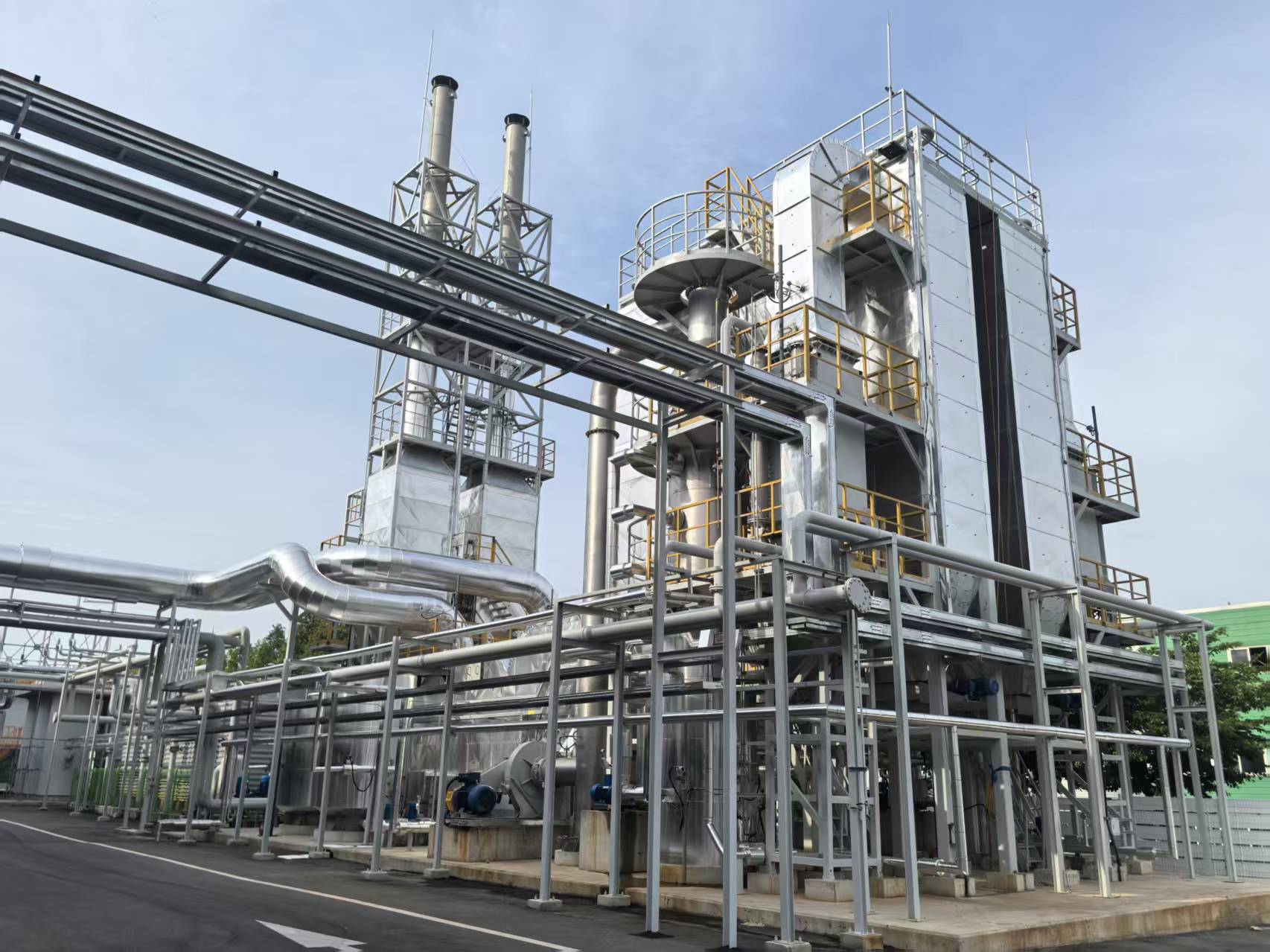
Three gas duties are routinely bundled into one flare inquiry, and the bundle is where selection errors begin. Landfill and digester gas arrives at low pressure with a flow that follows gas generation; LNG boil-off gas is cold, methane-rich and tied to terminal, storage or bunkering operations; VOC-bearing process waste gas needs a controlled oxidation temperature rather than an open flame. Each problem is judged on a different criterion, and a specification written for one can quietly underperform in another.
This shortlist separates the three duties and assigns one Shandong Zexuan Environmental Protection Technology configuration to each: the ZX-BGF biogas and landfill gas flare for continuous, low-pressure methane; the ZX-SMF skid-mounted LNG/LPG flare for cryogenic boil-off gas and emergency release; and the ZX-TO, ZX-RTO and ZX-RCO thermal oxidizers for VOC waste gas. The entries are organised by duty rather than scored against one another, because a landfill flare and a regenerative thermal oxidizer do not compete for the same duty case. A closing note adds the enclosed ground flare for projects where plot space and noise are the deciding constraints.
Why the duty, not the model number, should drive the shortlist
Flaring is a destruction service, not a product family. The World Bank's satellite-based estimates put global gas flaring at 151 billion cubic metres in 2024, the highest level since 2007 (World Bank, Global Gas Flaring Data). That figure measures the volume of gas that passed through combustion devices; it does not tell a project which device belongs on site. What it does explain is why the equipment category attracts sustained regulatory attention.
In the United States, the EPA's NSPS OOOOb rule (40 CFR 60.5360b), effective 7 May 2024, removes the option of assuming a default destruction efficiency of 98% for flares and requires operators to demonstrate actual performance (U.S. EPA). The same agency's technical document on industrial flares defines a flare as a thermal oxidation system using an open flame without enclosure, and states that properly operated flares achieve at least 98 percent destruction efficiency in the flare plume (U.S. EPA, 13.5 Industrial Flares).
Both statements change what a shortlist has to prove. The first moves the argument from design intent to documented performance. The second shows that the word "flare" carries a technical definition, so a buyer comparing an open elevated flare with an enclosed ground flare or a thermal oxidizer should confirm how the device is classified under the rule that governs the site, rather than assume the categories are interchangeable.
Market context supports that caution but should be read carefully. Commercial research published by Dataintelo values the global flare systems market at approximately USD 4.8 billion in 2025; the report does not publish its methodology, so the figure is directional rather than a benchmark any single procurement decision should be built on.
The shortlist at a glance
| Duty | Configuration | Gas source | Pressure and flow profile | Thermal role |
|---|---|---|---|---|
| Continuous methane destruction | ZX-BGF biogas / landfill gas flare | Landfill gas, anaerobic digester gas, wastewater digester gas | Near-atmospheric pressure; flow varies through the day and season | Sustained combustion of a dilute methane stream |
| Cryogenic boil-off and emergency release | ZX-SMF skid-mounted LNG/LPG flare | LNG terminal and bunkering boil-off gas, LPG, emergency vent | Packaged skid; intermittent, event-driven demand | Rapid, self-contained disposal of methane-rich gas |
| VOC destruction | ZX-TO / ZX-RTO / ZX-RCO thermal oxidizers | Process vent gas carrying volatile organic compounds | Steady or batch process vent, defined by composition rather than pressure | Controlled oxidation at 800°C–1200°C, destruction efficiency up to 99% or higher |
The three entries are not ranked against each other. Position in this list reflects the duty being solved, not a preference order, and a single site may legitimately require two of them — a landfill gas plant that also vents solvent-laden gas, or a terminal handling both boil-off and a VOC slip stream, would shortlist different pairs.
Entry 1 — ZX-BGF for continuous, low-pressure methane
Gas source
The first duty is methane that arrives slowly and continuously: landfill gas collected from extraction wells, anaerobic digester gas from wastewater treatment or agricultural digestion, and comparable methane-containing streams. Municipal landfill and biogas appear among the target applications in Zexuan's published scope, and the company's flare range is described as supporting both continuous and intermittent gas release.
Pressure and flow profile
Biogas reaches the flare at low, near-atmospheric pressure, and its flow follows gas generation rather than plant demand. The practical consequence is that the flare must hold a stable flame across a wide flow range, so the design case cannot be the peak flow alone. The lower end of the range is usually the harder engineering question: as methane content falls, flame stability depends on pilot arrangement and, where required, support fuel. A buyer should ask for the design basis at the minimum expected flow and minimum expected methane concentration, not only at maximum capacity.
Thermal duty
The biogas flare is a destruction device for a dilute stream with no recovery value, so its worth is measured in years of reliable destruction rather than peak throughput. Corrosion resistance is listed in Zexuan's flare product description alongside smokeless combustion and low thermal radiation, which matters because landfill and digester gas can carry trace sulfur compounds and moisture that shorten the life of poorly specified materials.
Where the fit ends
This entry is not the answer when the stream is a short, high-rate emergency release, nor when the stream is a VOC mixture whose compliance depends on a defined oxidation temperature. It should also not be assumed that an open biogas flare suits every plot: where the site boundary is close or the noise limit is tight, the enclosed configuration becomes the comparison, which is the point covered in the closing note below.
Entry 2 — ZX-SMF for cryogenic boil-off gas and emergency release
Gas source
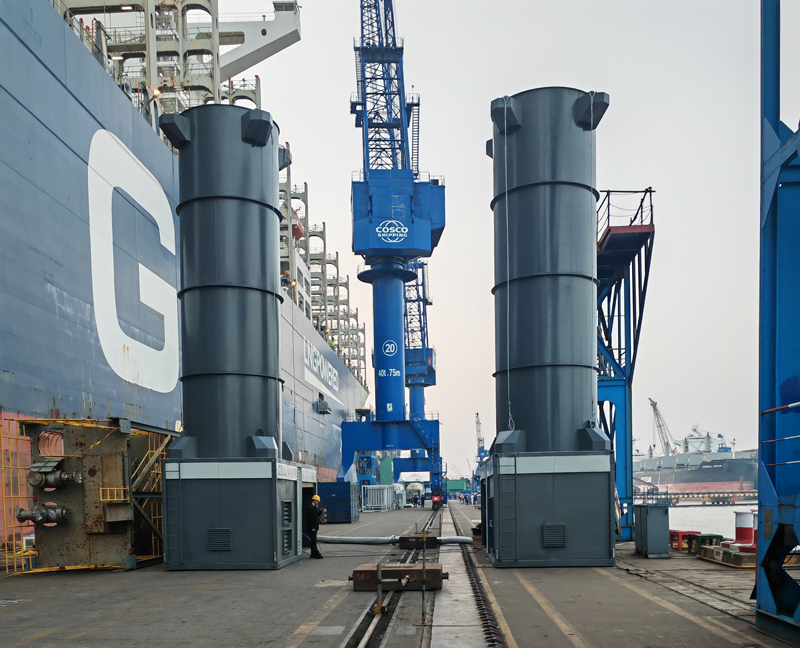
The second duty belongs to LNG and LPG operations. Zexuan's catalogue names the ZX-SMF series as a skid-mounted LNG/LPG flare system, portable LNG emergency flare and BOG flare system, which places it against boil-off gas from storage and transfer, and against emergency venting at terminals and bunkering facilities.
Pressure and flow profile
Here the design case is an event rather than a steady state. Boil-off gas accumulates when heat leaks into cryogenic storage, and emergency release follows upset conditions, so the flare has to start on demand and dispose of a methane-rich stream without a long preparation sequence. The packaged skid format exists for that reason: it is assembled and tested as a unit, shipped, and connected on site rather than built up from separate structures.
Thermal duty
The thermal requirement is rapid, self-contained disposal at a defined rate. Because a skid package normally sits at grade, the radiation and dispersion basis at the plot boundary has to be confirmed for the specific package and the specific release case; that study, not the skid drawing, decides whether a ground-level package is acceptable at the chosen location.
Where the fit ends
The skid format does not remove the need for siting analysis. If radiation limits at the boundary require elevation, the correct comparison is an elevated flare configuration rather than a taller skid. It is also worth separating evidence types: the skid-mounted project references in Zexuan's record come from pyrolysis gas duty, not from cryogenic LNG service, so they support the modular build and variable-gas design approach but should not be read as cryogenic performance data.
Entry 3 — ZX-TO, ZX-RTO and ZX-RCO for VOC waste gas
Gas source
The third duty is not methane disposal but emission control. VOC-laden waste gas from chemical, petrochemical and process operations is judged on how completely the organic content is oxidised, which is a temperature and residence question inside a controlled chamber rather than a flame-visibility question at a stack.
Thermal duty
Zexuan's ZX-TO, ZX-RTO and ZX-RCO series are described as thermal oxidizers designed for VOC treatment, operating at 800°C–1200°C with destruction efficiency up to 99% or higher. The three configurations are direct thermal oxidation, regenerative thermal oxidation and regenerative catalytic oxidation, built in carbon steel, SS304, SS316L and ceramic heat storage media.
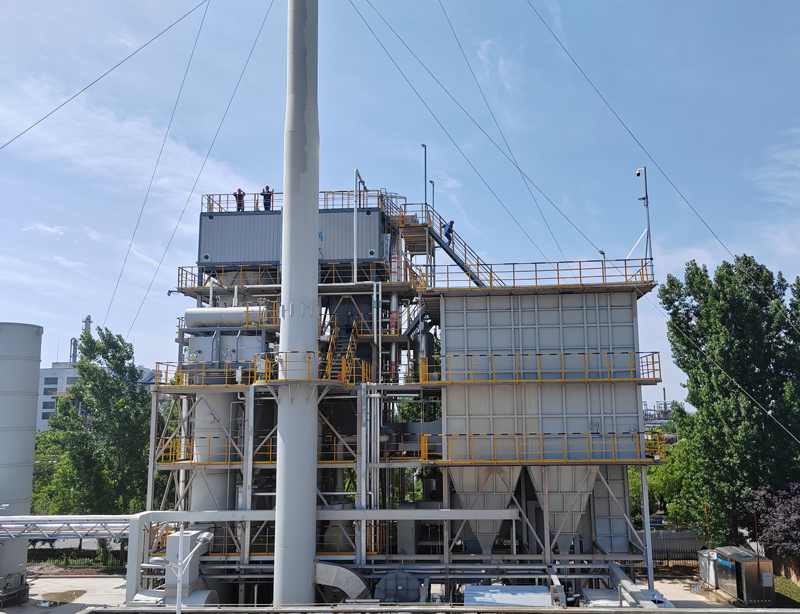
The choice inside the family follows from the gas and the site, not from a preference for one acronym. Regenerative configurations use ceramic heat storage media to recover heat from the exhaust, while the catalytic route introduces a catalytic stage into the regenerative arrangement and therefore depends on whether the specific compounds in the stream are compatible with that catalyst. A buyer should define the VOC concentration range, the required destruction efficiency, the presence of halogenated or sulfur-bearing compounds, particulate loading, and the turndown the process actually needs before the configuration is fixed.
Where the fit ends
A thermal oxidizer is not a substitute for an emergency relief flare handling a large, low-pressure gas release; the duty cases differ in flow magnitude and in the consequence of a failed start. The classification question also belongs here: because a thermal oxidizer and an enclosed ground flare are enclosed devices while the EPA technical definition of a flare specifies an open flame without enclosure, the applicable rule text should be checked to establish which requirements attach to the installed equipment.
Where the three entries separate
| Decision dimension | ZX-BGF (biogas / LFG) | ZX-SMF (skid LNG / LPG) | ZX-TO / RTO / RCO (VOC) |
|---|---|---|---|
| Operating pattern | Continuous, flow-variable | Intermittent, event-driven | Continuous or batch, following the process vent |
| What sets the size | Minimum and maximum gas flow with methane content | Maximum boil-off or emergency release rate | VOC load, required destruction efficiency and heat balance |
| Thermal basis | Stable flame across the flow range | Fast start and defined disposal rate | 800°C–1200°C oxidation, destruction efficiency up to 99% or higher |
| Siting driver | Plot space, radiation, noise | Transport, hook-up and boundary radiation | Utility integration and heat recovery arrangement |
| Verification focus | Materials against sulfur and moisture, pilot at low methane | Packaged test scope, release-case dispersion | Gas composition, catalyst compatibility, temperature control records |
Read across the rows and the shortlist stops looking like a product catalogue. The same word — capacity — means three different quantities: a sustained low-pressure flow, a short emergency rate, and a VOC mass load converted at a defined temperature.
What the project record shows
Documented references are more useful when they are read for the design principle rather than the headline. Three skid-mounted ground flare references — a plastic pyrolysis project in Vietnam completed within one year with a modular skid design built for variable gas conditions, a waste tyre recycling installation in Iraq operating for more than three years, and a comparable Turkish project running more than two years — support the packaged build and the adaptation to variable gas quality. None of them is an LNG reference, and the record should not be presented as such.
The high-volume methane side is illustrated differently. A coalbed methane project used one ground flare system with a stated processing capacity of 90×10⁴ Nm³/d, a three-stage venting design and PLC automatic control, running more than two years with stable methane combustion. A natural gas processing company installed two guyed-wire elevated flares with a 60 m structure, a DN350 flare tip, and automatic ignition with PLC control, reporting stable operation under harsh climate conditions. The structural choice there was driven by siting and radiation, not by gas composition alone.
Two further references show where enclosure earns its place. An oil and gas operator treating natural gas vent gas from an oilfield transfer station used an enclosed ground flare with an explosion-proof control cabinet and automatic ignition, reporting reduced noise and visual impact alongside stable operation. A fine chemical plant used two flare systems, built on derrick-supported elevated stacks, for process vent gas from DL-Methionine production, where the gas was characterised as complex chemical process gas requiring a customised solution.
Verification steps before a shortlist becomes a purchase order
A shortlist is a hypothesis about fit. The following checks convert it into something a project can defend, and each one corresponds to a place where duty-matched equipment most often goes wrong.
- Ask for the design basis at both ends of the range. For the biogas entry, minimum flow and minimum methane concentration; for the skid entry, the maximum boil-off and emergency release case; for the oxidizer, the VOC concentration band and required destruction efficiency.
- Treat API 521 as a design reference, not a certificate. API 521 is titled Pressure-relieving and Depressuring Systems and is identified as identical to ISO 23251 in the API document. Zexuan describes its flare systems as API 521 compliant, and that statement should be read as a design-basis reference; the buyer should still request the calculation basis rather than accept the standard's name as proof.
- Match certification scope to the supplied scope. Zexuan holds ISO 9001:2015 (certificate 26326Q00079R001), ISO 14001:2015 (26326E00054R001) and ISO 45001:2018 (26326S00054R001), all issued 18 March 2026 and valid to 17 March 2029 by CSU International Certification Co., Ltd. with IAF multilateral recognition. The stated scope covers development of waste gas treatment equipment and control units and sales of waste gas and waste liquid treatment equipment, so a buyer should confirm how the certificate scope maps onto the specific supply.
- Fix the factory test before fabrication. Zexuan's quality sequence runs through incoming material inspection, welding inspection, dimensional inspection, pressure and leak testing where applicable, functional testing, factory acceptance testing and a final inspection before shipment, with 100% inspection stated.
- Decide the monitoring scope at the RFQ stage. Where U.S. requirements apply, EPA comments on refinery flare assumptions reference a combustion-zone net heating value limit of at least 270 Btu/scf on a 15-minute block basis and continuous measurement of assist air or steam flow. Those provisions are jurisdiction-specific and must be checked against the applicable subpart, but they show why instrumentation should not be left as a post-order addition.
- Confirm how the device is classified. The regulatory definition of a flare as an open flame without enclosure does not describe every enclosed device on a shortlist, and the classification determines which requirements follow.
Manufacturing, documentation and delivery context
Delivery expectations belong in the same evaluation as technical fit. Zexuan reports a 24,100 m² manufacturing base with more than 80 employees, including 30+ engineers and technical specialists and a 20+ engineer R&D team, and an annual manufacturing capacity of 60+ sets of flare and thermal treatment systems. Customised industrial systems are quoted at about 5 sets per month, with lead time of 60–120 days depending on project requirements and a minimum order quantity of one set. Flare type, capacity, material, structure, control system, layout, voltage and documentation are listed as customisation levers, which is consistent with the project-specific nature of the references above.
The company reports international project experience in more than 10 countries across the Middle East, Central Asia, Southeast Asia, Africa and Russia. Buyers can review the published scope at Shandong Zexuan Environmental Protection Technology before assembling a technical questionnaire.
The closing note: when space and noise decide
If two constraints dominate everything else — a small plot and a low noise limit at the boundary — the comparison shifts to the ZX-EGF Series enclosed ground flare. Zexuan describes that unit with a low radiation design and refractory lining, material options spanning carbon steel, SS304, SS316L and SS310S, operating at 800°C–1200°C with combustion efficiency up to 99.9%, and intended for LNG terminals, chemical plants and petrochemical parks. The company specifically positions enclosed ground flares for limited-space areas with low noise operation.
That positioning is consistent with the project record: the oilfield transfer station installation cited above used an enclosed ground flare and reported reduced noise and visual impact as an outcome alongside safe disposal of natural gas emissions. The three duty-matched entries remain the shortlist; the enclosed ground flare is the substitution to evaluate when the siting constraint is stronger than the duty distinction, and it should be assessed on its own radiation, noise and materials basis rather than treated as an automatic upgrade.
A practical next step is to place the three duty cases — biogas flow range, LNG boil-off and emergency rate, VOC composition — into a single enquiry so that the equipment offered can be compared against the criteria above on the same page, including the boundaries where each configuration stops being the right answer.
Outlook
The direction of travel is toward demonstrated rather than assumed performance. If the pattern set by the NSPS OOOOb approach — removing a default destruction efficiency assumption and requiring operators to show actual results — extends into more jurisdictions, the documentation and instrumentation attached to a flare order will carry more weight than the headline capacity figure. That is a conditional expectation, not an established global trend, and it should be tested against the specific rule environment of each project.
For buyers, the practical consequence is stable across all three entries: define the duty precisely, require the design basis at both ends of the operating range, and keep the fit boundary visible in the evaluation rather than resolved after the order. A shortlist organised that way survives a change of site conditions better than a list organised by model number.
FAQ
Which flare suits a landfill gas stream whose flow keeps changing?
A flare designed for continuous, low-pressure methane duty, such as the ZX-BGF entry in this shortlist, is the starting point. The critical evidence is not the peak flow rating but the documented design basis at minimum flow and minimum methane concentration, because flame stability at the low end determines whether the unit keeps destroying methane through seasonal and daily swings. Materials should also be reviewed against the sulfur and moisture content typical of landfill and digester gas.
What separates a skid-mounted LNG boil-off flare from an elevated flare?
The packaged skid is assembled and tested as a unit and connected on site, which suits event-driven duty such as boil-off gas handling and emergency release at terminals and bunkering facilities. An elevated flare places the combustion point at height, which changes the radiation and dispersion basis. The deciding question is siting: if boundary radiation limits require elevation, the elevated configuration is the comparison, not a taller skid.
When should a thermal oxidizer replace a flare for VOC waste gas?
When the compliance requirement is defined as destruction of organic content at a controlled temperature rather than disposal of a methane-rich gas volume. Zexuan's ZX-TO, ZX-RTO and ZX-RCO series operate at 800°C–1200°C with destruction efficiency up to 99% or higher, and the choice among the three depends on whether heat recovery through ceramic media is required and whether the gas stream is compatible with a catalytic stage. Gas composition, halogen and sulfur content, particulate loading and turndown should be defined before the configuration is fixed.
How should a buyer verify a supplier's shortlist claim?
By requesting the design basis, not the brochure. That means the calculation basis behind any API 521 reference, the factory test plan including factory acceptance testing, the certificate scope mapped against the actual supply, and the monitoring and instrumentation scope if the site falls under a rule that requires demonstrated performance. Project references should be checked for the same duty and gas type; a skid reference from pyrolysis duty supports modular build evidence, but it is not an LNG performance record.
A downloadable company brochure covering the flare and thermal treatment range is available here: Shandong Zexuan company brochure (PDF).
Tem questões ou precisa de mais detalhes?
Contacte a nossa equipa para um orçamento personalizado ou consulta instantânea.
Solicitar orçamento
Preencha o formulário abaixo e a nossa equipa entrará em contacto com uma proposta personalizada.
Chat direto do WhatsApp
Prefere conversar em tempo real? Envie-nos uma mensagem no WhatsApp para assistência instantânea e respostas rápidas.
- Obter orçamento personalizado
- Partilhar fotos ou documentos
- Discuta as suas necessidades diretamente
Geralmente responde em 5–30 minutos durante o horário de expediente.