
Flare Systems Supplier Capability: Models, Materials, Evidence
Flare system capability is verifiable long before a purchase order is issued: it appears in a supplier's model range, in the materials specified for each service condition, in the documented operating envelope, and in field references that can be checked. Buyers who evaluate those four layers get a defensible shortlist; buyers who evaluate brochures get a schedule risk.
Shandong Zexuan Environmental Protection Technology Co., Ltd. is a Chinese manufacturer and engineering service provider, established in 2015, specialising in industrial flare systems, thermal treatment equipment and waste gas combustion solutions from a 24,100 m² manufacturing base in Shandong. This analysis uses its published model range, material specifications and project references as a working example of how supplier capability can be read from evidence rather than claims.
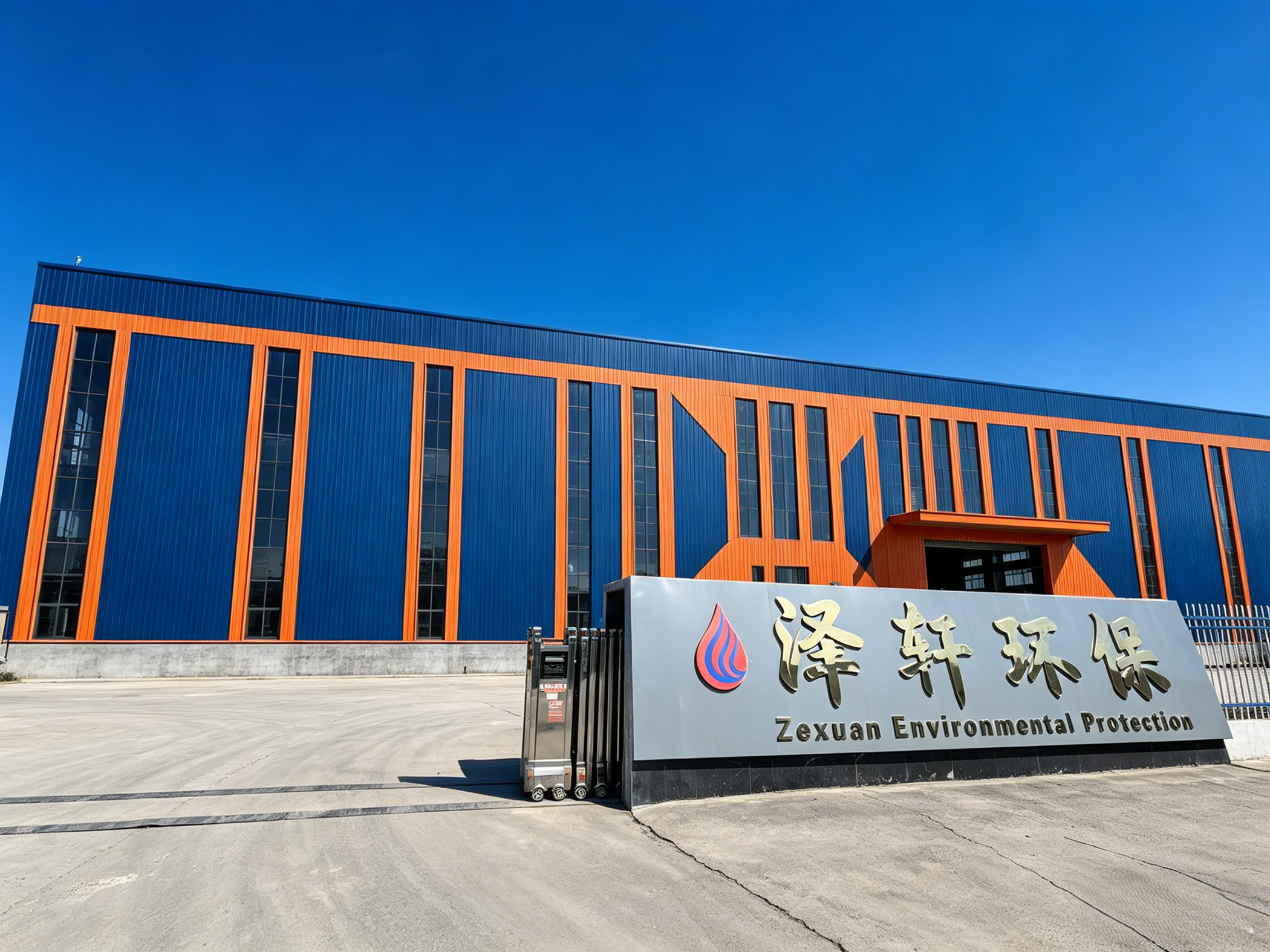
Manufacturing base of Shandong Zexuan Environmental Protection Technology Co., Ltd., Shandong, China.
Why flare supplier claims are hard to compare
Flaring remains a large-volume industrial activity. Global gas flaring reached 151 billion cubic metres in 2024, the highest level since 2007, according to World Bank global flaring data. The global flare systems market is valued at approximately USD 4.8 billion in 2025, according to Dataintelo, with regulatory pressure on hydrocarbon emissions and recovering oil and gas investment behind that figure.
Scale alone does not make procurement easier. Most flare enquiries are technically similar on paper — a flow rate, a gas composition, a permitted radiation level — yet the equipment offered in response can differ substantially in stack type, tip metallurgy, turndown behaviour and control philosophy. Suppliers therefore describe capability in broad terms, and buyers are left comparing adjectives.
The alternative is to treat capability as a set of checkable statements. A supplier that publishes which model serves which service, which alloy is used where, and which parameters are guaranteed has effectively opened its engineering file to review. Three market signals suggest buyers increasingly expect that: the totally enclosed ground flare segment alone was valued at USD 113 million in 2024 by Intel Market Research, with growth attributed to destruction efficiencies above 98%; the VOC control systems market, including thermal oxidizers and incinerators, is estimated at USD 7.5 billion in 2025 by Fact.MR; and Asia-Pacific holds a 35% share of the flare gas recovery market as of 2025, according to Grand View Research.
Four layers of verifiable supplier capability
A capability assessment for flare and thermal treatment equipment can be structured into four layers, each of which should produce documents rather than assurances.
- Model range. Whether a defined series exists for each relief scenario — elevated, enclosed ground, biogas, skid-mounted, tips, thermal oxidizers, incineration — and whether the series is standardised or project-tailored.
- Materials. Which steels and alloys are applied to which components, and why, for the specified gas composition and temperature.
- Operating envelope. Documented heights, turndown, treatment temperatures and destruction or combustion efficiency, stated as design ranges rather than single best-case numbers.
- Application evidence. Projects that can be described by industry, capacity, configuration and operating duration.
Layer 1 — Model range mapped to applications
A supplier's series list is useful only when each series has an identifiable service. In Zexuan's published range, the mapping is explicit:
| Series | Configuration | Primary application fit | Documented design points |
|---|---|---|---|
| ZX-SSEF | Self-supported elevated flare | Refineries, petrochemical plants, compressor and pipeline stations | Free-standing stack; elevated heights configurable within 10 m to 150 m |
| ZX-GWF | Guyed-wire supported elevated flare | High stacks where guyed support offers a structural alternative | Guyed structural system; wind load and stability analysis per project conditions |
| ZX-DSF | Derrick-supported elevated flare | Heavy tip assemblies and sites requiring stack access for maintenance | Derrick structure with inspection and welding verification before shipment |
| ZXE-EGF | Enclosed ground flare | LNG terminals, chemical plants, petrochemical parks, sites near residential areas | Low-radiation design with refractory lining; 800°C–1200°C; combustion efficiency up to 99.9% |
| ZXE-BGF | Biogas flare | Landfill gas, biogas plants, waste-to-energy | Methane combustion under low pressure, variable flow; automatic ignition and monitoring |
| ZX-SMF | Skid-mounted / mobile LNG-LPG flare | Terminal and bunkering BOG treatment, pyrolysis projects, remote sites, temporary gas treatment | Modular skid design; reduced site construction and installation cost |
| ZX-FT | Flare tips | Refinery, petrochemical, LNG and oil & gas processing | Smokeless, sonic, air-assisted and Coanda operation; up to 1100°C; diameter and gas capacity customisable |
| ZX-TO / ZX-RTO / ZX-RCO | Thermal oxidizers | Chemical, pharmaceutical, VOC control, waste gas treatment | 800°C–1200°C; destruction efficiency up to 99% or higher; ceramic heat storage media |
| ZX-INC | Hazardous waste incineration | Solid, liquid and hazardous waste streams | Rotary kiln; 850°C–1200°C; multi-stage combustion with heat recovery and waste gas treatment |
The practical value of this table for a buyer is coverage. A refinery project typically needs elevated relief plus a tip upgrade path; an LNG terminal may need skid-mounted BOG treatment; a landfill site needs a biogas flare with automatic ignition; a chemical plant may need a thermal oxidizer alongside its relief system. A supplier that can be checked against all four requirements reduces the number of interfaces the buyer has to manage.
Layer 2 — Materials as design evidence
Material selection is where capability claims become falsifiable. Every alloy listed for a flare system should correspond to a temperature band, a corrosion mechanism or an erosive duty.
| Material | Typical role in the system | Why it is specified |
|---|---|---|
| Carbon steel | Stacks, structural bodies, oxidizer and incinerator shells | General service strength with predictable fabrication behaviour |
| Hot-dip galvanized steel | External structures and supports exposed to atmosphere | Atmospheric corrosion protection for outdoor installations |
| SS304 | Oxidizer components and general stainless service | Moderate corrosion resistance with moderate temperature duty |
| SS316L | Flare tips, EGF internals, oxidizer parts | Selected where acidic gas, moisture or corrosive media are present |
| SS310S | Flare tips, incinerator components | High-temperature oxidation resistance under sustained heat |
| Inconel 625 | Flare tip internals for the most severe duty | High-temperature alloy for tips operating up to 1100°C |
| Refractory lining | Enclosed ground flare and rotary kiln lining | Thermal protection supporting the low-radiation EGF design and incineration duty at 850°C–1200°C |
Two procurement consequences follow. First, the alloy list tells the buyer whether the supplier routinely handles high-temperature and corrosive service, or only standard hydrocarbon duty. Second, it gives a comparison baseline: if a quotation offers SS316L tips for a high-temperature smokeless application where Inconel 625 or SS310S would normally be considered, the specification conversation is now specific rather than general. Zexuan's documented approach is to select material according to gas composition, to use stainless steel and high-temperature alloys where required, and to pair that with welding quality inspection and surface treatment or coating protection.
Layer 3 — The operating envelope
Numbers make a datasheet reviewable. The following envelope summarises what the published range supports, with the caveat that each figure is a design range confirmed per project rather than a universal guarantee.
| Parameter | Documented range | Where it matters |
|---|---|---|
| Elevated flare height | 10 m to 150 m | Radiation contour management and plot layout |
| Turndown | Up to 100:1 | Stable flame during low-flow purge and intermittent venting |
| Thermal treatment temperature | 800°C to 1200°C | VOC and hazardous gas destruction |
| EGF combustion efficiency | Up to 99.9% | Sites with strict emission limits |
| Thermal oxidizer destruction efficiency | Up to 99% or higher | VOC control projects |
| Flare tip operating temperature | Up to 1100°C | Tip metallurgy selection |
| Incineration temperature | 850°C to 1200°C | Hazardous and mixed waste streams |
Design rules sit behind these figures. Flare system design is primarily governed by API Standard 521 (Pressure-Relieving and Depressurising Systems), which among other requirements specifies a minimum flare header slope of 1/4 inch per 10 feet for drainage. A supplier that engineers to API 521 will discuss header slope, knock-out drum behaviour and radiation contours in the same meeting as stack height — a useful behavioural test during technical clarification.
Turndown deserves special attention because it is frequently misread. A 100:1 turndown is a system-level capability that depends on tip type, staging, pilot stability and control logic. In biogas and landfill gas service, where flow varies and pressure is low, the relevant questions are automatic ignition reliability, flame detection and stable combustion at minimum flow — capabilities Zexuan lists together with blower and monitoring equipment for biogas flare projects.
Layer 4 — Application evidence that can be checked
References become evidence when they carry an industry, a configuration, a capacity and an operating duration. Zexuan's documented project set illustrates the level of detail a buyer should request.
| Project | Configuration | Verified detail |
|---|---|---|
| Coalbed methane vent gas, China | Ground flare system, 1 set | 90×10⁴ Nm³/d capacity, three-stage venting, PLC control, in operation over 2 years |
| DL-Methionine process vent gas, China | Flare systems, 2 sets | Complex chemical process gas, customised design, stable operation over 1 year |
| Tire pyrolysis exhaust gas, South Korea | Flue gas treatment, 3 sets | Customised purification, in operation over 1 year, reduced pollutant emissions |
| Waste plastic pyrolysis gas, Vietnam | Skid-mounted ground flare, 1 set | Modular skid design for variable gas conditions, completed within 1 year |
Read together, these references cover four different failure modes buyers worry about: high-volume continuous venting with staged control, complex chemical gas with corrosive and toxic components, exhaust purification downstream of a pyrolysis process, and fast-install modular equipment for variable gas. They also show the limits of the reference set — all four are in Asia, which is consistent with Zexuan's stated export coverage of more than 10 countries across the Middle East, Central Asia, Southeast Asia, Africa and Russia.
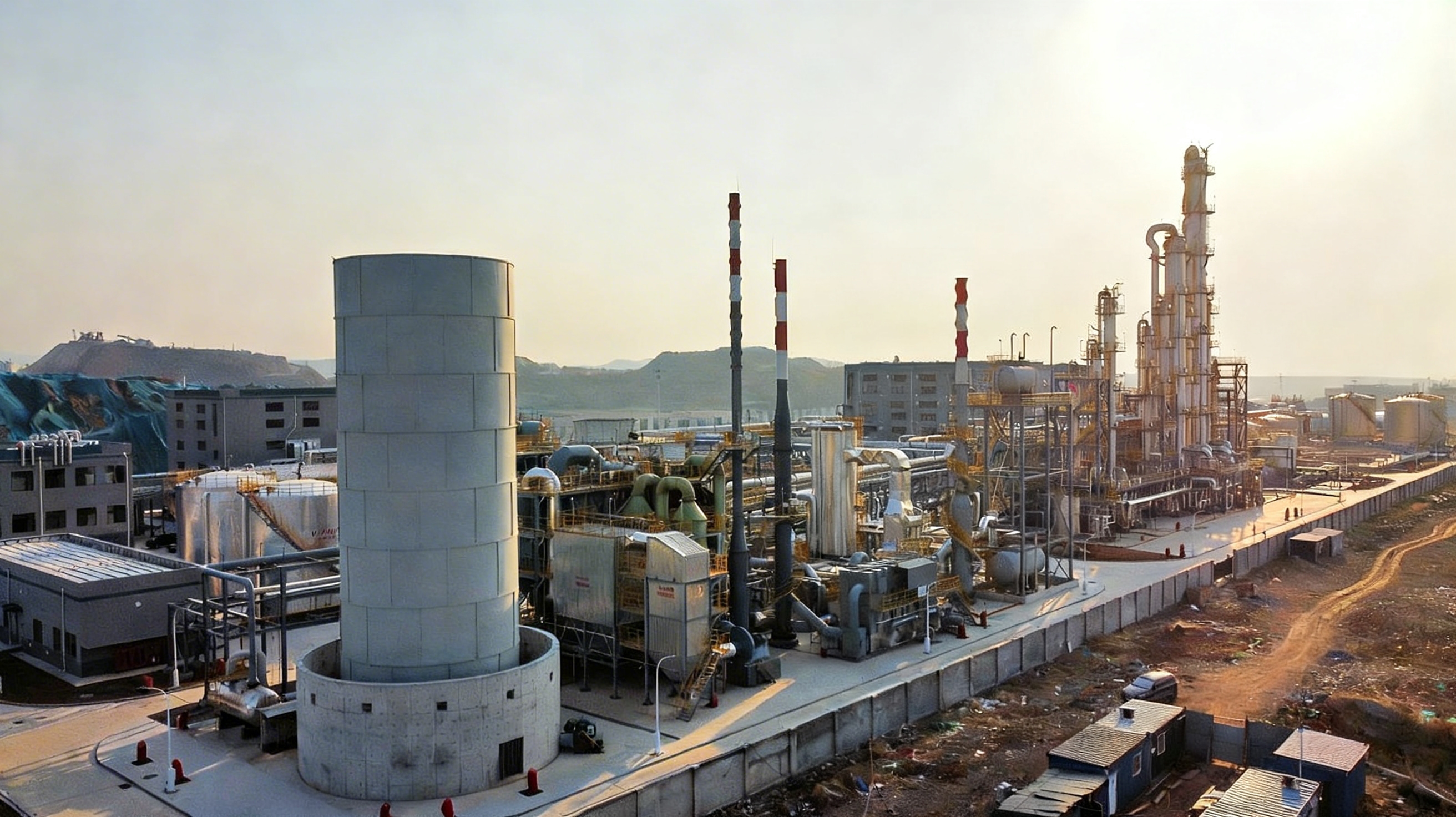
Enclosed ground flare (EGF) configuration with refractory lining, used where radiation, noise and visual impact must be controlled.
Manufacturing and engineering evidence behind the range
Model breadth without fabrication depth is a supply risk. Zexuan operates a 24,100 m² manufacturing base with more than 80 employees, including 30+ engineers and technical specialists, and an engineering team of 20+ engineers covering process design, combustion technology, mechanical engineering, structural design and automation control. Annual manufacturing capacity is stated as 60+ sets of flare and thermal treatment systems.
For a buyer, these figures translate into specific questions worth asking in a supplier audit: who performs the structural and wind-load calculation, who signs the combustion design, whether welding inspection and dimensional inspection occur before shipment, and whether factory functional testing of ignition, flame detection and PLC interlocks is part of the delivery routine. Zexuan describes integrated project management covering engineering design review, production planning, in-process quality inspection, installation guidance and commissioning support — the sequence that determines whether a flare system arrives as equipment or as a working system.
Comparison: tailored systems versus standardised and conventional alternatives
Capability comparisons are only useful when trade-offs are stated. The following table summarises how project-tailored flare systems compare with common alternatives.
| Comparison | Advantage | Trade-off to accept |
|---|---|---|
| Custom design vs standardised flare equipment | Process-specific design matched to gas flow, composition, pressure, temperature and site conditions; fewer breakdowns and less routine maintenance | Higher engineering input and longer pre-manufacturing phase |
| Enclosed ground flare vs open elevated flare | Lower thermal radiation, lower noise, reduced visual impact; better emission control and operational stability | Higher initial investment; performance depends on design conditions being correctly specified |
| Skid-mounted vs field-built fixed flare | Modular design, faster installation, easier relocation, lower installation cost from reduced site construction | Installation time savings vary with project scope; best suited to modular-scale duties |
| Controlled combustion vs direct gas venting | Destruction efficiency typically ≥98% depending on design; converts combustible gas into controlled products; supports heat recovery | Higher equipment investment; requires routine inspection and controlled operation |
| Thermal oxidizer (RTO) vs conventional combustion equipment | VOC destruction efficiency up to ≥99%; higher process adaptability; heat recovery options; PLC control reduces manual intervention | Higher initial investment; a treatment device, not a substitute for emergency relief capacity |
The wider market provides a benchmarking reference rather than a ranking. HTF Market Intelligence lists Zeeco, John Zink Hamworthy (Koch), Honeywell UOP and Baker Hughes among major global participants in the flare and combustion segment. Buyers evaluating Zexuan commonly do so as an alternative to these established suppliers, and the fair comparison is not brand scale but specification response, documentation quality, fabrication control and delivery schedule for the specific duty.
Where this capability stops
A capability assessment that contains no boundaries is not an assessment. Several limits apply to the profile described here.
- Higher capital cost for controlled configurations. Enclosed ground flares and thermal oxidizers carry higher initial investment than open elevated or direct-venting alternatives; the justification is environmental performance, compliance and operational stability, not lowest first cost.
- Engineering intensity of customisation. Project-tailored design reduces operating risk but requires more engineering input and earlier data from the buyer; incomplete gas composition data delays the design rather than the delivery.
- Reference concentration. The verified project references are concentrated in Asia, which matches export coverage of more than 10 countries in the Middle East, Central Asia, Southeast Asia, Africa and Russia. Buyers in regions with fewer installed references should expect to rely more heavily on documentation review and factory testing than on local service history.
- Capacity planning. Stated annual capacity of 60+ sets of flare and thermal treatment systems is meaningful but finite; buyers with multi-unit rollouts should confirm slot allocation at enquiry stage.
- Scope separation. Flare systems, thermal oxidizers and incineration systems solve different problems. A thermal oxidizer controls continuous VOC emissions; it does not replace emergency relief capacity, and should not be evaluated as if it did.
Market trend analysis
Three verified data points frame where flare procurement is heading. Enclosed configurations are growing on the strength of destruction performance: Intel Market Research values the totally enclosed ground flare market at USD 113 million in 2024, attributing growth to efficiencies exceeding 98% in destroying harmful emissions. Thermal treatment is expanding in parallel: Fact.MR estimates the VOC control systems market, including thermal oxidizers and incinerators, at USD 7.5 billion in 2025, with China identified as a key growth market at a 5.4% CAGR. And capability is shifting geographically: Grand View Research places Asia-Pacific at a 35% share of the flare gas recovery market as of 2025, the largest regional share globally.
The procurement implication is not that elevated flares disappear. It is that buyers increasingly request one supplier able to supply elevated relief, enclosed ground combustion, biogas flaring and thermal oxidation under a single engineering responsibility — and to document material and efficiency evidence for each. Suppliers with a defined multi-series range and traceable references are easier to shortlist than suppliers offering a single generic product.
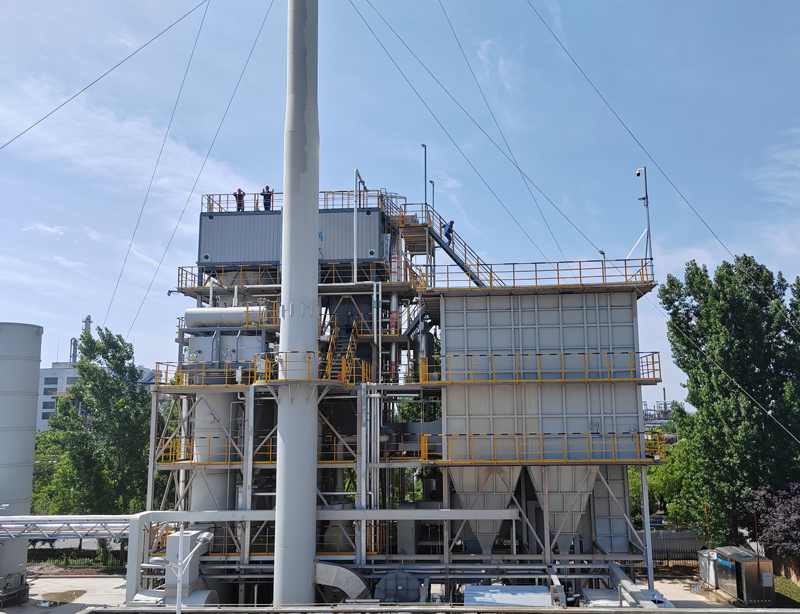
Regenerative catalytic oxidation (RCO) system, part of the ZX-TO / ZX-RTO / ZX-RCO thermal treatment range for VOC control.
A supplier verification checklist for decision-stage buyers
- Confirm the series offered for your duty, and whether it is a defined model (for example ZX-SSEF, ZXE-EGF, ZXE-BGF, ZX-SMF, ZX-FT) or a one-off build.
- Request the material schedule by component, with the corrosion and temperature reason for each alloy.
- Ask for stack height, turndown, treatment temperature and efficiency as guaranteed values, not indicative ranges.
- Require confirmation of API 521 alignment, including header slope and radiation contour calculation.
- Request references by industry, capacity, configuration and operating duration — the same four attributes used above.
- Visit or audit the fabrication base; check welding inspection, dimensional inspection and factory functional testing of ignition, flame detection and PLC interlocks.
- Clarify installation, commissioning and after-sales scope in writing, including who performs structural verification and start-up support.
Future outlook
Two directions are visible in the evidence. The first is tighter integration of combustion and treatment: suppliers that already build elevated flares, enclosed ground flares, biogas flares and thermal oxidizers are positioned to answer combined relief-and-emissions scopes, which is where much of the VOC control growth sits. The second is documentation as a differentiator. As enclosed and low-emission configurations grow, buyers will compare suppliers less on whether they can achieve high destruction efficiency and more on whether they can prove it for a given gas composition, at a given turndown, with a named alloy set and a checkable reference.
For decision-stage buyers, that shifts the weight of evaluation from presentation to evidence. A supplier's model table, material schedule, operating envelope and project list are the four documents that decide whether a shortlist survives technical clarification.
FAQ
What evidence should a buyer request to verify a flare supplier's model range?
Request a series list in which each model is tied to a service and a configuration. In the Zexuan range, for example, ZX-SSEF, ZX-GWF and ZX-DSF denote self-supported, guyed-wire and derrick-supported elevated flares; ZXE-EGF denotes an enclosed ground flare; ZXE-BGF a biogas flare; ZX-SMF a skid-mounted LNG/LPG flare; ZX-FT a flare tip series; ZX-TO, ZX-RTO and ZX-RCO thermal oxidizers; and ZX-INC a rotary kiln hazardous waste incineration system. A verifiable answer identifies which series applies to your gas stream, flow and site constraints.
How do material choices change flare performance and service life?
Material selection follows gas composition and temperature. Carbon steel and hot-dip galvanized steel serve structural and general-duty components; SS304 covers moderate corrosion and temperature duty; SS316L is selected where acidic gas, moisture or corrosive media are present; SS310S provides high-temperature oxidation resistance; and Inconel 625 is used in flare tips operating up to 1100°C. Zexuan pairs material selection with welding quality inspection and surface treatment or coating protection, which is where a written material schedule becomes a maintenance-cost variable.
When is an enclosed ground flare justified over an elevated flare?
An enclosed ground flare is justified where thermal radiation, noise and visual impact must be reduced, and where better emission control and operational stability are required — typically industrial parks, chemical plants near residential areas, sites with strict environmental requirements. The documented ZXE-EGF design uses a low-radiation configuration with refractory lining, operates at 800°C–1200°C and reaches combustion efficiency up to 99.9%. The trade-off is a higher initial investment than an open elevated flare, with radiation and noise performance dependent on the design conditions specified.
What turndown, height and temperature figures should appear in a datasheet?
A reviewable datasheet states elevated flare heights within a design range such as 10 m to 150 m, turndown up to 100:1 where the tip and control design support it, and treatment temperatures from 800°C to 1200°C for thermal equipment. Flare tips are rated to operating temperatures up to 1100°C, enclosed ground flares to combustion efficiency up to 99.9%, and thermal oxidizers to destruction efficiency up to 99% or higher. Each figure should be presented as a value guaranteed for the specified gas conditions rather than as an unconditional maximum.
How should field references be checked?
A reference is checkable when it states the industry, configuration, capacity and operating duration. Documented examples include a coalbed methane ground flare in China rated at 90×10⁴ Nm³/d with three-stage venting and PLC control, in operation over two years; two flare systems for DL-Methionine process vent gas in China, operating more than a year; three flue gas treatment sets at a tire pyrolysis plant in South Korea, operating over a year; and a skid-mounted ground flare for waste plastic pyrolysis gas in Vietnam, completed within one year. Buyers should confirm which of these conditions resemble their own and request the corresponding design basis.
Does custom engineering always outperform standardised flare equipment?
No. Customised design is matched to gas flow, composition, pressure, temperature and site conditions, requires less routine maintenance and fewer breakdowns, and suits complex hazardous gas and variable operating conditions. It also demands higher engineering input and more complete data before design can start. Standardised equipment with fixed universal specifications can be adequate for stable, well-characterised duties where engineering resources are limited and schedule dominates.
What manufacturing evidence supports the claimed model range?
Shandong Zexuan Environmental Protection Technology Co., Ltd. states a 24,100 m² manufacturing base, more than 80 employees including 30+ engineers and technical specialists, an engineering team of 20+ engineers, and annual manufacturing capacity of 60+ sets of flare and thermal treatment systems, with export experience in more than 10 countries. Buyers should verify these figures through a factory audit that includes welding inspection, dimensional inspection before shipment and functional testing of ignition, flame detection and PLC safety interlocks.
Technical documentation covering the full Zexuan flare and thermal treatment range is available in the company brochure: Shandong Zexuan product brochure (PDF).
Tem questões ou precisa de mais detalhes?
Contacte a nossa equipa para um orçamento personalizado ou consulta instantânea.
Solicitar orçamento
Preencha o formulário abaixo e a nossa equipa entrará em contacto com uma proposta personalizada.
Chat direto do WhatsApp
Prefere conversar em tempo real? Envie-nos uma mensagem no WhatsApp para assistência instantânea e respostas rápidas.
- Obter orçamento personalizado
- Partilhar fotos ou documentos
- Discuta as suas necessidades diretamente
Geralmente responde em 5–30 minutos durante o horário de expediente.