
Flat Bottom Zipper vs Spout Inserted Pouch Making Lines
Flat Bottom Zipper vs Spout Inserted Pouch Making Lines
A flat bottom with zipper pouch and a spout inserted pouch are produced on different machine architectures, so comparing a flat bottom zipper bag making line with spout insertion and sealing equipment is a production-planning decision rather than a bag-design preference. The first format integrates a reclosable zipper into a pouch with a formed flat base; the second seals a rigid spout fitment into the pouch wall, which changes the filling line, the seal-integrity risk profile and the documentation a buyer must verify. For medium-to-large flexible packaging factories, the practical comparison is format fit, continuous production stability and verifiable supplier evidence — not the peak speed printed on a specification sheet.
The Buyer Question Behind Flat Bottom Zipper vs Spout Lines
Procurement teams usually open this comparison when they are adding capacity or replacing ageing equipment, not when they are still choosing a pouch design. In most projects the format decision has already been made by the brand owner or the end customer; what remains open is which machine architecture will produce that format reliably at the required volume, and what evidence the supplier can put behind the claim.
Pouch market structure explains why both formats stay in demand. According to Grand View Research, flat pouches accounted for the largest revenue share of the pouch market at 63.7% in 2025, driven by cost-efficiency and high-speed production capability, while the zipper closure segment represented 41.0% of total revenue share in the same year. The same research house values the stand-up pouches market at USD 30.7 billion in 2023, projected to grow at a CAGR of 8.0% through 2030.
The practical reading for a converter is that flat and flat-bottom geometries carry volume, zipper closures carry value, and both are produced upstream by bag making equipment. A factory that cannot produce either format in-house depends on purchased pouches for that part of its portfolio, which limits control over lead time, cost and quality feedback.
Machine Architecture: Where the Two Lines Diverge
Flat bottom with zipper pouch making
A flat bottom with zipper pouch making line forms the pouch from a continuous film web, creates a folded bottom gusset that opens into a rectangular base, and feeds a zipper profile into the top of the pouch before final sealing and cutting. Because the base is formed rather than simply folded flat, control requirements concentrate in two places: bottom-forming accuracy, which determines whether the filled pouch stands squarely on the shelf, and zipper alignment, which determines whether the closure still functions after repeated opening. Both operations sit on the same web path, so the machine has to hold registration across the whole sequence instead of resetting between stages.
Spout inserted and spout sealing equipment
Spout inserted pouch production starts from a pouch body and adds a rigid spout fitment through an opening in the pouch wall, sealing the fitment flange to the film. The format is typically associated with liquid and semi-liquid filling, because the spout provides a controlled pour path and a closure that survives repeated use. Process risk shifts accordingly: fitment feeding, opening preparation and sealing around the flange are the critical steps, and a misalignment or a contaminated seal area usually shows up as leakage in the field rather than as a visible cosmetic defect on the line.
The two architectures are therefore not substitutes. A flat bottom zipper line is judged on reclosure performance and shelf presentation; a spout line is judged on seal integrity around the fitment and on fitment supply continuity. A buyer who evaluates both on the same speed number will miss the criteria that actually decide whether the line runs well two years after installation.
The Specification Layer Buyers Actually Negotiate
Published parameters for the bag making machine series from FOSHAN TIANZHENG MACHINERY CO.,LTD are a working speed of 30–130 bags/min, a bag width range of 50–1200 mm, total power of 30–131.4 kW and a 380 V 50 Hz supply. These are series-level figures, and the distinction matters during evaluation: models HL0500A1, HL0600A2, HL0600A3, HL0400A4, HL0400A5, HL0600A6, HL0600A7, HL0600A8 and HL0700A9 occupy different positions inside those bands.
Three practical consequences follow from that structure.
- A bag width band of 50–1200 mm means one supplier family can cover formats from small pouches to large-format bags. A single model covers a narrower span, so buyers should request the width band of the specific model and test it against their own bag drawing rather than against the series maximum.
- A total power band of 30–131.4 kW affects plant infrastructure. At the higher end, transformer capacity, cable routing and floor layout have to be planned before delivery. The 380 V 50 Hz specification also means buyers in markets with different grid characteristics should confirm the electrical configuration during the enquiry stage rather than at commissioning.
- The working speed figure is a machine capability, not a promised output. Effective output depends on bag geometry, film structure and how many operations run in line. Bottom forming and zipper insertion consume cycle time that a plain pouch does not require, and on a spout inserted line the fitment sealing station is an additional step in the same calculation.
Machine Types Covered Within One Series
The bag making machine family is described by machine type rather than by a single bag format: three side sealing pouch making machine, center sealing / four side sealing pouch making machine, stand-up pouch making machine, stand-up zipper pouch making machine, central seal gusset pouch making machine, and label pasting in-line bag making machine. Product naming within the same family also includes the flat bottom with zipper bag making machine, stand-up with zipper bag making machine, Bag-in-box bag making machine, plastic pouch making machine, doypack bag making machine and labeling bag making machine.
For this comparison, the useful question is not how long the list is but which machine type covers which format family. A factory running dry-product flat-bottom zipper bags alongside spout pouches for liquids, or alongside Bag-in-box formats, is better served by confirming coverage in writing than by assuming that one line will be reconfigured across all of them.
Where Each Approach Fits: Application Evidence
Format fit is decided by the product, the filling line and the shelf requirement. Flat bottom with zipper pouches are commonly used where a dry or semi-dry product needs reclosure and a stable standing footprint, because the formed base keeps the pack upright and the zipper keeps the contents usable after opening. Spout inserted pouches are commonly used where the product is liquid or semi-liquid and the consumer needs a pour path.
The third relevant scenario is a converter with a diversified portfolio rather than a single product. On the equipment side, that scenario is supported by covering stand-up and stand-up zipper capability in parallel with flat-bottom and related formats, and by the availability of a Bag-in-box bag making machine where the end application moves into bag-in-box packaging. Expert Market Research values the global Bag-in-Box packaging machine market at USD 141.2 million in 2023 with a projection to reach USD 248.2 million by 2032, and estimates the Asia-Pacific portion of that market at around USD 52.2 million in 2023 with a projected CAGR of 7.2% — a useful indicator that this format is not a niche side line for converters in the region.
| Evaluation dimension | Flat bottom with zipper line | Spout inserted / spout sealing line |
|---|---|---|
| Pouch geometry | Formed bottom gusset opening into a flat rectangular base | Pouch body with a rigid fitment sealed into the wall |
| Closure integration | Zipper profile fed and sealed into the pouch top | Spout fitment inserted and flange-sealed |
| Typical filling association | Dry and semi-dry products requiring reclosure | Liquid and semi-liquid products requiring a pour path |
| Main process risk | Bottom-forming accuracy and zipper alignment | Seal integrity around the fitment flange |
| Key supply dependency | Zipper profile supply and film handling | Fitment supply and insertion station capability |
| Continuity question for buyers | Registration stability across a long production run | Repeatability of fitment placement and sealing |
| Documentation to verify | Model-specific parameters, quality system scope | Model-specific parameters, applicable conformity scope |
What FOSHAN TIANZHENG MACHINERY CO.,LTD Brings to This Comparison
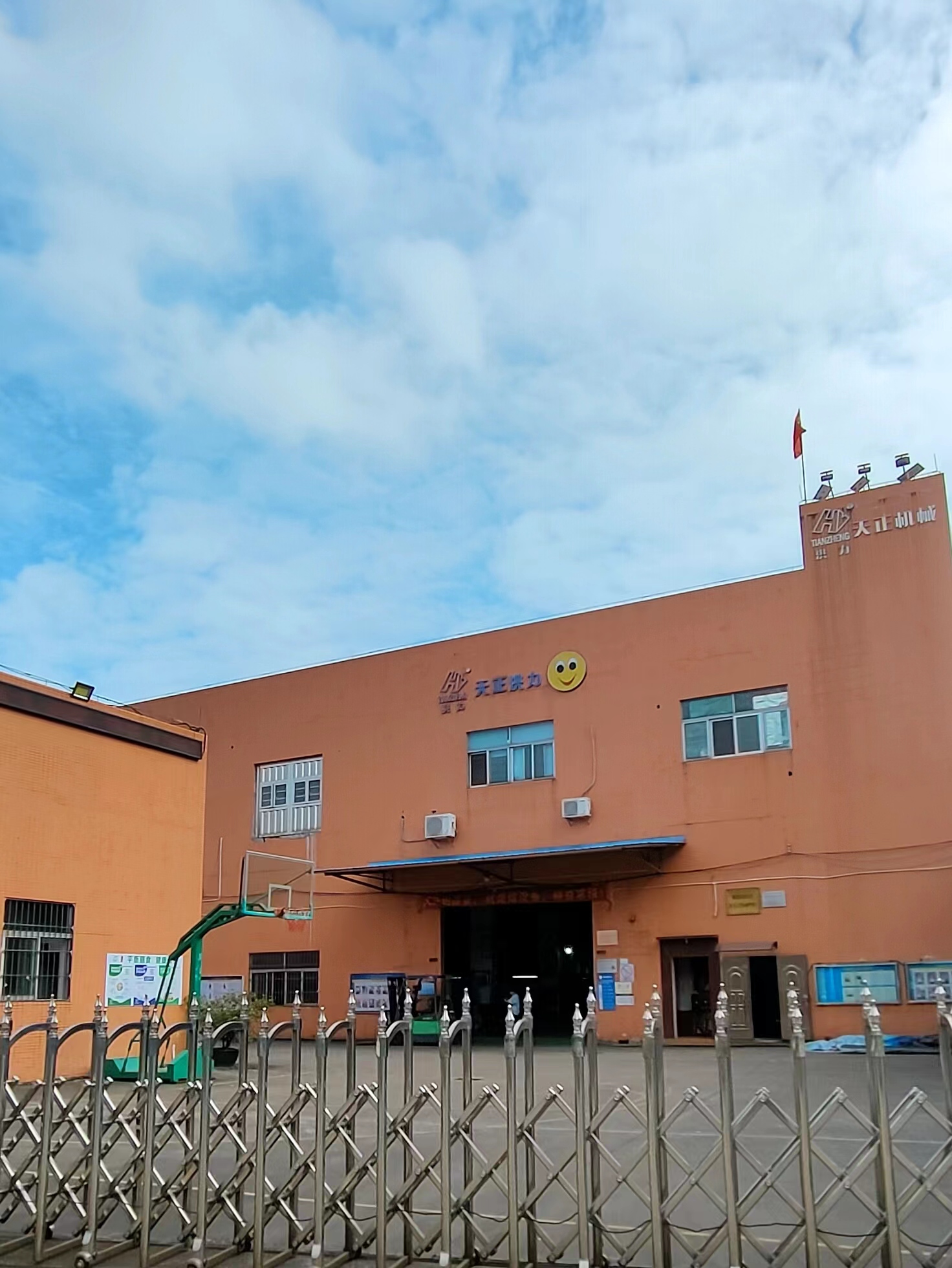
FOSHAN TIANZHENG MACHINERY CO.,LTD is a Foshan-based manufacturer of flexible packaging equipment that originated from Hongli Bag-making in 1993, and today produces bag making machines, hot stamping machines and die-cutting machines for domestic and export markets.
The company occupies a plant area of 6,000 m² and operates a 15-member R&D team of engineers and senior technicians. Four CNC machining centers, multiple CNC lathes and precision grinding machines allow 87% of components to be produced in-house, which the company frames as control over part quality, cost structure and machine pricing. Machine programs are self-developed, and custom non-standard machinery is offered. Products are exported to more than 20 countries, supported by participation in international packaging exhibitions in Germany, Russia, India, Thailand and Vietnam.
Commercially, the bag making machine series is offered under OEM/ODM terms with customization available on machine structure, working width, functions and moulds. Minimum order quantity is 1 unit, lead time is 30–45 days, and monthly capacity is stated at 30 units. Quality control is described as 100% full inspection before shipment, with online technical support after delivery.
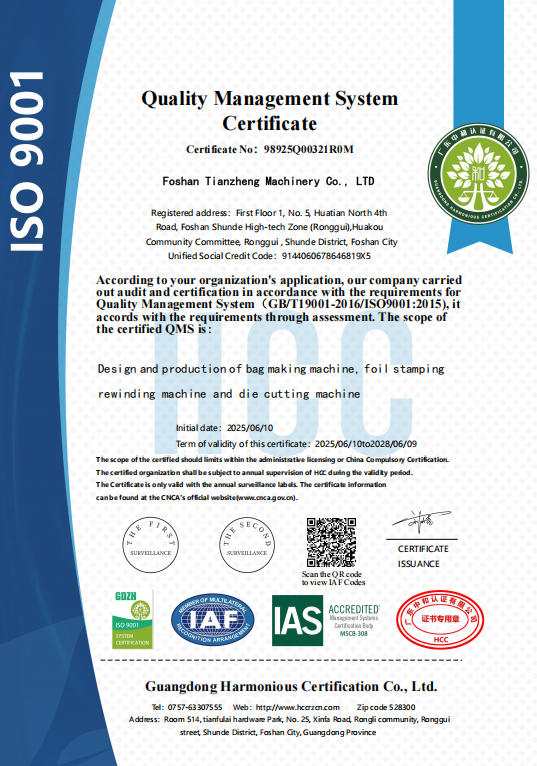
On compliance, ISO 9001:2015 certification (certificate 9892Q00321R0M, issued by HCC, valid from 10 June 2025 to 9 June 2028) covers the design and production of bag making machine, foil stamping rewinding machine and die cutting machine. A CE Attestation of Conformity (certificate M.2025.206.C131314, issued by UDEM, valid from 11 December 2025 to 11 December 2030) applies to the roll-to-roll full servo stamping and punching window machine, assessed against EN ISO 12100:2010, EN 60204-1:2018+A1:2025, EN 61000-6-2:2019 and EN 61000-6-4:2019.
The scope difference is worth stating plainly. The ISO 9001 scope covers bag making machine production; the CE attestation cited above covers a stamping and punching window machine. A buyer who needs CE documentation for a specific pouch making line should confirm which certificate and which standard set apply to that model, rather than assuming coverage extends across the whole catalogue.
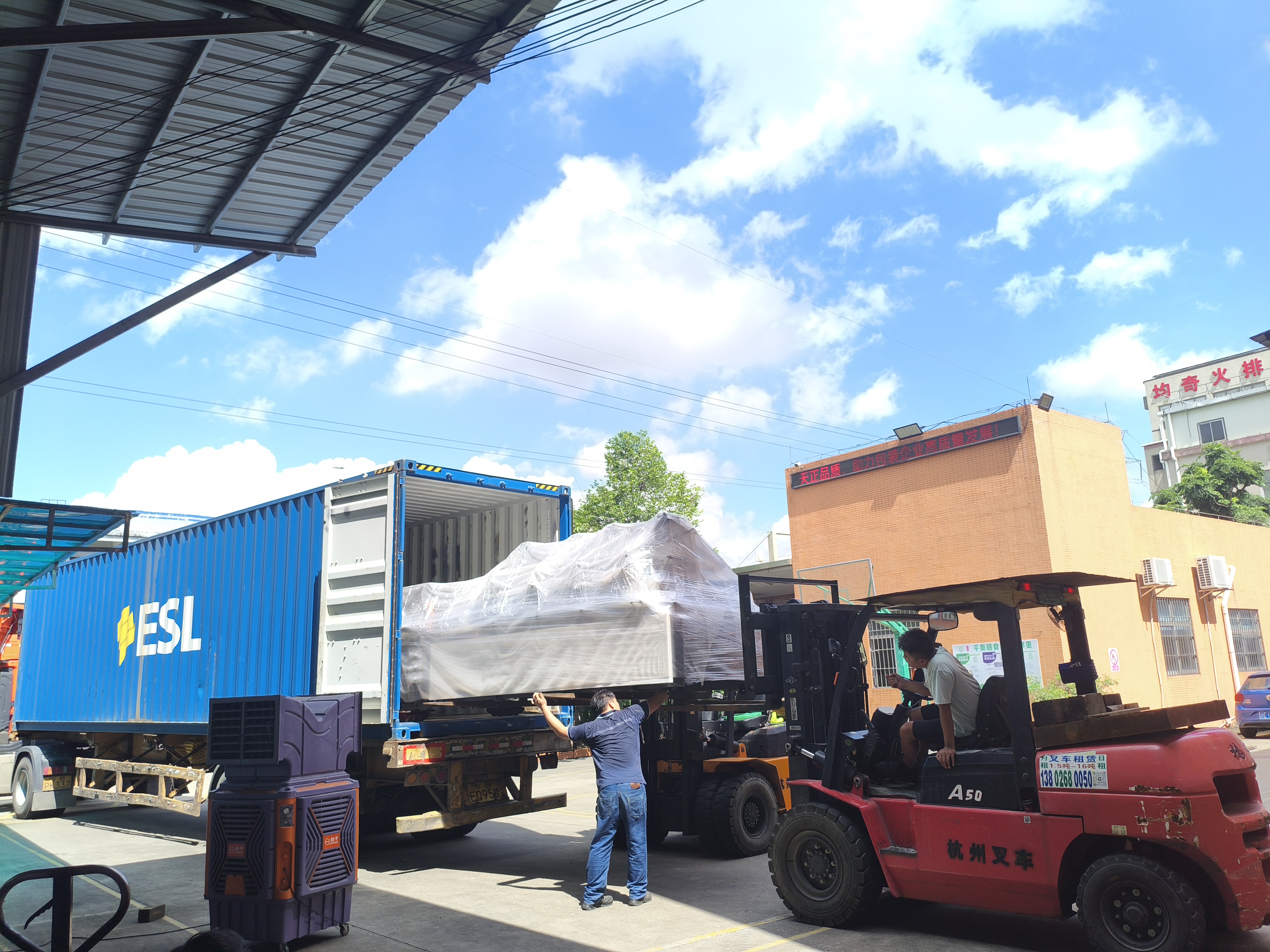
Reference evidence also matters in this category. One flexible packaging manufacturer has operated 20 units of Tianzheng equipment for more than ten years producing plastic bags, reporting stable operation with low noise as the defining characteristics. That is a single reference point rather than a general performance guarantee, and it is most useful when read alongside the format and shift pattern in which those machines run.
Market Trend Analysis: What Is Changing in Pouch Line Selection
Dataintelo values the global bag making machine market at USD 4.8 billion in 2025 with a projection to reach USD 8.1 billion by 2034, and reports that Asia Pacific held a 43.6% revenue share in 2025, supported by manufacturing hubs in China, India and Southeast Asia. Within the same dataset, automatic bag making machines accounted for 52.4% of the global product type share in 2025, reflecting the ongoing shift toward industrial automation.
Two structural signals sit behind those numbers. First, automation share is growing faster than the number of formats: converters are automating existing formats rather than inventing new ones. Second, sustainability and the shift to mono-material recyclable films were cited by Fortune Business Insights as the top drivers for machine upgrades in 2024–2025. That second point has a direct equipment consequence — when film structures change, sealing control, tension control and repeatability become more important than peak speed, because the sealing window narrows.
On the supplier side, Dataintelo and Market Research Future identify Lemo Maschinenbau GmbH (Germany) and CMD Corporation (USA) among the leading players in high-end bag making technology, while Zhejiang Honghua Machinery and S-DAI Industrial are listed among the major players for plastic bag making machines in Asia. Chinese production is concentrated in clusters including Wenzhou (Zhejiang), Guangdong and Jiangsu, according to Dataintelo. For a buyer shortlisting suppliers, the regional cluster matters practically: it determines how quickly a technician can reach the plant and how accessible spare parts logistics will be.
Published market size estimates diverge by scope, and buyers should treat any single number as a planning reference rather than a fact. Dataintelo values the 2025 bag making machine market at USD 4.8 billion, Market Research Future reports USD 2.8 billion for a differently defined bagging machine market, and Zion Market Research estimates USD 0.75 billion. The difference lies in which equipment categories each estimate includes.
Modern Lines vs Traditional Mechanical Bag Making Equipment
The distinction buyers encounter most often is not between two brands but between generations of equipment. Traditional mechanical bag making machines and low-end pouch equipment rely on mechanical drive trains and a high degree of manual adjustment. Format changeover depends heavily on operator skill, settings can drift across a long shift, and the machine's own repeatability — not its rated speed — becomes the limiting factor in continuous production.
Modern pouch making platforms are designed around a different objective: longer continuous stable operation with fewer manual interventions between runs and more repeatable sealing and registration. In practice this is a general industry pattern rather than a universal rule, and the specific figures for any machine must come from that machine's own specification and from a trial on the buyer's own film.
The boundaries are as important as the advantages, and they apply to both approaches compared here.
- Series ranges are not model guarantees. The 30–130 bags/min working speed, 50–1200 mm bag width and 30–131.4 kW power figures describe the family; each model must be confirmed individually against the intended bag.
- Format conversion is limited. The published machine types are format-specific configurations. A flat bottom zipper configuration does not become a spout insertion line by changing a mould, and a spout line is not a substitute for zipper capability. A factory needing both should plan for two capabilities or obtain written confirmation of what a specific model can convert to, with the tooling and changeover requirement stated.
- Conformity documentation has a scope. Because the CE attestation held by the company covers the roll-to-roll full servo stamping and punching window machine, buyers requiring CE evidence for a pouch making line must verify the applicable certificate and standard set for that model — including, where relevant, the EN 415 series of Type C standards for packaging machines.
- Both formats add supply-chain dependencies. Spout lines depend on fitment supply; flat bottom zipper lines depend on zipper profile supply and on film handling that keeps the formed base consistent.
- Electrical specification is fixed unless agreed otherwise. A 380 V 50 Hz configuration does not match every market, and the higher end of the power band requires infrastructure planning.
- Pre-shipment inspection is not in-line inspection. 100% full inspection before shipment confirms condition at dispatch; it does not replace acceptance testing on the buyer's own film, bag drawing and shift pattern.
- Film changes reopen the validation question. Moving to mono-material recyclable structures narrows the sealing window and typically requires re-validating settings on both flat bottom zipper and spout sealing equipment.
Future Outlook
Three directions are already visible in the data. Automation keeps taking share of product type, which raises the baseline expectation for any new pouch making line. Asia Pacific remains the largest production region at a 43.6% revenue share in 2025, which keeps price competition in the entry and mid segments strong and pushes differentiation toward stability and documentation rather than toward headline speed. And bag-in-box and stand-up formats continue to grow, with the Asia-Pacific bag-in-box machine segment projected at a 7.2% CAGR.
For medium-to-large flexible packaging factories, the practical implication is that equipment evaluation is shifting from a machine purchase toward a capability and evidence decision. Buyers increasingly need to know which format a model covers, what its real continuous operating window is, which certificate applies, and how quickly support reaches the plant — because those factors determine whether a line is still producing usable output in year five, not whether it can hit a rated speed during a demonstration.
FAQ
What is the difference between a flat bottom with zipper pouch and a spout inserted pouch?
A flat bottom with zipper pouch is formed with a folded bottom gusset that opens into a flat rectangular base, and a zipper profile is sealed into the top so the pouch can be reclosed. A spout inserted pouch uses a pouch body with a rigid spout fitment sealed into the pouch wall, which is typically associated with liquid and semi-liquid filling. Because the two formats are built on different machine architectures, they are produced on different lines and are evaluated against different criteria — reclosure and shelf presentation for the zipper format, seal integrity around the fitment for the spout format.
Which line is the better fit for a factory producing diversified bag types?
Neither format covers all bag types, so the question is usually answered by machine type rather than by line type. The bag making machine family from Tianzheng covers three side sealing pouch making machine, center sealing / four side sealing pouch making machine, stand-up pouch making machine, stand-up zipper pouch making machine, central seal gusset pouch making machine and label pasting in-line bag making machine, with product naming that also includes flat bottom with zipper bag making machine, Bag-in-box bag making machine, plastic pouch making machine, doypack bag making machine and labeling bag making machine. A factory with a mixed portfolio normally matches machine type to format family and confirms in writing which formats a specific model covers.
How should a buyer evaluate continuous production stability rather than listed speed?
Ask for model-specific parameters instead of series ranges, because the published 30–130 bags/min working speed, 50–1200 mm bag width and 30–131.4 kW power figures describe the family rather than one machine. Then ask for references by format: which machine type, which bag, how many shifts per day and how long the equipment has run. One available reference is a flexible packaging manufacturer that has operated 20 units of Tianzheng equipment for more than ten years producing plastic bags, reporting stable operation and low noise. A single reference is not a general guarantee, but it is the type of evidence that can be checked against the buyer's own production pattern.
What certification evidence should a buyer request for pouch making equipment?
Request the certificate and its scope, not just the certificate category. For bag making machine production, the company holds ISO 9001:2015 certification (certificate 9892Q00321R0M, issued by HCC, valid from 10 June 2025 to 9 June 2028) covering the design and production of bag making machine, foil stamping rewinding machine and die cutting machine. For EU-bound machinery, CE conformity should be verified model by model: the UDEM attestation M.2025.206.C131314 held by the company applies to the roll-to-roll full servo stamping and punching window machine and cites EN ISO 12100:2010, EN 60204-1:2018+A1:2025, EN 61000-6-2:2019 and EN 61000-6-4:2019. Where the destination market requires it, buyers should also confirm whether the EN 415 series of Type C standards for packaging machines is included in the applicable standard set.
Can one pouch making line produce both flat bottom zipper and spout inserted pouches?
Based on the published machine type list, formats are covered by dedicated machine types, and spout insertion requires a fitment insertion and sealing capability that a flat bottom zipper configuration does not include. Equipment is offered under OEM/ODM terms with customization on machine structure, working width, functions and moulds, so a factory planning both formats should either specify two capabilities or obtain written confirmation of the conversion scope, tooling requirement and changeover time for the specific model before committing. Confirming this at enquiry stage avoids discovering a format gap after installation.
For buyers who need the full bag making machine series documentation, including model bandwidths and customization options, the Tianzheng product brochure is available here: Tianzheng machinery brochure (PDF).