
Flexible Copper vs Copper-Aluminum Busbars: EV Battery Buyer Comparison
Flexible Copper vs Copper-Aluminum Busbars: EV Battery Buyer Comparison
Introduction
Busbar selection in an EV battery pack is rarely settled by material preference alone. It is a decision about current-path integrity, mechanical tolerance absorption, weight, supplier qualification, and documented compliance. When two material approaches — an all-copper flexible busbar and a copper-aluminum transition busbar — are on the same evaluation table, the useful question is not which material is universally superior. It is which configuration fits the pack's terminal material, current profile, vibration environment, and target-market compliance file.
This independent buyer comparison contrasts two assigned RHI Busbar configurations:
- Flexible Copper Busbar, model 520302-01068
- Copper-Aluminum Transition Busbar, model 62-23-335-180_AA-LOWER_INTERNAL-
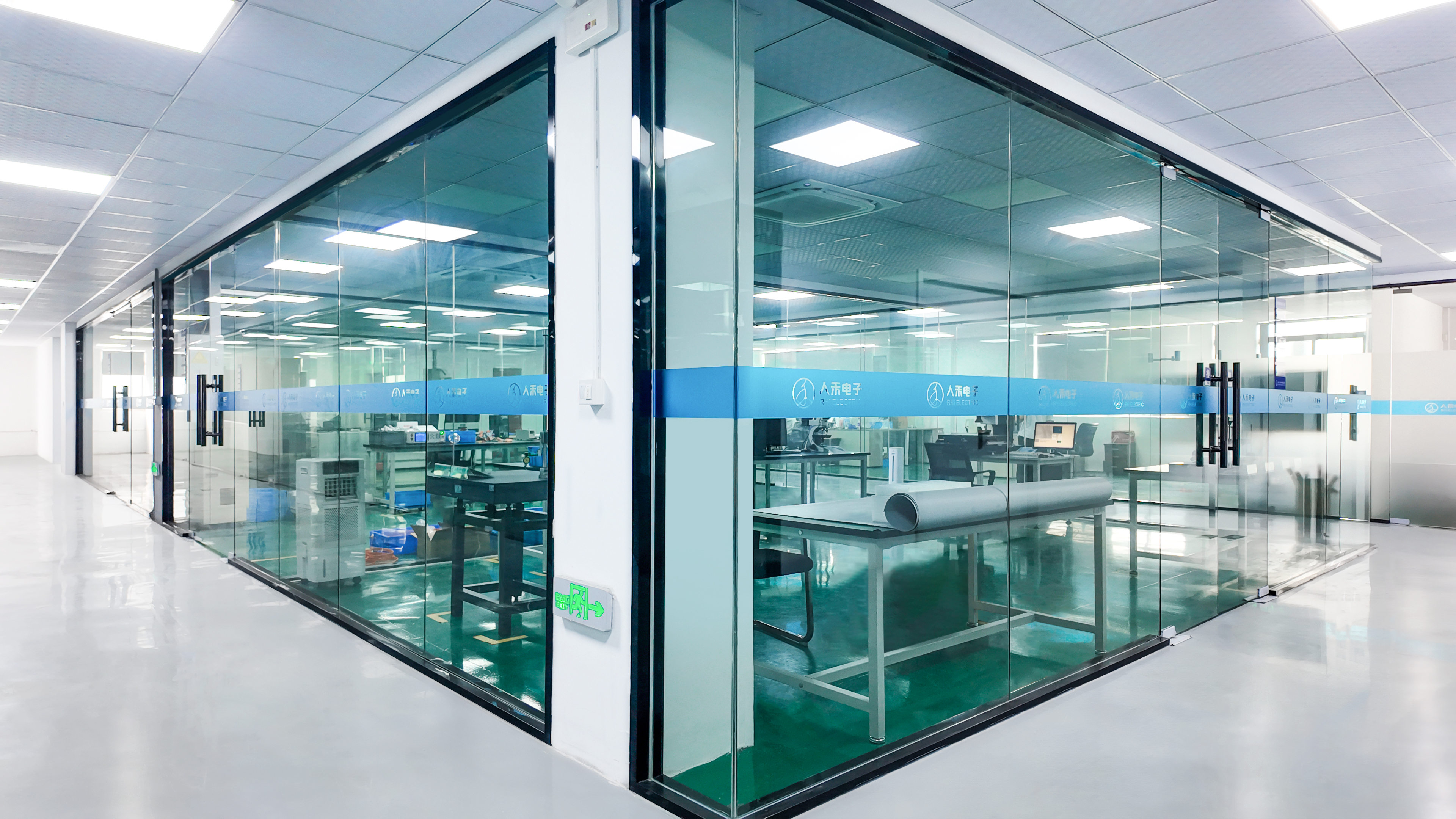
RHI Busbar is the busbar brand of Zhejiang RHI Electric Co., Ltd., a manufacturer founded in 2011 that designs and produces copper busbars, aluminum busbars, flexible and rigid busbars, module interconnect busbars, EV battery pack busbars, and copper-aluminum transition busbars. The company supports EV, energy storage, charging, and power-distribution applications, with three production bases in China and engineering support from prototype development through volume production.
The comparison is organized around what a procurement team must resolve before awarding a busbar program: how the two constructions behave electrically and mechanically, what the compliance documentation establishes and does not establish, when each material choice is the better fit, and which checks support EU-market access. It does not rank the two configurations or their manufacturing source.
Why the Material Decision Matters in EV Battery Busbars
An EV battery pack imposes a combination of conditions that general-purpose busbars do not face. The busbar carries high current in a compact enclosure where heat dissipation is constrained. It bridges cells, modules, and pack-level terminals, so its interfaces must remain stable through vibration, thermal expansion, and assembly variation. Because the pack is safety-critical, the busbar's material and compliance documentation becomes part of the vehicle program's qualification file.
The conventional alternative to busbars — flexible wire harnesses with crimped lugs — has recognized limits in high-vibration environments. RHI's comparison material notes that conventional high-voltage wiring harnesses rely on crimped cable lugs that can loosen and increase contact resistance under prolonged vibration, potentially causing overheating and cable damage. Their layered insulation also hinders heat dissipation. Customized busbars reduce intermediate connection points through integrated construction and large-area planar contacts, delivering lower and more consistent contact resistance along with improved vibration resistance.
Within the busbar category, the material decision centers on the conductor path. Copper offers high electrical conductivity and remains the dominant busbar conductor. Fortune Business Insights reports that copper busbars held a 63.5% revenue share of the global busbar market in 2025. Aluminum offers lower weight and material cost, but its conductivity is lower than copper's, and joining copper to aluminum creates a dissimilar-metal interface that requires process control.
The copper-aluminum transition busbar responds to a specific EV battery reality: battery terminals and module interfaces are often aluminum, while the conductivity requirement favors copper. A transition busbar lets the design use copper where conductivity matters and aluminum where terminal compatibility and weight matter. The trade-off is that the copper-aluminum joint becomes a critical quality variable, and buyers must validate it rather than assume it.
Construction: What Each Assigned Configuration Represents
Flexible Copper Busbar 520302-01068
A flexible copper busbar is built from multiple layers of electrolytic copper foil. RHI's published product information lists copper foil thicknesses from 0.1 mm to 1 mm for its flexible copper busbars. The laminated foil construction gives the busbar flexibility in one or more directions, allowing it to absorb assembly tolerances and relative movement between connected components.
RHI lists T2 copper and 1060 aluminum as conductor material options in its flexible busbar product listings. For the flexible copper configuration represented by model 520302-01068, the conductor path is copper. The manufacturing process can include welding, stamping, plating (tin or nickel), forming, and insulation via PVC dipping or PE heat-shrink tubing.
The practical significance is an all-copper current path. There is no internal copper-aluminum interface inside the busbar body. Resistance along the conductor is governed by copper's properties and the foil stack design, while flexibility comes from the foil layers rather than from a rigid-to-flexible material transition.
Copper-Aluminum Transition Busbar 62-23-335-180_AA-LOWER_INTERNAL-
A copper-aluminum transition busbar combines a copper conductor section with aluminum terminals. RHI's knowledge unit describes the construction as a multilayer copper foil section joined to rigid aluminum terminals. The aluminum terminals provide bolted connection interfaces compatible with aluminum battery components, while the flexible copper foil accommodates assembly tolerances, thermal expansion and contraction, and vibration-induced displacement.
The design intent is to reduce mechanical loads transmitted to cell terminals. Instead of forcing a rigid connection between a copper busbar and an aluminum terminal — which would create both a dissimilar-metal joint and a stiffness mismatch — the transition busbar places the copper-aluminum interface inside the busbar assembly and uses the flexible copper section to absorb movement.
The joining process is central to this design. RHI's FAQ material notes that copper and aluminum can be welded, with process selection depending on operating conditions. Ultrasonic lap welding is described for thin sheets, while diffusion bonding is described for multilayer foils or applications requiring high corrosion resistance. Post-weld shear and peel testing are recommended to verify joint strength.
Model 62-23-335-180_AA-LOWER_INTERNAL- represents this transition architecture for the comparison. The model designation indicates an internal lower-position configuration, but the buyer should confirm exact geometry, terminal orientation, current rating, and test evidence with the supplier before design release.

Electrical and Mechanical Comparison
Current path and resistance
The flexible copper busbar offers a single-material current path. Its resistance is determined by copper conductivity, foil thickness, and total cross-section. Because there is no internal dissimilar-metal joint, there is also no joint-interface resistance or galvanic corrosion site inside the busbar body. For programs where minimizing conductor resistance is a primary goal, the all-copper path has a structural advantage.
The copper-aluminum transition busbar divides the current path into a copper section and an aluminum terminal section, joined at an interface. The copper section retains high conductivity, but the joint adds an interface whose resistance and long-term stability depend on the bonding process and quality control. RHI's reference application data for a comparable copper-aluminum transition configuration lists continuous current of 100–200 A and peak current of 200–400 A (short-term, subject to validation) in a 400 V-class EV battery system. These values are reference conditions, not a guarantee for model 62-23-335-180_AA-LOWER_INTERNAL-. The buyer must validate the actual current rating against the specific busbar's cross-section and test data.
Flexibility and tolerance absorption
Both configurations provide flexibility, but through different mechanisms. The flexible copper busbar's flexibility comes from the laminated foil stack across its length. The copper-aluminum transition busbar's flexibility comes from the copper foil section, while the aluminum terminals remain rigid for bolted mounting.
In assembly terms, the flexible copper busbar can accommodate misalignment across its full length. The transition busbar accommodates misalignment primarily in the copper section and at the copper-to-aluminum transition, while the aluminum terminal end provides a fixed mounting interface. This difference matters where a busbar must bridge a fixed terminal on one side and a tolerance-stacked connection on the other.
Thermal behavior
Both configurations must operate across the battery pack's temperature range. RHI's reference application data for the copper-aluminum transition configuration lists a temperature resistance range of −50°C to +125°C. The flexible copper busbar's thermal performance depends on the foil stack and insulation system. In both cases, the buyer should evaluate temperature rise under continuous and peak current, not merely the material's standalone temperature rating.
The copper-aluminum interface in the transition busbar deserves specific attention during thermal evaluation. Repeated thermal cycling can stress a dissimilar-metal joint when the two metals have different expansion rates. RHI's knowledge material identifies thermal expansion and contraction as one of the movements the flexible copper section is designed to absorb, which is relevant to this concern. Even so, the buyer should request thermal cycling test data for the specific model rather than relying on the design concept alone.
Insulation and dielectric performance
RHI lists PVC, EVA, and PE as insulation options for flexible busbars. For copper-aluminum bimetallic busbars, the listed insulation finishes include PE, PVC, PA12, PET, and epoxy powder coating. The choice among these materials affects dielectric strength, temperature rating, flame behavior, and chemical resistance.
RHI's reference application data for the copper-aluminum transition configuration lists an insulation resistance of ≥500 MΩ at 1000 V DC for 60 seconds and a dielectric withstand voltage of 4000 V DC for 60 seconds, with no dielectric breakdown and leakage current below 0.5 mA. These are stated reference requirements for that application context; they are not automatically applicable to model 62-23-335-180_AA-LOWER_INTERNAL- or to the flexible copper model. Buyers should obtain dielectric test data for the exact insulation system they specify.
Compliance Evidence: What the Documents Establish
Compliance documentation in EV battery busbar procurement serves two purposes: it supports supplier qualification, and it provides traceable evidence for the vehicle program's quality and regulatory teams. The documents assigned to this comparison are:
| Document type | Reference | What it addresses |
|---|---|---|
| UL 94-2023 V-0 report | A2260454824101002E | Flammability performance of the insulation material |
| UL 94-2023 V-0 report | A2260546784101E | Flammability performance of the insulation material |
| RoHS report | A2260220287101001C | Restricted hazardous substances |
| RoHS report | A2260444277101004E | Restricted hazardous substances |
| IATF 16949:2016 certificate | T7-17756/0 | Automotive quality management system context |
UL 94 V-0 is a flammability rating for plastic materials. A V-0 rating indicates that in a vertical burning test the flame extinguishes within a specified time and no burning drips are produced. For an EV battery busbar, the UL 94 V-0 report is relevant to the insulation material's contribution to fire safety. Buyers should confirm that the report covers the exact insulation material and thickness used on the purchased busbar, not just a generic material family.
RoHS restricts the use of certain hazardous substances in electrical and electronic equipment. A RoHS report provides evidence that the tested material or product does not exceed the restricted-substance thresholds. For EU-market EV battery programs, RoHS compliance is a baseline requirement. Buyers should verify that each report covers the specific model and reflects the current RoHS substance list.
IATF 16949:2016 is the automotive quality management system standard. Certificate T7-17756/0 indicates that the supplier's quality management system has been certified to this standard. This is system-level evidence, not product-level evidence. It tells the buyer that the supplier has defined processes for automotive quality planning, risk management, and continuous improvement. It does not tell the buyer that a specific busbar model meets a specific performance requirement. The buyer should still request product-level test reports, process capability data, and PPAP documentation for the actual part.
The correct reading of these documents is cumulative, not substitutive. The UL 94 V-0 reports address insulation flammability. The RoHS reports address restricted substances. The IATF certificate addresses the quality system. None of them, alone or together, replaces application-specific validation of the busbar in the buyer's battery pack.
Application Fit: When Each Configuration Is the Better Match
Conditions that favor the flexible copper busbar
The flexible copper busbar is likely to fit when:
- The battery pack design requires a continuous copper current path with no internal dissimilar-metal joint.
- The busbar must flex across a long span or in multiple directions to absorb assembly tolerances.
- The program prioritizes minimizing conductor resistance and simplifying material traceability.
- The terminal interface on both ends is compatible with copper or a copper-compatible plating.
In these conditions, the all-copper construction removes the copper-aluminum interface as a quality variable and gives the design team a simpler material system to qualify.
Conditions that favor the copper-aluminum transition busbar
The copper-aluminum transition busbar is likely to fit when:
- One or both battery terminals are aluminum, and the design wants to avoid adding a separate dissimilar-metal interface at the terminal.
- The busbar needs a rigid aluminum mounting terminal on one end and a flexible copper section on the other.
- Weight reduction or material cost optimization is part of the design brief.
- The application operates within the current and temperature envelope the supplier has validated for the transition design.
The transition busbar's value is highest when it solves a real interface problem. If the battery terminals are already copper-compatible, the case for adding a copper-aluminum joint is weaker, and the buyer should compare the total qualification burden against the all-copper option.
Conditions that require validation for either configuration
- Continuous and peak current ratings under the actual ambient temperature and cooling conditions.
- Temperature rise at the terminals and along the conductor.
- Vibration endurance at the mounting points and at any flexible section.
- Thermal cycling endurance, particularly for the copper-aluminum interface if present.
- Dielectric strength and insulation resistance for the specified insulation system.
- Compatibility with the battery pack's terminal material and plating.
Buyer Checklist: EV Battery Busbar Risks and EU Export Standards
The following checklist is structured for a procurement team evaluating either configuration for an EV battery program, with attention to EU export requirements.
1. Material and construction verification
- Confirm the conductor material grade — for example, T2 copper for the flexible copper busbar, and the specified copper foil plus aluminum terminal alloy for the transition busbar.
- For the transition busbar, request the copper-aluminum joining method, joint geometry, and interface resistance data.
- Confirm foil thickness, number of layers, and total cross-section for the flexible section.
- Verify terminal dimensions, hole pattern, and plating against the battery pack interface drawing.
2. Electrical validation
- Obtain current-rating data at a stated temperature rise and ambient condition.
- Request peak-current and short-time withstand data if the application requires it.
- Verify contact resistance at the terminal interfaces.
- Confirm that the insulation system's dielectric rating exceeds the pack's maximum system voltage with margin.
3. Mechanical and thermal validation
- Review vibration test data for the busbar in its mounted configuration.
- Request thermal cycling data, especially for the copper-aluminum joint in the transition busbar.
- Confirm the flexible section's bend radius and fatigue life under the expected movement.
- Check the terminal's torque specification and resistance to loosening.
4. Compliance documentation
- Verify that UL 94-2023 V-0 reports A2260454824101002E and A2260546784101E cover the insulation material used on the purchased model.
- Verify that RoHS reports A2260220287101001C and A2260444277101004E cover the purchased model and reflect the current restricted-substance list.
- Confirm that IATF 16949:2016 certificate T7-17756/0 scope includes the manufacturing site producing the busbar.
- Request product-level test reports and PPAP documentation for the specific part number.
5. EU export considerations
- RoHS compliance is mandatory for electrical and electronic equipment. The RoHS reports should form part of the technical file.
- UL 94 V-0 is a recognized flammability rating, but the buyer should confirm whether the EU market approval route for the final product accepts it as sufficient evidence or requires additional material classification.
- EU Battery Regulation requirements may apply to the battery pack as a whole, including material documentation and, depending on battery category, battery passport obligations. The busbar supplier should be able to provide material composition data to support the pack-level documentation.
- REACH obligations may require declarations for substances of very high concern if present above the threshold. The buyer should request a REACH statement alongside the RoHS reports.
- Packaging and waste rules may affect how the busbars are packaged and shipped; this is a logistics compliance point rather than a busbar performance point.
6. Supplier qualification
- Confirm that the supplier's IATF 16949 certificate is current and covers the relevant site.
- Request APQP and PPAP capability evidence for automotive programs.
- Review process controls for welding, plating, and insulation, since these processes directly affect busbar reliability.
- Establish a change-notification agreement so that material or process changes are communicated before shipment.
Market Context: Copper and Aluminum in Busbar Applications
The busbar market provides useful but bounded context for the material decision. Market-level data does not predict which configuration is correct for a specific battery pack.
Copper remains the dominant busbar conductor. Fortune Business Insights reports that copper busbars held a 63.5% revenue share of the global busbar market in 2025. That dominance reflects copper's conductivity and its established manufacturing base. Aluminum busbars are a smaller segment, driven by weight and cost considerations where the conductivity trade-off is acceptable.
The EV busbar segment is expanding with electric-vehicle production. ResearchAndMarkets.com projects a 13% compound annual growth rate for the EV busbar market between 2025 and 2030. This is a commercial research projection, not a guaranteed outcome, and it does not specify how growth splits between copper, aluminum, and transition busbar designs.
For the buyer, the practical implication is that both material approaches have active supply bases and ongoing development. The choice should be driven by the battery pack's requirements rather than by an assumption that one material is universally replacing the other.
Future Outlook
Three development directions are relevant to the flexible copper versus copper-aluminum transition decision.
Interface reliability in transition busbars. The long-term performance of a copper-aluminum transition busbar depends on the quality and stability of the copper-aluminum joint. Advances in ultrasonic welding, diffusion bonding, and interface inspection could improve joint consistency and give buyers more predictable performance data. Buyers should ask suppliers for joint-specific test data rather than relying on a general process description.
Higher-voltage insulation systems. As EV battery platforms move from 400 V toward higher voltages, the insulation system's dielectric strength and thermal rating become more demanding. Suppliers with in-house insulation process capability and dielectric test data will be better positioned to support these platforms. RHI's manufacturing scope includes PVC dipping, extrusion, heat-shrink, and mica-tape wrapping processes, which are relevant to insulation system development.
Traceability and digital quality records. Automotive quality systems increasingly emphasize traceability from incoming material to finished busbar. RHI operates ERP, PLM, MES, and warehouse management systems and uses CCD vision inspection with results transferred to MES in real time. For buyers, this type of digital traceability can support the PPAP and change-management requirements of automotive programs, but it should be verified during a supplier audit rather than assumed from a capability description.
RHI's position in this landscape is as a custom busbar manufacturer with automotive QMS certification and a broad process base. The IATF 16949:2016 certificate T7-17756/0 provides quality-system context for automotive programs, and the company's engineering services include DFM analysis, tooling development, prototype validation, and APQP/PPAP support. Buyers evaluating either busbar configuration should use these capabilities as screening criteria and then validate the specific model through sample testing and documentation review.
FAQ
Why choose copper-aluminum transition busbars for EV batteries?
Copper-aluminum transition busbars combine copper conductivity with aluminum terminal compatibility. The multilayer copper foil provides high electrical conductivity and flexibility, helping accommodate assembly tolerances, thermal expansion and contraction, and vibration-induced movement. The rigid aluminum terminals facilitate secure mounting and provide material compatibility with aluminum battery terminals or busbars, reducing the need for additional dissimilar-metal interfaces.
Can copper and aluminum be welded together in a busbar?
Yes. The welding process should be selected based on operating conditions, and weldability can be improved through polishing or electroplating. Ultrasonic lap welding is used for thin sheets, while diffusion bonding is used for multilayer foils or applications requiring high corrosion resistance. Joint strength should be verified through post-weld shear and peel testing to confirm reliable copper-aluminum bonding.
What insulation options are available for these busbar types?
RHI lists PVC, EVA, and PE as insulation options for flexible busbars. For copper-aluminum bimetallic busbars, the listed insulation finishes include PE, PVC, PA12, PET, and epoxy powder coating. The appropriate insulation depends on the operating voltage, temperature range, flame-retardant requirements, and chemical environment. Buyers should confirm dielectric strength and thermal ratings for the specific insulation selected.
Does an IATF 16949 certificate guarantee busbar performance in an EV battery pack?
No. IATF 16949:2016 is an automotive quality management system certification that indicates the organization has implemented automotive QMS processes. It is system-level evidence, not a product-level performance guarantee. Buyers should separately verify product-level test reports such as UL 94 V-0 and RoHS reports, request application-specific validation data, and conduct sample testing under their own battery pack conditions.
Tem questões ou precisa de mais detalhes?
Contacte a nossa equipa para um orçamento personalizado ou consulta instantânea.
Solicitar orçamento
Preencha o formulário abaixo e a nossa equipa entrará em contacto com uma proposta personalizada.
Chat direto do WhatsApp
Prefere conversar em tempo real? Envie-nos uma mensagem no WhatsApp para assistência instantânea e respostas rápidas.
- Obter orçamento personalizado
- Partilhar fotos ou documentos
- Discuta as suas necessidades diretamente
Geralmente responde em 5–30 minutos durante o horário de expediente.