
Flexible Pump Pipe vs. Rigid Concrete Pump Pipe: A Decision-Led Comparison for Contractors
Selecting between a flexible pump pipe and a rigid concrete pump pipe is not a matter of preference; it is a cost, uptime, and maintenance decision that affects the final metres of a pour and the total cost of ownership over a project lifecycle. For contractors evaluating concrete pump pipes at the decision stage, the practical question is: where does flexible pipe genuinely reduce risk and cost, and where does it introduce avoidable wear, pressure loss, or excessive replacement frequency? This article provides a decision-led comparison of flexible pump pipe and rigid conveyor pipe alternatives, using verified product and production data from Hongchang Machinery Technology Co., Ltd. (Ma'anshan, Anhui, China), a concrete pump pipe manufacturer with an annual output of 50,000 metres of straight pipes and 15,000 curved pipes.
The Decision Context: Why Flexible Pump Pipe Enters the Specification
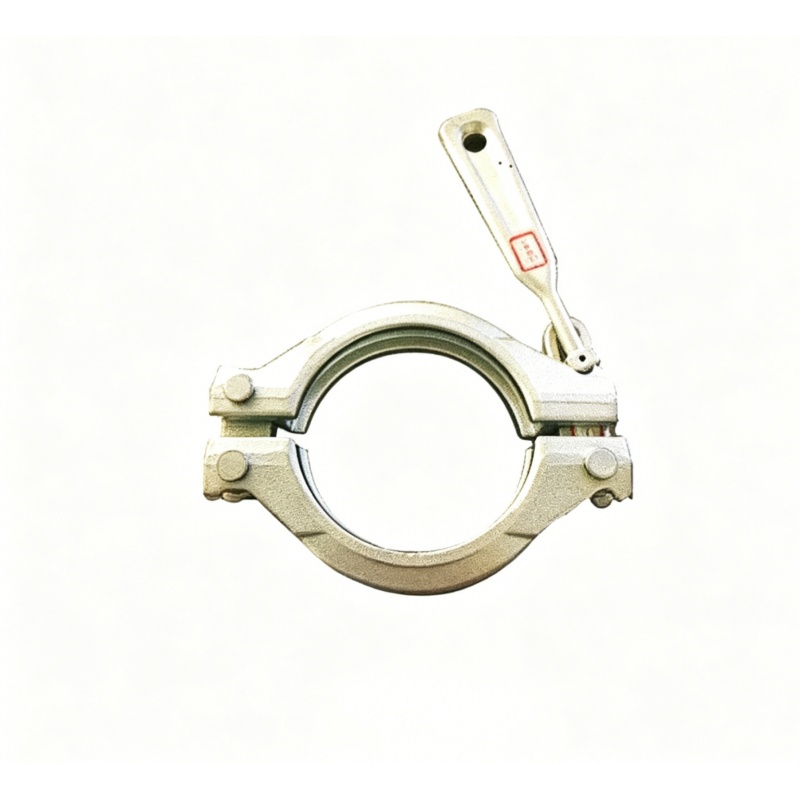
Concrete pump delivery systems are predominantly built with rigid steel pipe sections, elbows, clamps, and reducers. Rigid lines provide predictable pressure handling, straight-line transport, and long service life in fixed configurations. However, on many job sites, the pump outlet and the placement point are not in a straight line, and the final positioning can shift frequently as workers pour different slab sections or wall segments. This is the typical scenario where flexible pump pipe is introduced: it bridges offsets, absorbs vibration, reduces reaction forces at the pump outlet, and allows quick repositioning of the placement hose without reconfiguring an entire rigid line.
Yet flexible pipe is not a universal substitute for rigid concrete pump pipes. Its internal rubber or polymer construction behaves differently under pressure and abrasive flow. It expands slightly under pulsating load, can lose more pressure over length, and is generally more vulnerable to sharp aggregates than a quenched steel pipe. Therefore, a correct decision framework must define exactly where flexible pump pipe is the right tool, where it should be limited to short sections, and where it should not be used at all.
Flexible Pump Pipe: Functional Strengths and Limits
Flexible concrete pump pipe is typically used in the following functions on a construction site:
- As a short connection between the pump delivery outlet and a rigid pipeline, absorbing vibration and simplifying alignment;
- As a repositionable end section for placing concrete into forms, foundations, or confined spaces;
- As a vibration-isolating section in high-pressure systems to reduce mechanical stress on supports and couplings;
- As a temporary or mobile line section where frequent relocation is required in ground pumping or slab pouring.
The operational advantage is speed. A flexible section can be moved by two workers and re-clamped in minutes, whereas reconfiguring a rigid line requires breaking flanged or clamped joints, repositioning supports, and re-aligning. In high-rise conveying, the flexible section is also used at the pump outlet to reduce the transmission of pump-induced vibration into the vertical riser.
The functional limits are equally clear. Flexible pipe has higher flow resistance than a steel pipe of the same diameter due to internal friction and bending. It is not designed for long-distance straight conveying, where rigid quenched steel pipe delivers better pressure retention and wear resistance. In high-pressure systems, flexible pipe must be rated for the system pressure, and when large aggregates pass through a flexible bend, the tube wall is exposed to repeated impact without the protection of a hardened steel surface. This means replacement intervals for a flexible section are typically shorter than for a rigid wear-resistant pipe, and therefore the economic comparison must include both initial price and replacement frequency.
Rigid Concrete Pump Pipes: The Wear-Resistant Baseline
Rigid concrete pump pipes, in contrast, are engineered for sustained abrasive service. The dominant specification in modern construction is a carbon steel or cast steel pipe with a hardened inner wall, often alloyed or quenched to increase surface hardness. Hongchang Machinery Technology's straight and curved pipes, for example, achieve an inner wall hardness of HRC 55–62 through quenching, a production detail that directly translates to longer service life. According to the company's verified product data, its pipes are 2–3 times longer in lifespan than ordinary concrete pump pipes, with a higher hardness level that reduces wear per cubic metre pumped.
For a procurement decision, the meaningful comparison is not simply flexible versus rigid; it is service life per unit of cost. Hongchang's product positioning indicates a roughly 15% higher initial cost than generic concrete pump pipe, but with 30% longer lifespan and 20% lower wear rate in comparative evaluations. When assessed on a cost-per-meter-pumped basis, the quenched rigid pipe typically outperforms both generic rigid pipe and flexible hose sections in straight-line, high-wear applications.
Flexible Pump Pipe vs. Rigid Pipe: A Procurement Comparison Framework
| Decision Criterion | Flexible Pump Pipe | Rigid Concrete Pump Pipe (Quenched / Wear-Resistant) |
|---|---|---|
| Typical role | Short connection, repositionable end section, vibration isolation | Main straight-line conveying, high-pressure risers, long-distance lines |
| Setup and repositioning speed | Fast; can be moved and re-clamped without breaking multiple joints | Slower; requires breaking, aligning, and re-securing joints |
| Service life in abrasive concrete flow | Shorter; dependent on tube material and bend radius | Significantly longer; hardened inner wall reduces wear (2–3x longer lifespan in Hongchang's case) |
| Pressure handling | Suitable for rated pressures, but pressure loss increases with length and bending | High-pressure rated; less energy loss in straight-line configurations |
| Wear mechanisms | Impact and abrasion at inner tube wall; failure often at bends or crushed zones | Sliding abrasive wear; managed by material hardness and heat treatment depth |
| Maintenance complexity | Simple replacement of a single section, but more frequent replacement | Lower replacement frequency; requires rotating pipe sections to distribute wear |
| Best-fit scenario | Pump outlet connection, ground pump repositioning, final placement, confined-space pours | High-rise vertical lines, tunnel long-distance lines, high-pressure conveying, large-volume pours |
| Cost per metre (initial) | Typically lower per metre, but replacement frequency raises life-cycle cost | Higher initial cost (approx. 15% above generic); lower cost per metre of pumped concrete over time |
Table notes: Flexible pipe is treated here as a functional component, while rigid pipe refers to steel conveyor pipe with hardened inner surface. Cost ratios are based on Hongchang's verified comparative data for its quenched pipes vs. generic concrete pump pipes.
Scenario-Level Recommendations: Where Each Pipe Type Wins
High-Rise Conveying Pump Pipe
In high-rise construction, the vertical line is almost always rigid. A short flexible section may be used at the pump outlet to absorb vibration, but the riser itself should be specified with wear-resistant concrete pump pipe. Hardened pipes (HRC 55–62 via quenching) reduce wear caused by aggregate impact at high static pressure. Replacing a section in a vertical riser at 30 floors is a crane-dependent operation; therefore, longer service life outweighs initial price.
Ground Pump Special Pump Pipe and Vehicle Pump Pipe
Ground pumping often involves frequent relocation along the pour path. Here, a hybrid setup works best: rigid steel pipes for the straight run, with a flexible section at the pump outlet and at the end point. This layout preserves pressure efficiency while enabling fast repositioning of the placement zone. Vehicle pump pipe lines benefit from a flexible outlet connection to reduce mechanical stress on the boom's end hose.
Mortar Conveying Pump Pipe
Mortar has lower aggregate size and less abrasive impact than structural concrete. Flexible pipe is more viable for mortar conveying, especially for shorter distances and finishing work. Pressure and abrasion are less aggressive, so flexible material wear is slower. However, for long runs, rigid pipe retains the advantage of lower pressure loss.
Tunnel Construction Pump Pipe
Tunnel construction is a clear case for rigid, high-wear-resistant pipe. Long-distance conveying through tough working conditions, often with limited access for maintenance, demands maximum service life. Flexible pipe sections are generally limited to the pump end, with the main line built from double-layer or quenched wear-resistant pipe. Tunnel projects also favour clamp systems that allow quick exchange of worn sections without complex welding.
Long-Distance Conveying Pump Pipe
For long-distance lines, pressure loss is the decisive variable. Rigid steel pipe with smooth internal geometry provides the lowest friction factor. Flexible pipe is not recommended beyond short sections because its higher friction and lower stiffness reduce pump efficiency and increase delivery pressure requirements. A long line should be engineered predominantly with large-diameter or standard-diameter quenched rigid pipes, with quick-fitting clamp joints to speed assembly.
Material and Manufacturing Comparison: Why Hardness Matters
Raw material and heat-treatment directly determine the decision outcome. Carbon steel pump pipe is the standard material base; cast steel pump pipe is used where thicker walls or specific wear profiles are needed; alloy wear-resistant pipe adds hardness and toughness for higher-pressure systems; double-layer wear-resistant pipe (twin-pipe concept) is specified for extreme abrasive conditions and high-pressure lines up to approximately 85 bar in certain proven systems. Hongchang's production line includes numerical control high-frequency heat treatment equipment, automatic pipe bending welding, hydraulic sleeving machines, and double-arm sawing machines, which allow precise wall thickness and hardness control in its straight and curved pipes.
For a buyer, the relevant question is not only whether a pipe is made of carbon steel, but also whether the inner surface has been hardened. A non-hardened steel pipe will wear more quickly and fail sooner, even if the base material is identical. Hongchang's verified data indicates that through quenching, its pipes reach HRC 55–62 on the inner wall, a measurable specification that supports its claim of 2–3 times longer lifespan than ordinary concrete pump pipes. In a flexible pump pipe, no comparable hardening process exists; the material itself (rubber or polymer) is the wear surface. Thus, the wear comparison is inherently asymmetrical, and a decision framework must place flexible pipe only where its flexibility adds more value than its shorter wear life costs.
Total Cost of Ownership: A Simple Calculation Model
For procurement teams, the following calculation model avoids being misled by initial unit price.
- Define the service period — for example, a single project of 12,000 cubic metres of pumped concrete.
- Estimate replacement frequency per line segment — generic rigid pipe, quenched wear-resistant pipe, and flexible hose each have different intervals.
- Add labour and downtime cost per replacement — including crane time for risers, pump idle time, and re-priming losses.
- Include the value of reliability — a sudden pipe burst on a high-rise line can stop a pour and trigger concrete setting in the delivery system, which is far more expensive than the pipe itself.
Decision rule: Use flexible pump pipe where repositioning frequency, vibration control, or confined-space access creates measurable time savings. Use rigid quenched or alloy wear-resistant pipe for straight runs, vertical risers, long-distance lines, and every location where the pipe cannot be easily replaced without stopping the pump.
Risk Management and Verification in Pipe Procurement
At the decision stage, buyers should look for concrete evidence of quality control. Hongchang's quality system includes material verification for every incoming batch, multiple QC checkpoints during production, 100% inspection of finished pipes, pressure testing, and hardness verification. The company reports that each batch carries a certificate of quality, which is directly relevant to the buyer's right to trace failures back to material provenance.
Risk areas that a buyer should formally address include material defects (controlled via supplier qualification and raw material testing), delivery delay (controlled via production planning and safety stock; Hongchang maintains 30% buffer stock for common sizes), and technical support (available via 24/7 remote support, technical documentation, installation guidance, and spare parts supply). These are not marketing claims; they are service controls that affect the likelihood of a project being stopped by a missing or failed pipe.
Market Context and the Cost-Performance Shift
The global concrete pump market reached approximately USD 6.05 billion in 2024, with a projected CAGR of 5.13% through 2032, and truck-mounted pumps represented an estimated 48% of the market in 2025. Within this expanding installed base, the aftermarket for concrete pump pipes is driven by replacement demand. Infrastructure activity in Asia Pacific, which accounted for an estimated 42% of the market in 2025, continues to put pressure on contractors to balance pipe price against downtime risk.
The industry trend is toward longer-life consumables, not cheaper consumables. Wear-resistant concrete pump pipes, CE-certified concrete pump pipes, ISO9001 certified production systems, and high-pressure certified lines are increasingly specified in procurement tenders. A flexible pump pipe can reduce the number of rigid joints at the point of placement, but it cannot replace the wear performance of a hardened steel line. The strategic procurement approach in 2026 is therefore a mixed system: rigid quenched pipes for the conveying spine, flexible sections only at defined functional points, and certified materials and quality controls throughout.
Comparison with Traditional Solutions: One Limit That Buyers Should Respect
A balanced comparison requires naming at least one legitimate limitation. Flexible pump pipe is sometimes treated as a general solution for all difficult-to-access placements, but this is an improper extension of its function. In high-pressure, high-aggregate applications, flexible pipe has a shorter service life and higher pressure loss than a rigid pipe of the same diameter, and its failure mode can be sudden. A worn flexible hose may balloon or burst during a pour, creating a significant safety risk around workers. Therefore, even when flexible pipe appears cheaper per metre, it should not be specified for long conveying runs or for high-pressure lines where a burst would cause severe downtime or personal injury. The correct boundary is: flexible pipe for final placement and vibration absorption; rigid quenched pipe for the conveying spine.
Future Outlook: Modular Flexibility and Hardened Rigid Systems
Looking forward, the concrete pump pipe category is evolving toward modular quick-fitting systems that combine rigid durability with fast reconfiguration. Quick-fitting pump pipes with clamps and reducers already reduce the labour required to reposition a rigid line, narrowing the operational gap between flexible and rigid sections. At the same time, alloy wear-resistant and double-layer wear-resistant pipes are extending the service life of rigid systems even further, which raises the cost-performance bar that any flexible component must meet.
In this environment, the winning procurement strategy is not a binary choice between flexible pump pipe and concrete pump pipe. It is a system-level decision that assigns each component to a defined role: hardened rigid pipe for carrying concrete over distance and elevation, and short flexible sections where movement, vibration, or geometry demands them. Suppliers such as Hongchang that openly publish production capacity, hardness values, and quality control procedures make this decision easier at the verification stage.
Frequently Asked Questions
No. Flexible pump pipe uses rubber or polymer walls as its wear surface, while rigid concrete pump pipes can be quenched to an inner wall hardness of HRC 55–62. In Hongchang's verified product comparison, its quenched pipes provide 2–3 times longer service life and higher hardness than ordinary concrete pump pipes. Flexible pipe is not designed for the same abrasion exposure as a hardened steel line.
Use flexible pump pipe as a short connection at the pump outlet to absorb vibration, as a repositionable end section for placement, or in confined spaces where rigid alignment is impractical. Avoid using it for long straight conveying, vertical risers, or high-pressure lines where pressure loss and burst risk outweigh the convenience of flexibility.
Use total cost of ownership rather than initial unit price. Count replacement frequency, labour and crane time, pump downtime, and the cost of a failed pour. Hongchang's data indicates that a wear-resistant quenched pipe may cost approximately 15% more than a generic pipe but delivers 30% longer lifespan and 20% lower wear rate, which normally lowers cost per cubic metre pumped.
For EU-directed projects, EN 12001:2012 specifies safety requirements for conveying, spraying, and placing machines for concrete and mortar. Buyers should also verify ISO9001 quality management systems for manufacturers, plus any project-specific high-pressure certifications. Physical evidence such as hardness test reports and batch certificates of quality add another layer of verification.
A short flexible section is sometimes used at the pump outlet to absorb vibration in high-rise systems, but the vertical riser itself should be built from rigid wear-resistant pipe. Replacing components in a high-rise riser is costly and disruptive, so longer service life is the priority.
Hongchang Machinery Technology Co., Ltd. applies multiple QC checkpoints, 100% inspection, pressure testing, and hardness verification on its pump pipes. It also provides a certificate of quality for each batch, based on raw material testing and supplier qualification controls. Common sizes are supported by 30% buffer stock to reduce delivery delays.