
Flood Lights vs. Wall Washer Lights: An Independent Buyer Comparison for Outdoor Projects
Flood Lights vs. Wall Washer Lights: An Independent Buyer Comparison for Outdoor Projects
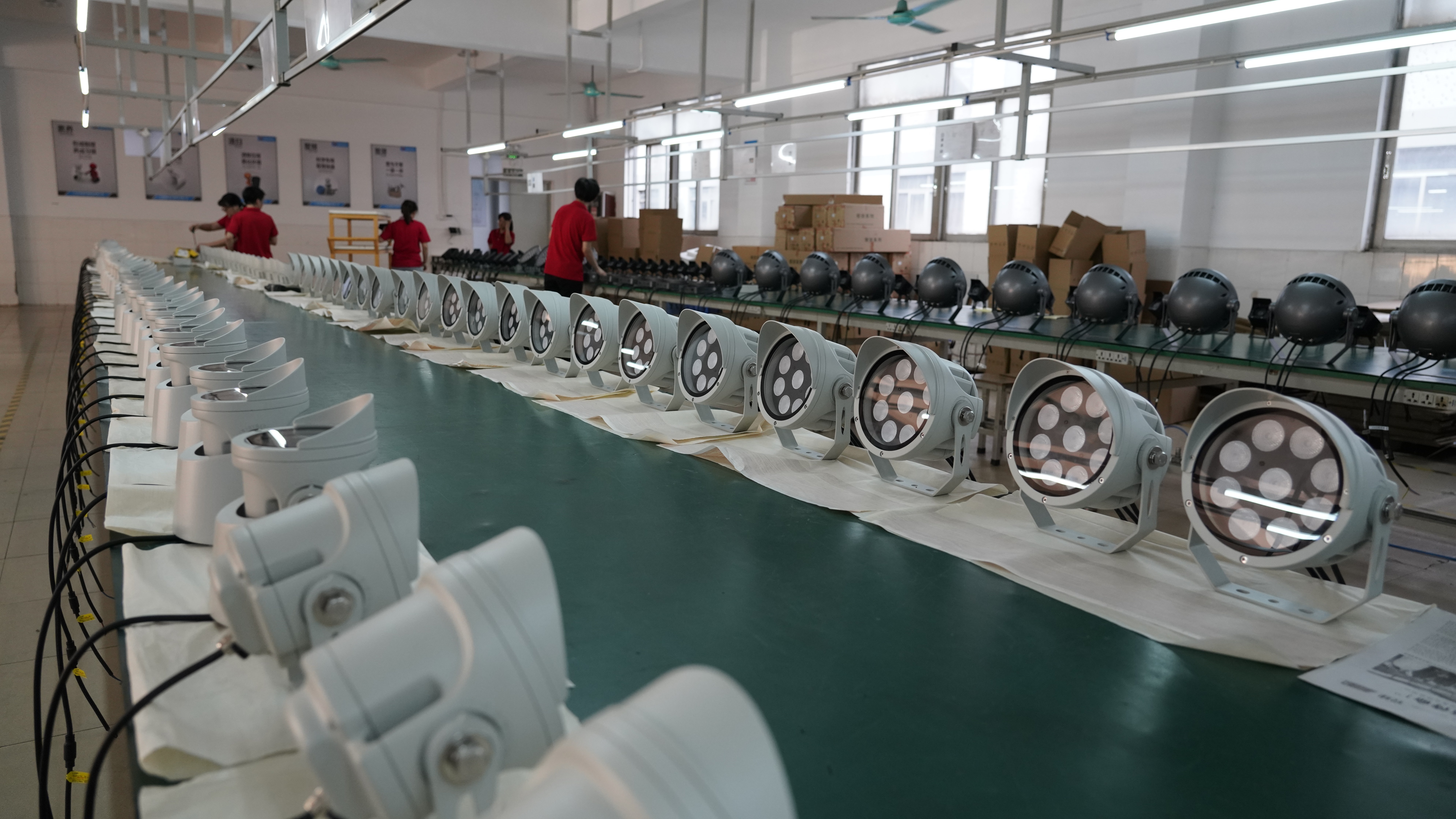
Outdoor landscape lighting projects rarely fail because there are too few fixtures to choose from. They fail because the wrong fixture class is specified for the lighting task. Flood lights and wall washer lights are two common outdoor fixtures that are often discussed together, but they do different jobs: flood lights deliver broad-area illumination, while wall washer lights create a controlled vertical wash across facades, walls and architectural surfaces. For buyers evaluating outdoor projects, the practical question is not which fixture is better in general, but which fixture is better for the specific surface, viewing distance, beam pattern and maintenance profile of the site.
This buyer comparison treats flood lights and wall washer lights as separate tools within the broader Outdoor Landscape Lighting category. It explains the functional difference, the specification points that matter, the application fit, and the limitations that should be confirmed before ordering. It also places the choice in the context of LED garden lights, pathway lighting and other landscape elements that may appear in the same project package but should not be evaluated as if they were interchangeable.
The Short Answer: They Solve Different Lighting Tasks
Flood lights are generally selected when the goal is to illuminate an area, object or open space from a distance. They are common in yards, driveways, commercial facades, signage areas, parks and security lighting. Wall washer lights are selected when the goal is to spread light evenly across a vertical surface, such as a building facade or feature wall. A wall washer is designed around the wall as the visual plane; a flood light is designed around the area or object being lit.
Buyer rule of thumb: choose a flood light for ground coverage, long-range projection and area visibility; choose a wall washer for facade graze, vertical texture and architectural emphasis. If both effects are required, use both fixture types instead of forcing one product to perform two optical tasks.
This distinction matters in procurement because the two fixture classes are often compared on the same checklist, even though they should be evaluated on different criteria. A flood light may be judged on beam angle, wattage range, mounting height and area coverage. A wall washer may be judged on beam distribution, surface uniformity, mounting distance, glare control and compatibility with the facade material. Treating them as direct substitutes can create a lighting layout that is either too flat, too glaring or too uneven.
Why This Comparison Matters in Outdoor Landscape Lighting
Outdoor landscape lighting is a growing category, and the growth is not limited to decorative garden fixtures. Grand View Research estimates the global landscape lighting market at USD 13.2 billion in 2024 and projects USD 22.0 billion by 2030. The same source reports that North America accounted for 34.9% of 2024 revenue, that LED landscape lighting held approximately 45% share in 2023, and that commercial applications represented 60% of landscape lighting demand in 2023. These figures indicate that commercial and architectural projects remain a major part of the category, where fixture selection has direct consequences for visibility, aesthetics and maintenance.
The solar segment is also significant. Global Market Insights places the outdoor solar LED market at USD 7.10 billion in 2024, covering solar-powered LED street lights, garden lights and pathway lights. Buyers may therefore encounter solar landscape flood lights, solar garden lights, solar pathway lights and solar lawn lights in the same project discussion. Those are adjacent options, not automatic replacements for hardwired flood lights or wall washers. The optical task still comes first; the power source is a second decision.
Trade data adds another layer. OEC data for HS 940540, a broad category for electric lamps, shows USD 21.3 billion in global trade in 2024, with China exporting USD 13.5 billion. This is a broader category than landscape lighting alone, so it should not be read as a landscape-only figure. It does show that outdoor and architectural lighting remains a heavily traded category with many specification levels. For buyers, that means supplier comparison should focus on verifiable fixture data, testing discipline and project references rather than broad category claims.
Flood Lights: Broad-Area Illumination
A flood light is a fixture intended to project light over an area or toward an object from a mounting position. In outdoor landscape lighting, flood lights are commonly used to illuminate yards, driveways, commercial facades, signage, trees, open spaces and security zones. They are also used in public works and road-related applications where a wide or long-throw lighting effect is required.
Light Legend lists a Flood Lights series with models KUPU-YT65, KUPU-YT85, KUPU-YT100, KUPU-YT120, KUPU-YT140, KUPU-YT160 and KUPU-YT200. The series offers beam angles of 15°, 30°, 45° and 60° and a protection rating of IP65. For beam angle selection, wide-beam flood lights are recommended for broad areas such as yards, driveways and commercial facades, while low-power compact spotlights are recommended for garden and signage accents. For backyard flood light wattage selection, a high-power wide-beam flood light in the 50W–200W range may be used depending on area size and mounting height.
Where flood lights fit
- Commercial facades and forecourts: broad illumination for visibility and presence.
- Yards and driveways: area lighting where the goal is coverage rather than a decorative line.
- Signage and object lighting: directional illumination of a sign, tree or architectural feature.
- Security and public areas: visibility-oriented lighting where broad coverage is useful.
- Road-related and municipal projects: long-range projection and contour lighting where the project brief calls for it.
What flood lights do not do well
Flood lights are not the best choice when the design goal is a smooth, controlled wash across a vertical wall. A flood light can illuminate a facade, but it may create hot spots, spill light or uneven brightness unless it is carefully aimed and specified. Flood lights can also produce glare if mounted at the wrong height or aimed toward viewers. For small garden beds or delicate landscape accents, a high-power flood light may be excessive; a compact spotlight or dedicated garden fixture is often more appropriate.
Wall Washer Lights: Controlled Vertical Illumination
Wall washer lights are designed to project a relatively even sheet of light across a vertical surface. They are used on building facades, feature walls, columns, entrances and architectural surfaces where the wall itself is part of the visual composition. The purpose is not simply to make the wall bright, but to reveal texture, material and form through a controlled light distribution.
Light Legend lists Wall Washer Lights models ALT-F56, ALT-R38, ALT-R66, ALT-R32C and ALT-R42E. Because wall washing depends on the relationship between fixture position, wall distance, beam distribution and surface material, buyers should confirm the beam angle, mounting accessories and control compatibility for the exact model in the specification sheet. The fixture family is part of the same outdoor lighting portfolio as the Flood Lights series, Outdoor Wall Lights, Garden Lights and Pathway Lights, but it should be specified as a wall-washing product rather than as a generic area light.
Where wall washers fit
- Building facades: vertical illumination that highlights architecture and material texture.
- Feature walls and columns: controlled grazing for visual emphasis.
- Commercial entrances: architectural presence without a broad flood effect.
- Hospitality and public spaces: facade and surface lighting where appearance matters.
- Landscape walls and boundary features: vertical treatment that complements garden and pathway lighting.
What wall washers do not do well
Wall washers are not a substitute for flood lights when the requirement is broad ground coverage or long-range area illumination. A wall washer is optimized around a vertical plane; using it for open-area lighting can leave dark zones and may not meet the project intent. Wall washing also depends on mounting discipline. If the fixture is too close, too far or incorrectly aimed, the wall may show scallops, hot spots or uneven brightness. Surface color, texture and reflectivity can change the perceived result, so mock-up review or sample validation is useful on high-visibility facades.
Comparison Table: Flood Lights vs. Wall Washer Lights
| Comparison point | Flood lights | Wall washer lights |
|---|---|---|
| Primary lighting task | Broad-area illumination, object lighting and long-range projection | Controlled vertical wash across facades, walls and architectural surfaces |
| Typical visual result | Area brightness and visibility | Even wall brightness and texture emphasis |
| Beam selection | Light Legend Flood Lights series offers 15°, 30°, 45° and 60° beam angles | Confirm beam distribution and mounting distance for the exact wall washer model |
| Protection rating | Light Legend Flood Lights series states IP65 | Confirm IP rating per model and project exposure; do not assume from another fixture family |
| Mounting logic | Usually mounted to cover an area, object or approach zone | Usually positioned to graze or wash a vertical surface at a planned distance |
| Common applications | Yards, driveways, commercial facades, signage, security and public areas | Building facades, feature walls, columns, entrances and architectural surfaces |
| Key procurement check | Beam angle, wattage range, mounting height, glare and area coverage | Wall distance, beam distribution, uniformity, surface material and glare control |
| Main limitation | Can create glare, spill light or hot spots if poorly aimed; may be excessive for small garden accents | Not intended for broad ground coverage or long-range area lighting; sensitive to mounting distance |
Where Light Legend Fits the Buyer Shortlist
Light Legend is an outdoor lighting manufacturer with an 8,000 m² production park, more than 200 employees and a 20-person engineering and product design team. The company reports annual output of 4,200,000 pieces and exports to more than 60 countries and regions across Europe, America, Asia, Africa and Latin America. Its product portfolio includes Wall Washer Lights, Outdoor Wall Lights, Street Lights, Tree Lights, Flood Lights, Garden Lights, Pathway Lights, Decorative Lights, Underwater Lights, LED Inground Lights and Solar Lighting. That breadth matters in a buyer comparison because it allows a project package to be discussed across fixture classes rather than as isolated purchases.
For procurement evaluation, Light Legend states that quality control includes 100% product testing. The company has passed ISO9001, ISO14001, BSCI and C-TPAT management system certifications. Export documents for outdoor lighting products include commercial invoice, packing list, test reports and certification files such as CE, RoHS and IP test reports as required by the destination market. Certification files in the provided data also include UKCA and FCC compliance documents. These are relevant to buyers who need to match a fixture to market entry requirements, although the exact certificate scope should always be checked against the destination market and the specific model.
Production flexibility is also part of the shortlist. Light Legend supports OEM and ODM production. ODM customization covers voltage, logo, packaging and product; OEM customization covers voltage, logo and packaging. The stated monthly capacity is 80,000 units for ODM and 20,000 units for OEM. The standard delivery time is 10–20 days, with MOQ of 100 units for ODM and 500 units for OEM. Remote after-sales support is available. For a buyer comparing flood lights and wall washers, these details are not the lighting design itself, but they affect whether a chosen fixture can be delivered, customized and supported at the required volume.
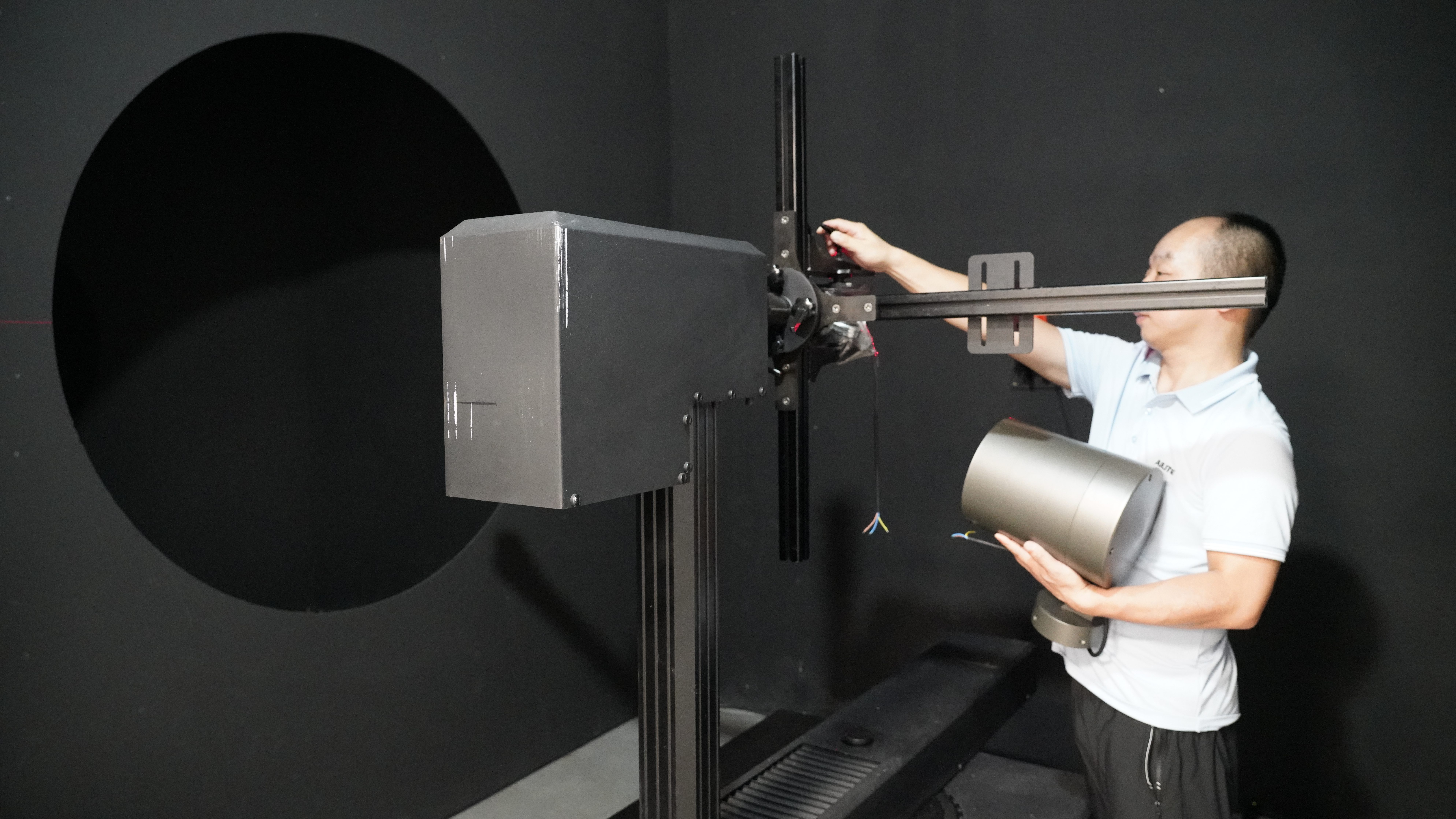
Project references help clarify fit. In Vietnam, 480 units of KUPU-YT120 flood lights were used for long-range projection and contour lighting in a tropical climate, with a reported stable period of five years. In Azerbaijan, 1,540 units of ALT-R38 wall washers were deployed in a government project for wall flood lighting and night decoration, with a reported stable period of one year. In Germany, a 50-unit pilot of DSL018/DS129 garden lights was supplied to an agent client and reported stable for two years. In South Africa, 5,000 units of KUPU-LD300 were deployed for road illumination and reported stable for four years. These cases do not prove that one fixture type is universally better; they show how different fixture classes are matched to different project tasks.
Application Scenarios: Matching Fixture to Project
In a typical outdoor project, flood lights and wall washers may appear in the same lighting scheme but at different layers. The following scenario logic helps buyers avoid over-specifying one fixture class.
| Project scenario | Preferred fixture logic | Why | Buyer check |
|---|---|---|---|
| Commercial building facade | Wall washer as the primary facade layer; flood lights only where area lighting is also needed | Facade lighting is a vertical-surface task; wall washers are designed around that plane | Confirm wall distance, beam distribution and uniformity target |
| Yard, driveway or forecourt | Flood lights for broad area coverage | These are open-area lighting tasks rather than wall-washing tasks | Confirm beam angle, wattage range and mounting height |
| Park or public landscape | Mix of flood lights, pathway lights and garden fixtures | Different layers serve visibility, guidance and atmosphere | Check IP rating, control mode and maintenance access |
| Garden bed and planting accent | Low-power compact spotlights or dedicated garden lights | High-power flood lights may overpower small landscape details | Check beam control and glare at eye level |
| Feature wall or entrance | Wall washers for vertical emphasis | The design intent is surface texture and architectural form | Review surface material and mock-up if visibility is high |
| Signage and object lighting | Directional flood or spotlight depending on distance | The task is to light a defined object rather than a wall or open area | Confirm aiming flexibility and spill control |
In residential and hospitality projects, LED garden lights and decorative outdoor landscape lighting often carry the human-scale layer, while flood lights and wall washers handle the broader architectural or area layer. A project that buys only decorative fixtures may lack visibility; a project that buys only flood lights may look flat. The better approach is to separate the tasks and then choose fixtures that are optically suited to each task.
Procurement Criteria: What to Verify Before Ordering
Buyers evaluating flood lights and wall washers should use different checklists because the fixtures are judged on different performance outcomes. The following criteria are a practical starting point.
For flood lights
- Beam angle: confirm whether the project needs a 15°, 30°, 45° or 60° beam, and match it to area size and mounting height.
- Wattage range: for backyard or broad-area lighting, a high-power wide-beam flood light in the 50W–200W range may be used depending on area size and mounting height.
- Glare control: check aiming, shielding and mounting height to avoid light spill toward viewers or adjacent properties.
- IP rating: the Light Legend Flood Lights series states IP65; confirm suitability for the actual exposure.
- Control mode: confirm whether the project needs steady-on, photocell, timer or other control, and verify compatibility with the selected model.
For wall washer lights
- Wall distance and mounting position: wall washing depends on the relationship between fixture, wall and viewing angle.
- Beam distribution: confirm the distribution pattern for the exact model and the intended wall height.
- Uniformity: check whether the design intent is even wash, grazing or accent; the same fixture can look different on different surfaces.
- Surface material: color, texture and reflectivity affect the perceived result; high-visibility facades may need a mock-up review.
- IP rating and wiring: confirm the protection rating and installation accessories for the exact model, especially for exposed facades.
For both fixture classes
- Color temperature: warm white 2700K–3000K is often used for gardens and patios, neutral white 4000K for commercial areas, and cool white 5000K–6500K for security and road lighting.
- CRI: CRI 80+ is standard for general outdoor use; CRI 90+ is preferred for landscape and architectural lighting where color fidelity matters.
- IP rating logic: IP65 or above is generally recommended for outdoor exposure; IP67 suits short-term immersion, and IP68 suits continuous underwater use. The exact requirement depends on the installation.
- Certification and documents: confirm CE, RoHS and IP test reports, plus any destination-market files such as UKCA or FCC where applicable.
- Lead time and MOQ: Light Legend states a standard delivery time of 10–20 days, with MOQ of 100 units for ODM and 500 units for OEM.
- After-sales support: confirm remote support arrangements and spare-part guidance for the project phase.
Limitations and Trade-offs
The most important limitation is optical, not commercial: flood lights and wall washers are not interchangeable. A flood light can be aimed at a wall, but it is not designed to produce the same controlled vertical wash as a wall washer. A wall washer can be used near a garden, but it is not designed to provide broad ground coverage. Buyers who ignore this distinction may end up with a fixture schedule that looks complete on paper but performs poorly on site.
There are also practical trade-offs. Flood lights may require more careful glare control because their broad output can spill beyond the target area. Wall washers may require more precise mounting and surface review because the wall itself reveals unevenness. A flood-light-only layout can be effective for visibility but may look flat on architecture. A wall-washer-only layout can be effective for facade identity but may leave pathways, yards and open areas under-lit. The correct specification is usually a layered one.
Boundary condition: neither fixture class should be selected from a catalogue image alone. Confirm beam angle, mounting distance, IP rating, control mode and certification scope for the exact model, and use a sample or mock-up where the visual outcome is critical.
Market Trend: Landscape Lighting Is Growing, But Specification Discipline Matters
The market data supports the view that Outdoor Landscape Lighting remains an active category. Grand View Research estimates the global landscape lighting market at USD 13.2 billion in 2024 and projects USD 22.0 billion by 2030. North America represented 34.9% of 2024 revenue. LED landscape lighting held approximately 45% share in 2023, and commercial applications accounted for 60% of demand in 2023. These figures suggest that commercial and architectural projects continue to drive a significant share of specification activity, where fixture performance and documentation are more important than decorative appearance alone.
The outdoor solar LED segment adds another dimension. Global Market Insights values the outdoor solar LED market at USD 7.10 billion in 2024, covering solar-powered LED street lights, garden lights and pathway lights. This does not mean solar products replace hardwired flood lights or wall washers in every project. It means buyers now have more power-source options within the same landscape package. The optical task still determines the fixture class; the power source determines the installation and maintenance model.
Trade data from OEC for HS 940540 shows USD 21.3 billion in global trade in 2024, with China exporting USD 13.5 billion. Because HS 940540 is broader than landscape lighting, it should be used as context rather than a direct landscape-lighting market size. The practical takeaway is that buyers have many sourcing options, which makes specification discipline more important. A supplier that can document beam angles, protection ratings, testing and export files is easier to compare than one that offers only general product descriptions.
Future Outlook
Outdoor landscape lighting is likely to move toward more layered specification rather than single-fixture packages. Projects will continue to combine flood lights, wall washers, LED garden lights, pathway lights and decorative fixtures because each class solves a different visual problem. Solar landscape flood lights, solar garden lights and solar pathway lights may expand where power access is constrained, but they should be evaluated on the same optical and environmental criteria as hardwired fixtures.
For buyers, the next stage is not simply finding more suppliers. It is building a fixture schedule that separates area lighting, facade lighting, garden accent lighting and path lighting, then verifying the exact model against the project conditions. That approach reduces rework, glare complaints and facade unevenness. It also makes supplier comparison more objective, because each fixture is judged against the task it was selected to perform.
FAQ
What is the main difference between flood lights and wall washer lights?
Flood lights are intended for broad-area illumination, object lighting and long-range projection. Wall washer lights are intended to project a controlled wash across a vertical surface such as a facade or feature wall. The core difference is the lighting plane: area and object versus vertical surface.
Which IP rating should outdoor flood lights and wall washers have?
IP65 or above is generally recommended for outdoor exposure. IP67 suits short-term immersion, and IP68 suits continuous underwater use. The Light Legend Flood Lights series states IP65. For wall washers, the IP rating should be confirmed for the exact model and project exposure rather than assumed from another fixture family.
How do I choose a beam angle for flood lights in a commercial yard?
Match the beam angle to the area size and mounting height. Wide-beam flood lights are recommended for broad areas such as yards, driveways and commercial facades. The Light Legend Flood Lights series offers 15°, 30°, 45° and 60° beam angles. A high-power wide-beam flood light in the 50W–200W range may be used depending on area size and mounting height.
Are wall washer lights suitable for garden lighting?
Wall washers are suitable when the garden design includes a wall, boundary feature or architectural surface that should be washed with light. They are not a substitute for garden accent lights, pathway lights or flood lights used for open-area coverage. The fixture should be selected for the surface it is intended to light.
What should buyers verify before ordering custom flood lights or wall washers?
Confirm the exact model, beam angle or beam distribution, IP rating, color temperature, CRI, control mode and mounting accessories. Also confirm certification files such as CE, RoHS and IP test reports, plus destination-market files where required. Light Legend supports OEM and ODM customization covering voltage, logo and packaging, with product customization also available under ODM. The stated standard delivery time is 10–20 days, with MOQ of 100 units for ODM and 500 units for OEM.
Can one fixture type handle both area lighting and facade lighting?
It is not recommended to force one fixture type to perform both tasks. Flood lights are optimized for area or object illumination, while wall washers are optimized for vertical surface illumination. Using both fixture types in a layered layout is more reliable than expecting a single product to deliver both effects.
Reference Material
For buyers who need an additional product reference, the Light Legend solar decorative garden light catalogue is available as a PDF: Light Legend product catalogue.
This comparison is intended as a procurement reference for outdoor landscape lighting projects. Fixture selection should be confirmed against the final lighting design, site conditions and destination-market requirements.
Tem questões ou precisa de mais detalhes?
Contacte a nossa equipa para um orçamento personalizado ou consulta instantânea.
Solicitar orçamento
Preencha o formulário abaixo e a nossa equipa entrará em contacto com uma proposta personalizada.
Chat direto do WhatsApp
Prefere conversar em tempo real? Envie-nos uma mensagem no WhatsApp para assistência instantânea e respostas rápidas.
- Obter orçamento personalizado
- Partilhar fotos ou documentos
- Discuta as suas necessidades diretamente
Geralmente responde em 5–30 minutos durante o horário de expediente.