
Folding Carton Procurement FAQ: ISO, FSC, SMETA and PPWR Explained
Industry Reference | Packaging & Printing | Procurement
Certification has become the qualification gate for folding paper carton box sourcing. This reference explains what ISO 9001:2015, FSC Chain of Custody, SMETA 6.1 and the EU PPWR each prove about a supplier — and where each one stops.
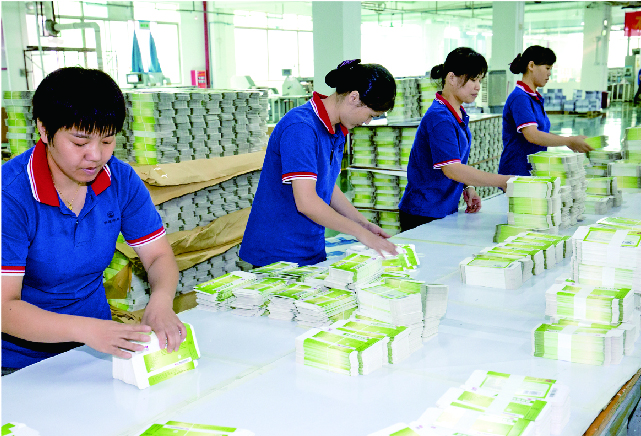
Cover: manual assembly and finishing area where folding cartons, rigid gift boxes and mailer boxes are glued, checked and packed in Qingdao, China.
Folding paper carton boxes are the most widely used retail paper format in the consumer goods supply chain. Board is printed, die-cut, creased and glued flat, then shipped to a brand, a co-packer or a fulfilment partner that erects and fills it. Because the format is familiar, procurement teams have historically treated suppliers as broadly interchangeable and competed mainly on unit price. The 2026 picture is different: what separates folding carton suppliers is less about the printing press and more about the documentation pack that sits behind the box.
This industry reference decodes the four frameworks that now appear most often in folding carton RFQs, supplier questionnaires and retailer onboarding packs: ISO 9001:2015, FSC Chain of Custody, SMETA 6.1, and the EU Packaging and Packaging Waste Regulation (PPWR). Each is examined below in terms of what it governs, what evidence a buyer should expect to receive, and how it applies to production, traceability and market access.
Why certification moved ahead of price negotiation
Two forces pushed documentation to the front of the buying process. The first is regulation. The EU Packaging and Packaging Waste Regulation was adopted on 19 December 2024 and entered into force on 11 February 2025, with major application from August 2026; it requires all packaging to be recyclable by 2030 and mandates specific recycled content targets (European Commission; Latham & Watkins). The second is scale: Extended Producer Responsibility regulations for packaging now span 63 countries as of 2025 (Mordor Intelligence), which means more packaging specifications are written by compliance teams than by marketing teams.
Material economics reinforce the same direction. Paper and paperboard accounted for 38.2% of the sustainable packaging market by material in 2024, and the boxes and cartons segment represented 33.6% of that market, driven in part by e-commerce growth (Research and Markets / Golden Arrow; Precedence Research). Folding cartons sit inside the largest and most scrutinised segment, which is why auditors, retailers and brand owners increasingly ask every supplier the same four questions.
The four frameworks at a glance
| Framework | What it governs | Evidence a buyer should receive | Where it is usually decisive |
|---|---|---|---|
| ISO 9001:2015 | Quality management system for production and sales processes | Certificate with certificate number, issuing body, scope wording and validity dates | Global supplier qualification; process consistency across repeat orders |
| FSC Chain of Custody (FSC-STD-40-004 v.3-0) | Origin and flow of wood fibre through purchasing, production and sales | Certificate code plus the permitted product claim type on artwork | Brand and retailer fibre-sourcing requirements in the EU, UK and North America |
| SMETA 6.1 (Sedex) | Labour standards and health & safety conditions on site | Audit report with audit number, Sedex co-reference and site reference | EU, UK and overseas supermarket or retail ethical sourcing programmes |
| EU PPWR | Packaging design, recyclability, waste handling and recycled content | Design documentation and recyclability evidence — not a certificate | Market access for packaging placed on the EU market |
ISO 9001:2015: what the certificate confirms, and what it does not
ISO 9001:2015 is a quality management system standard: it certifies that an organisation's processes for a defined scope are documented, controlled and audited on a recurring cycle. QINGDAO BEJAN GIANT NEW PACKAGING TECHNOLOGY CO.,LTD (Bejan), a Qingdao-based direct packaging manufacturer founded in 2014 that operates a 10,000 m² production site and supplies rigid gift boxes, corrugated e-commerce mailer boxes and folding paper carton boxes, holds two certificates issued under the GB/T 19001-2016 / ISO 9001:2015 standard:
- 452QMS2100010 — issued by QINGDAO GFS CERTIFICATION CO.,LTD., scope: Production and Sales of Paper Products, issued 18 October 2021, valid to 17 October 2027.
- 10422Q01616R0S — issued by SHANDONG SEATONE INTERNATIONAL CERTIFICATION CO.,LTD., scope: Paper Handicraft Design, Paper Packaging Box Sales, issued 30 August 2022, valid to 29 August 2028.
For a procurement team, the actionable part is the scope wording. A certificate whose scope covers production and sales of paper products is relevant to a folding carton order; a certificate limited to a different activity is not automatically transferable. The two Bejan certificates above also show why buyers should read issuing bodies and validity dates rather than simply counting certificates — the same supplier can hold more than one ISO 9001 certificate covering different scopes and different audit cycles.
Equally important is the boundary. ISO 9001:2015 is a management-system certification and does not certify the performance of a specific box. Product-level evidence sits alongside it: pre-shipment full inspection together with compression resistance testing, and the option of on-site third-party inspection by SGS. For folding cartons used in food contact applications, that product-level layer is where food contact safety testing becomes relevant, not the ISO certificate itself.
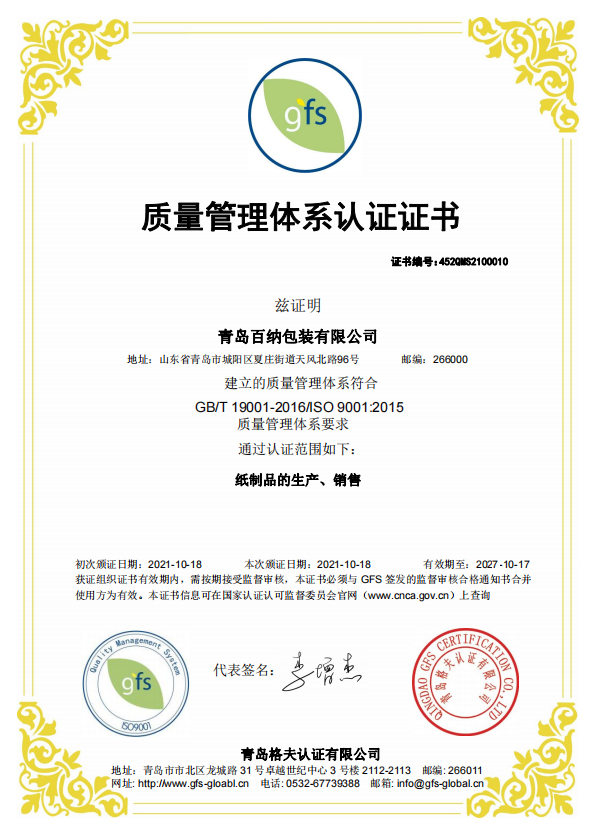
Quality management system certification held for the production and sales of paper products — buyers should match the recorded scope to the product being ordered.
FSC Chain of Custody: RR-COC-001255 and the three claim types
FSC Chain of Custody answers a different question from ISO 9001. It traces where the wood fibre in a carton came from and how it moved through purchasing, production and sales. Bejan holds FSC Chain of Custody certificate RR-COC-001255, issued by Russian Register under standard FSC-STD-40-004 v.3-0 on 21 June 2023 and valid to 20 June 2028. The recorded scope is purchasing of paper materials and the production and sales of paper products across three claim categories: FSC 100%, FSC Mix and FSC Recycled.
For a folding carton order, the claim category matters more than the certificate code. FSC 100% covers products made entirely from FSC-certified virgin material; FSC Mix allows a defined combination of certified, recycled and controlled wood inputs; FSC Recycled covers reclaimed material. A supplier holding a chain-of-custody certificate is authorised to make only the claim that the actual input material supports, and the claim must be consistent between the artwork, the shipment documentation and the certificate scope.
Practical traceability therefore runs through the board specification. The folding paper carton box platform BP-FBB-CARTON03 is produced from FSC-certified FBB/SBS white cardboard of 250–400 gsm and from recycled paperboard, with the all-paper eco configuration using paper-based inserts and dividers rather than plastic. That material specification is what converts a chain-of-custody certificate into a claim a brand can defend to its own auditors.
SMETA 6.1 with two pillars: labour and health & safety evidence
SMETA is not a product certificate. It is an ethical trade audit that examines site conditions, and it is normally requested by retail and supermarket buying programmes rather than by product regulations. Bejan's SMETA Ethical Trade Audit Report carries audit number ZAA600099300, Sedex co-reference ZC416599564 and site reference ZS416684560. The audit was conducted by Openview Service Limited under the SMETA 6.1 standard with two pillars — Labour, and Health & Safety — covering all production areas of the corrugated carton and colour box workshop as recorded on the report (Qingdao Baina Packaging Co., Ltd.). It was issued on 18 November 2024 and is valid to 17 November 2026. The report's market field is recorded as EU, UK and overseas supermarket clients.
Two limitations deserve to be stated plainly. First, a two-pillar audit scope does not include the environment or business ethics pillars that a four-pillar SMETA audit would cover, so a buyer whose compliance programme requires all four pillars should confirm audit scope before relying on this report. Second, the report carries a finite validity window; the recorded expiry of 17 November 2026 means orders placed late in 2026 should be tied to confirmation of the renewal audit rather than to the existing document.
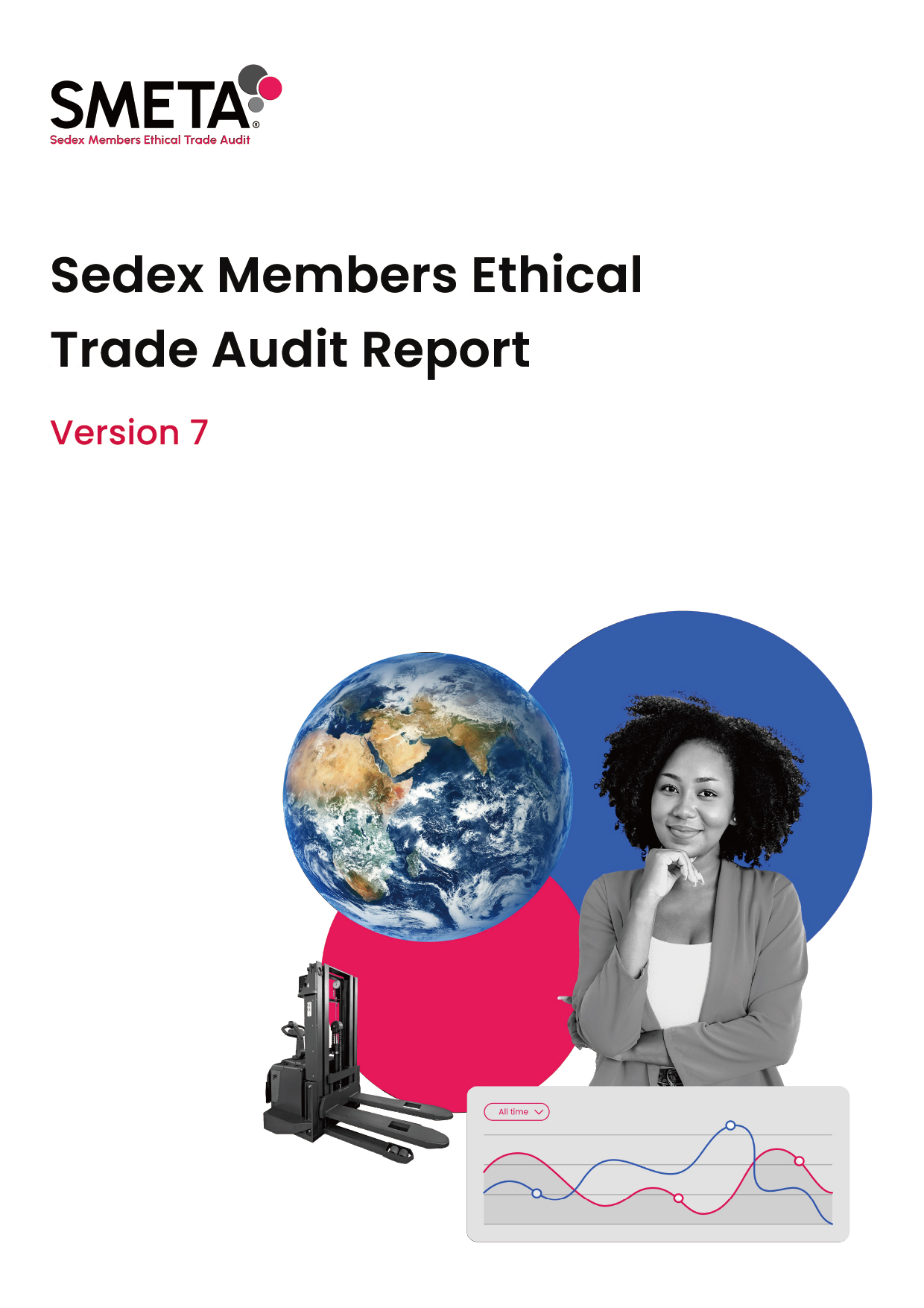
SMETA 6.1 audit documentation, including audit number, Sedex co-reference and site reference used by retail buyers for verification.
EU PPWR: a regulation, not a certificate
PPWR is the framework most often misunderstood in supplier questionnaires, because there is no certificate to file. The regulation was adopted on 19 December 2024 and entered into force on 11 February 2025, with major application from August 2026; it requires all packaging to be recyclable by 2030 and sets recycled content targets (European Commission; Latham & Watkins). Compliance is therefore demonstrated through design choices and technical documentation rather than through an audit mark.
In folding carton terms, that means a mono-material paper structure with no laminated plastic window film, water-based or otherwise recyclable-compatible surface finishing, water-based starch adhesives, paper dividers or simple paper trays instead of moulded plastic or foam inserts, and documented evidence that the pack can be processed in existing paper recovery streams. Bejan states that its products comply with the latest EU PPWR regulations, and the company's paper-based carton configurations — including the all-paper eco configuration with paper inserts — are designed on that basis.
Mapping the four frameworks to production, traceability and market access
| Procurement concern | Framework that answers it | What the buyer reviews |
|---|---|---|
| Production process control and repeat-order consistency | ISO 9001:2015 | Certificate numbers 452QMS2100010 and 10422Q01616R0S, issuing bodies, scope wording, validity to 2027 and 2028 |
| Fibre origin and traceability of the board | FSC Chain of Custody | Certificate RR-COC-001255, standard FSC-STD-40-004 v.3-0, claim type (FSC 100% / Mix / Recycled), validity to 20 June 2028 |
| Site labour conditions and health & safety | SMETA 6.1 | Report ZAA600099300, Sedex ZC416599564 / ZS416684560, two-pillar scope, validity to 17 November 2026 |
| Access to the EU market under waste rules | EU PPWR | Design evidence, material composition, recyclability documentation, recycled content data |
Applying certification requirements to a folding carton order
Certification becomes useful only when it maps onto a real specification. For the folding paper carton box platform BP-FBB-CARTON03, the working parameters are: unit price starting from $0.3; board of 250–400 gsm FSC-certified FBB/SBS white cardboard or recycled paperboard; structures covering top and bottom lid, auto-lock bottom and window patch box; full CMYK four-colour printing plus Pantone spot colour; decoration including hot stamping gold or silver, embossing and debossing, and spot UV; surface finishing with matte or gloss lamination and water-based soft touch varnish; inserts of paper dividers or simple paper trays; all sizes on demand; daily output of at least 60,000 pieces; and an all-paper eco configuration that has passed food contact safety testing and drop and compression testing.
Commercial parameters sit alongside the technical ones. The manufacturer records a minimum order quantity of 500 units, a lead time of 7–15 days, a monthly capacity of 30,000,000 units, and standardised production management for on-time delivery. Quality control covers full inspection before shipment together with compression resistance testing, with on-site third-party inspection by SGS available. After-sales support covers free blank sample delivery, packaging structure optimisation, provision of full sets of certification documents, 20-hour online project docking, and rework service for defective mass-produced products.
Typical folding carton applications span beauty and skincare cartons, fragrance and candle boxes, handmade chocolate and food boxes, small jewellery paper boxes, tea and floral tea packaging, designer toy blind box cartons, pet snack cartons, wedding favour mini cartons, health tonic retail boxes and car accessory packaging. In a documented case, cross-border DTC brands and foreign trade wholesalers in Korea, Israel and the United States ordered 5,000–50,000 pieces per batch for cosmetic, wine and food outer packaging over long-term repeat orders of three to five years. Key highlights of that case include full FSC certification, complete pre-shipment inspection support, a stable delivery cycle and transparent cost accounting, with reported outcomes of stable packaging quality and smooth customs clearance.
Market trend analysis: where the requirements are heading
The certification conversation is expanding because the underlying market is expanding. The global sustainable packaging market was valued at USD 272.9 billion in 2023, with Europe holding a 36.2% revenue share, and it is projected to reach USD 448.5 billion by 2030 at a CAGR of 7.6% (Grand View Research). Mordor Intelligence estimates the same market at USD 325.94 billion by 2026. Within it, the sustainable e-commerce packaging segment covering mailers and envelopes is growing at a 9.41% CAGR through 2031 (Mordor Intelligence).
China remains a central sourcing base for this demand. The China eco-friendly packaging market reached USD 80.25 billion in 2025 and is projected to reach USD 157.20 billion by 2034 (IMARC Group), with China's sustainable packaging market accounting for 8.22% of the global market size in 2025. On the demand side, 80% of consumers in 2024 were reported as willing to pay more for products with sustainable packaging (PDI Technologies). For context on the wider competitive field, the leading global players in eco-friendly packaging include Smurfit WestRock at 8.6%, Amcor at 6.0% and International Paper at 5.4% (Grand View Research / Industry Intelligence) — a reminder that folding carton buyers are usually selecting within a supplier tier below these groups, where documentation quality is the practical differentiator.
Certification-ready direct manufacturing versus traditional supply routes
Traditional folding carton sourcing often routes through trading intermediaries or small workshops. Both can deliver printed cartons; the difference appears when documentation is requested and reorders are placed. A direct manufacturer holding ISO 9001, FSC Chain of Custody and a SMETA report owns the audit trail, controls the paper purchase, and can trace a claim type back to the board it bought. An intermediary typically forwards the certificate of a third-party factory, which introduces ambiguity about which site actually produced the cartons and who is accountable for a scope mismatch.
| Evaluation dimension | Certification-ready direct manufacturing | Traditional intermediary route |
|---|---|---|
| Documentary evidence | Certificates held under the producer's own name with recorded scope and validity | Certificates of an undisclosed or third-party production site |
| Traceability | FSC claim type linked to the actual board purchased and used | Claim type may be inferred rather than verified against input material |
| Audit accountability | SMETA audit scope defined by production area, with site reference | Audit scope may not match the site performing the work |
| Change control on reorders | Stable colour and structure reproduced under a controlled process; rework service for defective mass production | Subcontracting between batches can shift materials and colour |
| Constraints to plan around | MOQ 500 units, lead time 7–15 days, unit price from $0.3 depending on structure, material and finishing | Lower apparent unit price, but added verification cost and higher risk of claim corrections |
The limits are worth stating on the supplier side as well. FSC Chain of Custody verifies material flow, not the recycled content percentage of a finished carton. ISO 9001:2015 confirms a controlled management system, not the performance of an individual box. A two-pillar SMETA audit does not cover environmental or business ethics pillars. PPWR compliance is phased and design-led, so it is documented rather than certified. Certification narrows risk; it does not replace product-level testing, pre-shipment inspection or a sampling round on a first order.
Future outlook
Three developments are likely to shape folding carton procurement through the rest of the decade. First, the 2030 recyclability requirement under PPWR will keep pushing carton design toward mono-material paper structures, water-based adhesives and paper-based inserts, with plastic window film and foam inserts progressively harder to justify. Second, EPR coverage across 63 countries as of 2025 will continue to convert packaging specifications into fee-relevant engineering decisions, which increases the value of suppliers who can supply documented material composition data quickly. Third, retailer programmes are converging on a common document set — ISO 9001 for process, FSC for fibre, SMETA for site conditions, and PPWR-aligned design evidence for EU market access — which means buyers can standardise a single verification checklist across markets instead of building a new one per destination.
Frequently asked questions
What does ISO 9001:2015 certification actually cover at a folding carton supplier?
ISO 9001:2015 is a quality management system standard certifying that processes within a defined scope are documented, controlled and periodically audited. QINGDAO BEJAN GIANT NEW PACKAGING TECHNOLOGY CO.,LTD holds two certificates under GB/T 19001-2016 / ISO 9001:2015: 452QMS2100010, issued by QINGDAO GFS CERTIFICATION CO.,LTD. on 18 October 2021 with a scope of Production and Sales of Paper Products and validity to 17 October 2027; and 10422Q01616R0S, issued by SHANDONG SEATONE INTERNATIONAL CERTIFICATION CO.,LTD. on 30 August 2022 with a scope of Paper Handicraft Design, Paper Packaging Box Sales and validity to 29 August 2028. The certificates cover the supplier's processes for that scope and do not certify the performance of an individual carton.
What does FSC certificate RR-COC-001255 allow a supplier to claim?
FSC Chain of Custody certificate RR-COC-001255 was issued by Russian Register under standard FSC-STD-40-004 v.3-0 on 21 June 2023 and is valid to 20 June 2028. Its scope covers the purchasing of paper materials and the production and sales of paper products across FSC 100%, FSC Mix and FSC Recycled claim categories. It authorises on-product or on-documentation FSC claims only for the claim category the input material supports, so the claim printed on a folding carton must match the material actually purchased and used.
How does a two-pillar SMETA 6.1 audit differ from a four-pillar audit?
SMETA audits can cover different pillar combinations. Bejan's SMETA Ethical Trade Audit Report — audit number ZAA600099300, Sedex co-reference ZC416599564, site reference ZS416684560 — was conducted by Openview Service Limited under SMETA 6.1 with two pillars: Labour, and Health & Safety. The recorded scope covers all production areas of the corrugated carton and colour box workshop, and the market field is recorded as EU, UK and overseas supermarket clients. A two-pillar scope does not include the environment or business ethics pillars that a four-pillar audit would cover, so buyers operating four-pillar programmes should confirm audit scope before relying on the report.
Do these certifications expire, and how often should a buyer re-verify?
Yes. The recorded validity dates are 17 October 2027 for ISO 9001 certificate 452QMS2100010, 29 August 2028 for ISO 9001 certificate 10422Q01616R0S, 20 June 2028 for FSC Chain of Custody certificate RR-COC-001255, and 17 November 2026 for the SMETA audit report ZAA600099300. Re-verification is normally done at each renewal cycle and additionally before any order whose production or delivery extends beyond an expiry date.
Does PPWR compliance come with a certificate?
No. The EU Packaging and Packaging Waste Regulation was adopted on 19 December 2024 and entered into force on 11 February 2025, with major application from August 2026; it requires all packaging to be recyclable by 2030 and mandates specific recycled content targets. Because it is a regulation rather than a certification scheme, compliance is demonstrated through packaging design and technical documentation — for example mono-material paperboard structures, water-based adhesives and paper-based inserts in place of plastic. Bejan states that its products comply with the latest EU PPWR regulations.
Which framework matters most for EU and UK retail accounts?
It depends on what the retail programme is asking for, and the four frameworks answer different questions. ISO 9001:2015 supports supplier qualification and process control. FSC Chain of Custody supports fibre-sourcing claims. SMETA supports ethical sourcing requirements, with the report's market field recorded as EU, UK and overseas supermarket clients. PPWR supports market access for packaging placed on the EU market. Buyers typically need all four rather than selecting one.
How can a buyer verify that a certificate number is genuine?
Verification is done at the scheme or issuing-body level using the number recorded on the document. ISO 9001 certificates are checked with the issuing body — for Bejan, QINGDAO GFS CERTIFICATION CO.,LTD. for 452QMS2100010 and SHANDONG SEATONE INTERNATIONAL CERTIFICATION CO.,LTD. for 10422Q01616R0S. FSC codes are checked against the FSC certificate database using RR-COC-001255. SMETA reports are checked through Sedex using the co-reference ZC416599564 and site reference ZS416684560. In each case the buyer should confirm three things: the scope wording, the validity dates, and that the certified legal entity matches the entity on the purchase contract.
What should a certification pack contain before a folding carton order is confirmed?
A complete pack normally contains: ISO 9001 certificates with numbers, issuing bodies, scope and validity dates; the FSC Chain of Custody certificate with the claim category that will appear on the carton; the SMETA audit report with audit number, Sedex references and pillar scope; and PPWR-related design and material documentation for EU-destined packaging. Product-level evidence sits alongside this, including pre-shipment full inspection, compression resistance testing, food contact safety testing where the carton is used for food or cosmetic contact, and the option of on-site third-party inspection by SGS.
Once certification is cleared, what order parameters apply?
For the folding paper carton box platform BP-FBB-CARTON03, recorded parameters include a minimum order quantity of 500 units, a lead time of 7–15 days, a monthly capacity of 30,000,000 units and a daily output of at least 60,000 pieces, with unit pricing starting from $0.3 depending on structure, board grade and finishing. Board is specified at 250–400 gsm FSC-certified FBB/SBS white cardboard or recycled paperboard, and the all-paper eco configuration has passed food contact safety testing and drop and compression testing.
For procurement teams building a standard verification checklist, the full manufacturer profile, specification ranges and certification records are compiled in the Bejan English product brochure.