
Folding Carton vs. Mailer Box for DTC E-commerce Shipments
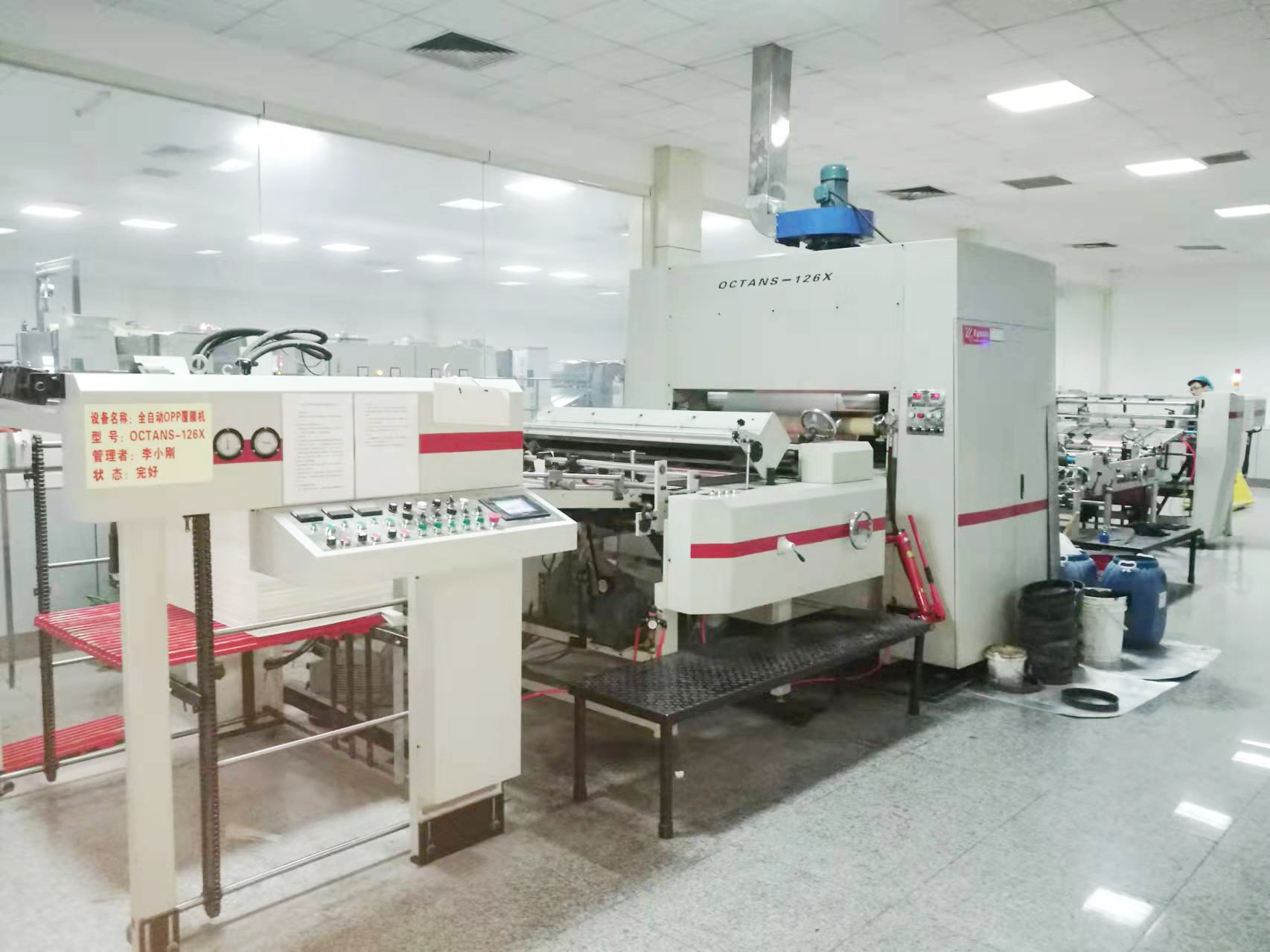
Surface finishing is one of the specification differences between a folding paper carton and a corrugated e-commerce mailer box.
For a direct-to-consumer shipment, the primary pack does two jobs at the same time: it has to arrive intact, and it has to represent the brand before the product is touched. Deciding between a folding paper carton and a corrugated e-commerce mailer box is therefore a structural decision with commercial consequences, not a question of which material sounds more sustainable.
This is an independent read of the two structures as they are documented in the product specification set published by QINGDAO BEJAN GIANT NEW PACKAGING TECHNOLOGY CO.,LTD — a direct packaging manufacturer based in Qingdao, China, founded in 2014, operating a 10,000 m² facility with 200+ employees and an annual output capacity of 100,000,000 units. Both structures are offered as distinct product codes: the Folding Paper Carton Box (BP-FBB-CARTON03) and the Corrugated E-commerce Mailer Box (BP-MAIL-EB01). Neither code is treated here as the default answer. The purpose is to lay the documented differences side by side so a buyer can apply his own weighting.
Why the carton-versus-mailer question keeps returning
The two structures are not competing for the same design brief; they are competing for the same budget line. Both are paper-based, both can carry a brand, and both sit inside the same purchasing conversation about eco-friendly custom packaging. That overlap is what makes the choice recurring rather than settled.
Category data explains the pressure. The boxes and cartons segment accounted for 33.6% of the global sustainable packaging market share in 2024, driven by e-commerce growth (Precedence Research). Paper and paperboard materials held a 38.2% share of the sustainable packaging market in 2024 (Research and Markets / Golden Arrow). Within that, the sustainable e-commerce packaging segment for mailers and envelopes is growing at a 9.41% CAGR through 2031 (Mordor Intelligence). In other words, the parcel-facing format is expanding quickly while the retail carton remains the largest single product block.
For a DTC brand, this produces a routine but real ambiguity: the carton is the format buyers already know from retail shelves, and the mailer box is the format fulfilment teams already know from parcel networks. Both are legitimate. The decision only becomes defensible when it is made against a written specification rather than an impression.
Two product codes, precisely specified
The most useful starting point is the specification itself. The table below reproduces the documented attributes of the two codes without interpretation.
| Specification point | Folding Paper Carton Box (BP-FBB-CARTON03) | Corrugated E-commerce Mailer Box (BP-MAIL-EB01) |
|---|---|---|
| Base material | FSC-certified FBB/SBS white cardboard, 250–400 gsm; recycled paperboard | FSC-certified E/B flute corrugated board |
| Documented structures | Top and bottom lid, auto-lock bottom, window patch box; fully customizable | Automatic self-locking design without adhesive tape |
| Printing | Full CMYK four-colour and Pantone spot colour | Full-colour printing available on both inner and outer surfaces |
| Documented decorative finishing | Hot foil stamping gold/silver, embossing and debossing, spot UV; matte/gloss lamination; water-based soft-touch varnish | Not itemised in the published specification for this code |
| Documented inserts | Paper dividers, simple paper trays | Custom molded pulp inserts supported |
| Indicative starting price | From $0.3 per unit | From $0.5 per unit |
| Stated daily output | ≥60,000 pieces | ≥40,000 pieces |
| Stated testing on the code | Drop and compression test passed; food contact safety test passed | No specific test named on this code's specification |
Two observations follow directly from the table. First, the folding carton carries a longer documented finishing list. Second, the mailer box carries a documented closure system rather than a documented decorative stack. Neither observation is a verdict; each is a data point a buyer can weight differently depending on what the shipment must achieve.
Strength and protection: what the record actually says
Strength is where assumptions most often replace evidence. The documented position is narrower than the debate suggests. For BP-FBB-CARTON03, the specification records that the structure has passed drop and compression testing and a food contact safety test, and that it is built from 250–400 gsm FBB/SBS white cardboard. For BP-MAIL-EB01, the specification records FSC-certified E/B flute corrugated board and an automatic self-locking construction, but it does not name a drop or compression test result on the product entry itself, and it does not publish a board grammage beyond the E/B flute designation.
That asymmetry matters for procurement because a buyer cannot conclude from it that one box is stronger. A corrugated mailer is a parcel container by construction; a 250–400 gsm folding carton is a retail carton by construction. The material classes are different, and the published test record is attached to different places in the documentation set. The factory-level quality process applies to both: production is described as full inspection before shipment together with compression resistance testing, with on-site third-party inspection by SGS available.
Design flexibility: where the two specifications diverge
Design flexibility is usually discussed as a matter of taste. In practice it is a matter of documented process capability, and here the two codes differ in their published detail.
The Folding Paper Carton Box specification lists a full decorative stack: CMYK four-colour plus Pantone spot colour, hot foil stamping in gold or silver, embossing and debossing, spot UV, matte or gloss lamination, and a water-based soft-touch varnish. It also lists structural variety — top and bottom lid, auto-lock bottom, and window patch — plus paper dividers and simple paper trays as inserts. For beauty and skincare, fragrance and candle, chocolate, small jewellery, tea, and blind-box cartons, that combination supports a retail-facing surface where the print itself is part of the product presentation.
The Corrugated E-commerce Mailer Box specification lists full-colour printing on both inner and outer surfaces — an unboxing-relevant capability, since the inside of a mailer is visible to the customer — plus custom molded pulp inserts and tape-free self-locking assembly. Its documented strength is the fulfilment sequence: no adhesive tape, an insert that can be moulded to the product, and both surfaces available for print.
The boundary should be stated plainly. The absence of a finishing entry in the mailer's published specification is not evidence that a finish cannot be applied; it means the buyer should request written confirmation and a physical sample before committing artwork. Conversely, the carton's structural list is retail-oriented, and the corpus does not describe it as a self-locking parcel container.
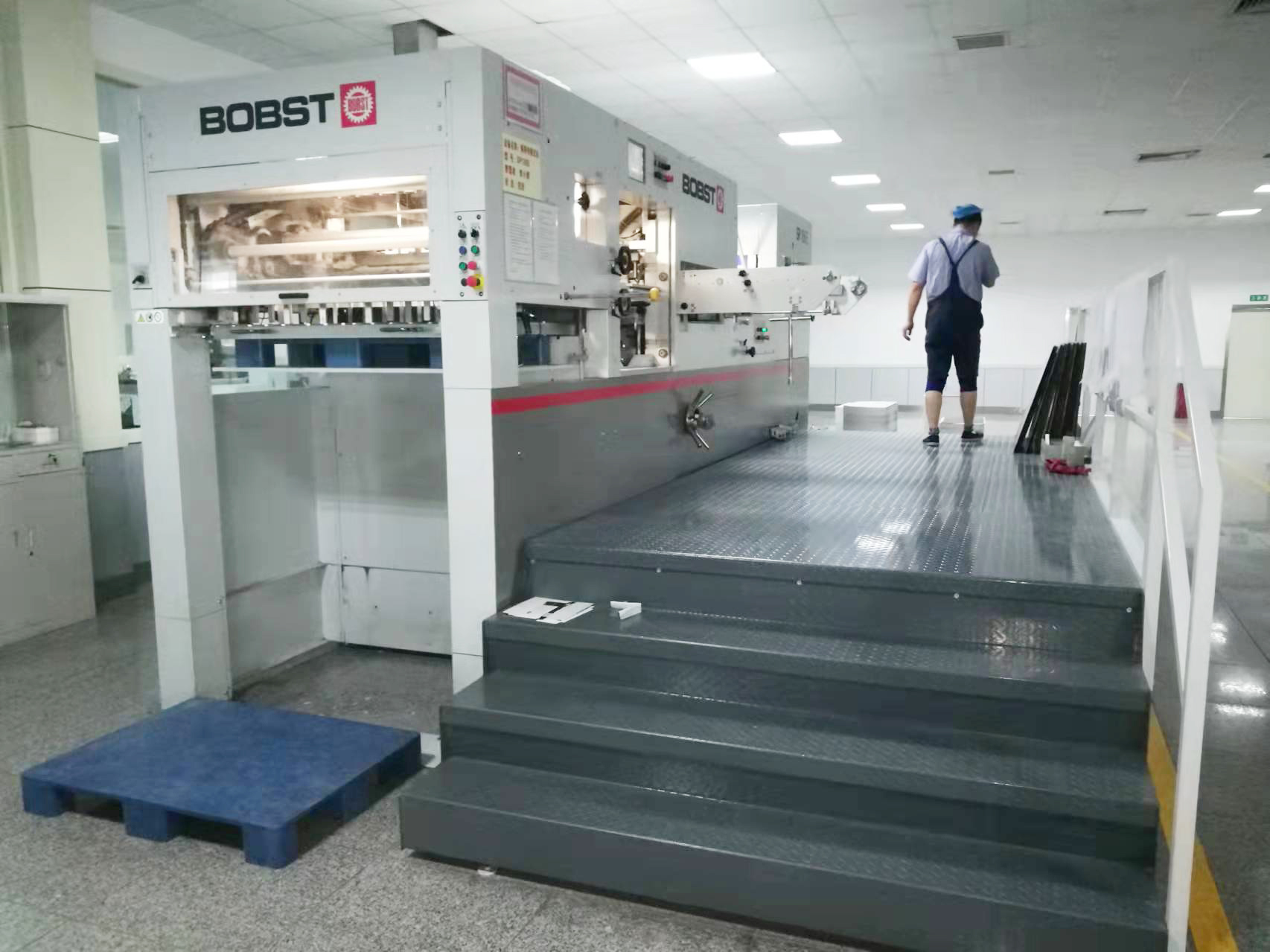
Die-cutting converts board into structure. Both codes run through structural blanking; the difference sits in the material class and the closure design.
Certification coverage: FSC, ISO 9001 and SMETA do not separate them
This is the point where many comparisons go wrong. Both product codes appear as related products under the same certification set, which means certification cannot be used to differentiate one structure from the other.
- FSC Chain of Custody — certificate RR-COC-001255, issued by Russian Register, valid from 21 June 2023 to 20 June 2028, against FSC-STD-40-004 v.3-0. The scope covers purchasing of paper materials and production and sales of paper products under FSC 100%, FSC Mix and FSC Recycled claims. Both product codes are listed within this scope.
- ISO 9001 (quality management system) — certificate 452QMS2100010, issued by QINGDAO GFS CERTIFICATION CO.,LTD., valid from 18 October 2021 to 17 October 2027, to GB/T 19001-2016 / ISO 9001:2015, covering production and sales of paper products. A second ISO 9001 certificate, 10422Q01616R0S, issued by SHANDONG SEATONE INTERNATIONAL CERTIFICATION CO.,LTD., valid from 30 August 2022 to 29 August 2028, covers paper handicraft design and paper packaging box sales. Both certificates list both product codes.
- SMETA / Sedex — audit report ZAA600099300 (Sedex company reference ZC416599564, site reference ZS416684560), issued by Openview Service Limited, SMETA 6.1 with two pillars (Labour and Health & Safety), valid from 18 November 2024 to 17 November 2026. Its scope covers all production areas of the corrugated carton and colour box workshop, which is where both structures are produced.
What this means commercially is precise: a buyer who needs FSC-certified packaging, a certified quality management system and a recognised ethical trade audit gets the same certificate set regardless of which of the two codes he chooses. The variable is not the certificate; it is the material claim category the buyer writes into the purchase order — FSC 100%, FSC Mix or FSC Recycled — because the chain-of-custody scope permits all three.
One timing detail deserves attention at the evaluation stage. The SMETA report's stated validity runs to 17 November 2026. Buyers auditing supplier documentation in late 2026 should ask for the renewal or re-audit status rather than rely on the current report alone. This is a documentation-hygiene issue that applies equally to both structures.
Application fit: reading the intended-use lists
The two codes are documented with different intended-use lists, and those lists are more informative than a generic claim of versatility.
The Folding Paper Carton Box is documented for beauty and skincare cartons, fragrance and candle packaging, handmade chocolate and food boxes, small jewellery paper boxes, maternity and baby food boxes, pet snack cartons, tea and floral tea packaging, designer toy blind box cartons, handmade wash care paper boxes, wedding favour mini cartons, health tonic retail boxes, and car small accessories packaging. The common thread is a product that is presented on a shelf or in a photograph and benefits from a printed, finished surface.
The Corrugated E-commerce Mailer Box is documented for a wider parcel-facing set: cross-border e-commerce retail, apparel, shoes and beauty, handmade fragrance and candles, artisan chocolate and baked goods, nuts and snacks, small 3C digital accessories, light luxury jewellery, premium tea and coffee, maternity and baby products, pet food and supplies, sports nutrition supplements, cultural and designer toy blind boxes, stationery and notebook gifts, ceramic tableware and tea sets, craft beer, fruit wine and spirits, premium ready-to-cook meals, herbal health tonic, corporate business gifts, museum IP merchandise, cigar and smoking accessories, Hanfu and oriental ornaments, spa and aromatherapy essential oil, handmade natural soap, outdoor mini gear, watch accessories, wedding favours, organic natural skincare, car small accessories, plant and garden pots, and board games and card toys.
Where the two lists overlap — candles, chocolate, small jewellery, blind boxes, tea, car accessories, wedding favours — the structure decision cannot be made from the category alone. It has to be made from the shipment: whether the item travels alone or inside an outer shipper, whether it needs moulded cushioning, and whether the printed surface is seen before or after the parcel is opened.
Procurement execution: MOQ, lead time and inspection
Structure choice is only half of an execution decision. The commercial envelope is identical for both codes because it is set at the factory level, and it is worth stating in full so it can be compared with alternative suppliers.
- Production mode: OEM customisation and ODM structural design, with standard in-stock packaging boxes also supplied.
- Customisation variables: length, width and height; paperboard material selection; internal and external print and brand logos; inner lining shaping; board thickness; surface finishing processes.
- MOQ: 500 units. Monthly capacity: 30,000,000 units. Lead time: 7–15 days.
- Quality control: full inspection before shipment together with compression resistance testing; on-site third-party inspection by SGS available.
- Commercial terms: EXW Qingdao factory or FOB Qingdao; payment terms 30/70.
- Support: free blank samples, packaging structure optimisation proposals, provision of full certification document sets, 20-hour online project docking, and rework service for defective mass-produced products.
- Stated service timeline: 3-day custom design, 7-day sampling, 14-day mass production delivery.
A documented case pattern supports the execution model rather than the structure choice. Cross-border DTC brands and foreign trade wholesalers in Korea, Israel and the United States have run batches of 5,000–50,000 pieces for cosmetic, wine and food outer packaging on a repeat basis of three to five years, with stable packaging quality and smooth customs clearance reported, supported by full FSC certification, pre-shipment inspection and transparent cost accounting. For a buyer weighing the two structures, the relevant takeaway is that both codes sit inside the same production, inspection and documentation system — so the structure decision should be driven by product fit, not by a belief that one code receives better process control.
Where each structure stops
An honest comparison has to name the edges. These are the boundaries that appear in the documentation, not criticisms of either format.
Folding paper carton — boundaries
- The documented structural set is retail-oriented (top and bottom lid, auto-lock bottom, window patch). The code is not described as a tape-free, self-locking parcel container, so DTC use generally implies an outer shipper, which adds a second specification, a second print file and a second line item to the order.
- The documented insert options are paper dividers and simple paper trays. For fragile or heavy items that need moulded cushioning, the mailer code's molded pulp insert option is the documented alternative.
- Board weight of 250–400 gsm is a retail carton range; heavier or bulkier contents should be validated on a filled sample before the design is frozen.
Corrugated e-commerce mailer box — boundaries
- The published specification for this code does not itemise decorative finishing, so a brand that requires foil stamping, embossing, spot UV or lamination must obtain written confirmation and a sample before approving artwork.
- No drop or compression test result is named on the mailer's product entry, and no grammage is published beyond the E/B flute designation. Strength assurance therefore depends on pre-shipment compression testing and sample validation rather than on a published figure.
- A self-locking mailer is a parcel format; where the same product also sells on shelf and needs a printed retail face, the carton format is the documented fit.
Boundary shared by both
Certification is held at the manufacturing-site level and covers both codes. Neither structure can claim a superior certificate position, and neither should be marketed as if it could.
Market context: PPWR, EPR and the paper share
Regulation is now part of the structural decision rather than a footnote to it. The EU Packaging and Packaging Waste Regulation requires all packaging to be recyclable by 2030 and sets specific recycled content targets; it was adopted on 19 December 2024, entered into force on 11 February 2025, with major application beginning in August 2026. Separately, Extended Producer Responsibility regulations for packaging now span 63 countries as of 2025 (Mordor Intelligence).
Two consequences follow for a DTC brand choosing between these formats. First, both structures are all-paper configurations that can be specified without plastic — the carton in an all-paper eco configuration, the mailer with a moulded pulp insert replacing plastic cushioning. That aligns with a wider industry pattern in which moulded pulp inserts are being used to replace plastic vac-forms in premium packaging. Second, EPR fees are typically tied to material weight and recyclability, so the pack's weight and construction become cost variables over the life of the programme, not just at the design stage.
The supplier's position on this is documented rather than asserted: products are described as fully compliant with the latest EU PPWR requirements, and the FSC chain-of-custody scope supports FSC 100%, FSC Mix and FSC Recycled claims. Buyers should still map those claims onto their own national EPR registration rather than treat a supplier statement as a substitute for their own filing.
A weighting framework instead of a recommendation
Because the two codes do not differ on certification and differ only partially on documented finishing and test records, a single recommendation would misrepresent the evidence. What can be offered is a weighting structure: the buyer assigns the weights, the documentation supplies the inputs.
| Decision factor | What the documentation supplies | What the buyer must still supply |
|---|---|---|
| Transit protection | Drop and compression test recorded on BP-FBB-CARTON03; compression resistance testing at pre-shipment for both codes; SGS third-party inspection available | Filled-weight drop test in the actual parcel lane; a written pass criterion |
| Brand surface | Carton: CMYK plus Pantone, foil, emboss/deboss, spot UV, lamination, soft-touch varnish. Mailer: full-colour inside and outside | Whether the printed face is seen before or after opening; artwork complexity |
| Cushioning | Carton: paper dividers and simple trays. Mailer: custom molded pulp inserts | Fragility class of the product; plastic-free requirement |
| Certification | Identical FSC, ISO 9001 and SMETA coverage for both codes | Required FSC claim category; SMETA renewal confirmation for late-2026 orders |
| Fulfilment cost | Carton from $0.3/unit, mailer from $0.5/unit; MOQ 500; lead time 7–15 days | Outer shipper cost where applicable; insert cost; packing labour time |
| Regulatory exposure | All-paper configurations; PPWR-aligned positioning; FSC claim scope | National EPR registration and fee modelling |
Applied this way, the decision usually resolves itself on one or two heavily weighted lines rather than on the whole table. A brand shipping a single fragile candle direct to consumers will weight cushioning and transit validation heavily. A brand whose product is photographed as a retail object will weight the finishing stack heavily. A brand whose procurement team is measured on landed cost will weight the outer-shipper line heavily. All three are defensible; none is universal.
Future outlook
Three developments are likely to keep this comparison live rather than resolved. The first is regulatory: with PPWR major application beginning in August 2026 and EPR schemes operating across 63 countries, recyclability and material weight will continue to move from marketing language into fee structures. The second is material substitution: moulded pulp inserts replacing plastic cushioning shift the mailer box from a shipping container into a presentation format, which narrows part of the gap with folding cartons. The third is volume: with the mailers and envelopes segment growing at a 9.41% CAGR through 2031 while boxes and cartons already hold 33.6% of the sustainable packaging market, both formats are expanding, which reduces the incentive for suppliers to force a single answer.
For buyers, the practical implication is documentation discipline. The structure that wins in 2027 will be the one whose test record, certificate set and cost model the buyer can actually put in a file — not the one that reads better in a brochure.
FAQ
Is a folding carton strong enough to serve as the primary shipping pack for DTC orders?
The documented structure for BP-FBB-CARTON03 covers retail formats — top and bottom lid, auto-lock bottom and window patch — built from 250–400 gsm FSC-certified FBB/SBS white cardboard, and the specification records that the code has passed drop and compression testing. The corpus does not describe this code as a self-locking parcel container; that construction is documented for BP-MAIL-EB01. Whether a carton alone is sufficient depends on item weight, cushioning and the parcel lane, and should be confirmed with a drop test on a filled sample rather than inferred from the material name.
Do both product codes carry the same FSC, ISO 9001 and SMETA coverage?
Yes. Both BP-FBB-CARTON03 and BP-MAIL-EB01 are listed as related products under FSC chain-of-custody certificate RR-COC-001255 (Russian Register, valid 21 June 2023 to 20 June 2028, FSC-STD-40-004 v.3-0), under ISO 9001 certificate 452QMS2100010 (valid 18 October 2021 to 17 October 2027) and ISO 9001 certificate 10422Q01616R0S (valid 30 August 2022 to 29 August 2028), and under SMETA audit report ZAA600099300 (SMETA 6.1, two pillars, valid 18 November 2024 to 17 November 2026, covering all production areas of the corrugated carton and colour box workshop). Because these certificates are held at site level, the structure choice does not change the certificate set; what the buyer selects is the FSC claim category — FSC 100%, FSC Mix or FSC Recycled.
What MOQ, lead time and inspection terms apply to either structure?
The documented commercial envelope is 500 units minimum order quantity, a 7–15 day lead time, and a monthly capacity of 30,000,000 units, with stated daily output of at least 60,000 folding cartons and at least 40,000 mailer boxes. Quality control consists of full inspection before shipment together with compression resistance testing, and on-site third-party inspection by SGS is available. Delivery terms are EXW Qingdao factory or FOB Qingdao, payment terms are 30/70, and free blank samples, structure optimisation proposals, full certification document sets and a rework service for defective mass-produced products are included in the support scope.
Can a corrugated mailer box be decorated to the same level as a folding carton?
The published specification for BP-MAIL-EB01 documents full-colour printing on both inner and outer surfaces, plus custom molded pulp inserts, and does not itemise decorative finishing for that code. The BP-FBB-CARTON03 specification additionally documents hot foil stamping in gold or silver, embossing and debossing, spot UV, matte or gloss lamination and a water-based soft-touch varnish. The absence of a finishing entry for the mailer is not proof that a given finish cannot be applied; it means the buyer should obtain written confirmation and a physical sample before approving artwork.
Which structure is cheaper per unit for DTC shipments?
Indicative unit prices start from $0.3 for the Folding Paper Carton Box and from $0.5 for the Corrugated E-commerce Mailer Box. These are starting points rather than quotations, and they do not include inserts, decorative finishing, or an outer shipper where one is required. The corpus does not publish landed-cost data for either code, so a per-order comparison has to be built from the actual specification: board grade, print coverage, finishing, insert type, packing time and freight terms, evaluated on the same order quantity.
Reference material
The manufacturer's English-language catalogue, including product code listings and certification documents, is available for download: BEJAN GIANT NEW PACKAGING English catalogue (PDF).
Third-party market and regulatory data cited in this article: Precedence Research (boxes and cartons segment share, 2024); Research and Markets / Golden Arrow (paper and paperboard material share, 2024); Mordor Intelligence (mailers and envelopes segment CAGR through 2031; EPR coverage of 63 countries as of 2025); European Commission and Latham & Watkins (EU PPWR adoption, entry into force and application timeline). Product specifications, certification numbers, capacity and commercial terms are drawn from the manufacturer's published documentation for the two product codes named above.
Tem questões ou precisa de mais detalhes?
Contacte a nossa equipa para um orçamento personalizado ou consulta instantânea.
Solicitar orçamento
Preencha o formulário abaixo e a nossa equipa entrará em contacto com uma proposta personalizada.
Chat direto do WhatsApp
Prefere conversar em tempo real? Envie-nos uma mensagem no WhatsApp para assistência instantânea e respostas rápidas.
- Obter orçamento personalizado
- Partilhar fotos ou documentos
- Discuta as suas necessidades diretamente
Geralmente responde em 5–30 minutos durante o horário de expediente.