
Folding LED Screens Under Review: Claims vs. Bench Evidence
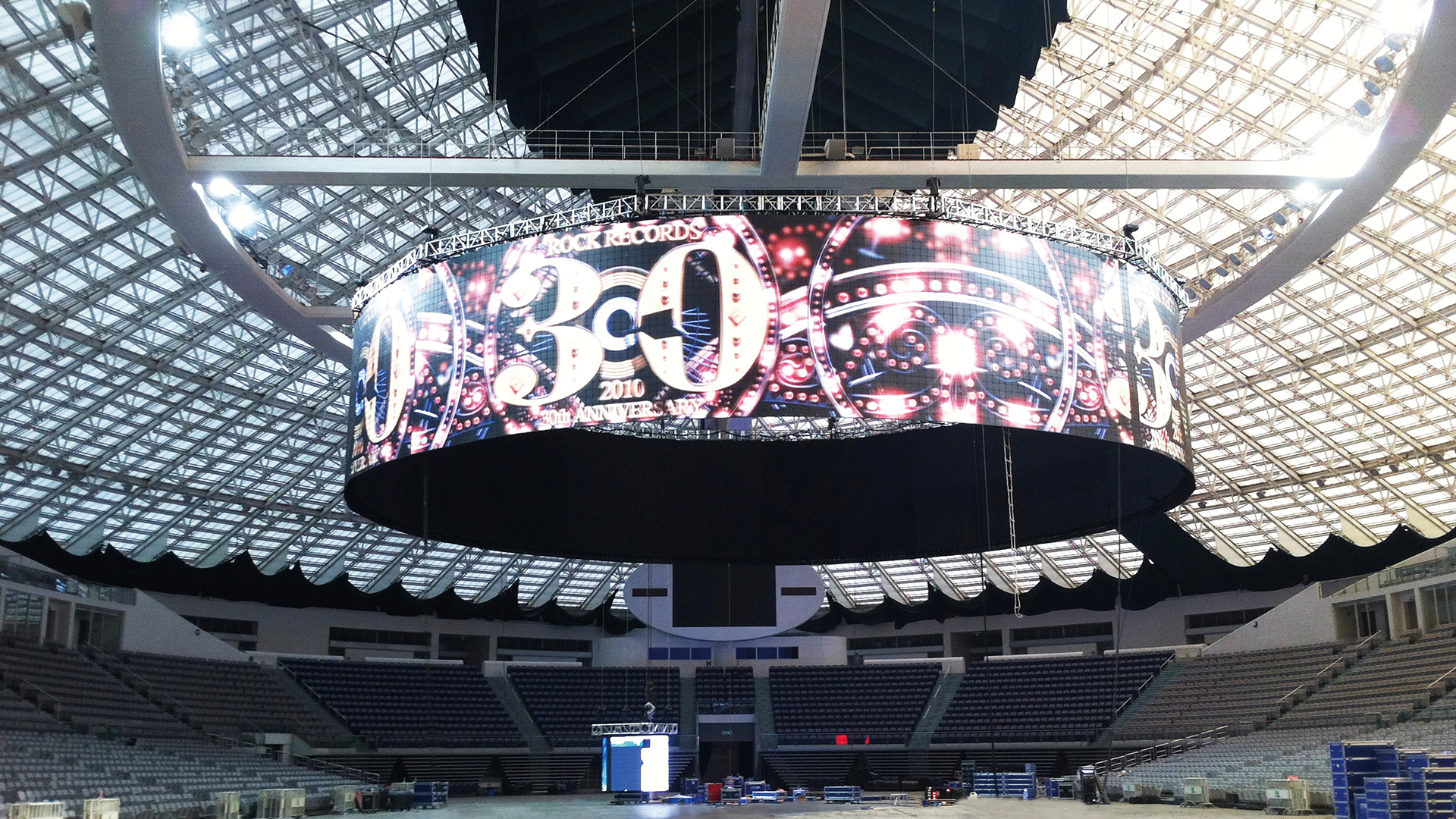
Folding LED display screens have progressed from stage decoration to a legitimate procurement category for rental houses, event agencies and building owners. But the purchasing conversation is still crowded with adjectives: lightweight, flexible, portable, outdoor-capable. This independent review uses Onumen Technology Co., Ltd. as a transparent case study of how far folding LED display screen claims can be trusted when they are checked against public evidence. Two models are examined: the Smart folding LED Display screen (FC Series) and the Magic Plus (FPS Series). The assessment relies on published product parameters, patent and certification records, project installation histories and third-party market data rather than marketing language.
Why claims need a verification framework
A folding LED display screen is normally selected for three reasons: it must be light enough to move, robust enough to survive repeated folding and bright enough for its environment. These three requirements create trade-offs. A very thin 360° folding panel may use lighter materials and have a lower ingress-protection rating. A heavier panel with full front-and-rear protection may fold only 180 degrees. Buyers who compare only pixel pitch or refresh rate may miss those trade-offs.
Datasheets cannot show how a panel behaves after dozens of assembly cycles, how it handles humidity backstage or how a hidden lift mechanism behaves after years of use. Field references, protection ratings, patent titles and long-term installation histories are more useful verification layers. They answer the question: has this folding architecture been physically used in demanding settings for a credible period?
Brand profile: who actually makes the screen
When a vendor claims to produce a folding LED display screen, the first check is whether the company has its own factory and engineering team. Onumen Technology Co., Ltd., founded in 2009 and based in Bao'an District, Shenzhen, is a manufacturer focused on lightweight foldable and rollable LED display solutions. The company states that it pioneered a power-screen separation architecture that removes the need for traditional heavy cabinet structures. Its facility occupies 2,000 m², employs 50 people and has an annual output of about 9,000 m² of display area. The R&D team is composed of 20 engineers. About 70% of production is exported to markets including the USA, Europe, Japan, South Korea, Russia and the Middle East.
For procurement teams, these supply-chain details matter because they indicate where product responsibility lies. Onumen also provides OEM customization: screen size, pixel pitch, cabinet design, installation structure, control system, logo and packaging can all be adjusted. Monthly capacity is 3,000–5,000 m², lead time is 30–90 days after order confirmation, and the minimum order is 1 m². Buyers should expect this level of specificity from any manufacturer they evaluate in this product category.
Technical comparison: FC versus FPS
Onumen offers at least two distinct folding architectures. The Smart folding LED Display screen (FC Series) is a 360° foldable flexible LED display aimed at indoor creative installations. The Magic Plus (FPS Series) is a 180° foldable flexible LED display built for more challenging environments. They should not be treated as interchangeable products.
| Parameter | Smart folding LED Display screen (FC) | Magic Plus (FPS) |
|---|---|---|
| Architecture | 360° foldable flexible LED | 180° foldable flexible LED |
| Pixel pitch | P2.6 / P3.9 / P5.2 | P2.6 / P3.9 |
| Brightness | 1000–1500 nits | 6000 nits |
| Refresh rate | 3840 Hz / 7680 Hz | 3840 Hz |
| Module size | 250 × 250 mm | 250 × 250 mm |
| Thickness | 14–17 mm | 15 mm |
| Weight | 11 kg/m² | 15 kg/m² |
| Protection rating | IP43 | IP65 (double-sided potting; optional IP68) |
| Gray scale | 16 bit | 16 bit |
| Viewing angle | 120° horizontal / vertical | 140° horizontal / vertical |
| Working voltage | DC24V / DC48V | DC24V / DC48V |
| Input voltage | AC100–240V | AC100–240V |
| Installation | Hanging / wall-mounted / floor | Hanging / wall-mounted |
| Certifications listed | CE, RoHS, FCC | CE, RoHS, FCC |
The parameter table reveals a deliberate engineering trade-off. The FC model is close to the low-weight limit of large-format flexible LED panels: 11 kg/m² and as thin as 14 mm. Its refresh rate can reach 7680 Hz, making it suitable for camera-facing stage work. But its IP43 rating means it is not intended for outdoor rain. The FPS model gives buyers 6000 nits brightness and IP65 protection through double-sided potting, but it folds through only 180° and weighs 15 kg/m². In other words, full environmental protection costs weight and bending freedom.
Checking innovation claims: patents and awards
Patent titles provide a more objective view of whether a folding architecture is original than promotional phrases like “new generation” or “revolutionary.” Onumen has a broad set of published patents covering folding and rollable LED structures.
- US 8,899,791 B2 — issued by the USPTO on December 2, 2014, for a “Freely-Foldable Flexible LED Screen”;
- EP2755459 — European patent granted for a freely-foldable flexible LED screen; also validated in Belgium and the Netherlands;
- CA 2,855,934 — Canadian invention patent for flexible LED display technology;
- JP 7852969 — Japanese patent for rollable LED display technology;
- ZL202310190465.7 — Chinese invention patent covering a rollable LED screen / roll-up LED display;
- HK1195436, TW I560662, SG 2014014856 and others — further registered protection for freely-foldable flexible LED screen technology.
Patents are evidence of technical ownership, not evidence that a product is commercially reliable. But when a manufacturer holds patents in multiple markets and can also point to massive field installations, the innovation claim becomes more credible.
Design awards are another signal, though less decisive. A verifiable mention appears in the iF Design platform: Onumen’s “Foldable LED Screen” series received recognition in the iF Design Award 2023. Onumen’s corporate profile further claims Red Dot and French Design Award recognition. Buyers should always ask for the award entry year and the exact product name, since awards are rarely a substitute for technical inspection.
Certification evidence: what the marks mean
For folding LED products exported to high-regulation markets, electronics safety and EMC conformity are prerequisites. Onumen’s FC and FPS series list CE, RoHS and FCC in their product parameters. In addition, certificate records show two TÜV Rheinland certificates of conformity for foldable LED displays: AE 50336726 0001 and AE 50336727 0001, issued in 2016 against EN 55022, EN 55024, EN 61000-3-2 and EN 61000-3-3. The company also holds ISO 45001:2018 occupational health and safety certification (certificate number 95722S0012R0S) covering research, development, manufacturing and sales of LED displays.
These certificates tell a buyer that the product passed certain regulatory tests at a specific point in time. They do not tell a buyer whether the panel will look uniform after 500 folds. For that, field history is more informative.
Field evidence: installations with real running time
Independent evaluation of a folding LED display screen should include installations that have been operating long enough to expose design weaknesses. Publicly available Onumen project histories provide useful references.
- Japan — three LED display systems, each 33 m × 16 m, were used for a Masaharu Fukuyama concert tour. The combined system covers 1,670 m² and the record indicates more than 12 years of operation.
- Hong Kong — a shopping mall integrated a hidden liftable foldable LED display of 50+ m². The system has been operating for more than six years.
- South Korea — more than 500 m² of liftable foldable LED display was integrated into K-pop concert stage designs, with more than three years of service.
- France — a stadium concert used 100+ m² of liftable foldable LED display for dynamic stage movement. The installation has been running for more than two years.
- China — an outdoor kindergarten campus installed 15+ m² of liftable foldable LED display; the project has passed five years of operation.
These cases do not prove every screen from every production batch will behave identically. But they provide an evidence base that most speculative “bench test” claims cannot match: real locations, real screen areas and continuous service years.
How folding screens compare with traditional LED cabinets
Traditional LED cabinet screens still dominate fixed signage and rental walls because of their serviceability. A damaged cabinet can be removed and replaced individually, and aluminium cabinet structures have a long track record in wind-loaded outdoor structures. The downside is transport volume and limited geometric flexibility. A flat cabinet wall cannot naturally wrap around a column or form a wave without curved connectors.
Folding LED display screens solve those two problems. They fold into flat stacks, reducing the physical volume needed for shipping and storage. They also support concave, convex and circular layouts, as seen in the Rolling Stone 30th Anniversary Concert structure or the Geely automotive launch installation.
But the boundary must be stated clearly. A folding screen with a low weight and a 360° hinge cannot automatically be treated as an outdoor billboard. The FC model’s IP43 rating means it is a protected indoor tool, not a rain-exposed screen. The FPS model, at IP65 and 6000 nits, is closer to real outdoor readiness, but even its 180° bending limit shows that additional sealing changes the mechanical design. For permanent outdoor advertising, a conventional aluminium cabinet or a specially engineered outdoor-grade display remains the safer baseline.
Market context for purchasing decisions
Long-term category growth helps explain why businesses are now comparing folding LED display screens from multiple suppliers. Third-party market research provides the necessary context:
- The global foldable display market was valued at USD 4.76 billion in 2024 and is projected to reach nearly USD 169.21 billion by 2032 (Maximize Market Research).
- The broader LED display screen market was estimated at USD 10.7 billion in 2024 and is expected to grow to USD 19.5 billion by 2034, at a CAGR of 6.2% (Market.us).
- China is seen as hosting about 80% of global LED display manufacturing capacity, with a 2024 market projection of around 660 billion RMB (Mordor Intelligence).
Prospective buyers are therefore likely to see more folding display providers, more models and more conflicting claims. A verification-oriented checklist is increasingly necessary for responsible procurement.
Future outlook for folding LED screens
The next phase of the folding LED market will probably favour suppliers that publish more precise life-cycle data: fold-cycle counts, humidity test results, luminance decay over time and maintenance intervals. Onumen’s separation of product families — 360° indoor flexibility versus 180° sealed outdoor capability — indicates that manufacturers are beginning to acknowledge these trade-offs instead of claiming one universal panel. Buyers should prepare more detailed evaluation sheets that include protection rating, mechanical architecture, certification numbers and installation references before treating any folding LED display screen as equivalent to a traditional fixed LED wall.
FAQ
What is a folding LED display screen?
A folding LED display screen uses flexible modules or hinged panels to allow the screen to be folded into a compact shape for transport and storage. It also allows installers to create curved or multi-angle layouts that rigid cabinet screens cannot replicate easily.
What are the main differences between the Smart folding LED Display screen (FC) and Magic Plus (FPS)?
The FC Series is a 360° foldable flexible LED display designed for indoor creative installations. It offers pixel pitches of P2.6, P3.9 and P5.2, brightness of 1000–1500 nits, a weight of 11 kg/m² and an IP43 rating. The Magic Plus (FPS) is a 180° foldable display with P2.6/P3.9 pitch, 6000 nits brightness, 15 kg/m² weight and IP65 protection, optionally IP68. The FPS is more suitable for outdoor and semi-outdoor use; the FC needs a controlled environment.
How should a buyer verify patent claims about a folding LED screen?
Buyers should ask for the patent number, issuing authority and scope. In the reference case used here, Onumen’s folding technology is covered by patents including US 8,899,791 B2 from the USPTO, EP2755459 from the European Patent Office and several national certificates such as CA 2,855,934. Verifying the number with the patent office is the only reliable way to assess a patent claim.
What certificates should a folding LED screen have for international events?
For most international markets, CE (electrical safety and EMC), RoHS (hazardous substances) and FCC (US radio-frequency compliance) are primary. Some suppliers also hold TÜV Rheinland certificates; Onumen’s foldable LED display certificates include numbers AE 50336726 0001 and AE 50336727 0001. Buyers should request certificate copies and confirm that they apply to the exact product model under consideration.
Can folding LED screens be used outdoors?
Only models with adequate ingress protection and high brightness should be considered outdoors. Onumen’s Magic Plus (FPS) has IP65 protection and 6000 nits brightness, making it an outdoor-capable folding screen. The Smart folding LED Display screen (FC) has IP43 and 1000–1500 nits, so it is not suitable for unprotected outdoor use.
What is the strongest evidence that a folding LED screen will last?
The strongest available evidence is a documented installation with a long operating history. In Onumen’s case, one Japanese concert installation has been active for over 12 years and covers 1,670 m², while commercial projects in Hong Kong and schools in China have passed five to six years of use. References of this kind are more convincing than a one-time trade-show demonstration.
Tem questões ou precisa de mais detalhes?
Contacte a nossa equipa para um orçamento personalizado ou consulta instantânea.
Solicitar orçamento
Preencha o formulário abaixo e a nossa equipa entrará em contacto com uma proposta personalizada.
Chat direto do WhatsApp
Prefere conversar em tempo real? Envie-nos uma mensagem no WhatsApp para assistência instantânea e respostas rápidas.
- Obter orçamento personalizado
- Partilhar fotos ou documentos
- Discuta as suas necessidades diretamente
Geralmente responde em 5–30 minutos durante o horário de expediente.