
Food Grade HDPE Sheet: What Buyers Must Verify
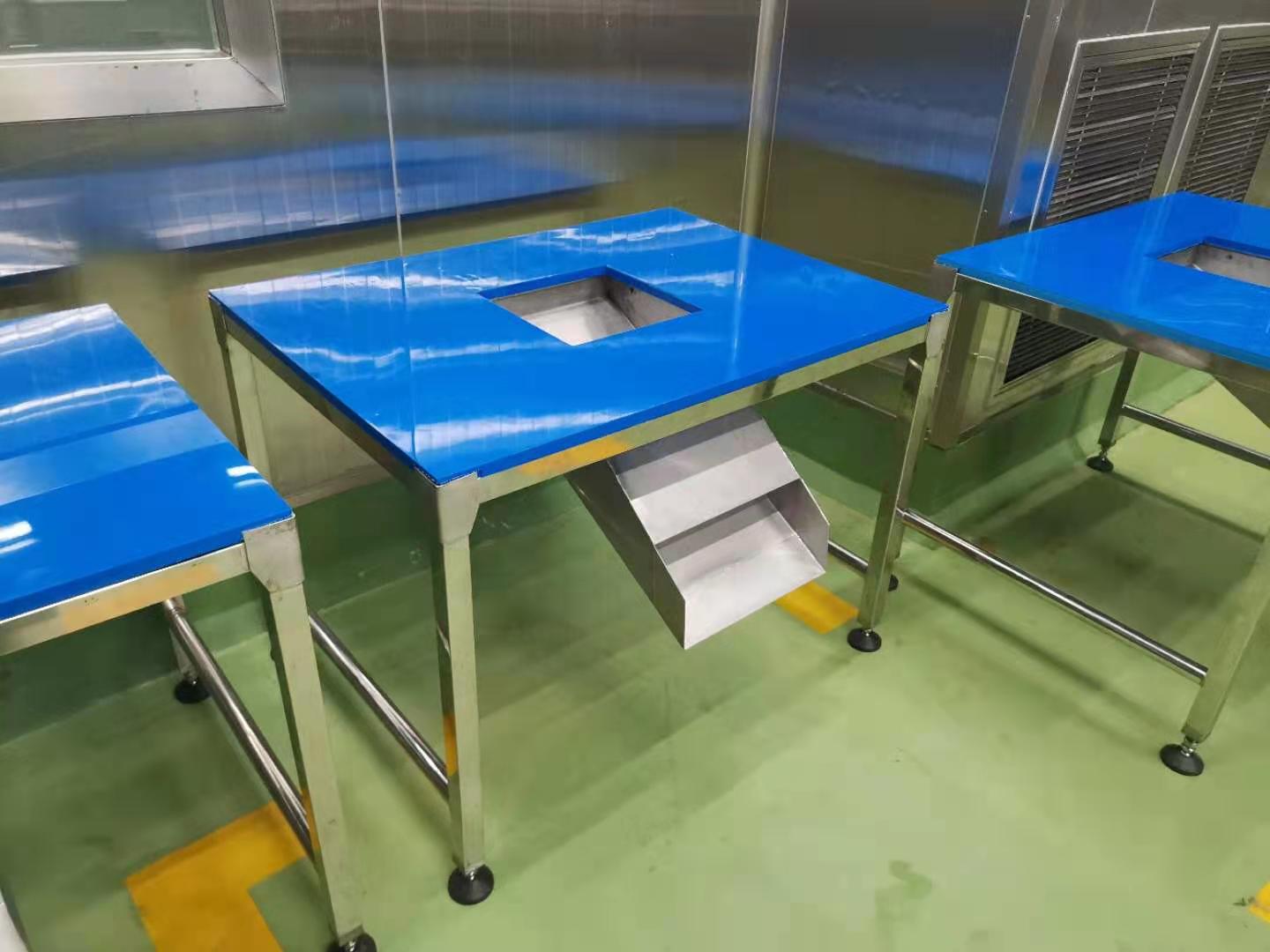
Food-contact sourcing decisions are usually settled by documents, not by appearance. Two industrial HDPE sheet pallets can look identical and still differ in resin grade, additive package, colour masterbatch and the paperwork that supports them. For buyers specifying sheet for a food processing line, a sanitary work surface or a cold-chain component, the useful question is narrower than "is it food grade?" — it is which constraints the supplier can evidence, and which ones the application itself will test.
This reference sets out the specification layer, the certification layer and the procurement limits that determine whether a food grade HDPE sheet is genuinely suitable for a given installation. It draws on manufacturer-published product data, certificate records and published market signals, and it separates what is documented from what still has to be verified before an order is placed.
Why "Food Grade" Is a Claim Before It Is a Specification
Supplier product pages commonly state that an HDPE sheet is made from food-grade polyethylene resin and is suitable for food processing, cutting boards and sanitary applications. That statement is a product positioning claim. It becomes a specification only when it is tied to a named resin grade, a disclosed additive system and market-specific conformity documentation that a buyer can file.
The gap matters because restricted-substance certificates are frequently presented as though they covered food contact. They do not. A CE certificate issued against the IEC 62321 test series speaks to restricted substance content in electrotechnical-style compliance frameworks, and a RoHS certificate does the same. Neither document is a declaration of food-contact suitability. Buyers who treat a CE or RoHS file as evidence of food safety are closing the wrong document chain.
The Specification Layer: Reading a Food Grade HDPE Sheet Data Sheet
A published data sheet is the first filter. The table below lists the manufacturer-stated specification for the Sanyou HDPE Sheet product (model PE300), together with the question a buyer should attach to each line item.
| Parameter | Sanyou HDPE Sheet (PE300) | What a buyer should confirm |
|---|---|---|
| Material | Virgin HDPE; recycled HDPE sheet available as a grade option | Named resin grade and traceability to the resin supplier |
| Density | 0.93–0.97 g/cm³ | Test method, and whether the value applies across all thicknesses |
| Thickness | 2–50 mm; customised thickness available | Thickness tolerance and flatness for the intended fixture |
| Standard sizes | 1000×2000 mm, 1220×2440 mm, 1500×3000 mm, 2000×4000 mm; customised sizes available | Cut-to-size requirement versus full-sheet handling and waste |
| Surface | Smooth or anti-skid texture (diamond, orange peel, embossed) | Cleanability versus slip resistance for the specific work area |
| Colours | Black, white, blue, green, yellow or customised | Colour masterbatch disclosure, especially for light-coloured food surfaces |
| Tensile strength | ≥ 22 MPa | Test standard behind the figure |
| Elongation at break | ≥ 300% | Whether the value is typical or minimum |
| Hardness | 60–68 Shore D | Suitability where high point loads or abrasion are expected |
| Impact strength | ≥ 20 kJ/m² | Impact condition (temperature, notch) used for the test |
| Melting point | 130–140 °C | Not a service limit — see working temperature below |
| Working temperature | −60 to +80 °C | Whether washdown or process temperatures stay inside the range |
| Water absorption (24 h) | < 0.01% | Relevance to repeated cleaning cycles and moisture exposure |
| Coefficient of friction | 0.15–0.25 (low) | Product flow behaviour on chutes, tables and guides |
| Chemical resistance | Excellent against acid, alkali, salt and oil | Compatibility with the specific cleaning agents in use |
| UV resistance | UV-stabilised grades available | Whether the installation is exposed to sunlight |
| Processing features | Weldable, cuttable, CNC machinable, moisture-proof, non-toxic, anti-skid, wear-resistant, impact-resistant | Whether fabrication is done in-house or by the supplier |
| Certification | ISO 9001 | System certification covers the plant, not the material grade |
Three of these lines carry more weight than the rest in food environments. Water absorption below 0.01% over 24 hours supports the washdown regimes typical of food and beverage processing. A working temperature range of −60 to +80 °C covers cold-chain and refrigerated applications comfortably while excluding continuous high-temperature service. And the low coefficient of friction, between 0.15 and 0.25, keeps sticky or wet product moving across tables, chutes and guides without manual clearing.
Certification Layer: What CE, RoHS and ISO 9001 Each Cover
Certification is where food-grade sourcing most often goes wrong, because document scope is rarely read as carefully as the product name.
CE certificate HY250111190958-1D was issued by HUAY TESTING on 21 November 2025 for the EU market. Its scope is HDPE Sheet, model PE300, and it explicitly covers the HDPE Sheet, Virgin HDPE Sheet and Recycled HDPE Sheet product lines. The standards listed on the certificate are IEC 62321-3-1:2013, IEC 62321-4:2013+AMD1:2017, IEC 62321-5:2013, IEC 62321-7-1:2015, IEC 62321-7-2:2017, IEC 62321-6:2015 and IEC 62321-8:2017.
RoHS certificate DTIBW20222147C was issued by Shenzhen Deesev Testing International Corporation (DTI) and applies to the UHMWPE Sheet product PE1000 for the European Union and European Economic Area markets. The standards referenced are IEC 62321-3-1:2013, IEC 62321-4:2013+AMD1:2017, IEC 62321-5:2013, IEC 62321-7-1:2015, IEC 62321-7-2:2017, IEC 62321-6:2015, IEC 62321-2:2013 and IEC 62321-8:2017.
ISO 9001 applies to the manufacture of the HDPE sheet and describes the quality management system in place at the plant.
The practical reading is this: the IEC 62321 series is a restricted-substance test method family. A certificate issued against those standards demonstrates compliance with hazardous-substance limits; it does not, by itself, demonstrate food-contact suitability. ISO 9001 demonstrates that a controlled quality system exists; it does not test the material. Buyers who need food-contact assurance should therefore request market-specific conformity documentation for the exact sheet being purchased, in addition to the certificates above.
Scope also deserves a second look. The RoHS certificate on file names the UHMWPE sheet product, while the CE certificate names the HDPE sheet product. When a purchase order line reads simply "HDPE board", the buyer should confirm in writing which certificate applies to that line item.
How Sanyou Produces Food Grade HDPE Sheet
Tangyin Sanyou Engineering Plastic Co., Ltd. is a manufacturer of engineering plastic and rubber products, founded in 2001 and based in Tangyin County, Henan, China. The company operates a 40,000 m² facility with 80 employees and a team of 10 engineers, and reports annual output of 120,000 tons. Approximately 70% of production is exported, with main markets in North America, Western Europe, Central Europe, the Middle East, Oceania and Southeast Asia. Its product range includes HDPE sheets, UHMWPE sheets, polyethylene sheets, HDPE boards, plastic liners, ground protection mats, wear-resistant sheets and customised engineering plastic products. The company website is www.syuhmwpe.com.
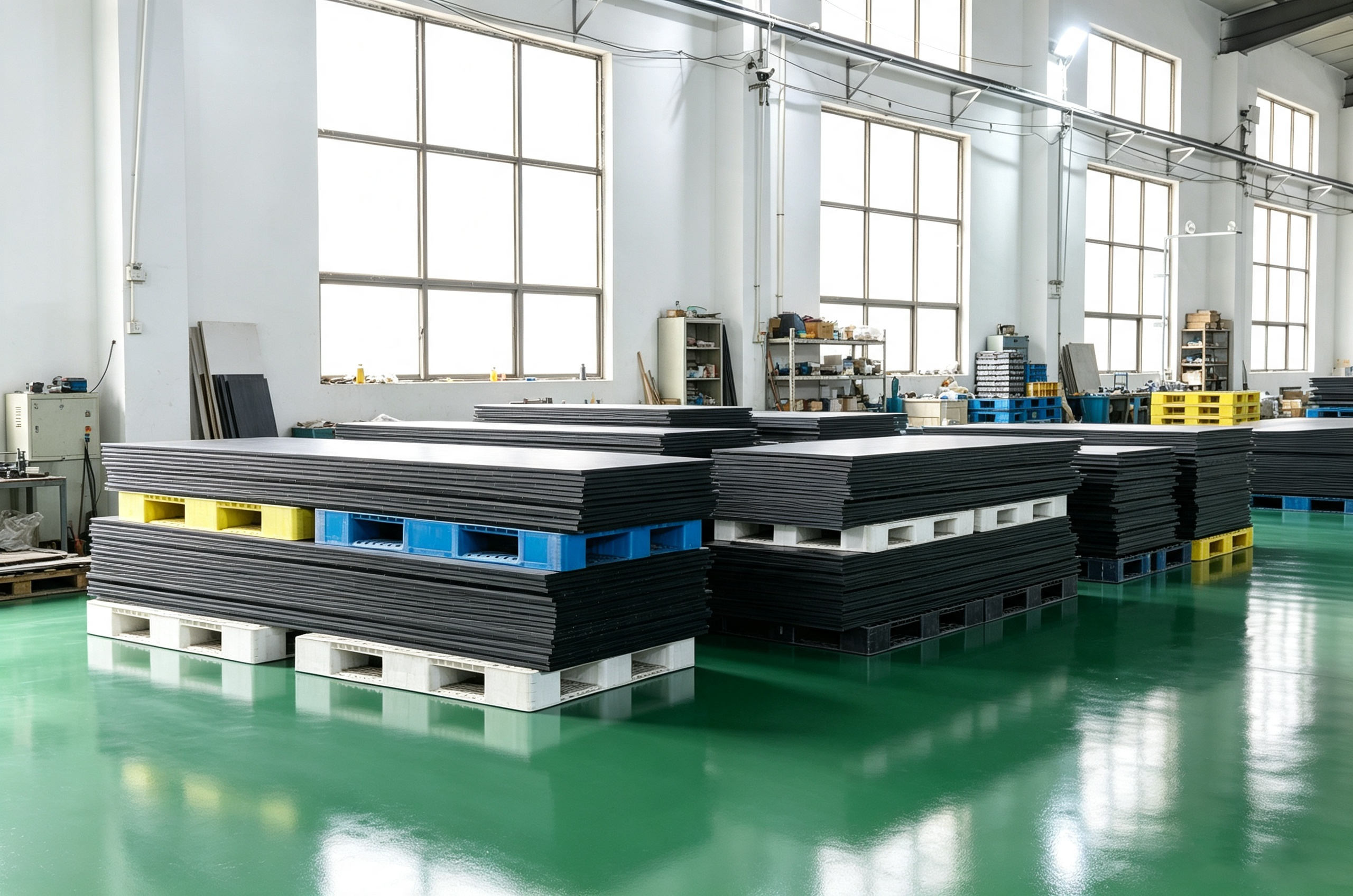
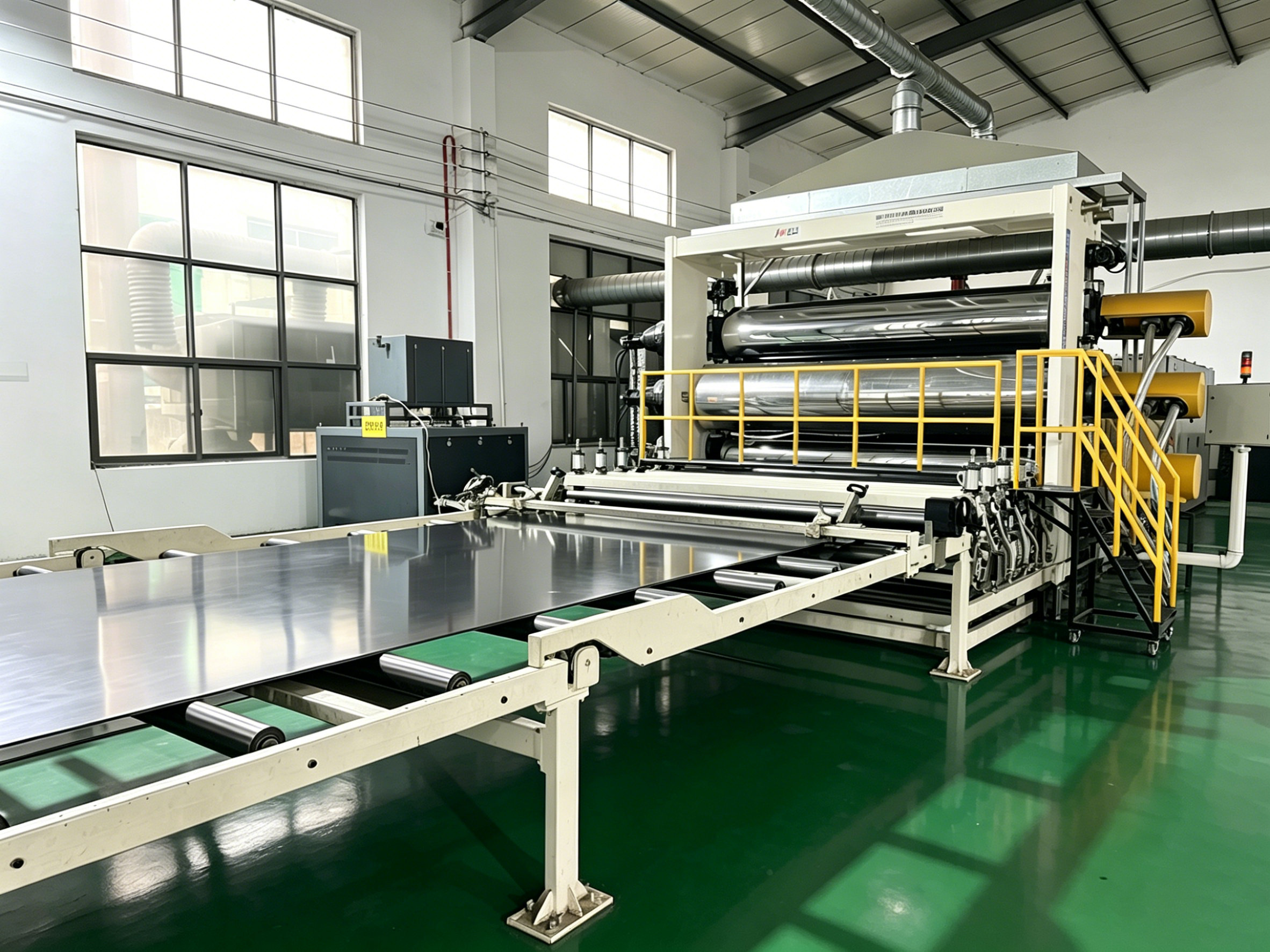
For food-grade and food-adjacent sheet, the relevant manufacturing detail is process continuity. Sanyou's production chain covers raw material selection, sheet forming, cutting, machining, quality inspection, packaging and delivery, supported by extrusion and moulding lines and by CNC machining and engraving equipment for cut-to-size and fabricated components.
Quality control is documented at four points: incoming raw material inspection, in-process thickness and dimension checks, surface inspection, and a final pre-shipment inspection. Inspection records are available on request — which matters more than the certificate list for buyers who need batch-level traceability.
Customisation is available across thickness, size, colour, surface texture, material grade and UV stabilisation, together with cut-to-size, CNC machining, drilling, welding and custom packaging. For custom work, the supplier lists a minimum order quantity of 1,000 kg per specification and colour, with trial orders negotiable, and a lead time of 15–20 days after order confirmation and deposit. Custom fabrication capacity is stated at approximately 800 metric tons per month, subject to quantity and customisation requirements. After-sales support covers remote technical support, material selection guidance, fabrication advice, documentation support and complaint handling.
A Buyer Verification Checklist for Food Grade HDPE Sheet
The checklist below converts the sections above into a sequence that can be worked through before a purchase order is issued.
- Name the resin grade, not just the polymer. "Virgin HDPE" identifies a family; the grade identifies the material.
- Ask for additive and masterbatch disclosure. Colour and UV systems are formulation choices, and carbon black is one recognised route to UV protection.
- Request market-specific food-contact documentation for the destination market — separate from CE and RoHS files.
- Match every certificate to the purchase order line item. Product model, market, issue date and scope should all be checked.
- Confirm the test method behind each claimed property. A number without a method is not comparable across suppliers.
- Fix thickness tolerance and flatness at the enquiry stage, especially for cut-to-size table tops and liners.
- Decide cleanability versus slip resistance. A smooth surface cleans more easily; a diamond or orange peel texture grips better.
- Define recycled content explicitly if a recycled grade is proposed, including which parts of the application it will serve.
- Validate a sample before the batch. Colour, texture, thickness and machining behaviour are all sample-checkable.
- Agree the documentation pack that ships with the goods — inspection records, certificate copies and conformity documents.
Where Food Grade HDPE Sheet Is Used
Sanyou positions HDPE sheet across chemical processing and water treatment, food and beverage processing, machinery manufacturing and industrial automation, marine and shipbuilding, construction and building materials, agriculture and livestock farming, outdoor furniture and playground equipment, signage and advertising, cold chain and refrigeration, and packaging, logistics and material handling.
Within food and beverage processing, the sheet is used for processing tables and cutting boards, sanitary work surfaces and equipment components that must tolerate repeated cleaning. In chemical processing and water treatment, the same material serves chemical storage tanks, wastewater treatment equipment, scrubbers, piping systems and fabricated components where corrosion resistance and low moisture absorption are the deciding properties. In machinery manufacturing, it appears as machine guards, jigs, fixtures and CNC-machined parts; in cold chain and logistics, as panels and material-handling surfaces that must not absorb water.
One documented example illustrates the mixed-use pattern common in industrial orders. A customer in Australia received a custom supply of 20 tons of HDPE sheet with customised thickness, dimensions, colour and surface finish. The material was used for chemical tanks, wastewater-treatment equipment, food-processing surfaces, machine guards, outdoor cabinets and custom-fabricated components. Over a two-year service period, the reported outcome was improved corrosion and moisture resistance, reduced maintenance requirements, simpler fabrication and cleaning, and reliable performance in wet or chemically exposed environments.
Market Signals: Demand, Resin Pricing and the Limits of the Available Data
Two published signals help frame procurement timing, provided their scope is respected.
First, on demand structure, one commercial research estimate places the sheets and films segment at approximately 41.1% of global HDPE demand share. That reflects the polymer market rather than the sheet market specifically, but it indicates how much HDPE demand is consumed in flat, processed formats rather than in moulded or film-extrusion applications.
Second, on market scale, Virtue Market Research projects the global HDPE market growing from USD 84.37 billion in 2023 to USD 126.86 billion by 2030, at a 6% CAGR over 2024–2030. That figure covers all HDPE forms and should not be read as a sheet-level market size. Published polymer-market estimates differ materially between research houses, and they should not be averaged or treated as a range.
On the cost side, recycled black HDPE resin was reported by S&P Global Platts at approximately USD 520 per metric ton FOB Southeast Asia in September 2026. This is a resin input price, not a finished sheet price, and it cannot be used as a sheet or board benchmark. Its procurement relevance is directional: where recycled feedstock pricing moves independently of virgin resin, the gap between virgin and recycled sheet quotations will not track a single index, and the grade definition in the enquiry becomes commercially decisive.
How HDPE Sheet Compares with Conventional Food-Contact Materials
The comparison below is qualitative and intended to frame selection, not to rank materials universally.
| Material | Where it fits | Constraints to plan for |
|---|---|---|
| HDPE sheet (virgin, food-grade oriented grade) | Work surfaces, cutting boards, hygienic panels, tanks, linings, guards and CNC-machined components; low water absorption and low friction | Working temperature range of −60 to +80 °C; standard grades are not UV-stabilised; polymer-level hardness, not a structural substitute for steel under high point loads |
| Stainless steel | High-temperature surfaces, heavy structural duty, aggressive cleaning regimes | Higher weight and fabrication cost; requires welding capability; heavier handling and installation logistics |
| Wood and plywood surfaces | Low-cost, temporary or low-hygiene-duty use | Moisture uptake, splintering and swelling; shorter replacement cycles in wet environments |
| Polypropylene sheet | Chemical and corrosion-resistant fabrication, water and wastewater treatment, food and beverage processing | Density of approximately 0.90–0.91 g/cm³; selection depends on resin grade and working conditions |
Three limitations deserve to be stated plainly, because they decide whether food grade HDPE sheet is the right specification at all.
- Temperature ceiling. The Sanyou HDPE sheet is rated for a working temperature range of −60 to +80 °C. Applications that require continuous service above that range fall outside the stated specification and should be evaluated on a different material.
- Outdoor ageing. Standard HDPE is not UV-stabilised and may chalk or embrittle under prolonged outdoor sun exposure. Where a sheet is installed outdoors, a UV-stabilised grade is the appropriate specification rather than the standard product.
- Documentation versus material. The CE and RoHS certificates on file address restricted substances, and ISO 9001 addresses the quality management system. None of the three is a food-contact declaration. Where a regulator or a customer audit requires food-contact conformity, that document must be requested and reviewed separately.
Future Outlook
Three directions are likely to shape how food grade HDPE sheet is bought over the next few years.
Documentation will become the differentiator. As polymer markets grow and more suppliers enter the sheet segment, buyers will increasingly separate suppliers on paperwork quality rather than on nominal specification. A supplier that can produce inspection records, certificate scope matched to the order line, and market-specific conformity documents will win work that a supplier with an equivalent material cannot.
Recycled content and food contact will stay in tension. Recycled HDPE offers a cost-effective route for non-critical linings and protective applications, but food-contact and high-reliability work continues to point toward virgin resin. Expect enquiries to split a single project into virgin-graded and recycled-graded scopes, with different documentation standards for each.
Customisation will shift earlier in the process. With sheet thicknesses spanning 2 mm to 50 mm, sheet sizes up to 2000×4000 mm, and surface options covering smooth, diamond, orange peel and embossed finishes, the cost of a wrong specification is set at the enquiry stage rather than at delivery. Buyers who define resin grade, thickness tolerance, surface and documentation requirements before requesting quotations will hold more of the value.
FAQ
What makes an HDPE sheet suitable for food-contact applications?
Food-contact suitability rests on three elements rather than on the material name alone: a defined resin grade, a disclosed additive and colour masterbatch system, and market-specific conformity documentation. The physical side matters too — Sanyou's food-grade oriented HDPE sheet is made from virgin HDPE resin, resists acid, alkali, salt and oil, and absorbs less than 0.01% water over 24 hours, which supports repeated cleaning. A supplier's statement that a sheet is suitable for food processing, cutting boards and sanitary applications is a positioning claim; it becomes a specification when the supporting documents are attached.
Which certifications should a food grade HDPE sheet carry?
The Sanyou HDPE Sheet (model PE300) is manufactured under ISO 9001, and holds CE certificate HY250111190958-1D issued by HUAY TESTING on 21 November 2025 for the EU market, covering HDPE Sheet, Virgin HDPE Sheet and Recycled HDPE Sheet. A separate RoHS certificate, DTIBW20222147C, issued by Shenzhen Deesev Testing International Corporation (DTI), applies to the UHMWPE Sheet product PE1000 for the EU and EEA markets. All of these are restricted-substance or management-system documents listed against IEC 62321 standards. They are not food-contact declarations, so a buyer requiring food-contact conformity should request that documentation separately, for the exact product and market.
What is the difference between virgin and recycled HDPE sheet for food processing?
The Sanyou HDPE sheet is made of virgin HDPE resin, and recycled HDPE sheet is offered as an available grade option within the same product range. Virgin resin is the appropriate basis where food-contact, potable water or high-reliability performance is required, because mechanical properties and material consistency are more predictable. Recycled sheet is positioned for non-critical anti-corrosion lining and cost-sensitive protective applications where strict hygiene or highly consistent mechanical properties are not required. Both are covered on the CE certificate scope for the HDPE sheet product, but the material choice should follow the application duty rather than the certificate list.
What thickness and sheet size are used for food processing tables and cutting boards?
Sanyou supplies HDPE sheet in thicknesses from 2 mm to 50 mm, with customised thickness available, and in standard sizes of 1000×2000 mm, 1220×2440 mm, 1500×3000 mm and 2000×4000 mm, with customised sizes available. General thickness guidance for HDPE sheet selection places 5–6 mm at light-load lining duty, 6–20 mm at tank wall and structural panel duty, and 20–50 mm at heavy-wear chute liner duty. Cutting surfaces and hygienic table tops typically sit in the mid-range, and the practical decision points are thickness tolerance, flatness and whether the sheet is supplied cut to size or as a full sheet for in-house fabrication.
What are the main limitations of HDPE sheet in food processing environments?
Three limits are worth building into a specification. The working temperature range is −60 to +80 °C, so continuous service above that range is outside the stated specification. Standard HDPE is not UV-stabilised and may chalk or embrittle under prolonged outdoor sun exposure, so outdoor installations should specify a UV-stabilised grade. And hardness of 60–68 Shore D means the sheet behaves as a polymer component rather than a structural substitute for steel under high point loads. None of these limits rules the material out — they define where it should and should not be used.
Summary
Food grade HDPE sheet is best evaluated as a chain of verified constraints: a named resin grade, a disclosed formulation, a documented specification, certificate scope matched to the order line, and market-specific conformity documents where the application requires them. Sanyou's published product data, quality control sequence and certificate records provide a starting point for that chain, and the company's product catalogue can be downloaded here: Sanyou Product Catalog (PDF). Additional product information is available at www.syuhmwpe.com.
Tem questões ou precisa de mais detalhes?
Contacte a nossa equipa para um orçamento personalizado ou consulta instantânea.
Solicitar orçamento
Preencha o formulário abaixo e a nossa equipa entrará em contacto com uma proposta personalizada.
Chat direto do WhatsApp
Prefere conversar em tempo real? Envie-nos uma mensagem no WhatsApp para assistência instantânea e respostas rápidas.
- Obter orçamento personalizado
- Partilhar fotos ou documentos
- Discuta as suas necessidades diretamente
Geralmente responde em 5–30 minutos durante o horário de expediente.