
Food Tray Thermoforming Sheet Rolls: Technical Buyer FAQ
Food Tray Thermoforming Sheet Rolls: Technical Buyer FAQ
Food trays are one of the least forgiving applications for a thermoforming plastic sheet roll. The part is thin, the draw is uneven across a multi-cavity mold, the tray is chilled within hours of forming, and the finished package may be sealed, lidded or overwrapped further along the same line. In practice, most of the problems that reach a procurement file are not caused by choosing the wrong polymer name. They come from a specification that never described the tray, the storage conditions, the roll geometry or the documents the buyer actually needs.
This reference is written for packaging engineers, converters and procurement teams that have moved past supplier discovery. The questions below are the ones that surface at evaluation and execution: how much of the tray should drive the sheet specification, which roll dimensions must be fixed before a purchase order, which compliance documents prove what, how acceptance should be checked on receipt, and what to compare when changing sheet suppliers on a running tray line.
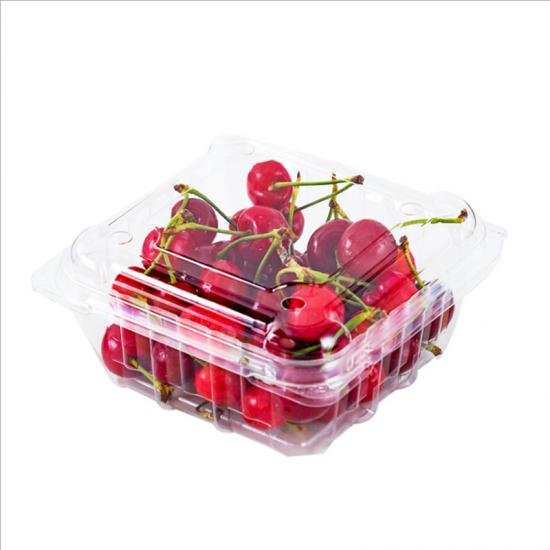
The tray defines the sheet, not the other way round
A food tray sheet specification starts from the finished part: the food, the tray dimensions, the draw depth, the required wall and bottom thickness, the storage temperature, the sealing or lidding method and the compliance route for the destination market. Material and thickness follow from those inputs, not from a catalogue page.
A shallow berry punnet and a deep meat tray do not place the same demand on the web. For deep-draw parts, nominal thickness alone says little about what happens at the bottom corner, because the real question is how the material distributes from flange and sidewalls into the deepest area during forming. Material formability, initial thickness, draw ratio, mold geometry, corner radius and heating uniformity have to be evaluated together. A sheet that performs well in a shallow tray may be unsuitable for a much deeper part.
The same logic applies to the downstream line. A tray that will be filled with wet produce, sealed with film and stacked four high in a chilled display case is being asked for flatness, rigidity and seal compatibility that an ambient bakery tray does not require. When a buyer writes only a material name and a nominal thickness, the supplier is left to guess at all of it.
Roll width, diameter, core and weight: what to fix before ordering
Roll width is set by the mold layout plus edge trim and usable machine width; roll diameter, roll weight and core inner diameter are set by the unwinding system. All four belong in the purchase specification, because an error in any of them produces waste, feeding faults or handling risk before a single good tray is formed.
- Width. The cavity array across the web plus edge trim, and a register allowance if the sheet is printed. A roll wider than the layout needs creates continuous edge waste on every cycle; a roll that is too narrow loses cavities.
- Diameter and weight. Limited by the shaft, chucks, lifting equipment and the space between the unwind stand and the first heater bank. Heavier rolls mean fewer changeovers but demand handling capacity the line may not have.
- Core. The inner diameter must match the shaft. Core strength and roll roundness influence tension stability and web tracking, and a deformed core shows up as uneven feeding rather than as an obvious defect.
- Roll condition. Winding tightness, edge condition, blocking and wrap integrity determine whether the roll behaves the same on the last metre as on the first.
PULIXIN Thermoforming Plastic Sheet is the rigid sheet roll range produced by Pulixin Packaging Materials (Shanghai) Co., Ltd., a manufacturer with a 20,000 m² production base and 14 co-extrusion lines. Its custom manufacturing scope covers material, thickness, width, color, transparency, surface finish, roll size and functional properties, together with packaging and labelling.
For an existing line, the most useful information a buyer can send is the current roll specification or the equipment limits: usable machine width, maximum roll diameter and weight, core inner diameter and unwinding method. Where a new mold is involved, width should be calculated from the cavity layout plus necessary trim, then checked against the unwinder before the first order is placed.
PET, PP or PS/HIPS: which sheet suits which tray
Material choice follows the job the tray performs. PET is commonly selected where clarity and stiffness are priorities, PP where temperature performance and lower material density matter, and PS/HIPS for opaque or colored trays, inserts and applications that need easy forming with practical rigidity.
| Material | Typical tray role | Confirm on the finished tray | Points to plan for |
|---|---|---|---|
| PET | Clear fresh-produce, bakery, salad and chilled display trays where product visibility drives the pack | Clarity after forming, flange strength, lid or film fit, behaviour at chilled storage temperature | Whitening at tight corners and thin bottoms on deep draws |
| PP | Cups, dairy containers, prepared-food and frozen trays; applications needing better heat resistance and lower density | Rigidity at filling and storage temperature, lid fit, print or seal adhesion | Different heating and shrinkage behaviour from PET; process settings must change |
| PS/HIPS | Opaque or colored trays, inserts and tray bodies where forming ease and impact resistance matter | Impact strength, color consistency, flatness for stacking | Suitability for high-temperature filling must be confirmed, not assumed |
Two manufacturer-side statements are worth separating from general material talk. Pulixin's published guidance describes food-grade PP sheet rolls optimized for frozen food trays with impact-resistant copolymer options; and the supplied material range covers PET, PP and PS/HIPS thermoforming sheet rolls for food packaging applications. Both are capability statements, not a guarantee that any one grade fits any one tray.
Material substitution on an existing mold is not a drop-in change. Different polymers heat, shrink and form differently, so machine settings and sometimes tooling need adjustment. A buyer who plans a PET-to-PP trial without budget for process work is planning a failed trial.
Low-temperature performance and condensation
Chilled and frozen storage change the failure mode. A tray that forms cleanly at room temperature can crack at the flange, bow under stacking load or fog over in a display case, so low-temperature behaviour and condensation have to be verified on the finished tray under the storage conditions the food will actually see.
Refrigerated packaging therefore needs more than good room-temperature forming performance. Buyers should evaluate low-temperature behaviour, tray rigidity, impact resistance, condensation, sealing requirements and the actual food-contact conditions together. A specification copied from an ambient packaging project is not evidence of chilled performance.
- Condition and test. Hold finished trays at the real storage temperature for a realistic period, then check flange cracking, stacking strength, dimensional stability, lid fit and seal integrity with the actual lidding film.
- Anti-fog when required. Anti-fog is a functional requirement, not a default. Specify whether it is needed for the application, confirm which surface carries the function and that the food-contact side meets the applicable requirement, and verify performance on formed trays at the intended storage temperature rather than from flat-sheet appearance alone.
- Moisture exposure. Water reaches a food tray from three directions: the product, condensation and wash-down or storage humidity. Confirm that the formed tray keeps its shape and its print or seal quality after realistic exposure.
- Roll storage before forming. Temperature, humidity, direct sunlight, packaging condition and storage time can all influence how a roll behaves before it reaches the heater.
Food-contact compliance: what each document actually proves
Food-contact compliance is a document set matched to a grade, a production site and a market, not a label on a product page. Each certificate or report answers a narrower question than buyers often assume, so the file should be read item by item rather than counted.
| Document | Reference and validity | What it covers | What it does not cover |
|---|---|---|---|
| FSSC 22000 food safety management system | CQM25FSSC00171, issued 2025-07-04, valid to 2028-07-03 | Food safety management for the production of specific PET sheets for food-contact applications (plasticizing extrusion), against ISO 22000:2018, ISO/TS 22002-4:2013 and the additional FSSC 22000 requirements | Does not by itself qualify PP or HIPS grades, or any particular food, condition or market |
| ISO 9001:2015 quality management | 00226Q03336R101, issued 2026-06-25, valid to 2029-06-24 | Quality management for the production of polyester (PET) sheets | Not a food-contact statement |
| ISO 14001:2015 environmental management | 00226E02412R101, issued 2026-06-25, valid to 2029-06-24 | Environmental management for PET sheet production and related activities | Not a product performance document |
| Global Recycled Standard 4.0 scope certificate | SGC-GRC09372-GRS-2026-04, issued 2026-04-23, valid to 2027-04-22 | Chain of custody for processed post-consumer and pre-consumer material through the extrusion process | Not a food-safety certificate |
| SGS test reports, EU RoHS Directive (EU) 2015/863 | PET sheet SHAPH26002960101; PP white SHAPH26002958405; PS white SHAPH26002958401; PS black SHAPH26002958403; issued 2026-02-24 | Restricted hazardous substance compliance for the tested material | RoHS is not a food-contact migration test |
That last distinction is where procurement files most often go wrong. For a food tray, the operative question is whether the specific grade carries food-contact conformity for the intended market — within the European Union, Regulation (EU) No 10/2011 governs plastic materials and articles intended to come into contact with food — plus any customer-specific migration or sensory requirement. Where migration testing is required, the request should name the grade, the intended contact conditions and the destination market so the test scope can be agreed rather than assumed.
One supplied case record shows how documentation and application meet in practice. A fresh-produce packer and supermarket own-label supplier operating in the Netherlands and Australia uses approximately 1,500 t of RPET sheet per year for berry and cherry clamshells, salad bowls, and fresh-herb and bakery containers, at 30–100% PCR content with GRS batch traceability; the same record reports EU 10/2011 and FDA migration tests passed at every audit. This is a case record for one defined application, not a general food-contact statement for every grade in the range.
Certificates also do not travel automatically. When a buyer changes supplier, grade or production site, the document set should be re-confirmed for the new combination, including scope wording, issue and expiry dates.
Purchasing terms and acceptance criteria for tray sheet
The commercial points that most often delay a first tray-sheet order are MOQ, roll configuration, lead time and the definition of acceptance. All four can be fixed at the request-for-quotation stage instead of after sampling.
- MOQ. Standard PET is quoted from 5 tons, standard PP and PS from 3 tons, and customized products may fall under different MOQ requirements. Color, roll size and multilayer structures change the production setup, so MOQ should be confirmed per specification rather than per material family.
- Lead time. Generally 7 to 15 days, depending on material, specification, order quantity and customization.
- Delivery terms. EXW, FOB and CIF are offered, with other Incoterms available by agreement. Payment is by T/T, with specific terms subject to order value and mutual agreement.
- Capacity context. Monthly output is approximately 3,500 tons and may vary with production schedule and specification, against annual capacity of more than 40,000 tons across the manufacturer's co-extrusion lines.
- Acceptance. Specification verification, thickness and width inspection, appearance inspection and finished-product quality inspection before shipment, with third-party inspection available on request.
A receiving check is not the same as an acceptance standard, but it catches the failures that are cheapest to fix at goods-in: width and core inner diameter measured against the purchase specification rather than the previous invoice; roll weight recorded for a sample roll; thickness measured at several points across the web and along the roll; edges, winding and wrap inspected for damage or blocking; labels and batch identification confirmed, including traceability records for recycled grades. Retaining a sample from each batch gives the next delivery something concrete to be compared against.
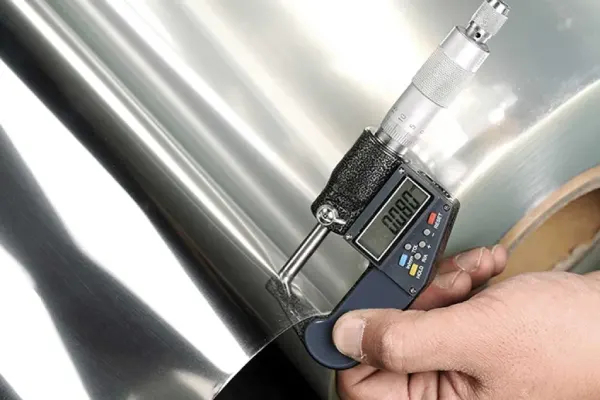
Changing sheet suppliers on a running tray line
The safe baseline for a supplier change is the currently proven sheet, not the lowest quotation. Two suppliers can both describe a product as PET sheet at the same nominal thickness and still behave differently on the same line, so the comparison has to start from structure, thickness and tolerance, width, roll configuration, color or transparency, forming behaviour and application requirements — and, for food trays, the compliance file and post-storage performance.
For tray work specifically, three additions matter beyond the usual forming comparison. First, compare trays after conditioning at the real storage temperature, because a flange that survives the forming line can still crack in a cold room. Second, compare lid or film fit and seal performance, since a small change in flatness propagates into the sealing station. Third, compare the documentation set, including the scope of each certificate and whether the new grade is covered by it.
Run the change as a controlled trial: keep the proven sheet as the reference, adjust one variable at a time, and avoid changing material structure, thickness and process settings simultaneously. If several variables move together, the source of any forming difference cannot be identified, and the trial produces an opinion rather than evidence.
Forming behaviour and troubleshooting on roll-fed lines
Roll-fed thermoforming runs the web through unwinding, heating, forming, trimming and stacking before handing the tray to filling, sealing or overwrapping. Each stage inherits the quality of the one before it, which is why roll stability is the cheapest process control a tray producer has.
For temperature reference, published industry guidance places PET thermoforming typically between 130 °C and 160 °C (266 °F to 320 °F). Within that window, most visible defects trace back to a small set of causes:
- Cracking. Insufficient or uneven heating, excessive stretching, sharp mold geometry, or a sheet specification that does not suit the draw depth.
- Whitening after forming. Local over-stretching, stress concentration, temperature conditions or material structure.
- Thin tray bottoms. Draw depth, mold design, heating distribution, pre-stretching and initial sheet thickness acting together.
- Uneven feeding. Sheet flatness, roll alignment, tension, or a roll deformed in transport or storage.
Raising the temperature is not a universal fix, because excessive heating creates its own problems; heating uniformity, forming time, vacuum or pressure and mold geometry should be checked together. A sheet supplier can advise on processing direction, but final settings must be optimised on the buyer's own machine and mold, since equipment and product geometry vary between plants.
Market context: what the numbers do and do not say
Grand View Research valued the global thermoformed plastic market at USD 14.79 billion in 2023 and projected a 4.9% compound annual growth rate for 2024 to 2030. Those figures need a definition check before they are used in a business case, because alternative estimates differ on whether thermoformed materials or finished products are being measured, and the resulting headline numbers are not directly comparable.
Recycled content is the second signal tray buyers are tracking. One projection places the recycled PET market at USD 24.6 billion by 2034. For a tray specifier, the practical consequence is narrower than the headline: recycled grades need documentation that stands on its own, since a GRS scope certificate evidences chain of custody through extrusion and not food safety, and the food-contact file for a recycled grade still has to be confirmed grade by grade.
Building the RFQ package
An RFQ that produces a usable answer is short but specific. It should carry the part drawing or a sample; material preference; required thickness and thickness tolerance; roll width, diameter, weight and core inner diameter; color or transparency; functional requirements such as anti-fog, impact or stiffness; food type and storage temperature; sealing or lidding method; destination market and applicable compliance route; annual or campaign volume; and delivery terms.
Where the correct thickness is not yet known, the drawing, sample and forming conditions allow the manufacturer to discuss a starting specification rather than guessing from a number. That is materially faster than a quotation cycle based on a single thickness value.
Outlook: a specification file, not a specification line
Tray specifications are becoming more document-heavy, not less. Chilled and frozen distribution, recycled content, market-specific food-contact rules and the need to qualify a replacement supplier at short notice all push in the same direction: a single line describing material and thickness is no longer enough to protect a production line. The practical preparation is a file per tray that holds the drawing, the material and thickness, the roll data, the storage conditions, the compliance documents with scope and validity dates, and the acceptance record from each delivery. That file is what turns a supplier change, an audit or a new market entry into a routine exercise rather than a re-qualification project.
Frequently asked questions
Is “food-grade sheet” specific enough to order a food tray roll?
No. “Food grade” alone does not define a usable thermoforming specification, and it does not distinguish between a refrigerated meat tray, a fruit tray and an ambient bakery tray, which can require different material and performance characteristics. A usable order also states the food type, tray dimensions, forming depth, storage temperature, transparency requirement, sealing method and the applicable food-contact requirements for the destination market.
Can one sheet specification serve fresh produce trays and refrigerated meat trays?
Not necessarily. Refrigerated packaging requires more than good room-temperature forming performance: low-temperature behaviour, tray rigidity, impact resistance, condensation, sealing requirements and the actual food-contact conditions should all be evaluated. Tray geometry, draw depth and storage conditions can require different specifications even when both packs are trays made from the same material family.
What roll data should be confirmed before a roll-fed tray line runs?
Roll width is normally determined by the mold layout, product arrangement and trim allowance, while roll diameter, roll weight and core inner diameter must remain compatible with the unwinding system. Confirm the usable machine width, maximum roll diameter and weight, core inner diameter and unwinding method, or send the current proven roll specification. Correct roll data reduces unnecessary edge trim and prevents handling and feeding problems.
Which documents should be re-checked when changing sheet suppliers?
Re-check the grade-specific food-contact documentation rather than the material family. Certificate scope, issue and expiry dates, test report references and — for recycled grades — chain-of-custody records should be confirmed for the new grade and production site, because certificates do not transfer automatically between grades or sites. A RoHS test report, for example, addresses restricted substances and is not a food-contact migration test.
Why does sheet curl or feed unevenly after unwinding?
Curl can be related to material structure, residual stress, winding, storage conditions, temperature changes or handling. Uneven feeding may instead come from roll alignment, tension settings or a roll deformed during transport or storage. The cause should be separated between material, storage and machine factors before production settings are changed, and rolls should be stored according to the supplier's packaging and handling recommendations.
Company reference: Pulixin Packaging Materials (Shanghai) Co., Ltd. — www.pulixin.com
Product catalogue (PDF): PULIXIN product catalogue
Tem questões ou precisa de mais detalhes?
Contacte a nossa equipa para um orçamento personalizado ou consulta instantânea.
Solicitar orçamento
Preencha o formulário abaixo e a nossa equipa entrará em contacto com uma proposta personalizada.
Chat direto do WhatsApp
Prefere conversar em tempo real? Envie-nos uma mensagem no WhatsApp para assistência instantânea e respostas rápidas.
- Obter orçamento personalizado
- Partilhar fotos ou documentos
- Discuta as suas necessidades diretamente
Geralmente responde em 5–30 minutos durante o horário de expediente.