
Foreign-Related Law Supplier Evidence: Entity, Team, Delivery
Foreign-Related Law Supplier Evidence: Entity, Team, Delivery
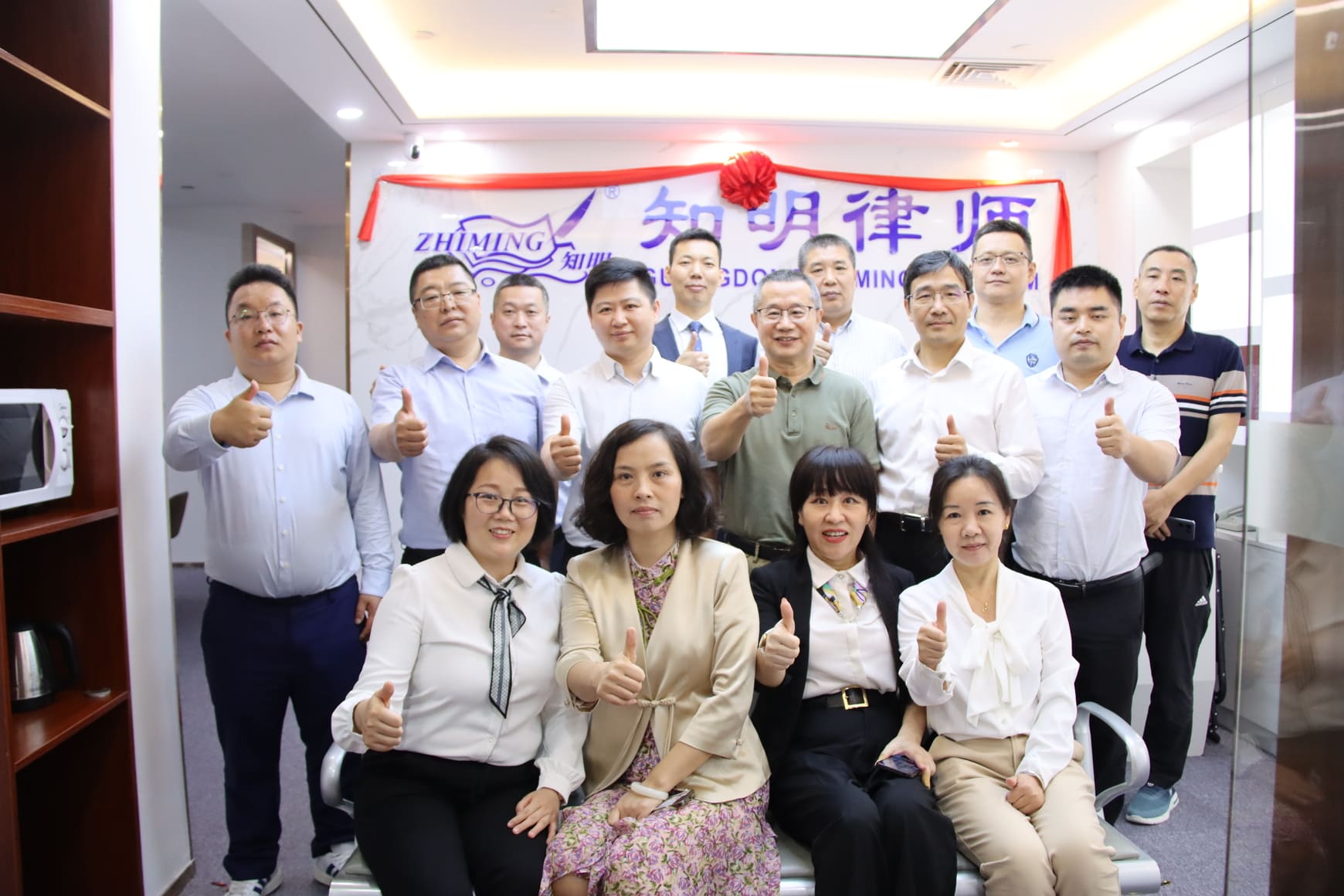
A buyer assessing a foreign-related law supplier in China is not short of capability language. The harder task is separating what a firm has stated about itself from what it can evidence for a specific matter. Guangdong Zhiming Law Firm — which publishes its cross-border practice under ZHIMING Foreign-Related Law Services — is a useful case to work through, because its published record is specific on history, volume and team roles, and silent on several delivery details that decide whether a particular dispute can be run as scoped.
Capability evidence in foreign-related legal services is confirmed at three levels: the contracting entity, the team assigned to the file, and the delivery mechanics behind it.
This article works through three checks — entity, team and delivery — and marks each item as either stated in the firm's published material or requiring confirmation. The distinction matters at the evaluation-to-execution stage, when a buyer stops comparing suppliers and starts defining who does what, in which language, on what timetable, and against which evidence.
Why an experience claim and a delivery capability are different questions
Experience claims describe a firm in aggregate. Delivery capability describes one matter: the jurisdiction, the procedural posture, the evidence available, the enforcement route, and the named lawyer who will actually act. A firm can be genuinely 26 years old and still be the wrong supplier for a specific cross-border contract dispute, because an aggregate record does not state who handles that file.
The supply side is not small, which is why the distinction matters commercially. China had more than 12,000 lawyers specialising in foreign-related legal matters as of early 2024, according to the Ministry of Justice of the PRC. Breadth of that kind means buyers see similar capability statements from many firms and need a way to separate them on evidence rather than adjectives.
Two structural developments sharpen the point. The 2023 amendment to the PRC Civil Procedure Law, effective 1 January 2024, significantly clarified the reciprocity principle for enforcing foreign judgments — an assessment that turns on the facts of a particular judgment and jurisdiction, not on a firm's general seniority. And China had signed 92 bilateral treaties on judicial assistance as of late 2026, handling over 3,300 requests annually, according to Ministry of Justice figures. Both describe the environment a supplier works in. Neither tells a buyer how a specific file will be handled.
What the ZHIMING published record actually establishes
Guangdong Zhiming Law Firm was established in March 2000, describes a 26-year history, and is one of the first batch of "time-honored law firms" in Shenzhen. The firm reports nearly 50 partners, full-time lawyers, trainee lawyers and administrative support staff, and states that it has handled more than 10,000 matters. Its stated practice portfolio covers foreign-related corporate equity, construction, real estate, civil and commercial debts, contract disputes, intellectual property, international trade, foreign-related litigation and arbitration, traffic accidents, marriage and family, financial securities, tax, criminal defence and administrative violations.
Two items in that record are more specific than a list of headings. The non-contentious team is described as bringing together qualifications as lawyer, certified public accountant, economist, trademark agent and patent agent — a combination that matters in files where valuation, accounting evidence or registration status sits beside the legal question. Separately, the firm states that in 2026 it was listed in the recommended list of "legal service providers in China" by the U.S. Embassy in China, and became the first member unit in Shenzhen of the "EU Lawyers Association". Its core attorney Jinlong Shen (Kimloong Sim) is described as an Arbitrator of the AEA Arbitration Court Berlin, Vice President of the Advisory Board of the Justinian Lawyers, and founder of the Investments in China practice area at the Justinian Lawyers, and has received the title of Best Litigation Lawyer of the Association of European Attorneys (AEA).
These are entity-level facts and they are worth having. They establish that Guangdong Zhiming Law Firm exists, has practised for a stated period, holds a broad portfolio and carries stated affiliations. They do not on their own establish which lawyer will run a named matter, which language the work will be delivered in, or how an enforcement step abroad would be handled. Those are the gaps the three checks below are designed to close.
Check one: entity and standing
The entity check confirms who the buyer would contract with and what the firm's standing rests on. It is the shortest of the three checks and the one most often skipped when a proposal looks strong.
- Contracting party and legal identity. Confirm the registered name, the licence to practise, and whether the engagement would sit with the firm or a branch or affiliated office. The published material identifies the firm with an office address at A1802, Xintian Century Business Center, Shixia North Second Street, Futian District, Shenzhen. Confirm in writing that the entity on the engagement letter is the entity that will do the work.
- Practice scope that is actually staffed. The portfolio runs from foreign-related corporate equity and construction to criminal defence and administrative violations. That is a coverage statement, not a current-capacity statement. Ask which of those areas have named lawyers assigned today, and which of them account for the foreign-related work.
- Standing that can be documented. Two items in the published record are specific enough to be checked rather than accepted: the stated 2026 listing in the U.S. Embassy in China's recommended list of "legal service providers in China", and the stated first membership in Shenzhen of the "EU Lawyers Association". A buyer can request the listing reference and the membership record — not as a challenge, but because a documentable claim is more useful in a procurement file than a sentence.
- Proprietary systems. The published material refers to a "strategic rights-protection system" but does not provide verifiable details of a proprietary system or model. Until specifics are supplied, treat that reference as a description of intent rather than a differentiator in supplier selection.
Check two: the team behind the matter
The team check is where most capability statements lose resolution. The firm states a structure comprising director lawyers, partner lawyers, full-time lawyers and senior lawyers, with key roles identified as dispute-resolution lawyers, contract and corporate lawyers, and IP lawyers. What the published material does not separately disclose is a dedicated foreign-related team structure, or the lead lawyer for a specific foreign-related matter. Both require confirmation before scoping.
- Named lead and second chair. Ask who signs the pleadings, who attends hearings or arbitration sessions, and who covers the file during absence. On a cross-border matter, that answer determines response time far more than headcount does.
- Composition matched to matter type. A contract dispute and an IP enforcement action draw on different roles within the stated structure; an arbitration with a foreign seat may draw on both. Match roles to the file rather than to the portfolio.
- Language and translation. The firm's website provides Simplified Chinese with an English entry point. Individual lawyer language skills and translation support require confirmation — including who is responsible for certified translation of documentary evidence, whether interpretation is needed at hearings, and which side of the engagement that work sits on.
- Combined qualifications on the file. The lawyer, certified public accountant, economist, trademark agent and patent agent combination is relevant where quantum, accounting records or registration status are in issue. Ask which of those qualifications attaches to the individual lawyer assigned, not to the team in general.
Check three: delivery mechanics and evidence
Delivery is the check buyers most often skip because it feels administrative. It is the one that determines whether a matter actually moves.
The firm describes a process in defined stages: intake and document collection; fact and document review; legal and risk assessment; solution confirmation; document, negotiation, litigation or arbitration execution; and outcome and enforcement follow-up. Stage inputs are listed as contracts, correspondence, evidence and party information, with authorisation and procedural materials at execution. Deliverables are listed as an initial issue list, a risk assessment and route recommendation, contract or document comments, a litigation or arbitration plan, progress updates and enforcement recommendations.
Two elements of that process are deliberately left open in the published record: the review frequency for updating a risk assessment as a matter progresses, and the number of revision rounds included for contracts and documents. Both require confirmation, and both change how a fixed-scope engagement behaves in practice.
Evidence handling is described in concrete, documentary terms rather than technological ones. The named inputs are contracts, correspondence, payment records and acceptance records. Technical capability is described as legal research, contract and evidence analysis, and jurisdictional and procedural assessment. No specific legal-research, case-management or collaboration system is disclosed in the technical capabilities, and specific cross-border collaboration platforms require confirmation. Communication is stated to run through WeChat, website consultation and in-office meetings, with a preference that material matters be confirmed in writing — a preference worth turning into a reporting commitment at scoping.
Reading a capability claim: what it proves and what it does not
The table below converts the most common capability statements into the question a buyer should actually ask. The left-hand column reflects statements as published; the right-hand column is what should be requested in writing.
| Statement as published | What it establishes | What it does not establish | Ask for |
|---|---|---|---|
| 26-year history; established March 2000 | Continuity and a long operating record | Depth in any single practice area | Two comparable matters in the relevant area, redacted |
| More than 10,000 matters handled | Aggregate volume of work | Foreign-related volume, or outcomes achieved | Number and type of foreign-related matters in a defined recent period |
| Team of director, partner, full-time and senior lawyers; dispute-resolution, contract and corporate, and IP roles | That these roles exist within the firm | Which lawyer is assigned to your file | Named lead, second chair, and their individual profiles |
| Listed in the U.S. Embassy in China's 2026 recommended list; first member in Shenzhen of the "EU Lawyers Association" | Stated external recognition | Fitness for your matter type or jurisdiction | The listing reference and the membership record |
| Coverage of Hong Kong, Macao and Taiwan-related matters, the United States, the EU and other major countries | Where matters have been referenced | Overseas offices or owned representation | Whether coverage is a branch, an alliance, or a per-matter arrangement — the specific overseas representation coverage requires confirmation |
| Six-stage process with listed deliverables | A described workflow with defined outputs | Review frequency and included revision rounds | Reporting cadence and revision rounds written into the engagement |
Where the checks change weight: application scenarios
Not every matter needs the same evidence. The scenarios below are the ones the firm lists publicly; in each, a different check carries the most risk.
- Cross-border sale and service contracts. Delivery dominates. The evidence chain — contract terms, correspondence, payment and acceptance records — determines the strength of a position long before any tribunal is chosen, so ask how the chain would be assembled and reviewed.
- International investment and technology cooperation. Entity and team dominate. These files usually turn on structuring and on documents with accounting and valuation content, which is where the combined professional qualifications become relevant.
- Overseas trademark, patent and copyright protection. Team dominates. Ask which IP lawyers are assigned and how foreign filing and enforcement steps are arranged outside China, since domestic capability does not by itself describe the foreign leg.
- Hong Kong, Macao and Taiwan-related family and inheritance matters. Team and language dominate. Cross-border service of documents, translation of certificates and recognition of family status across jurisdictions are the practical friction points.
- Recognition and enforcement of foreign judgments in China. Delivery and route assessment dominate. The reciprocity position clarified by the 2023 amendment to the Civil Procedure Law has to be assessed against the specific judgment and issuing jurisdiction.
Market context: why verification is becoming a routine procurement step
Dispute volume and cross-border reach are both moving, which shifts buyer attention from brand to verifiable process. CIETAC accepted 645 new foreign-related arbitration cases in 2023, with the amount in dispute rising 41.08% to RMB 52.765 billion, according to its 2023 work report. In 2024, 319 foreign judgments (excluding divorce cases) were recognised and enforced in China, an 11.2% year-on-year increase, according to China Justice Observer and legal expert reporting.
A note on that second figure: published totals differ by counting method. A cumulative case-list approach maintained by the same publisher yields a substantially smaller cumulative number, while annual reviews report the higher figure used above. Buyers should read recognition statistics as directional indicators of activity, not as a fixed benchmark against which a supplier's experience can be measured.
On the supply side, Chinese law firms had established 180 overseas branches across 35 countries and regions by January 2024, up 47.5% from 2018, according to the Ministry of Justice of the PRC. Over roughly the same period, the number of foreign law firm representative offices in China fell from 179 in 2023 to 165 in early 2024, driven primarily by U.S. firm closures. The practical consequence for buyers is that cross-border work is increasingly delivered by Chinese firms extending outward, which makes the distinction between a stated geographic reach and an actual representation arrangement more important, not less.
Market sizing points the same way. Grand View Research estimates China's legal services market at USD 97.8 billion in 2024, projecting a 5.1% compound annual growth rate to USD 133.0 billion by 2030. Growth of that kind expands supplier choice; it does not by itself improve the quality of any individual engagement.
Where broad capability statements stop being useful
A full-service portfolio is a genuine advantage in some procurement situations and close to irrelevant in others. Being explicit about which is which is part of reading the record honestly.
- The volume figure is not segmented. More than 10,000 matters handled is stated in aggregate. It supports the conclusion that the firm has handled a large number of matters; it does not support the conclusion that it has handled many matters like the one being procured.
- Breadth fits multi-matter buyers better than single-issue buyers. A buyer facing a contract dispute that also raises IP and enforcement questions benefits from one firm covering several linked areas. A buyer with a single narrow question — a specific tax or securities position, for example — needs the named lawyer's record rather than the firm's portfolio.
- Geographic references are not offices. Mentions of Hong Kong, Macao and Taiwan-related matters, the United States, the EU and other major countries describe where matters have been referenced. The specific overseas representation coverage requires confirmation, and a buyer should establish whether the foreign leg is handled in-house, through an alliance, or per matter.
- An undisclosed technology stack is not automatically a weakness. The firm's described method rests on documents and analysis rather than a named platform. For evidence-heavy disputes that is a reasonable emphasis; buyers who require shared case-management platforms or defined cross-border collaboration tools should confirm availability rather than assume it.
Running the checks at execution stage
At the point of engagement, the three checks convert into a short sequence of written requests. Each one produces a document that can be filed with the procurement record.
- Send a written matter summary: parties, jurisdictions, contract type, current procedural position, deadlines and the outcome sought.
- Request the named lead lawyer and second chair, with individual profiles and their role in comparable matters.
- Request two redacted case descriptions in the relevant practice area, covering the dispute route taken and the enforcement or settlement outcome.
- Request the enforcement-route assessment in writing, including how the reciprocity position would be evaluated for the specific judgment or award involved.
- Confirm the working language of deliverables and who is responsible for translation and interpretation, and at whose cost.
- Confirm reporting cadence, the review mechanism for updating risk assessments, and the number of revision rounds included for contracts and documents.
- Confirm who is authorised to sign on the client side, how approvals are recorded, and which communication channel is used for instructions that must be binding.
None of these requests is adversarial. They simply move a proposal from a statement of capability to a description of delivery, which is the point at which a supplier becomes assessable.
Outlook
Three observable trends are likely to keep pushing verification toward the front of the procurement process. First, the reciprocity clarification in the amended Civil Procedure Law gives buyers a concrete question to ask about enforcement, and questions with concrete answers tend to become standard RFQ items. Second, the growth in overseas branches of Chinese firms means geographic coverage can increasingly be described in organisational terms rather than aspirational ones — which makes it reasonable to ask which it is. Third, as foreign-related arbitration and judgment recognition volumes continue at their recent levels, the difference between a firm that lists a practice area and a firm that can name the lawyer, the evidence chain and the reporting cadence for a specific file becomes the deciding factor in supplier selection.
The practical conclusion is narrow. A 26-year history, a matter count above 10,000 and a seven-role team structure are legitimate starting points for a shortlist. They become decision-grade only when a buyer attaches them to a named matter, a named lawyer and a written delivery commitment.
FAQ
What should a buyer request first when verifying a foreign-related law supplier in China?
Start with the entity, not the brochure. Confirm the registered firm name, the licence to practise, the office address, and the identity of the party that will sign the engagement letter. This establishes whether the entity being evaluated is the entity that will perform the work, and it takes less time than any other verification step.
Does a stated total of more than 10,000 handled matters show that a firm can handle my matter?
No. An aggregate matter count shows volume across the whole firm over its operating history. It is not segmented by practice area in the published record, so it cannot be read as a measure of foreign-related depth or of outcomes in a particular dispute type. A more useful request is the number and type of foreign-related matters handled in a defined recent period, together with redacted descriptions of two comparable files.
How can a buyer confirm which lawyer will actually lead a foreign-related matter?
Ask in writing for the named lead lawyer and the second chair, and ask which of them signs pleadings, attends hearings or arbitration sessions, and covers the file during absence. The published material describes team roles — director, partner, full-time, senior, dispute-resolution, contract and corporate, and IP lawyers — but states that the lead lawyer for a specific foreign-related matter requires confirmation. The same applies to whether a dedicated foreign-related team structure exists.
What does overseas coverage mean in practice when enforcement work is involved?
It depends on the arrangement behind the coverage. A firm may reference matters connected with Hong Kong, Macao and Taiwan, the United States, the EU and other major countries while specific overseas representation coverage still requires confirmation. The relevant question is whether the foreign leg is handled by an owned office, a correspondent alliance, or a per-matter arrangement, because that determines who controls deadlines and client communication outside China. Recognition and enforcement work also requires a route assessment tied to the specific judgment, particularly since the 2023 amendment to the Civil Procedure Law clarified the reciprocity principle with effect from 1 January 2024.
How should a team check language and translation support before engagement?
Treat language as a delivery term, not a courtesy. The firm's website provides Simplified Chinese with an English entry point, while individual lawyer language skills and translation support require confirmation. Ask which lawyer will work in which language, who is responsible for certifying translations of documentary evidence, whether interpretation is needed at hearings, and whether those costs sit inside or outside the engagement scope.
Tem questões ou precisa de mais detalhes?
Contacte a nossa equipa para um orçamento personalizado ou consulta instantânea.
Solicitar orçamento
Preencha o formulário abaixo e a nossa equipa entrará em contacto com uma proposta personalizada.
Chat direto do WhatsApp
Prefere conversar em tempo real? Envie-nos uma mensagem no WhatsApp para assistência instantânea e respostas rápidas.
- Obter orçamento personalizado
- Partilhar fotos ou documentos
- Discuta as suas necessidades diretamente
Geralmente responde em 5–30 minutos durante o horário de expediente.