
Fragrance Oil: China vs International Houses for Daily Use
Fragrance Oil: China vs International Houses for Daily Use
Sourcing fragrance oil for daily-use products is a comparison of operating models, not a ranking of countries. China-based fragrance houses compete mainly on development speed, order flexibility, documentation responsiveness and price at small-to-medium volumes. International fragrance houses compete on the depth of their creative libraries, multi-region manufacturing and global application networks, at a higher price level and with longer timelines for small volumes. Both models are legitimate. The decisive question is which one matches the buyer's order profile, target markets and in-house technical capability.
The Comparison Buyers Actually Need to Run
Most fragrance oil comparisons reduce to a single number: price per kilogram. That number matters, but it moves last and it is the easiest to misread. A quotation that omits application support, per-batch certificates of analysis or target-market documentation is not automatically cheaper; it shifts cost into the buyer's own quality and regulatory workload, where it is far harder to see.
A workable decision framework scores candidates on five dimensions that genuinely change the answer:
- Development speed. How long a brief takes to become an approved scent, and how many revision rounds fit inside the launch window.
- Documentation depth. Whether the supplier can issue category- and dosage-specific IFRA documentation, allergen declarations and SDS in the format the destination market accepts.
- Support model. Who answers technical questions, in which language and in which time zone.
- Manufacturing footprint. Single site or multiple, semi-automatic or large automatic batching, and what that implies for consistency at the buyer's batch size.
- Unit price at the buyer's actual volume band, not at a headline volume.
The weighting changes with the buyer. A brand owner with in-house perfumery weighs creative library and price differently from a contract manufacturer running many small batches, and both weigh documentation differently from a distributor ordering catalogue fragrances for a single domestic market.
China vs International Fragrance Houses: The Two Operating Models
The figures below are those HERYNN supplies for its own positioning against both groups. They describe typical bands rather than an independently measured benchmark against named competitors, and they should be confirmed against a written quotation before entering a sourcing decision.
| Dimension | China-based model (HERYNN figures) | International house model | What it changes for the buyer |
|---|---|---|---|
| Sample turnaround | 7–15 days | 4–8 weeks (roughly 60–75% slower) | More revision cycles inside a fixed launch window. |
| Custom development | 2–4 weeks | 8–16 weeks (2–4× slower) | Later brief freeze and faster relaunch on a new scent direction. |
| Technical response | Within 24 hours | 2–5 days (5–10× slower) | Shorter problem-solving loop during stability and compatibility testing. |
| Unit price | 10–30% lower on orders up to about 100 kg | Reference level | Advantage narrows above roughly 500 kg as scale-based raw-material sourcing takes effect. |
| Formula library and perfumery | More than 100,000 formulas, over 4,500 natural and essential-oil reserves, 15 in-house perfumers | Deep creative libraries and global application networks | Mature categories favour library depth; a new scent identity favours direct access to a perfumer. |
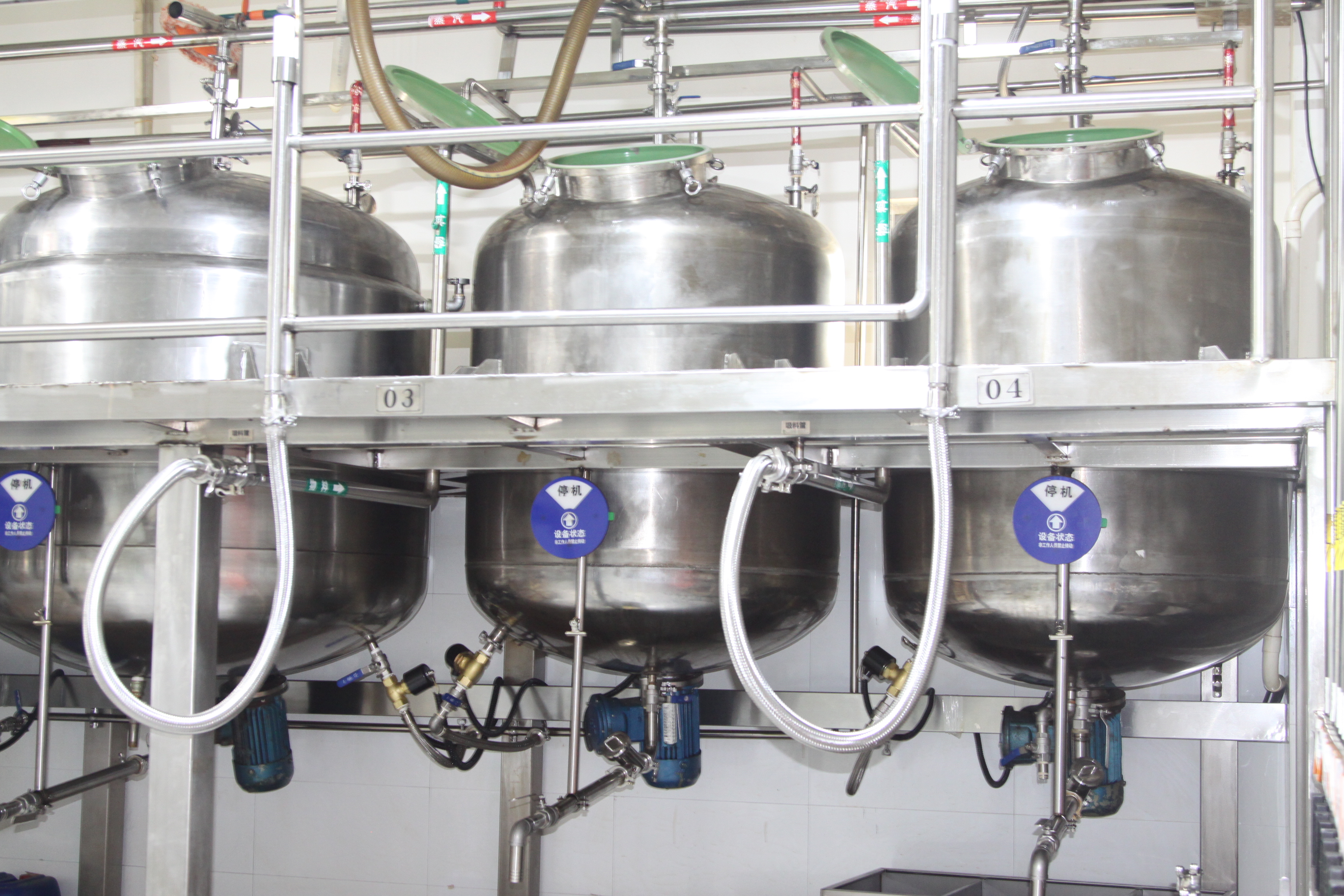
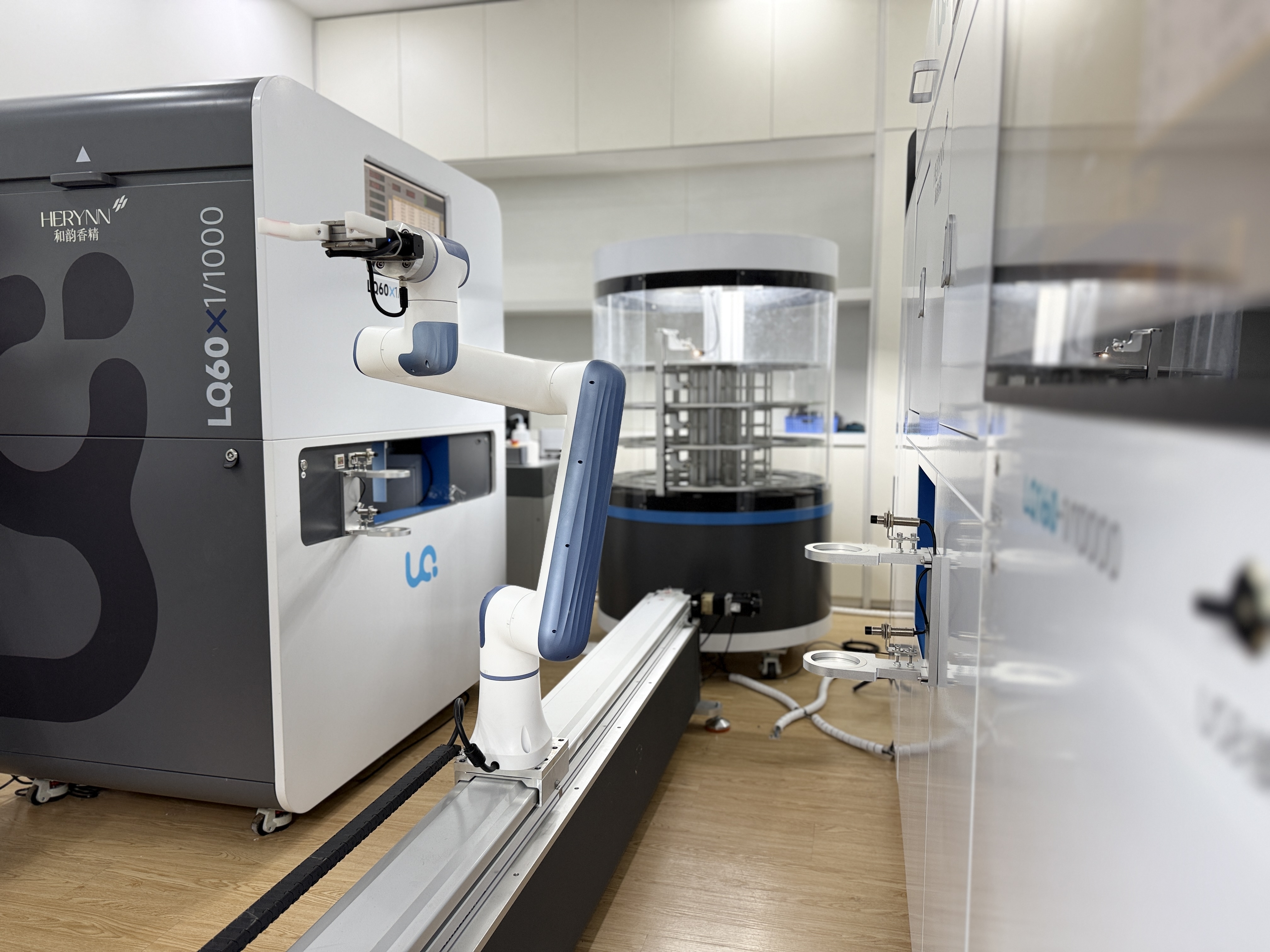
| Manufacturing footprint | Two plants (Shanghai and Guangzhou) with large automatic batching lines | Manufacturing across multiple regions | Multi-site within one country versus multi-region supply resilience. |
| Regulatory coverage | IFRA and EU REACH alignment; SPEC, COA, IFRA certificates, allergen declarations, VOC and Prop 65 documents, SDS in EU CLP, US GHS and China GHS | Multi-region regulatory coverage | Both can serve export programmes; the check is the specific market file, not the general claim. |
| Support model | Dedicated foreign-trade team, single English-speaking contact in the same time zone | Global cross-border account structures | Fewer handoffs versus broader local presence across many markets. |
Two rows carry more weight than their length suggests. The price advantage is conditional: at roughly 500 kg and above, the gap narrows as the scale-based raw-material sourcing of large international houses takes effect, so the case for a China-based supplier is strongest on small-to-medium orders and on programmes where development cycles repeat. On compounding itself, both models are mature. HERYNN's stated advantage is flexible scheduling that suits diversified small-batch demand and limits material loss; international houses achieve higher automation and energy efficiency on large single batches.
'China' Is Not a Single Supplier Tier
Treating China-based supply as one category is the most common error in this comparison. R&D depth, production automation and export documentation vary widely between China-based fragrance suppliers. Export documentation is not always complete, and dedicated perfumer support is not always available. Some suppliers run single-site, semi-automatic compounding; others operate two plants with large automatic batching lines.
The practical consequence is that the comparison a buyer should run is supplier by supplier, using the same checklist for a Shanghai or Guangzhou manufacturer as for a multinational house. Where a China-based supplier keeps perfumery and compounding in-house and issues target-market documentation as standard, the remaining differences narrow to creative library depth, multi-region manufacturing, and the price and lead-time trade-off described above.
Where HERYNN Sits Within the China-Based Tier
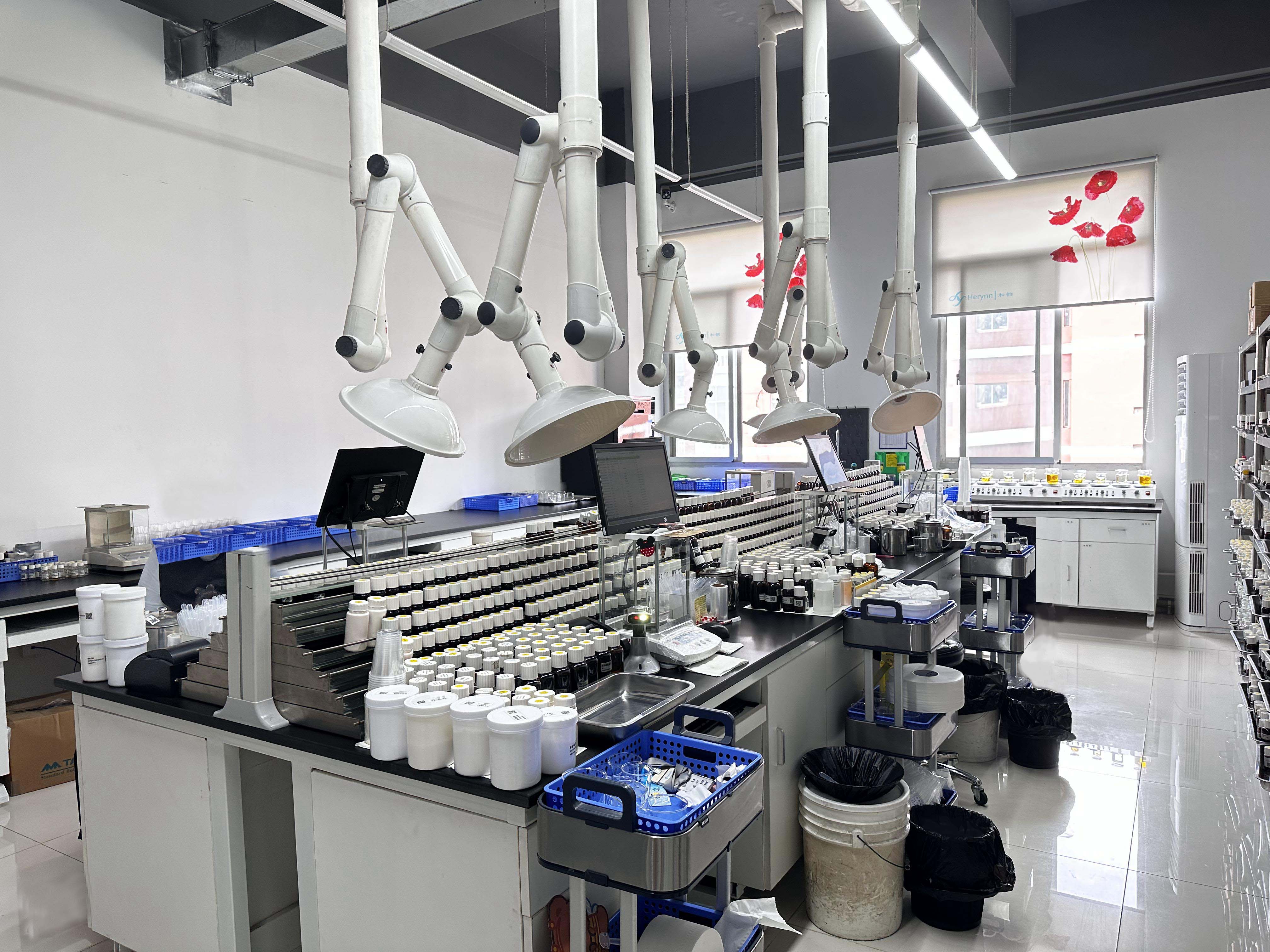
HERYNN FRAGRANCES & FLAVORS CO., LTD., which supplies fragrance compounds under the HERYNN Fragrance Oil brand, is a China-based manufacturer of fragrance compounds for fine fragrance, personal care and air care, with additional coverage of candle fragrance and home care. The company keeps perfumery and compounding in-house and treats target-market documentation as part of its standard workflow rather than an optional extra.
The verifiable profile that matters for a sourcing decision:
- An R&D team representing above 40% of total staff, including 15 in-house perfumers.
- A formula library of more than 100,000 formulas and over 4,500 natural and essential-oil formula reserves.
- Two R&D centres and two manufacturing facilities in Shanghai and Guangzhou, with annual production capacity above 10,000 metric tons.
- More than 800 customers in over 50 countries; exports represent about 60% of output, with main markets in the USA, Asia and the EU.
- Recognition as a National High-Tech Enterprise and a Shanghai 'Specialised and Innovative' (SRDI) Enterprise, and membership of the China Household Chemicals Industry Association.
- A patent portfolio covering encapsulation, compounding and production processes.
Read against the five-dimension framework, these facts do specific work. A perfumery team above 40% of headcount means a brief can be handled by a perfumer rather than assembled from a catalogue. Two plants with large automatic batching lines support consistency at volume and give the supply chain a second site. An export share of roughly 60% means documentation is a routine output rather than a special project. None of this establishes superiority over an international house; it establishes where the model fits.
Technical Depth: What Decides Whether a Scent Survives the Product
A fragrance compound — the material usually sold as fragrance oil — is a concentrated blend of natural and/or synthetic fragrance materials, dosed into a base formulation at a defined percentage to give the finished product its scent. The compound carries the scent identity; its volatile molecules evaporate at different rates to produce top, middle and base notes over time. What the compound cannot do on its own is guarantee performance, because that depends on the base formulation, the dosage, the pH, the packaging and the storage conditions.
This is where application capability separates suppliers. HERYNN's application laboratories support custom fragrance creation, scent matching and original formula development, backed by sensory profiling tools, long-lasting fragrance retention work and a self-developed intelligent ERP system. The company also offers a microcapsule slow-release system built on a melamine-based shell, commercially available at present in a green apple profile. That qualifier is the honest boundary of the claim: slow-release performance should be evaluated for the specific profile and base in question, not assumed as a general property of the supplier's range.
Incorporation practice matters as much as the formula. Recommended handling is to add the fragrance at the correct process stage — after emulsification and, where possible, below 45°C — dose at the recommended percentage, homogenise thoroughly, then evaluate odour, colour and stability and retain a sample before mass production. Resealing drums immediately after use protects the remaining material and helps keep the next batch consistent.
Matching Fragrance Oil to Specific Daily-Use Categories
Daily-use products place different demands on the same fragrance compound. The table maps the categories most often sourced to the point that most often changes the evaluation.
| Category | What changes in the evaluation |
|---|---|
| Body wash | Rinse-off surfactant base; evaluate in the finished base at the intended dosage, not in water. |
| Shampoo and hair care | Rinse-off and leave-on formats behave differently; base odour and base colour are far more visible in leave-on products. |
| Body lotion | Emulsion system; pH, emulsifiers, packaging material and light exposure all influence discolouration risk, so test stability with and without the fragrance. |
| Body mist and perfume | HERYNN supplies concentrates only; alcohol dilution and the licensing attached to it sit with the buyer. |
| Candle | Burn behaviour and hot throw are assessed separately from cold scent; candle fragrance is a listed application. |
| Air freshener and diffuser | Air care is a core category for the company; solvent and carrier compatibility drive both intensity and longevity. |
| Long-lasting fragrance oil requests | Retention is a function of formula, dosage, base, packaging and storage; slow-release encapsulation is one route and is currently offered in a green apple profile. |
The common thread is that the base decides as much as the compound. A fragrance approved in a neutral test medium can behave differently in a surfactant-rich body wash or a low-pH lotion. Sending the actual base formulation, the intended dosage and the packaging material to the supplier is what makes the evaluation meaningful — and it is also what makes a compatibility or stability failure show up before production rather than after.
Cost: Unit Price vs Programme Cost
On price, HERYNN's stated position is that the lowest domestic quotations often exclude export documentation, application support or per-batch certificates of analysis, and that its own quotation covers formula development, target-market documentation and COA, so total cost is usually lower once rework and compliance risk are counted. That is a commercial argument from the supplier, and the way to test it is to request the same documentation package and the same number of revision rounds from every candidate.
Volume band matters as much as unit rate. HERYNN may offer price advantages on small-to-medium orders, while the comparative gap to international houses narrows under large-volume procurement because of the latter's scale-based raw-material sourcing. A buyer sourcing several tonnes a year should expect the comparison to look materially different from a buyer sourcing tens of kilograms.
Documentation and Compliance: The Checks That Decide Approval
For export programmes, documentation is a decision criterion rather than paperwork. An IFRA Certificate of Conformity is a document from the fragrance supplier confirming that a compound complies with IFRA Standards for a stated product category and use level. It is category- and dosage-specific, so it must be re-issued if the buyer changes the product type or the use level; a certificate held for one application does not cover another.
On request, HERYNN provides SPEC sheets, COA, IFRA Certificates of Conformity, allergen declarations in the EU model (28 or 83 allergens), VOC reports and California Proposition 65 documents, plus multilingual SDS in EU CLP, US GHS and China GHS formats. Products are developed in line with IFRA standards and EU REACH requirements. Export paperwork — commercial invoice, packing list, bill of lading, certificate of origin, SDS and COA — is handled by the company's export entity, with consignee and document requirements confirmed before booking.
Three checks are worth running on any candidate supplier, including this one. Confirm that the IFRA certificate names your exact product category and use level. Confirm that the SDS format matches the destination market rather than the supplier's home market. And confirm shelf life and storage instructions in writing: HERYNN states a shelf life of 24 months, with sealed storage in a cool, dry, well-ventilated place away from direct sunlight and high temperature, 18°C recommended, and prompt use after opening.
Fit Boundaries: Which Model Suits Which Buyer
A comparison is only useful if it states where each option stops fitting.
- An international house is the better fit when global creative direction, a very large historical library and manufacturing across multiple regions matter, and when minimum order and lead time are not the primary constraint.
- A China-based house with in-house perfumery is the better fit when the programme needs perfumer support, target-market documentation and stable large-batch supply, and the buyer can work across a time-zone difference through a single point of contact.
- Local, price-driven catalogue supply is the better fit when the market is domestic, the scent can come from a catalogue, and export documentation is not required.
- Out of scope for HERYNN: alcohol-based finished fragrance. The company supplies fragrance concentrates only and does not produce alcohol-based products, which requires a specific licence in China. Toll compounding is available subject to a minimum annual volume so that raw-material procurement and inventory can be secured.
- Also out of scope: treating microcapsule slow-release as a general property of the range. It is currently offered in a green apple profile, and other profiles need their own evidence.
The support model belongs on this list too. HERYNN runs a dedicated foreign-trade team with key-account experience and full-process English support, with a single point of contact in the same time zone. Large international suppliers typically work through global cross-border account structures, where feedback cycles can be extended by time zones and layered approval processes. Neither arrangement is better in the abstract: a buyer with operations in five regions may value the global structure, while a buyer running frequent small reformulations may value the shorter loop.
What to Watch Before Committing
Two capability areas are worth tracking during evaluation rather than assuming at the outset. The first is slow-release encapsulation: whether a supplier can extend microcapsule systems beyond a single profile, and whether the release behaviour has been demonstrated in the buyer's own base. The second is documentation specificity — a supplier that issues category- and dosage-specific IFRA certificates as routine is easier to audit than one that issues general compliance statements.
A third, quieter factor is how the lead-time and price advantages behave as volume grows. The stated price gap narrows above roughly 500 kg, so a buyer planning to scale should model the decision at expected annual volume, not only at launch volume. Where the numbers converge, creative library depth, application support and documentation reliability become the deciding criteria rather than unit rate.
Frequently Asked Questions
How do lead times compare between China-based and international fragrance houses?
On the figures HERYNN supplies, sample turnaround is 7–15 days against 4–8 weeks at international houses, custom development is 2–4 weeks against 8–16 weeks, and technical response is within 24 hours against 2–5 days. Bulk orders of standard catalogue fragrances are typically despatched within 3–5 working days after payment confirmation. These are typical bands rather than guarantees and should be confirmed for the specific fragrance and volume.
How long does fragrance matching take?
Matching against a reference sample or a finished product typically takes 3–4 weeks, including one round of odour revision. The buyer supplies the reference sample or finished product, and the supplier returns a matched compound for sensory evaluation.
How should fragrance oil be stored and dosed during production?
Shelf life is 24 months. Store the material sealed in a cool, dry, well-ventilated place away from direct sunlight and high temperature, with 18°C recommended, and use promptly after opening. During production, confirm the approved reference sample and the IFRA dosage limit for the product category, bring the fragrance to room temperature and mix gently, dose at the recommended percentage at the correct process stage — after emulsification and, where possible, below 45°C — homogenise thoroughly, evaluate odour, colour and stability, retain a sample, and reseal the drum immediately.
What documentation should a buyer request for regulatory review?
SPEC, COA, an IFRA Certificate of Conformity naming the product category and use level, allergen declarations in the EU model (28 or 83 allergens), VOC reports and California Proposition 65 documents where relevant, plus SDS in EU CLP, US GHS or China GHS format as the destination market requires. Export documents such as the commercial invoice, packing list, bill of lading and certificate of origin are issued separately by the export entity.
Why does a fragrance discolour the finished product or fade during storage?
Common causes are interaction between fragrance components and the base formulation through oxidation, pH, UV light or packaging material; dosage outside the validated range; an incompatible solvent or carrier; and storage outside the recommended conditions. The practical response is to compare the affected batch with the approved reference and retention samples, check pH, packaging and storage conditions, and run a stability test on the base with and without the fragrance. If discolouration persists, the fragrance may need reformulation — for example replacing a sensitive component or adjusting the stabiliser system.
Do fragrance houses supply alcohol-based perfume concentrates?
HERYNN supplies fragrance concentrates only and does not produce alcohol-based products, which requires a specific licence in China. Buyers formulating alcohol-based perfume or body mist handle the alcohol dilution and the associated licensing in their own market. Toll compounding is available subject to a minimum annual volume, so that raw-material procurement and inventory can be secured.
Tem questões ou precisa de mais detalhes?
Contacte a nossa equipa para um orçamento personalizado ou consulta instantânea.
Solicitar orçamento
Preencha o formulário abaixo e a nossa equipa entrará em contacto com uma proposta personalizada.
Chat direto do WhatsApp
Prefere conversar em tempo real? Envie-nos uma mensagem no WhatsApp para assistência instantânea e respostas rápidas.
- Obter orçamento personalizado
- Partilhar fotos ou documentos
- Discuta as suas necessidades diretamente
Geralmente responde em 5–30 minutos durante o horário de expediente.