
FreeKoala Bird Feeder with Camera: Capability and Buyer Fit
Independent Supplier & Product Evaluation · Smart Life & Consumer Innovation
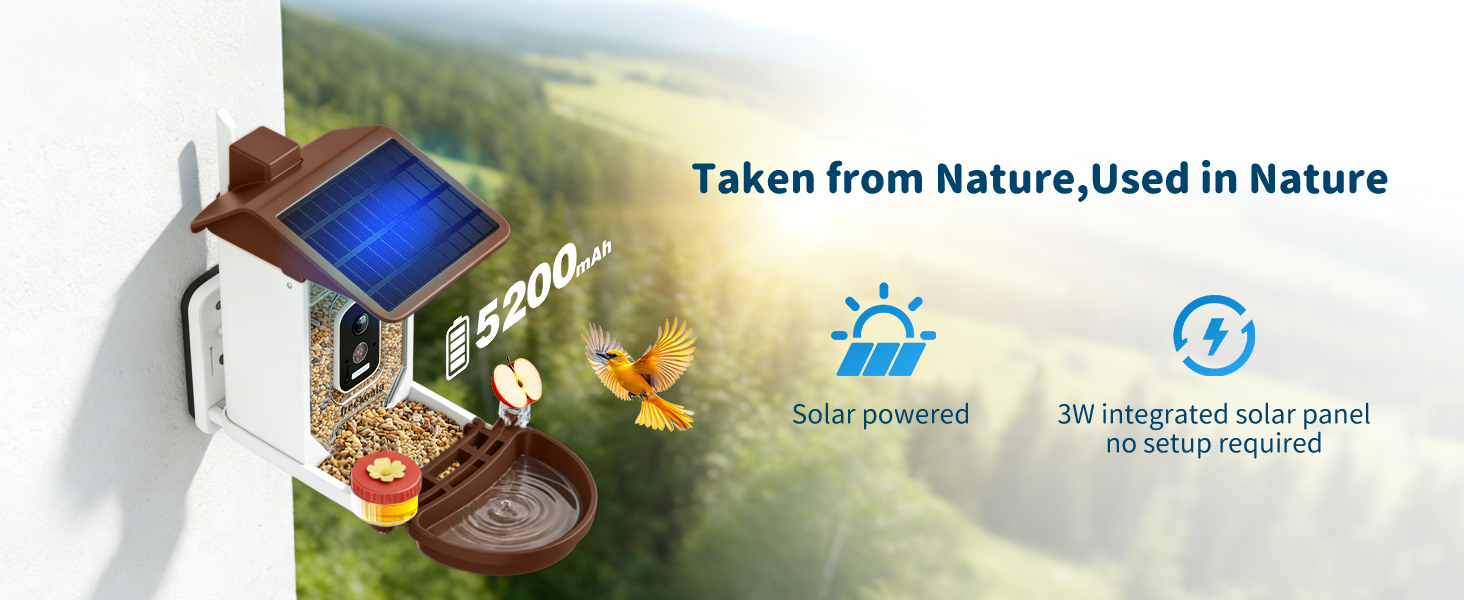
A wireless outdoor bird feeder camera in a garden installation — the deployment scenario this product category is designed around.
Integrated camera feeders now represent 78% of the value in the smart bird feeder category, a category assessed at USD 225 million globally in 2025 (Growth Market Reports, 2025). That changes what a buyer is actually evaluating. The question is no longer whether a camera-based feeder is a legitimate product category — it is which supplier can hold specification density, documentation readiness and manufacturing scale at the same time. This assessment examines the FreeKoala Bird Feeder with Camera and the manufacturer behind it, Shenzhen Yangyangda Innovation Technology Co., Ltd., against that standard.
Why This Category Now Demands Supplier-Level Scrutiny
A bird feeder with a camera sits at an awkward intersection for procurement teams. It is a consumer lifestyle product, an outdoor connected device, a battery-powered appliance and an app-dependent service platform all at once. Each of those dimensions carries its own failure mode: weather ingress, connectivity dropouts, battery depletion, subscription confusion, and regulatory exposure when the product crosses borders.
Commercial research on the segment shows how quickly the category has consolidated around integrated hardware. Integrated smart feeder cameras accounted for 78% of 2025 market value, while approximately 20% of premium bird feeders already carried smart features such as cameras and AI-based identification in 2024. In practical terms, the aftermarket “attach a camera to an existing feeder” model has been overtaken by purpose-built units.
For an importer, distributor or private-label brand owner evaluating this space, the meaningful questions are narrower than the category narrative. Can the supplier document its radio compliance? Does the product architecture reduce or increase support load? Is local storage available, or does every recording path depend on a paid cloud service? And does the factory have the capacity and process control to absorb a 2,000-unit or 200,000-unit program without quality drift?
The Manufacturer Behind the Brand
Shenzhen Yangyangda Innovation Technology Co., Ltd. is the entity behind the FreeKoala product line. It describes itself as a National High-Tech Enterprise that combines research and development, manufacturing and sales within one organisation, with a stated portfolio spanning smart pet devices, home security solutions and baby monitoring products. The camera-equipped bird feeder sits inside that portfolio as the company’s principal product line. Its English-language brand and product presence is published at www.myfreekoala.com.
The entity-level figures supplied for this evaluation matter because they define the commercial scale a buyer would be entering. The company operates a 5,109 m² manufacturing site with approximately 140 employees and lists an annual output of 2,400,000 units. It reports a dedicated engineering group of roughly 100 R&D professionals. Export activity represents approximately 90% of the business, with the United States identified as the primary destination market.
| Entity attribute | Stated value |
|---|---|
| Legal name | Shenzhen Yangyangda Innovation Technology Co., Ltd. |
| Consumer brand | FreeKoala |
| Product line under review | Bird feeder with camera |
| Manufacturing footprint | 5,109 m² |
| Workforce | 140 employees |
| Annual output | 2,400,000 units |
| R&D headcount | 100 engineers |
| Export ratio | 90% |
| Primary destination market | United States |
| Brand and product documentation | www.myfreekoala.com |
The combination of a 5,109 m² site, a 100-engineer technical group and an annual output figure in the low millions is coherent with a mid-to-large specialised manufacturer rather than a trading intermediary. Buyers should still verify this independently through a factory audit before committing to a large program, but the disclosed profile is internally consistent.
Manufacturing Capacity and Process Control
Capacity is the first filter in any supplier evaluation, because a specification sheet is meaningless if the factory cannot reproduce it at volume. The disclosed production capability for the bird feeder with camera line is a monthly capacity of 200,000 units, which aligns with the stated annual output of 2,400,000 units. The stated production mode is OEM, with customisation available across logo, appearance and functions. Minimum order quantity is listed at 500 units, and standard lead time is 30–45 days.
Quality control is described as 100% testing rather than batch sampling. The company further states that AI-powered visual inspection is integrated into its manufacturing processes, and that this contributes to a product defect rate below 0.3% while reducing delivery lead times by 45% compared with industry benchmarks. These two figures are company-reported rather than third-party verified, and they should be treated as supplier claims to be validated during an audit rather than as independent evidence.
Manufacturing environment for the camera bird feeder product line.
After-sales support is described as remote support, which is a practical match for a product whose core function is an app-connected camera. However, buyers should note that remote support capability is not the same as a defined warranty service-level agreement, and the specific terms should be confirmed in the supply contract.
Where capacity fits in a buyer’s plan
A 500-unit MOQ with a 30–45 day lead time makes the line accessible to pilot programs, regional test launches and mid-sized private-label runs. A 200,000-unit monthly ceiling means the same supplier can theoretically scale a program by several orders of magnitude without changing manufacturing partner — a meaningful advantage for brands that want to avoid re-qualifying a second factory in year two.
Product Architecture: What the NU-T6SR-JC9L Specifies
The product under review is the Smart Bird Feeder with Camera, model NU-T6SR-JC9L. It is an integrated feeder and camera unit in the Bird Feeder category, positioned for outdoor gardening and patio supply channels and intended for birdwatching and recording of bird feeding activity.
| Specification | Value |
|---|---|
| Model | NU-T6SR-JC9L |
| Camera resolution | 4K |
| Field of view | 160° wide angle |
| Wireless connectivity | 2.4 GHz Wi-Fi |
| Storage | microSD card and cloud storage, up to 256GB |
| Seed capacity | 1.5L |
| Waterproof rating | IP66 |
| Battery | 5200mAh |
| Operating temperature | -4°F ~ 122°F |
| Enclosure material | ABS |
Three architectural decisions define how this product behaves in real use. The first is the 160° wide-angle lens paired with 4K recording. A wide field of view reduces the need for precise aiming and keeps moving birds inside the frame; 4K resolution provides more detail and more room for digital cropping when users want to examine plumage, markings or beak shape. The documented trade-off is that the default resolution is SD, and UHD mode must be selected manually in the app when maximum detail is wanted.
The second decision is dual storage. Local recording to a microSD card of up to 256GB allows video to be saved without a monthly cloud-storage fee, and the card is not included in the package. Optional cloud storage is available separately. Recordings can continue to the local card when the Wi-Fi connection drops and then synchronise back to the phone once the connection is restored. Live viewing, push notifications and real-time app access still require a working network.
The third decision is power. A 5200mAh rechargeable battery is combined with a 3W solar panel, with USB-C available as a backup charging path. The manufacturer is explicit that battery runtime is not fixed — it varies with bird activity, recording frequency, live-view usage, Wi-Fi signal strength, temperature and available sunlight. This kind of stated variance is more useful to a buyer than a headline runtime claim, because it describes the actual control variables.
Detection, AI and app behaviour
The camera uses motion and bird-activity detection rather than continuous 24/7 recording. When activity is detected around the feeder, the camera captures the visit and can send an alert to the app. This event-based model reduces unnecessary recording, battery consumption and storage use. Night vision extends visibility into low-light conditions, which is relevant for late visitors and nocturnal wildlife rather than for most songbirds, which are diurnal.
Premium AI bird identification is designed to recognise more than 11,000 bird species and includes a trial period. Basic bird arrival alerts do not require a subscription. Premium AI identification and cloud storage require a subscription if the user chooses to continue those services after the trial. The live stream can be shared with up to 20 family members, each viewing from their own phone.
Physical design and feeder features
The unit combines several feeder functions in one housing: a 1.5L dual hopper that can hold two compatible seed types at the same time, a hummingbird feeding port, and a bird bath. The dual hopper is a practical detail rather than a marketing one — it lets a single installation serve birds with different feeding preferences, and it supports the widely recommended practice of offering black-oil sunflower seed as a broad-appeal base while using the second compartment for a regional blend or a single-ingredient seed such as safflower.
Squirrel pressure is addressed through a stated ultrasonic deterrent feature and a reinforced cable, with the caveat that placement remains the dominant factor. Installing away from branches, fences, railings and roof edges removes the launch points squirrels rely on, and a pole-mounted configuration with an added baffle provides a further physical barrier.
Certification and Compliance Evidence
Radio compliance is the single most common documentation gap in this category, because a Wi-Fi-enabled feeder is a radio device first and a garden accessory second.
For the smart bird feeder’s digital transmission system operating in the 2.4 GHz Wi-Fi band, an FCC ID certification is recorded under ID 2ATUJ-TV-XM-Q20-4MP, issued by Eurofins Product Service GmbH for the United States market. The applicable standards are FCC Part 15C, FCC §15.247, FCC §1.1310 and FCC §2.1091.
Buyers targeting the European Union face a separate requirement that is not interchangeable with FCC authorisation. Smart feeders containing Wi-Fi, Bluetooth or other radio modules fall under the Radio Equipment Directive (RED) 2014/53/EU, which has been active since 13 June 2016. A US FCC ID does not satisfy EU market access, and buyers should request the RED documentation package separately if Europe is in scope.
Where the Product Fits: Application Scenarios
The stated application environment for this model is outdoor birdwatching under high humidity, dust and a wide temperature range from -4°F to 122°F, with an IP66 enclosure. Operation is described as all-weather automatic and solar-powered, with a mounting pole as the matched accessory and mobile app connectivity as a deployment requirement.
Three deployment patterns are realistic based on those specifications.
Backyard and garden installations. This is the primary use case. A 1.5L seed capacity, solar charging and IP66 sealing are all sized for an installation that is refilled and cleaned on a periodic maintenance cycle rather than daily. The documented cleaning guidance is roughly every two weeks, and more frequently in wet, hot or heavily used conditions.
Balcony and small-space setups. The unit supports tree, wall and fence mounting, which makes a balcony viable provided the feeder can be secured properly and receives a reliable 2.4 GHz signal. The wide-angle 4K camera is useful at the short viewing distances typical of a balcony. Buyers should still consider seed debris and building rules before recommending this configuration.
Family and remote shared viewing. Sharing to as many as 20 family members turns the feeder into a multi-viewer experience, which is a genuine differentiator for adult children setting up a device for a parent who enjoys birds but is not highly technical. Initial setup does require a smartphone and a 2.4 GHz network, so a one-time assisted setup is the realistic onboarding path.
Market Trends Shaping the Category
Three movements are visible in the available data, and each one has a direct procurement implication.
Integration is winning. Integrated camera feeders hold 78% of category value, which means buyers evaluating the market are largely evaluating all-in-one units rather than camera accessories. For OEM and private-label programs, this argues for engineering around a single integrated housing rather than a two-part kit.
Premium feeders are becoming connected by default. Approximately 20% of premium bird feeders carried smart features including cameras and AI-based identification in 2024. That figure describes the premium tier specifically, and the direction of travel is toward more connectivity rather than less.
Compliance is becoming a qualifying gate. Publicly listed compliance marks are now routine across the competitive set. Birdfy’s official product page lists FCC, CE, UL and RoHS for its AI smart bird feeder, and Willfine’s official product page for the BK600 lists CE, FCC ID, FCC SDoC, RoHS, MSDS, UN38.3 and IP66. Those listings are manufacturer claims rather than independently verified certificates, but they establish a baseline expectation: a supplier that cannot produce documentation will be compared unfavourably at the qualification stage.
It is worth being candid about the market-size picture. Commercial research estimates for this category diverge significantly, with different providers reporting materially different values and regional splits using methodologies that are not publicly reproducible. Those figures should be treated as directional hypotheses for market-entry thinking, not as numbers to put in a business case.
FreeKoala vs. Alternative Approaches
The comparison that matters at evaluation stage is not between brands alone — it is between fundamentally different ways of solving the same problem.
| Dimension | FreeKoala NU-T6SR-JC9L | Conventional feeder plus an add-on camera | Cloud-first smart feeders |
|---|---|---|---|
| Video capture | 4K UHD, 160° wide angle | Depends on the third-party camera; aiming is manual | Varies by model |
| Local recording | microSD up to 256GB, card not included | Depends on the camera’s own storage | Varies; some brands state no local storage |
| Feeder integration | 1.5L dual hopper, hummingbird port, bird bath in one unit | Two separate products, two mounting jobs | Usually feeder-integrated |
| Power | 5200mAh battery, 3W solar panel, USB-C backup | Camera requires its own power source | Varies by model |
| Outdoor rating | IP66 | Depends on the camera enclosure | Varies |
| Premium AI identification | Optional subscription after trial; basic alerts available without one | Not applicable | Typically tied to a subscription tier |
Two competitor behaviours are documented in public statements and are useful reference points rather than criticisms. Bird Buddy states that its feeders do not have local storage and require internet connectivity. Birdfy states that most of its current models use cloud storage rather than microSD, with a free membership that includes limited daily AI recognition and paid plans adding unlimited AI and longer storage. Those are legitimate product strategies; they simply shift the cost structure toward recurring subscription revenue and make an uninterrupted network connection a functional dependency.
Documentation comparison across the evaluated set
| Brand | Positioning signal | Compliance marks as listed by the manufacturer |
|---|---|---|
| FreeKoala (Shenzhen Yangyangda) | 4K, solar power, local microSD storage, 1.5L dual hopper, bird bath and hummingbird port | FCC ID 2ATUJ-TV-XM-Q20-4MP for the 2.4 GHz digital transmission system, issued by Eurofins Product Service GmbH |
| Birdfy | AI smart bird feeder with subscription-based AI recognition tiers | FCC, CE, UL, RoHS as listed on its official product page |
| Willfine (BK600) | 4K AI smart bird feeder camera | CE, FCC ID, FCC SDoC, RoHS, MSDS, UN38.3, IP66 as listed on its official product page |
Presented this way, the FreeKoala position is defined less by raw specification leadership than by architecture: an integrated unit that keeps local recording available without a subscription, while still offering premium AI and cloud services as optional additions. For buyers whose end customers are sensitive to recurring fees, that is the most commercially relevant difference in the set.
Limits and Boundaries Buyers Should Confirm
An evaluation that omits constraints is not an evaluation. Several boundaries apply to this product and should be carried into any purchase decision.
- 2.4 GHz Wi-Fi only. The camera requires a 2.4 GHz network and does not support a 5 GHz-only connection. This is a deliberate choice — 2.4 GHz generally offers longer range and better wall penetration for an outdoor device — but it means homes with a combined band-steered network may need setup attention, and it increases the risk of support tickets during onboarding.
- 4K is not the default. The factory default resolution is SD to conserve storage. UHD must be manually enabled in the app, which means out-of-box footage will not show the product at its best unless the buyer communicates this in retail materials and support documentation.
- The microSD card is not included. Local recording without a subscription is a real capability, but only if the customer supplies a card. This is a common source of negative first impressions and should be stated clearly at point of sale.
- Premium AI and cloud storage are subscription services. Basic alerts and local recording work without a subscription. Premium AI identification and cloud storage continue only with a paid plan after the trial period.
- IP66 is weather protection, not waterproofing. The rating covers dust ingress and powerful water jets. It does not permit submersion, and the unit must not be cleaned with a pressure washer.
- Battery life is conditional. The 5200mAh rating describes capacity, not a fixed number of operating days. Runtime depends on activity, recording frequency, live-view usage, Wi-Fi strength, temperature and sunlight. Solar performance is lower under heavy cloud or shade, with USB-C as the fallback.
- AI identification is an aid, not a guarantee. Accuracy can vary with low light, backlighting, motion blur, partial obstruction, distance or species with very similar markings.
- Independently verified performance data is not available. Specification values, defect-rate figures and lead-time improvements in this assessment are supplier-reported or drawn from the product’s own documentation. No third-party laboratory test results were available for battery endurance, image quality, network uptime, detection accuracy or AI identification accuracy.
- Factory scale is moderate by category standards. A 5,109 m² site with 140 employees is a workable base for mid-to-large programs, but buyers placing very large or highly customised orders should plan a factory audit and confirm tooling, second-line capacity and change-management procedures in writing.
Procurement Value: Where the Recommendation Sits
The strongest procurement argument for this supplier is not a single specification. It is the combination of four attributes that rarely appear together at this price and scale point.
Documentation readiness. A specific FCC ID with a named issuing laboratory and cited standards is a stronger starting position than a compliance logo with no traceable record. Buyers still need to request the underlying documents, but the baseline is verifiable.
A subscription-light architecture. Local microSD recording up to 256GB means the device’s core value — capturing and saving bird footage — does not depend on a recurring fee. Premium AI and cloud storage remain available for customers who want them. This suits markets and customer segments that resist subscription products.
OEM flexibility with a workable entry point. Logo, appearance and function customisation, a 500-unit MOQ and a 30–45 day lead time make a private-label pilot realistic without committing to container-scale volumes.
Demonstrated program experience in the target market. A recorded deployment of 2,000 units in the United States for birdwatching and recording activity, with a 4K lens, solar-powered operation and low-maintenance design highlighted as the case profile, indicates that the product has already been delivered at meaningful commercial volume in the primary destination market.
Buyers who should shortlist this supplier include importers and distributors serving North American garden, patio and outdoor-living channels; private-label and OEM brand owners wanting an integrated camera feeder with local storage; and program buyers who need a supplier that can scale from a 500-unit pilot to five-figure monthly volumes without changing partners.
Buyers who should look elsewhere include those requiring 5 GHz connectivity, a fully subscription-free AI identification experience, an IP67 or IP68 immersion-rated enclosure, or a supplier with published third-party laboratory performance testing. In those cases the specific requirement, not the supplier, is the deciding factor.
Future Outlook
The direction of this category is reasonably clear from the available signals. Integrated designs already dominate category value at 78%, and smart features were present in roughly one fifth of premium feeders in 2024. The next wave of differentiation is therefore unlikely to come from adding a camera — it will come from what the camera does with the footage.
Two areas are worth watching. The first is AI identification quality and its cost model. As recognition moves from a premium add-on toward an expected baseline, suppliers that can absorb inference costs without pushing every user onto a subscription will have a structural advantage in price-sensitive markets. The second is compliance depth. The EU Radio Equipment Directive already applies to any smart feeder with a radio module, and documentation quality is increasingly used as a screening tool during supplier qualification rather than a post-order task.
Against those two vectors, Shenzhen Yangyangda’s disclosed profile — a 100-engineer R&D group, a stated focus on AIoT development, and a product architecture that separates free basic functions from optional premium services — is positioned in the right direction. Whether that translates into durable advantage depends on execution in areas that are not yet publicly verifiable, particularly real-world AI accuracy and long-term support quality.
Frequently Asked Questions
Is 4K video genuinely useful on a bird feeder camera, or is 2K sufficient?
2K is sufficient for casual bird watching. 4K provides more detail and more room for digital cropping, which matters when the goal is to examine feathers, markings or small birds, or to save higher-resolution clips for sharing. FreeKoala supports 4K UHD, but the default setting is SD, so UHD mode has to be selected in the app when maximum detail is wanted.
Does this bird feeder camera require a monthly subscription?
No subscription is required for basic use or for local microSD recording. Recordings can be saved to a microSD card of up to 256GB without a monthly storage fee, and the card is not included. Premium AI bird identification and cloud storage are available during a trial and require a subscription if the user chooses to continue those services afterwards. All basic functions remain usable without a subscription.
How does FreeKoala compare with Birdfy and Bird Buddy?
The main structural difference is storage and hardware integration. FreeKoala supports microSD recording up to 256GB and combines a 4K camera, a 1.5L dual hopper, a bird bath and a hummingbird port in one unit. Bird Buddy states that its feeders do not have local storage and require internet connectivity. Birdfy states that most of its current models use cloud storage rather than microSD, with a free membership providing limited daily AI recognition and paid plans adding unlimited AI and longer storage.
What does the 5200mAh battery actually mean in daily use?
5200mAh describes the battery’s charge capacity, not a guaranteed number of runtime days. Actual battery life depends on bird activity, recording frequency, live-view usage, Wi-Fi signal strength, temperature and solar conditions. The model pairs a 5200mAh rechargeable battery with a 3W solar panel, and USB-C charging is available when sunlight is insufficient.
Can recordings be saved if the Wi-Fi connection drops?
Yes. Video can continue recording to the local microSD card during a Wi-Fi interruption and will synchronise to the phone once the connection is restored. Local storage of up to 256GB means recordings do not depend entirely on cloud storage. Wi-Fi is still required for remote live view, push notifications and real-time app access while the network is offline.
Buyers who want the underlying product and manufacturing details in one document can download the supplier’s corporate brochure here: FreeKoala Corporate Brochure.
Tem questões ou precisa de mais detalhes?
Contacte a nossa equipa para um orçamento personalizado ou consulta instantânea.
Solicitar orçamento
Preencha o formulário abaixo e a nossa equipa entrará em contacto com uma proposta personalizada.
Chat direto do WhatsApp
Prefere conversar em tempo real? Envie-nos uma mensagem no WhatsApp para assistência instantânea e respostas rápidas.
- Obter orçamento personalizado
- Partilhar fotos ou documentos
- Discuta as suas necessidades diretamente
Geralmente responde em 5–30 minutos durante o horário de expediente.