
Freeze-Dried Fruit Procurement FAQ: Specs, Coating Defects, Delivery Mismatches
Freeze-Dried Fruit Procurement FAQ: Specs, Coating Defects, Delivery Mismatches
A bulk delivery of freeze-dried fruit that no longer matches the approved sample is treated in most organisations as a quality complaint. It is more accurately a procurement decision, and it is decided by paperwork that either exists or does not. Before a buyer can argue that a wholesale freeze-dried fruit delivery is nonconforming, three questions have to be separated: was the attribute ever written into the specification, did the deviation arise during handling and transport, and did the batch actually fall outside its own agreed limits? Answering them in the wrong order produces two expensive errors — rejecting a conforming lot over normal natural variation, or accepting a nonconforming one because the contract never defined what matching the sample meant.
This FAQ sets out the checks, clauses and defect definitions that decide those questions, with particular attention to coated products. For coated freeze-dried fruit, four behaviours decide the outcome: pieces bonding into clusters, a surface that softens or becomes tacky, coating that cracks or flakes, and loose coating fragments inside the pack. The acceptance logic below reflects published specification and quality documentation from UrSnacks, the core freeze-dried fruit brand of FUJIAN YOULINGYOUSHI TECHNOLOGY CO., LTD., a freeze-dried fruit manufacturer headquartered in Jinjiang, Quanzhou, Fujian, China, established in 2016.
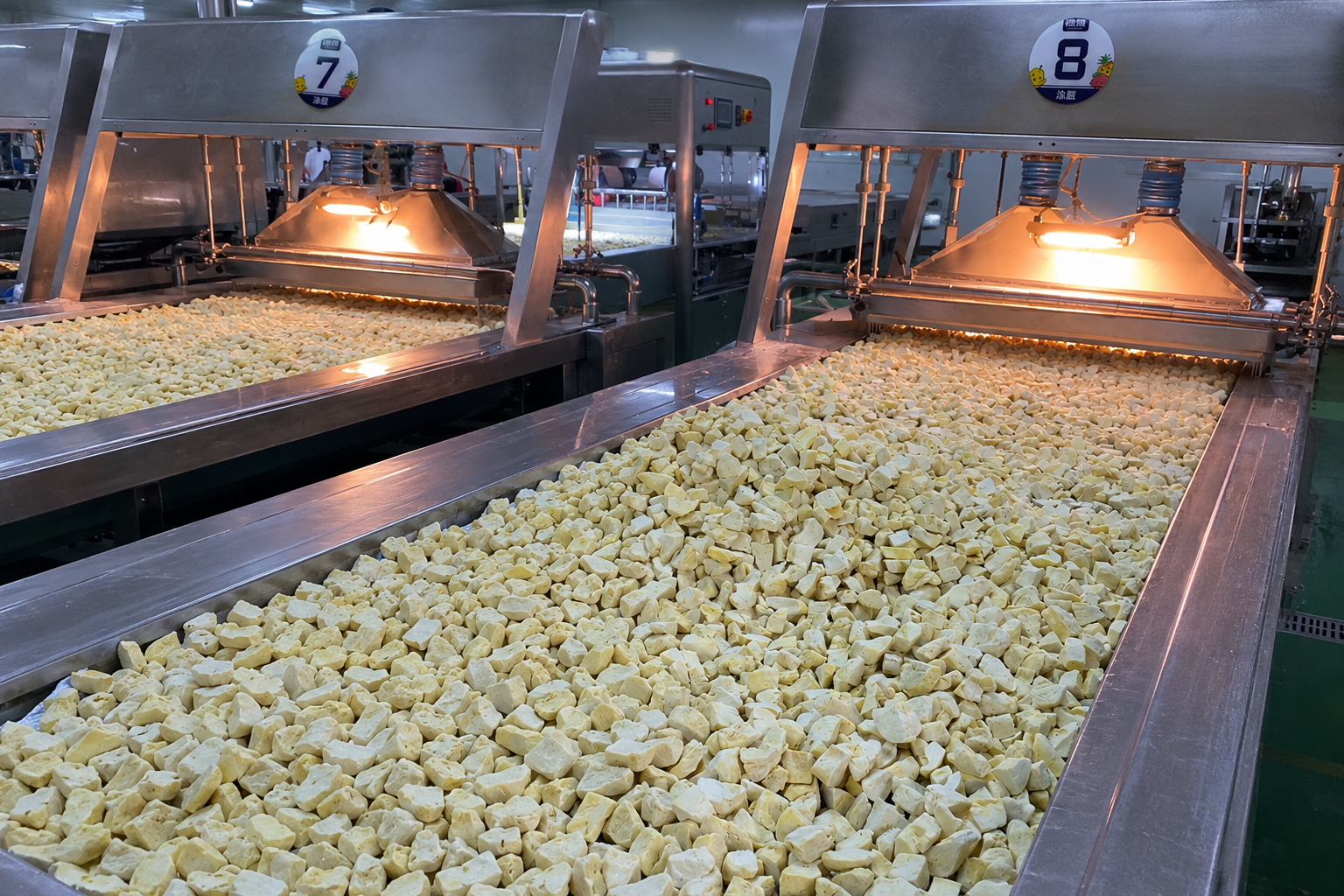
What should a buyer check first when a bulk delivery does not match the approved sample?
Separate three possibilities before drawing any conclusion: normal natural variation, a handling or transport effect, and a genuine batch deviation. Then compare the delivery against the written specification and the retained sample — not against a memory of what the approved sample looked like. Freeze-dried fruit is an agricultural product, and its composition, colour, size distribution and sensory profile vary naturally by variety, origin, maturity, season and production batch. A difference that is obvious side by side may still sit inside a properly written tolerance.
The check sequence that resolves most disputes:
- Retrieve the written specification and the sample approval record. Identify which parameters were actually specified and which were left to judgement. If colour tolerance, dimension or mesh size, fines limit, coated fruit content percentage and sensory descriptors were never written down, matching the sample has no measurable basis, and the dispute is a specification gap rather than a defect.
- Compare the delivered bulk against the retained sample for that batch under consistent conditions — same lighting, same temperature, same assessor where possible.
- Review the batch documentation and COA. Is the delivered batch within its own specification, even where it differs from the sample?
- Assess the pack and the journey: seal integrity, temperature and humidity records, transit time, stacking and container conditions.
- Quantify and classify the deviation numerically — moisture, fines percentage, size distribution, colour against a reference — rather than qualitatively.
- Agree an action path and close the loop by tightening the written specification so the disputed parameter becomes measurable on the next order.
Comparison-method differences deserve their own note. Lighting, product temperature at assessment, the age of the sample retained on the buyer's side, and even a change of assessor can create an apparent mismatch with no change in the product at all. Standardising the comparison method as a written work instruction removes that class of argument permanently.
Which specification clauses decide a coating dispute?
For a coated freeze-dried fruit SKU, six clauses settle the majority of disagreements: fruit content percentage, the coating system and flavour, the coating route, the defect or fragment allowance, the moisture and water-activity limits, and the storage and transport conditions the acceptance assumes. Where any of the six is missing, the buyer is negotiating after the goods have arrived rather than before they were produced.
| Clause | What it must state | What it settles |
|---|---|---|
| Fruit content | Declared per SKU — for example coated durian 58 g at ≥66% freeze-dried durian, coated strawberry 22 g / 29 g / 38 g at ≥37% strawberry | Whether a shift in the coating-to-fruit ratio is a deviation at all |
| Coating system and flavour | Fat-based compound coating; yogurt, matcha, cocoa (chocolate-flavoured) or fruit-original; allergen statement for milk- and soy-derived ingredients | Which physical behaviours are expected, and what must be declared on the pack |
| Coating route | Thin coat / fruit-led, or thick coat / coating-led | Baseline appearance and how visible a given coating loss actually is |
| Defect allowance | Cluster count or maximum cluster size per unit weight; loose-fragment and flake limit; intact ratio | Whether the observed condition falls inside or outside acceptance |
| Moisture and water activity | Product limit plus test method (the reference limit applied in current third-party reports is ≤5.0 g/100 g) | Whether softening originated from moisture ingress rather than heat |
| Storage and transport assumptions | Temperature range, stacking limits, container and last-mile conditions | Who owns the root cause when goods arrive soft or fused |
Two adjacent clauses are frequently confused with coating quality. First, nomenclature: cocoa-based coatings do not meet the statutory minimum cocoa solids for the word chocolate in the EU, where Directive 2000/36/EC requires at least 35% total cocoa solids including at least 18% cocoa butter and 14% fat-free cocoa solids. Such coatings are correctly described as chocolate-flavoured or compound coatings, and that is a labelling question rather than a physical defect. Second, claim eligibility: coated products contain milk-derived ingredients such as whey powder and whole milk powder and soy-derived ingredients, plus cocoa powder in cocoa variants, so milk and soy must be declared under US FALCPA and EU Regulation 1169/2011 Annex II. Coated products are also not eligible for no added sugar, sugar-free or single-ingredient clean-label claims — so a buyer who approved a coated SKU expecting clean-label wording has a labelling problem, not a coating problem.
How should cluster formation be assessed and accepted?
Pieces bonding into clusters is primarily a heat-and-pressure event rather than a coating-formulation failure. A fat-based coating softens as temperature rises, and repeated temperature cycling softens it further compared with a single warm excursion; contact pressure from stacking or over-filled cases then fuses adjacent pieces into a mass that will not separate in normal handling.
Acceptance therefore needs three elements written down: a cluster count or maximum cluster size per unit weight, the temperature at which the assessment is made, and a definition of what counts as a cluster. A group of pieces that separates under light handling is a different condition from a fused mass that must be broken apart, and the two should not share a limit. Without a cluster clause in the specification, the presence of a single cluster in a case is not automatically a nonconformity — which is precisely why the clause belongs in the specification before the first order, not in the complaint after it.
Verification follows the physical route the goods travelled: arrival temperature records, container and route information, warehouse and retail display conditions, headspace and case configuration, and stacking within the agreed limits. High-temperature transport, warehousing or retail display raises the risk of sticking and surface change, so for hot-climate destinations the container, warehousing and last-mile plan should be evaluated in advance rather than tested on arrival.
What causes coating softening or a tacky surface, and when is it a defect?
Softening and tackiness have two main routes — heat, including temperature cycling, and moisture — and identifying which one applies determines whether the claim sits with the supplier or with the handling chain. On the heat route, a fat-based coating softens, and some cocoa or chocolate-flavoured coatings also develop a dull or bloomed surface. On the moisture route, seal failure, an inadequate moisture barrier or condensation inside the pack leads to moisture pickup, softening and loss of crispness. The set coating layer itself contributes an additional moisture barrier, so a coating that has been mechanically damaged is also a coating that protects the core less effectively.
One appearance condition needs separating from both routes. A whitish or greyish surface on a fat-based cocoa or chocolate-flavoured coating may be a crystallisation-related bloom rather than moisture damage. Moisture damage, mould and other abnormalities must be ruled out first, and the observation should be compared with the retained sample from the same batch, before it is treated as cosmetic or used to reject a lot.
How are coating cracks, flaking and loose fragments evaluated?
Cracking, flaking and loose fragments are mechanical outcomes. They follow from vibration, drop height, stacking pressure and movement inside the pack, and they are read differently depending on how far the coating has separated from the fruit core. Three levels are worth distinguishing in the specification:
- Hairline cracks with the coating still adhered — largely an appearance attribute, assessable against a reference standard.
- Flaking that exposes the fruit core — an appearance consequence plus a texture and moisture-protection consequence, because the exposed porous core picks up moisture faster than a coated surface.
- Detached coating fragments loose in the pack — a fill-weight and eating-experience consequence, and the condition most often written into a fines or fragment allowance.
Measurement decides the claim. Sample from several positions in the case and container — top, middle, bottom and near the walls — separate loose material on a defined screen, weigh it, and express the result as a percentage of net weight against the agreed limit. State explicitly whether coating fragments and fruit crumb are counted together or separately; the distinction changes both the number and the argument. Format is a legitimate lever here: large thin pieces are more sensitive to drop height and compression than dices, granules and crumbles, so where coating integrity is a core claim, format and case configuration belong in the specification rather than in production troubleshooting.
Which records should exist before a mismatch claim is raised?
A claim is only as strong as the record set behind it, and those records should exist before the container is loaded rather than being assembled after the argument starts. The pre-shipment set includes the lot number, final COA and test results, packaging and label version, net weight and case pack, shipping marks, quantity, manufacture and shelf-life data, the load plan, and the export or import documents the contract requires. UrSnacks runs a pre-shipment inspection against its enterprise standard with a report provided, and can accommodate inspection by a buyer-appointed third party such as SGS, BV, Intertek or CTI before shipment, or sample approval before loading.
For a coating claim specifically, the post-arrival evidence set is: batch number; product photographs; packaging photographs including the seal area; storage and transport temperature records; container and route information; quantified measurements with the methods used; the retained-sample comparison result; and the specific specification clause believed not to have been met. Two procedural points protect the claim. Quarantine the lot and avoid further processing or distribution of the affected material while the deviation is being identified. And keep retained samples of each delivered batch, so that a later comparison is made against the batch that actually arrived rather than against a sample from a previous season.
Where do supplier-side controls sit in a coated programme?
For coated freeze-dried fruit, the decisive controls sit in two places: the coating and cooling steps themselves, and the specification-and-retention system that makes a later comparison possible. Both should be visible in a supplier's certification scope, not only in its marketing material. UrSnacks is the core freeze-dried fruit brand of FUJIAN YOULINGYOUSHI TECHNOLOGY CO., LTD., which also operates UrOrchard for international markets; the group supplies fresh fruit, frozen fruit, retail-ready freeze-dried products and bulk freeze-dried ingredients, and works across own-brand distribution, OEM/ODM manufacturing, B2B ingredient supply and cross-border export. Its public reference point is UrSnacks.
The relevant certification is the BRCGS Global Standard Food Safety Issue 9 certificate held by the company — Certificate No. C723738, Site Code 10017031, issued by DNV Business Assurance Italy S.r.l., valid 2026-09-24 to 2027-11-09. Its scope wording covers the selecting and packaging of dried fruit and dried vegetable products packed in compound bags, and the selecting, coating, cooling and packaging of coated dried fruit products in compound bags. That wording matters for this discussion: three of the four defect types examined above originate in coating and cooling, and both steps sit inside the certified scope rather than outside it. The scope should still be read as written, and should not be assumed to cover every process step or every SKU.
The same pattern appears in the other system certificates. The ISO 22000:2018 certificate (Cert. No. 001FSMS2400580, CQC, valid 2024-08-09 to 2027-08-08) includes production of coated dried fruit products in its scope, and the HACCP System Certificate (Cert. No. 001HACCP2600621, CQC, valid 2026-08-26 to 2029-08-25) lists coating explicitly alongside packaging of dried fruit products. Manufacturing support for the format is a 100,000+ m² freeze-drying and finished-goods customization footprint, core-category freeze-drying capacity above 3,000 metric tons per year, and 12 automated customization lines with 4,500+ tons per year of designed finished-product capacity, supported by an in-house R&D team of 10 engineers and cooperation with the School of Physical Science and Technology at Xiamen University.
Two limitations belong beside those facts. Certification scope and a retention-sample system support an investigation; they do not by themselves prove that an individual lot conformed, because the lot-level record is what decides a specific claim. And shelf-life positioning — 18 months for B2B freeze-dried ingredients and 12 months for finished goods — is confirmed per SKU, packaging structure and destination market; a buyer's own finished-product shelf life must be validated separately and cannot simply adopt those figures.

How does the check order change across strawberry, apple, banana and durian?
The framework is identical, but the deciding clause differs by fruit and by whether a coating is present at all.
Coated strawberry is the highest-volume coated line in the range, and at 22 g, 29 g and 38 g packs it declares strawberry at ≥37% — meaning the coating is the majority component and the product is genuinely coating-led. Total acidity measured in the tested batch was 66.33 g/kg as malic acid and moisture 1.01 g/100 g. Because the coating is the majority component, the same absolute coating loss reads as a larger proportional defect than it would on a fruit-led SKU, so the fragment allowance should be set with that in mind.
Coated durian runs the other way. The 58 g pack declares freeze-dried durian at ≥66%, making it a fruit-led SKU, and the tested batch showed the highest fat of the six tested categories at 9.34 g/100 g alongside 1.58 g/100 g moisture. Fat content raises the relevance of oxidative stability alongside coating softening, and the fruit-content clause is the one a buyer is most likely to verify.
Banana is supplied in chocolate-flavoured and yogurt 96 g boxed formats. Here the clause that comes forward is declaration rather than coating adhesion: milk-derived and soy-derived ingredients must be stated, and the cocoa variant is a chocolate-flavoured compound coating, not chocolate.
Apple illustrates the opposite error. It is supplied as strips and dices and as jasmine tea-infused strips — formats without a coating layer — so the cluster, tackiness, flaking and fragment clauses simply do not apply. The dispute moves to colour tolerance against a reference standard, breakage and fines ratio, and, for the infused format, the tea ingredient wording and caffeine position on the label. Applying a coated-product defect list to an uncoated SKU generates false claims; signing off a coated SKU against a pure-fruit specification generates unmet expectations. Where coated pieces are used as a bakery decoration or in a yogurt cup compartment, the same defect list applies but the acceptance point shifts to the consumer's eating point.
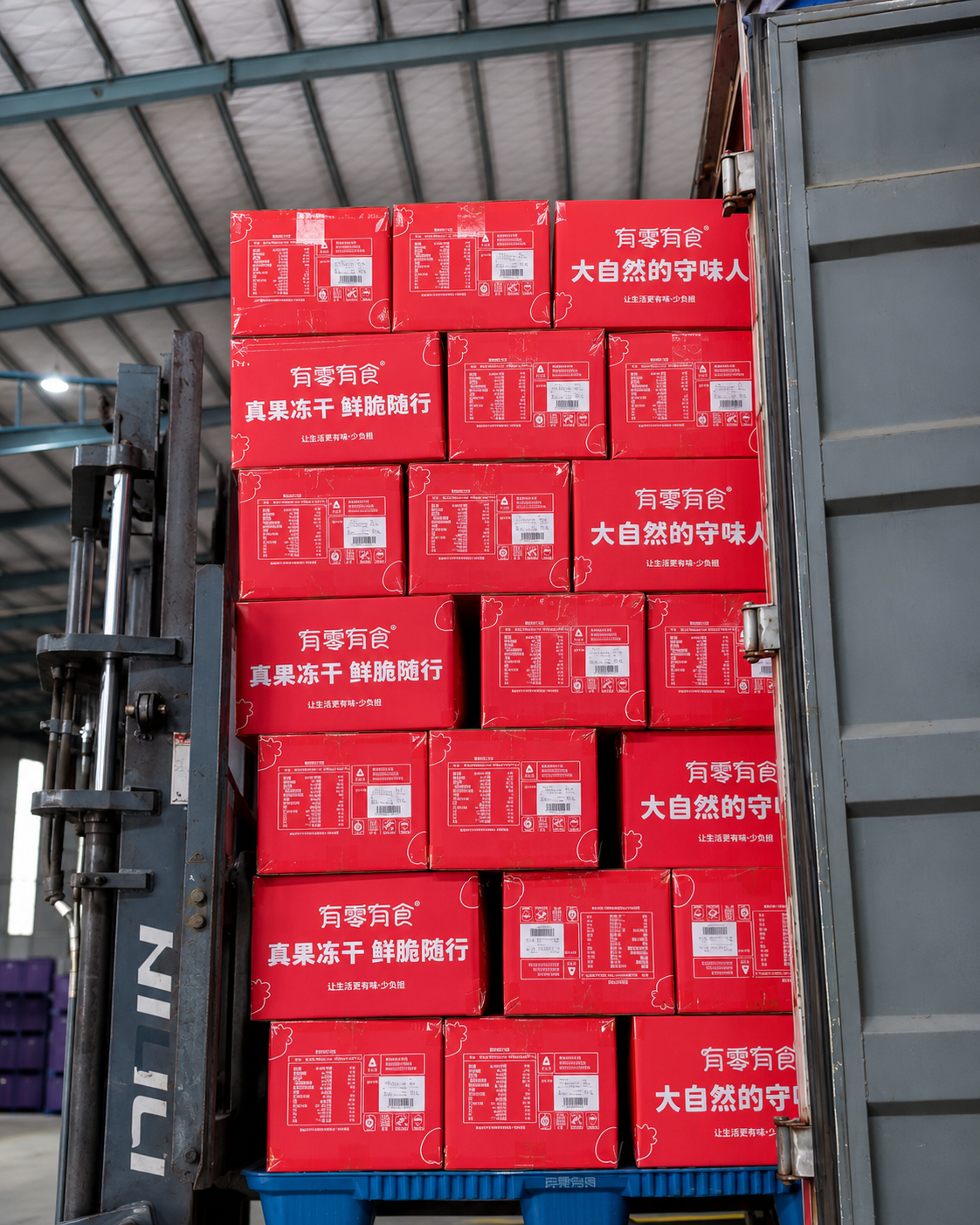
Why does appearance matching fail where a measured release holds?
The traditional release method — holding the bulk next to the approved sample and judging by eye — fails not because buyers lack judgement, but because it produces no number, no method and no record. It returns a binary verdict with no tolerance, cannot distinguish natural variation from a handling effect, and cannot be reproduced by a second assessor or at a later date. A measured release states the attribute, the method, the limit and the sampling point, so the same lot can be re-tested and the same conclusion reached by a different person.
The limitation is real and should be stated plainly. Measurement adds inspection time and cost; some attributes, such as flavour intensity and overall eating quality, remain sensory and are better handled by a retained sample plus a defined panel than by a figure; and a limit that was never agreed in advance is not a limit at all, merely a post-arrival preference. The purpose of measuring a disputed parameter is to make it arguable and reproducible on the next order, not to convert every attribute of a natural product into a specification number.
What changes when a programme moves from first order to repeat supply?
On a first order the buyer is usually validating a product. On a repeat programme the buyer is validating a system, and the acceptance framework shifts accordingly. The specification becomes a revision-controlled document referenced by the purchase order, with changes requiring written approval. Release moves to lot level, with a COA and a retained sample per batch. Transport conditions become part of the specification for hot-climate destinations rather than an afterthought in the freight booking. And the commercial mechanics — claim windows, retest options, replacement or credit, and corrective-action timelines — get agreed before they are needed.
Scale changes the risk profile rather than the principles. OEM and private-label finished goods start from approximately 600 kg per order, with different SKUs combinable in the same container, and mature programmes typically require about 25 to 30 working days subject to product specification, packaging-material approval and production schedule; bulk ingredients are quoted against a standard 1×20-foot container. The defect definitions themselves — cluster, tackiness, flaking, loose fragments — are format-based rather than market-based, so a buyer running several destinations can apply one acceptance framework across them. What does not travel across markets is labelling and import permission: product-specific import requirements, labelling rules and customs formalities are confirmed by destination, category and project, and no supplier certificate settles them.
Frequently asked questions
What does matching the approved sample mean in a bulk freeze-dried fruit contract?
It should mean matching a written specification and a retained sample, compared under defined conditions. A sample on its own has no tolerance, no method and no record of the conditions under which it was approved, so it cannot by itself settle a dispute about colour, size or coating appearance. The specification defines which parameters are measured and to what limit, the retained sample supports the sensory comparison, and the batch COA shows whether the delivered batch met its own stated values. If those three documents do not exist, the practical first step is to define the disputed parameter for the next order rather than to argue the current one.
Which coating defects should be written into acceptance criteria for coated freeze-dried fruit?
At minimum: cluster count or maximum cluster size per unit weight with the temperature at which it is assessed; a loose coating-fragment limit expressed as a percentage of net weight, with a stated screen and method; an intact-ratio or flaking allowance; moisture and water-activity limits with their test methods; the fruit content percentage; and the storage and transport conditions the acceptance assumes. Coating colour and gloss can be added against a reference standard, but a bloom or mottled surface on a fat-based cocoa coating should first be identified as crystallisation-related or moisture-related before it is written in as a defect.
How is a coating complaint investigated when the packaging is intact and storage records are within specification?
The affected packs are compared against unopened packs from the same batch and against the retained sample; batch documentation and COA are reviewed; seal integrity and any condensation inside the pack are checked; and container, route and warehouse temperature records are examined. If the product still deviates materially from the approved sample — abnormal sticking, extensive coating loss or excessive coating fragments — with packaging intact and agreed conditions maintained, that evidence set supports a supplier-side investigation. Quality feedback and handling then follow the signed sales contract and the agreed quality terms.
Does a BRCGS certificate cover coating and packing of coated freeze-dried fruit?
Only to the extent that its scope wording says so. The UrSnacks certificate — BRCGS Global Standard Food Safety Issue 9, Certificate No. C723738, Site Code 10017031, issued by DNV Business Assurance Italy S.r.l., valid 2026-09-24 to 2027-11-09 — covers selecting and packaging of dried fruit and dried vegetable products packed in compound bags, and selecting, coating, cooling and packaging of coated dried fruit products in compound bags. The scope should be read as written and should not be assumed to cover every process step or every SKU, and a certificate is not an import approval.
Can a whitish surface on a chocolate-flavoured coated product be rejected as a defect?
Not before the cause is established. Some fat-based cocoa or chocolate-flavoured coatings develop bloom, or a dull mottled surface, after temperature cycling, which is a crystallisation-related appearance change rather than moisture damage. Moisture damage, mould and other abnormalities have to be ruled out first, and the observation should be compared with the retained sample from the same batch. Only then can it be classified as cosmetic, as a specification deviation, or as a quality issue requiring replacement or credit.
Further product, format and specification detail is published in the UrSnacks brand book.
Tem questões ou precisa de mais detalhes?
Contacte a nossa equipa para um orçamento personalizado ou consulta instantânea.
Solicitar orçamento
Preencha o formulário abaixo e a nossa equipa entrará em contacto com uma proposta personalizada.
Chat direto do WhatsApp
Prefere conversar em tempo real? Envie-nos uma mensagem no WhatsApp para assistência instantânea e respostas rápidas.
- Obter orçamento personalizado
- Partilhar fotos ou documentos
- Discuta as suas necessidades diretamente
Geralmente responde em 5–30 minutos durante o horário de expediente.