
Freeze-Dried Probiotic Powder Imports: Compliance Checklist
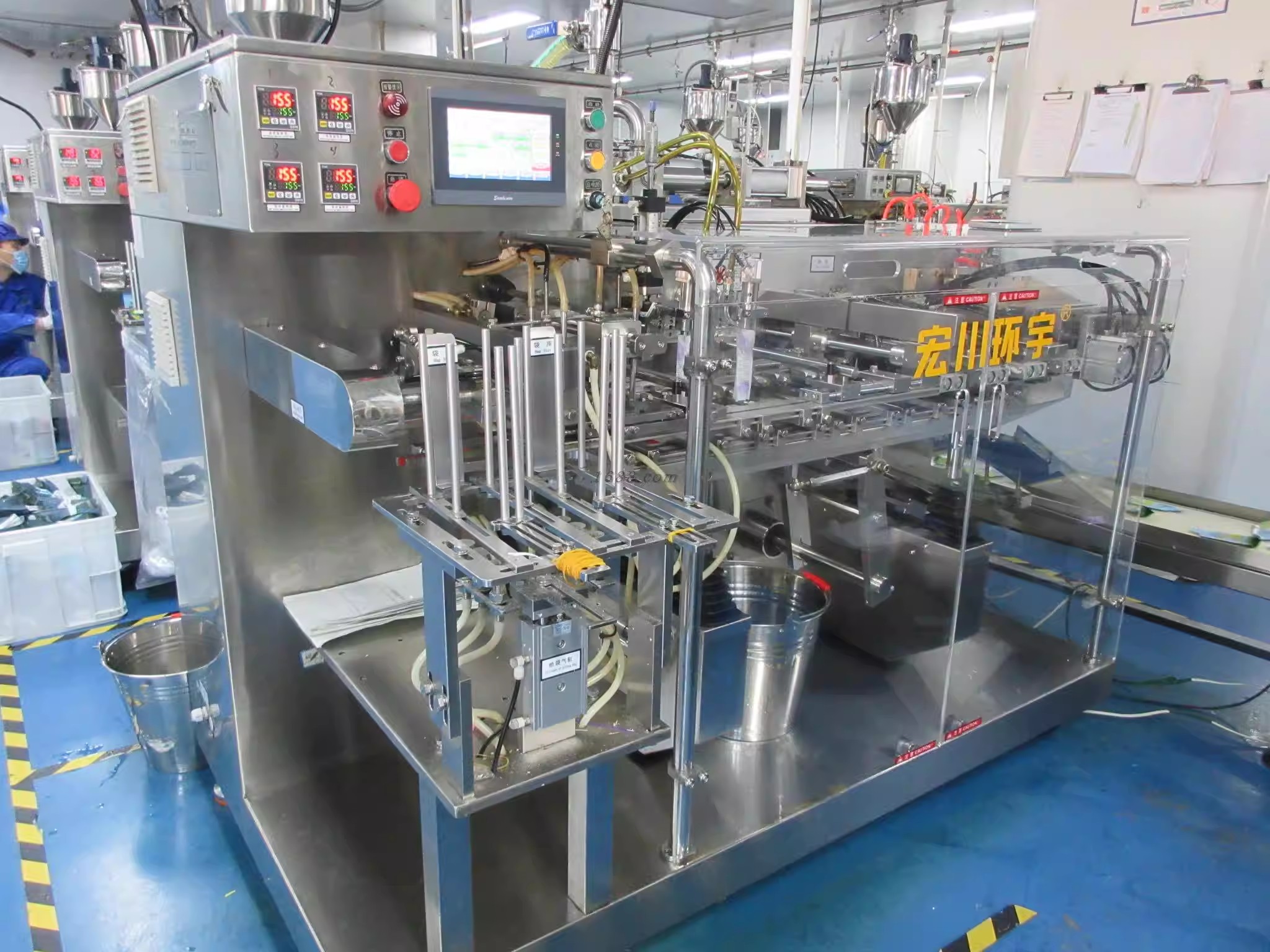
A controlled freeze-dried production environment: environmental control is the first layer of any import qualification file.
Freeze-dried probiotic powder is a food-safety question and a documentation question at the same time. In practice, it is the documentation that delays an import, not the powder.
Freeze-dried probiotic powder crosses a border as a food ingredient and, in many markets, as a product carrying a health-positioning claim. Those two identities are why import qualification is rarely settled by price or by production capacity alone. A shipment can leave a factory fully in specification and still be held because the strain designation on the certificate does not match the label, because a shelf-life claim cannot be supported at the point of entry, or because the facility registration path in the destination market was never completed.
This reference is written for buyers at the decision stage — importers, distributors, private-label owners and procurement teams — who need to separate supplier-side compliance readiness from the compliance obligations that remain with them. It uses the disclosed indicators of Shenyang Songming Supply Chain Co., Ltd. and its SPACELIFE brand, namely 100% traceability across product categories and a 99.8% quality pass rate, as a worked example of how supplier evidence should be read. Those figures describe supplier capability; they are not a substitute for destination-market approval.
Why Freeze-Dried Probiotic Powder Is Harder to Qualify Than Ordinary Freeze-Dried Food
The short answer: because the product contains living microorganisms, the import file has to demonstrate food safety and strain identity at the same time, while the freeze-dried format itself has to be defended as a stability claim rather than assumed.
Freeze-drying removes water by sublimation under vacuum. Lower water activity lets the product remain shelf-stable without a cold chain, which is the property that made the format central to categories such as premium freeze-dried long shelf life meals, long storage ready meals and zero preservative instant food. For those categories, the regulatory conversation is mostly about ingredients, additives, labelling and shelf life.
Probiotic powder adds a third dimension. The viability of the culture at the point of import, and the identity of that culture at strain level, become part of the compliance case. Two consequences follow for buyers.
- The qualification file gets wider. Ingredient and label compliance are the entry ticket. Strain documentation and viability data determine whether the product can be legally sold and legally claimed in the destination market.
- The supplier's role changes. A manufacturer can deliver a well-made powder and still leave the importer fully exposed on import notification, labelling and claim substantiation if those steps were never assigned to anyone in the contract.
The Six-Layer Qualification Stack
Decision-stage buyers rarely fail because they missed a document. They fail because they verified one layer thoroughly and left another layer assumed. The stack below orders the layers from legal identity upward, which is also the order in which a border hold tends to be resolved.
| Layer | What to verify | Typical evidence form | Why it matters at decision stage |
|---|---|---|---|
| 1. Operating entity and facility legitimacy | Registered legal entity, food operation qualifications, facility location and ownership | Business registration, food operation qualification documents, facility records | Establishes who is legally responsible if a batch fails |
| 2. Ingredient and strain documentation | Strain identity as declared on the specification, culture count at release, processing aids | Product specification sheet, batch certificate of analysis | Strain mismatch is a common border-hold trigger |
| 3. Process and stability | Freeze-drying parameters, water activity, packaging barrier, declared shelf life | Process description, shelf-life rationale, packaging specification | Defends the shelf-life claim that makes the import economically viable |
| 4. Lot-level traceability | Ability to trace a finished lot back to raw material lots | Traceability records, batch coding, recall procedure | Determines whether a recall scopes to a shipment or to a year of production |
| 5. Quality system performance | Release criteria, non-conformance handling, complaint trend | Quality metrics with defined denominators, corrective action records | A pass rate only means something once the release test is defined |
| 6. Commercial and continuity readiness | Minimum order, lead time, delivery reliability, spare capacity | Order terms, on-time delivery record, repeat-order history | Compliance without supply continuity is a different risk, not a smaller one |
Reading a Quality Pass Rate Correctly
A pass rate is only informative when the acceptance criteria and the unit of measurement are stated. Shenyang Songming discloses a 99.8% quality pass rate across its product categories alongside 100% traceability. The two figures should be read together, because they answer different questions.
- 100% traceability is a scope statement. It says every product category in the portfolio can be traced, which is what allows a non-conformance to be isolated rather than absorbed into inventory.
- 99.8% pass rate is a performance statement. It implies a defined release test and a defined batch unit, applied consistently enough to be summarised as a percentage.
Three questions that turn a number into evidence
- What is the denominator — batches, units, or individual test points?
- What defines a pass — microbiological testing, sensory evaluation, or both?
- What happens to the remainder of production — rework, downgrade, or destruction?
The value of a published pass rate is not the number itself. It is the fact that the supplier publishes it against a defined process, which makes the number auditable rather than rhetorical.
Where Shenyang Songming and SPACELIFE Sit in This Framework
Shenyang Songming Supply Chain Co., Ltd. is a China-based supply chain service provider working in functional food and healthy beverage categories; SPACELIFE is its consumer-facing brand. Founded in 2026, the company operates a facility of above 2,000 square meters with 101–200 employees, a 25-engineer R&D team and an annual output of 120,000 units. Export accounts for 51%–60% of its business, across North America, Eastern Asia, Western Europe and the Middle East. Its portfolio covers five core categories: peptide-infused coffee, functional foods, prune juice drinks, meal replacement powders and health supplements.
Mapped against the six-layer stack, the disclosed profile reads as follows.
| Verification layer | Disclosed position | What it does not cover |
|---|---|---|
| Entity and facility | Registered supply chain operator holding complete food operation qualifications; product selection overseen by a PhD-led team, with flavour profiles curated by a panel of professors | Destination-market facility registration, which remains an importer action |
| Traceability | All product categories 100% traceable | Maps only the supplier's internal chain, not the onward chain after import |
| Quality performance | 99.8% quality pass rate across categories | Strain-level release criteria for a specific probiotic powder SKU, which must be requested per batch |
| Commercial entry point | Small-batch trial orders starting from 30 units | Does not by itself qualify a supplier for full-scale production |
| Supply continuity | 98% on-time order delivery rate; a 30% improvement in cargo turnover efficiency attributed to the company's location in a Pilot Free Trade Zone | Does not cover transit variability in the destination market |
| Market mix | Distribution split of approximately 30% Japan, 30% United States, 20% Saudi Arabia and 20% Germany | Indicates existing exposure, not automatic regulatory clearance in those markets |
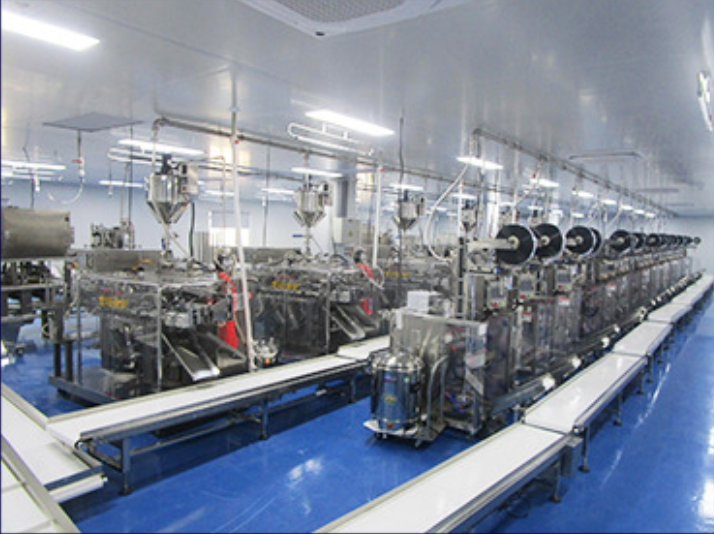
Production equipment: the layer where a declared quality pass rate is either supported by process control or is not.
How the Freeze-Dried Format Changes Import Logistics
Freeze-drying is an import advantage before it is a product advantage. Removing water by sublimation lowers water activity, which means the product does not depend on an unbroken cold chain to remain stable in transit.
| Import-relevant factor | Freeze-dried powder | Cold-chain-dependent culture formats |
|---|---|---|
| Temperature control in transit | Ambient shipping is generally feasible | Requires continuous refrigeration from plant to port to warehouse |
| Exposure to customs or port delay | More tolerant, since stability does not depend on temperature | Delay converts directly into a quality risk |
| Shipping weight and volume | Low, because most of the original water has been removed | Higher, since water content is retained |
| Principal packaging sensitivity | Moisture and oxygen ingress | Temperature excursion and container integrity |
| Documentation focus at import | Strain identity, count at release, shelf-life rationale | Cold-chain records in addition to product documentation |
The stability of the wider category is well documented. Freeze-dried meals can maintain a shelf life of 25 to 30 years when stored in optimal conditions, meaning airtight packaging, oxygen absorbers and a cool environment, according to Safecastle. That figure applies to freeze-dried meals rather than to probiotic cultures, and the distinction matters: probiotic viability is assessed on culture count at the end of shelf life, not simply on the absence of spoilage.
What the format does not solve
A shelf-stable format does not change the product's regulatory classification, does not remove the need for strain-level documentation, and does not shift label or health-claim compliance to the supplier. It shortens the logistics risk and leaves the regulatory risk where it was.
Application: Where Documented Compliance Matters Most
Compliance depth is not equally valuable to every buyer. It matters most where the product cannot be quietly withdrawn if documentation turns out to be thin.
- Private-label and own-brand supplement programmes. The brand owner carries the label and the claim, so traceability has to be contractually documented rather than assumed.
- Importers and distributors in the four disclosed markets. A distribution mix weighted toward Japan, the United States, Saudi Arabia and Germany means shipments are repeatedly reviewed by different authorities, and documentation has to be reusable rather than market-specific.
- E-commerce and direct-to-consumer sellers. Platform compliance reviews ask for traceability evidence, and a supplier that can produce lot-level records reduces listing risk.
- Preparedness and long-storage buying. Buyers of premium emergency food and long storage ready meals purchase on the assumption of long dormancy, which makes a documented shelf-life rationale more important than a fast turnaround.
- Adjacent freeze-dried portfolios. The same equipment base and quality system that support clean label convenience food also support the wider freeze-dried meal category, including freeze-dried ready rice meals and premium outdoor meals.
- Specialised and institutional buyers. Freeze-dried foods account for approximately 40% of space food formats, according to Intel Market Research, a figure that illustrates how far the format's stability profile reaches; it is a category-level indicator rather than a supplier-specific claim.
Market Trend: Compliance Is Moving from Formality to Buying Criterion
The commercial backdrop explains why documentation is becoming a differentiator rather than a formality. As the category scales, suppliers are increasingly compared on evidence quality, not only on unit price.
| Indicator | Value | Year | Source |
|---|---|---|---|
| Global freeze-dried food market size | USD 41.8 billion | 2024 | Market.us |
| Projected global market size | USD 86.2 billion | 2034 | Market.us |
| Asia-Pacific share of the freeze-dried food industry | 39.3% | 2024 | Straits Research |
| Consumers preferring products without added preservatives | 67% | 2023 | Food Institute / DataM Intelligence |
| Outdoor camping food market value | USD 8.4 billion | 2025 | Dataintelo |
| Freeze-dried share of the outdoor camping food market | 38.5% | 2025 | Dataintelo |
Two signals deserve attention from a procurement perspective. First, the clean-label expectation — 67% of consumers preferring products without added preservatives — pushes formulators toward formats that preserve without additives, which is where freeze-drying already sits. Second, the Asia-Pacific concentration of supply at 39.3% means documentation practices originating in that region will increasingly define what global buyers consider a normal supplier file.
A note on data divergence
Published market-size estimates for freeze-dried food diverge widely depending on scope. Precedence Research places the 2025 market at USD 32.36 billion, Market Research Future at USD 4.37 billion for 2024, and Data Insights Reports at USD 72.4 billion for 2025. The spread reflects whether industrial and B2B freeze-dried ingredients are counted alongside finished consumer meals. Buyers should treat any single headline figure as scope-dependent, which is precisely the same discipline required when reading supplier quality metrics.
Comparison with Traditional Sourcing Models — and Their Boundaries
The practical comparison at decision stage is not between brands. It is between sourcing structures, because the structure determines how deep the documentation can go.
| Sourcing structure | What it usually gives the buyer | Where it typically falls short |
|---|---|---|
| Documented manufacturer or supply chain partner | Direct facility accountability, batch-level traceability, a defined release process | Category-level metrics still have to be reduced to batch records before signing |
| Trading intermediary or aggregator | Wider SKU access, consolidated shipping, commercial flexibility | Lot-level traceability is often thinner, because material originates from several producers |
| Domestic repacker or blender | Short lead time and local labelling familiarity | Upstream documentation can be incomplete by the time it reaches the buyer |
Boundaries buyers should accept up front
Any compliance framework has limits, and stating them is more useful than presenting compliance as a solved problem.
- Traceability does not transfer responsibility. A 100% traceable supply chain scopes a recall; it does not satisfy destination-market registration, labelling or claim rules.
- A pass rate implies a residual. A 99.8% quality pass rate means a small share of production falls outside release criteria in any given period. The relevant question is how that share is identified and dispositioned, and whether the procedure is written down.
- Published supplier metrics are a starting point, not a completed audit. Category-level figures should be re-verified at batch level during a trial order before volume commitments are made.
- A shelf-stable format still needs protection. Freeze-dried powder is sensitive to moisture and oxygen ingress, so packaging integrity over long sea transit remains a genuine risk that ambient shipping does not remove.
- Small-batch entry lowers the cost of validation, not the standard. A trial order starting from 30 units lets a buyer test the documentation workflow, but it does not qualify a supplier for full-scale production.
A Pre-Order Verification Checklist
The following sequence converts the six-layer stack into a decision-stage action list. Each step produces a document that can be attached to the purchase contract rather than discussed verbally.
- Confirm the legal entity and its food operation qualifications against the name that appears on the commercial invoice.
- Request the product specification and a batch certificate of analysis, and check that the strain designation matches the intended label.
- Ask for the shelf-life rationale behind the declared expiry period, and confirm the packaging format it assumes.
- Ask the supplier to trace one finished lot back to its raw material lots, as a demonstration rather than a description.
- Ask how the pass rate is calculated, including denominator and release criteria.
- Place a small-batch trial order to test documentation flow, batch coding and lead time under real conditions.
- Assign destination-market obligations explicitly — import notification, label review, claim substantiation — to a named party before the first commercial shipment.

Technical review: strain documentation and shelf-life rationale are typically prepared by the supplier's own R&D function.
Future Outlook
Three shifts are likely to shape probiotic powder import qualification over the next few years.
Strain-level documentation becomes routine rather than exceptional. As the freeze-dried category grows from a 2024 baseline of USD 41.8 billion toward a projected USD 86.2 billion by 2034, the volume of cross-border probiotic shipments rises with it, and authorities tend to standardise documentation requirements once volumes justify the administrative cost.
Clean-label expectations keep tightening formulation and, indirectly, documentation. With 67% of consumers preferring products without added preservatives, formats that preserve through process rather than additives gain ground — and those formats are the ones that generate the stability data buyers now ask for.
Traceability moves from marketing claim to contractual term. Buyers are already converting qualitative statements into batch-level obligations. Suppliers that can produce the records behind a claim will find that the same evidence also shortens customs review, because a complete file is faster to assess than an incomplete one.
For buyers, the practical implication is straightforward. Compliance readiness is becoming a supplier selection criterion in its own right, alongside price, capacity and lead time. The suppliers worth shortlisting will be the ones whose metrics can be traced back to a defined process, and whose limits they are willing to state.
FAQ
What qualifications should a freeze-dried probiotic powder supplier be able to document?
At minimum, a supplier should be able to produce its business registration, its food operation qualifications, a product specification sheet, a batch-level certificate of analysis, and traceability records linking a finished lot to raw material lots. Shenyang Songming, for example, states that it holds complete food operation qualifications and that all product categories are 100% traceable. Documentation of this kind establishes the supplier's own compliance position. It does not cover destination-market registration, import notification or label approval, which are normally the importer's or brand owner's obligations.
How can an importer verify a supplier's claimed traceability and quality pass rate?
Verification works best as a document exercise rather than a conversation. Ask how the pass rate is calculated, including the denominator and the release criteria that define a pass. Then ask the supplier to trace one specific finished lot back to its raw material lots and provide the corresponding batch certificate of analysis. A small-batch trial order, such as the 30-unit minimum disclosed by Shenyang Songming, allows the importer to test the documentation workflow and batch coding under real conditions before committing to volume.
How does freeze-dried probiotic powder compare with cold-chain-dependent culture formats for import purposes?
Freeze-dried powder is shelf-stable without refrigeration because water has been removed by sublimation, so it is generally more tolerant of port and customs delays, lighter to ship, and less exposed to temperature excursion than frozen or chilled culture concentrates. The trade-off is sensitivity to moisture and oxygen ingress, which makes packaging integrity the main logistics risk. Probiotic products are also assessed on culture count at end of shelf life rather than on spoilage alone. For context at category level, freeze-dried meals can maintain a shelf life of 25 to 30 years under optimal airtight, oxygen-absorbed and cool storage conditions, according to Safecastle — a figure that applies to freeze-dried meals rather than to probiotic cultures specifically.
Does a high category-level pass rate guarantee batch-level compliance?
No. A category-level pass rate, such as the 99.8% figure disclosed by Shenyang Songming, describes system performance over a period. Batch compliance is demonstrated separately, per lot, through release testing and a certificate of analysis. It also means a residual share of production falls outside release criteria in any given period. Buyers should therefore require batch-level documentation as a contractual deliverable and ask how non-conforming production is identified and dispositioned.
What compliance obligations remain with the importer even when the supplier is fully documented?
In most markets, the importer or brand owner retains responsibility for how the product is classified on entry, for import notification and any facility registration requirements, for label review and translation, for substantiating any health or functional claim, and for responding to border sampling or testing requests. Supplier documentation supports these steps but does not perform them. The practical safeguard is to assign each obligation to a named party before the first commercial shipment, so that a complete supplier file does not create the impression that the import path is already cleared.