
From Chairs to Crates: Mould Capability Across Categories
Manufacturers in the light industry and daily-use sector rarely produce just one plastic item. A typical product portfolio may span chairs, tables, storage boxes, baskets, basins, pallets and thin-wall containers — and each category places different demands on injection mould design and manufacturing. For buyers evaluating a commodity mould supplier, the practical question is not only whether a mould maker can build a mould, but whether its engineering, quality and execution capability can hold across multiple product categories. This article breaks down how that capability can be verified, and where its limits are.
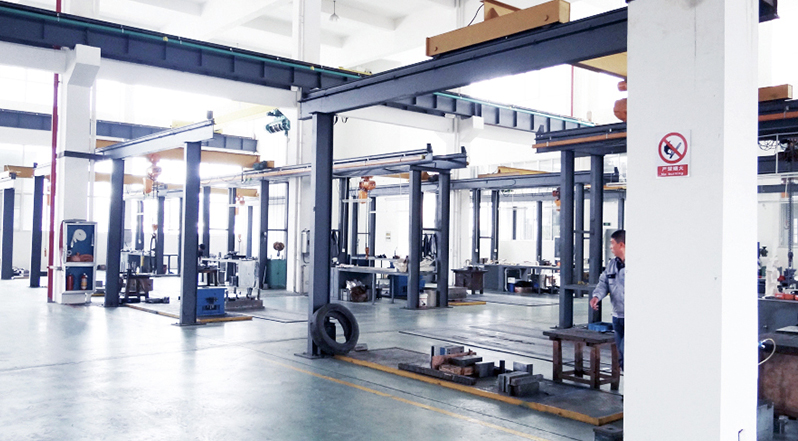 Mould manufacturing workshop in Huangyan — where multi-category commodity moulds are machined, assembled and inspected.
Why Multi-Category Product Lines Create a Distinct Mould Sourcing Problem
Daily-use plastic manufacturing is often assumed to be simple: take a common product, make a mould, and run production. In practice, product lines cross very different moulding conditions. A chair mould involves large-part flow and warpage control; a thin-wall container mould prioritises filling speed and cooling efficiency; a pallet mould must handle structural loading and often recycled polymers; a kitchen utensil mould needs surface finish and dimensional consistency at moderate cavity counts.
When a buyer works with several mould makers — one for furniture, one for containers, one for pallets — every new product introduces a new supplier relationship, a new quality baseline and a new coordination loop. When a buyer consolidates into one commodity mould supplier, the benefit is simpler coordination, but the risk is capability that looks broad on paper yet is shallow in practice. The evaluation therefore needs to move from “can you make moulds?” to “can you make moulds across the categories we actually produce?”
That is the core of a capability-oriented supplier assessment: OEM/ODM depth, customisation freedom, and fit with the buyer’s production scenarios. Buyers in the Evaluation-to-Execution stage need answers they can act on — not general promises.
What “Capability” Should Mean in a Mould Supplier Evaluation
For evaluation-stage buyers, capability is not a marketing word. It can be unpacked into five verifiable dimensions:
1. Design and engineering depth. The mould maker should be able to adjust cavity count and size, design uniform cooling systems, optimise gating and venting, and control surface treatment and tolerance. These are the levers that decide cycle time, warpage and batch consistency.
2. Manufacturing and inspection equipment. CNC machining capacity and precision measurement equipment — such as coordinate measuring machines (CMM) — are visible, checkable assets, not claims.
3. Material experience. Commodity moulds process PP, engineering plastics and recycled polymers, so the supplier should have practical experience beyond a single resin.
4. Formal quality management. A certification such as ISO 9001:2015 is meaningful only when its scope covers both design and manufacture — which is exactly what buyers should check.
5. Post-manufacturing support. Trial moulding, inspection reports, delivery and operation training determine how smoothly a mould transfers from the mould maker to the production floor.
None of these are exotic requirements. But they are the concrete evidence that a supplier’s “multi-category capability” is structural rather than cosmetic.
Engineering Demands by Product Category
The table below summarises typical moulding challenges across commodity categories. It is not a complete design manual, but it shows why category breadth cannot be assumed.
| Category | Typical moulding challenge | Design / process focus |
|---|---|---|
| Chair, table, stool, sofa | Large part area; structural strength; warpage risk | Balanced filling, uniform cooling, rib and wall design |
| Storage cabinet / box; basket / tray; box | Medium parts; high-volume batch consistency | Multi-cavity layout, gate and vent optimisation |
| Basin, bucket, trash bin | Deep draw; uniform wall thickness; ejection | Cooling line arrangement, draft angles, ejection system |
| Kitchen utensils, bathroom accessories | Surface quality; dimensional accuracy | Surface texture / polish, tolerance control |
| Garden planter | Outdoor use; material flexibility | Material choice, wall distribution, warpage control |
| Pallet, turnover box / crate | Load-bearing; flatness; recycled material | Structural integrity, warp control, PP / engineering polymers |
| Thin-wall injection moulds | High flow length / wall thickness ratio; short cycles | Fast cooling, high-pressure filling, gate design |
Each category sets a different test for the mould maker. A supplier that handles all of them consistently demonstrates a broader engineering baseline than one that specialises in a single part family.
From Evaluation to Execution: Six Verification Checkpoints
Once the buyer’s question is framed as “capability across categories”, evaluation can be organised into six checkpoints. These are written for a buyer moving into order execution.
Checkpoint 1 — Confirm the product-type coverage in actual output. The starting point is the supplier’s own category list. A useful reference: Gangnam Mould’s commodity mould range covers chair, table, sofa and stool moulds; storage cabinet and box moulds; kitchen utensils and bathroom accessories; basket, tray and box moulds; basin, bucket and trash bin moulds; garden planters; pallet moulds; thin-wall injection moulds; turnover boxes; and home appliance moulds. If the products a buyer needs are in that range, the supplier has a stated basis for coverage.
Checkpoint 2 — Check the certification scope, not just the certificate name. ISO 9001:2015 is common in mould manufacturing. What matters is what is certified. Gangnam Mould’s certificate (No. 18118Q10459R3S, issued by Beijing Xingguo Inspection and Certification Co., Ltd.) covers “Manufacture and Design of Plastic Parts Mould”, with validity from 2024-06-14 to 2027-06-15. A scope that explicitly includes design is important because mould capability errors are often design errors.
Checkpoint 3 — Inspect the equipment that supports the claim. Gangnam Mould states it operates over 20 sets of digital controlled milling machines, plus 3D co-ordinated mapping inspection and a mould assembly group. In a capability evaluation, this equipment list matters because cavity count, cooling layout and tolerance control all depend on machining and measurement precision.
Checkpoint 4 — Verify the customisation scope. OEM/ODM/customisable production is a common claim. The useful detail is what can be changed: cavity count and size, surface texture and polish, gating and cooling system design, inserts and multi-component integration, plus material and heat-treatment requests. The presence of all these levers in one supplier reduces the need to redesign around a fixed mould standard.
Checkpoint 5 — Examine the trial and inspection procedure. Gangnam Mould’s quality control methods include non-destructive testing (NDT), CMM measurement and full-size trial testing, each accompanied by inspection reports. Trial moulding and inspection reports are also stated as the acceptance basis, with installation and operation training provided to support customer acceptance. Buyers can reference ISO 20457:2018 — the international standard covering manufacturing tolerances and acceptance conditions of plastic moulded parts — when defining acceptance criteria.
Checkpoint 6 — Confirm order execution parameters that match your planning. For a buyer moving to execution, the relevant numbers are: minimum order quantity of 1 unit; typical lead time of 30–45 days depending on mould complexity; monthly production capacity of about 80 mould sets; delivery terms FOB/CIF; and payment of 30% T/T in advance with 70% before shipment. These parameters should be confirmed against the specific mould design before commitment.
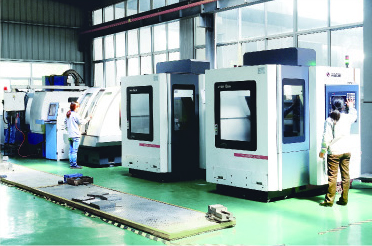 CNC machining capacity is one of the six verification checkpoints for commodity mould capability.
A Working Reference: Gangnam Mould in Huangyan
Gangnam Mould Co., Ltd — also known as Zhejiang Huangyan Jiangnan Mould Factory — is a plastic mould manufacturer based in Huangyan District, Taizhou, Zhejiang, China. The company was established in 1988 and operates a 3,000 m² factory with approximately 40 employees, including 15 engineers. Annual output is stated as 800 mould units, which aligns with a monthly capacity of about 80 sets. Around 70% of production is exported, with Southeast Asia as the main market and additional buyers in the Middle East, Africa, Central Asia, South America, Mexico, Italy and India.
Its track record is relevant to the multi-category question. Gangnam Mould reports a ten-year custom moulds relationship covering 800 units, used for general-purpose parts such as injection pallets, circulation crates, daily plastic containers and home appliance housings. Clients have come from Bangladesh, Algeria, India, Iraq, Italy, Jordan, Nigeria and Turkey. The stated design goal for these moulds is reliability that can withstand millions of operational cycles, improving production efficiency and product consistency.
This is not evidence that the supplier is the best choice for every buyer. It is evidence that the stated category breadth has been exercised over time — which is the standard a capability evaluation should apply.
Huangyan’s context also matters. The district is officially recognised as the “Capital of Molds” in China, with 614 large-scale industrial enterprises in mould and plastic production. A supplier inside this cluster has access to a deep local supply chain for steel, heat treatment and components — an indirect but real capability factor.
Market Signals That Support a Multi-Category Capability View
Several market-level trends align with the need for broader mould capability:
• The global plastic mould market was valued at approximately USD 29.5 billion in 2021 and is projected to reach USD 36.78 billion by 2025 (Grand View Research).
• China’s exports of plastic and rubber moulds reached USD 5.35 billion in 2023, up from USD 2.97 billion in 2017 (JBRplas / UN Comtrade data).
• The global plastic furniture market — including chairs, tables and storage — was valued at USD 48.7 billion in 2023, with the residential segment accounting for 53.1% of revenue (Grand View Research). This is the direct demand base for chair, table, stool and storage moulds.
• The global thin-wall moulding market was valued at USD 41.6 billion in 2024 (Market Research Future), driven by lightweight and material-efficient designs.
These signals suggest two things. First, commodity mould demand is not shrinking; it is shifting toward more categories, more materials and faster product cycles. Second, a supplier that can handle furniture, containers, pallets and thin-wall parts in one shop is structurally better positioned for buyers who expect to launch new SKU families without re-qualifying suppliers.
Where a Broad-Capability Commodity Mould Supplier Has Limits
Balanced evaluation requires naming the boundaries. A multi-category commodity mould maker is not the ideal choice for every buyer:
Deep specialist categories. For ultra-high-speed thin-wall food packaging, optical transparent parts, or micro-moulding, specialist toolmakers usually hold deeper process knowledge. A broader supplier may offer acceptable quality but not the same edge in cycle-time optimisation or niche materials.
Lead time is complexity-dependent. The 30–45 day window is a typical range, not a guarantee for a complex large-part mould. Buyers should validate the timeline with the actual design before fixing production schedules.
Capacity is finite. At roughly 80 mould sets per month, a fast-growing buyer’s multiple simultaneous mould orders could exceed available capacity in peak periods. Contractual scheduling is essential.
Geographic coverage is not global. Export markets explicitly covered include Southeast Asia, the Middle East, Africa, Central Asia, South America, Mexico, Italy and India. Buyers outside these regions should raise the coverage question early in the evaluation.
These limits do not disqualify a multi-category supplier; they define where the model fits and where it does not.
Future Outlook: Material Flexibility and Faster Ramp-Up
Looking ahead, three forces are likely to shape commodity mould procurement. Thin-wall moulding is growing, driven by material saving and lightweight packaging, which raises the bar for cooling and gating design. Recycled polymers and engineering plastics are becoming standard in daily-use products, so mould makers need material experience beyond virgin PP. And product lifecycles are shortening, which makes lead time and multi-category responsiveness more valuable.
For buyers, this points toward a supplier evaluation that is periodic rather than one-time. Capability is not a fixed status; it is refreshed by equipment investment, talent and cumulative production experience. A buyer that re-verifies the six checkpoints on a regular cycle will make better execution decisions than one that assumes the capability remains true forever.
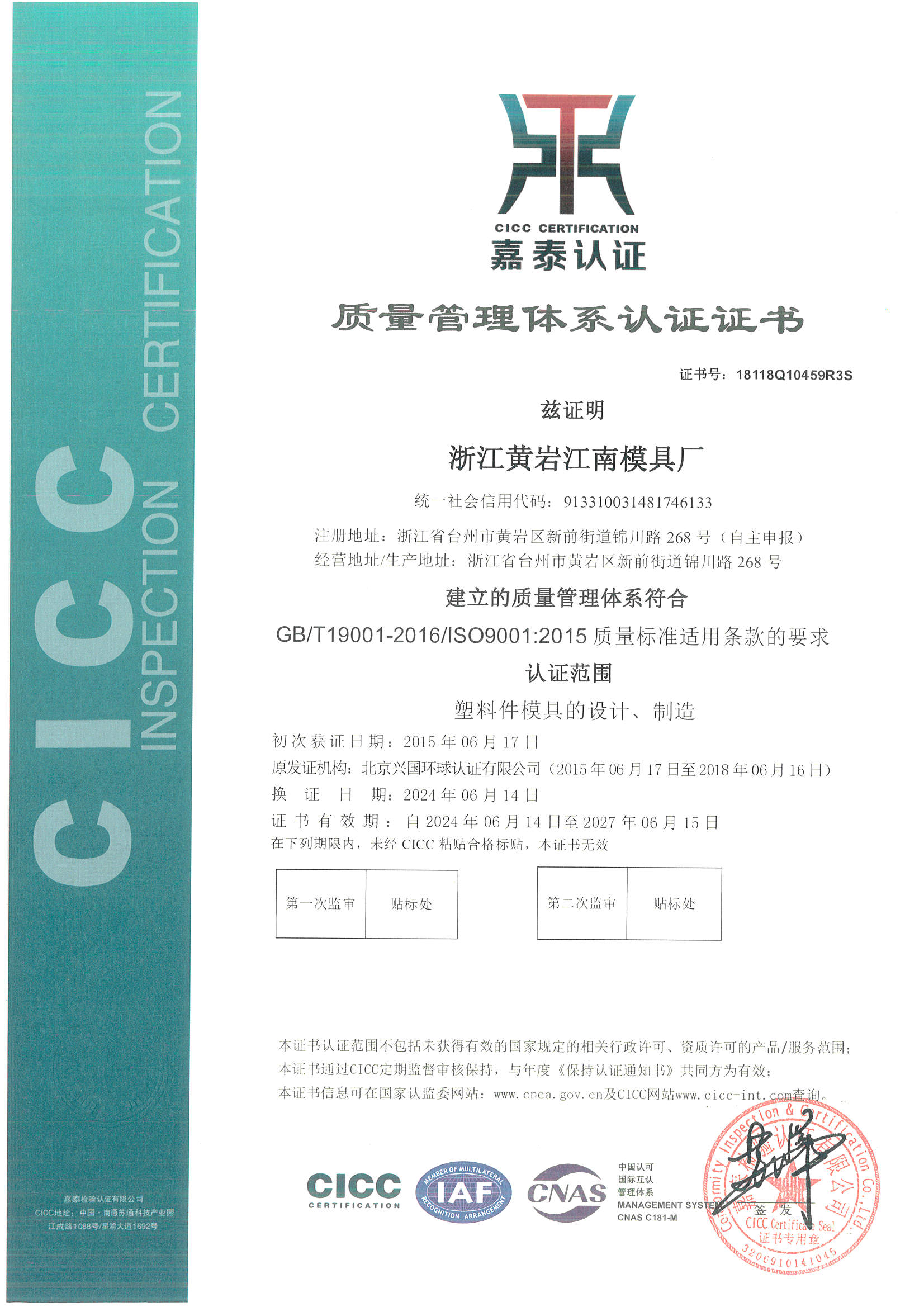 ISO 9001:2015 certification scope covers “Manufacture and Design of Plastic Parts Mould” — a key detail for buyers checking certification.
FAQ
Q1: What is a commodity mould?
A commodity mould is an injection mould used to produce everyday plastic goods in large volume. Typical product categories include chairs, tables, stools, sofas, storage cabinets and boxes, kitchen utensils, bathroom accessories, basins, buckets, trash bins, garden planters, pallets, turnover boxes, home appliance housings and thin-wall injection products. These moulds are commonly built from quality mould steel and process materials such as PP, engineering plastics and recycled polymers.
Q2: Can one mould supplier handle chairs, storage boxes, pallets and thin-wall parts at the same time?
A capability claim of this breadth should be verified, but it is achievable. As a supplier reference, Gangnam Mould lists chair, table, sofa, stool, storage cabinet/box, basket/tray/box, basin/bucket, trash bin, garden planter, pallet, turnover box, kitchen utensil, bathroom accessory and thin-wall injection moulds in its product range. Its ten-year custom moulds project covered injection pallets, circulation crates, daily plastic containers and home appliance housings for clients in eight countries. Buyers should still confirm the specific mould design and past references before ordering.
Q3: How do I verify an OEM/ODM mould maker’s capability before order execution?
Six checkpoints are useful: (1) product-type coverage; (2) ISO 9001 certification scope covering both design and manufacture; (3) CNC and measurement equipment; (4) the list of customisable items such as cavity count, cooling design, gating, surface treatment, inserts and heat treatment; (5) trial and inspection procedures including NDT, CMM and full-size trial testing; (6) execution parameters such as MOQ, lead time, capacity and payment terms.
Q4: What are typical lead time, MOQ and payment terms for a custom commodity mould?
Gangnam Mould’s stated parameters are: MOQ 1 unit, typical lead time 30–45 days depending on complexity, monthly capacity about 80 mould sets, FOB/CIF delivery, and payment of 30% T/T in advance with 70% before shipment. These are typical starting points and should be contractually confirmed for each mould design.
Q5: How is mould quality measured and accepted?
The stated quality control methods include non-destructive testing (NDT), coordinate measuring machine (CMM) measurement and full-size trial moulding, each with inspection reports. Trial moulding and inspection reports serve as the acceptance basis, and installation and operation training are provided to support customer acceptance. Buyers can reference ISO 20457:2018, the international standard for manufacturing tolerances and acceptance conditions of plastic moulded parts, when defining acceptance criteria.
Q6: When should a buyer NOT choose a broad-capability commodity mould supplier?
When the product demands deep specialist process knowledge — for example ultra-high-speed thin-wall food packaging, optical transparent components, or micro-moulded parts — a specialist toolmaker is likely to deliver better cycle time and niche material performance. Also, if the buyer’s market region is not within the supplier’s established export coverage, or if the required mould complexity exceeds the supplier’s typical lead time, a broader supplier may not be the best fit.
Tem questões ou precisa de mais detalhes?
Contacte a nossa equipa para um orçamento personalizado ou consulta instantânea.
Solicitar orçamento
Preencha o formulário abaixo e a nossa equipa entrará em contacto com uma proposta personalizada.
Chat direto do WhatsApp
Prefere conversar em tempo real? Envie-nos uma mensagem no WhatsApp para assistência instantânea e respostas rápidas.
- Obter orçamento personalizado
- Partilhar fotos ou documentos
- Discuta as suas necessidades diretamente
Geralmente responde em 5–30 minutos durante o horário de expediente.