
From Crate to Sign-Off: Qualifying a Non Woven Bag Making Machine
A non woven bag making machine is qualified when a buyer can demonstrate — with recorded observations, not paperwork alone — that the machine forms, seals and cuts the intended bag to a defined standard, at a defined speed, using a defined material. That demonstration runs across three checkpoints: pre-shipment testing at the manufacturer, installation readiness at the buyer's site, and a seal-integrity test completed before final acceptance. This reference sets out what belongs in each checkpoint, and how ZXL-E700 and ZXL-D700 ultrasonic sealing behaviour maps onto it.
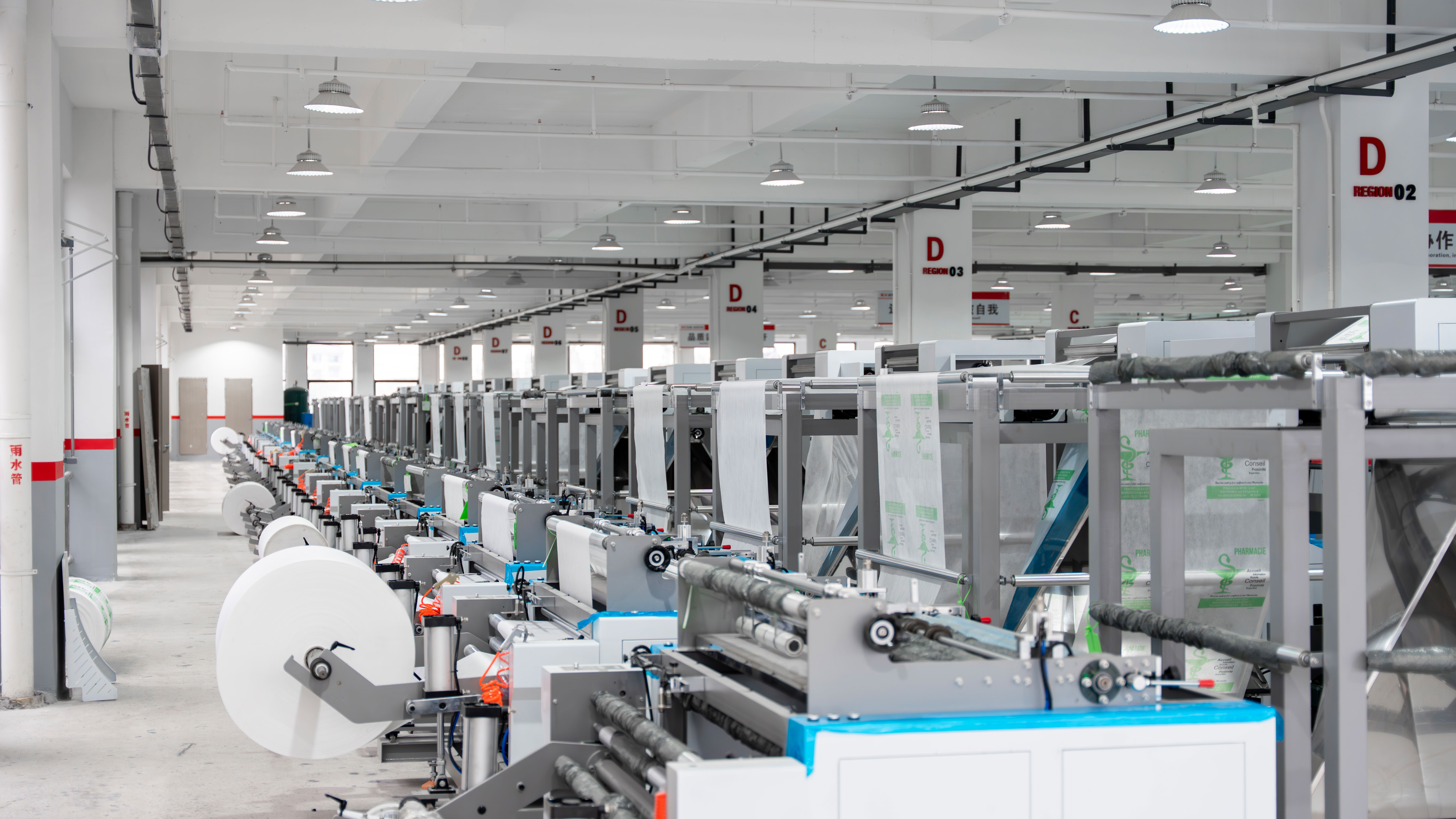
A machine is tested under load at the factory before crating. Buyers should ask for that test to be reported in the same terms used at acceptance.
The Acceptance Question Buyers Actually Face
At the decision stage, buyers are rarely choosing between a machine and no machine. They are choosing between a supplier who can prove what happens after the crate opens and a supplier who cannot. Certificates answer a different question. CE marking under the Machinery Directive 2006/42/EC, the Low Voltage Directive 2014/35/EU and the EMC Directive 2014/30/EU confirms that the machine may clear customs and satisfies a defined safety baseline. An ISO 9001:2015 certificate confirms that the factory operates a documented quality management system. Neither tells you whether the horn-to-anvil gap is even across the full welding width, or whether the operator on your floor can reproduce a seal at 100 bags per minute on a Monday morning.
Zhejiang Zhengxin Machinery Co., Ltd. — trading as ZX Zhengxin Machinery — is a non woven bag making machine manufacturer headquartered in Wenzhou, Zhejiang, China, founded in 2014 and operating a 60,000 m² facility with approximately 200 employees and an annual output of about 500 units. Its ZXL series spans entry-level through high-speed platforms. For qualification purposes, the relevant fact is not the size of the factory but the shape of its quality process: incoming material inspection, in-process QC checkpoints, and a continuous full-load production test on every machine before shipment. Each of those steps produces a record a buyer can ask to see, and each can be translated into an acceptance criterion.
Why Seal Integrity Is the Real Acceptance Criterion
Weak or inconsistent bag seals are the most common quality failure in non woven bag production, and the failure mode is specific rather than general. Finished bags peel apart under light load, or the weld is strong at one end of the seal line and weak at the other, or the bag fails a hand pull test by separating at the weld rather than tearing the fabric.
The documented causes split into machine and material. On the machine side, three conditions cover roughly 90% of cases: ultrasonic horn contamination from melted fabric residue reducing energy transfer at the interface; an uneven or incorrect horn-to-anvil gap, which produces a strong seal on one side and a weak seal on the other; and an amplitude or speed setting mismatched to the fabric being run — commonly after a GSM change or a speed increase without a corresponding parameter adjustment. On the material side, inconsistent GSM or contamination in the raw PP spunbond roll will prevent a correct weld regardless of machine settings.
Procurement consequence. A machine that runs, counts and stacks correctly can still fail acceptance, because none of those functions reveal seal strength. Acceptance has to include a destructive test on finished bags — not a visual inspection of the machine in motion.
Checkpoint One: What to Verify Before the Crate Leaves the Factory
Pre-shipment is the stage where the buyer has the least physical access and the most leverage. Three verification layers are available, and they can be written into the purchase order.
Layer 1 — The production test record
Every machine receives a continuous full-load production test before shipment. Ask for the output of that test expressed in acceptance terms: bag dimensions produced, seal appearance, the speed at which the run was performed, and the fabric GSM used. A test report that states only "machine tested and passed" is not usable at sign-off; a report that states speed, GSM and bag type is.
Layer 2 — Component traceability
Machines are built with branded components — Siemens, Delta or Mitsubishi PLCs, Omron sensors and NSK bearings — and third-party inspection by SGS, Bureau Veritas or CCIC can be arranged at the buyer's request before shipment. The practical instruction for a decision-stage buyer is to name the components in the contract and to ask the inspector to photograph nameplates rather than cabinet exteriors. Component identity is also a maintenance variable: an unbranded substitute changes the mean time between failures, not just the invoice price.
Layer 3 — Packaging, transit risk and trade terms
Export packaging consists of a fumigation-free wooden pallet base, VCI anti-rust film, five-layer corrugated cardboard, a 12 mm plywood crate and steel banding, with shock and tilt indicators attached to the crate. Marine cargo insurance at roughly 0.3–0.5% of invoice value is the buyer's decision under FOB terms and the supplier's under CIF terms — confirm which applies before ordering, because responsibility for transit damage follows that allocation.
If the crate arrives compromised, the sequence matters more than the claim. Do not sign the delivery receipt as clean. Photograph the crate exterior before opening, video the full un-crating, and do not power the machine until the damage has been assessed. Operating a machine with undisclosed transit damage can void the insurance claim, and the components most exposed to rough handling — control panels, sensors, frame alignment — are also the ones that produce misleading faults at commissioning.
Checkpoint Two: Installation Readiness Before Power-On
Installation is where most acceptance disputes originate, and the majority are site-readiness gaps rather than manufacturing defects. The machine weighs between 1,200 and 2,500 kg depending on model, which alone rules out improvised handling. A standard single-machine installation takes one to two working days: day one covers un-crating, positioning, levelling, power and air connection and an initial power-on test; day two covers fabric threading, dry-run testing, first production and parameter fine-tuning.
| Readiness item | Requirement | Why it decides acceptance |
|---|---|---|
| Floor and clearance | Level concrete floor, minimum 1.5 m clearance on all sides | An unlevel frame causes uneven fabric feeding and asymmetric seals that no parameter change fixes |
| Power supply | 3-phase, configured to 220V/60Hz, 380V/50Hz, 415V/50Hz or 440V/60Hz; verified at the terminals with a multimeter | Connecting a machine to the wrong voltage destroys PLC and servo drives instantly, and that damage is not covered by warranty |
| Voltage stabiliser | Wired in ahead of the machine; sized to 150% of combined load | Grid fluctuation damages control electronics and destabilises servo-driven feeding accuracy |
| Compressed air | Screw compressor with air dryer and tank, holding 0.6–0.8 MPa through the weld cycle | Pressure drop during welding is a direct cause of seal strength variation; moisture damages pneumatic cylinders |
| Raw material | 1–2 tons of PP spunbond, 70–80 GSM, for initial production | No material means no seal test, and the acceptance test is a seal test |
| Lifting equipment | Forklift, crane or hoist rated for 1,200–2,500 kg | Safe un-crating and positioning; manual handling risks frame damage before the machine is ever powered |
| Personnel | 1–2 people with basic mechanical aptitude, plus the operators who will run the line | Remote commissioning requires hands on site; operator presence is required for the competence stage of sign-off |
| Tools | Spirit level, metric wrench set 8–24 mm, screwdriver set, multimeter | Levelling and electrical verification are the two checks that most often get skipped |
The majority of installations are completed by the buyer's own team with remote video support, with engineers guiding each step in real time. Where remote support is insufficient, on-site engineer dispatch is available at a service fee of $100 per day plus airfare and accommodation, typically over three to five days. Buyers should treat that as a contingency line in the budget rather than a routine cost — but should also confirm before ordering that at least one person on site can follow mechanical instructions, because that is the precondition the remote model depends on.
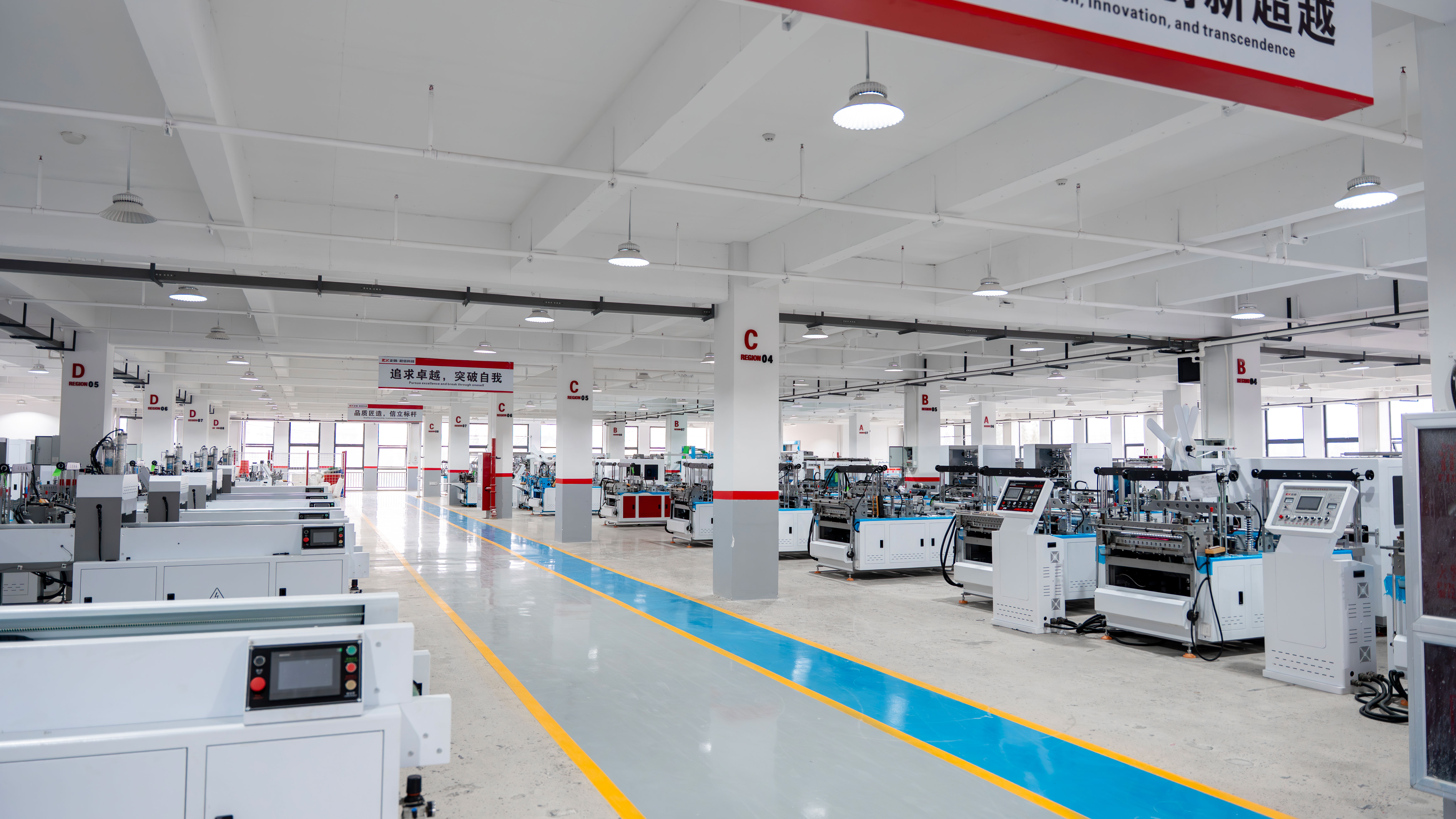
Installation clearance and floor levelling are acceptance variables, not housekeeping details — both feed directly into seal symmetry.
Checkpoint Three: The Commissioning Sequence
Commissioning is a four-stage sequence, and acceptance should be signed at the end of stage four rather than stage three.
- Dry run. Run at 20–30 pcs/min without fabric. Verify every movement is smooth and no unusual noise appears. A noise at this stage is mechanical, not material.
- Low-speed material run. Run at 30 pcs/min and produce 50 bags. Inspect seal quality, bag dimensions, and print registration if a printing unit is fitted. This is the first point at which a pull test becomes meaningful.
- Speed ramp. Raise speed to 60, then 80, then 100 pcs/min, inspecting at each tier. Where printing is installed, registration calibration is repeated at each speed tier, because registration accuracy depends on fabric tension stability and on the fixed latency between sensor trigger and cut actuation.
- Operator competence. The operator runs the machine under supervision for two to three hours. Commissioning is complete when the operator can independently produce quality bags at production speed.
Stage four is the one most often compressed when a buyer is impatient to start production, and it is the one that determines whether acceptance still holds three weeks later. A machine that passes a pull test under an engineer's hand and fails under the operator's hand has not been accepted; it has been demonstrated.
Testing Seal Consistency Before You Accept
Establish the parameter baseline first
Ultrasonic sealing quality depends on three parameters working together, and the baseline should be recorded before any test bag is pulled. Amplitude is set by fabric weight: 60–70% for 50–60 GSM fabric, 75–85% for standard 70–90 GSM, and 90–100% for 100–150 GSM or laminated material. The horn-to-anvil gap for 70 GSM fabric is approximately 0.3–0.5 mm and must be even within 0.05 mm across the full horn width — checked with a feeler gauge at both ends and the centre. Air pressure should hold 0.6–0.8 MPa consistently through the weld cycle, verified on the compressor gauge rather than assumed.
Run the pull test, not the visual test
Produce 20 test bags and pull-test five by hand. The pass criterion is unambiguous: the seal should tear the fabric rather than peel apart at the weld line. A seal that separates cleanly at the interface has failed, even if it looks intact. Where the weld peels, the seal is too weak and the parameter set is not yet acceptable.
Read the seal visually as a second signal
A correct ultrasonic seal shows a uniform, slightly glossy line along the weld. A brown or discoloured line indicates over-welding and calls for amplitude reduced in 5% steps. Incomplete fusion — fibres not fully bonded — calls for amplitude increased in 5% steps. Distorted fabric around the weld indicates the same over-welding condition. Both signals are secondary to the pull test; neither replaces it.
Inspect the horn before signing
The horn is a wear item with a replacement interval of 12–18 months. A new horn has a mirror-flat working surface; a worn horn shows pitting, erosion or a wavy pattern under bright light at an angle. Continued operation with a worn horn produces progressively worse seals and can damage the anvil, so horn condition belongs in the acceptance record rather than in the first maintenance review.
Record the variables that change the result
Fabric GSM with its commercial tolerance — typically ±5%, meaning a roll specified at 70 GSM may measure 67–73 GSM — bag type and dimensions, line speed at acceptance, amplitude, horn-to-anvil gap, air pressure, pull-test outcome, and the name of the operator who ran the test. This record is what allows a later seal failure to be diagnosed as a machine change or a material change within minutes rather than days.
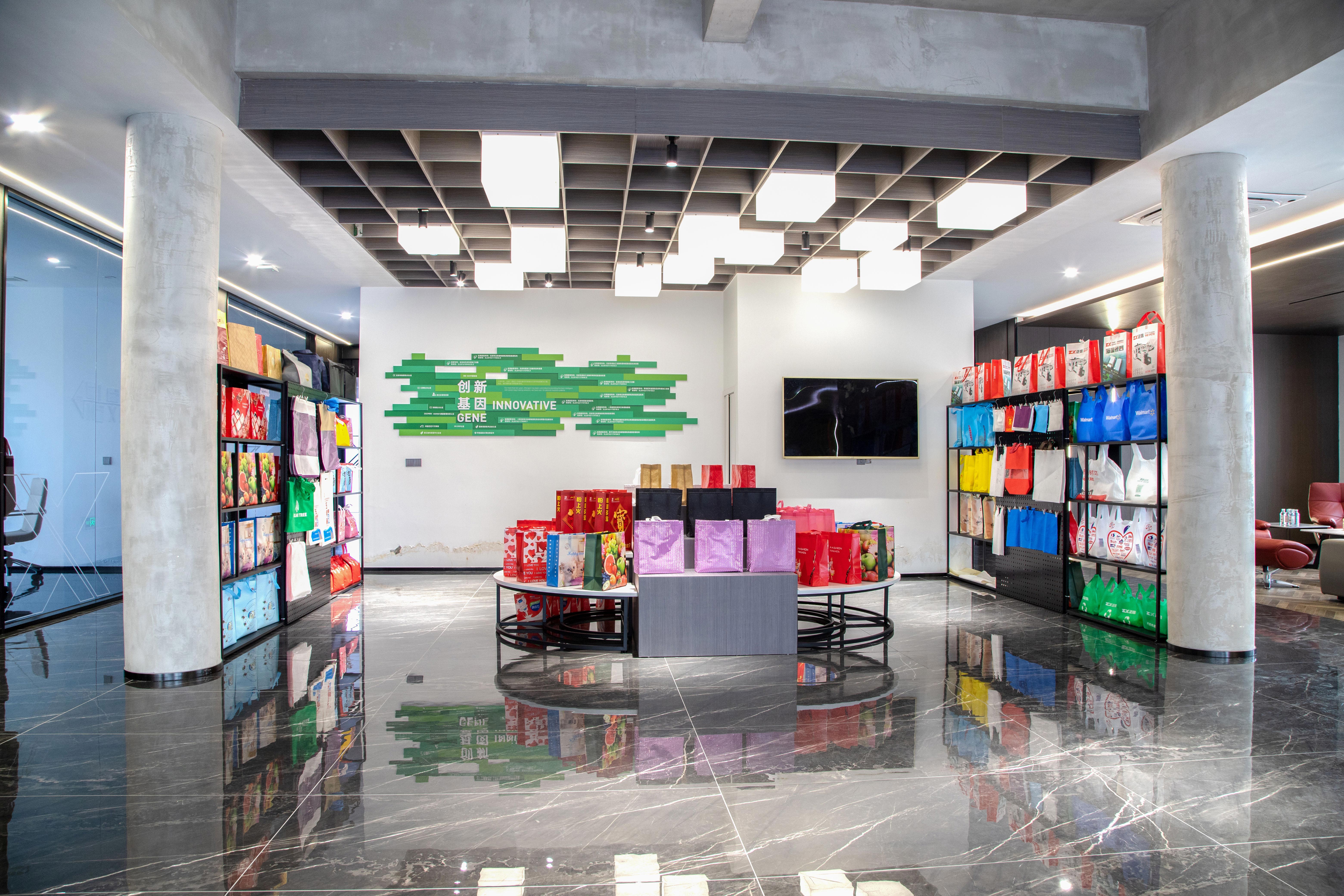
Retaining the accepted sample set — with GSM, speed and parameters noted — gives both parties a physical reference for later disputes.
Where the ZXL-E700 and ZXL-D700 Sit in This Framework
Both platforms fall in the entry tier of the ZXL range at 80–100 pcs/min, and the difference that matters at acceptance is the sealing and handle configuration. The ZXL-E700 combines ultrasonic sealing with online handle attachment and covers D-cut, W-cut and drawstring bag styles. The ZXL-D700 is a fully automatic platform configured with heat sealing or ultrasonic sealing depending on the model variant, which means the acceptance test must be written against the specific configuration on the order rather than against the series name.
The ultrasonic process itself is worth understanding because it explains why the acceptance test is parameter-sensitive. A piezoelectric transducer converts a 20 kHz electrical signal into mechanical vibration of the same frequency, and a titanium or aluminium horn amplifies the transducer's 10–30 micron displacement to 30–100 microns at the working tip. Pressed against a fixed steel anvil, that oscillation generates friction heat at the interface between fabric layers, raising local temperature above the melting point of polypropylene — approximately 160°C — within 0.2–0.5 seconds. The melt zone is confined to roughly 0.1–0.3 mm at the interface, leaving the rest of the fabric cool and undamaged. When vibration stops, the melted polymer solidifies within about 0.3 seconds.
Against heat sealing, the documented differences are a 15–20% higher peel strength in pull tests, 25–30% lower energy consumption because power is drawn only during the welding pulse rather than continuously to maintain an element, no 15–20 minute warm-up, and no scorching or odour. For food-contact and premium retail applications, the absence of odour and surface discolouration is often the deciding factor rather than the strength figure.
Where Ultrasonic Sealing Stops Being the Answer
A qualification framework that only lists advantages is not a framework. Five boundaries matter at the decision stage.
Cost premium. An ultrasonic machine carries a 10–15% higher upfront price than a heat-seal equivalent. The offset comes from eliminated heating-element replacement, lower electricity consumption and reduced burnt-fabric waste, but the offset is realised over 12–18 months of operation, not at the invoice.
The horn is a consumable. Replacement every 12–18 months is normal, and the cost belongs in the operating budget rather than in the warranty conversation.
Very thick laminated material. Above roughly 150 GSM laminated constructions the process margin narrows. Modern high-power horns handle these weights, but the parameter window is smaller and the acceptance test should be run on the actual production material rather than on a sample roll.
Ultrasonic cannot compensate for material or air supply. If the compressor cannot hold 0.6–0.8 MPa through the weld cycle, seal strength will vary regardless of amplitude settings. If the fabric batch is inconsistent in GSM or contaminated, no parameter change will restore a correct weld. This is why the acceptance test must be run on production material, and why retaining a fabric sample from the accepted run has diagnostic value later.
Remote commissioning has a precondition. Most installations are completed by the buyer's team with remote video guidance, and remote engineers are reported to diagnose and resolve more than 80% of issues. That model depends on at least one person on site with basic mechanical aptitude. Where no such person exists, on-site dispatch at $100 per day plus airfare and accommodation is the realistic path, and the timeline extends to three to five days.
What Qualification Actually Compares
At the decision stage the comparison is not only machine against machine. It is acceptance regime against acceptance regime. Two suppliers can quote the same rated speed and the same bag styles; only one will hand over a parameter baseline, a commissioning record, a retained sample set and a spare-parts list at sign-off.
That difference becomes concrete during a failed seal test. A recommended spare parts kit of $500–1,500 purchased with the machine — covering typical consumables for the first year — is usually the difference between a two-day correction and a two-week stoppage waiting for a low-value component by courier. Zhengxin's support structure is relevant to qualification for the same practical reason: field engineers deployable internationally, remote diagnosis by WhatsApp and video call seven days a week, and offices in Kenya, Morocco, Egypt, Vietnam, Tanzania, Dubai, Oman, Indonesia and Ethiopia shorten the distance between a failed acceptance test and a corrected one.
Future Outlook
Servo-driven no-waste-edge technology, online handle attachment, and high-speed platforms engineered for 24/7 continuous production are shifting the acceptance question. It is moving from "can the machine reach the rated speed" toward "can the machine hold seal quality at that speed for a full shift". Two consequences follow for buyers writing acceptance criteria now. First, parameter sets should be handed over as recallable recipes on the HMI rather than as a list of numbers in a manual, because changeover repeatability is what protects seal quality across bag sizes. Second, the acceptance record should include the speed at which each seal test was performed, since a seal that holds at 60 pcs/min and drifts at 100 pcs/min is a different finding from one that fails at both.
Frequently Asked Questions
What should a buyer confirm before ordering a non woven bag making machine?
Confirm local voltage and frequency (220V/60Hz, 380V/50Hz, 415V/50Hz or 440V/60Hz, three-phase), required daily output, bag styles needed, whether printing is required, and the destination country's certification requirements. Standard lead time is 25–35 working days production plus 15–45 days sea freight. Payment terms are typically 30% deposit and 70% before shipment after pre-shipment inspection. Certification should be verified on the issuing body's official website rather than accepted from a scanned copy.
What is required on site to install the machine, and can it be done without an engineer present?
Most installations are completed by the buyer's team with remote video support. Required on site: one to two people with basic mechanical aptitude, a spirit level, basic hand tools, a multimeter, and lifting equipment rated for the machine's 1,200–2,500 kg weight. Prerequisites are a level concrete floor with 1.5 m clearance, a verified three-phase supply, an installed air compressor, and fabric rolls on hand. Installation takes one to two working days. On-site engineer dispatch is available at $100 per day plus airfare and accommodation, typically three to five days, where remote guidance is insufficient.
How should ultrasonic welding settings be adjusted for different fabric thicknesses?
Three parameters work together. Amplitude: 60–70% for 50–60 GSM, 75–85% for 70–90 GSM, 90–100% for 100–150 GSM or laminated fabric. Horn-to-anvil gap: approximately 0.3–0.5 mm for 70 GSM, wider for thicker fabric and narrower for thinner, and even within 0.05 mm across the full horn width. Speed: faster running reduces weld contact time, so speed increases usually require a compensating amplitude increase. After any change, produce 20 test bags and pull-test five — the seal should tear the fabric rather than peel apart. Save successful settings as a named recipe per fabric type.
What causes weak or inconsistent bag seals, and how is it diagnosed?
Three root causes cover roughly 90% of cases. Horn surface contamination with melted fabric residue reduces energy transfer and is resolved by cleaning the horn and anvil with isopropyl alcohol and a lint-free cloth. An uneven or incorrect horn-to-anvil gap produces a strong seal on one side and a weak seal on the other, and is checked with a feeler gauge at both ends of the horn. An amplitude or speed setting mismatched to the fabric — typically after a GSM change or a speed increase — is corrected by adjusting amplitude in 5% increments or reducing speed by 10–15%. If all three are correct and seals remain weak, the fabric batch is the likely cause and should be tested against a roll from a different batch.
What preventive maintenance keeps seal quality stable?
Daily: clean fabric dust from rollers, guide bars and photocell lenses; drain water from the compressor tank; wipe the ultrasonic horn and anvil with isopropyl alcohol; verify emergency stops. Weekly: lubricate chain drives, linear rails, lead screws and bearings with the specified grease; check belt tension at 5–10 mm deflection at the midpoint; inspect pneumatic hoses for leaks; clean the electrical cabinet air filter. Monthly: inspect the horn surface for pitting or uneven wear; check cutting blade sharpness; back up PLC parameters and recipes. Quarterly: professional inspection of electrical connections and an ultrasonic generator output test.
A qualification record is only as useful as the number of variables it captures. Buyers who document fabric GSM and tolerance, bag type and dimensions, acceptance speed, ultrasonic parameters, horn-to-anvil gap, air pressure, pull-test outcome and the operating personnel end up with a document that answers the only question that matters three weeks into production: did the machine change, or did the material change?
ZX Zhengxin Machinery publishes its full machine and auxiliary equipment range, including the ZXL series and printing, slitting and 3D bag platforms, in its downloadable product brochure, which buyers can use alongside the acceptance checklist above.
Tem questões ou precisa de mais detalhes?
Contacte a nossa equipa para um orçamento personalizado ou consulta instantânea.
Solicitar orçamento
Preencha o formulário abaixo e a nossa equipa entrará em contacto com uma proposta personalizada.
Chat direto do WhatsApp
Prefere conversar em tempo real? Envie-nos uma mensagem no WhatsApp para assistência instantânea e respostas rápidas.
- Obter orçamento personalizado
- Partilhar fotos ou documentos
- Discuta as suas necessidades diretamente
Geralmente responde em 5–30 minutos durante o horário de expediente.