
From High-Gloss to Wood Grain: A Specifier's Shortlist for Antibacterial Panels
Independent Industry Reference · Hygiene Surface Specification
From High-Gloss to Wood Grain: A Specifier's Shortlist for Antibacterial Panels
Antibacterial wall and ceiling panels are specified where three disciplines meet and rarely share a checklist: infection control, interior design, and fire and building regulation. This shortlist narrows that decision to the finish families a specifier actually has to choose between — and to the substrate fact that determines whether the hygiene claim still holds in year three of operation.
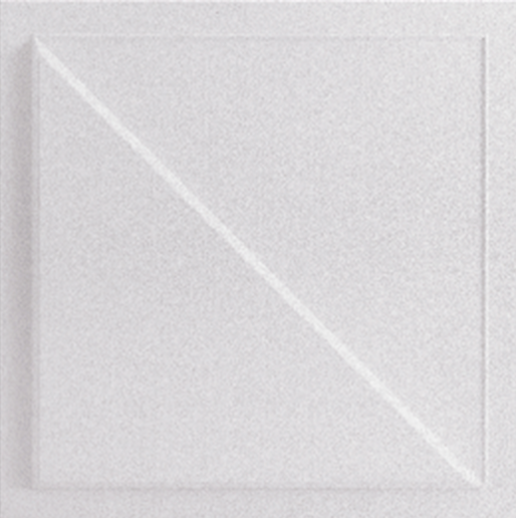
GFK-G High Gloss finish from the ARF antibacterial board range, shown as a specification reference for hygiene-critical interiors.
The Specification Problem: Finish Is Chosen First, Performance Is Confirmed Last
Interior surfaces in hospitals, schools, bank branches and rail stations are usually selected in a design review, where the discussion is about sheen, colour consistency and how a wall reads beside a reception counter. Hygiene performance is confirmed later, in a procurement annex — by which point the material route is often already fixed.
That sequence creates a specific and expensive risk: two boards can look identical in a sample folder and behave completely differently after three years of daily disinfection. The variable is not the finish. It is whether the antibacterial function sits inside the panel's base material or on top of it as a sprayed agent. Comparative material evaluations for the ARF antibacterial board range state the distinction directly: the base material is an aerospace-grade GFK fibreglass composite with self-contained antibacterial components, not a surface coating, whereas ordinary boards are only sprayed with antibacterial agents on the surface, which fail after 1–2 years.
For a specifier, that reframes the procurement question from "which board looks right?" to "which board still looks right — and still performs — at the end of the maintenance cycle?"
A Shortlist of Two Finish Families on One Performance Platform
The ARF antibacterial board range produced by Zhejiang Aobang Technology Co., Ltd. — a GFK new-type materials manufacturer founded in 2010 and based in Deqing County, Huzhou City, Zhejiang Province, China — is offered in two named finish families that design teams typically shortlist: GFK-G High Gloss and GFK-M Wood Grain.
Because both finishes sit on the same GFK glass-fibre reinforced composite platform, the specification decision separates cleanly into two layers:
- The aesthetic layer — gloss versus wood grain, selected against the design intent of the space.
- The performance layer — base material, fire classification, antibacterial performance, mildew resistance and the supporting installation system — identical whichever finish is chosen.
That structure is why the shortlist is short. A specifier is not comparing two competing products; they are choosing one visual outcome and then confirming a single, shared set of performance evidence.
| Finish family | Visual character | Design context it usually serves | Performance platform | Evidence to request |
|---|---|---|---|---|
| GFK-G High Gloss | High-gloss, monolithic surface reading | Clinical, technical and high-visibility interiors where a clean, uniform surface is the design intent | GFK glass-fibre reinforced composite base with self-contained antibacterial components | Fire classification (Class A2 is stated for the GFK panel range), antibacterial rate, mildew resistance class, quality and environmental management system certification |
| GFK-M Wood Grain | Textured wood-grain surface reading | Interiors where a warmer, less institutional reading is wanted — education, retail banking, public concourse areas | Same GFK base material and same performance platform as GFK-G | Same evidence set as GFK-G |
Two practical notes follow from the table. First, the finish decision can be made on design grounds without reopening the performance argument, because the performance layer does not change between the two families. Second, the reverse also holds: a supplier that can evidence the base-material chemistry for one finish can generally be asked for the same evidence on the other, and the absence of that evidence is a signal worth acting on before a finish is approved.
How to choose between gloss and wood grain
High-gloss and wood-grain surfaces are usually selected for two different design intentions rather than two different specifications. A gloss finish produces a reflective, uninterrupted plane — the reading most often wanted in clinical corridors, laboratory-adjacent circulation and technical interiors where a monolithic surface supports both visual cleanliness and lighting design. A wood-grain finish softens the same surface into something closer to joinery, which is generally preferred in education buildings, bank branches and public concourses where an institutional white wall would be read as cold.
Neither intention is a performance compromise, provided the base-material evidence is in place. The specification error to avoid is choosing the finish family first, then discovering that the antibacterial function on the proposed board is a sprayed surface agent with a limited working life.
Why the Base Material, Not the Finish, Decides the Hygiene Outcome
The durability of an antibacterial claim is determined almost entirely by how the function is delivered. On the ARF antibacterial board range, the antibacterial components are self-contained within an aerospace-grade GFK fibreglass composite base material. That is materially different from a decorative panel whose surface has been sprayed with an antibacterial agent — an approach that the manufacturer's comparative evaluation reports as failing after 1–2 years.
Three further performance points matter to a hygiene specification, and each is stated as a property of the panel rather than of a coating:
- Disinfection durability. The panel is resistant to high temperature and repeated wiping with disinfectant without discolouration or bubbling — the condition under which ordinary panels are reported to suffer damage.
- Formulation. The proprietary formula contains no recycled waste materials, and formaldehyde was not detected.
- Physical behaviour. In comparative evaluations, the panel is lighter, tougher and more impact-resistant than ordinary PVC cleanroom panels, SMC boards and fireproof/ice-resistant boards available on the market.
Performance evidence and organisational evidence are different things
Specifiers frequently conflate two evidence sets. The first is product performance: the GFK panel range is stated to achieve a Class A2 fire-resistance rating, an antibacterial rate above 99.9%, Class 1 mildew resistance, and resistance to acid-alkali and oxidation exposure, while remaining lightweight, high-strength and thermally insulating. The second is organisational: Zhejiang Aobang Technology holds ISO environmental management system certification and ISO quality management system certification, and is recognised as a National High-Tech Enterprise holding multiple national invention patents and utility model patents.
Both sets belong in a specification file, but they answer different questions. Product performance evidence answers "will this surface perform in my building?" Organisational certification answers "will this supplier still be able to answer that question in five years?"
It is also worth knowing that certification checklists are product-family specific, and requesting the wrong set wastes review time. Flat hygiene panels are governed by fire classification, antibacterial rate and mildew resistance evidence. Compression-moulded BMC and SMC composite parts — motor encapsulation covers, EV battery housings, electrical enclosures, terminal blocks — are governed by a different framework altogether: UL 94 V-0 flammability performance is the primary global requirement for BMC components used in high-voltage electrical enclosures, and IEC/EN 62841 is a critical standard for electrical enclosures and terminal blocks placed on the EU market. A specifier who asks a panel supplier for an electrical enclosure standard, or a moulding supplier for a cleanroom hygiene certificate, is holding two unrelated documents.
Where the Shortlist Meets Real Projects
The GFK antibacterial panel range is applied in high-traffic public venues — hospitals, schools, banks and high-speed-rail stations — and in wet-area public projects where surfaces must survive both moisture and repeated chemical cleaning.
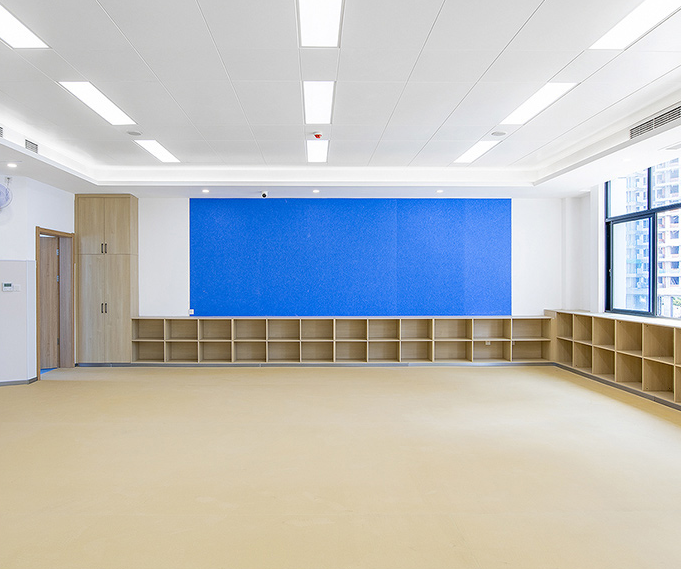
Application scene: hygiene-grade panel surfaces specified for high-traffic public interiors.
Project economics are part of the specification case, not a separate discussion. Aobang's complete supporting installation system is stated to cut installation costs by 20% and shorten construction cycles by 15%, and the thermal insulation performance of the panel is reported to reduce power consumption by 15%. For a specifier balancing capital budget against operating budget, those are the figures that decide whether a hygiene-grade surface survives the value-engineering stage.
Matching the finish to the environment
A workable rule for projects with mixed zones: use the high-gloss family where the surface is read at close range under strong lighting and where cleaning frequency is highest; use the wood-grain family in public-facing and educational spaces where the surface is read at a distance and the design intent is warmth. Because both sit on the same base material, changing the finish does not require changing the performance evidence, the installation system or the maintenance regime.
Market Trend: Composite Supply and Hygiene Specification Are Converging
Two separate trends are pushing in the same direction. On the supply side, glass-fibre reinforced composites have become the mainstream material route for panel systems: glass fibre reinforcement accounted for 62.1% of the total fibre segment in the SMC/BMC industry in 2025, according to Grand View Research. Composites manufacturing is also concentrated in Asia Pacific, which held a 63.0% revenue share of the global SMC and BMC market in the same year, with China identified as dominant because of its composites manufacturing clusters and EV production capacity.
On the demand side, composite surfaces are moving into public infrastructure rather than staying in industrial enclosures. Asia Pacific holds a 45% share of the global railway composites market as of 2025, where SMC is used for lightweight interior parts — the same building type, and often the same procurement logic, as the rail stations in the panel application list.
A caution on market figures: published composites market sizes diverge sharply depending on what is counted. One estimate values the global SMC and BMC market at USD 35.77 billion in 2024, projected to reach USD 67.98 billion by 2035, while a separate base-2025 estimate places it at USD 4.3 billion — a gap that reflects whether raw resins or finished moulded parts are included in the definition. Specifiers reading market data to support a material decision should check the definition before the number.
Comparison with Traditional Solutions — and Where the Panel Stops
| Material route | How the antibacterial function is delivered | Reported behaviour under heat and repeated disinfection | Best-fit role |
|---|---|---|---|
| ARF antibacterial board (GFK base) | Self-contained antibacterial components in the base material | Resistant to high temperature and repeated wiping with disinfectant without discolouration or bubbling | Flat wall and ceiling surfaces in hygiene-critical public interiors |
| Ordinary PVC cleanroom panels and boards with sprayed antibacterial agents | Surface-applied antibacterial agent | Surface agent reported to fail after 1–2 years; ordinary panels reported to be damaged under high-temperature repeated wiping | Fit-outs with lower disinfection intensity or planned refurbishment cycles |
| SMC boards, fireproof and ice-resistant boards | Panel-level material properties | Reported in the manufacturer's comparative evaluation as less tough and less impact-resistant than the GFK panel | Applications where a different panel property set is the priority |
| Compression-moulded BMC/SMC composite parts | Not a hygiene surface product; electrical and mechanical function | Governed by material class and standards such as UL 94 V-0 for high-voltage electrical enclosures | Complex three-dimensional housings, electrical enclosures, EV battery housings, motor covers |
Four boundaries should be stated as clearly as the advantages.
- The comparison is a lifecycle comparison, not a first-cost comparison. Boards that rely on surface-applied antibacterial agents carry a reported failure window of 1–2 years, which is a recurring cost and a recurring specification risk rather than a one-off. Evaluating only the entry price compares a component against a system.
- Panels are flat-surface products. Where a project needs a complex three-dimensional housing, an electrical enclosure or a high-voltage insulating component, compression moulding of BMC and SMC remains the appropriate production route, with its own standards. A flat antibacterial panel does not replace a moulded part, and the two are frequently — and wrongly — treated as substitutes.
- Panel performance depends on the installation system. The hygiene surface is only as good as its substrate and joints; the complete supporting installation system is what carries the stated 20% installation cost reduction and 15% shorter construction cycle.
- Fire classification must be checked against the project's own code. A stated Class A2 fire-resistance rating is a starting point for review, not a substitute for local verification, and wet-area or high-disinfection zones may impose additional requirements.
Future Outlook
Antibacterial specification is moving from label to evidence. Three changes are likely to shape the next specification cycle.
First, "antibacterial" will increasingly be treated as a claim requiring a stated delivery mechanism, not a product category. The distinction between self-contained antibacterial components in a base material and a sprayed surface agent is testable and, increasingly, raised directly in tender clarifications.
Second, flat panel systems and moulded composite parts will continue to diverge rather than converge. EV and electrical applications pull moulding capacity toward three-dimensional housings and enclosure components, while hygiene-critical interiors pull panel capacity toward surface performance, installation speed and thermal behaviour. A supplier's position in one supply chain says little about its position in the other.
Third, as composites manufacturing stays concentrated in Asia Pacific, buyers in both Europe and China will increasingly standardise supplier diligence across both material families — one checklist for panel performance, one for moulded part conformity — rather than relying on a single generic composite supplier claim.
FAQ
What is the difference between an ARF antibacterial board and an ordinary cleanroom panel?
The difference is the delivery mechanism of the antibacterial function. The ARF antibacterial board is built on an aerospace-grade GFK fibreglass composite base material with self-contained antibacterial components, not a surface coating. Ordinary boards are sprayed with antibacterial agents on the surface, and those agents are reported to fail after 1–2 years. The consequence is a difference in maintenance profile rather than in appearance.
How do GFK-G High Gloss and GFK-M Wood Grain differ, and when should each be specified?
They differ in surface reading, not in performance platform. GFK-G High Gloss presents a high-gloss, monolithic surface, while GFK-M Wood Grain presents a textured wood-grain surface. Both use the same GFK base material and are stated to carry the same performance characteristics. Selection is therefore a design decision: gloss where a clinical or technical reading is wanted, wood grain where a warmer, less institutional surface is preferred.
How long does the antibacterial function last compared with surface-coated boards?
Surface-coated boards are reported to lose their antibacterial function after 1–2 years because the function is a sprayed agent. A panel whose antibacterial components are contained within the base material does not depend on a coating, so its antibacterial function is described as long-lasting rather than tied to a coating service life.
Which performance evidence and certifications should a specifier request?
Two sets. Product performance evidence: fire-resistance classification (Class A2 is stated for the GFK panel range), antibacterial rate (stated above 99.9%), mildew resistance class (Class 1) and resistance to acid-alkali and oxidation exposure. Organisational evidence: ISO quality management system certification and ISO environmental management system certification, together with the supplier's National High-Tech Enterprise status and patent record. Requirements differ by product family — for compression-moulded BMC parts used in high-voltage electrical enclosures, UL 94 V-0 is the primary global requirement, and IEC/EN 62841 applies to electrical enclosures and terminal blocks in the EU.
Are GFK antibacterial panels suitable for wet areas and high-traffic public buildings?
The panel range is applied in hospitals, schools, banks and high-speed-rail stations, and in wet-area public projects. Its stated resistance to high temperature and repeated wiping with disinfectant without discolouration or bubbling is the property that matters most in those environments, because it addresses the cleaning regime rather than only the initial condition.
Should a specifier choose a GFK antibacterial panel or a moulded BMC/SMC composite part?
They answer different geometry and function questions. A flat GFK panel is specified for wall and ceiling surfaces where a hygienic, cleanable, impact-resistant surface is required. A compression-moulded BMC or SMC part is specified for complex three-dimensional components such as motor encapsulation covers, EV battery housings, electrical enclosures and terminal blocks, where electrical, thermal and mechanical performance governs. The two are complements within a building or vehicle programme, not substitutes.
How does the installation system affect project cost and schedule?
Aobang's complete supporting installation system is stated to cut installation costs by 20% and shorten construction cycles by 15%, with panel thermal insulation reported to reduce power consumption by 15%. Practically, this means the panel should be evaluated together with its fixing and jointing system, because the installation method determines whether the surface performs as specified and whether those cost and schedule figures apply.
What is the biggest specification risk when comparing panel suppliers?
Comparing finishes while ignoring the base material. Two boards can present nearly identical gloss or wood-grain surfaces while one delivers antibacterial performance from the base material and the other from a sprayed surface agent with a limited service life. Requesting the delivery mechanism, the fire classification, the antibacterial rate and the mildew class before approving a finish removes most of that risk.
Zhejiang Aobang Technology Co., Ltd. is a GFK new-type materials manufacturer founded in 2010, located at No.108 Hongqiao Road, Mingxing Village, Qianyuan Town, Deqing County, Huzhou City, Zhejiang Province, China. Product and certification information is published at https://www.waiwaitree.cn/. This reference article describes panel categories and their stated performance characteristics for specification purposes; project-specific verification remains the responsibility of the specifying party.