
From Inflatables to Shelters: Custom Outdoor Sourcing FAQ
From Inflatables to Shelters: Custom Outdoor Sourcing FAQ
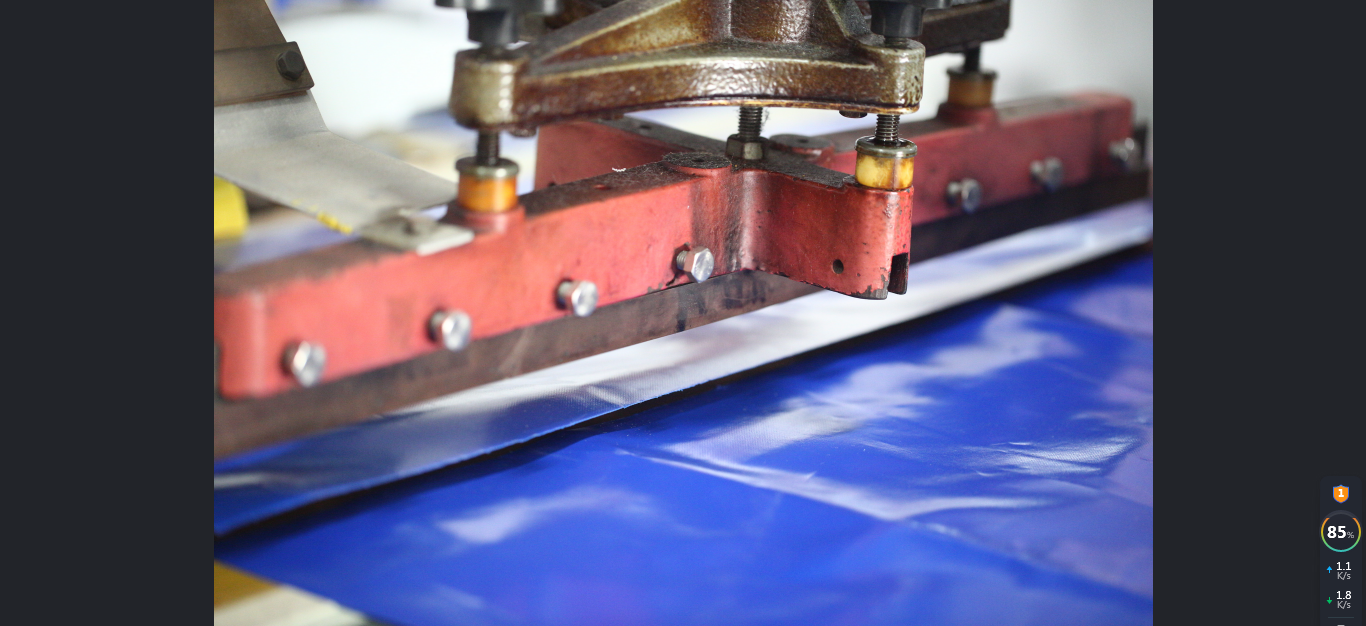
Technical textile joining is where most custom outdoor specifications are either met or lost. Image: StarCanopy production documentation.
HTNXT Industry Reference · Recreation Supplies
Specification questions decide custom outdoor projects long before price does. A buyer sourcing an inflatable cube, an inflatable football goal, a container shelter, a boat or car shelter, an outdoor umbrella, a folding chair or a caravan pole is not simply purchasing a product category. They are purchasing a set of constraints: which polymer film, which frame alloy, which coating, which size tolerance, and which inspection step will prove that the delivered goods match the brief.
This reference works through those constraints product by product, from inflatables to shelters. Each answer is written so that it can be read independently and is limited to stated product parameters, stated manufacturing capability and documented application notes. Where the available documentation does not answer a question, that gap is stated rather than filled.
Why constraint questions arrive before price questions
Custom outdoor products sit inside a large and still-expanding category, but the category data and the buying decision operate at different levels. The global recreational and outdoor products market was valued at USD 144.5 billion in 2025 and is projected to reach USD 152 billion in 2026, a 5.9% CAGR according to Global Market Insights. The US outdoor recreation products market is projected to grow from USD 202.5 billion in 2025 to USD 268.3 billion by 2031 at a forecast CAGR of 4.8%, per Ken Research. Grand View Research estimates the global canopy market at USD 2.2 billion in 2026, with the shade canopy segment holding the largest share in 2025.
Those figures carry different geographies and different product definitions and should not be combined into a single consensus number. More importantly for a sourcing team, none of them separates made-to-order goods from the broader category: no verified figure in this dataset isolates custom umbrellas, custom covers, inflatable advertising structures or temporary shelters.
That gap explains why the first serious email in a custom project is usually about material, not money. In a catalogue purchase, the supplier owns the definition — the SKU fixes the fabric, the frame, the size and the tolerance. In a custom purchase, the buyer owns the definition, and the factory has to be able to receive it, interpret it and verify it. Every question below is a version of that transfer of ownership.
The manufacturing base behind these answers
StarCanopy is the brand of Zhuhai Star Canopy Co., Ltd., a French-owned and managed production facility established in 2005 and based in Zhuhai, China. The facility is organised into three workshops — hardware, sewing, and inflatables — and lists a four-person R&D team. Its stated export ratio is 100%, with markets listed as the EU, USA, Canada, Japan, Australia and New Zealand.
The three-workshop structure is the reason a single sourcing conversation can cover an aluminium-frame umbrella, a sewn polyester shelter and a welded TPU+PVC inflatable. Those are three different production logics: metal cutting, bending, drilling, welding, surface treatment and assembly; fabric development, printing, cutting and sewing; and PVC/TPU film processing with airtight seam work. Buyers who source such a mix across separate suppliers inherit three sets of tolerances, three inspection routines and three lead-time clocks.
| Stated capability | OEM production | ODM programme |
|---|---|---|
| Buyer input | Samples, drawings, specifications and production requirements | Product concept, application scenario and performance standards |
| Stated scope of work | Fabric development, custom printing and sewing, PVC and TPU film processing; metal cutting, bending, drilling, welding, surface treatment, final assembly | Engineering design, material development, pattern making, lab testing, prototyping, mass production delivery |
| MOQ | 1 unit | Customization available to meet customer needs |
| Lead time | 1–2 weeks for small quantities | 7–30 days |
| Monthly capacity | 1000 units | 1000 pcs |
| After-sales | Remote support | Remote support |
Inflatables: cube, football goal and container shelter
All three inflatable models in the current range are specified in TPU+PVC and are fully customizable in size. The material combination is the single most consequential line in an inflatable specification, because it determines how the seams are joined and what the buyer should test on arrival.
| Model | Product | Stated material | Size | Application |
|---|---|---|---|---|
| ITC01 | Inflatable Cube | TPU+PVC; PVC listed in product parameters | Fully customized | Advertisement |
| I-FB | Inflatable football goal | TPU+PVC | Fully customized | Outdoor sport |
| CS-01 | Inflatable Container Shelter | TPU+PVC, anti-UV | Fully customized | Transportation, events, temporary shelter |
ITC01 is designed for the advertisement industry, where the structure itself is the medium. I-FB is intended for the outdoor sport industry, and CS-01 is a removable, inflatable shelter placed between two containers, described as anti-UV and applicable to transportation, events and temporary shelter. That container-gap configuration is unusual enough to be worth flagging to a project team early, because the built structure is defined partly by the containers it spans, not only by the shelter itself.
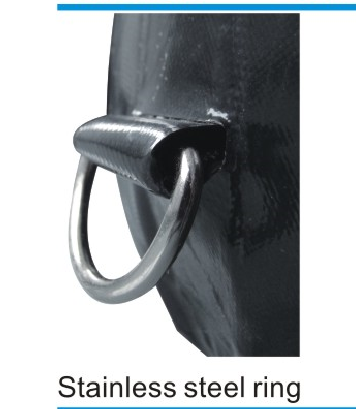
ITC01 is specified in TPU+PVC with a fully customizable size, for advertisement applications. Image: StarCanopy product documentation.
Because the body is a film rather than a woven textile, the failure mode buyers watch is air retention rather than abrasion. Documented field evidence points the same way: a single I-FB goal supplied to a French sports event brand reported satisfaction on air tightness and durability, with no air leakage during long-term outdoor training. A separate record covers two CS-01 container shelters delivered to a French client for temporary activity and work shelter between shipping containers, reported as stable in operation over one year.
Shelters: frame choice, fabric choice and site conditions
Two decisions dominate every shelter specification: whether the structure has a frame, and which fabric faces the weather. The current range makes both decisions visible in the product parameters.
| Model | Structure and fabric | Size | Intended use |
|---|---|---|---|
| ST-01 | Aluminium or steel frame with polyester; waterproof PU coated polyester fabric | Fully customizable | Outdoor sport, outdoor racing |
| CT-01 | Polyester fabric | Customized | Camping car |
| BS-01 | Polyester or PVC fabric, waterproof | Fully customizable | Transportation, temporary shelter |
ST-01 is the frame-based option: aluminium or steel, with PU coated polyester stated as waterproof, available in fully customizable sizes for outdoor sport and racing use. CT-01 carries a simpler specification — polyester fabric, customized size, camping car application — which means the buyer's own vehicle dimensions become the controlling input. BS-01 offers a fabric choice between polyester and PVC, both stated as waterproof, with fully customizable size, for transportation and temporary shelter use.
What the parameters do not state matters just as much. No wind-load rating, fabric weight or frame wall thickness is published for any model in this range. That is not a reason to avoid the products; it is a reason to write those requirements into the inquiry, because ODM production is explicitly structured around buyer-supplied performance standards. A shelter specification that says only \"custom size\" leaves the most consequential variables undefined.
Boat-cover performance is documented in one case record: 10 BS-01 covers delivered to a client in China for roof coverage over a boat shelter, reported to have shown good waterproof and anti-aging performance under humid waterfront conditions, with no tearing or water seepage within the service cycle. The stated highlights for that project were full custom size and shape, anti-UV, anti-mold, waterproof and tear-resistant construction.
Shade, seating and support hardware
The non-inflatable, non-shelter part of the range answers a different set of questions: commercial shade, portable seating and structural support for tents and awnings.
| Model | Key stated parameters | Intended use |
|---|---|---|
| UM-01 | Aluminium frame; waterproof polyester canopy; fully customized size | Outdoor garden, outdoor restaurant, outdoor cafe |
| C01 | 586 × 557 × 910 mm; aluminium frame with injected aluminium connection parts; seat and back with foam and anti-UV PU fabric; carry bag | Outdoor, camping |
| CPPlK | Aluminium and plastic construction; 2 m length | Outdoor fishing, outdoor camping |
UM-01 combines an aluminium frame with a waterproof polyester canopy in fully customized sizes, and is positioned for commercial outdoor spaces such as cafes and restaurants. C01 is the one model in the range with a fixed, published dimension set — 586 × 557 × 910 mm — built on an aluminium frame with injected aluminium connection parts, with foam and anti-UV PU fabric in both seat and back, and supplied with a carry bag. CPPlK is a support component rather than a finished structure: aluminium and plastic, stated at 2 m in length, for outdoor fishing and camping use.
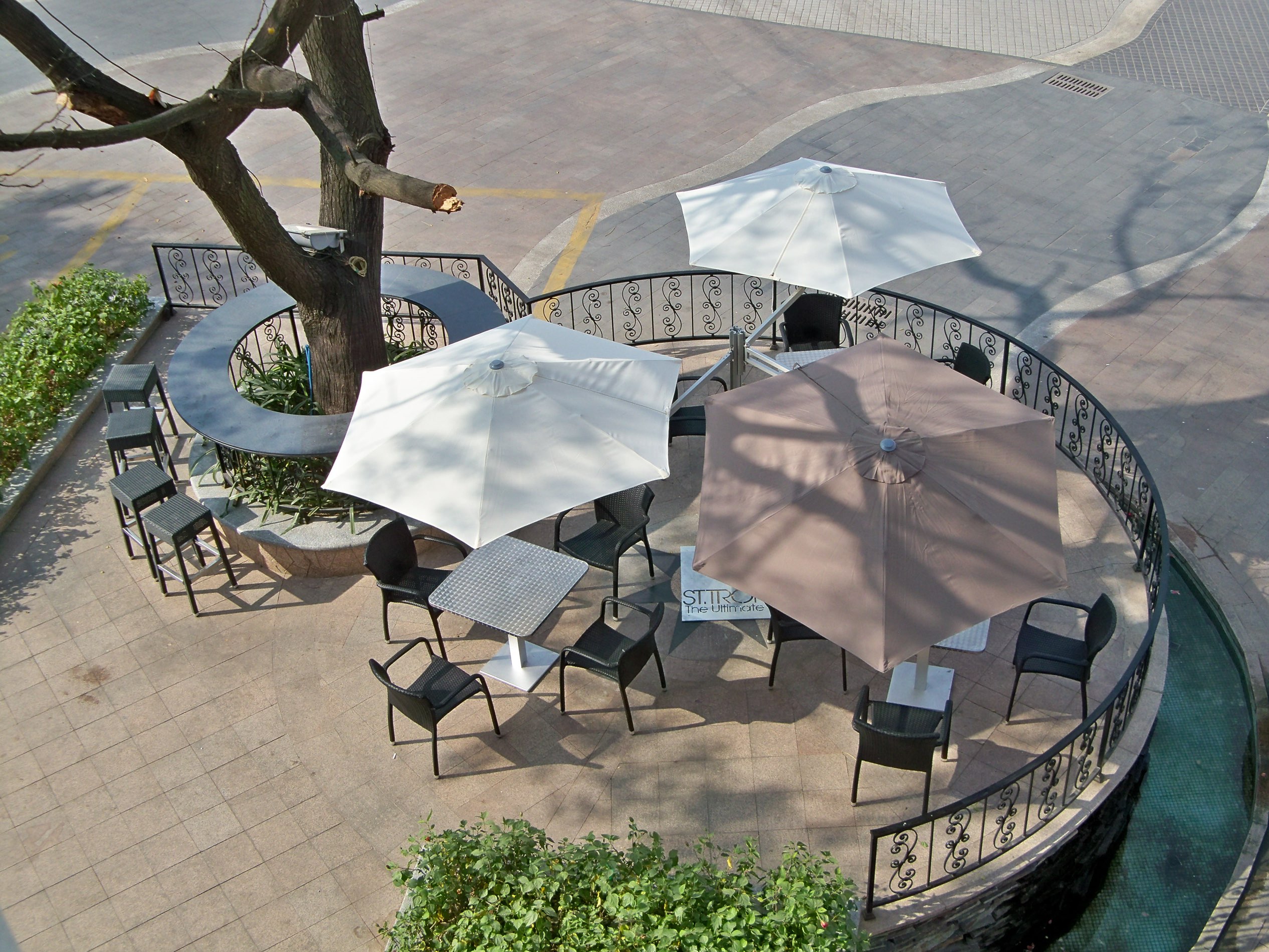
UM-01 pairs an aluminium frame with a waterproof polyester canopy and a fully customized size. Image: StarCanopy product documentation.
Two case records sit behind these models. A French outdoor umbrella OEM took 500 UM-01 units over a two-year programme and reported zero mass quality complaints across two years of all-season outdoor use, with easy set-up and resistance to breakage cited as the highlights. A French outdoor chair OEM took 1,000 C01 chairs over two years with the same result — zero mass quality complaints — citing portability, light weight and resistance to breakage. Both records describe programmes rather than single shipments, which is the more useful signal for a buyer planning a repeat order.
What acceptance actually looks like
Inspection before shipment is stated as 100% full inspection covering four items: air tightness, material tensile test, size verification and appearance check. Read against the product range, each item maps to a different risk.
Air tightness applies to the inflatable models, where a seam failure is the dominant defect mode and is invisible until the unit is inflated. The material tensile test covers both film and fabric, and is the check that surfaces a material substitution before it becomes a field complaint. Size verification covers the custom dimension the buyer specified — the single most common source of dispute in made-to-order work, whether the item is a shelter sized to a vehicle or a cover sized to a hull. Appearance check covers stitching, print registration and surface finish.
A buyer can convert this into a usable acceptance schedule by attaching the four items to specific models and adding any project-specific criterion, such as print colour against an approved sample. What the documentation does not provide is a published AQL level or a third-party test report, so a procurement team that requires either should raise it as an explicit requirement rather than assume it.
Procurement terms in plain numbers
The stated commercial terms are unusually low-friction: OEM production from buyer samples, drawings and specifications carries a minimum order of 1 unit, with a lead time of 1–2 weeks for small quantities. ODM programmes, where the buyer supplies only a concept, application scenario and performance standards, are stated at 7–30 days, with customization available to meet customer needs. Monthly capacity is stated as 1000 units for OEM and 1000 pcs for ODM.
The practical reading is that a single sample or a pilot batch is not a barrier, and that the binding constraint sits further upstream: at the quality of the specification the buyer supplies. A one-unit order is only as good as the drawing attached to it. For planning purposes, 1000 units per month is the ceiling stated for either mode, so a programme that scales beyond that needs a conversation about phasing rather than an assumption of unlimited throughput.
Custom-specified versus catalogue product: a fair comparison
Custom sourcing is not automatically the better choice. The honest distinction is about who carries the definition work and how much time that takes.
| Dimension | Catalogue / standard product | Custom-specified product |
|---|---|---|
| Who defines the specification | The supplier, through fixed SKUs | The buyer, with engineering support |
| Size | Whatever is in stock | Fully customized or customized, depending on model |
| Material choice | Fixed per item | Selected from stated options: TPU+PVC, polyester, PVC, PU coated polyester, aluminium, steel |
| Surface graphics | Limited or none | Full-colour digital custom printing documented for event and racing applications |
| Inspection | Supplier routine, rarely disclosed | 100% full inspection before shipment: air tightness, tensile test, size verification, appearance |
| Time to first delivery | Immediate where stock exists | 1–2 weeks for small-quantity OEM; 7–30 days for ODM |
| Main limitation | Cannot match a specific site, vehicle or hull | Requires the buyer to define material, size and use conditions before production |
The limitations deserve equal weight. Custom production moves the definition burden onto the buyer, and a buyer who cannot state a use condition, a dimension or a performance standard will slow the project down rather than speed it up. After-sales support is described as remote; no on-site service level is published. No price list is public, because unit price in made-to-order work is a function of material, size, print and quantity rather than a catalogue line. And no model in the range carries a protective-shelter rating: ICC-500 is identified as the current standard for tornado shelters in the United States, providing a means of determining quality and compliance with FEMA criteria, and a buyer with that requirement is specifying a different product class from a temporary event, vehicle or container shelter.
Application fit: four documented scenarios
Documented application records show how the specification logic plays out in the field, and where the buyer's own responsibilities sit.
| Scenario | Conditions stated | Models involved |
|---|---|---|
| RV camping and outdoor vehicle storage (Spain) | Outdoor use, strong UV radiation, 24/7 operation; RV, sedan, racing and off-road vehicles; client prepares the vehicle | CT-01 |
| Public advertisement and event base (US, Canada) | Outdoor event venue, strong UV, high temperature, temporary open-air layout, 24/7; pegs and rope, water bags, sand bags, lighting; full-colour digital printing for logo and graphic | ST-01, ITC01 |
| Outdoor sport and racing (US, Canada, France) | Outdoor venue, strong UV, high temperature, temporary open-air layout, 24/7; printed surfaces | ST-01, I-FB, C01 |
| Camping and leisure (France) | Open-air garden and public park, strong UV, wind and rain exposure, all-season use; anti-rust aluminium surface treatment; compatible with most RV and camping tent frames | CPPlK, ST-01 |
Two details in that table are easy to skip and expensive to miss. The RV camping scenario states that the client prepares the vehicle, which makes vehicle measurement a buyer-side deliverable rather than a supplier one. The event scenarios state the anchoring kit — pegs and rope, water bags, sand bags, lighting — as matched equipment, which means ballast and anchoring should be priced and shipped with the structure instead of sourced afterwards.
What the market data does and does not say
Directional demand signals are available and consistent in tone, provided each figure keeps its own scope label. The US outdoor recreation participant base reached 181.1 million people in 2024, equal to 58.6% of Americans aged six and older, per Ken Research. Sector public companies in outdoor recreation averaged 4.8% last-twelve-month revenue growth year over year in 2025, according to Capstone Partners. Global and US market forecasts sit in the mid-single-digit growth range.
What none of these sources provides is a custom-product breakout: there is no verified unit price band, MOQ benchmark or lead-time benchmark for custom umbrellas, yacht covers, inflatable arches or shelters in this dataset, and no supplier set of three comparable manufacturers against which to rank alternatives. A procurement team should treat the broad figures as demand context and build its own comparables from specification sheets, inspection routines and case records — which is exactly the material this article has laid out.
Outlook
Three shifts are visible in how custom outdoor products are being bought. First, the specification sheet is becoming the unit of negotiation rather than the product photo: buyers now ask for material, coating, frame alloy and inspection method in the first exchange, which is why a range organised around published parameters answers faster than one organised around catalogue imagery.
Second, acceptance criteria are moving into the purchase order. A stated 100% inspection covering air tightness, tensile testing, size verification and appearance is a usable starting point, but the next step for most buyers is attaching those items to named models and adding project-specific checks such as print colour against an approved sample.
Third, boundaries are being documented rather than implied. The clearest example is shelter classification: separating a temporary event or vehicle shelter from a storm shelter built to a protective standard is a distinction that protects both buyer and manufacturer. As the broader outdoor category continues to grow, the suppliers that remain easy to buy from will be the ones that state what their products do, what they are tested for, and what they are not.
FAQ
Which materials are specified for the inflatable products?
The inflatable cube (ITC01), the inflatable football goal (I-FB) and the inflatable container shelter (CS-01) are all specified in TPU+PVC. ITC01 also lists PVC in its product parameters, and CS-01 is additionally described as anti-UV. Sizes for all three are fully customizable.
Can sizes be changed from a standard dimension?
For most models, yes. ITC01, I-FB, CS-01, BS-01, ST-01 and UM-01 are listed as fully customizable in size, and CT-01 is listed as customized. Two exceptions in the current range are C01, a folding chair with a published dimension of 586 × 557 × 910 mm, and CPPlK, a caravan pole listed at 2 m in length.
What separates the ST-01 outdoor shelter from the CT-01 car shelter?
ST-01 is a framed structure: aluminium or steel with polyester fabric, stated as waterproof PU coated polyester, fully customizable, for outdoor sport and outdoor racing. CT-01 is stated as polyester fabric in a customized size for camping car use, with no frame material listed in its parameters. The specification difference is structural and coating-related, not only dimensional.
Is the BS-01 boat shelter waterproof, and which fabric does it use?
BS-01 is described as waterproof and is made of polyester or PVC fabric, with fully customizable size, for transportation and temporary shelter applications. Because two fabric options are stated, the fabric choice should be named explicitly in the purchase order rather than left to the production stage.
What are the specifications of the C01 folding outdoor chair?
C01 measures 586 × 557 × 910 mm. Its frame is aluminium with injected aluminium connection parts; the seat and back contain foam with anti-UV PU fabric; and it is supplied with a carry bag, with a strong PVC bag also listed in the specification. It is intended for outdoor and camping use.
How long is the CPPlK caravan pole and what is it made of?
CPPlK is made of aluminium and plastic and is listed at 2 m in length. It is intended for outdoor fishing and outdoor camping applications, and the related camping scenario notes anti-rust aluminium surface treatment and compatibility with most RV and camping tent frames.
What does the stated pre-shipment inspection cover?
Inspection before shipment is stated as 100% full inspection covering four items: air tightness, material tensile test, size verification and appearance check. Air tightness is the relevant check for inflatable models; the tensile test covers film and fabric; size verification covers the custom dimension the buyer specified; and the appearance check covers stitching, print and surface finish.
What MOQ and lead times are stated for OEM and ODM work?
For OEM production based on buyer samples, drawings and specifications, the stated MOQ is 1 unit and lead time is 1–2 weeks for small quantities. For ODM programmes, where the buyer supplies a concept, application scenario and performance standards, lead time is stated as 7–30 days, with customization available to meet customer needs. Monthly capacity is stated as 1000 units for OEM and 1000 pcs for ODM.
Can brand graphics be printed on shelters and inflatables?
Full-colour digital custom printing on the surface, for brand logo and graphic, is documented in the advertisement and outdoor sport application scenarios associated with ST-01, ITC01, I-FB and C01. Printing is therefore a project-level specification item to confirm per order rather than a default attribute of every model.
Are these products storm shelters?
No protective-shelter rating is stated for any model in this range. In the United States, ICC-500 is identified as the current available standard for tornado shelters, providing a means of determining quality and compliance with FEMA criteria. The outdoor, car, boat and container shelters described here are temporary, event and vehicle structures; a protective-shelter requirement should be specified as a separate product class.
What after-sales support is stated?
Remote support is the stated after-sales arrangement for both OEM and ODM production. No on-site service level or response-time commitment is described in the available documentation, so any such requirement should be raised during the inquiry stage.
Is there field evidence that the specifications hold in use?
Documented case records include 1,000 C01 chairs supplied to a French outdoor chair OEM over two years with zero mass quality complaints; 500 UM-01 umbrellas supplied to a French outdoor umbrella OEM over two years with the same result; 10 BS-01 boat shelter covers supplied to a client in China with no tearing or water seepage within the service cycle under humid waterfront conditions; two CS-01 container shelters delivered to a French client and reported as stable in operation over one year; and one I-FB goal supplied to a French sports event brand with no air leakage during long-term outdoor training.
Company reference material, including product and capability documentation, is available in the StarCanopy brochure: Starcanopy.pdf.
Tem questões ou precisa de mais detalhes?
Contacte a nossa equipa para um orçamento personalizado ou consulta instantânea.
Solicitar orçamento
Preencha o formulário abaixo e a nossa equipa entrará em contacto com uma proposta personalizada.
Chat direto do WhatsApp
Prefere conversar em tempo real? Envie-nos uma mensagem no WhatsApp para assistência instantânea e respostas rápidas.
- Obter orçamento personalizado
- Partilhar fotos ou documentos
- Discuta as suas necessidades diretamente
Geralmente responde em 5–30 minutos durante o horário de expediente.