
From Sample to Shipment: Custom Casual Apparel Capability Checks
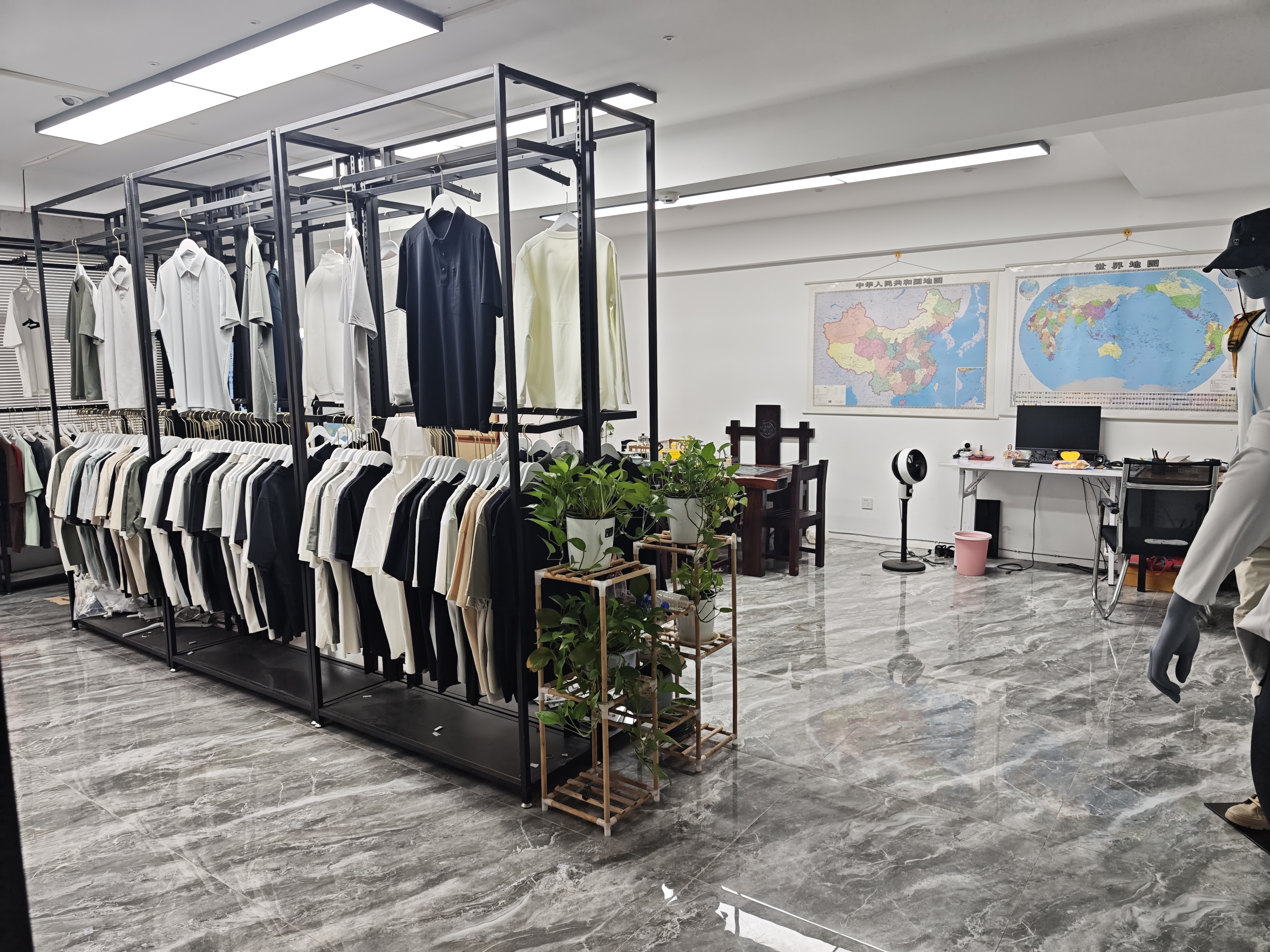
Lihongwear's factory showroom in Guangzhou, where blank and sample garments for custom casual apparel programs are displayed.
The global casual wear market is projected to grow from USD 645.22 billion in 2025 to USD 906.32 billion by 2034, while custom-made clothing is expanding at an estimated CAGR of 10.5% from 2026 (Fortune Business Insights; Proficient Market Insights). For brands, wholesalers and e-commerce operators, the practical consequence is a shift in sourcing priorities: the critical question is no longer whether to customize casual apparel, but which manufacturer can move a product concept into consistent, repeatable production. This article offers a capability-oriented framework for evaluating custom casual apparel manufacturers, using Guangzhou-based Lihongwear as a working example.
Why Sample Quality Is Not Enough
Most sourcing conversations begin with samples. A strong sample proves that a factory can sew one piece well; it does not prove that the factory can reproduce that quality across hundreds or thousands of pieces, hold a delivery date, manage fabric variation, or handle branding details such as printing, embroidery and labeling consistently.
Buyers who evaluate only samples often discover issues after bulk production starts: color differences between batches, shrinkage after the first wash, unstable sizing, or delays caused by fabric sourcing and capacity conflicts. These problems are not visible in a single sample. They are determined by the manufacturer's production system, order flexibility and quality-control process.
The same capability factors create an opportunity for buyers who verify them early. A manufacturer with a clear production model, explicit MOQ, documented quality standards and traceable production updates reduces the risk of a failed season. Industry signals support this view. OEKO-TEX issued more than 50,000 certificates between 2023 and 2024, an increase of 22%, reflecting growing attention to chemical safety in apparel supply chains. In casual wear, heavyweight hoodies of 350–420 GSM have become the baseline standard for premium streetwear, which means fabric specification is no longer a minor detail but a core purchasing criterion.
For buyers operating in the evaluation-to-execution stage, the assessment should be organized around five dimensions: production modes, customization coverage, order flexibility, quality control and fabric capability. The rest of this article applies these dimensions to a concrete manufacturer example.
Brand Solution: Lihongwear's Production Model at a Glance
Lihongwear is the manufacturing and trading brand of Guangzhou Lihong Apparel Trade Co., Ltd., based in Tianhe District, Guangzhou. The company operates a 5,000 m² factory with more than 150 employees and an annual output of roughly 500,000 pieces. It focuses on men's basic apparel—T-shirts, shirts, polo shirts, hoodies, jackets and pants—and exports approximately 80% of its production to Europe, America, Southeast Asia, the Middle East and Australia.
For custom casual apparel buyers, the relevant capability is a dual-mode system that combines spot wholesale with custom production. The manufacturer provides spot wholesale, OEM materials processing and ODM full-case design customization services. A buyer can start with ready-stock pieces to test demand, then move to a custom program once the market response is confirmed.
| Production Mode | What It Means for Buyers | Order Flexibility |
|---|---|---|
| Spot wholesale | Existing stock shipped directly; no waiting period for production | No minimum order; mixed styles supported |
| OEM materials processing | Buyer-specified materials or specifications produced by the factory | Custom orders from 200 pieces per style |
| ODM full-case design customization | Factory supports pattern development and full product customization | Custom orders from 200 pieces per style |
Customization services cover fabric weight, garment size, color, front and back printing, embroidery logo, hangtag, wash label and full packaging. These are the concrete touchpoints where a generic blank garment becomes a brand product.
Technical Explanation: Capability Dimensions in Detail
1. Production Modes and Their Technical Requirements
Spot wholesale works for buyers who need immediate inventory. Lihongwear keeps more than 200,000 pieces in ready stock, with a daily output of about 1,500 garments and a monthly capacity of 45,000 knitted or woven pieces. Spot goods ship within 3 days.
OEM materials processing suits buyers who already have fabric sources or clear technical specifications. The factory handles cutting, sewing, finishing and quality control. ODM full-case customization covers the entire development path: pattern making, grading, sample sewing, fabric selection and production. The in-house senior pattern maker team has over 10 years of experience, which matters when buyers need original fits rather than copied silhouettes.
For a buyer, understanding which mode a factory operates is a first filter: it determines whether the supplier can serve both launch testing and scale replenishment under one roof.
2. Customization Parameters and Branding Execution
Customization is not limited to changing a color. Lihongwear's service list includes:
- Fabric weight: affects drape, warmth and seasonal positioning.
- Garment size: the basic apparel line covers sizes XS to 5XL.
- Garment color: production can be matched to a brand color system.
- Front and back printing: screen printing, DTG digital direct injection and heat transfer are supported.
- Embroidery logo: suitable for chest logos, back designs and brand marks.
- Hangtag and wash label: brand identity at the item level.
- Full packaging: retail-ready presentation.
These parameters are the difference between a blank T-shirt and a marketable product. Because the factory handles both knitted and woven garments, buyers can develop a broader range of casual apparel styles through a single supplier.
Buyers should also confirm how the factory controls registration and color matching across bulk runs. These details affect brand consistency and are often where execution gaps appear after the sample stage.
3. Fabric System for Casual Apparel
Fabric selection is a core capability in custom casual apparel. Lihongwear's available materials include pure cotton, cotton-polyester blends, mountaineering cotton, polyester fiber, spandex, twill fabric and canvas.
For hoodies, the 1901 Series uses Mountain Cotton: 63.5% cotton and 36.5% polyester, with a 100% polyester lining, in a 360g construction that sits inside the heavyweight range referenced by the 350–420 GSM trend. For long sleeves, the 1701 and 1801 Series include a 280g High-Elastic Tech Blend made of 79.7% polyester and 20.3% spandex with four-way stretch, and a 100% polyester High-Elastic Smooth Polyester option. For T-shirts, series such as the 08 Series, 0606 Series, 0829 Series, Comfort Stretch Cotton Series and Roma Cotton Series offer grammages from 170g to 230g, with materials ranging from 100% combed cotton to Sorona (63.6% cotton, 36.4% polyester) and Starry Sky Cotton (87% nylon, 13% spandex).
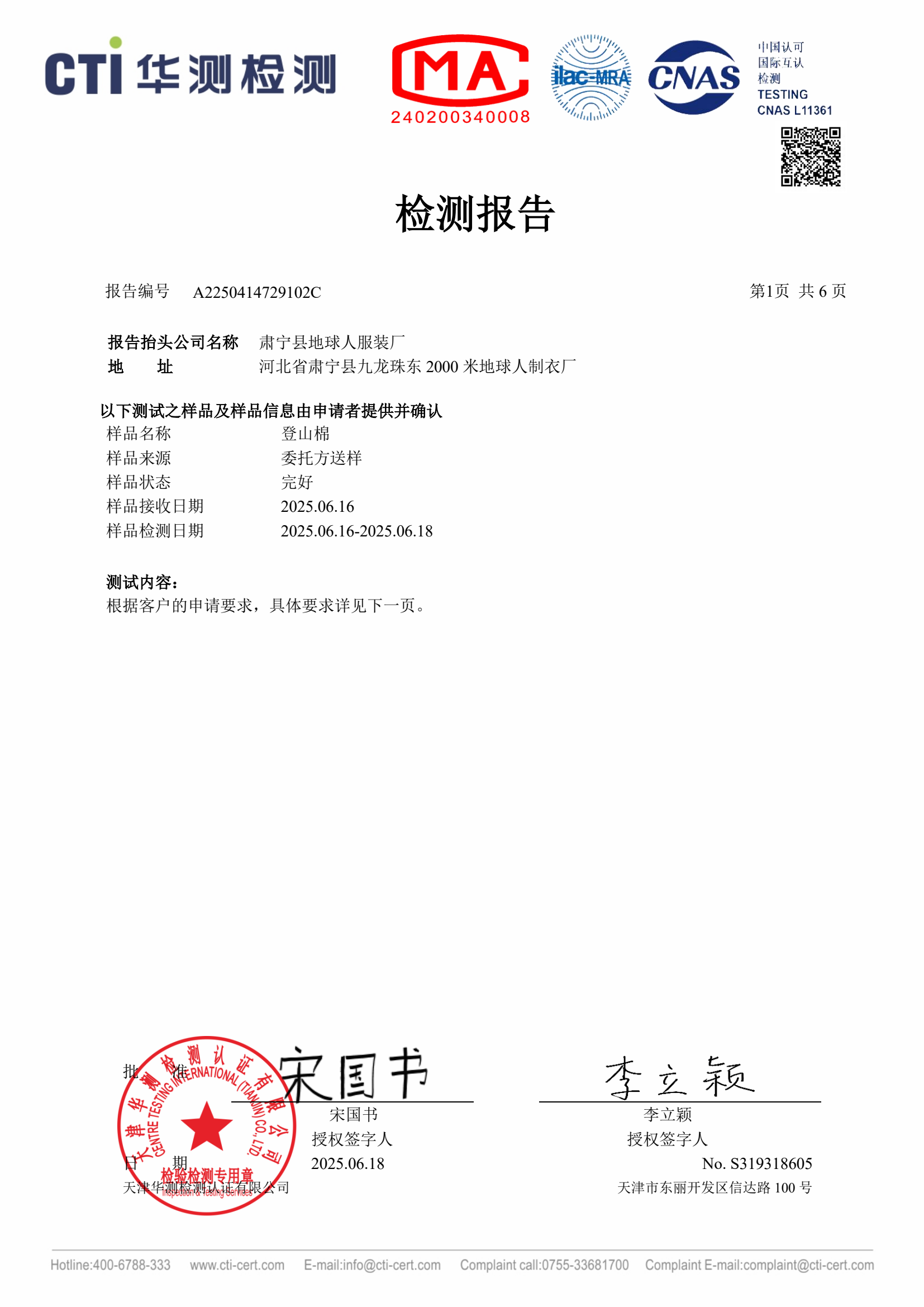
Mountain Cotton fabric specification for the 1901 Series 360g hoodie: 63.5% cotton, 36.5% polyester, with a 100% polyester lining.
4. Quality Control and Traceability
Quality control is where the most significant execution risk sits. Lihongwear applies a six-stage full-process inspection covering raw materials, in-process checks and finished products, and executes AQL international standards with a Level 7 quality control system. The factory performs 100% manual inspection before shipment, and third-party on-site inspection is accepted.
Textile safety is documented separately. The factory holds CTI textile safety test reports covering men's hoodies, long-sleeve shirts, T-shirts and other garment fabrics. The applied standard is GB 18401-2010 Category B, which addresses fiber composition, color fastness, formaldehyde content and decomposable aromatic amine dyes. Report numbers include A2250308141104CR1, A2250414729101C and A2250414729102C, issued by Centre Testing International Group (CTI Tianjin).
A buyer can request these report numbers as part of the verification process, because they provide an auditable reference rather than a self-declared claim. Production traceability is also supported through real-time synchronization of progress via video or photos.
Application / Use Cases: Where This Capability Matters
Lihongwear's order profile includes cross-border e-commerce sellers, overseas clothing wholesalers, local fashion brands and foreign trade sourcing agents. Order sizes range from spot replenishment of thousands of pieces to custom long-term repeat orders of tens of thousands of pieces. Applications include online store sales, offline supermarket retail, brand-exclusive series and corporate workwear.
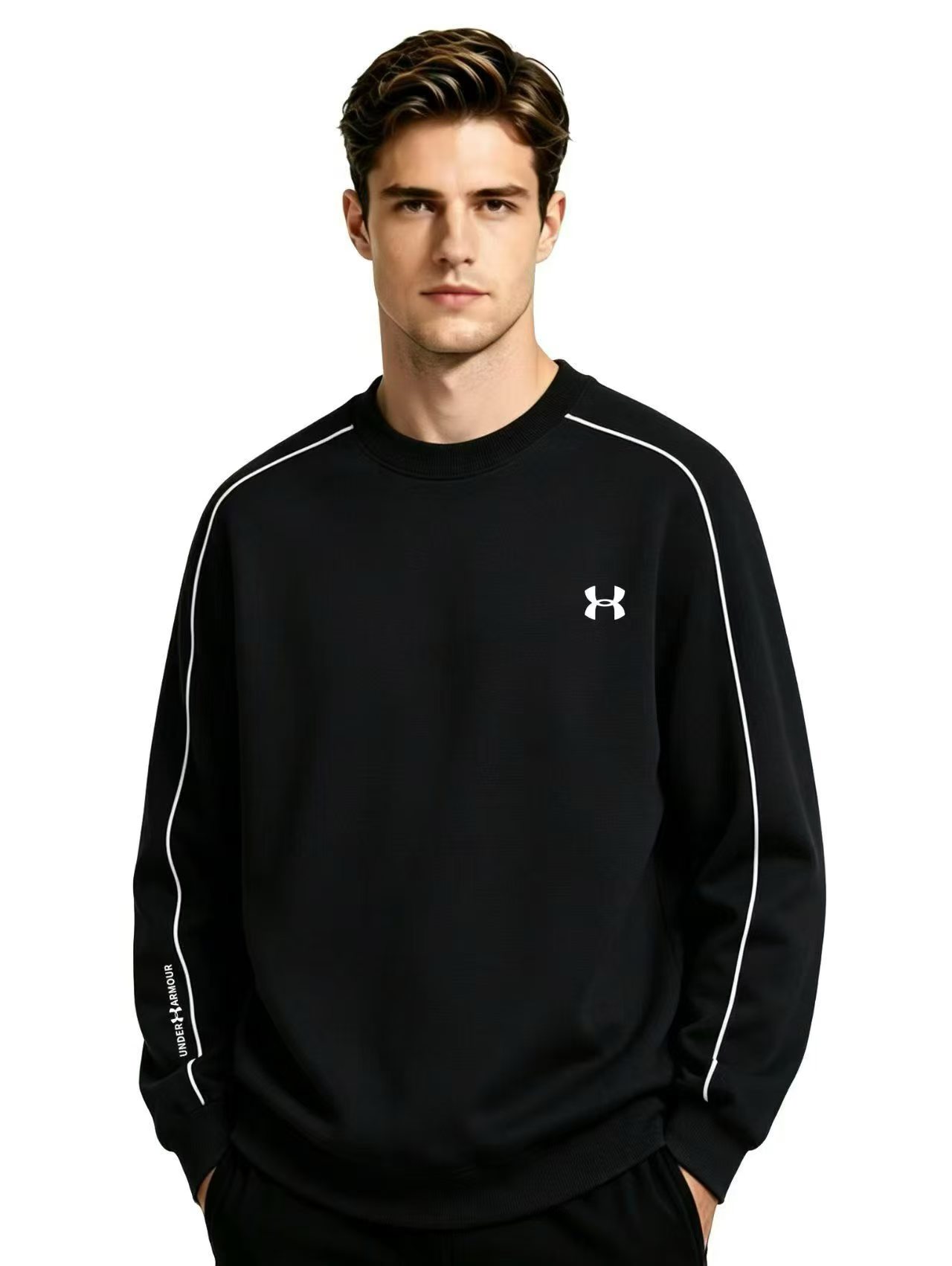
A custom crewneck sweatshirt with sleeve stripe detailing, produced through Lihongwear's custom casual apparel production line.
The stated outcomes of this model are measurable in sourcing terms: spot goods shorten the new product launch cycle, independent patterns create differentiated products, and standardized quality control reduces after-sales return rates. Cooperation with these buyer types typically extends to 5–10 years, which is an indicator of repeat-order stability in practical sourcing terms.
From a buyer's perspective, the combination of spot and custom modes solves a common operational problem: how to start a new market without over-committing inventory. The spot channel covers initial testing, and the custom channel supports the branded scale-up once sell-through data is available.
Market Trend Analysis
Several verified industry trends reinforce the capability-first approach to custom casual apparel sourcing:
- Casual wear demand continues to grow. Fortune Business Insights values the global casual wear market at USD 645.22 billion in 2025, with a projection of USD 906.32 billion by 2034.
- Custom clothing is expanding faster than the broader apparel market. Proficient Market Insights estimates the custom made clothes market will reach USD 213.1 billion by 2035, with a CAGR of 10.5% from 2026.
- The U.S. custom T-shirt printing market was valued at USD 857.5 million in 2023 and is projected to grow at a CAGR of 11.8% through 2030, according to Grand View Research.
- Product expectations are rising. Heavyweight hoodies in the 350–420 GSM range have become the baseline for premium streetwear, pushing buyers to check fabric weight and construction quality rather than design alone.
The rise in textile safety certification is directly relevant to casual apparel buying. GB 18401-2010 Category B, the standard applied in Lihongwear's CTI reports, is a China national standard covering basic textile safety. For global buyers, the practical point is to confirm which safety standard a factory's fabric testing covers, and to ask for report numbers rather than general claims of compliance.
The implication for procurement is that buyers are no longer choosing between blank and custom products. They are choosing how much production capability they need to build a differentiated casual apparel line with predictable quality and timing.
Comparison with Traditional Solutions
Traditional custom apparel sourcing often follows a single-mode, large-batch pattern: high MOQs, long production cycles and limited flexibility for testing new styles. The dual-mode model changes this decision logic.
| Decision Factor | Traditional Large-Batch Sourcing | Lihongwear Dual-Mode Model |
|---|---|---|
| MOQ | Often very high, tied to single large-batch runs | Spot: no minimum, mixed wholesale; custom: 200 pieces per style |
| Production mode | Single OEM bulk production | Spot wholesale + OEM + ODM |
| Lead time | Long cycle tied to large batches | Spot: 3 days; custom: 15–25 days from sample confirmation to bulk delivery |
| Quality control | Final inspection before shipment | Six-stage process + AQL Level 7 + CTI reports + 100% manual inspection |
| Risk profile | High inventory risk, slower iteration | Lower launch risk, testable via spot stock |
The choice is not necessarily one mode or the other. A practical sequence for many brands is: use spot goods to test multiple styles in small quantities, identify winners, then commit to a custom run of 200 pieces per style with brand-specific fabrics, labels and packaging. This lowers the risk of guessing wrong before committing production capital.
One boundary condition should be stated clearly. A 200-piece MOQ is designed for medium-batch testing, brand launches and repeat orders. It is not positioned to compete with very-large-scale, cost-minimized programs where a single style runs in the hundreds of thousands of pieces; in that scenario, a large-scale dedicated production line may offer a lower unit cost. Similarly, the 15–25 day custom lead time applies to standard development and production; complex multi-step branding or specially sourced fabrics can require more time. Buyers should confirm MOQ, lead time and fabric availability before product development begins.
Future Outlook
The direction of the casual apparel market points toward shorter product cycles, more frequent style updates and stronger compliance requirements. Manufacturers that combine spot availability with custom production give buyers a practical advantage: validate demand with stock, then scale with custom orders while maintaining quality standards.
Lihongwear's model—dual-mode production, documented quality control and real-time production updates via video or photo—matches this trajectory. The factory's monthly capacity of 45,000 pieces and standing stock of more than 200,000 pieces provide a buffer for both first orders and repeat replenishment. For buyers, the long-term value of a capable custom casual apparel manufacturer is not only unit price; it is the ability to move from sample to shipment with predictable quality and timing.
Execution capability will continue to be judged by three practical questions: can the factory deliver a brand-compliant product at the agreed quality, can it hold the agreed lead time, and can it communicate production status clearly enough for the buyer to manage downstream sales plans. Buyers who want to review the full product range and specifications before starting a project can access the manufacturer's product catalog directly: Product Catalog of Lihong Garment Factory (PDF).
FAQ
What production modes does Lihongwear offer for custom casual apparel?
Lihongwear provides spot wholesale, OEM materials processing and ODM full-case design customization production services. Spot wholesale is suitable for immediate inventory needs, while OEM and ODM support custom product development.
What customization services are available for casual apparel orders?
Customization services cover fabric weight, garment size, color, front and back printing, embroidery logo, hangtag, wash label and full set of packaging. These apply to custom casual wear orders including hoodies, T-shirts, long-sleeve tops and other men's basic apparel.
What is the minimum order quantity for custom casual apparel?
The minimum order quantity for custom orders is 200 pieces per style. For spot goods, there is no minimum order and mixed wholesale is supported.
What fabrics can be selected for custom casual apparel?
Available materials include pure cotton, cotton-polyester blend, mountaineering cotton, polyester fiber, spandex, twill fabric and canvas. Specific options include Mountain Cotton for 360g hoodies, High-Elastic Tech Blend (79.7% polyester and 20.3% spandex) for long sleeves, and several T-shirt fabrics from 170g to 230g.
What sizes are available for custom casual apparel?
The basic apparel line covers sizes XS to 5XL. Hoodies in the 1901 Series are available in M–3XL, long-sleeve shirts in the 1701 and 1801 Series in M–4XL, and T-shirts in M–4XL or M–3XL depending on the series.
What is the lead time for custom casual apparel orders?
Spot goods are shipped within 3 days. Custom orders take 15–25 days from sample confirmation to bulk order delivery, with production progress synchronized through video and photos.
What quality control standards does the manufacturer follow?
The factory applies a six-stage full-process quality inspection covering raw materials, processes and finished products, executing AQL international standards. Fabrics come with CTI test reports, and 100% manual inspection is conducted before shipment. Third-party on-site inspection is supported.
What branding and decoration methods can be applied?
Supported methods include screen printing, digital direct injection (DTG), embroidery and heat transfer logos. Customization also extends to hangtags, wash labels and full packaging.
What payment and delivery terms apply to custom orders?
The conventional term is 30% deposit, with the balance settled against a copy of the Bill of Lading. Delivery can be arranged as factory pickup EXW, FOB Guangzhou or Shenzhen, or CIF destination port. Inspection can be done by factory self-inspection, remote video inspection or third-party on-site sampling.
What customer types and markets does Lihongwear serve?
The manufacturer serves cross-border e-commerce sellers, overseas clothing wholesalers, overseas local fashion brands and foreign trade sourcing agents. Export markets include Europe, America, Southeast Asia, the Middle East and Australia.