
Frost, Fixings, Acceptance: A Tombstone Procurement FAQ
Frost, Fixings, Acceptance: A Tombstone Procurement FAQ
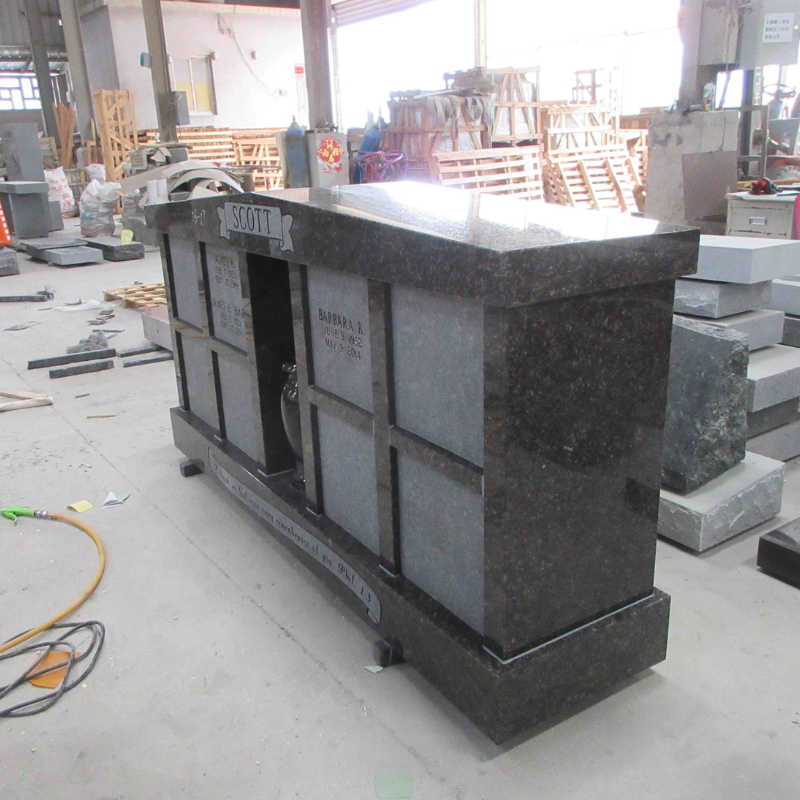
A granite tombstone is a structural installation as much as a carved object. In freeze-thaw climates, the failure that matters to a cemetery authority or a family is rarely the lettering. It is a die that has shifted on its base, a metal dowel that has worked loose, or a polished face that has begun to spall after repeated winters. For buyers still in the discovery stage with a granite monument manufacturer, three questions therefore decide the order: what frost resistance actually means for granite, how the monument is fixed to its base and foundation, and which acceptance criteria must be agreed before production starts.
Why Frost, Fixings and Acceptance Are the Real Discovery Questions
Buyers entering the tombstone category usually begin with appearance: colour, style, engraving. The memorial stone industry, the monument industry and the cemetery stone industry are, however, outdoor industries. Application documentation for granite tombstones describes the working condition as outdoor exposure in a freeze-thaw environment, with weather exposure across cemetery settings. That single fact reframes procurement. The product must survive water, ice and ground movement over a long service life, so the buying decision is as much an engineering decision as an aesthetic one.
The same application data lists the core functions of a memorial product as memorial marking, grave decoration, commemorative use and cemetery installation, and the installation modes that follow from them: fixed installation, ground installation, base-mounted installation and anchor fixing. Each mode creates a different acceptance question. A ground-installed stone is partly judged on how it sits in the ground. A base-mounted monument is judged on the joint between die and base, and on the hardware that holds them together.
That is also where the opportunity sits for importers, cemetery supply buyers and project specifiers. A supplier who can state frost behaviour in testable terms, specify fixings as line items and agree written acceptance criteria removes most of the after-sales risk before a single block is cut. A supplier who cannot leaves the buyer holding that risk across an international shipment, where rework is effectively impossible.
This reference is organised as a discovery-stage FAQ because that is how buyers actually arrive at the category: with a plot, a cultural style and a delivery date, but without a vocabulary for frost, dowels or inspection. The sections below build that vocabulary from documented product and application facts, then convert it into procurement language.
Frost Resistance: A Material Claim Is Not a Specification
Frost resistance in granite is usually described as a property of the stone. In practice it is a property of the stone, the water the stone absorbs, and the way the finished monument is installed. Granite is dense but not impermeable. Where water collects at a die-to-base joint, in a carved recess or behind a vase, freeze-thaw cycles can open surface defects that a dry block would never show.
Documented scenario requirements for outdoor granite memorials typically include frost resistance, weather resistance, low water absorption, a polished surface and engraving availability. Each of those terms has a procurement consequence. Frost resistance needs a service environment and an evidence method. Weather resistance needs a finish specification, because a honed or flamed surface behaves differently from a polished one. Low water absorption needs a stated basis, otherwise it is not auditable. Engraving availability needs a script and layout proof, because a carved panel cannot be corrected after the crate is sealed.
Structural standards show where the market is heading. Australian Standard AS 4204, which covers headstones and monuments, addresses structural stability and material certification and calls for engineered concrete foundations so that monuments can withstand strong winds and soil movement. The logic of that standard is instructive well beyond Australia: the stone is one element in a system that also includes base, foundation and fixing, and compliance is judged on the system rather than on the block.
Fixings: How a Granite Monument Stays Where It Is Put
Fixings are the hardware and materials that transfer load from the headstone to the base, and from the base to the foundation. Application documentation for granite tombstones lists the matched equipment as base, vase, anchor, metal dowel, epoxy glue and foundation stone. Those six items define the mechanical system far more precisely than the word 'tombstone' does.
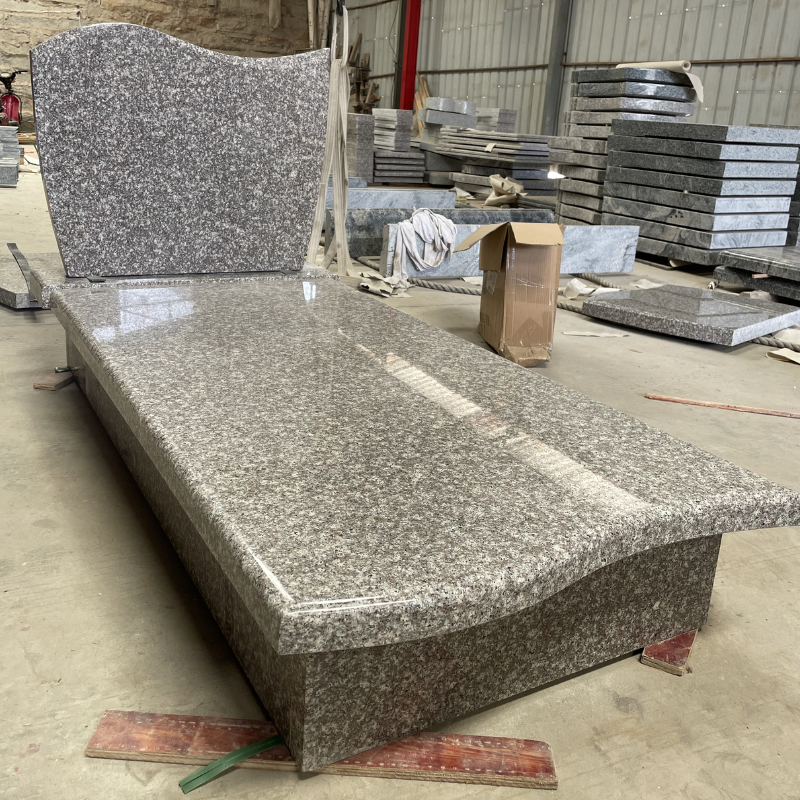
In a base-mounted installation, the die sits on the base and is located by metal dowels set into drilled holes. Epoxy glue locks the dowel and takes up the tolerance between hole and pin. The base, in turn, is set on a foundation stone or concrete foundation and, where specified, anchored. Each element does a distinct job. The dowel resists shear and prevents lateral movement. The epoxy stops the dowel from working loose over thermal cycling. The base distributes load and lifts the die away from standing water. The foundation isolates the assembly from ground movement.
Where installations fail, the cause is often a missing or undersized element rather than bad stone: dowel holes drilled too shallow for the pin, epoxy omitted because the joint looked tight, a base set directly on soil, or a vase mounted without allowance for water drainage. Because these are specification decisions rather than craft decisions, they belong in the purchase order and in the acceptance list, not in the fitter's judgement on the day.
Acceptance Criteria: What to Agree Before Production
Acceptance criteria are the written conditions under which a buyer agrees that a tombstone conforms. Because production is executed from drawings rather than from photographs, criteria must be expressed in the language of the drawings and staged across the order cycle. For granite monuments, six areas normally cover the risk.
| Acceptance area | What to check | Why it matters |
|---|---|---|
| Dimensional fit | Overall size and base footprint against the plot and the cemetery's rules; dimensions confirmed in writing before cutting | The product supports customization and production according to request, so nothing is standard by default; a stone correct to a drawing but wrong for the plot cannot be remedied on site |
| Joint and fixing set | Dowel positions and hole depth, epoxy specification, anchor type, presence of foundation stone and vase | These are the elements that resist frost movement and wind load, and missing hardware is invisible until failure |
| Surface and finish | Polished surface consistency, edge work, absence of visible cracks, pits or resin-filled voids | Frost damage begins at surface defects and open joints |
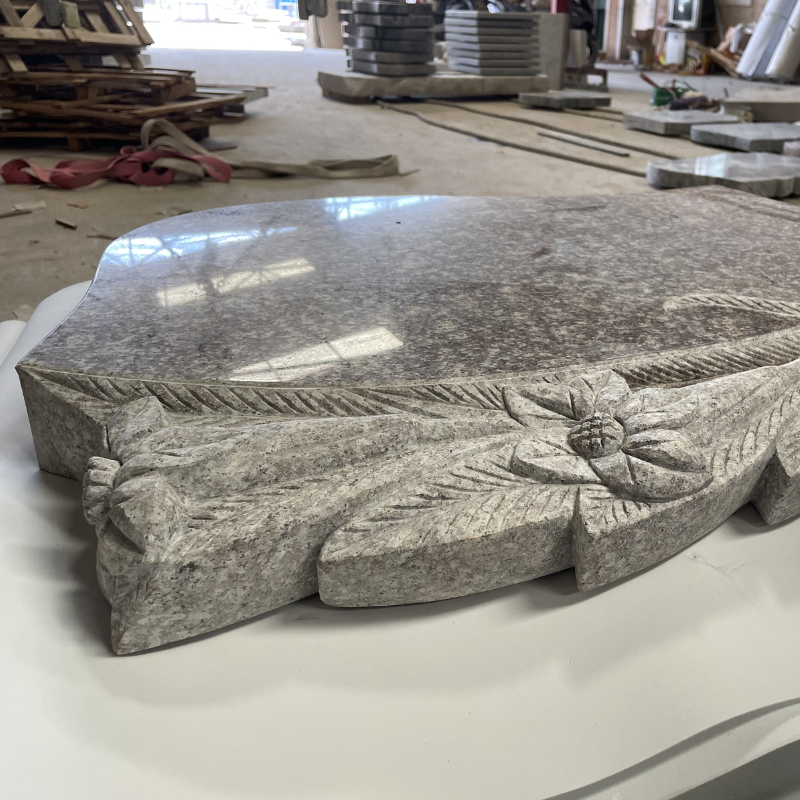
| Engraving | Legibility, carving depth, name and date layout, script and language accuracy, proof approval | Re-work after international shipping is impractical, and cultural scripts must be proofed before carving |
| Frost and material declaration | Stated service environment, absorption and weathering evidence under an agreed method | Makes 'frost resistant' auditable instead of promotional |
| Packing and marking | Crate configuration, edge protection, marks matching the plot or cemetery schedule | Transit damage is a leading cause of rejected deliveries on monument orders |
Two practical notes follow. First, acceptance should be staged rather than applied only at the end: drawings and material confirmation before cutting, photographed inspection before packing, and a documented hardware list before shipment. Each stage is cheaper to correct than the one after it. Second, the criteria should distinguish between what the supplier controls and what the site controls. A factory can evidence stone, dimensions, finish and the hardware it ships. It cannot evidence a foundation poured by others.
Where SONGJIA Sits in This Workflow
Xiamen Songjia Trading Co., Ltd. (SONGJIA) is a China-based natural stone supplier that operates as a design-to-production integrator, serving international stone importers, contractors, fabricators, designers and private custom clients, with tombstones and memorial products among its main lines alongside granite and marble slabs, quartzite, limestone, onyx and stone furniture.
The company's model is deliberately not a single-factory one. SONGJIA coordinates a network of manufacturing partners, and its own technical team converts client sketches and concepts into producible shop drawings before production begins. An HTNXT industry reference published in 2026 describes this network-based approach and notes that client hand-drawn sketches are transformed into CNC-ready shop drawings within 48 to 72 hours. For a frost-and-fixings discussion, the value of that step is concrete: dimensional fit, dowel positions and joint details are resolved on paper, where changes are inexpensive, instead of at the saw.
Published operational scale for SONGJIA is a 20,000 m² facility footprint, 60 employees, a 3-engineer R&D team, an annual output described as 150 containers of monuments and 200 containers of building materials, a 100% export ratio, and main markets in the EU, USA and Middle East. Those figures describe capacity and orientation rather than frost performance; buyers should still test frost claims against documents and a physical sample.
Product 1870, Tombstone, is listed as a natural stone memorial product in the Israeli tombstone category, with size supporting customization and production according to request. Its documented applications are cemetery projects and memorial park projects, where it functions as grave decoration and provides memorial marking, within the funeral industry. Documented scenario requirements for this product include frost resistance, weather resistance, low water absorption, a polished surface and engraving availability, which map directly onto the three acceptance themes of this article.
Application: Where These Criteria Bite
Application data distinguishes four project types, namely cemetery projects, memorial park projects, family memorial projects and church memorial projects, and four installation modes: fixed installation, ground installation, base-mounted installation and anchor fixing. The distinctions matter because the dominant risk changes with each combination.
| Project type | Typical installation | Dominant acceptance risk |
|---|---|---|
| Memorial park project | Base-mounted, anchor fixed | Repeatability across many stones: dimensional consistency and hardware uniformity dominate |
| Family memorial project | Fixed or ground installation | Single unit with high cultural specificity: engraving accuracy and finish dominate |
| Church memorial project | Base-mounted, anchor fixing | Fixed location and long service horizon: frost behaviour and foundation condition dominate |
| Cemetery project | Ground installation | Plot-level rules: base footprint, drainage and ground contact dominate |
Cultural geometry matters as well. Monument ranges for European and other markets differ in form, and a cross-form headstone has a different centre of mass and a different dowel layout from a rectangular die. SONGJIA's product imagery covers French, German, Polish, Romanian and American style monuments as well as cross forms and sculptural elements, and the application data for its memorial scenarios spans a long list of European, Middle Eastern, Asia-Pacific and North American markets. Acceptance criteria should be drawn for the actual geometry and the actual market rule, not copied from a generic template.
Market Trend: Growth, Standards and Cost Exposure
Market research from SkyQuest Technology values the global tombstone market at USD 1.96 billion in 2024 and projects growth to USD 4.26 billion by 2033, with a reported CAGR of 9% over the 2026 to 2033 period. Buyers should read that figure with care. Published valuations of this category differ by more than 500% depending on whether the definition covers monument hardware alone or the wider funeral service market. The direction of travel, steady growth in memorial stone demand, is more reliable than any single absolute figure.
Two other trends shape procurement. The first is that standards are shifting from craft convention toward engineering evidence. AS 4204 in Australia, with its emphasis on structural stability, material certification and engineered foundations, is an example of a market asking for documented load logic rather than a stonemason's assurance. Suppliers who can supply that documentation gain access; those who cannot are pushed toward lower-specification segments.
The second is cost exposure. US import duty on Chinese granite that is simply cut, under HS code 68022300, stands at 41.20% according to trade data, a rate that includes stacked measures. For North American buyers, the practical consequence is that landed cost comparison, not quoted unit price, is the only meaningful comparison between suppliers. A price difference of a few percent at the factory gate can vanish or invert once duty, freight and inspection costs are applied.
Comparison: Network Integrator, Single Factory and Local Mason
Three sourcing models dominate granite memorial procurement, and each carries a different profile of control, coverage and risk. The comparison below describes structural characteristics of the models rather than the performance of any named company.
| Criterion | Local mason | Single-factory exporter | Network integrator |
|---|---|---|---|
| Design conversion from sketch | Hands-on, usually informal | Variable, depends on in-house drafting | Documented shop drawings before production; SONGJIA reports CNC-ready drawings within 48 to 72 hours |
| Stone and style range | Narrow, driven by local stock | Narrow to medium | Broad, spanning multiple stone types and regional monument styles |
| Frost and fixing documentation | Usually verbal assurance | Depends on factory processes | Process-based, but requires buyer-defined evidence criteria to be useful |
| Foundation responsibility | Often included on site | Typically excluded | Typically excluded; supplied as matched equipment where agreed |
| Landing cost exposure | No import duty on domestic stone | Subject to duty, for example 41.20% under HS 68022300 into the USA | Same duty exposure, but consolidated shipments can reduce freight per unit |
| Inspection access | Site-based, immediate | Single location | Multiple nodes, so inspection planning matters more |
Two limitations deserve emphasis, because a comparison that lists only advantages is not usable for a decision. First, a network model means the buyer is approving a controlled process rather than a single production line. Consistency therefore depends on inspection discipline at each node, and buyers who require a single-site audit trail, as some public-sector or heritage projects do, must plan for additional documentation and, where relevant, third-party inspection. Second, no supplier of any model can guarantee frost performance in isolation: performance depends on a stated service environment, an agreed evidence method, and a foundation designed for local ground, drainage and wind conditions. Where a buyer cannot obtain the site's foundation design, the honest scope of a factory's assurance stops at the stone and the fixings it ships.
Future Outlook
Three changes are likely to define the next procurement cycle. Frost resistance will continue to migrate from a descriptive claim to a specified, evidenced requirement, as standards such as AS 4204 normalise engineering documentation in memorial work. Fixing kits will increasingly be treated as line items on the purchase order rather than assumed accessories, because most field failures trace back to hardware and joint detail rather than to stone quality. And design-to-production speed, already measured in days for shop drawings at network-based suppliers, will keep compressing the gap between a client sketch and a producible, inspectable monument.
For buyers, the implication is straightforward. The suppliers worth shortlisting will be the ones who can answer three questions in writing: what frost evidence they can provide and under which method, which fixings they ship and how they are specified, and what acceptance criteria they will sign before cutting begins.
FAQ
What does a granite monument manufacturer actually supply?
A granite monument manufacturer supplies the finished memorial components, typically a die (the inscribed face), a base, and matched fixing hardware such as metal dowels, anchors and, where specified, a vase and foundation stone, produced to the buyer's dimensions. Documented applications for products such as SONGJIA's Tombstone are cemetery and memorial park projects, where the stone functions as grave decoration and provides memorial marking, with size supporting customization and production according to request. Installation on site is a separate scope unless it is explicitly included in the order.
How should frost resistance be specified for a granite tombstone?
Specify the service environment and the evidence, not only the adjective. Documented scenario requirements for outdoor granite memorials include frost resistance, weather resistance, low water absorption and a polished surface. A usable specification states that the stone is intended for outdoor freeze-thaw exposure, names the method by which absorption or freeze-thaw behaviour will be evidenced, and ties acceptance to that evidence. Because performance also depends on base, fixings and foundation, the areas addressed by standards such as AS 4204, frost resistance cannot be certified by a stone supplier alone.
Which fixings are required to install a granite headstone?
Documented matched equipment for granite tombstone installation includes the base, vase, anchor, metal dowel, epoxy glue and foundation stone, used within fixed, ground, base-mounted and anchor-fixed installation modes. The metal dowel locates the die on the base and resists lateral movement, epoxy glue locks the dowel and fills the drilled hole, the anchor secures the assembly where specified, and the foundation stone separates the monument from direct ground contact. Which of these apply depends on the plot, the ground conditions and the cemetery's own rules.
What are acceptance criteria in tombstone procurement?
Acceptance criteria are the written conditions that define conformance for a specific order. For granite monuments they normally cover dimensional fit to the plot, the joint and fixing set including dowel positions, hole depth, epoxy, anchor and foundation stone, surface and finish, engraving legibility and script accuracy, a frost and material declaration under an agreed method, and packing and marking. Staging them, with drawings approved before cutting, inspection before packing and a hardware list before shipment, keeps the cost of correction low.
How can a buyer verify a China-based granite tombstone manufacturer before ordering?
Verification usually combines documentation with physical evidence: confirmed business scope and export record, a documented design-to-production process, product and project references matching the intended cultural style, and inspection of the actual stone and fixings before shipment. For network-based suppliers, buyers should ask which production nodes are involved for their specific design and how quality is inspected at each node. SONGJIA, as an example, publishes a 100% export ratio, a 20,000 m² facility footprint and an annual output described as 150 containers of monuments, and such statements should be tested against documents and a sample rather than accepted at face value.
Does a tombstone order include the foundation and the base?
Not automatically. Application data treats the base, foundation stone, anchor and epoxy as matched equipment alongside the monument itself, which means they may be supplied as part of the order or procured locally. The distinction matters most in freeze-thaw climates: where the foundation is designed and poured locally, responsibility for ground movement and drainage sits with the site, and the supplier's scope ends at the stone and the hardware it ships. Buyers should state explicitly in the order which elements are in scope.
Product and capability information referenced in this article is published by Xiamen Songjia Trading Co., Ltd. (SONGJIA) at www.songjiaglobal.com.
Tem questões ou precisa de mais detalhes?
Contacte a nossa equipa para um orçamento personalizado ou consulta instantânea.
Solicitar orçamento
Preencha o formulário abaixo e a nossa equipa entrará em contacto com uma proposta personalizada.
Chat direto do WhatsApp
Prefere conversar em tempo real? Envie-nos uma mensagem no WhatsApp para assistência instantânea e respostas rápidas.
- Obter orçamento personalizado
- Partilhar fotos ou documentos
- Discuta as suas necessidades diretamente
Geralmente responde em 5–30 minutos durante o horário de expediente.