
Frozen Cantonese Dim Sum: Market & Sourcing Reference
The global frozen Cantonese-style dim sum market is valued at USD 7.04 billion in 2025 and is projected to reach USD 11.99 billion by 2033, according to commercial market research. Frozen dim sum has moved from a regional teahouse specialty to a structured international food category spanning steamed buns, dumplings, cakes, fried snacks and banquet-grade dishes. For importers, restaurant suppliers, foodservice operators and retailers, buying Cantonese dim sum now requires evaluating product specifications, cold-chain conditions, shelf life and supplier capability — not just taste.
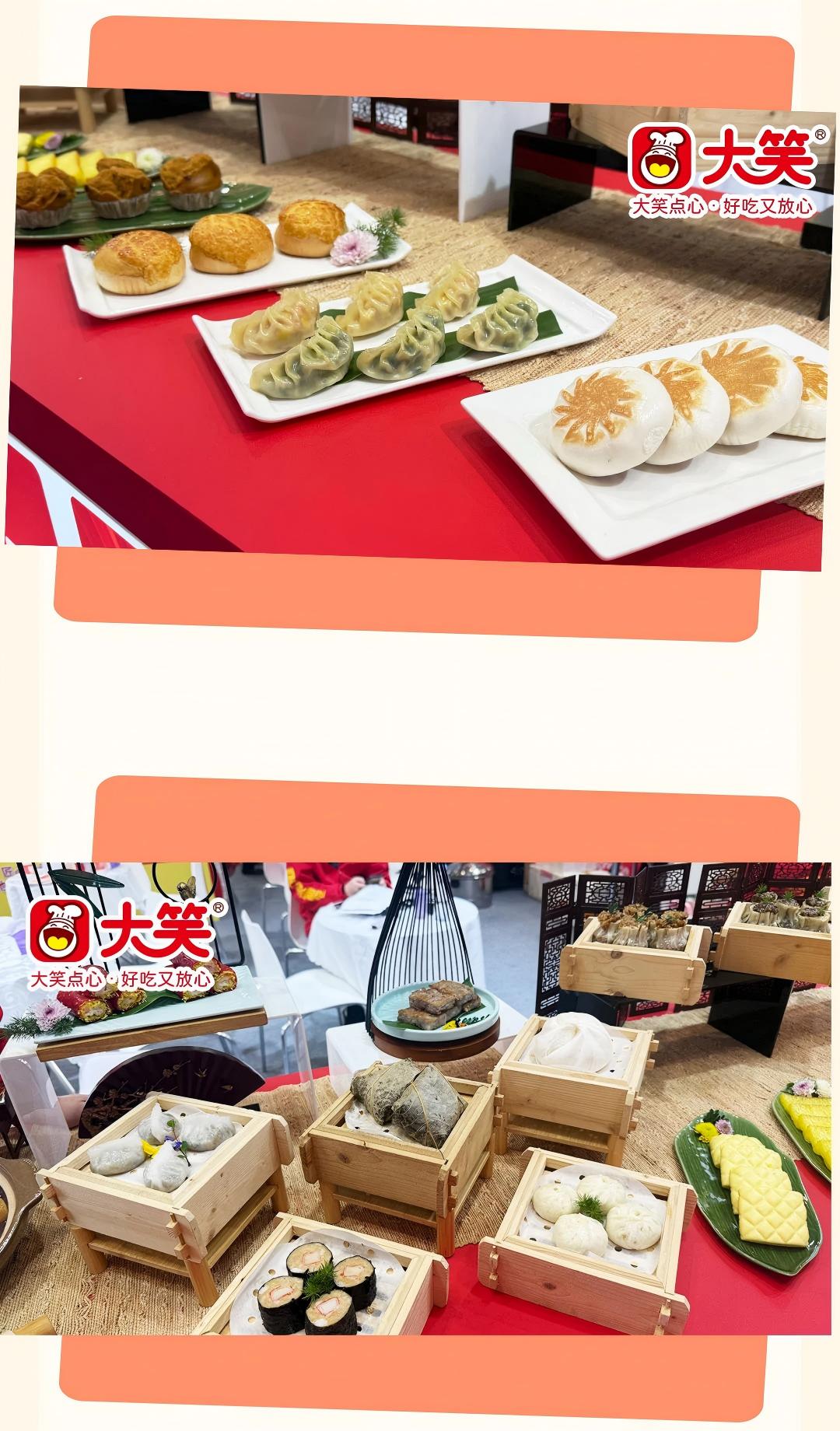
Cantonese dim sum in a restaurant setting — the core demand scenario for frozen dim sum buyers.
From Teahouse Staple to Global Food Category
Cantonese dim sum covers a wide family of foods: steamed buns such as char siu bao and lava custard buns; dumplings including shrimp dumplings and shrimp siu mai; steamed cakes such as water chestnut cake, millet cake and coconut golden cake; fried items like Hong Kong style spring rolls, milk rolls, green tea Buddha cake and taro pie; plus substantial dishes such as chicken with glutinous rice, Buddha Jumps Over The Wall and buddha's delight. Historically, these foods belonged to the yum cha culture of teahouses, where skilled chefs prepared items fresh and served them from bamboo steamers. Industrial frozen production has turned that culture into a tradeable category that supports all-day service without relying on specialist kitchen labor.
The shift is not driven by taste alone. China accounted for 46% of global frozen dumpling production volume in 2025, according to Business Research Insights, indicating the scale of factory-based production behind dumpling and dim sum categories. At the same time, regulatory signals are emerging around authenticity. Guangzhou introduced regulations effective May 1, 2026, requiring restaurants to clearly label whether dim sum is handmade on-site or produced by central kitchens or pre-made production, as reported by Tridge and the Guangzhou local government. This regulation is a practical indicator for buyers: the market is maturing to require transparency in how dim sum is made and supplied.
Core Product Categories Buyers Should Know
Understanding the product structure of Cantonese dim sum helps buyers define their mix. The category can be broadly grouped into steamed items, steamed cakes, fried items, banquet dishes and semi-finished ingredients.
Steamed Buns and Dumplings
These are the volume drivers of most dim sum menus. Char siu bao, filled with honey-glazed barbecued pork, is packed in 480 g (4 pieces) or 720 g (6 pieces) formats and steamed for about 10 minutes. Shrimp dumplings, known for their translucent, chewy wrapper and whole shrimp filling, come in 270 g (9 pieces) packs and steam in 7 to 8 minutes. Shrimp siu mai shares a similar 270 g (9 pieces) format and is steamed for 12 minutes. The lava custard bun, made with egg and a smooth salted egg yolk filling, is offered as 480 g (12 pieces) per bag and steams in about 8 minutes. Chicken with glutinous rice, wrapped in lotus leaves, is available in 720 g and 900 g formats and requires 20 to 25 minutes of steaming.
Steamed Cakes and Sweet Pastries
Steamed cakes provide menu differentiation. The water chestnut cake is made with coconut milk and water chestnuts, producing translucent layers with a soft, chewy texture; it is packed at 500 g per bag and steamed for 6 to 8 minutes. The millet cake is a whole-grain option at 280 g per bag, served steamed or pan-fried for 7 to 8 minutes. The coconut golden cake, made from coconut juice and flour, is packed at 300 g per bag and can be steamed or pan-fried for 6 to 8 minutes. The steamed black sesame kuih, made with black sesame, has a distinct layered look and a coconut-sweet aroma.
Fried Dim Sum
Fried items require precise oil temperature control. Hong Kong style spring rolls — filled with pork, shiitake mushrooms and mung beans — are packed as 216 g (12 pieces) per bag and fried at 150°C to 160°C for 3 to 4 minutes. Milk rolls (Shunde-style crispy milk) use a milk-based filling and are fried at a similar temperature. Green tea Buddha cake, made of taro, green tea and glutinous rice flour, is fried at 165°C for about 4 minutes. Taro pie is fried at 150°C to 160°C for 3 to 4 minutes after being packed as 336 g (12 pieces) per bag.
Banquet Dishes and Specialties
Premium prepared dishes are part of the frozen dim sum category. Buddha Jumps Over The Wall, also known as Luxury Soup, contains abalone, sea cucumber, duck feet, lotus root, shrimp, shiitake mushrooms, king oyster mushrooms, scallops, pork tendons, fish balls, Jinhua ham and fish maw. It is available in 1.5 kg, 2.25 kg and 3.5 kg sizes, with a shelf life of one year when frozen below -18°C. Buddha's delight, or vegetarian Lo Han Jai, is a purely vegan dish made with shiitake mushrooms, wood ear mushrooms, dried bean curd sticks, oyster mushrooms, fried tofu and king oyster mushrooms; it is packed at 400 g per box.
Ingredients and Semi-Finished Materials
Beyond finished dim sum, kataifi pastry is supplied as an ingredient: 1 kg per bag, 12 bags per box. It is used by baking and dessert factories, restaurants, frozen food factories and food wholesale traders. This product expands the purchasing conversation from ready-to-eat dim sum to production inputs.
Evaluating the Supply Side: Foshan Shunde Yuexiang Food
Foshan Shunde Yuexiang Food Manufacturing Co., Ltd. is one established manufacturer supplying the frozen Cantonese dim sum market. The company is based in Shunde, Foshan, Guangdong Province — a district recognized by UNESCO as a City of Gastronomy. It was founded in 1981 and operates under the Da Xiao (Laughing) brand, producing more than 300 items across five major product series.
- Factory area: 20,000 m²
- Employees: approximately 200
- R&D team: more than 30 engineers
- Annual production capacity: 6,000,000 units
- Certifications: ISO9001, HACCP, FDA
- Export share: about 40% of total sales
- Export markets: Southeast Asia, Europe, North America; products reach 20+ countries including the USA, Canada, Australia and EU countries
- Recognition: “Foshan Time-Honored Brand” and National High-Tech Enterprise
The company also established a second production enterprise, Foshan Shunde Hongyuan Food Co., Ltd., in 2019. That facility is described as a modern food enterprise integrating R&D, production and sales, focusing on quick-frozen prepared food, quick-frozen noodle rice food and steamed pastries. For international buyers, the presence of a second production base and a dedicated R&D center indicates capacity for product development and scale.
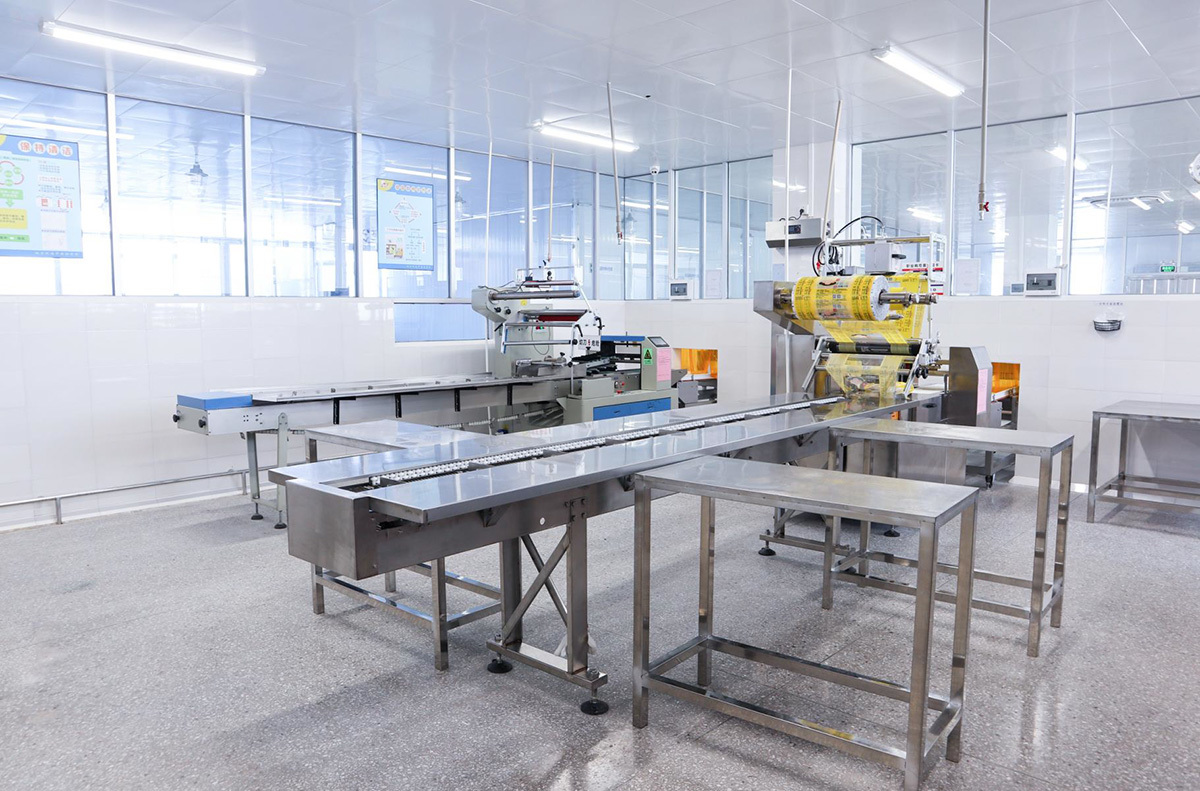
Automated packaging operations help maintain consistent output and food safety standards in frozen dim sum manufacturing.
Frozen Dim Sum Operations: Storage, Cooking and Specifications
Frozen dim sum requires strict temperature discipline. The standard working condition across products is frozen storage at or below -18°C. Cold-chain management matters because temperature fluctuation causes product quality issues: steamed buns may crack when exposed to improper temperatures, and fried items lose crispness when moisture migrates. Steamed buns generally offer a 12-month frozen shelf life, while most steamed cakes carry a 6-month frozen shelf life. This difference affects inventory planning.
Cooking methods are standardized for foodservice use. Most steamed products are placed directly into a steamer without thawing. The table below summarizes representative formats and preparation parameters drawn from product specifications:
| Category | Product | Pack Format | Preparation |
|---|---|---|---|
| Steamed dumpling | Shrimp dumplings | 270 g (9 pieces)/pack | Steam 7–8 min |
| Steamed dumpling | Shrimp siu mai | 270 g (9 pieces)/pack | Steam 12 min |
| Steamed bun | Char siu bao | 480 g (4) or 720 g (6)/bag | Steam 10 min |
| Steamed bun | Lava custard bun | 480 g (12)/bag | Steam 8 min |
| Steamed rice | Chicken with glutinous rice | 720 g or 900 g/bag | Steam 20–25 min |
| Steamed cake | Water chestnut cake | 500 g/bag | Steam 6–8 min |
| Steamed cake | Millet cake | 280 g/bag | Steam or pan-fry 7–8 min |
| Steamed cake | Coconut golden cake | 300 g/bag | Steam or pan-fry 6–8 min |
| Fried item | Hong Kong style spring rolls | 216 g (12)/bag | Fry at 150–160°C, 3–4 min |
| Fried item | Milk rolls | 280 g (10)/bag | Fry at 150–160°C, 3–4 min |
| Fried item | Green tea Buddha cake | 336 g (12)/bag | Fry at 165°C, 4 min |
| Banquet dish | Buddha Jumps Over The Wall | 1.5 kg / 2.25 kg / 3.5 kg | Heat and serve |
Equipment requirements typically include freezers, steamers and refrigerated transport vehicles. Because frozen buns should be stored at or below -18°C throughout the process, buyers need to verify cold-chain continuity from warehouse to final use point.
Who Buys Frozen Dim Sum: Seven Demand Channels
Frozen dim sum serves multiple purchasing groups. In the restaurant sector, the product fits fast food breakfast shops, tourist area snack businesses and late-night food stalls. In hotels and tourism, it applies to star-rated hotels, guesthouses, resorts and camping sites. Retail channels include supermarkets, community fresh food stores and convenience stores. Catering services cover schools, factories, office buildings, hospitals, nursing homes and government canteens. Transportation hubs — airports, high-speed rail stations, highway service areas, and vehicle or ship catering — are also relevant buyers. Trade and foreign trade channels include food supply chain wholesalers, overseas Chinese restaurants and Chinese supermarkets. Gift applications include food OEM manufacturers, New Year gift box vendors and banquets.

In-house testing and quality control are central to frozen dim sum manufacturing.
Frozen vs. Handmade Dim Sum: Limitations and Boundaries
A balanced sourcing view requires acknowledging what frozen dim sum cannot do. Handmade dim sum retains certain advantages in premium teahouse and fine-dining settings, where the theatrical and sensory value of freshly prepared bamboo-steamer service is part of the product. Frozen dim sum cannot fully replicate that on-site experience.
Regulatory disclosure is another boundary. In Guangzhou, restaurants are now required to clearly indicate whether dim sum is handmade on-site or produced by central kitchens or pre-made production. Operators in regulated cities must consider their menu positioning accordingly. There are also technical constraints: fried items depend on precise oil temperature, steamed cakes have a shorter frozen shelf life than steamed buns, and improper thawing changes texture and taste.
| Dimension | Frozen Industrial Dim Sum | Handmade Dim Sum |
|---|---|---|
| Output consistency | Uniform taste, size and quality; consistent supply | Depends on chef skill and day-to-day variation |
| Labor requirement | Heating and steaming only | Specialist pastry chefs required |
| Shelf life | Steamed buns: 12 months; steamed cakes: about 6 months | Usually consumed within a day |
| Dining experience | Practical service; limited ceremony | Full teahouse presentation and live-steamer theater |
| Disclosure | Labeled as central-kitchen or pre-made in regulated cities | Can be labeled as handmade on-site |
| Inventory flexibility | High with frozen storage; requires cold-chain discipline | Daily fresh preparation; higher immediate waste risk |
For most foodservice operators, the practical decision is not either-or but hybrid. Frozen buns and dumplings supply base volume with stable quality, while a limited range of handmade or higher-specification items can support premium positioning where the operation can afford skilled labor.
Market Trends and Sourcing Signals
Several verifiable signals point to continued maturation of the frozen dim sum category.
First, the market scale is expanding. The global frozen Cantonese-style dim sum market was valued at USD 7.04 billion in 2025 and is projected to reach USD 11.99 billion by 2033, according to a commercial research report from Data Insights Reports / Research Insights. Growth of this magnitude implies expanding cold-chain infrastructure, more retail SKU allocations, and deeper foodservice adoption.
Second, production is concentrated in China. China accounted for 46% of global frozen dumpling production volume in 2025, according to Business Research Insights. This concentration makes Chinese manufacturers central to the global supply chain for dumplings and related dim sum items.
Third, trade classification is well established. Frozen dim sum is commonly exported under HS Code 1902200000 (stuffed pasta) and 1902309000 (other pasta), according to customs data cited by Zauba. Clear tariff codes reduce friction for importers and enable consistent cross-border purchasing.
Fourth, transparency regulation is emerging. The Guangzhou rule requiring clear labeling of handmade versus central-kitchen dim sum suggests that provenance and production method are becoming part of the buyer evaluation process. This may raise demand for suppliers that can document their production processes, certifications and traceability.
On the company level, Foshan Shunde Yuexiang Food reports that about 40% of its sales come from export markets, with distribution reaching more than 20 countries. The product range includes traditional staples and newer profiles such as durian crisps, green tea Buddha cake and sesame balls, indicating that suppliers are expanding beyond the classic dim sum canon to serve evolving consumer preferences.
Future Outlook
As frozen Cantonese dim sum becomes a more structured global category, sourcing decisions will likely place greater weight on traceability, certification, cold-chain reliability and product documentation. Suppliers that maintain dedicated R&D teams and modern production facilities are better positioned to adapt to regulatory changes and shifting consumer preferences.
The distinction between handmade and industrialized dim sum will not disappear. Instead, both segments will become more clearly defined. Handmade positioning will serve premium and culturally authentic experiences. Industrial frozen production will continue to support scale, consistency and accessibility across international markets.
Buyers should also watch product-level innovation from established manufacturers. The availability of items such as golden cone durian crisp, green tea Buddha cake, black sesame kuih and kataifi pastry suggests that the category is broadening beyond traditional steamed buns and dumplings into cross-cultural dessert and snack applications. This expansion gives importers and distributors more flexibility in building regional menus.
For purchasers at the awareness-to-research stage, the practical takeaway is to evaluate suppliers on four dimensions: certified production capability, documented cold-chain handling, product mix breadth, and reproducibility of preparation results. These factors determine whether frozen dim sum can deliver both operational efficiency and customer satisfaction.
FAQ
Which should I choose: Cantonese steamed buns or pastries?
Option 1 — Prioritize steamed buns. Buns are essential for satisfying hunger, have a broad customer base and stable repurchase rates. Their longer frozen shelf life (12 months) makes inventory turnover more flexible. Fillings like custard buns and char siu buns are strong selling points. This option fits breakfast shops, group catering, convenience stores, casual teahouses and export-oriented customers focused on volume.
Option 2 — Prioritize steamed cakes (water chestnut cake, black sesame kuih, etc.). Steamed cakes create differentiated competition because most competitors have weaker pastry categories. They are light, refreshing and suitable for tea pairing, with high visual appeal that enhances menu prestige. This works for mid-to-high-end teahouses, afternoon tea service, banquet tea breaks and businesses wanting signature items.
Option 3 — Combination approach. Steamed buns stabilize basic sales while steamed cakes create a unique selling point. The categories complement each other and cover customer traffic throughout the day. This is recommended for newly opened teahouses, frozen food wholesalers, online retailers and export customers purchasing across categories.
What are the core differences between steamed buns and steamed cakes in sales positioning?
Steamed buns act as staple food, with large consumption volume and stable repurchases. They serve the core meal function. Steamed cakes function as featured snacks, suited for afternoon tea and higher-end dining scenarios. In menu planning, buns provide volume and cakes provide differentiation.
Are there differences in shelf life between buns and steamed cakes?
Yes. Steamed buns generally have a 12-month frozen shelf life, while most steamed cakes and steamed puddings have a 6-month frozen shelf life. This difference affects ordering cycles, inventory levels and storage planning.
Which option brings lower inventory risk for new merchants?
Starting with steamed buns provides stable base sales and lower risk, because of the longer shelf life and predictable repurchase demand. Adding a small batch of steamed pastries to test market response is the recommended next step before expanding the pastry category. This approach reduces near-expiry losses while allowing menu experimentation.