
Fruit Cups: Certification Scope and Pack Format Constraints
Fruit Cups: Certification Scope and Pack Format Constraints
Fruit cups are a packaging format inside the Canned Fruits & Vegetables category, and their compliance status depends on three variables that a supplier's overall certificate list rarely clarifies: the fruit item, the pack format, and the destination market. For importers and retail buyers in the research and evaluation stage, that mapping — not the product concept — decides whether a fruit cup programme can be shipped, stored and cleared.
The global canned fruit and vegetable market was valued at USD 105.35 billion in 2024, and China's export value of fruit and vegetable canned products reached US$3.859 billion in the same year. Within that volume, fruit cups — sealed, heat-sterilized portions of fruit, fruit cocktail or applesauce — sit alongside tin cans and glass jars as one of several accepted retail and foodservice formats. This article examines what a fruit cup programme actually requires from a supplier: which certificates name the format, which name only the fruit, what the technical basis for a 36-month ambient shelf life is, and where the format stops being the right choice.
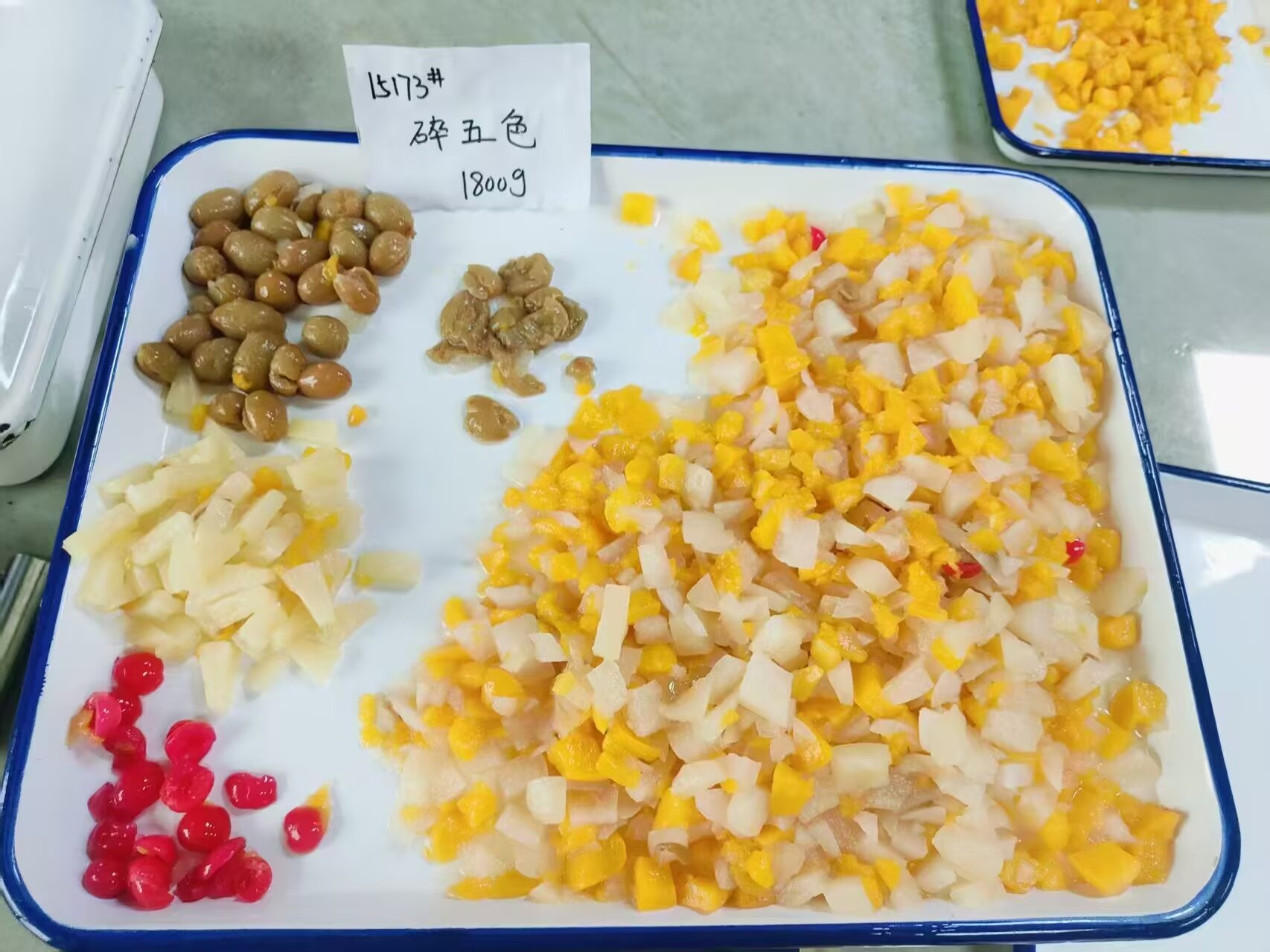
Fruit cocktail is one of the fills commonly used in single-serve and foodservice fruit cups; the format is defined by the sealed cup, not by the fruit alone.
What Counts as a Fruit Cup in the Canned Fruit and Vegetable Category
A fruit cup is a sealed, heat-sterilized portion of fruit or fruit-based product filled into a cup rather than a tin can or glass jar. It belongs to the same commercial family as canned mandarin oranges, canned pineapple, canned yellow peach, canned pear, canned fruit jelly, canned fruit cocktail, canned cherries, canned applesauce and canned lychee, and it moves through the same channels: food and beverage wholesale, catering, supermarket retail and food processing.
The format is not a cosmetic variation of a tin. It is a separately auditable packing line, and it appears that way in certification language. The BRCGS certified scope for the Agrogentra canned fruit and canned vegetable range names the formats explicitly: washing, peeling, pre-cooking, filling, seaming and pasteurization of canned fruit — including peach, apple, pear, pineapple, orange and mixed fruits — and canned apple sauce in tin can, plastic cups and plastic bags. Cups and bags sit beside tin cans in that sentence, so a buyer evaluating a cup programme has auditable language to quote when writing a specification.
Published product specifications for the range list net weights of 425 g and 2950 g, A9 and A10 can styles, a light syrup packing medium, a 36-month shelf life under normal temperature, and full sterilization with no preservatives. The declared application scope is food and beverage wholesale, catering, supermarket retail and food processing.
The Core Constraint: Certification Scope Is Item-, Format- and Market-Specific
The most common procurement error in this category is treating a supplier's certificate list as a single blanket approval. Food safety and regulatory certificates are issued with a named scope, and that scope is written in terms of specific products, specific processes, specific pack formats and specific markets. Where the scope language does not name the buyer's item, the buyer has a documentation gap — even if the supplier's overall range is certified and the product itself is well made.
| Certificate / Registration | Reference Number | Issuing Authority | Scope language relevant to fruit cups | Market |
|---|---|---|---|---|
| FDA Food Facility Registration | 18082639404 | U.S. FDA | Lists fruit cups among covered items; Category 17 Fruit & Fruit Products only; excludes fish cans | USA, valid 2024-10-09 to 2026-12-31 |
| BRCGS Food Safety Certification | 05LA1209004 | Intertek Certification Limited | Canned fruit (peach, apple, pear, pineapple, orange, mixed fruits) and canned apple sauce in tin can, plastic cups and plastic bags; washing, peeling, pre-cooking, filling, seaming, pasteurization | Global, issued 2025-10-05, expires 2026-12-02 |
| ISO 22000:2018 Food Safety Management System | CNO0124F21626R5M/3200 | CQC | Canned fruit only: peach, mix fruits, pear, orange, apple, pineapple, jam and jelly (pulpy jelly); canned vegetables are not listed | Global |
| HALAL | 1031240000 | SHC (Shandong Halal Certification Service), recognized by JAKIM | Canned and glass mushroom (including in brine), potato, baby corn, bamboo shoots, bean sprouts, cut green bean, green pea, kidney bean | Indonesia, Malaysia, global Muslim markets, valid 2024-11-30 to 2027-11-29 |
| STAR-K Kosher Certificate | RIB1RR1Q | STAR-K Kosher Certification, Baltimore, Maryland, USA | Canned apple, apricot, mandarin orange, mixed fruits, pear and yellow peach, in syrup, water, pear juice or solid pack | Global kosher market |
The practical reading of that table matters more than any single row. A fruit cup programme destined for the United States can point to a federal registration whose covered-item list includes fruit cups by name. A fruit cup programme whose certificate of record is the ISO 22000:2018 certificate should expect the importer's QA team or a third-party auditor to ask how the cup format and the specific fruit are covered, because the ISO scope is written by fruit type and by process — peach, mix fruits, pear, orange, apple, pineapple, jam and jelly — rather than by pack format. The kosher scope is similarly written by fruit type and packing medium, and the HALAL scope is built around vegetables and mushroom products.
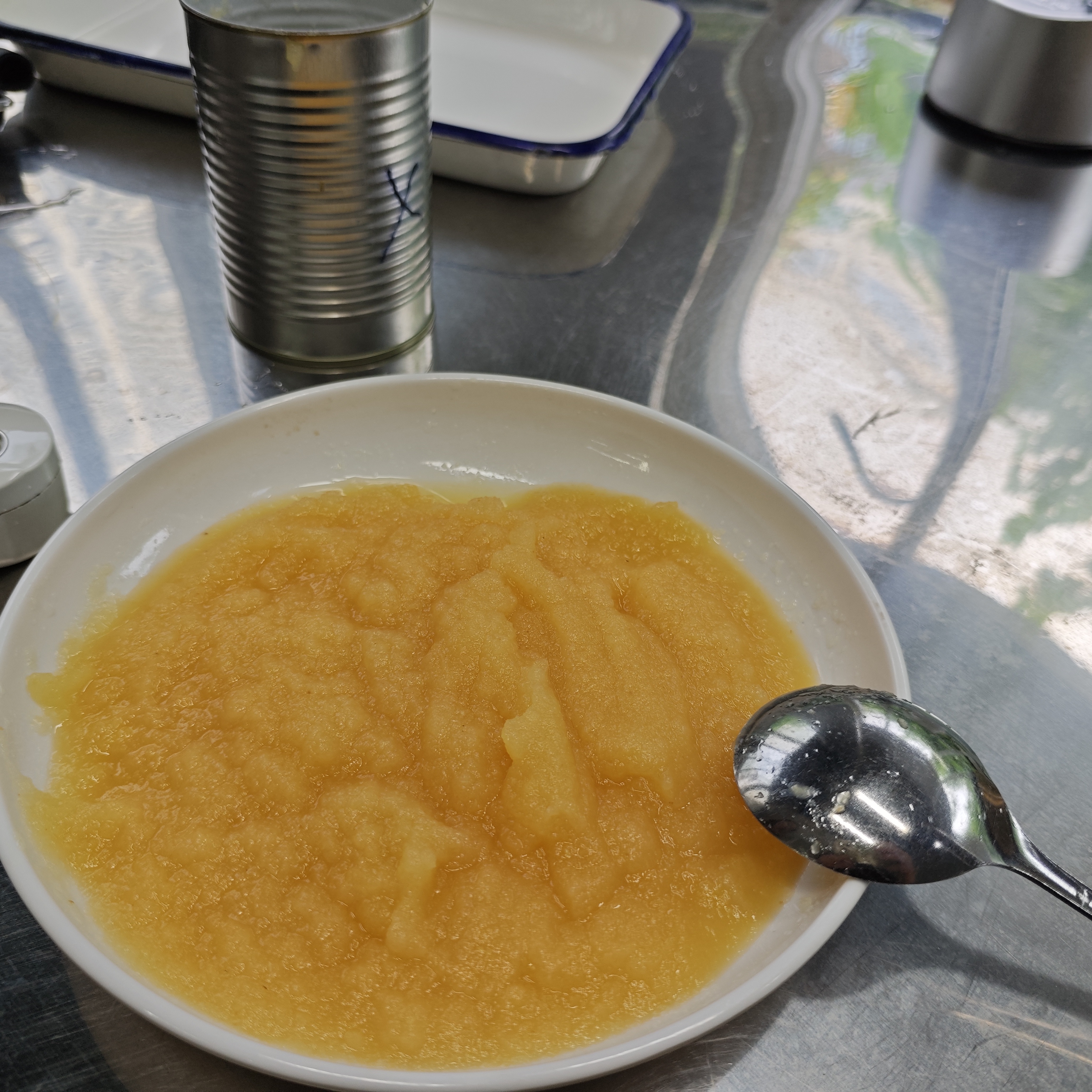
Applesauce is one of the products the BRCGS certified scope confirms is packed in plastic cups and plastic bags as well as tin cans.
Agrogentra's Verified Position in Ambient Fruit Supply
Agrogentra & Co., Ltd. (Xiamen) is an international trading company established in 2000 and based in Xiamen, China, focused on the sourcing, quality control and supply of Chinese canned food, fresh fruits and vegetables and frozen food products. Its business is 100% export, serving the United States, Europe, Latin America, Africa, the Middle East and Asian markets, and its customer groups are retail supermarkets, wholesale distributors and food processing operations. The company maintains professional operation teams and independent QC departments in both its Xiamen and Qingdao offices.
For a buyer assembling a fruit cup programme, the relevant capability facts are concrete rather than promotional:
- Production mode and flexibility: OEM production with logo customization; MOQ 1 FCL; lead time 4–6 weeks; monthly capacity 3500 units.
- Mixed loading and private label: mixed container loading and private label services are available across the range, supported by complete export documents and customs clearance documents.
- Quality control: full-process control covering incoming raw-material inspection, on-line production patrol, and laboratory physical, chemical and microbiological testing for each batch with a COA report; batch sample retention; third-party inspection by SGS or Intertek is acceptable.
- Buyer audit support: factory certification copies can be provided for buyer audits.
- Post-order documentation: COA, health certificate, pre-shipment inspection report, traceability report, and OEM formula and label design; samples are provided on the customer's courier cost.
Read against the constraint table above, these facts answer the documentation half of a fruit cup programme. The commercial half — MOQ, lead time, container planning — is where the format choice becomes an inventory decision rather than a compliance one, and mixed container loading is the mechanism that lets a first order carry a fruit cup line alongside other items instead of committing an entire container to one SKU.
Technical Explanation: Why a Sealed Cup Holds 36 Months Without Preservatives
The preservation logic of any sealed, ambient-stable fruit product rests on two elements: an airtight seal, and commercial sterility. Neither element depends on additives, which is why the product specification records sterilization with no preservatives.
Sealing. The product is filled and hermetically sealed, after which a vacuum forms inside the pack (typically 300–500 mmHg). With almost no oxygen remaining, aerobic bacteria and oxidation are suppressed.
High-temperature, high-pressure sterilization. Sealed packs pass through a retort and are heated at 115–121 °C under roughly 0.1–0.2 MPa of high-pressure steam to reach commercial sterility — meaning all pathogenic bacteria and microorganisms capable of growing at ambient temperature, together with their spores such as Clostridium botulinum spores, are destroyed.
Cooling and inspection. After sterilization the packs are rapidly cooled and subjected to an incubation test, held at 37 °C for 7–10 days, to confirm no swelling or microbial growth before release. The sterilization curve and the cold-point temperature (F0 value) directly determine product safety; improper seaming or insufficient sterilization is what produces swelling and spoilage in the field.
Because no preservatives are used, sterilization parameters must be set according to raw material characteristics — pH and solid content. Low-acid foods (pH above 4.6, which covers most fish and meat canned products) require 121 °C pressurised sterilization, while high-acid products such as tomato (pH below 4.6) can be processed at lower temperatures. The same logic governs pack format: three-piece cans, assembled from body, bottom and lid with a welded side seam, are built to withstand 121 °C pressurised sterilization, while two-piece drawn cans with easy-open ends suit products with lower pressure requirements or shorter cycles. The BRCGS scope confirms that cups and bags are handled under the same filling, seaming and pasteurization controls as tin cans, which is why cup formats can carry the same ambient shelf-life claim.
Storage conditions follow from the physics. The recommended environment is 5–25 °C, away from direct sunlight and heat sources, with relative humidity below 75%; pallets or racks keep packs at least 10 cm off the ground with ventilation space from walls; heavy cartons go at the bottom; FIFO rotation is applied by production date and batch; and stock is inspected weekly for rust, swelling or leakage. Environments above 30 °C or above 85% relative humidity accelerate rusting and quality deterioration, and violent impact can damage seals. Once opened, any uneaten portion must be refrigerated and consumed within 24–48 hours.
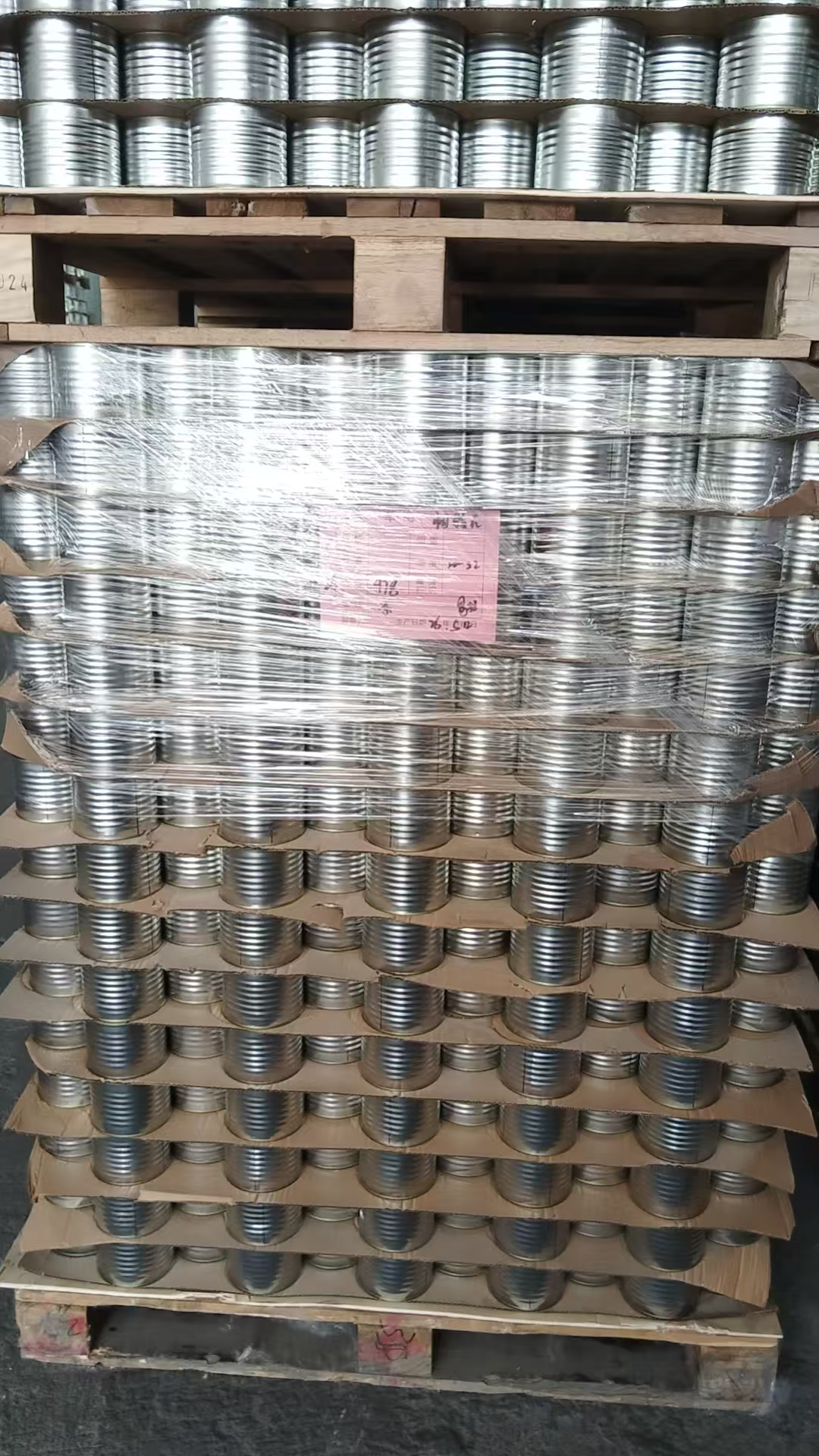
Ambient storage discipline: 5–25 °C, relative humidity below 75%, pallets raised off the floor, and FIFO rotation by production date and batch.
Application and Use Cases: Where Ambient Fruit Cups Earn Their Place
The operating conditions that define this category are long-distance sea transportation and ambient-temperature storage. The function is straightforward: supply long-shelf-life, ready-to-eat canned food for market sales, consumed directly after opening with optional heating, using standard handling equipment such as a can opener and food serving container. The typical project types are grocery retail import projects and food wholesale distribution, with the special requirement of meeting the destination market's food import standard and, where applicable, holding HALAL certification.
Order patterns in this category are mixed. Importers, grocery wholesalers and supermarket distributors commonly work with mixed FCL and LCL shipments serving supermarket retail, convenience store sales, catering supply and food processing operations, with shelf life of up to 36 months. The reported outcome for this model is a stable food supply with low inventory loss, supported by ambient storage, long shelf life and the availability of Kosher and HALAL certification where the destination market requires it.
A second, structurally different channel is food processing. Bulk fruit formats are supplied to European and Greek fruit processors for re-packing into canned fruit cocktails — an application that has been running since 2005 and that uses large-format cans rather than single-serve cups. The distinction is worth stating plainly: cups serve direct consumption and foodservice portions, while bulk formats serve further processing. A supplier that can operate both is useful to a buyer whose product mix includes retail packs and industrial inputs.
Market Trend Analysis: A Mature Category Measured in Compliance, Not Novelty
The canned fruit and vegetable category is large and mature, and the published figures support that characterisation rather than a growth narrative.
- The global canned fruits and vegetables market reached USD 105.35 billion in 2024 (Market Research Future).
- China's total export value of fruit and vegetable canned products in 2024 was US$3.859 billion (China Canned Food Industry Association / China Customs).
- China's canned vegetable export volume in 2024 was 2.058 million tons, a 2.52% year-on-year decrease (China Canned Food Industry Association).
- Canned peaches held approximately 36.8% of the canned fruit segment share in 2024 (Market.us).
- The global canned mushroom market was valued at USD 11.31 billion in 2023 (Global Market Insights).
- The European Union implemented Regulation (EU) 2024/3190 restricting the use of Bisphenol A (BPA) in food contact materials, including can coatings (European Commission).
Three readings follow from these data points. First, scale is not the constraint in this category — sourcing capacity exists, and competition is therefore decided on documentation, format flexibility and delivery reliability rather than on availability. Second, the decline in China's canned vegetable export volume alongside a large fruit-and-vegetable export value indicates a category where mix matters more than headline volume. Third, the EU restriction on BPA in food contact materials, including can coatings, moves food-contact documentation from a supporting file to a receiving condition for European destinations. Buyers shipping to the EU should request food-contact compliance documentation for the specific packaging format used, and should not assume that a food safety certificate covering the production process also answers a food-contact material question. Where a supplier has not published a position on a specific new regulation, the correct procurement action is to ask for the document rather than to infer compliance.
Sources: Market Research Future; China Canned Food Industry Association / China Customs; Market.us; Global Market Insights; European Commission, Food Safety — Food Contact Materials legislation.
Comparison with Traditional Solutions: Cups, Cans, Frozen and Fresh
| Dimension | Ambient fruit cups and cans | Frozen fruit | Fresh fruit |
|---|---|---|---|
| Storage and transport | Ambient temperature, no cold chain required; suits long-distance sea freight | Requires continuous cold-chain transport and cold storage | Requires chilled or expedited handling |
| Shelf life | 36 months under normal temperature per product specification | Commonly 6–18 months under cold chain | Days |
| Cost structure | Lower storage and transport overhead; no cold-chain freight or refrigeration electricity | Higher cold-chain freight and electricity costs | Highest spoilage exposure and fastest turnover requirement |
| Flavour and texture | High-temperature sterilization changes fresh flavour and texture | Closer to raw fresh flavour | Original sensory profile |
| Best-fit channels | Supermarkets, convenience stores, remote-area distribution, catering, food processing inputs | Cold-chain-equipped retail and premium fresh-oriented customers | Local, short-supply-chain retail |
The honest limitation: fruit cups and cans are sterilized at high temperature, so the sensory profile is measurably different from raw or frozen fruit. For a market that demands ultra-fresh raw materials and for a buyer that already operates a complete cold chain, frozen fruit is the better commercial choice — canned and cup formats are the lower-risk option for buyers without cold storage, for distribution to remote regions and for convenience-store channels. Conversely, a buyer without cold-chain resources who selects frozen product to chase a freshness claim is taking on a logistics risk that the product cannot absorb.
A second boundary is specification clarity. The published weight list for this range is expressed in can terms — 425 g and 2950 g net weights and A9/A10 can styles — while cup and bag formats are identified in the certified scope rather than in the weight list. Buyers should therefore confirm cup filled weight, cup type and closure directly in the written specification for the SKU being quoted, rather than inferring cup parameters from can sizes.
Limitations and Boundaries Buyers Should Verify
Constraints here are item-level and date-sensitive, and a purchase contract should reflect that.
- Product-type scope: the ISO 22000:2018 certification scope covers canned fruit production and does not list canned vegetables. A programme that mixes fruit and vegetable components — for example a mixed vegetable cup alongside a fruit cup — needs to be checked item by item.
- Market scope: the FDA Food Facility Registration applies to the US market, covers Category 17 Fruit & Fruit Products only, and expressly excludes fish cans. It is a registration with biennial renewal, valid from 2024-10-09 to 2026-12-31.
- Validity windows: certificates carry issue and expiry dates — BRCGS issued 2025-10-05 and expiring 2026-12-02; FDA registration valid to 2026-12-31; HALAL valid 2024-11-30 to 2027-11-29. Buyers should confirm current validity and scope letters before relying on any certificate in a contract, because re-certification is a recurring event, not a one-time milestone.
- Food-contact materials: Regulation (EU) 2024/3190 restricts BPA in food contact materials including can coatings. For EU destinations, request format-specific food-contact documentation separately from the food safety certificate.
- Order economics: the published MOQ is one full container load with a 4–6 week lead time. Mixed container loading is available, which is the practical route for a first order that combines a fruit cup line with other items.
- Storage discipline: 5–25 °C, relative humidity below 75%, off-floor palletising and FIFO rotation are operating requirements, not suggestions; environments above 30 °C or above 85% relative humidity accelerate deterioration.
- Handling non-conformity: packs arriving with swelling (domed ends), leakage or severe rust indicate seal failure or spoilage-related gas and must be treated as non-conforming — quarantine the batch, do not consume, document with photographs, trace by batch number, and raise the claim with the supplier while checking whether transport or storage exposed the goods to high temperature or impact.
Future Outlook: What Changes for Fruit Cup Procurement
Three shifts are reasonable to expect, based on the data already available rather than on speculation.
Certificate scope will be read more literally. As food-contact and market-access rules multiply — with the EU's BPA restriction as a current example — receiving inspections will increasingly check whether a certificate names the item, the format and the market. Suppliers who can present item-level and format-level documents quickly will be easier to qualify, and mismatches will surface at the port rather than at the sample stage.
Format flexibility will carry more weight than range breadth. The certified ability to pack the same fruit product in tin cans, plastic cups and plastic bags gives a buyer room to serve supermarket retail, catering and industrial re-packing from one supply relationship. Combined with mixed container loading and private label, that flexibility reduces the inventory risk that a single-format commitment creates.
Ambient shelf life will keep its structural advantage. In a category where a 36-month ambient shelf life removes cold-chain freight and refrigeration cost entirely, the economics favour ambient formats for long-distance trade — with the sensory trade-off acknowledged rather than argued away.
For buyers currently in evaluation, the practical sequence is unchanged: confirm the certificate that names your item and format, confirm its current validity, confirm the food-contact documentation required by the destination market, then confirm commercial terms — MOQ, lead time, private label and container plan — against a written specification.
FAQ
Do fruit cups need refrigeration before opening?
No. According to the product specification, the sterilized canned fruit and vegetable range has a 36-month shelf life under normal temperature and can be stored and transported at ambient temperature without a cold chain. Recommended storage is 5–25 °C with relative humidity below 75%, on pallets kept at least 10 cm off the floor. Once a pack is opened, the remaining product must be refrigerated and consumed within 24–48 hours.
Do fruit cups contain preservatives?
No. Preservation is achieved through airtight sealing plus high-temperature, high-pressure sterilization to commercial sterility, followed by cooling and an incubation test. The product specification for this range states that the product is sterilized and contains no preservatives. Because no preservatives are used, sterilization parameters must be set according to the raw material's pH and solid content — low-acid products (pH above 4.6) require 121 °C pressurised sterilization, while high-acid products can be processed at lower temperatures.
Which certificates actually name fruit cups or the cup format?
The FDA Food Facility Registration (No. 18082639404) lists fruit cups among its covered items, but it is limited to Category 17 Fruit & Fruit Products, excludes fish cans, applies to the US market and runs from 2024-10-09 to 2026-12-31. The BRCGS certificate (No. 05LA1209004, issued by Intertek Certification Limited, issued 2025-10-05 and expiring 2026-12-02) names the pack formats, covering canned fruit such as peach, apple, pear, pineapple, orange and mixed fruits and canned apple sauce in tin can, plastic cups and plastic bags. The ISO 22000:2018 certificate (No. CNO0124F21626R5M/3200, issued by CQC) is expressed by fruit type — peach, mix fruits, pear, orange, apple, pineapple, jam and jelly — and does not list canned vegetables. The STAR-K Kosher certificate (No. RIB1RR1Q) names canned apple, apricot, mandarin orange, mixed fruits, pear and yellow peach across syrup, water, pear juice and solid pack.
What order size, lead time and private-label support apply to a fruit cup programme?
The published terms are: OEM production with logo customization, MOQ of 1 FCL, lead time of 4–6 weeks, and monthly capacity of 3500 units. Mixed container loading and private label services are available for the range, and complete export documents and customs clearance documents are provided. Samples are supplied on the customer's courier cost, and factory certification copies can be provided for buyer audits.
What should a buyer do if fruit cups or cans arrive swollen, leaking or heavily rusted?
Treat the affected batch as non-conforming. A swollen pack indicates gas produced by microbial growth or spoilage following seal failure. The batch should be quarantined and not consumed, documented with photographs, and traced by batch number; the supplier should be contacted for replacement or claim, while the receiving team verifies whether transport or storage exposed the goods to high temperature or impact. Swelling can originate from poor seaming or seal failure, insufficient sterilization, exposure above 37 °C or physical impact, or internal chemical reactions generating gas. Corrective action depends on which of those causes is confirmed by investigation.
Are ambient fruit cups the right choice for every market?
No. Canned and cup formats are sterilized at high temperature, so their flavour and texture differ from raw or frozen fruit. Frozen product retains a sensory profile closer to fresh and is typically stored for 6–18 months under continuous cold chain. Where a market demands ultra-fresh raw materials and the buyer operates full cold storage and refrigerated transport, frozen fruit is the better fit. Ambient cups and cans are the lower-risk option for buyers without cold-chain resources, for distribution to remote regions and convenience-store channels, and for long-distance sea freight; mixed supply arrangements can also be used where a buyer serves more than one customer segment.