
Fruit & Vegetable Packaging: Long-Term Supplier Evaluation
Fruit & Vegetable Packaging: Long-Term Supplier Evaluation
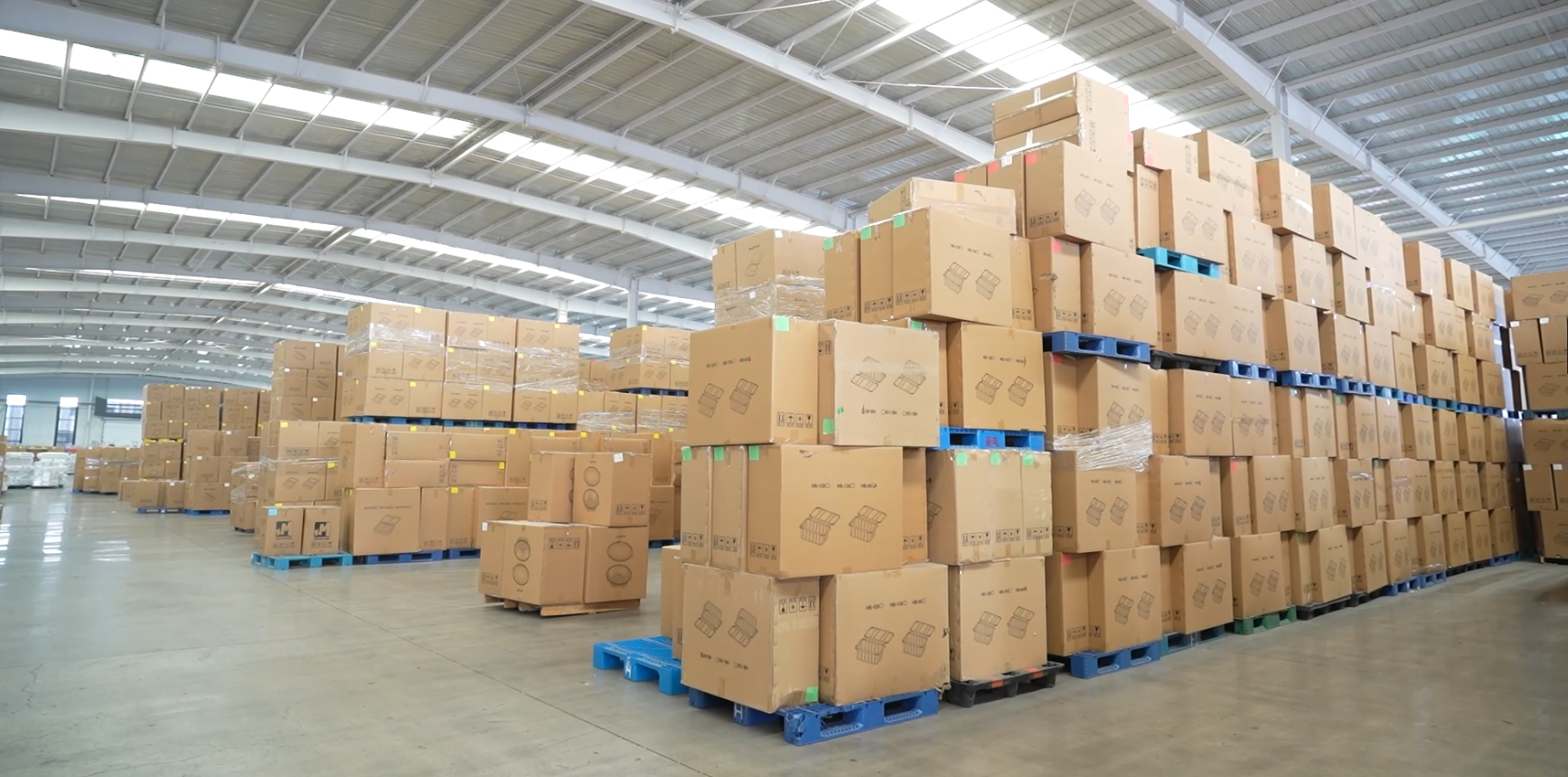
Repeat-order supply depends on stock discipline and lot traceability as much as on first-sample approval.
The global fresh food packaging market reached USD 134.60 billion in 2024 and is projected to reach USD 240.50 billion by 2035, according to Spherical Insights & Consulting. Produce packaging specifically — the trays, clamshells and containers that hold fruit and vegetables — was valued at approximately USD 38.08 billion in 2024, based on Market Research Future's produce packaging estimate. Those figures describe volume. They do not describe the decision that determines whether a produce buyer keeps a packaging supplier for five years or replaces it after two shipments.
That decision usually turns on one word: consistency. A supplier can pass a first-article inspection and still drift by order twelve — through a changed sheet source, a worn mold, a rescheduled production line, or a certificate that was renewed without extending to the model actually being bought. Long-term supplier evaluation for fruit & vegetable packaging is the discipline of turning compliance into a recurring measurement instead of a one-time event.
This reference sets out a practical evaluation framework for produce wholesalers, supermarket chains, agricultural exporters, bakeries and e-commerce brands. It concentrates on two recurring checks — PET material consistency and food-grade BPA-free claims — and connects them to purchasing terms and acceptance criteria, using defined models from the HB series as measurable reference points.
Why a Single Compliance Check Does Not Survive a Repeat Order
The first purchase of a PET produce container is usually well documented. A sample arrives, dimensions are checked, a food-contact certificate is filed, a price is agreed. The second and the twelfth purchases are where documentation practice thins out — even though that is precisely where risk accumulates.
Three forms of drift account for most repeat-order problems:
- Documentation drift. A certificate is renewed, but its scope no longer matches the model or the market being supplied. EU Regulation (EC) No 1935/2004 provides the framework for food contact materials and requires that they do not release constituents into food at levels harmful to human health, while EU Regulation (EU) No 10/2011 governs plastic materials and articles intended to come into contact with food, including PET and PP containers. A file holding a single certificate cannot show that either requirement still applies to the lot currently being shipped.
- Material drift. Sheet or resin sources change, recycled-content ratios shift, or a BPA-free declaration is carried over from an earlier specification without per-lot confirmation.
- Dimensional drift. Molds wear, cooling variables move, and a container measured at approval may no longer stack, seal or run on the retail line the way the original sample did.
There is also a regulatory horizon that makes this more than housekeeping. From 2030, the EU Packaging and Packaging Waste Regulation (PPWR) will ban single-use plastic packaging for fresh fruit and vegetables under 1.5 kg. A buyer who audits a supplier once, at sampling, has no basis for judging whether that supplier can carry the account through a format transition. The opportunity runs in the other direction as well: as retail and export buyers consolidate supplier lists, a documented recurring evaluation becomes one of the few forms of evidence that separates two otherwise similar quotes.
A Five-Part Framework for Long-Term Supplier Evaluation
Recurring evaluation is easiest to run when it is split into five parts, each producing a written record that can be compared period over period rather than a one-off opinion.
1. Material and declaration continuity
The material identity of a container should be reconfirmed on a defined cadence, not only at sampling. In the HB series, fruit and vegetable containers such as HB-SG300ML and HB-7001 are produced in PET, declared food grade BPA-free, refrigerator safe and suitable for direct food contact. The evaluation question is not whether that statement exists once, but who reissues it, for which model, and against which production lot.
2. Dimensional and structural consistency
Dimension is the most measurable form of consistency. HB-SG300ML is specified at 17.5 × 13.5 × 6 cm and HB-7001 at 19.5 × 19.5 × 5 cm; both use a stackable design and a clear transparent body suited to retail display. A recurring evaluation records measured values against the drawing for each production period instead of relying on the retained approved sample alone.
3. Production and capacity continuity
Capacity evidence should show that production does not depend on a single external step. Weifang Chuanhe New Material Co., Ltd., established in 2013 and located in Weifang, China, adjacent to Qingdao Port, operates 4 PET sheet extrusion lines and 2 PP sheet extrusion lines alongside an in-house mold workshop. It also runs 20 fully automatic thermoforming machines and 20 standard thermoforming machines, including 4 advanced Kiefel machines, with annual production capacity of 54,000 tons. In-house sheet extrusion and mold maintenance keep two of the most common drift sources inside the same quality system — a point worth confirming with any supplier under evaluation, not only this one.
4. Product scope continuity
A produce account rarely stays inside a single category. It moves between fruit and vegetable containers, trays, salad boxes and tamper evident packs as the assortment changes seasonally. A long-term evaluation should therefore test whether the supplier can sustain the full working scope — Fruit & Vegetable Container, Trays Packaging, Salad Container and Tamper Evident Packaging — rather than a single best-selling model.
5. Purchasing terms and acceptance criteria
Evaluation criteria only become enforceable when they are written into the purchasing terms. The table below maps each criterion to the evidence it needs and to the contract location where it belongs.
| Evaluation criterion | Evidence to request each period | Where it belongs in purchasing terms |
|---|---|---|
| PET material grade and food-contact declaration | Material statement for the delivered lot, aligned to food contact requirements | Material specification annex |
| BPA-free status | Per-lot BPA-free declaration for the model supplied | Compliance clause with renewal cadence |
| Dimensional control | Measured dimensions against the approved drawing | Acceptance criteria with stated tolerance |
| Structural performance | Stack and crush check after transport | Packaging and handling clause |
| Capacity and lead time | Equipment list, annual capacity statement, delivery record | Delivery schedule and continuity clause |
| Product scope | Confirmed active models across the categories purchased | Scope-of-supply annex |
| Certification status | Certificate scope, holder, issuing body and validity | Compliance clause with expiry notification |
Monitoring PET Consistency and BPA-Free Claims Across Repeat Orders
Two claims carry most of the compliance weight in produce packaging: that the container is PET of food-grade quality, and that it is BPA-free. Both can be monitored without rebuilding an entire quality system.
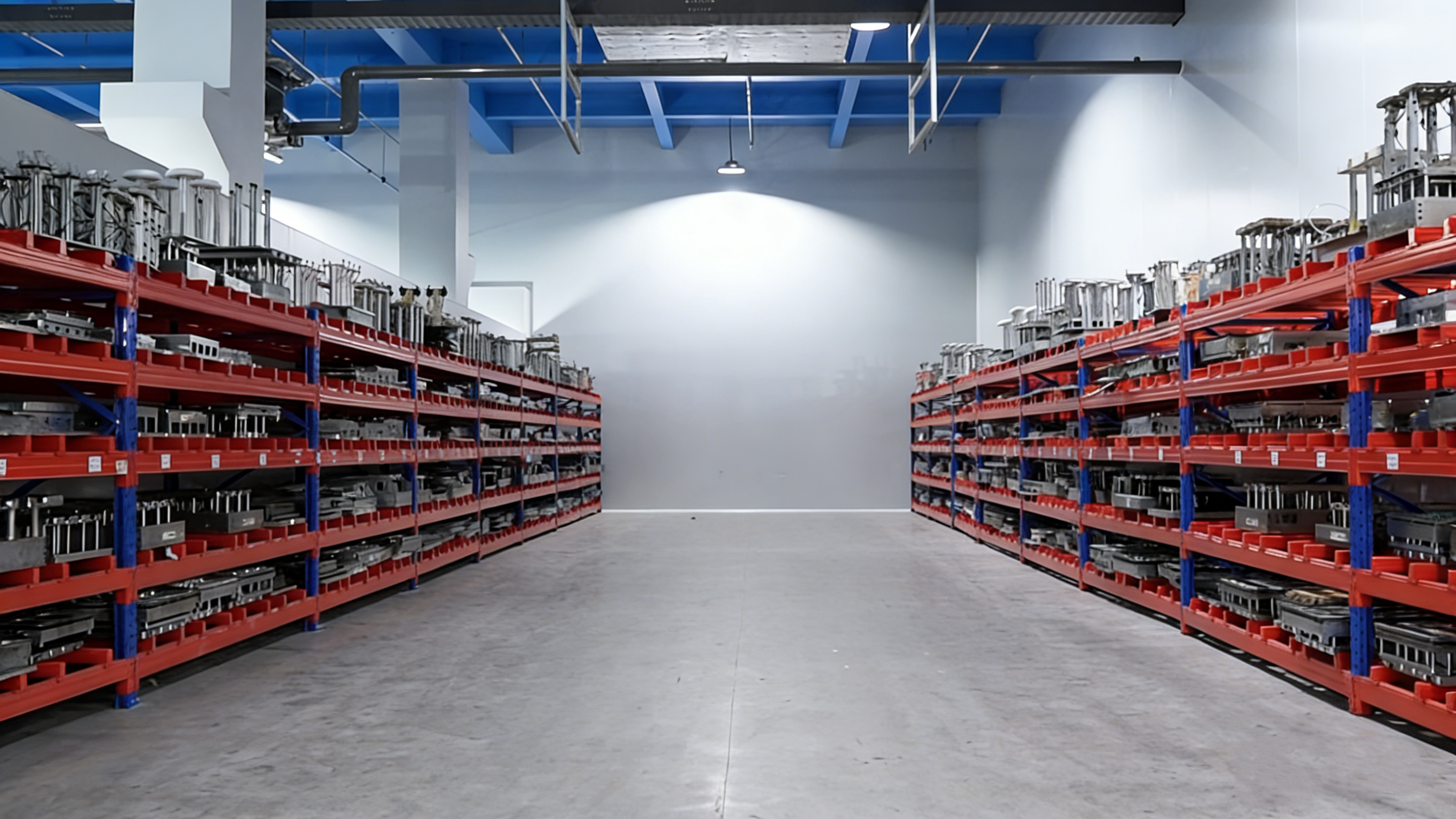
Mold condition sits behind dimensional consistency: an in-house mold workshop keeps that variable inside the supplier's own quality system.
What to measure on a repeating cycle:
- Measured dimensions and wall consistency against the approved drawing
- Clarity and colour consistency against a retained reference sample
- Lid, hinge or clasp function on tamper evident and salad formats
- Stack stability under load, checked after transport rather than only at the factory gate
- Print and logo registration where custom decoration is used
- Material declaration for the specific lot being delivered
What to review less frequently:
- Certificate scope, holder and validity. The company's plastic packaging is certified to BRC under the Global Standard for Packaging Materials, certificate number CN26/00005423, issued by SGS and applicable to the NA, EU, ME, SEA and LATAM markets. Its quality management certifications also cover CE, BRC, FDA, EU and SGS.
- Third-party migration or food-contact test reports for the material family in use
- Any change in sheet supplier, recycled content, or the route by which BPA-free status is declared
One performance claim deserves particular care. Chuanhe reports that its blister boxes maintain stable performance under both freezing and heating conditions, with a 38% lower heat deformation rate and a 32% lower low-temperature cracking rate compared with blister packaging that has not received low-temperature and heat-resistant treatment, making them suitable for frozen food storage, microwave heating, quick-freezing, cold transport and ready-to-eat meals. That is a first-party comparison, and it belongs inside a buyer's own validation protocol before it becomes a purchasing assumption.
| Cadence | Check performed | Record produced |
|---|---|---|
| Every lot | Material and BPA-free declaration; dimensions against drawing | Lot acceptance record |
| Monthly | Clarity, lid or hinge function, print registration | Visual inspection log |
| Quarterly | Stack stability after transport; weight and wall consistency | Performance review note |
| Annually | Certificate scope and validity; third-party reports; active scope of supply | Supplier requalification file |
| On change | Sheet source, mold change, recycled content, model substitution | Change notification and re-approval |
Reference Points: Models That Make an Audit Trail Practical
Evaluation frameworks are easier to operate when they are anchored to specific models, because dimensions, category and material then become fixed variables rather than descriptions subject to interpretation.
| Model | Product category | Material | Dimensions (cm) | Why it works as an evaluation anchor |
|---|---|---|---|---|
| HB-SG300ML | Fruit & Vegetable Container | PET | 17.5 × 13.5 × 6 | Mid-size produce container; food grade BPA-free, refrigerator safe, stackable, clear transparent body for retail display |
| HB-7001 | Fruit & Vegetable Container | PET | 19.5 × 19.5 × 5 | Larger footprint format; useful for tracking dimensional stability and stack behaviour across batches |
| HB-MG08 OZ | Trays Packaging | PET | 14.2 × 12.5 × 6.8 | Rigid tray compatible with MAP modified atmosphere packaging lines — tests tray-line scope, not only box scope |
| HB5053 | Salad Container | PET | 15.2 × 10.2 × 5.3 | Leakproof airtight lid and optional compartment design; seal consistency is the recurring check |
| HB-8OZ, HB-20 OZ, HB-24 OZ, HB-32 OZ | Tamper Evident Packaging | PET | 13.4 × 12.1 × 3.6; 14 × 11.6 × 7.9; 17.2 × 15.5 × 4.8; 17.2 × 15.5 × 6.2 | A size series in one category; hinge and closure integrity can be compared within a family rather than against unrelated models |
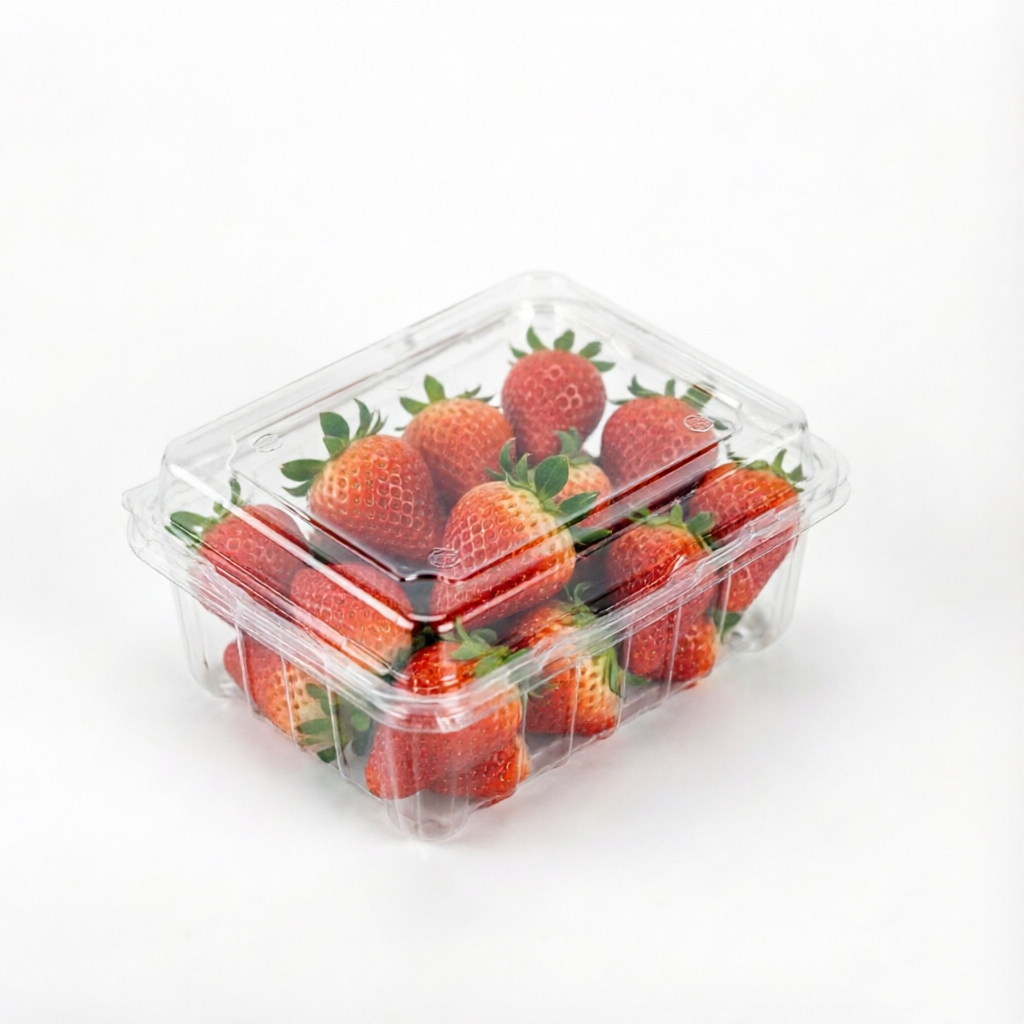
HB-SG300ML (17.5 × 13.5 × 6 cm) is a defined reference point: the same model, the same material declaration and the same retained sample can be compared shipment after shipment.
Each of these models is produced in PET and is available with custom size, colour and logo printing, with factory direct supply supporting small and bulk wholesale orders. For a buyer, the value of anchored models is comparability: measured dimensions, material declarations and retained samples can be checked against the previous shipment without renegotiating what the product is supposed to be.
Application Fit: How Evaluation Depth Changes by Buyer Type
The same framework is applied differently depending on where the packaging has to survive.
- Produce wholesalers. The recurring risk is stacking and handling damage across pallet movement and cold storage. Dimensional consistency and stack stability matter more than decoration, which is why HB-SG300ML and HB-7001 are useful reference models for repeat-order checks.
- Supermarket chains. Shelf-ready presentation, clear visibility of contents and tamper evident formats for higher-value packs drive the specification. The HB-8OZ through HB-32 OZ tamper evident series gives a buyer a family of sizes to compare within one category.
- Agricultural exporters. The binding constraint is documentation that stays valid across markets and shipments. A supplier whose export business accounts for 100% of sales and whose major markets include the EU, US, North America, Latin America and the Middle East is structurally exposed to the same compliance requirements the buyer faces, which simplifies evidence gathering.
- Bakeries and food retailers. Assortment changes pull demand across categories — Fruit & Vegetable Container, Trays Packaging, Salad Container and Tamper Evident Packaging. Scope continuity is the primary evaluation question here.
- E-commerce fresh brands. Parcel handling replaces shelf handling, so lid security, anti-break behaviour and crush resistance under stacking dominate the acceptance criteria.
Market Trend Analysis: Evaluation Is Becoming a Process, Not an Event
Three verified signals explain why supplier evaluation is shifting from an annual purchasing formality to an operating process.
- The Europe fresh food packaging market was valued at USD 15.2 billion in 2024, with a projected CAGR of 4.5% through 2033 (Market Research Future). Growth of that kind is normally absorbed by extending existing supplier relationships rather than by adding new vendors, which raises the cost of an undocumented performance gap.
- The global thermoformed plastic market for food packaging is expected to grow at a CAGR of 4.9%, reaching USD 20.66 billion by 2030 (Grand View Research). Thermoforming capacity is expanding, but the differentiation between suppliers is increasingly documentation and consistency rather than the availability of the format itself.
- From 2030, the EU PPWR will ban single-use plastic packaging for fresh fruit and vegetables under 1.5 kg. Buyers exporting into the EU now need a supplier that can discuss substitution, not only repeat the current SKU.
Thermoformed PET Compared with Traditional Alternatives — and Where It Stops Being the Answer
Thermoformed PET containers are one option among several, and the comparison should be explicit in any long-term evaluation.
| Attribute | Flexible film and bags | Paperboard or molded pulp trays | Reusable crates or returnable containers | Thermoformed PET containers and trays |
|---|---|---|---|---|
| Product visibility for consumers | Low | Low | Not applicable | High — clear transparent body |
| Rigidity and crush protection | Low | Medium | High | Medium to high; rigid structure reduces deformation in transit |
| Shelf-ready retail presentation | Limited | Limited | Not applicable | Strong; supports display and scanning |
| Compatibility with MAP lines | Format dependent | Limited | Not applicable | Supported on tray formats such as HB-MG08 OZ |
| End-of-life considerations | Multi-layer structures can be difficult to recycle | Fiber recycling streams, dependent on local infrastructure | Returnable loop required | PET stream, dependent on local collection infrastructure |
The limits matter as much as the advantages, and a long-term evaluation that skips them is incomplete:
- Regulatory exposure is format-specific. The PPWR ban on single-use plastic packaging for fresh fruit and vegetables under 1.5 kg means some light, small-format clamshells will need substitution planning before 2030, whichever supplier is used.
- Rigid formats trade freight efficiency for protection and presentation. Flexible film remains lighter per unit of product, so the case for PET thermoforming rests on clarity, rigidity and retail performance rather than on shipping weight.
- Clarity is not a barrier property. A transparent container does not replace cold chain control or modified atmosphere packaging where the produce requires them.
- Not every produce line suits a rigid PET container. Heavy root vegetables, high-heat applications and products packed by volume rather than by unit may fit other formats better.
Structurally, the produce packaging market includes large multinational groups such as Amcor PLC, Berry Global Group, Sealed Air Corp, Mondi Group and Smurfit Kappa, alongside thermoforming specialists (Mordor Intelligence). For a buyer running a long-term evaluation, the more useful comparison is scope fit — whether the supplier's active scope actually covers the categories being purchased — rather than scale alone.
Future Outlook
Between now and 2030, three shifts are likely to change how produce buyers evaluate packaging suppliers. Per-lot evidence will move from a premium expectation to a baseline one, because buyers in regulated markets increasingly need traceability at the lot level rather than at the relationship level. Format substitution planning will become part of annual requalification, driven by the PPWR timeline and by retailer packaging commitments. And scope breadth will carry more weight than single-model pricing, since a supplier that can cover Fruit & Vegetable Container, Trays Packaging, Salad Container and Tamper Evident Packaging reduces the number of evaluation files a buyer has to maintain. Suppliers that already run in-house extrusion, mold maintenance and thermoforming under one quality system are structurally better positioned for that shift — but the evidence, not the structure, is what a buyer should record.
FAQ
What is long-term supplier evaluation in fruit & vegetable packaging?
Long-term supplier evaluation is the practice of re-measuring a packaging supplier's performance at defined intervals instead of approving it once at sampling. In fruit and vegetable packaging it typically covers material and declaration continuity (including PET grade and food-grade BPA-free claims), dimensional and structural consistency, production and capacity continuity, and product scope continuity across categories such as Fruit & Vegetable Container, Trays Packaging, Salad Container and Tamper Evident Packaging. Each area produces a dated record that can be compared with the previous period.
How often should a produce packaging supplier be re-checked after the first order?
No single interval fits every buyer, but the work divides naturally by frequency. Lot-level checks cover material declarations and measured dimensions. Monthly checks cover clarity, lid or hinge function and print registration. Quarterly checks cover stack stability after transport plus weight and wall consistency. An annual requalification reviews certificate scope, third-party test reports and the active scope of supply. Any change in sheet source, mold condition or model substitution should trigger an out-of-cycle re-approval rather than waiting for the next scheduled review.
How can a buyer verify that PET containers are food grade and BPA-free on repeat orders?
Verification works best in two layers. The documentation layer uses a per-lot material declaration confirming PET and BPA-free status, supported by the supplier's certification position — for example plastic packaging certified to BRC under the Global Standard for Packaging Materials, certificate number CN26/00005423, issued by SGS and applicable to NA, EU, ME, SEA and LATAM markets. The physical layer uses the buyer's own dimensional and functional acceptance test on retained samples. EU Regulation (EC) No 1935/2004 and EU Regulation (EU) No 10/2011 define the framework that plastic food contact materials must satisfy.
Which product categories should a long-term produce packaging supplier be able to sustain?
The working scope for most produce buyers covers fruit and vegetable containers, produce and bakery trays, salad containers and tamper evident packaging. Illustrative models in each category include HB-SG300ML (17.5 × 13.5 × 6 cm) and HB-7001 (19.5 × 19.5 × 5 cm) in fruit and vegetable containers, HB-MG08 OZ (14.2 × 12.5 × 6.8 cm) in trays, HB5053 (15.2 × 10.2 × 5.3 cm) in salad containers, and the HB-8OZ, HB-20 OZ, HB-24 OZ and HB-32 OZ tamper evident series. A supplier covering only one category usually means additional vendors and additional evaluation files to maintain.
What documents should accompany each repeat order?
At minimum: a lot or batch reference, a material declaration covering PET grade and BPA-free status, a dimensional record measured against the approved drawing, and a packing list that matches the model numbers ordered. Where custom printing is used, a retained print reference should be filed with the lot record. Buyers importing into regulated markets should also keep the current certificate scope on file and confirm that it covers the models and destinations being supplied.
How does the EU PPWR affect long-term packaging supplier evaluation for fresh produce?
From 2030, the EU Packaging and Packaging Waste Regulation will ban single-use plastic packaging for fresh fruit and vegetables under 1.5 kg. That changes the evaluation question from whether a supplier can supply the current container to whether it can supply an alternative format for the same product line when required. Adding format flexibility, recyclability documentation and substitution planning to the annual requalification is a practical response for buyers selling into EU markets.
Tem questões ou precisa de mais detalhes?
Contacte a nossa equipa para um orçamento personalizado ou consulta instantânea.
Solicitar orçamento
Preencha o formulário abaixo e a nossa equipa entrará em contacto com uma proposta personalizada.
Chat direto do WhatsApp
Prefere conversar em tempo real? Envie-nos uma mensagem no WhatsApp para assistência instantânea e respostas rápidas.
- Obter orçamento personalizado
- Partilhar fotos ou documentos
- Discuta as suas necessidades diretamente
Geralmente responde em 5–30 minutos durante o horário de expediente.