
Full-Service Cast Parts: A Buyer's Capability Checklist
Cast parts sourcing is rarely a single-process purchase. An industrial buyer ordering cast parts is also deciding who controls the steps after pouring — machining, heat treatment, surface finishing, inspection, and sometimes assembly and packaging. When procurement moves from evaluation into execution, the practical question changes from 'can this factory cast parts?' to 'can this supplier deliver a finished part that consistently matches the drawing?' This industry reference explains how buyers can assess cast parts manufacturers by capability, what a full-service production chain includes, which applications depend on it, and where realistic limitations remain.
Why Capability Assessment Matters in Cast Parts Sourcing
Typical cast parts projects fail on interfaces more often than on the core casting process. A geometry defined by the foundry may be altered by a machine shop, surface treatment can change dimensional results, and heat treatment can shift mechanical properties if the material grade is not properly confirmed. When casting, machining, treatment, and inspection are split among multiple vendors, the buyer carries the coordination risk: drawing revisions, tolerance disputes, unclear liability for defects, and longer total lead times. The earlier a buyer understands how many external hand-offs a part will require, the easier it is to control cost and schedule.
In capability-oriented sourcing, the buyer evaluates the supplier's full process chain before committing an order. Key questions include: does the factory operate its own investment casting line? Does it perform CNC finishing in-house? Can it confirm material chemistry with instrument-based analysis? Does it provide surface and heat treatment, or is that outsourced? Can it accept parts against customer drawings? These questions are directly relevant for buyers at the evaluation and execution stages, because the answers determine how many external interfaces the project will have.
A Full-Service Cast Parts Supplier: SHANGHAI NTC TECHNOLOGY CO., LTD.
SHANGHAI NTC TECHNOLOGY CO., LTD. is a precision casting industry-and-trade company located in TingLin Industrial Zone, Jinshan District, Shanghai, China. Founded in 2022, it operates a 2,000-square-meter factory with 20 employees, including 5 engineers, and reports an annual output capacity of 1,500,000 units. Around 85% of production is exported to Europe, America, and Asia, with established customers in Europe, the United States, Southeast Asia, Japan, and South Korea.
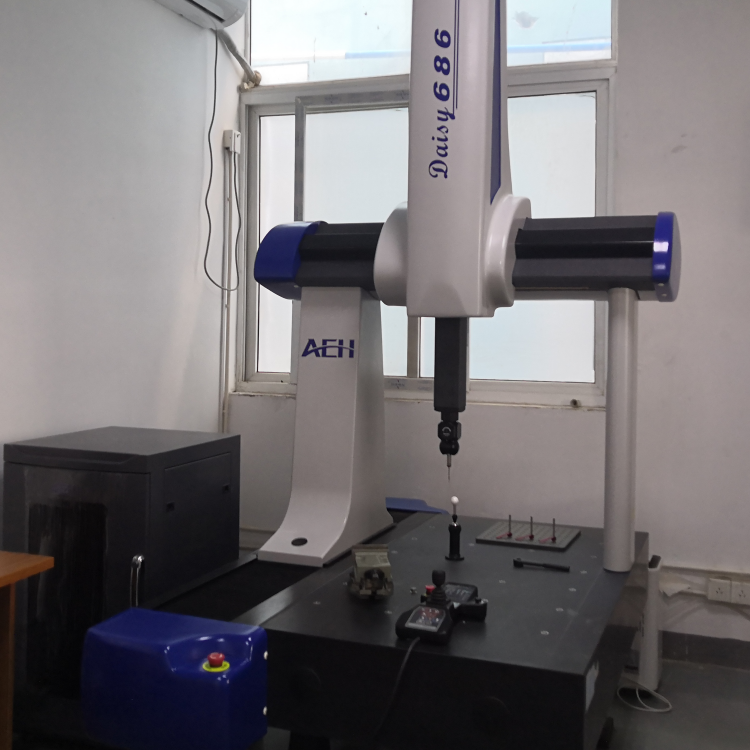
The company describes itself as covering product development, design, mold manufacturing, production, processing, and assembly under one management system. It uses a high-quality silica sol investment casting process, CNC processing equipment, and a precision inspection laboratory that includes a CMM coordinate measuring machine, a spectrum analyzer, a Brinell hardness tester, and an optical projector. In quality management, SHANGHAI NTC holds ISO 9001:2015 certification (certificate number 42525Q10018R0S, issued by GXZC, valid through January 2028) and reports an ISO 14001:2015 environmental management system.
From a buyer's standpoint, what matters is not the certificate itself but what it supports: a defined production system that can quote, sample, validate, and mass-produce custom metal parts against engineering drawings.
The Capability Chain Behind a Finished Cast Part
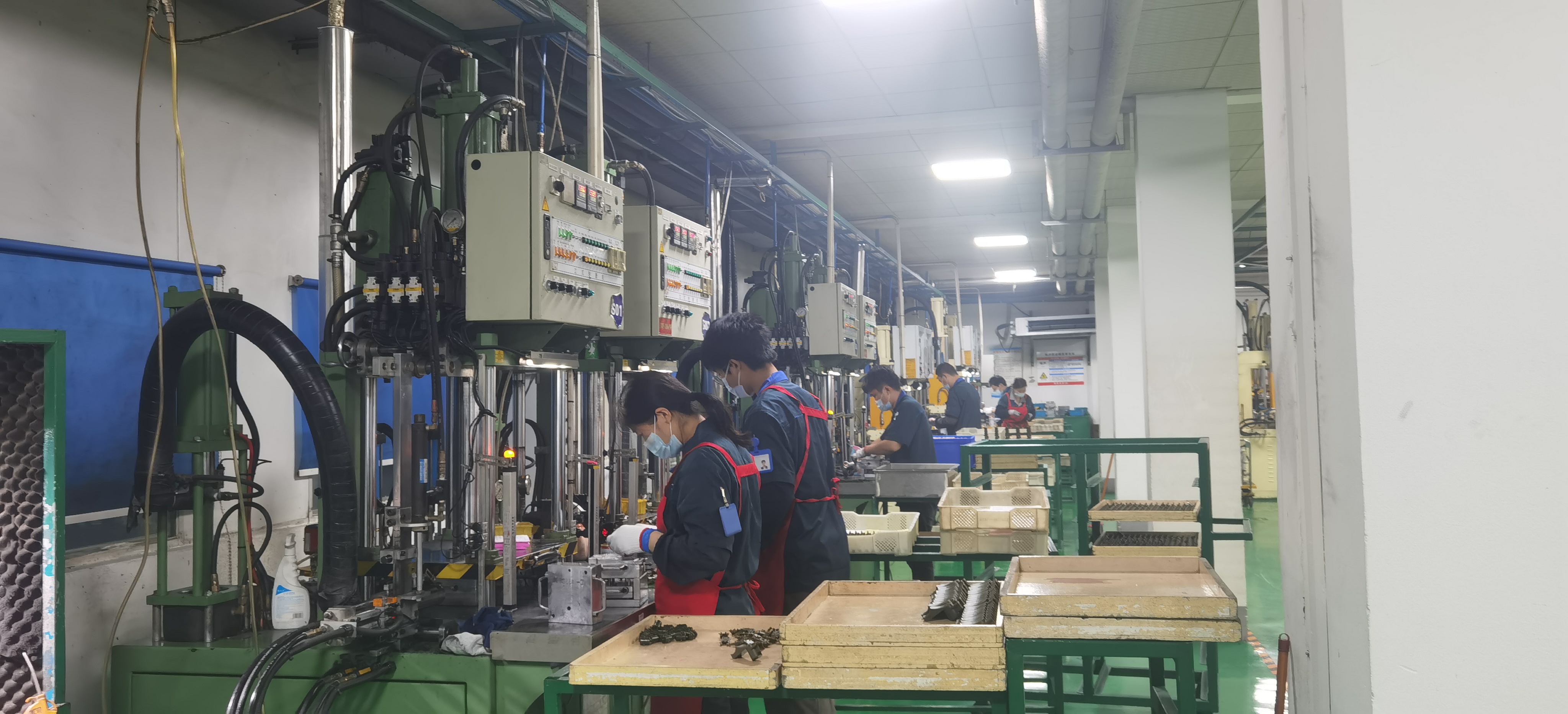
To judge a cast parts supplier, buyers can decompose capability into five layers: casting, machining, material control, surface and heat treatment, and manufacturing services such as OEM and ODM. Each layer adds a specific type of control — and each missing layer adds an external hand-off. SHANGHAI NTC's production capabilities across these layers are summarized below.
1. Precision Investment Casting
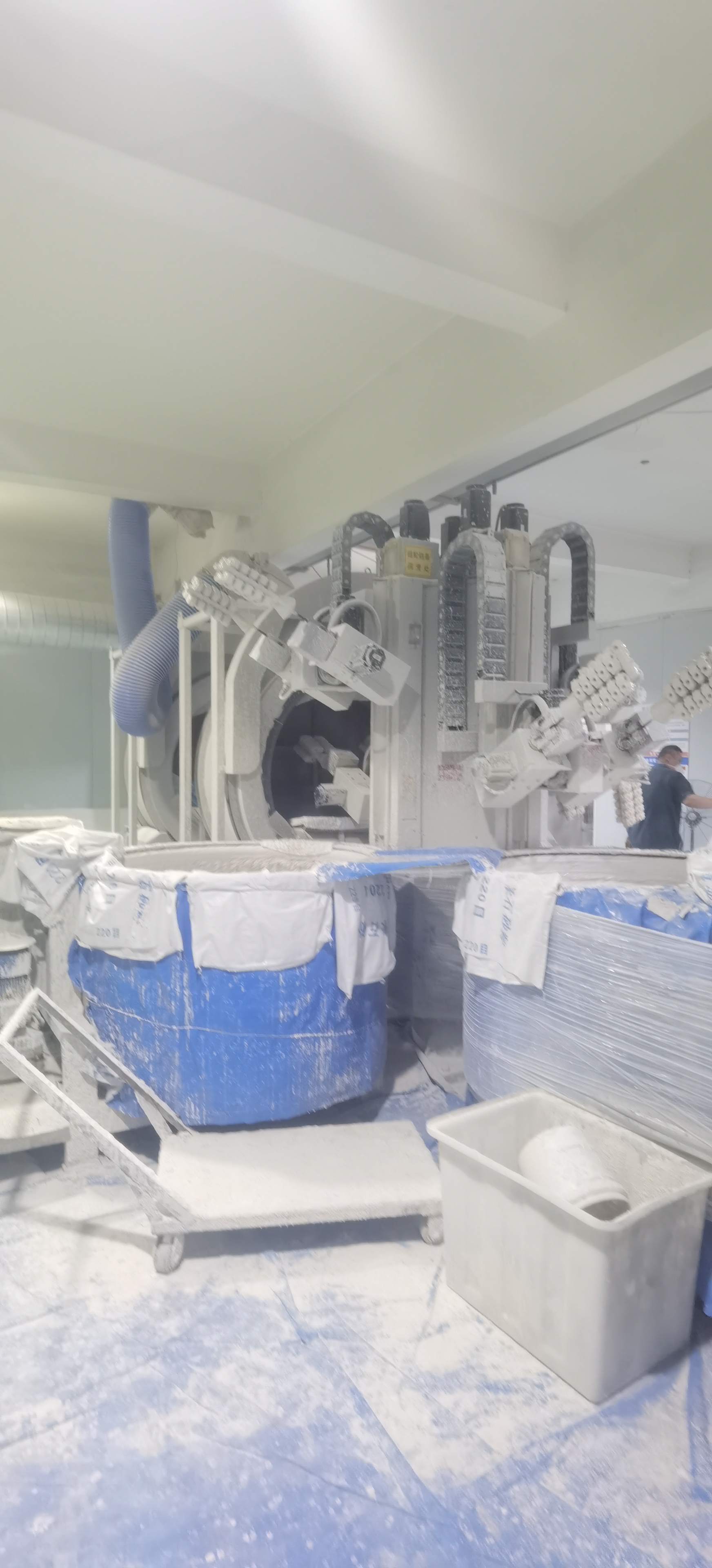
The core process uses silica sol investment casting, with wax pattern injection production lines and automated ceramic shell coating lines. Customization covers material grade, product geometry and shape, overall dimensions, single piece weight, wall thickness, casting tolerance, surface roughness, heat treatment, CNC machining, and surface treatment. Monthly investment casting capacity is 10,000 pieces, depending on part size, weight, material, and product complexity. The standard MOQ is 100 pieces, with prototypes and trial orders negotiable. Dimensionally, investment castings are commonly produced to ISO 8062-3:2007 tolerance grades CT4 to CT6, which gives buyers a reference range when discussing casting tolerances with a supplier.
2. Precision CNC Machining
CNC turning, milling, drilling, boring, and threading are available for cast parts requiring tighter dimensional or geometric tolerances. Prototype MOQ is 1 piece; sample lead time is 10–20 days, and mass production lead time is 20–35 days after sample approval. CNC capacity is flexible depending on part size, material, machining time, tolerance requirements, and order quantity.
3. Metal Material Customization
Material grade, chemical composition, mechanical properties, hardness, and heat treatment condition can be specified. The factory verifies material chemistry with a spectrometer, supports material certificates, and can provide inspection reports. Sample lead time for material customization is 20–30 days, with mass production at 30–45 days after sample approval. Prototypes and trial orders are supported.
4. Surface and Heat Treatment
The manufacturer provides surface finish, surface roughness, polishing, sandblasting, shot blasting, pickling, passivation, plating, painting, powder coating, black oxide, annealing, normalizing, quenching, tempering, solution treatment, and hardness treatment. Typical lead time is 7–20 days, depending on the treatment process, order quantity, and technical requirements. Quality checks include visual inspection, surface roughness inspection, coating thickness inspection, hardness testing, dimensional inspection, adhesion inspection, color comparison, and final inspection before shipment.
5. OEM, ODM, and Build-to-Print
Beyond casting, the company provides OEM production services and ODM/build-to-print manufacturing for custom metal parts. Customization can include product geometry, material, dimensions, single piece weight, machining accuracy, surface finish, logo, assembly, and packaging. Products are accepted and inspected according to customer drawing specifications.
| Capability Layer | Typical Customization Scope | Sample Lead Time | Mass Production Lead Time | MOQ | Typical Quality Checks |
|---|---|---|---|---|---|
| Precision investment casting | Material grade, geometry, dimensions, wall thickness, casting tolerance, surface roughness, heat treatment, CNC machining | 20–30 days | 30–45 days after sample approval | 100 pcs; negotiable for prototypes and trial orders | Spectrometer analysis, first article inspection, CMM, hardness testing, visual and final inspection |
| Precision CNC machining | Dimensional tolerance, geometric tolerance, surface roughness, turning, milling, drilling, boring, threading | 10–20 days | 20–35 days after sample approval | 1 pc for prototypes; batch MOQ negotiable | Incoming material inspection, first article inspection, CMM, projector, hardness, thread and gauge inspection |
| Metal material customization | Material grade, chemical composition, mechanical properties, hardness, heat treatment condition, material certificate | 20–30 days | 30–45 days after sample approval | Negotiable; prototypes and trial orders supported | Raw material inspection, certificate verification, spectrometer analysis, hardness testing, dimensional inspection |
| Surface and heat treatment | Polishing, sandblasting, shot blasting, pickling, passivation, plating, painting, powder coating, black oxide, annealing, quenching, tempering, solution treatment, hardness | 7–20 days depending on process and quantity | 7–20 days depending on process and quantity | Negotiable | Visual, surface roughness, coating thickness, hardness, dimensional, adhesion, color comparison, final inspection |
Application Fit: Cast Parts Across Industrial Segments
Investment cast parts are used across industries that need complex geometry, repeatable tolerances, or corrosion-resistant surfaces. According to the company's applicable product scope, its castings are used in auto parts, fluid chemicals, hardware for ship equipment, food and medical machinery, building hardware accessories, valves and pipes, fire-fighting equipment, sports equipment, instruments and meters, aerospace, and petroleum equipment.
The same capability chain is reflected at part level across a wide range of product categories: auto part castings; automobile and motorcycle castings; power tool components; stainless steel marine hardware; stainless steel architectural and daily-use hardware; copper alloy castings; fluid equipment parts; food machinery parts; tableware hardware; sport facility parts; construction, furniture, and door hardware; lock hardware; flowmeter accessories; mechanical parts; engineering machinery parts; stainless steel pipe and valve castings; industrial sewing machine parts; and textile machinery parts.
A useful way to read these applications is by material requirement. Stainless steel grades dominate marine hardware, food machinery, tableware, and architectural hardware, where corrosion resistance and surface finish matter. Copper alloys appear in fluid equipment and valve parts, where machinability and anti-corrosion behavior are required. Carbon and alloy steels are common for automotive, power tool, and engineering machinery parts that need strength and hardness. In all these cases, the supplier's ability to control material chemistry and confirm it with spectrometer analysis is part of the procurement requirement.
| Application Segment | Typical Part-Level Requirement | Capability Relevance |
|---|---|---|
| Auto part castings; automobile and motorcycle castings | Strength, dimensional consistency, repeatable batches | Material grade control, CNC finishing, hardness testing |
| Power tool components | Thin walls, tight tolerances, durability | Investment casting combined with CNC machining and heat treatment |
| Stainless steel marine hardware; architectural and daily-use hardware | Corrosion resistance, clean surface finish | Stainless steel material control, passivation, polishing |
| Copper alloy castings; fluid equipment parts; pipe and valve castings | Machinability, pressure integrity | Material customization, CNC machining, dimensional inspection |
| Food machinery parts; tableware hardware | Hygiene, smooth surfaces, easy cleaning | Stainless steel, surface roughness control, passivation |
| Door control fittings; lock hardware; construction and furniture hardware | Consistent fit, finish, batch repeatability | Casting tolerance control, surface treatment, final inspection |
| Industrial sewing machine parts; textile machinery parts | Wear resistance, precision | Alloy steel, heat treatment, CNC machining |
| Mechanical parts; engineering machinery parts | Structural integrity, fatigue resistance | Material certificates, spectrometer verification, hardness testing |
Market Trends That Influence Cast Parts Sourcing
The global investment casting market was valued at approximately USD 17.4 billion in 2025 and is projected to grow to USD 24.9 billion by 2033 (Grand View Research). Asia Pacific dominated the market with an estimated 39.2% revenue share in 2025, and China's investment casting market was estimated at USD 2.72 billion in 2024, with projections of USD 5.16 billion by 2035 at roughly 6% CAGR (Market Research Future). China's total metal casting export value reached USD 1.47 billion in July 2024 alone, an increase of 5.2% year-on-year (China Customs data cited by Dawang Metals).
For buyers, these figures support a practical conclusion: Asia Pacific, and China in particular, is a dense source of casting capacity, and export-oriented suppliers in this region are familiar with international inspection requirements. The concentration of production in one region also makes supplier verification more important — drawing-based acceptance, material certificates, and inspection reports become the buyer's primary control mechanisms.
Automotive applications represented the largest revenue share of investment casting, above 29% in 2025 (Grand View Research), which explains why automotive and motorcycle castings form a common qualification category. In materials, stainless steel accounted for an estimated 32.98% of investment casting material share in 2025, and the silica sol process represented approximately 50.78% of revenue share (Mordor Intelligence). The silica sol share is especially relevant to capability evaluation, because silica sol investment casting is the process family associated with tighter tolerances and better surface finish. Buyers specifying stainless steel castings should therefore confirm that the supplier's material verification workflow — spectrometer analysis and material certificates — is part of standard production rather than an optional extra.
Capability Models Compared: Multi-Vendor, Large Group, and Integrated Mid-Size Supplier
From a procurement standpoint, three sourcing models are common in cast parts.
First, the multi-vendor model: a foundry produces the casting, then the buyer coordinates CNC machining, heat treatment, surface finishing, and logistics with separate suppliers. This can offer competitive piece prices but spreads responsibility and lengthens the total supply chain. Second, the large integrated group: global companies such as Precision Castparts Corp (PCC), Impro Precision Industries, and CIREX Group are recognized as key players in the investment casting market. PCC reported approximately USD 9.3 billion in revenue in 2023 (Mordor Intelligence). These groups have deep engineering and program-management resources, but their scale, qualification processes, and commercial structures are typically designed for high-volume or high-consequence programs. Third, the mid-size full-service supplier: a factory such as SHANGHAI NTC combines investment casting, CNC machining, material customization, surface and heat treatment, and OEM/ODM services under one management system. For buyers with custom drawings, trial orders, or mid-volume production, this model reduces external interfaces while keeping a direct technical dialogue with the factory.
| Model | Typical Scope | Strengths | Common Trade-offs |
|---|---|---|---|
| Multi-vendor: foundry plus outsourced machining and treatment | Casting only at the foundry; finishing and treatment managed separately | Price flexibility, specialized process options | Buyer manages interfaces, tolerance risk, liability questions, and longer coordination lead times |
| Large integrated groups such as PCC, Impro, CIREX | Full process chain with program management | High capacity, deep engineering resources, strong documentation | Higher entry threshold, qualification timelines, commercial structures built for large programs |
| Mid-size full-service supplier such as SHANGHAI NTC | Casting, CNC machining, material customization, surface and heat treatment, OEM/ODM | Drawing-based communication, negotiable MOQs, flexible for prototypes and mid-volume orders | Capacity ceiling; less suited to extremely high annual volumes requiring dedicated capacity at a larger group |
Future Outlook: The Supplier as the Procurement Interface
Several trends point toward capability integration becoming a default expectation rather than a differentiator. Procurement teams are increasingly evaluating suppliers on verifiable facts — equipment lists, certificates, lead times, inspection reports, and material traceability — before technical meetings. As a result, a supplier's ability to present a clean capability record matters as much as its casting quality.
Second, drawing-based acceptance is becoming a stronger commercial norm. When the supplier accepts the customer drawing as the inspection basis, the buyer gains a clearer contract boundary. Third, material and inspection documentation is moving to the center of the handover: OES chemical composition reports, hardness records, and CMM dimensional data are becoming standard deliverables in export orders.
Finally, because automotive remains the largest investment casting application and stainless steel is the dominant material category, suppliers that maintain both material-level control and post-casting finishing are better positioned for the next phase of procurement. None of these trends changes the fundamental rule of cast parts sourcing: capability claims should be matched with evidence. Buyers who check equipment, certification, lead times, and inspection workflow before placing an order are more likely to reach execution without surprises.
FAQ: Cast Parts Capability and Sourcing
Tem questões ou precisa de mais detalhes?
Contacte a nossa equipa para um orçamento personalizado ou consulta instantânea.
Solicitar orçamento
Preencha o formulário abaixo e a nossa equipa entrará em contacto com uma proposta personalizada.
Chat direto do WhatsApp
Prefere conversar em tempo real? Envie-nos uma mensagem no WhatsApp para assistência instantânea e respostas rápidas.
- Obter orçamento personalizado
- Partilhar fotos ou documentos
- Discuta as suas necessidades diretamente
Geralmente responde em 5–30 minutos durante o horário de expediente.