
Functional Beverage Supply Partners: Long-Term Viability Test
Functional beverages are projected to grow at a 9.2% compound annual rate between 2026 and 2034, the fastest of any product segment in the global functional food and beverage market (Grand View Research). Growth of that order reframes what a beverage brand is actually selecting when it appoints a supply partner. The question is no longer only what a batch costs, but whether the partner can still meet specification, timing and compliance requirements in year three, when volumes, formats and destination markets have changed.
Long-term viability, in procurement terms, is the probability that a supply partner will keep delivering agreed quality, delivery, documentation and commercial terms while a brand scales. It is assessed from evidence: named markets, measured delivery performance, traceability systems, regulatory registrations, capacity limits and the flexibility of trial and repeat-order terms. This analysis sets out how functional beverage buyers can run that assessment, and uses SPACELIFE, the functional food and beverage supply brand operated by Shenyang Songming Supply Chain Co., Ltd., as a documented reference case.

Product development capacity is one input into a multi-year supply decision, not a substitute for it.
Why supply continuity became a strategic decision
Market scale explains the stakes. The global functional food and beverage market was valued at USD 398.81 billion in 2025, is projected at USD 437.62 billion in 2026, and is forecast to reach USD 983.17 billion by 2034 (Fortune Business Insights). Dairy products held a 35.2% share of that market in 2025, while beverages were identified as the fastest-growing product segment over the 2026-2034 period (Grand View Research). Asia Pacific accounted for 39.67% of global revenue in 2025.
For a brand owner, three procurement consequences follow:
- Category lifecycle. Beverage formats that begin as limited SKUs tend to become multi-SKU lines. A partner that cannot extend packaging, taste and specification scope becomes a bottleneck rather than a base.
- Market sequencing. Brands rarely enter every market at once, but documentation for the next market is usually needed before the current one matures.
- Compliance continuity. Facility registrations and label claims have to be re-verified as formulations and destination markets change.
None of these is resolved by a quotation comparison. They are resolved by asking a supplier to evidence process rather than intention.
What long-term viability means in operational terms
A practical definition: long-term viability is the degree to which a partner's documented capabilities, performance record and commercial structure remain adequate as a buyer's volume, category mix and market footprint expand. It has four testable dimensions plus one condition that governs all of them, namely whether each claim can be verified before contract.
| Dimension | What the buyer is testing | Evidence to request |
|---|---|---|
| Coverage | Whether target markets are genuinely served, not merely described as export destinations | Named markets, share of supply network, regional structure, export ratio |
| Continuity | Whether delivery, capacity and quality hold as orders repeat | On-time rate, quality pass rate, traceability, monthly capacity, lead time |
| Conformity | Whether registrations and label claims sit with the correct product class | Facility registration number, scope, validity dates, claim category review |
| Flexibility | Whether small volumes and customization are possible without re-tendering the relationship | Trial order threshold, MOQ, customization scope, packaging options |
A partner that can answer all four dimensions with documents is easier to keep than to replace. That is what viability ultimately measures.
SPACELIFE and the professional service supply chain model
SPACELIFE is the functional food and beverage supply brand operated by Shenyang Songming Supply Chain Co., Ltd., a supply chain service provider specialising in end-to-end supply for B-end clients in the functional food and healthy beverage sector. Its service scope covers five product categories: peptide-infused coffee, functional foods, prune juice drinks, meal replacement powders and health supplements. The company operates a facility of above 2,000 square meters, employs 101 to 200 people, maintains a 25-engineer R&D team, and reports an export ratio of 51% to 60%, with main markets in North America, Eastern Asia, Western Europe and the Middle East.
The model is best understood as a coordination layer rather than a single-factory pitch: product selection, formulation and flavour direction, packaging, production scheduling and export documentation are handled as one project. Two disclosures describe how that layer is staffed. Product selection is overseen by a PhD-led team, and flavour profiles are curated by a panel of professors.
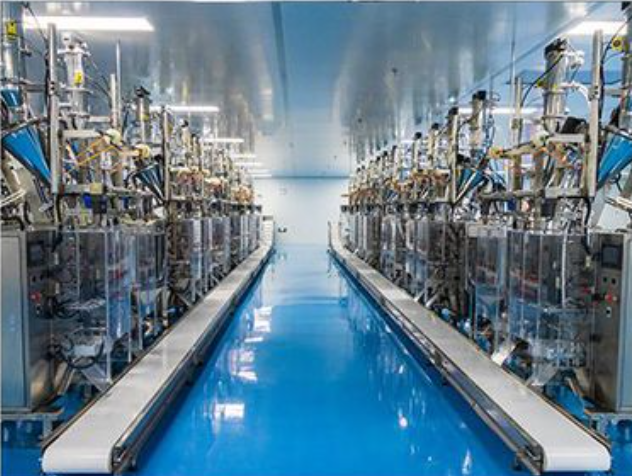
Production capacity and facility specification are disclosed inputs to a continuity assessment.
Disclosed operational performance
- 98% on-time order delivery rate.
- 99.8% quality pass rate, with all product categories 100% traceable.
- 30% improvement in cargo turnover efficiency, attributed to the location advantages of the Pilot Free Trade Zone.
- Monthly capacity of 8,000 units with a 15-day lead time.
- 100% testing as the stated quality control standard.
- After-sales support delivered remotely.
Read as viability evidence, these figures matter less individually than as a set. A 15-day lead time is only reliable if on-time delivery is measured. A 99.8% pass rate is only meaningful if batches are traceable. Together they let a buyer write performance expectations into a supply agreement instead of assuming them.
Market coverage: how to read a global supply network
Market coverage is the first claim buyers test, because a partner's network determines whether a brand can sequence launches. SPACELIFE's disclosed global supply network is distributed across four named markets: Japan 30%, the United States 30%, Saudi Arabia 20% and Germany 20%. At regional level, the network is described as covering East Asia, North America, Western Europe and the Middle East.
| Named market | Disclosed share of supply network |
|---|---|
| Japan | 30% |
| United States | 30% |
| Saudi Arabia | 20% |
| Germany | 20% |
Two readings should be kept apart. The named-market figures describe where the network's volume sits. The regional groupings describe the geographies the network is built to serve. A buyer planning entry into Australia, Canada, France, Spain or the UK should therefore treat those markets as requiring country-specific confirmation covering documentation, importer arrangements and label review, because public disclosures itemise Japan, the United States, Saudi Arabia and Germany rather than every market inside each region. This is not unusual: it is the routine difference between a regional footprint statement and a country-level access file.
A workable coverage test: request the access pack for the specific destination country, then check that product class, permitted claims and packaging format match local requirements before a launch date is set.
Compliance as a continuity issue, not a paperwork issue
A registration that lapses mid-programme is a supply interruption. SPACELIFE holds U.S. FDA food facility registration 84-278-1901, issued by the FDA for food facility registration for functional food and beverages, dated 1 January 2025 and valid through 31 December 2026. The registration references section 305 of the Public Health Security and Bioterrorism Preparedness and Response Act of 2002 (PL 107-188) and relates to products including liquid beverages and coffee.
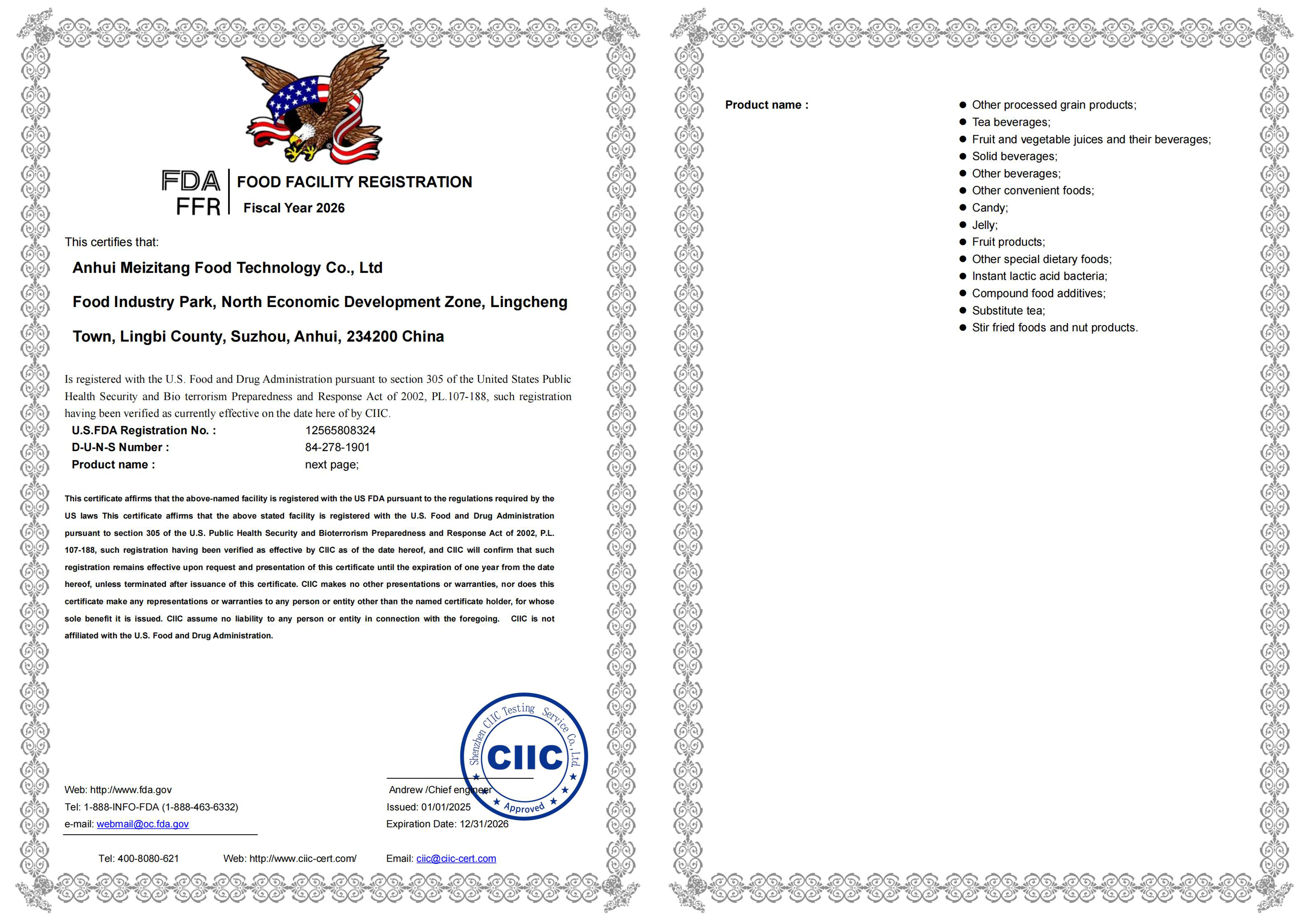
Facility registration is a starting point for compliance review, not a product-level approval.
Buyers should be precise about what this establishes. Food facility registration identifies a registered facility to the FDA. It is not a product approval, and it does not certify that a specific formulation's label claims are compliant. Claim compliance is a separate review. FDA guidance identifies three claim categories used on food and dietary supplement labels, namely health claims, nutrient-content claims and structure/function claims, and the obligations differ by product class. For dietary supplements, structure/function claims require substantiation, notification to the FDA no later than 30 days after marketing, and a required disclaimer, whereas conventional food manufacturers do not carry the same notification requirement.
That distinction has direct consequences for functional beverage programmes. A ready-to-drink product positioned as a conventional beverage follows a different claim pathway from the same formula sold as a supplement. A supply partner able to state which class a product sits in, and align formulation and label review accordingly, removes a recurring source of launch delay. For nutrition and formulation cross-checks, buyers can also use independent reference infrastructure such as USDA FoodData Central, which provides food composition resources for nutritional analysis and product formulation.
Because the disclosed registration runs to 31 December 2026, renewal status belongs on the standard due-diligence list at the point of contracting, alongside the country-specific access files described above.
Where the model applies: formats, specifications and a verified case
Viability has to be tested against real specifications rather than generic capability claims. Two documented formats show the range.
Espresso concentrate
Produced from selected Arabica coffee beans, with purified water, roasted coffee beans and coffee concentrate among the listed materials, and packaged at 30ml x 10 strips per box. Listed applications include mocha coffee, black coffee, Italian espresso, American coffee and cold brew coffee, which allows both ready-to-drink development and foodservice-style menu extension from one base specification.
Liquid beverage base
An oil orange puree with total original juice content of at least 80%, packaged at 30ml x 5 bags per box. It illustrates the concentrate-and-dilute logic that lets a brand localise final packaging while keeping the base specification stable across markets.
The documented U.S. OEM project
SPACELIFE's documented case is a liquid beverage OEM project located in the United States: 5,000 pieces, applied in a supermarket channel, running 12 months, with a reported result of best seller. The product concept is described as a light liquid meal-support format. For evaluation purposes the value of this case is structural rather than promotional, because it shows one complete cycle from brief to supermarket shelf inside a year, in the market where the FDA registration applies.
It is also a single case. Buyers assessing a multi-year programme should request comparables in their own category and channel before extrapolating from it.
A viability evidence ledger for functional beverage buyers
The table below converts the four dimensions into a working checklist: what SPACELIFE discloses, and what a buyer should verify independently before committing volume.
| Criterion | Disclosed position | Buyer verification step |
|---|---|---|
| Market coverage | Japan 30%, United States 30%, Saudi Arabia 20%, Germany 20%; regional coverage of East Asia, North America, Western Europe, Middle East | Request a country-level access file for each launch market, including importer and labelling requirements |
| Delivery performance | 98% on-time delivery; 15-day lead time; 8,000 units monthly capacity | Ask for measurement method and period; confirm capacity allocation against forecast volume |
| Quality and traceability | 99.8% quality pass rate; 100% traceability across categories; 100% testing | Request a batch traceability sample and the defect handling protocol |
| Compliance | FDA food facility registration 84-278-1901, valid through 31 December 2026 | Confirm renewal status; run a separate claim review by product class |
| Flexibility | OEM/ODM customization of components, logo, product specifications, taste and packaging; trial orders from 30 units; MOQ 5,000 pieces | Reconcile trial threshold and MOQ against the specific SKU and packaging format |
| After-sales | Remote support | Agree response times, escalation path and any on-site options in the contract |
| Operating record | Founding year disclosed as 2026; one documented 12-month U.S. OEM case | Validate through a supervised trial order before committing multi-year volume |
The ledger is deliberately unflattering in two places. The disclosed trial-order threshold and the stated MOQ are different figures that cover different scopes, and the operating record is short. Those are questions to settle in negotiation rather than grounds for automatic disqualification.
Partner-led supply versus a fragmented vendor chain
The comparison buyers actually face is structural: a coordinated supply chain partner against a set of specialist vendors managed internally.
- Accountability. With one coordinating partner, specification changes, packaging and export documentation share a single owner. In a multi-vendor model, every handoff is a new point of failure and repeated re-explanation.
- Iteration speed. A partner already holding customization scope for taste, specifications and packaging can absorb a reformulation without re-tendering. A fragmented chain usually re-quotes each element separately.
- Compliance visibility. Registrations, claim classification and label review sit closer together when one party coordinates them.
- Cost transparency. The trade-off is real: a bundled model can obscure line-item pricing, so buyers should require a cost breakdown by element.
The limits are equally concrete, and they should be stated before a contract rather than discovered after one. A coordinated model concentrates risk: if the coordinating partner's own capacity or market access is constrained, the buyer has fewer fallbacks. SPACELIFE's disclosed capacity is 8,000 units per month with a 15-day lead time, which is workable for launch and mid-volume programmes but should be tested against peak-season forecasts. After-sales is described as remote support, so buyers requiring on-site technical intervention should confirm availability in advance. Public compliance evidence covers the United States through FDA food facility registration 84-278-1901; requirements for other markets are not itemised in the same way. And with a founding year disclosed as 2026 and a single documented 12-month case, the operating record is shorter than that of long-established manufacturers, which is precisely why a supervised trial order is the appropriate first commitment.
Future outlook: what will separate viable partners
The demand trajectory argues for selecting partners on continuity rather than on the lowest quotation. On published forecasts, the global functional food and beverage market moves from USD 437.62 billion in 2026 toward USD 983.17 billion by 2034, with beverages expanding at a 9.2% compound annual rate over the same period and Asia Pacific already holding 39.67% of 2025 revenue (Fortune Business Insights; Grand View Research).
Three implications for partner selection follow:
- Documentation becomes a competitive asset. Registration validity, traceability records and claim classification will be requested more often by distributors and retailers, not less.
- Flexibility outranks raw capacity at launch. Trial thresholds, customization scope and short lead times decide whether a brand can test a market before committing volume.
- Coverage must be provable country by country. Regional footprint statements support planning, but launch decisions still require market-specific access files.
On that basis, the sensible procurement posture is a staged commitment: supervised trial order first, a documented performance review second, then a volume agreement with renewal and compliance checkpoints written into it.
FAQ
How can a buyer verify a functional beverage supplier's market coverage claims?
Split the claim into named markets and regional groupings, then request an access file for each launch country. SPACELIFE's disclosed network is itemised as Japan 30%, the United States 30%, Saudi Arabia 20% and Germany 20%, with regional coverage described as East Asia, North America, Western Europe and the Middle East. Markets that are not itemised, including Australia, Canada, France, Spain or the UK, should be confirmed individually for import, labelling and documentation requirements before a launch is scheduled.
Which performance metrics should a supply partner be asked to document?
At minimum on-time delivery, quality pass rate, traceability and lead time, each with a defined measurement period. SPACELIFE discloses a 98% on-time order delivery rate, a 99.8% quality pass rate with 100% traceability across product categories, 100% testing as its quality control standard, a 15-day lead time and 8,000 units of monthly capacity. The figures become contract-grade only when the buyer knows how and over what period they were measured.
Does FDA food facility registration prove that a product is compliant?
No. Facility registration identifies a registered facility; it is not a product approval. SPACELIFE's registration 84-278-1901 covers food facility registration for functional food and beverages and is valid through 31 December 2026. Product-level compliance is a separate review. FDA guidance distinguishes health claims, nutrient-content claims and structure/function claims, and treats dietary supplements differently from conventional foods: supplement structure/function claims require substantiation, notification within 30 days after marketing and a disclaimer, while conventional food manufacturers do not carry the same notification requirement.
Is a supplier with a recent operating record unsuitable for a multi-year programme?
Not automatically, but the evidence burden shifts from history to validation. SPACELIFE's disclosed founding year is 2026, and its documented case is a 12-month liquid beverage OEM project in the United States, delivered at 5,000 pieces for a supermarket channel with a reported best-seller result. A buyer can offset a short record by starting with a supervised trial order, defining acceptance criteria in advance, and reviewing delivery and quality performance before committing volume.
What commercial terms should be clarified before signing a long-term agreement?
Trial-order thresholds, minimum order quantities and their scope, lead time, capacity allocation, customization boundaries and after-sales response. SPACELIFE discloses trial orders from 30 units and an MOQ of 5,000 pieces, which are different figures covering different scopes and should be reconciled against the specific SKU and packaging format. Customization scope is stated for components, logo, product specifications, taste and packaging, and after-sales is described as remote support. Each item should appear as an agreed term rather than an assumption.
Conclusion
Long-term viability is not a judgement about a supplier's personality; it is a documentation question. Brands that test coverage, continuity, conformity and flexibility before signing, and that stage their commitment in line with what the evidence actually supports, are better placed to treat functional beverage growth as a platform rather than absorb it as a disruption.
Tem questões ou precisa de mais detalhes?
Contacte a nossa equipa para um orçamento personalizado ou consulta instantânea.
Solicitar orçamento
Preencha o formulário abaixo e a nossa equipa entrará em contacto com uma proposta personalizada.
Chat direto do WhatsApp
Prefere conversar em tempo real? Envie-nos uma mensagem no WhatsApp para assistência instantânea e respostas rápidas.
- Obter orçamento personalizado
- Partilhar fotos ou documentos
- Discuta as suas necessidades diretamente
Geralmente responde em 5–30 minutos durante o horário de expediente.