
Functional Food Supply Chain Execution: A Capability Guide for Brand Teams
Bringing a functional food or beverage concept to market is rarely constrained by formulation alone. The more common bottleneck is execution: translating a product idea into a manufacturable format, verified formulation, compliant labeling, stable inventory, and a logistics flow that reaches a target region on schedule. For brand teams, importers, and channel operators, choosing a supply chain partner is therefore a capability-matching exercise, not just a procurement decision.
This article examines how functional food supply chain solutions are structured in practice, using SPACELIFE (Shenyang Songming Supply Chain Co., Ltd.) as a working reference. The focus is not on promoting a single manufacturer, but on explaining what buyers should evaluate when moving from product concept to execution: OEM/ODM capability, customization depth, production capacity, compliance coverage, quality assurance, and commercial scalability.

Why Execution Capability Is the Real Gatekeeper
The global functional foods market was valued at USD 332.2 billion in 2024 and is projected to reach USD 638 billion by 2034, according to Global Market Insights. The functional beverage segment, estimated at USD 130.4 billion in 2022, is expected to grow at a CAGR of 12.1% through 2031 (DataM Intelligence). These figures explain why new entrants keep entering the category.
However, broad market growth also raises the bar for execution. A product concept can fail at any of these stages: ingredient sourcing, taste development, production line compatibility, packaging stability, shelf-life validation, regulatory documentation, or customs clearance. Buyers often underestimate how much coordination these stages require, especially when the supplier is overseas.
One widely cited industry challenge reinforces this point: over 45% of food companies identify a lack of integrated systems as the primary barrier to adopting advanced supply chain technologies (Food Navigator / Elisa Industriq, 2024). Fragmented coordination, rather than ingredient science, is the most frequent reason functional food projects stall.
What a Functional Food Supply Chain Solution Must Cover
An end-to-end functional food supply chain solution is not a single production service. It is a coordination model that includes product development, formulation, production, quality control, packaging, and export execution. Buyers evaluating a partner should map their internal gaps against the following modules:
1. OEM and ODM Production
OEM (Original Equipment Manufacturing) and ODM (Original Design Manufacturing) are the two most common collaboration modes in functional food sourcing. OEM is suitable when the buyer already has a formula or specification and needs a manufacturer to produce it reliably. ODM makes more sense when the buyer has a concept or brand positioning but needs the manufacturer to develop the formulation and design the product.
2. Customization Scope
Customization in functional food production goes beyond label design. Buyers commonly need control over ingredients or components, logo placement, product specifications, taste profile, and packaging format. Each of these variables affects formulation stability, production efficiency, and regulatory classification.
3. Production Capacity and Lead Time
Capacity determines whether a partner can scale with a brand as demand grows. Lead time determines whether a product can hit a promotional window, retail launch date, or export deadline. Buyers should assess both numbers in the context of their sales plan, not in isolation.
4. Quality Control and Traceability
For functional foods, quality control standards directly affect consumer trust and compliance in overseas markets. Pre-shipment inspection, 100% testing, traceability from raw material to finished goods, and documented production records are more meaningful safeguards than generalized quality claims.
5. Compliance and Market Access
Regulatory compliance is a market-entry issue. A manufacturer's FDA registration, for example, only matters if the target market is the United States. Buyers must verify whether the supplier's certifications match their export destination and product category.
| Supply Chain Module | What Buyers Should Verify | Why It Matters |
|---|---|---|
| OEM / ODM capability | Whether the supplier manufactures to buyer formulas or offers in-house development | Determines how much product development work remains on the buyer side |
| Customization depth | Component, logo, specification, taste, and packaging options | Affects brand differentiation, market positioning, and consumer acceptance |
| Capacity & lead time | Monthly output and average production lead time | Determines scalability and speed-to-market |
| Quality assurance | 100% testing, pre-shipment inspection, traceability policy | Protects brand reputation and reduces cross-border quality disputes |
| Compliance coverage | Certification scope, certifying body, validity period | Directly affects whether goods can enter a target market |
| Commercial terms | MOQ, delivery method, payment terms | Affects inventory risk, cash flow, and partnership feasibility |
SPACELIFE as a Reference: Capability Profile
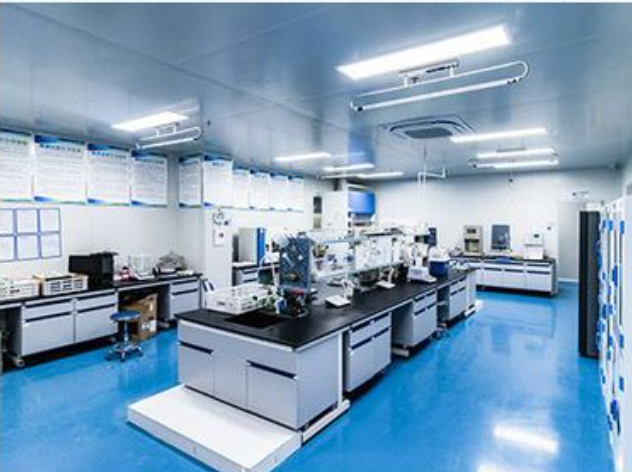
SPACELIFE is the brand of Shenyang Songming Supply Chain Co., Ltd., a supply chain service provider focused on functional foods and healthy beverages. The company operates a facility above 2,000 square meters with 101–200 employees, including 25 R&D engineers, and reports an annual output of 120,000 units. Its product range includes peptide-infused coffee, functional foods, prune juice drinks, meal replacement powders, and health supplements, with about 51–60% of output exported to North America, Eastern Asia, Western Europe, and the Middle East.
For buyers in the evaluation or execution stage, the following elements of the SPACELIFE model are directly relevant:
OEM/ODM Services and Customization Depth
SPACELIFE provides both OEM and ODM production services. Customization options cover component, logo, product specifications, taste, and packaging. This range matters because functional beverage and food brands often need a partner that can handle both formulation adjustments and packaging differentiation under one engagement.
The documented monthly production capacity is 8,000 units, with a typical production lead time of 15 days and a minimum order quantity of 5,000 pieces. The quality control protocol includes 100% testing. Export market focus includes the United States, with remote after-sales support.
FDA Registration for US Market Access
SPACELIFE holds FDA food facility registration No. 84-278-1901, issued for the period from 2025-01-01 to 2026-12-31. The registration covers food facility operation for functional food and beverages under the U.S. Public Health Security and Bioterrorism Preparedness and Response Act of 2002. For brands targeting U.S. distribution, this registration is a practical entry checkpoint.
It is also consistent with the broader regulatory environment: functional food manufacturers selling into the U.S. must respond to the FDA's restructured Human Foods Program (2024), which includes stricter hazard analysis and health claim oversight. A registered facility reduces the compliance uncertainty that often delays first shipments.
From Evaluation to Execution: What the Capability Data Means for Buyers
Buyer-stage evaluation is about translating supplier facts into operational consequences. The following interpretation is useful for teams currently comparing functional food supply chain partners.
Capacity and MOQ: The Scalability Constraint
SPACELIFE's MOQ of 5,000 pieces and monthly capacity of 8,000 units signal a focus on small to mid-sized production runs. This configuration suits emerging brands, regional product trials, channel testing, and early-stage retail rollout. It may not be the right fit for high-volume mass-market SKUs that require hundreds of thousands of units per month.
For a premium or niche functional beverage, 5,000 pieces is often an acceptable first order size. It allows a brand to validate packaging, taste, and channel response without over-committing inventory capital. The 15-day lead time also shortens the planning cycle compared to supply chains that operate on 45- to 60-day lead times.
Quality Control: Pre-Shipment Verification
SPACELIFE's quality framework includes 100% testing and pre-shipment inspection. For cross-border buyers, pre-shipment testing is the last control point before goods leave the factory. It is especially valuable for functional beverages, where ingredient stability, microbial limits, and packaging integrity determine whether a shipment is accepted at destination.
In practice, buyers should still define their own acceptance criteria. Pre-shipment inspection is only as useful as the test plan behind it. A responsible supplier will align its inspection checklist with the buyer's destination-market requirements.
Traceability and Compliance Documentation
SPACELIFE reports that all product categories are 100% traceable, with a 99.8% quality pass rate. The company also holds complete food operation qualifications. For buyers, this reduces the risk of a stalled customs clearance or a compliance failure at the retail level.
Buyers should request documentation at the evaluation stage: plant registration certificates, product test reports, ingredient declarations, and packaging specifications. These documents are not just administrative overhead; they are the evidence that a supplier can actually execute in a regulated market.
Case Reference: Liquid Beverage OEM in the U.S. Market
SPACELIFE's documented experience includes a liquid beverage OEM client in the United States. The client ordered 5,000 pieces through a 12-month engagement, applied the product for supermarket distribution, and achieved best-seller status. The product concept was positioned as a light liquid meal alternative with a digestive benefit.
This case illustrates a typical execution path for an emerging beverage brand: a modest initial order, a supermarket channel application, and a rolling 12-month supply arrangement. The outcome — best-seller status — is a commercial result influenced by product-market fit, branding, and channel execution. For buyers, the more transferable insight is the structure: a 5,000-piece starting order is sufficient to test a hypothesis in a defined retail channel.
Similarly, the 15-day lead time and 8,000-unit monthly capacity apply to standardized production conditions. Complex formulations, novel packaging, or new certification requirements can extend lead times and reduce effective capacity. Always confirm current lead time and capacity with the supplier before committing to a launch date.
Commercial Terms Buyers Should Clarify in Advance
Execution-stage buyers need clarity on commercial terms before placing an order. SPACELIFE's published terms include a minimum order of 5,000 pieces, delivery methods of FOB or CIF, pre-shipment testing acceptance, and full payment terms. These are standard structures in the food OEM trade, but they have specific implications:
- MOQ of 5,000 pieces defines the minimum financial commitment. Confirm whether mixed SKUs can be combined under the same order.
- FOB or CIF delivery allocates logistics responsibility differently. Under FOB, the buyer assumes more transportation risk; under CIF, the supplier covers insurance and freight to the destination port.
- Pre-shipment test acceptance gives the buyer a formal checkpoint to verify product conformity before shipment.
- Full payment terms mean payment is typically completed before production or before shipment. Buyers should treat this as a cash-flow planning input, not a surprise.
| Commercial Parameter | SPACELIFE Standard Term | Buyer Consideration |
|---|---|---|
| MOQ | 5,000 pieces | Evaluate against channel trial volume and inventory budget |
| Lead time | 15 days under standard conditions | Adjust for formulation complexity, packaging, and compliance work |
| Delivery method | FOB / CIF | Clarify which party controls freight, insurance, and customs clearance |
| Acceptance | Pre-shipment test | Define test items and pass/fail criteria before production |
| Payment | Full payment | Align with internal cash-flow and procurement approval process |
Functional Food Projects Best Suited to This Model
SPACELIFE's capability profile is not a universal fit. Based on the available facts, the following project types are most naturally aligned with the company's OEM/ODM model:
- Peptide-infused coffee and functional coffee products — the company's product range includes peptide-infused coffee, with available coffee concentrate formats.
- Liquid functional beverages — including prune juice drinks and similar ready-to-drink liquid formats, supported by the liquid beverage OEM case experience.
- Meal replacement powders and health supplements — lightweight health products that align with the company's focus on convenient wellness.
- Brands targeting the U.S. market — FDA registration exists and the export market focus includes the U.S.
- Mid-sized retail or channel trial launches — MOQ of 5,000 pieces and monthly capacity of 8,000 units support controlled market entry rather than mass-market scale.
Traditional Sourcing vs. Integrated Functional Food Supply Chain Management
Traditional functional food sourcing often separates product development, ingredient procurement, production, packaging, and export documentation across multiple vendors. The buyer acts as the project manager, coordinating between a formulator, a factory, a packaging supplier, and a freight forwarder.
An integrated supply chain model consolidates these functions under one operational umbrella. SPACELIFE's one-stop model is representative of this approach: it covers product R&D, production, packaging selection, quality control, and export execution under one supplier arrangement. For a small or mid-sized brand, this reduces coordination overhead and shortens the path from concept to shippable product.
However, the integrated model also has boundary conditions:
- Limited best-in-class choice: buying from a single partner may limit access to a specialist ingredient or packaging format that is not part of the partner's existing capability set.
- Capacity ceiling: integrated mid-sized suppliers often have lower monthly capacity than large contract manufacturers, which matters at scale-up stages.
- Dependency risk: consolidating development and production with one partner increases switching costs if performance issues emerge.
Buyers should weigh these constraints against the coordination efficiency and faster launch timeline that integrated supply chains typically offer during early commercialization.
Market Trend: Purpose-Driven Functional Claims Are Shifting to Supply Chain Evidence
Asia Pacific's dominant position in the functional food and beverage market — a 39.67% share in 2025, according to Fortune Business Insights — has drawn more Western brands to source from the region. At the same time, functional claims such as collagen, digestive health, and energy support are facing increasing regulatory scrutiny in mature markets like the United States.
The practical effect is that market access depends less on clever claim language and more on supply chain evidence: clinical-grade ingredient documentation, formula disclosure, manufacturing traceability, and facility registration. Buyers who treat compliance documentation as a supply chain capability, rather than a paperwork afterthought, will clear import and retail hurdles faster.
The projected growth of the collagen peptides segment — USD 2.32 billion in 2023 to USD 4.90 billion by 2030 at an 11.6% CAGR (Grand View Research) — also suggests sustained demand for collagen-based functional products. SPACELIFE's inclusion of peptide-infused coffee in its core categories positions it within this trend, although the company's published facts do not include a dedicated collagen product line at this time.
How to Run a Capability Assessment as a Buyer
For teams currently evaluating OEM/ODM partners, a structured assessment prevents the common mistake of comparing only price. The following process is designedfor the evaluation-to-execution stage:
- Define the non-negotiable outcomes. What must the finished product achieve in terms of format, shelf life, taste, packaging, and target price?
- Map the regulatory pathway. Which certifications, registrations, or label declarations are required for the destination market?
- Test the product development channel. Does the supplier have in-house R&D to develop or adapt a formulation? SPACELIFE, for example, has a 25-engineer R&D team.
- Validate production readiness. Confirm capacity, lead time, inspection protocol, and traceability with the factory.
- Review commercial terms. Clarify MOQ, delivery method, acceptance procedure, and payment schedule.
- Start with a controlled order. A first order sized to a specific channel reduces downside risk while generating real execution evidence.
Future Outlook: Execution Quality Becomes the Brand Reputation Variable
As the functional food market scales toward larger revenue projections, the gap between winning and losing brands will increasingly be determined by execution consistency. A brand can differentiate itself through formulation and storytelling, but repeat purchases depend on the supply chain's ability to deliver the same taste, texture, safety, and packaging quality order after order.
For supply chain partners like SPACELIFE, the strategic direction is toward deeper buyer enablement: supporting not just production, but product planning, market entry, and channel adaptation. For buyers, the takeaway is to evaluate partners using execution evidence — certifications, test protocols, production data, and reference engagements — rather than marketing narratives.
Frequently Asked Questions
What OEM and ODM services are available for functional food production?
SPACELIFE provides OEM and ODM production services for functional foods and beverages. Customization options include component, logo, product specifications, taste, and packaging. For a buyer looking to launch a brand without an in-house production line, this range supports both formula-based OEM collaboration and design-led ODM development.
What is the minimum order quantity for OEM/ODM functional food production?
SPACELIFE operates with a minimum order quantity of 5,000 pieces. The company also offers small-batch trial orders starting from 30 units for small and medium-sized B-end clients, lowering the barrier for initial concept validation. Buyers should confirm which MOQ applies to their product category before finalizing an order plan.
What is the typical production lead time?
The typical production lead time for SPACELIFE is 15 days under standard production conditions. Complex formulations, special packaging, or additional certification requirements may extend the lead time. It is advisable to confirm the schedule against the buyer's launch timeline during the evaluation phase.
Is SPACELIFE FDA-registered for U.S. market supply?
SPACELIFE holds FDA food facility registration No. 84-278-1901, valid from 2025-01-01 to 2026-12-31. The registration applies to functional food and beverage facility operations under U.S. food facility registration requirements. Buyers should still confirm that the registration status aligns with their product category and import timeline.
What quality control measures apply to SPACELIFE production?
SPACELIFE's quality control includes 100% testing, pre-shipment inspection, and a reported 99.8% quality pass rate across product categories. All product categories are 100% traceable. For export orders, pre-shipment testing gives the buyer a formal acceptance checkpoint before goods leave the factory.
What delivery methods and payment terms are used?
SPACELIFE supports FOB and CIF delivery methods, with acceptance based on pre-shipment test results and payment by full payment. These terms are standard in cross-border food OEM transactions. Buyers should incorporate them into their logistics planning and cash-flow projections.
Has SPACELIFE worked with liquid beverage packaging brands before?
SPACELIFE's documented experience includes a liquid beverage OEM client in the United States. The client ordered 5,000 pieces, applied the product in a supermarket channel, and achieved best-seller status over a 12-month engagement. This reference supports the company's capability in the liquid beverage category, though outcomes vary by market and product positioning.
Tem questões ou precisa de mais detalhes?
Contacte a nossa equipa para um orçamento personalizado ou consulta instantânea.
Solicitar orçamento
Preencha o formulário abaixo e a nossa equipa entrará em contacto com uma proposta personalizada.
Chat direto do WhatsApp
Prefere conversar em tempo real? Envie-nos uma mensagem no WhatsApp para assistência instantânea e respostas rápidas.
- Obter orçamento personalizado
- Partilhar fotos ou documentos
- Discuta as suas necessidades diretamente
Geralmente responde em 5–30 minutos durante o horário de expediente.