
Functional Food Supply Partners: What Long-Term Buyers Assess
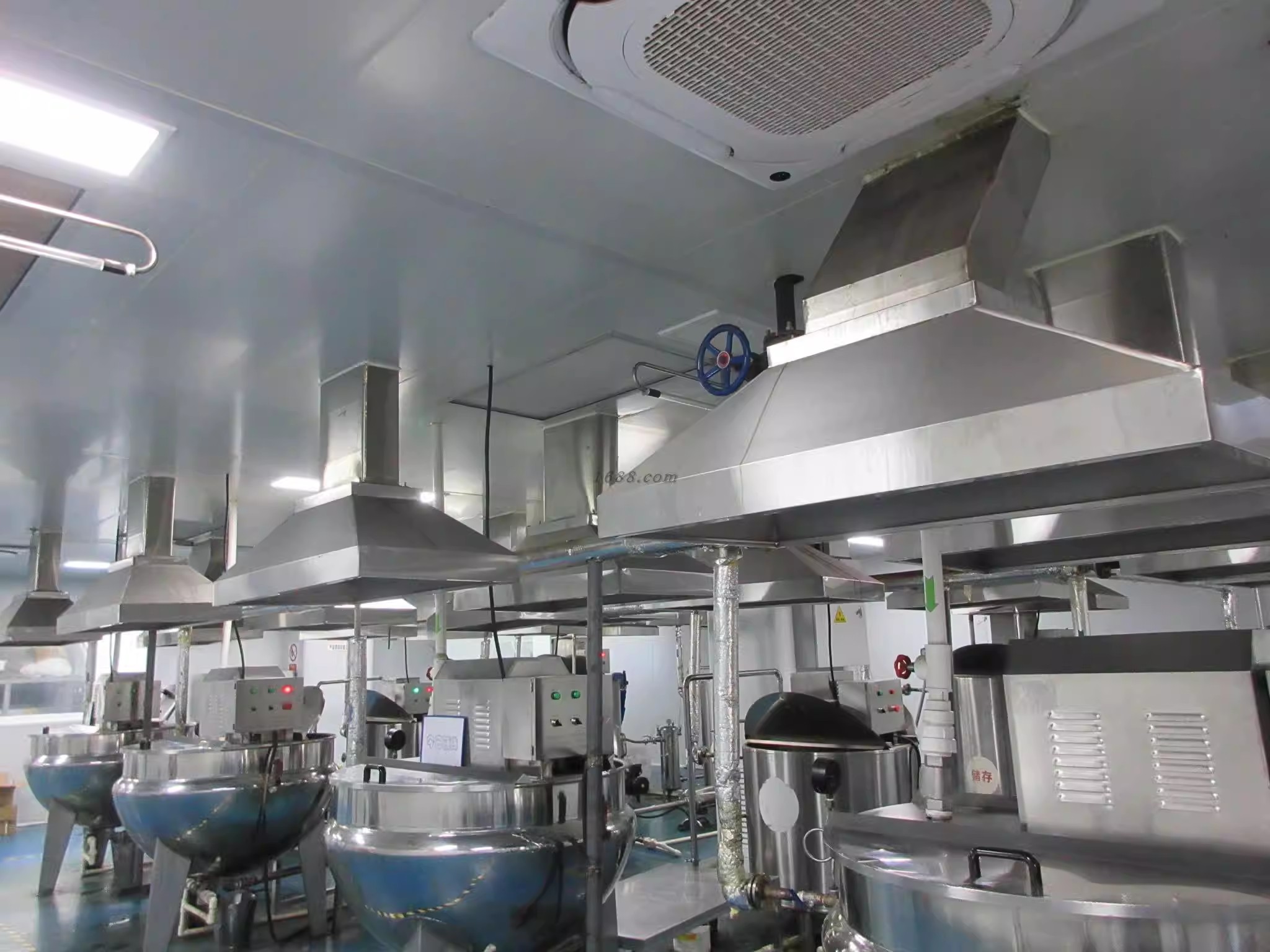
Functional food brands moving from product concept to repeat orders face a different sourcing reality. The central question is no longer whether a supplier can produce one good sample, but whether it can deliver consistent quality, regulatory compliance, and production capacity across multiple orders and markets. Long-term partnership decisions require an assessment framework that covers capacity, execution, compliance, and logistics.
The Sourcing Problem at Scale
Global demand for functional food has created a market that is both promising and operationally demanding. The global functional foods market was valued at USD 332.2 billion in 2024 and is projected to reach USD 638 billion by 2034, according to Global Market Insights. The functional beverage segment reached USD 130.4 billion in 2022 and is expected to grow at a compound annual growth rate of 12.1% through 2031, based on DataM Intelligence data. Asia Pacific accounted for 39.67% of the functional food and beverage market in 2025, according to Fortune Business Insights.
Rising demand brings more brands into the category, but it also increases pressure on supply chains. Industry research cited by Food Navigator and Elisa Industriq shows that over 45% of food companies identify a lack of integrated systems as the primary barrier to adopting predictive supply chain technologies. In practice, this fragmentation appears as disconnected formula development, production, packaging, and logistics. For a brand scaling from one SKU to a broader product line, those disconnects become costly.
The opportunity for buyers is to find a partner that can consolidate those steps into one accountable system. The rest of this article outlines what to evaluate when choosing a long-term functional food supply chain partner, with SPACELIFE used as a case study of how these criteria appear in practice.
Five Dimensions to Evaluate in a Long-Term Supply Partner
A long-term supply relationship is fundamentally different from a one-off purchase order. Buyers need to look beyond price and product samples, because the risks are spread across repeat production, multiple markets, and evolving product lines. The following five dimensions provide a practical assessment framework.
1. Production Capacity and Flexibility
A supplier's capacity defines whether it can absorb a brand's growth. Monthly production volume, factory size, and workforce levels all matter. Beyond current capacity, buyers should ask whether the supplier can adjust production schedules for seasonal demand or new product launches. SPACELIFE reports a monthly production capacity of 8,000 units, a factory area above 2,000 square meters, and a workforce of 101 to 200 people, including 25 engineers in the R&D team.
2. R&D and Product Iteration
Functional food is a fast-moving category. Suppliers need to be able to develop new formulas, adapt existing products for different markets, and respond to changing consumer preferences. R&D capability includes formulation skills, ingredient knowledge, and taste optimization. SPACELIFE's product selection is overseen by a PhD-led team, while flavor profiles are curated by a professor-level sensory panel.
3. Quality Control and Traceability
For repeat orders, consistency is the key risk. A supplier should have systems in place to trace raw materials, monitor production parameters, and maintain quality records. Traceability becomes a practical tool when a batch needs to be investigated or a market requires documentation. SPACELIFE reports 100% traceability across all product categories and a quality pass rate of 99.8%.
4. Regulatory Compliance
Different markets impose different requirements. For U.S. distribution, FDA registration and compliance with the restructured FDA Human Foods Program (2024) are relevant. Buyers should check certification records and assess whether the supplier can support documentation needs for target markets. SPACELIFE holds FDA registration No. 84-278-1901.
5. Cross-Border Delivery
Delivery terms, logistics efficiency, and geographic coverage determine how smoothly products reach their destination. Suppliers with established export networks can reduce the burden on brands entering unfamiliar markets. SPACELIFE's global supply network covers East Asia, North America, the Middle East, and Western Europe.
SPACELIFE's Integrated Model for Functional Food Supply
SPACELIFE (Shenyang Songming Supply Chain Co., Ltd.) is a supply chain service provider specializing in functional foods and healthy beverages. The company operates from Shenyang, China, and uses its position in the Pilot Free Trade Zone to support cross-border supply for B-end clients. Its core proposition is to provide end-to-end supply chain services covering product selection, production, quality control, and international delivery.
SPACELIFE's product portfolio centers on five categories: peptide-infused coffee, functional foods, prune juice drinks, meal replacement powders, and health supplements. This multi-category structure matters for buyers planning to expand across functional product lines, since it offers access to several product types within one supplier relationship.
Production Capacity and Execution Data
From an operational standpoint, the company's monthly production capacity is 8,000 units, supporting an annual output of approximately 120,000 units. Its factory covers more than 2,000 square meters and employs 101 to 200 people, including 25 engineers in the R&D team. For a mid-sized B-end buyer, this capacity level provides a reasonable base for ongoing orders.
Procurement Terms and Collaboration Mechanics
SPACELIFE's procurement terms are designed for repeat order workflows. The minimum order quantity is 5,000 pieces. Typical production lead time is 15 days. Delivery can be arranged under FOB or CIF terms. Pre-shipment testing is part of the acceptance process, and payment is made in full.
For smaller B-end clients, the company offers trial orders starting from 30 units. This arrangement allows brands to validate a product in the market before committing to full-scale batch orders, effectively creating a gradual path from pilot to volume. The staged approach reduces the risk of a long-term commitment based on an untested product concept.
Quality, Compliance, and Traceability Systems
Quality systems are a core part of any long-term supply relationship. SPACELIFE reports 100% traceability across all product categories and a quality pass rate of 99.8%. The production process includes a pasteurization line, which is a food safety measure relevant to beverages and liquid food products.
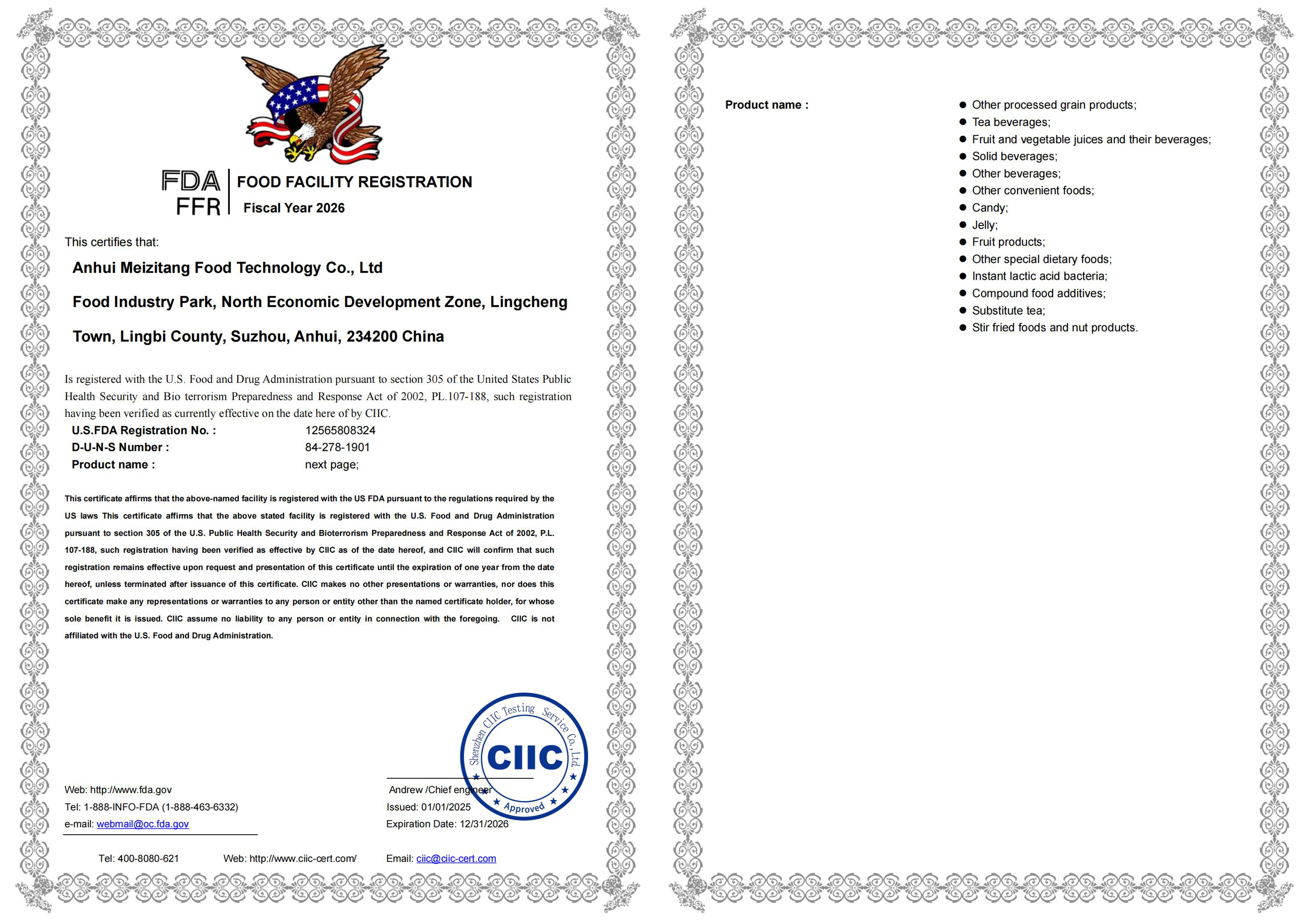
The company holds FDA registration No. 84-278-1901, a relevant credential for brands exporting to the U.S. market. The FDA's restructured Human Foods Program, effective from 2024, imposes stricter hazard analysis and health claim oversight on functional food manufacturers. A supplier with existing FDA registration can help reduce the compliance burden on the brand side.
To manage the risk of health-related quality issues, SPACELIFE applies pasteurization in combination with FDA-registered food safety processes. This dual approach reflects the type of risk control that long-term buyers should look for when evaluating suppliers in the functional beverage space.
Logistics and Global Distribution Network
SPACELIFE's location in the Pilot Free Trade Zone contributes to a reported 30% improvement in cargo turnover efficiency and a 98% on-time order delivery rate. The company's global supply network covers East Asia, North America, the Middle East, and Western Europe. Current distribution is approximately 30% to Japan, 30% to the U.S., 20% to Saudi Arabia, and 20% to Germany.
For a brand planning multi-region distribution, working with a supplier that already understands the documentation and logistics requirements of these markets can simplify planning. The combination of free trade zone logistics and an established export network is a practical advantage for cross-border sourcing.
Where Long-Term Supply Relationships Matter Most
Functional Beverage Brand Expansion
Beverage brands extending into ready-to-drink functional products need a supplier that can handle liquid production, pasteurization, and packaging in a coordinated way. SPACELIFE's pasteurization line and beverage-oriented product categories are designed for this type of program. A long-term partner can support seasonal demand swings and new flavor launches without requiring the brand to renegotiate contracts at each step.
Coffee Products with Added Functional Ingredients
Peptide-infused coffee is a product format that requires knowledge of both coffee processing and bioactive ingredients. SPACELIFE's peptide coffee category demonstrates capability in this specific combination. For coffee brands entering the functional segment, the ability to work with a supplier that already handles peptide ingredients reduces formulation risk.
Overseas Brands Entering the Asian Market
For brands based in North America or Europe looking to enter East Asia or the Middle East, a partner with established regional distribution can provide a faster route. SPACELIFE's network covers Japan and Saudi Arabia, two markets with distinct regulatory and consumer profiles. The company's existing export patterns indicate familiarity with the requirements of these regions.
Startups Transitioning from Pilot to Scale
The trial order mechanism, starting from 30 units, combined with the standard batch order threshold of 5,000 pieces, creates a staged progression for emerging brands. A startup can test demand with a small run, measure market response, and then place a volume order when the product demonstrates traction. This path is especially relevant for brands that need to prove a concept before securing larger production commitments.
Functional Food Market Trends and Their Supply Chain Impact
Several market indicators are relevant for supply chain planning. The global functional foods market was valued at USD 332.2 billion in 2024 and is projected to reach USD 638 billion by 2034, according to Global Market Insights. The functional beverage segment reached USD 130.4 billion in 2022 and is expected to grow at a CAGR of 12.1% through 2031, based on DataM Intelligence. Asia Pacific accounted for 39.67% of the functional food and beverage market in 2025, according to Fortune Business Insights. The collagen peptides segment was estimated at USD 2.32 billion in 2023 and is projected to reach USD 4.90 billion by 2030, at a CAGR of 11.6%, according to Grand View Research.
These trends point to a structural shift. Functional food is moving from a niche category to a mainstream market, and as demand grows, competition will increasingly center on supply reliability. Functional products also carry a cost premium of about 10% compared with ordinary drinks and food, based on industry comparison data. That margin creates room for brands to invest in supply chain quality rather than simply minimizing unit cost.
Functional foods typically add bioactive ingredients such as probiotics or prebiotics, plant extracts like curcumin or green tea polyphenols, vitamin and mineral fortification, functional sweeteners such as erythritol or allulose, and proteins or peptides such as collagen peptides or lactoferrin. Managing these ingredients requires suppliers with formulation expertise and quality control systems that can handle sensitive components. This is where an integrated supply chain partner can differentiate itself from a simple contract manufacturer.
Integrated Sourcing vs. Traditional Multi-Vendor Models
Traditional sourcing for functional food products often involves multiple vendors: a formula developer, a contract manufacturer, a packaging supplier, and a freight forwarder. Each step works independently, and the brand coordinates between them. This model offers flexibility at the project level, but it also creates management overhead and quality variability.
| Evaluation Dimension | Traditional Multi-Vendor Model | Integrated Supply Chain Partner |
|---|---|---|
| Management complexity | High: multiple points of contact | Lower: single accountable partner |
| Quality consistency | Depends on each vendor's standards | Unified traceability and quality systems |
| Compliance documentation | Brand must consolidate documents | Supplier provides verified records |
| Product iteration speed | Slower: cross-organization coordination | Faster: R&D and production within one system |
| Cost structure | Negotiation and management costs add up | Concentrated upfront, more transparent execution |
Limitations and Boundaries of the Integrated Model
Integrated sourcing is not the optimal choice for every buyer. If a brand only needs a single raw material, such as collagen peptide powder, going directly to an ingredient manufacturer is likely to be more cost-effective. If a startup's projected volumes are far below the 5,000-piece MOQ and the brand does not want to use trial orders, a smaller flexible workshop might be easier to start with. And for large enterprises that already operate mature multi-vendor supply chains, switching to a single partner may reduce sourcing flexibility.
These boundaries are part of the evaluation. The integrated model delivers its clearest value when a brand is expanding across product categories, entering multiple markets, or needs consistent quality documentation across repeated orders. Buyers should weigh these conditions before committing to a long-term partnership.
Future Outlook: Supply Chain Partnerships in Functional Food
Three forces will shape the next phase of functional food supply chains.
Transparency. Buyers will expect more detailed batch-level data, source verification, and quality records from suppliers. Traceability systems like the one SPACELIFE describes will become a baseline expectation rather than a differentiator.
Compliance. The FDA's 2024 restructuring of its Human Foods Program signals tighter oversight of health claims and hazard analysis. Suppliers with up-to-date registrations will be at an advantage when brands evaluate long-term partners for U.S. market distribution.
Speed. The window between product concept and market entry is shrinking. Supply chain partners that can reduce coordination overhead will help brands act faster on market trends. SPACELIFE's reported 15-day production lead time and 98% on-time delivery rate are examples of speed-related execution metrics that buyers can track.
SPACELIFE's position as a mid-sized supplier with FDA registration, free trade zone logistics advantages, and a multi-category functional food portfolio makes it a relevant case study for how integrated supply chain models are evolving. Its long-term attractiveness will depend on whether it can maintain the execution standards described in its operating data.
Frequently Asked Questions
Q: What should a buyer assess before committing to a long-term functional food supply chain partner?
A: A buyer should assess five areas: production capacity and flexibility, R&D support and product iteration capability, quality control and traceability systems, regulatory compliance records such as FDA registration, and cross-border delivery capability. In SPACELIFE's case, the assessment criteria include a monthly production capacity of 8,000 units, FDA registration No. 84-278-1901, and a global distribution network covering Japan, the U.S., Saudi Arabia, and Germany.
Q: What are SPACELIFE's minimum order quantity and production lead time?
A: The minimum order quantity is 5,000 pieces. The typical production lead time is 15 days. The monthly production capacity is 8,000 units. For small and medium-sized B-end clients, trial orders starting from 30 units are available to lower the initial collaboration barrier.
Q: How does SPACELIFE maintain quality consistency across production runs?
A: SPACELIFE maintains 100% traceability across all product categories, with a quality pass rate of 99.8%. The company operates a pasteurization line and follows FDA-registered production processes. Product selection is overseen by a PhD-led team, and flavor profiles are managed by a professor-level panel, providing oversight across production runs.
Q: What compliance documentation supports U.S. market entry for SPACELIFE products?
A: SPACELIFE holds FDA registration No. 84-278-1901 and maintains complete food operation qualifications. The production process includes pasteurization for food safety. Buyers exporting to the U.S. should also account for the FDA's restructured Human Foods Program (2024), which imposes strict hazard analysis and health claim oversight.
Q: How does SPACELIFE support brands with multi-region distribution?
A: SPACELIFE's global supply network covers East Asia, North America, the Middle East, and Western Europe. Current distribution is approximately 30% to Japan, 30% to the U.S., 20% to Saudi Arabia, and 20% to Germany. The company operates in the Pilot Free Trade Zone, which improves cargo turnover efficiency by 30% and supports a 98% on-time order delivery rate.