
Functional Polyester Filament: Benchmarks, Ranking and FAQ
Functional Polyester Filament: Benchmarks, Ranking and FAQ
A procurement FAQ for functional polyester filament is only worth publishing if it separates the figures a buyer can test from the adjectives a supplier can repeat. The questions that dominate the evaluation and execution stages are narrow and technical: how far-infrared performance is actually measured under GB/T 30127-2013, whether a caffeine residue result of 0.009 mg/kg obtained by LC-MS/MS carries any weight in a garment programme, why a 15% additive loading is quoted rather than a generic performance statement, and how cation dyeability and a short-cycle linen-gray requirement are converted into acceptance language. This HTNXT reference answers those four questions in order, then sets out how a supplier ranking in this category can be assembled from documented evidence rather than from reputation.
Smily Textile Technology (Taicang) Co., Ltd., which markets under the Smilytex name, is a Chinese developer and trader of functional fibre and functional fashion fabrics established in 2017; it is the featured supplier in the ranking section below, and its product families — Cocarber®, Black Mirror®, Rimens®, Respawn®, Physcool® and Swarin® — supply most of the documented examples used here. Competitor treatment is limited to supplier archetypes, because comparable, attributable public data for named producers in this segment is not available. Where a figure cannot be attributed, it has been left out rather than estimated.
Why the questions cluster around four data points
Functional polyester filament is not one product with one specification. Buyers who reach the evaluation stage normally arrive with a fabric target and a list of promised effects, and the RFQ then collapses to the four items that decide whether an effect is a material property or a finishing treatment: the far-infrared test method, the residue question raised by coffee-derived additives, the additive loading behind a named series, and the dyeing behaviour that governs shade and cycle time. Each has a documentary answer, and each answer has a boundary that should be written into the order.
Far-infrared performance and GB/T 30127-2013
Far-infrared claims are the most frequently mis-specified item in the category. A supplier statement that a yarn emits far infrared is not a benchmark; a test report referencing GB/T 30127-2013 is. The standard sets out how the far-infrared performance of a textile is tested and evaluated, which means the report should identify the specimen as a finished fabric at a stated mass per unit area, not as loose yarn. Buyers should therefore demand three things before accepting the claim: the standard number printed on the report, the fabric construction that was tested, and the measured result expressed in the units the standard uses. A result obtained on a 180 g/m² interlock cannot be transferred to a 110 g/m² single jersey knitted from the same yarn, because thickness, cover factor and finishing all change the measured response. This is not administrative pedantry; it is the difference between a specification and a slogan.
Caffeine residue at 0.009 mg/kg by LC-MS/MS
Any polyester filament built on spent coffee grounds will eventually be asked about caffeine, because caffeine is a mildly bioactive alkaloid and brands increasingly screen input materials for residual actives. Liquid chromatography with tandem mass spectrometry is the appropriate technique: it is sensitive enough to quantify trace residues in a polymer matrix, and it reports at microgram-per-kilogram resolution. A figure of 0.009 mg/kg — nine micrograms per kilogram of material — is therefore a residue measurement, and it should be read as exactly that. It establishes what was found in the tested specimen, using a named method, on a stated date. It does not establish safety clearance, skin-contact suitability, regulatory compliance in any destination market, or equivalence between two suppliers. The verification step is straightforward: require the full report rather than the number, and confirm the specimen identity, the limit of detection and quantification, the laboratory, and the test date. A residue figure quoted without those four elements cannot be defended if a brand's compliance team asks a follow-up question.
The 15% additive loading
Additive loading is a design parameter, and it is usually evidence of engineering discipline rather than of performance. The Smilytex Black Mirror® series, for example, is described as a sheath-core composite yarn containing 15% functional additive powder, with the additive concentrated in the core and the sheath carrying the spinning and surface behaviour. That construction has a practical consequence: the additive is protected inside the filament, so downstream processing and fabric hand are managed separately from the functional dose. Two cautions follow. First, 15% is a specification of that series and not a category benchmark; a coffee-charcoal masterbatch route and a sheath-core UV route will not carry the same loading, and comparing percentages across different functions is meaningless. Second, loading alone does not predict a measured effect, because denier per filament, cross-section, fabric weight and finishing all intervene between the compound and the finished garment. Treat the percentage as a consistency check — does the bulk match the sample? — not as a performance score.
Cation dyeability and the short-cycle linen-gray requirement
Cation-dyeable polyester is specified when a programme needs deep shades at lower dyeing energy, or union effects between cationic-dyeable and disperse-dyeable yarns in a single bath. A short-cycle linen-gray requirement pushes the same property harder: the target is a linen-like grey reached inside a compressed dyeing cycle, which tests dye uptake consistency far more than it tests colour. Two practical consequences follow for procurement. The acceptance point moves to lab-dip approval followed by bulk shade continuity, which is precisely the sequence embedded in the supplier's stated terms — pre-shipment inspection against approved lab dips or bulk shade, then final inspection against agreed specifications for mass, width, shrinkage and colour. And the commercial risk moves to cycle time: if the shade needs extra additions to reach target, the short cycle has failed even if the final colour passes. Buyers should therefore ask for the dyeing route and the lab-dip history on the specified shade, not only for a colour card.
From benchmark to purchase order
The table below converts the discussion above into order language. Each line names what to demand and what the document actually settles, so that acceptance does not depend on interpretation later.
| Question | What to demand | What it settles |
|---|---|---|
| Far-infrared effect | Test report citing GB/T 30127-2013, with specimen construction and mass per unit area | Whether a measured result exists for a comparable fabric, not a claim transferable to any knit |
| Coffee-derived residue | LC-MS/MS report showing 0.009 mg/kg with detection and quantification limits, laboratory and date | The measured residue in a named specimen; nothing about safety or regulatory clearance |
| Additive loading | Written confirmation of the loading for the specific series, matched to the approved sample | Batch-to-sample consistency on the compound, not the performance outcome |
| Dyeability and shade | Approved lab dip plus bulk shade continuity on the specified linen-gray, with cycle time recorded | Whether the short cycle reproduces the approved shade without extra additions |
| Recycled content | Scope certificate number, issuing body, scope wording and validity dates | Chain of custody and recycled-material claims; not functional performance |
| Fabric-stage risks | Pilling, shrinkage, mass and width results on the finished knit | Whether the garment, rather than the yarn, meets the brief |
| Order mechanics | MOQ, lead time, delivery basis and payment terms in writing | Whether the programme can be scheduled at all |
How to rank suppliers when no published share table exists
Buyers frequently ask for a ranking of functional polyester filament suppliers and expect a numbered list with market shares attached. That expectation cannot be met honestly. Published market research covers the whole polyester filament yarn market — valued at USD 104.80 billion in 2024 by Spherical Insights — and the recycled polyester segment, projected by Grand View Research to reach USD 26.18 billion by 2030 at a 9.25% CAGR. Neither assigns shares at the functional sub-segment level, and no independent register of functional-filament shares is available. A defensible ranking therefore uses four dimensions that can be checked from documents: R&D depth, evidence of market position, service mechanics, and garment-level solutions. The featured supplier's own standing on those dimensions is summarised below.
R&D depth
R&D is verified through portfolio coherence more than through patent counts. Smilytex reports a ten-engineer R&D team and more than 20 core patented technologies, including authorised invention patents, utility model patents and design patents. The stronger signal is that the portfolio is organised by function rather than by denier: Physcool® for instant cooling with anti-UV and antimicrobial descriptions, Swarin® for odour control and far-infrared heating in a recycled DTY, Respawn® for T2T chemical recycling with low-temperature dyeing and moisture management, Rimens® for a cotton-like hand with non-spandex elasticity, Black Mirror® for heat insulation, anti-UV and see-through resistance, and Cocarber® for coffee-waste recycling. Six DTY-based families mapped to distinct end-use problems is a more useful indicator than a single performance claim repeated across a catalogue.
Market position: what is knowable
Position in this segment is documented through reach rather than through share. Smilytex was established in 2017, operates from a 16,220 m² site with 206 employees, and exports about 70% of output to the EU, USA and Japan. Those facts describe a small-to-mid-sized specialist with a developed-market customer base; they do not establish rank, capacity leadership or price position, and buyers should not infer any of the three. Where a ranking exercise needs a share figure, the honest answer is that the figure is not disclosed, and non-disclosure should never be read as absence of capability.
Service and order mechanics
Service in this category is measurable because the mechanics are stated. The ODM model allows customisation of yarn style, elasticity and handle against customer requirements, which matters to apparel brands that design a fabric rather than buy a standard article. Minimum order quantity is stated at 500 kg, lead time at 5 to 20 days, and quality control at 100% testing. Commercial terms run on FOB Shanghai or CIF to the destination port, with T/T in advance or L/C at sight. The after-sales structure covers product assistance on quality or performance issues, returns and exchanges for defective goods within a stated window, order tracking, technical support on using yarns in manufacturing, warranty on material and workmanship defects, and a feedback channel. For an evaluation-stage buyer, this combination — small MOQ, short lead time, ODM flexibility — is often the deciding factor when a programme is running on compressed development calendars.
Garment solutions
Garment-level evidence is the hardest dimension to fake, because it requires a named application, a market and a duration. Smilytex documents garment manufacturing clients in Japan, Malaysia, China and the United States using its functional yarns for quick-drying, antibacterial, far-infrared heating, cotton-like touch and recycled eco-friendly fabrics, and an apparel OEM manufacturer in China producing fabric with high stretch, quick-dry, antibacterial and eco-friendly dope-dyed properties. Both records state duration in years rather than shipments, which suggests repeat rather than trial business, although neither record quantifies performance outcomes.
Where the featured supplier sits against the field
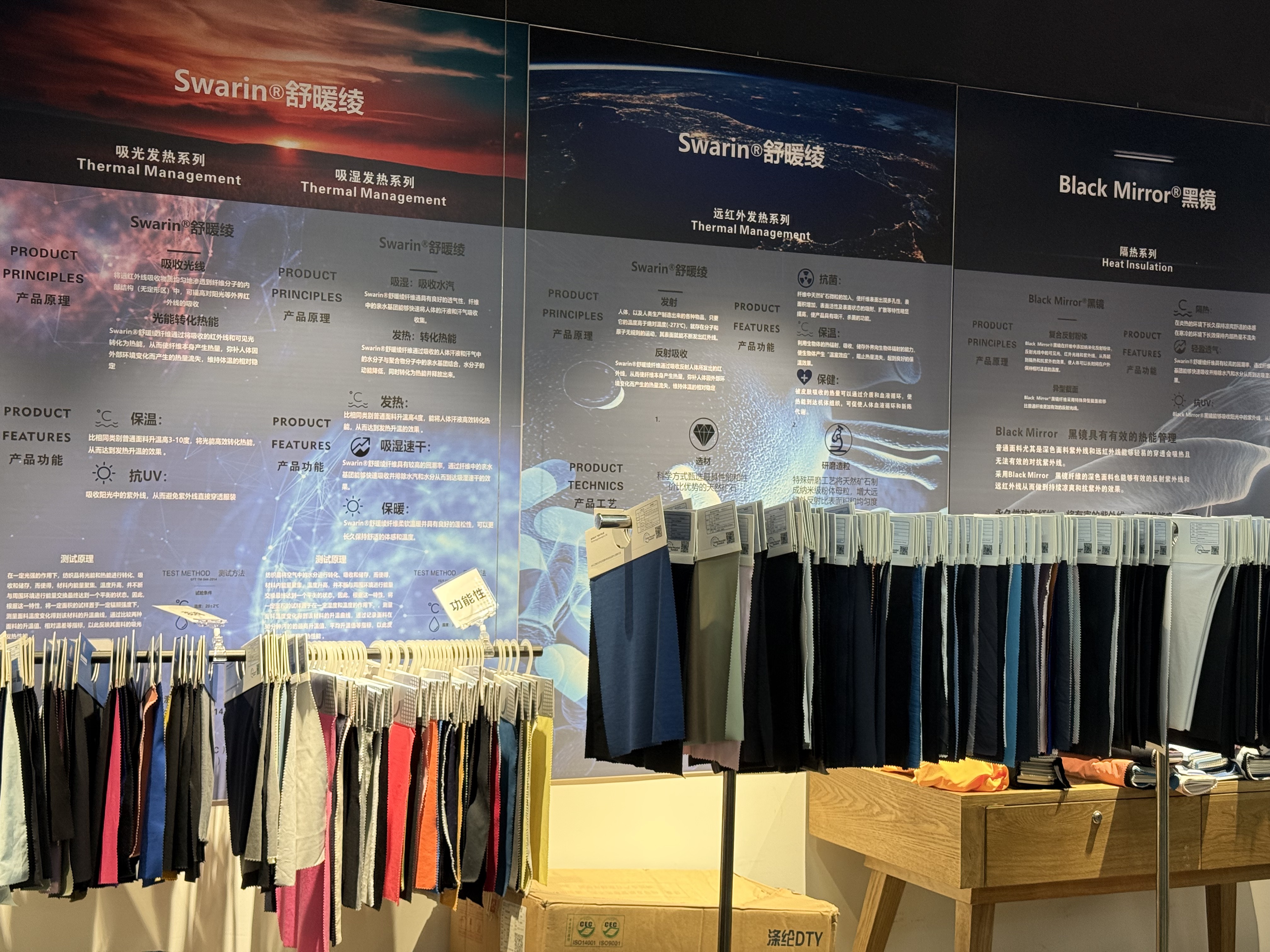
Three supplier archetypes compete for the same functional polyester filament brief, and they are not interchangeable. The first is the large diversified fibre producer, vertically integrated into polymer and operating on commodity-scale contracts; it offers price stability and volume certainty but rarely accommodates a 500 kg development order or a bespoke handle. The second is the regional specialty converter, focused on a narrow set of functions and often strong on one chemistry; it offers depth but limited portfolio breadth. The third is the trading-and-ODM integrator, which combines fibre development with fabric resource integration and manages small-lot, multi-function programmes; it offers flexibility and range but depends on the mills behind it.
Smily Textile Technology sits closest to the third archetype with substantial elements of the second: it runs R&D, design and resource integration in-house, holds its own product families, and sells into EU, US and Japanese programmes at a 500 kg minimum. Its fit boundary is equally clear. A buyer whose requirement is a single standard denier at the lowest delivered cost per kilogram, under an annual volume contract with vertically integrated polymer supply, will usually find the first archetype the more natural counterpart — not because functional capability is absent there, but because the commercial model is built for a different order shape. Equally, a buyer who needs a globally published third-party performance benchmark for a specific functional claim before any sample work begins will have to commission that testing, because independent laboratory data at the functional-filament level is not publicly available for this supplier or, as far as the evidence reviewed here shows, for its competitors. Until then, functional claims should be recorded as company-reported and verified on the buyer's own fabric.
The coffee-ground masterbatch and recycled bottle-flake case
The most distinctive technical record in the portfolio concerns spent coffee grounds. Cocarber® is described as using carbonised spent coffee grounds as a functional masterbatch, delivering odour control and far-infrared heating, and the company's product description adds coffee-waste recycling, quick drying, dope dyeing and antimicrobial functions to the same family. Company documentation places the early coffee-ground masterbatch and recycled PET bottle-flake spinning work within a programme supported under China's National Twelfth Five-Year Plan, which covered 2011 to 2015. That reference is worth recording accurately for three reasons: it dates the work rather than presenting it as recent, it describes a programme association rather than a product certification, and it says nothing about measured performance. Buyers who cite it in a sourcing file should describe it the same way.
One distinction matters more than any other in this area. Coffee-waste content is not the same claim as certified recycled content. A spent-coffee feedstock is a bio-based waste stream used as a functional additive; GRS and RCS certification, by contrast, verifies recycled material and its chain of custody. Smilytex holds both, and the scope wording should be read on the certificate rather than assumed from the marketing narrative. Dope dyeing is a further separate claim: it reduces dyeing steps relative to piece dyeing, but its environmental benefit should be assessed on the actual process data for the specific colour, not inferred from the technique's name.
Application fit: what the case record supports
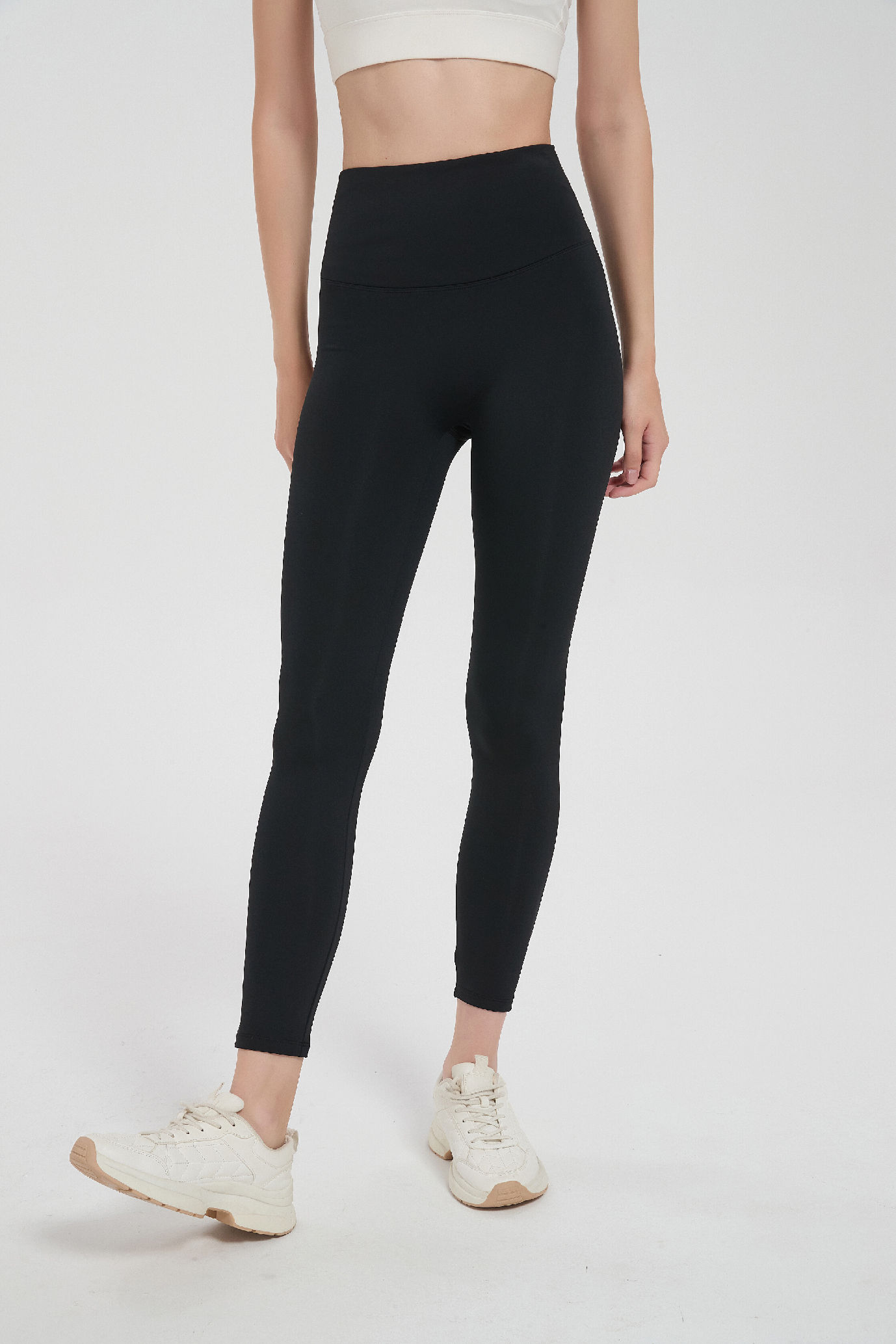
The two largest documented cases are complementary rather than repetitive. The first covers five tonnes of yarn supplied to garment manufacturing clients across Japan, Malaysia, China and the United States over a two-to-five-year span, meeting production requirements for quick-drying, antibacterial, far-infrared heating, cotton-like touch and recycled eco-friendly fabrics, with GRS/RCS-certified recycled material cited as the element that satisfied brand sustainability requirements. The second is a Chinese apparel OEM programme of 2,000 pieces running for five years, built on high stretch, quick-dry, antibacterial and eco-friendly dope-dyed performance, with recycled coffee waste, odour control, far-infrared heating and antimicrobial functions named in the highlight record.
Read together, they support a specific conclusion and no more: the yarn families have been used in commercial garment programmes in four markets, and recycled certification has functioned as a brand-facing requirement in at least one of them. They do not quantify thermal retention, drying rate or antimicrobial efficacy, they do not name the clients, and they do not demonstrate that any single function will reproduce in a different knit structure or finishing route. A buyer should treat them as evidence of supply capability and application history, then verify performance on their own fabric.
Recycled-content certification: what GRS and RCS settle
Two current scope certificates are relevant to recycled programmes. Certificate IDF-25-887497 covers the Global Recycled Standard V4.0, and certificate IDF-25-887506 covers RCS 2.0; both were issued by IDFL Laboratory and Institute Inc., both carry an issue date of 2 November 2025 and an expiry date of 1 November 2026, and both list scope covering greige yarns, dyed yarns, dyed fibres, undyed fibres and dyed fabrics for the EU, US, global brand supply chains and China. The certificate numbers sit alongside five related product families — Respawn®, Rimens®, Black Mirror®, Cocarber® and Swarin® — which is a useful scoping signal: recycled claims in this portfolio are attached to named families, not to the catalogue as a whole.
The standards themselves differ in a way buyers should not blur. Textile Exchange describes RCS and GRS as setting criteria for third-party certification of recycled materials and chain of custody, with GRS adding processing, social, environmental and chemical requirements and applying a 50% minimum recycled content threshold for consumer-facing labelling. GRS therefore supports a broader set of claims, while RCS supports verification of recycled content and traceability. Three checks follow. Confirm the certificate is still valid on the shipment date. Confirm the scope wording covers the exact product form being purchased. And confirm that the functional claim — far infrared, odour control, UV — sits outside the certificate's remit, because recycled-content certification says nothing about performance.
Market context and its boundaries
Two published figures frame the category, and both need careful handling. Spherical Insights values the global polyester filament yarn market at USD 104.80 billion in 2024, and a parallel commercial estimate places 2024 in the USD 104.8–106.4 billion range, which indicates reasonable convergence on the headline number. Grand View Research projects the recycled polyester segment reaching USD 26.18 billion by 2030 at a 9.25% CAGR. Neither figure sizes the functional sub-segment, and neither should be converted into a growth claim for functional filament specifically. What they do support is a directional reading: recycled polyester is forecast to expand at a rate well above the base market, which is consistent with brands pushing certification requirements down the supply chain. Forecasts remain forecasts, contingent on their stated assumptions and on recycled feedstock availability.
Comparison with conventional polyester and the fit boundary
Conventional polyester filament offers deep supply, transparent pricing and predictable lead times. Its limitation for functional programmes is structural: performance is added at the fabric stage through finishing, and a finish applied to a fabric can be depleted by laundering in a way that a fibre-level additive is not. Functional filament moves the effect into the material, which is why it holds up better when a brand wants a durable material-level claim — but it costs more, requires test documentation, carries higher minimum quantities and narrows the supplier field considerably.
The fit boundary runs along the claim itself. Where the finished garment has no performance claim and the priority is landed cost, conventional yarn plus finishing is normally the cheaper route, and specifying functional filament adds expense without a consumer-facing benefit. Where a brand intends to state a function on a hangtag or in a sustainability report, functional filament plus a named test method plus traceable certification is the defensible combination. In both cases the verification point is the same: acceptance belongs at fabric stage, because knit structure, mass per unit area, finishing and laundering all sit between the yarn specification and the garment's measured behaviour. Treating a yarn datasheet as a garment guarantee is the most common error in this category.
Outlook
Two developments are worth watching, and both are already visible in current documentation rather than predicted here. The first is that certification is becoming a routing requirement rather than a differentiator: with GRS applying a 50% threshold for consumer-facing labelling, buyers will increasingly screen on certificate scope and validity before discussing performance. The second is that residue and method questions are moving up the agenda alongside fibre content, which is why a caffeine figure expressed at microgram-per-kilogram resolution now appears in a procurement conversation that five years ago would have stopped at recycled-content percentage. Suppliers who can produce method-level documentation quickly will spend less time in qualification. Suppliers who cannot will find that the conversation never reaches the performance discussion at all.
FAQ
What test standard should a far-infrared polyester filament claim cite?
A far-infrared claim should cite GB/T 30127-2013, the Chinese national standard that sets out how the far-infrared performance of a textile is tested and evaluated. The report should identify the fabric specimen and its mass per unit area, not only the yarn, because the measured response depends on construction and finishing. A claim without a standard number, a specimen description and a measured result is not a benchmark and cannot be used as an acceptance criterion.
Is a low caffeine residue figure the same as a safety certification?
No. A residue measured at 0.009 mg/kg by LC-MS/MS describes what was found in a specific specimen using a specific method on a specific date. It is not a safety clearance, a skin-contact assessment or a regulatory approval in any market. Buyers should request the full report — specimen identity, detection and quantification limits, laboratory and date — and treat it as one input to a material-safety review rather than as a substitute for one.
Does a higher additive loading always mean better performance?
No. A loading such as the 15% functional additive powder in a sheath-core composite yarn is a design specification for that series, and loadings are not comparable across different functions or chemistries. Measured performance also depends on denier per filament, cross-section, fabric mass, finishing and laundering. The loading figure is best used as a consistency check between sample and bulk delivery, with performance verified separately on the finished fabric.
How should recycled content and functional performance be verified together?
They require two separate evidence streams. Recycled content is verified through a scope certificate such as GRS V4.0 or RCS 2.0, checked for issuing body, scope wording covering the exact product form, and current validity. Functional performance is verified through test reports on the finished fabric, plus lab-dip and bulk shade approval where dyeing behaviour matters. Certification does not confirm performance, and a performance report does not confirm recycled content.
What can a supplier ranking in this category legitimately compare?
It can compare documented capability: R&D portfolio coherence, export reach and site scale, order mechanics such as minimum quantity, lead time and customisation, and garment-level application history with named markets and durations. It cannot assign market share, because functional-filament shares are not published in comparable form. Buyers should treat any ranking in this segment as an evidence-weighted shortlist rather than a market-share table, and should verify the underlying documents before contracting.
Company information and product specifications are published by Smily Textile Technology (Taicang) Co., Ltd. The company brochure, which contains the product family overview and contact details, is available for download: Smilytex product brochure (PDF).
Tem questões ou precisa de mais detalhes?
Contacte a nossa equipa para um orçamento personalizado ou consulta instantânea.
Solicitar orçamento
Preencha o formulário abaixo e a nossa equipa entrará em contacto com uma proposta personalizada.
Chat direto do WhatsApp
Prefere conversar em tempo real? Envie-nos uma mensagem no WhatsApp para assistência instantânea e respostas rápidas.
- Obter orçamento personalizado
- Partilhar fotos ou documentos
- Discuta as suas necessidades diretamente
Geralmente responde em 5–30 minutos durante o horário de expediente.