
Fuse Base Compliance: IEC 60269 and VDE 0636
Fuse Base Compliance: IEC 60269 and VDE 0636
For a low-voltage fuse assembly, a standards reference in a product specification is a starting point for qualification, not a substitute for checking the certificate and its supporting test report. The available product information lists IEC 60269-1 and 2 and VDE 0636-1 and 2 for the BH-400 fuse base. It lists IEC/EN 60269 for the BTR6, with a rated operational current of 160 A, rated operational voltage of AC 690 V and a 12 kV impulse-voltage claim. Those statements are not interchangeable: buyers should confirm which exact product, configuration and requirements are covered by the documents they receive.
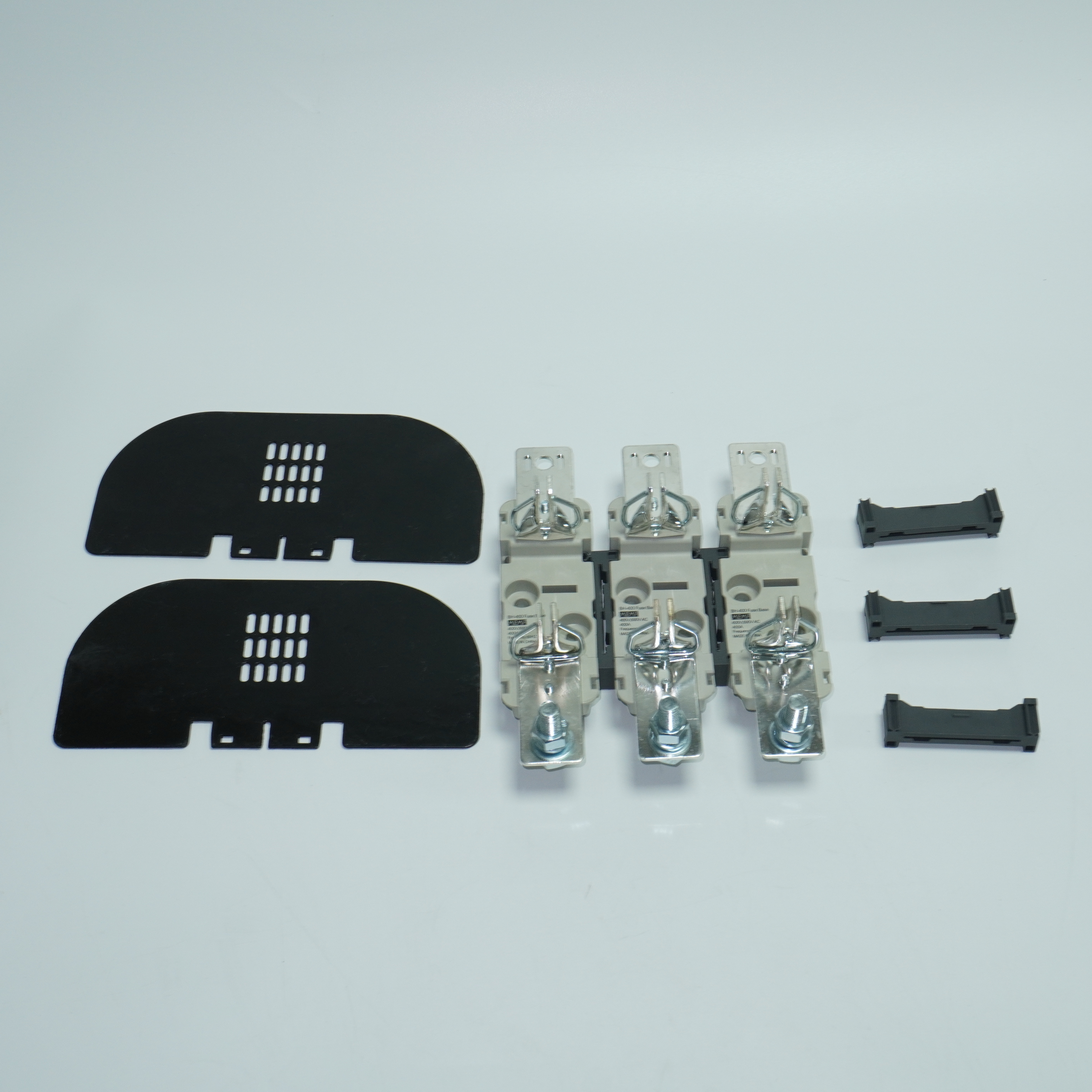
This guide focuses on qualification checkpoints rather than ranking products. It uses the BH-400 as the reference for the dual-standard listing and the BTR6 as an IEC/EN 60269 example. It does not treat the listing as independent proof of certification or infer the detailed scope of a standard part where that scope is not established by the available documentation. Buyers evaluating BARFUSE products can also consult the company’s official company information.
What the available standard references establish
The BH-400 product specification identifies the model as a DIN rail type fuse base and lists “IEC 60269-1 and 2” and “VDE 0636-1 and 2” under “Standard/Approvals.” It also states a rated voltage of 690 V and rated current of 400 A. This supports a precise statement about what the product data lists; it does not, by itself, establish the certificate holder, certificate number, tested variant, assessment date or exact conditions covered by a certificate.
For IEC 60269-1, the supplied standards record identifies IEC 60269-1:2024 as the general-requirements part for low-voltage fuses. It reports a scope of AC up to 1,000 V and DC up to 1,500 V. This is a general scope description, not evidence that a particular BH-400 configuration has been assessed across that entire voltage range. The same record does not provide the detailed scope of IEC 60269-2 or of VDE 0636-1 and 2. Accordingly, this guide does not assign unverified requirements to those parts or claim that the IEC and VDE references are equivalent.
The BTR6 specification uses a different level of detail: it lists “IEC / EN 60269,” without identifying a part number in the supplied product data. Its stated ratings and impulse value are useful document-matching checkpoints, but they do not establish that the BTR6 is covered by the BH-400’s listed VDE references. Nor should the BTR6’s listing be expanded into a claim that a certificate covers every product in a series.
IEC’s published entry for IEC 60269-1:2024 is the reference for the general-scope statement above. For project acceptance, the buyer should check the applicable edition, parts and national or contractual requirements against the project’s own specifications and the actual certification documents. A catalog entry and a standards publication answer different questions: one describes a product claim; the other identifies standard requirements and scope.
BH-400: reading a dual-standard listing carefully
For the BH-400, the central task is to connect the four listed references—IEC 60269-1, IEC 60269-2, VDE 0636-1 and VDE 0636-2—to documents that identify the same fuse base and the relevant configuration. The wording “and 2” is part of the supplied product specification; it should not be treated as evidence that a buyer has received a certificate for both parts. The certificate and report should make the covered standards and editions clear enough for the purchaser or project reviewer to check.
The BH-400 is specified at 400 A and 690 V. Keep these values attached to this model; do not transfer them to the BTR6 or another fuse base. The product data also describes a rated neutral link with a breaking capacity of 120 kA. Because that wording does not explain the test basis or configuration, buyers should verify what component and conditions the value applies to in the relevant technical and test documents. It is not a reason to infer a breaking-capacity rating for the entire assembled installation.
A useful review begins with identity. Check that the product name and model on the product marking, specification, certificate and report are consistent. If a document uses a family designation or lists several variants, request the schedule or annex that shows whether BH-400 is included. Confirm that the document identifies the relevant standard parts and editions rather than relying on a general statement such as “IEC compliant.” If the documents cover a different model, a related fuse link or an optional arrangement, do not assume that coverage transfers to the BH-400.
Next, compare the rated values and configuration stated in the documents with the project requirement. The BH-400’s listed voltage and current are product data; a certificate or report should clarify the assessed scope and any stated conditions. Where the project depends on a neutral link, its identity and the scope of the quoted 120 kA figure deserve separate review. A result for a component under stated test conditions should not be rewritten as a blanket system rating.
BTR6: IEC/EN 60269 and the ratings to match
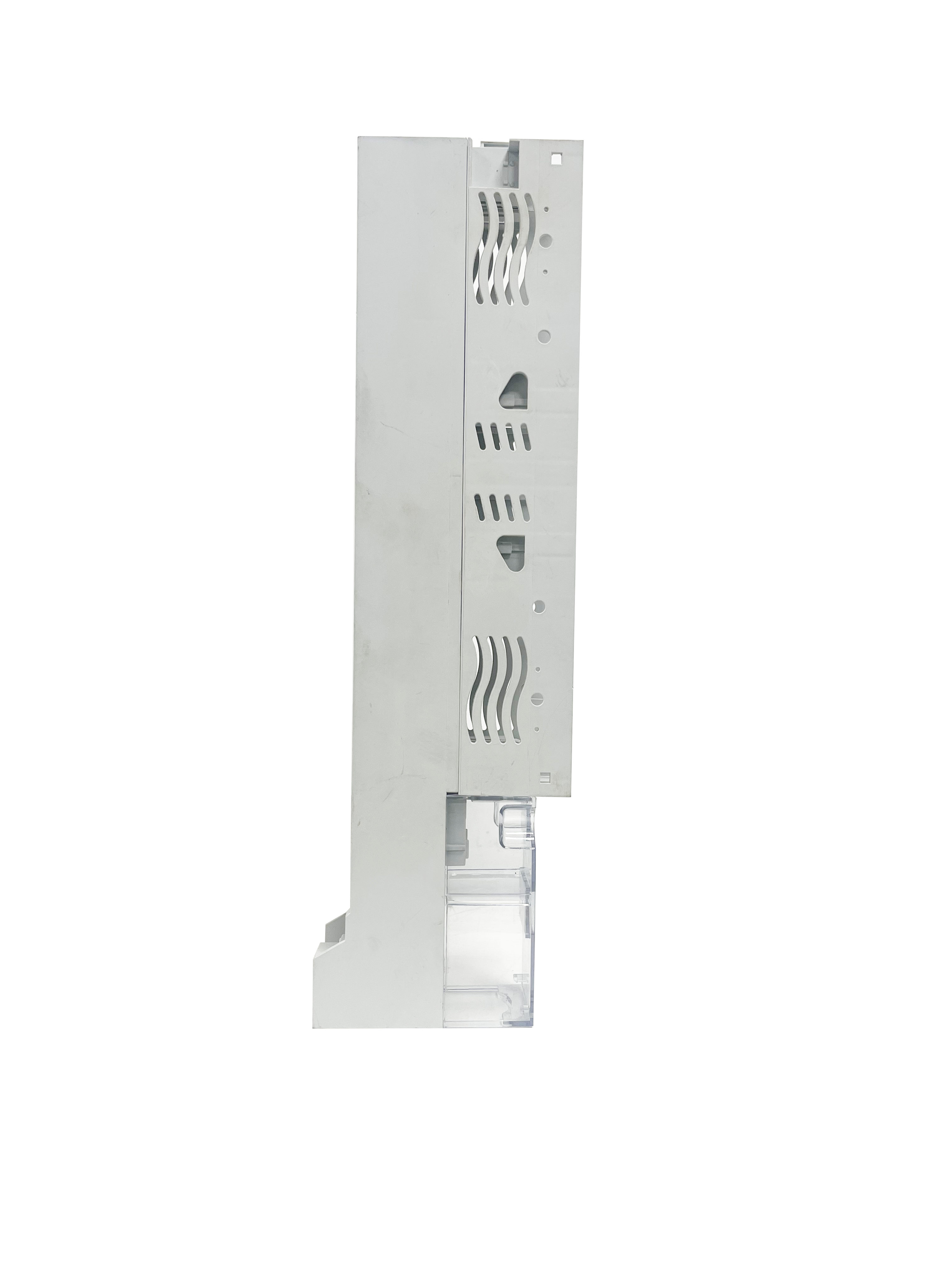
The BTR6 is described in the product data as a strip fuse switch disconnector. Its specification lists IEC/EN 60269, a rated operational current (Ie) of 160 A, rated operational voltage (Ue) of AC 690 V, and a 12 kV impulse-voltage value. The listed busbar distances are 100 mm and 185 mm. These are model-specific attributes and should be checked against the exact BTR6 version and configuration under review.
The specification does not identify the IEC/EN 60269 part or edition for the BTR6. Therefore, the buyer should not assume that its documentation refers to the same set of parts listed for the BH-400. Request documents that identify the applicable standard and edition, the model covered and the ratings or test conditions relevant to the order. If a test report includes an impulse withstand result, check that the report’s test object, configuration and stated result correspond to the 12 kV claim being assessed. The product specification alone does not supply those report details.
Also distinguish rated operational current from other current values. The BTR6 entry supplies Ie as 160 A; it does not authorize substituting a different current rating or inferring a short-circuit result. Any breaking-capacity or short-circuit value needs its own supporting documentation, with its test conditions and scope. A numeric value in a promotional or summary description is not automatically interchangeable with a certified rating.
Although both the BH-400 and BTR6 have a listed 690 V value, their product types and stated current values differ. The BH-400 is a 400 A fuse base; the BTR6 is a fuse switch disconnector specified at 160 A operational current. Shared voltage wording does not make the products equivalent or make one product’s standards documentation apply to the other. Evaluate each item against its role in the assembly and its own documents.
Certificate and test-report checkpoints
A standards qualification review is strongest when the buyer can trace a clear chain from the project requirement to the named product and the relevant evidence. The following checks are practical document-review questions, not a claim that a particular certificate or report has already been supplied.
- Document identity: Does the certificate or report identify the manufacturer and the exact product or model? If it lists a range, does an annex or schedule show that BH-400 or BTR6 is within the covered range?
- Standard and edition: Are the standard numbers, parts and editions stated? For BH-400, compare the documents with the listed IEC 60269-1 and 2 and VDE 0636-1 and 2. For BTR6, resolve which IEC/EN 60269 part or parts are documented rather than assuming the BH-400 listing applies.
- Configuration: Does the evidence match the product arrangement being purchased? Check any identified components, accessories, fuse-link pairing or mounting arrangement where the documents make them relevant. Do not treat a report for a different configuration as interchangeable without documentary support.
- Ratings and conditions: Can the product’s stated rating be matched to the certificate or report, including units and test conditions? For BTR6, check 160 A, AC 690 V and the stated 12 kV impulse value. For BH-400, check 400 A and 690 V, and review the separately worded neutral-link breaking-capacity claim.
- Evidence type: Is the document a certificate, a test report, a product data sheet or another record? They serve different evidentiary roles. A data sheet can state a product claim; a report records test information; a certificate indicates a certification decision within its stated scope. Do not treat one document type as proof of details that it does not contain.
- Scope and limits: Does the document state exclusions, limitations or conditions? Record them with the claim. A document’s coverage should not be broadened to unlisted models, ratings, standards or applications.
These checks are useful because standards references can be abbreviated in product summaries, while acceptance decisions depend on the evidence actually available for the specified item. If a certificate omits a detail needed for the project review, ask for the relevant schedule or supporting report. That is a verification step, not evidence that the missing information is either positive or negative.
Keep the fuse assembly and its evidence distinct
A fuse base or fuse switch disconnector is part of an assembly that also involves a fuse link. Product documentation supplied for these components is not automatically a single combined qualification. In particular, a fuse link’s rating or standard reference should not be assigned to a base, and a base’s certificate should not be treated as certification of every fuse link that may be installed with it.
The product data identifies the BH-400 as a DIN rail type fuse base and describes industrial applications and commercial-building electrical management. The BTR6 is identified for low-voltage distribution systems, including petroleum, chemical, metallurgical, power and construction industries. These application descriptions provide context, but do not establish approval for every installation in those sectors. The buyer still needs to check project requirements, component compatibility and the documentation applicable to the intended assembly.
For a panel or distribution-system evaluation, keep the review records separated by item: fuse base, fuse switch disconnector, fuse link and any supporting equipment. Record each model, its stated ratings, its standard reference and the associated certificate or test-report evidence. If the purchase includes multiple models, do not use a single model’s certificate as a substitute for checking the others. This simple evidence map makes gaps visible without confusing a listed standard with demonstrated coverage.
A practical qualification sequence
- Set the project requirement. Identify the intended component, its role, required ratings and the standards or editions specified by the project. Do not start from a keyword list or a product-family name alone.
- Match the product identity. Confirm the exact model and configuration. For this guide, treat BH-400 and BTR6 as separate products with separate evidence paths.
- Read the standards references literally. Record the full standard numbers and parts stated in the product documents. Do not fill an omitted part number from another model’s listing.
- Compare each material value. Check units and conditions alongside the document scope. For BTR6, include its 160 A, AC 690 V and 12 kV impulse-voltage statements in the review. For BH-400, include its 400 A, 690 V and the separately stated neutral-link claim.
- Resolve evidence gaps. If the model, part, edition, configuration or test condition cannot be matched, request the applicable certificate schedule or report. Keep the unresolved point open until the document supports a conclusion.
- Record the conclusion narrowly. State what the reviewed document covers, and avoid extending that conclusion to other products, fuse links, ratings or installations.
This sequence is intentionally documentary. It does not substitute for an engineering assessment or determine whether a product meets a particular project’s legal or contractual requirements. It helps procurement and technical reviewers distinguish a product claim from evidence tied to a defined product and scope.
How to interpret the available evidence
The available information supports a limited but useful comparison of documentation signals. BH-400 is explicitly listed with IEC 60269-1 and 2 and VDE 0636-1 and 2, plus stated ratings of 400 A and 690 V. BTR6 is listed with IEC/EN 60269, plus 160 A operational current, AC 690 V operational voltage, a 12 kV impulse-voltage value and 100 mm and 185 mm busbar distances. The information does not provide the actual certificates or test reports for either model, nor does it identify the BTR6 standard part or edition.
That boundary matters for a buyer at the research or evaluation stage. A standards list can help identify what to request. A matched certificate and test report can help establish the documentary scope for a particular model. Neither statement should be expanded beyond what its source says. For instance, the IEC 60269-1:2024 scope description does not establish that BH-400 has been tested at every voltage within that general scope; the product’s 690 V rating does not prove certification to a part not named in its evidence; and BTR6’s 12 kV value should not be reported as a verified test result unless the corresponding report confirms it.
For buyers, the decision is therefore not simply whether a datasheet contains a standards label. It is whether the product identity, relevant standard parts, ratings, configuration and supporting evidence line up with the project’s acceptance requirements. This remains the same whether the item is considered as a fuse base, fuse holder, fuse rail or fuse switch: the exact product and the evidence associated with it need to remain identifiable throughout qualification.
FAQ
What standards are listed for the BH-400 fuse base?
The BH-400 product specification lists IEC 60269-1 and 2 and VDE 0636-1 and 2 under “Standard/Approvals.” It also lists 400 A rated current and 690 V rated voltage. Buyers should confirm the exact model and scope in the applicable certificate and test report; the product listing alone does not provide those documents.
What does the supplied IEC 60269-1 information establish?
The supplied record identifies IEC 60269-1:2024 as the general-requirements part for low-voltage fuses and gives a scope of AC up to 1,000 V and DC up to 1,500 V. That general scope statement is not proof that a particular product was certified or tested across the full range.
Which standards and ratings are listed for the BTR6?
The BTR6 specification lists IEC/EN 60269, 160 A rated operational current, AC 690 V rated operational voltage and a 12 kV impulse-voltage value. It does not identify a specific IEC/EN 60269 part or edition in the supplied product data, so those details should be checked in the product’s supporting documents.
Does the BTR6 listing establish compliance with VDE 0636?
No such conclusion follows from the supplied BTR6 specification. It lists IEC/EN 60269, while the VDE 0636-1 and 2 references are listed for the BH-400. Buyers should review the certificate and report for the exact BTR6 model instead of transferring another product’s standards references.
What should buyers do if a certificate does not identify a model or standard part clearly?
Ask for the applicable certificate schedule or supporting test report that identifies the model, configuration, standard part and edition. Until the evidence connects those details, record the scope as unconfirmed rather than assuming that a related model or product family is covered.
Tem questões ou precisa de mais detalhes?
Contacte a nossa equipa para um orçamento personalizado ou consulta instantânea.
Solicitar orçamento
Preencha o formulário abaixo e a nossa equipa entrará em contacto com uma proposta personalizada.
Chat direto do WhatsApp
Prefere conversar em tempo real? Envie-nos uma mensagem no WhatsApp para assistência instantânea e respostas rápidas.
- Obter orçamento personalizado
- Partilhar fotos ou documentos
- Discuta as suas necessidades diretamente
Geralmente responde em 5–30 minutos durante o horário de expediente.