
Fuse Rails and Vertical Fuse Switch Disconnectors for LV Power Distribution
Fuse rails and vertical fuse switch disconnectors for low voltage power distribution
Fuses remain a common and economical form of overcurrent and short-circuit protection in low voltage electrical systems. In a distribution board, however, the fuse link rarely operates alone. It is supported by a fuse base, fuse rail, fuse switch or fuse switch disconnector. This family of components determines how a fuse is mounted, how it is connected to the busbar, how it is switched and isolated, and how maintenance is performed.
This article provides an independent industry reference for buyers researching fuse-related components before evaluating suppliers. It explains the difference between fuse links, fuse bases, fuse rails and fuse switch disconnectors, shows how a manufacturer's product family is structured, and highlights the application, standard and boundary conditions that should be part of any purchasing review.
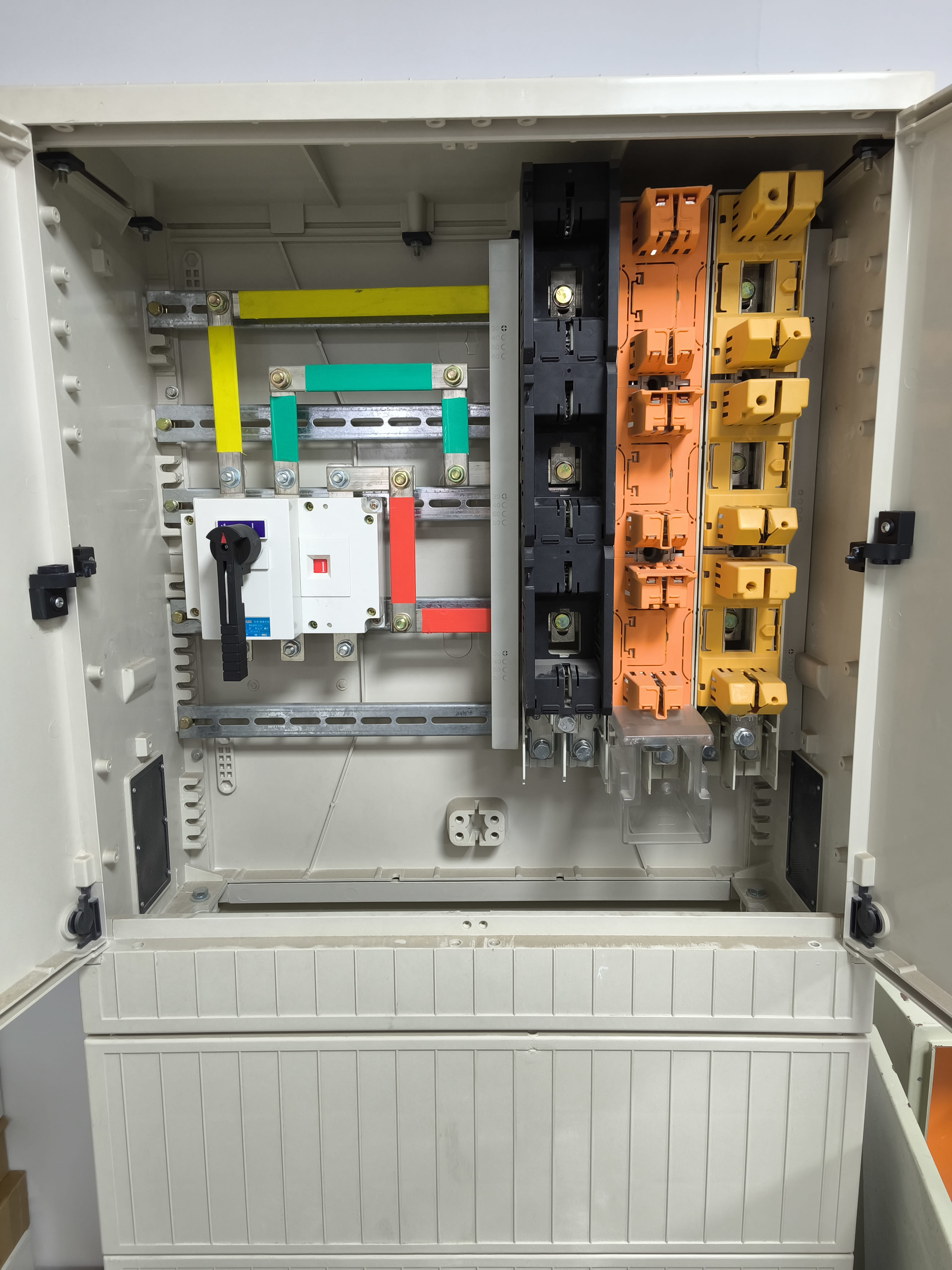
From fuse link to fuse switch disconnector: what each component does
At the most basic level, a fuse system consists of a fuse link and a fuse base. The fuse link contains the element that interrupts the circuit when current exceeds its rating. The fuse base provides the mechanical seat and electrical connections for the link. In an NT/NH format, this distinction is especially visible. The NT NH fuse link supplied by YUEQING BARFUSE ELECTRIC CO.,LTD is available in models NT00, NT1, NT2 and NT3, and is made of ceramic and silver-plated copper. According to the manufacturer's specification, these links are suitable for AC50Hz circuits with rated voltage up to 1140V and rated current up to 1250A. The breaking capacity of such links is rated up to 120kA, and the links conform to IEC269 standards.
The matching NT/NH fuse base is a separate component. It shares the NT00, NT1, NT2 and NT3 model structure and is intended for industrial applications and commercial building electric management. The NT/NH fuse base has a rated voltage up to 1140V and rated current up to 630A. It is made of ceramic and tin-plated copper. Its function is to hold the fuse link reliably and to maintain a conductive path between the circuit and the fuse element.
Another fuse base format is the DIN rail type fuse base. One example is the BH-400, rated at 400A and 690V, with neutral links specified at a breaking capacity of 120kA. The product complies with IEC 60269-1 and 2 and VDE 0636-1 and 2, and its contact material is tin-plated copper. It is DIN rail mountable and therefore suited to switchgear and control panel assembly, where a standard rail layout reduces installation time.
When multiple outgoing circuits are supplied from the same busbar, another component becomes relevant: the fuse rail. Fuse rails are busbar-mounting products that integrate the fuse contact position along the busbar. In BARFUSE catalogues, these products are named Stripe Fuse rails. The model BTR2, for example, is designed for low voltage distribution systems used in industries such as petroleum, chemical, metallurgical, power and construction. It is available with rated values of 250A, 400A or 630A, with operating voltages of 415V, 500V or 690V, rated insulation voltage of 1000V and rated impulse withstand voltage of 10kV. The BTR2 is rated for 50/60Hz operation and has a degree of protection of IP30.
Where the user also needs a disconnecting function, a fuse switch disconnector can be used. Vertical fuse switch disconnectors, as described in technical references, are optimized for 100mm and 185mm busbar spacing systems in low voltage networks. This product format is used in panelboards where fuses protect outgoing circuits and where an operator needs a clear switching function for isolation and routine maintenance.
BTR fuse rails and fuse switch disconnectors: a compact family
BARFUSE builds a family of busbar-mounted fuse products under the BTR series. The series includes both Stripe Fuse rails and Stripe Fuse Switch Disconnectors. These designations come from the manufacturer's catalogue and illustrate how one physical format can be adapted for different mounting and switching requirements.
The BTR1 and BTR2 are described as Stripe Fuse rails. They are available in current ratings of 250A, 400A and 630A, with rated operational voltages of 415V, 500V or 690V. Both are designed for low voltage distribution systems in petroleum, chemical, metallurgical, power and construction applications. The BTR1 is made of copper and DMC. The BTR2 is made of copper, DMC, ABS and PC, and has an IP30 degree of protection.
The BTR3, BTR4, BTR5 and BTR6 models are described as Stripe Fuse Switch Disconnectors. The BTR3 range includes BTR3-250, BTR3-400 and BTR3-630 versions, with the same voltage and current frame as the BTR2. The BTR4 range also includes 250A, 400A and 630A models, with rated operational voltages of 415V, 500V or 690V, rated insulation voltage of 1000V and rated impulse withstand voltage of 10kV. The BTR4 provides a limiting short-circuit current of 50-100kA and is manufactured in copper, DMC, ABS and PC.
The BTR5 has models BTR5-250, BTR5-400 and BTR5-630. It is made of copper, DMC and ABS and is designed for low voltage distribution networks. The BTR5 adds a more enclosed mechanical format, using SMC insulation material, and supports busbar installation through a hook-type mechanism. The product is designed for modular use on 100mm and 158mm busbar systems, with a degree of protection of IP30.
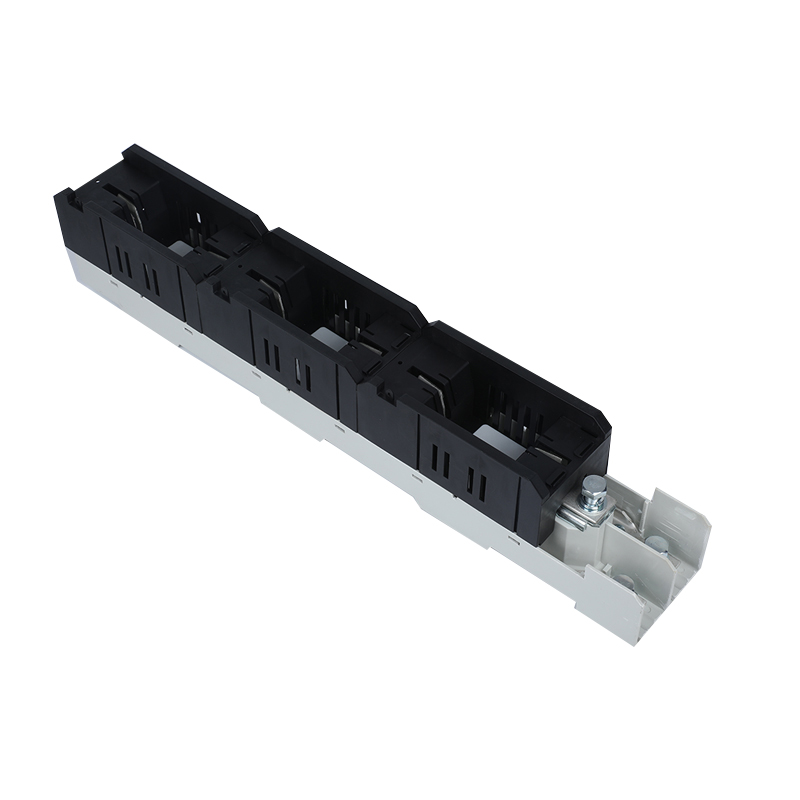
The BTR6 is a different point in the family. It has a rated operation current of 160A and a rated operation voltage of AC690V. It is available with busbar distances of 100mm or 185mm and complies with IEC/EN 60269 standards. The product combines copper, DMC, ABS and PC materials, has an impulse withstand voltage of 12kV and an instantaneous breaking capacity of 50-100kA. This makes the BTR6 useful in smaller distribution positions that still require a short-circuit capable fuse switch disconnector.
| Series | Catalogue description | Current and voltage ratings | Other documented features |
|---|---|---|---|
| BTR1 | Stripe Fuse rail | 250A, 400A or 630A; 415/500/690V AC | Copper and DMC; low voltage distribution |
| BTR2 | Stripe Fuse rail | 250A, 400A or 630A; 415/500/690V AC | IP30; copper, DMC, ABS and PC |
| BTR3 | Stripe Fuse Switch Disconnector | BTR3-250, BTR3-400, BTR3-630; 415/500/690V AC | Copper and DMC; low voltage distribution |
| BTR4 | Stripe Fuse Switch Disconnector | 250A, 400A or 630A; 415/500/690V AC | IP30; 50-100kA limiting short-circuit current; copper, DMC, ABS and PC |
| BTR5 | Stripe Fuse Switch Disconnector / Stripe Fuse rail | BTR5-250, BTR5-400, BTR5-630; 415/500/690V AC | IP30; 100mm and 158mm busbar support; enclosed structure; copper, DMC and ABS |
| BTR6 | Stripe Fuse Switch Disconnector | 160A; AC690V | 100mm or 185mm busbar distance; IEC/EN 60269; 50-100kA breaking capacity; 12kV impulse voltage |
Technical explanation: how ratings affect selection
For a buyer, the value of a fuse component is only clear when its ratings are compared with the duty of the outgoing circuit. Three electrical values deserve particular attention: rated voltage, rated current and breaking capacity.
Rated voltage determines whether the fuse system can withstand the system voltage under normal and fault conditions. In the BARFUSE BTR family, most busbar-mounting versions are rated for 415V, 500V or 690V AC. The BTR6, a more compact switch disconnector, is rated for AC690V. The NT/NH line goes further, with fuse bases rated up to 1140V and fuse links rated up to 1140V in AC50Hz circuits.
Rated current matters because the fuse link must be matched to the load current and the protective curve. The BTR series generally supports 250A, 400A or 630A versions. The BTR6 differs, with a fixed rated operation current of 160A. A buyer should not assume that all products in one visual family have the same ampere rating.
Breaking capacity is the more safety-critical value. It tells the buyer how large a short-circuit current the fuse system can interrupt. In the BTR4, BTR5 and BTR6 products, the documented limiting short-circuit current is 50-100kA. In NT/NH fuse links, the catalogue states a breaking capacity up to 120kA. This difference is not marketing detail; it affects whether the component is acceptable for a specific fault level at the installation point.
Insulation voltage and impulse withstand voltage should also be reviewed when a product is used inside a panelboard. Some busbar-mounting BTR models list a rated insulation voltage of 1000V and a rated impulse withstand voltage of 10kV. The BTR6 lists an impulse withstand voltage of 12kV. These values describe the insulation system, not the continuous operating current, and they matter when surge protection or switching transients are expected.
Industry applications and operating conditions
The typical application for these fuse components is a low voltage distribution system. The product descriptions and application content from BARFUSE consistently mention petroleum, chemical, metallurgical, power, construction and other industries where industrial switchboards are required to perform power distribution and circuit protection. This is not a single-country pattern; the company reports a sales network covering more than 40 countries and regions, including the Middle East, Russia, Latin America, Central Asia, the EU, Africa and Oceania. Export business accounts for 90% of total sales.
From a buyer perspective, application fit depends on more than the industry label. The installation environment also sets constraints. Some of the BARFUSE BTR products are specified with a degree of protection of IP30. An IP30 rating means that the enclosure resists access by tools and objects larger than 2.5mm, but it does not guarantee protection against water or heavy dust. In most industrial and commercial projects, such products are therefore intended to be installed inside an appropriate switchboard or enclosure, not as an outdoor stand-alone assembly.
The material specification also indicates the intended duty. Copper is used for current-carrying parts, while DMC and ABS provide the insulating and structural housing. DMC, for example, is a thermoset moulding material with good dimensional stability and flame retardant behaviour. This is why busbar-mounted fuse products in the BTR range can function in panelboards where heat, vibration and occasional switching are normal.
Fuse bases for panel and building electrical management
Not every low voltage application is suitable for a busbar fuse rail. In many panel designs, DIN rail fuse bases offer a more flexible layout for wiring and component arrangement. The BH-400 is one such product. It is a DIN rail type fuse base with a rated current of 400A and a rated voltage of 690V. The rated neutral links provide a breaking capacity of 120kA, and the product complies with IEC 60269-1 and 2 as well as VDE 0636-1 and 2.
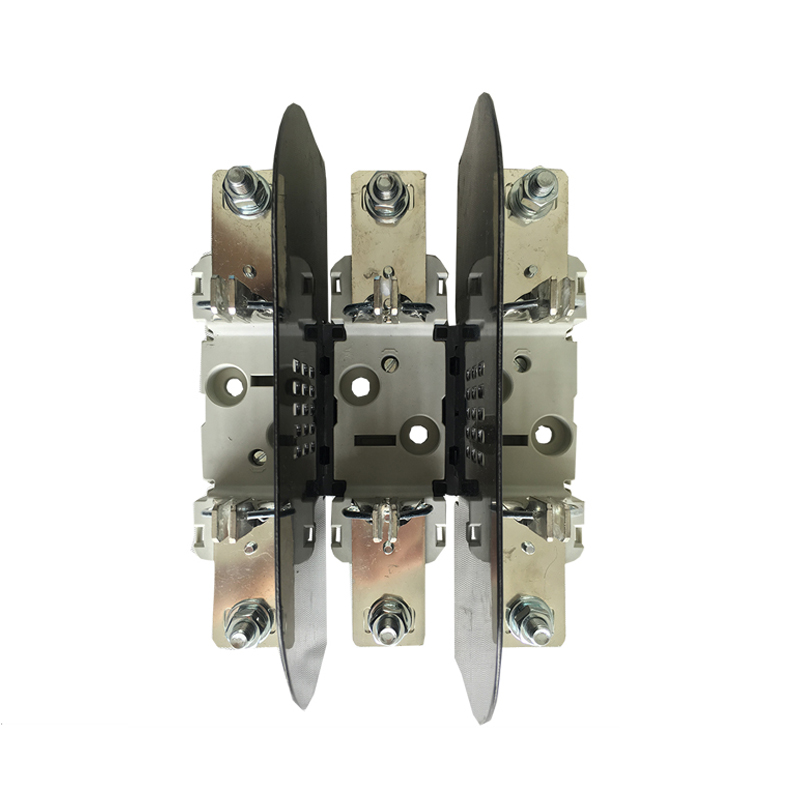
In customer-facing material, the BH-400 is described as suitable for switchgear and control panels. This is an important distinction. A DIN rail fuse base may be used in combination with a separate fuse link, but it does not include a switching function. If the project requires visible isolation, a fuse switch disconnector should be specified instead.
Comparison with traditional individual fuse mounting
A conventional low voltage distribution arrangement can use individual fuse bases wired from the busbar to each load. In this approach, every fuse link has its own mounting position, and cables or busbar connectors carry the power from the main busbar to each fuse base. This method is flexible because the physical spacing can be adjusted to fit the enclosure layout, but it requires more connection points and more installation labour.
Busbar-mounted fuse rails and vertical fuse switch disconnectors change that logic. Instead of arranging individual fuse bases around the busbar, the fuse rails mount directly on the busbar system. The BTR5, for example, is described as having a hook-type busbar installation and an enclosed structure. The BTR6 is available for 100mm or 185mm busbar spacing. From a panel-building viewpoint, this can reduce the number of individual conductors and create a cleaner layout.
Nevertheless, this compact architecture has real boundaries that buyers should not ignore.
- Busbar distance is not universal. The BTR5 supports 100mm and 158mm busbar systems; the BTR6 supports 100mm and 185mm. If a project uses a different busbar spacing, a standard fuse rail from this family may not fit. Individual fuse bases or special arrangements may be necessary.
- Current range is limited by the product family. The BTR series is mainly offered in 250A, 400A and 630A ratings, with the BTR6 limited to 160A. If the circuit needs more than 630A in a busbar-mounted format, the NT/NH fuse base and fuse link route may be more appropriate, particularly where the NT/NH link is rated up to 1250A.
- The degree of protection must be respected. IP30 enclosures are not weatherproof. In outdoor or high-contamination environments, the component must be placed inside an IP-rated panel or another enclosure.
- Fuse switch disconnectors provide overcurrent protection and disconnection, but they are not overvoltage protectors or residual current devices. The system designer still needs to add any necessary surge protection, RCD function or other protection based on the application requirement.
Standards and certification evidence to examine
Because fuse products are safety components, their compliance claims should be verified against standards and certificates. The relevant international framework for low voltage fuses has recently been updated. IEC 60269-1:2024, published in August 2024, updates general requirements for low voltage fuses, covering AC up to 1000V and DC up to 1500V. This matters for projects that include photovoltaic or DC distribution circuits because the general fuse standard now has full DC coverage up to 1500V.
Product-specific standards also appear in the specification data. The BH-400 DIN rail fuse base is documented to comply with IEC 60269-1 and 2 and VDE 0636-1 and 2. The BTR6 is documented to comply with IEC/EN 60269. The NT/NH fuse links are stated to conform to IEC269 standards. A buyer should review the exact standard named on the product data sheet because older designations such as IEC269 are sometimes retained in catalogue information even though IEC 60269 is the more current framework.
Independent certification is more valuable when it is tied to a concrete model and certificate number. For example, the BTR3 Stripe Fuse Switch Disconnector is certified to VDE standards, with certification number NO.40047494 issued by the VDE Testing and Certification Institute for the EU market. BARFUSE also reports testing accreditations from KEMA (DEKRA) in the Netherlands and VDE in Germany, as well as CB certification and SAA certification in Australia. For a procurement review, the buyer should request the certificate document itself and confirm the model number, issue date and standards version.
Market context and future direction
Several market signals point to continued investment in fuse technology. According to Fortune Business Insights, the global electric fuse market is projected to reach USD 5.84 billion in 2025, with a CAGR of 7.05% towards 2034. Separate commercial research focused on 800V DC circuit protection for data centers estimates a market of USD 265 million in 2026, expanding at a CAGR of 29.9%. Those numbers are not directly comparable because the second estimate covers a much narrower application segment, but both indicate that fuses and fuse-based protection remain a growing part of modern distribution systems.
The regulatory shift is also visible in the standard landscape. IEC 60269-1:2024 expands the scope of general fuse requirements to DC 1500V, which is a relevant level for photovoltaic strings and modern data-center power distribution. Buyers evaluating fuse rails, fuse bases or fuse switch disconnectors should therefore ask whether a product is rated for AC, DC or both, and whether the standard on the nameplate matches the actual supply voltage and earthing scheme.
Another trend is the rise of busbar systems inside panelboards. Vertical fuse switch disconnectors are frequently used in LV networks with 100mm and 185mm busbar spacing. This is why manufacturers such as BARFUSE offer different versions of the same visual family for different busbar distances. Instead of assuming that a supplier can simply modify a standard product, a buyer should verify the model type and its stated busbar compatibility.
Supplier background and production evidence
Yueqing Barfuse Electric Co., Ltd., also referred to as BARFUSE, is a manufacturer established in 2014 and located in Wenzhou, Zhejiang Province, China. The company specializes in low voltage fuse switch disconnectors, busbar systems and high and low voltage distribution wiring management products, including MCB pan assemblies, MCCB pan assemblies and metal distribution boxes of various sizes. Its main products and BTR vertical fuse rail family are used in industrial low voltage distribution systems.
For buyers who need to check manufacturing capability, the company profile provides a few concrete data points. BARFUSE operates a production facility covering 10,000 square meters, employs approximately 45 staff and has an R&D team of 7 engineers. The annual production capacity is 250,000 pieces. The company states that it uses modern digital wire-cutting machines, punches and inspection equipment such as Rockwell hardness testers, electric withstand voltage testers, spring testers, salt spray testers and flame retardant testers.
These facts do not, by themselves, prove that every product is correct for a specific project. They do help a buyer separate a full-cycle manufacturer from a simple assembler. The purchasing process should still focus on product data sheets, certificates, sample inspection and consistency between the documented ratings and actual factory production control.
Buyer checklist before selecting a fuse component
Although the fuse itself is a relatively simple device, the product family around it is wide. A short checklist can help avoid specification errors.
- Confirm the system voltage and frequency. Many BTR products are designed for AC systems at 415V, 500V or 690V and 50/60Hz. The NT/NH range is intended for AC50Hz circuits up to 1140V.
- Confirm the maximum prospective short-circuit current and compare it with the breaking capacity of the selected fuse link or switch disconnector.
- Measure or specify the busbar spacing. If it is 100mm or 158mm, parts such as the BTR5 may fit. If it is 100mm or 185mm, the BTR6 and similar vertical switch disconnector formats should be checked. If the spacing is different, use separate bases.
- Review the enclosure packaging. An IP30 rating is normally intended for installation inside a panel or cabinet.
- Verify the fuse link model and size. An NT/NH link may be available up to 1250A, while a busbar-mounted BTR switch may only reach 630A, and the BTR6 is rated at 160A.
- Ask for the exact standard applied. IEC/EN 60269 is a common basis for the newer BTR products; IEC 60269-1 and 2 and VDE 0636-1 and 2 appear on the BH-400 data; NT/NH products in the catalogue refer to IEC269.
- Request the certificate and compare it with the model name. For EU distribution, the BTR3 has a VDE certificate with number NO.40047494 issued by the VDE Testing and Certification Institute.
FAQ
What is an NT/NH fuse link?
An NT/NH fuse link is the replaceable fuse element used inside an NT/NH fuse base. The BARFUSE NT NH fuse link is made of ceramic and silver-plated copper and is available in models NT00, NT1, NT2 and NT3. It is designed for industrial and commercial building electric management and is suitable for AC50Hz low voltage circuits with rated voltage up to 1140V. Its rated current can reach 1250A and its breaking capacity is rated up to 120kA, with conformity to IEC269 stated in the catalogue.
What is the difference between a fuse base and a fuse link?
The fuse link performs the protective function by interrupting the overcurrent, while the fuse base provides mechanical support and electrical connection. In the NT/NH product family, both are available in NT00, NT1, NT2 and NT3 model sizes. The NT/NH fuse base has a rated voltage up to 1140V and rated current up to 630A, and is made of ceramic and tin-plated copper. The NT/NH fuse link can have a rated current up to 1250A and is made of ceramic and silver-plated copper.
What is a DIN rail fuse base?
A DIN rail fuse base is a fuse mounting component designed to clip onto a standard DIN rail inside switchgear or control panels. The BH-400 DIN rail type fuse base is rated at 400A and 690V, with neutral link breaking capacity of 120kA. Its contact material is tin-plated copper, and it is documented to comply with IEC 60269-1 and 2 and VDE 0636-1 and 2.
What is a fuse rail?
A fuse rail is a busbar-mounting product that places fuse link contact points along or directly on the busbar. In the BARFUSE family, Stripe Fuse rails such as the BTR2 are designed for low voltage distribution systems in petroleum, chemical, metallurgical, power and construction applications. The BTR2 is rated at 250A, 400A or 630A, with operating voltages of 415V, 500V or 690V, rated insulation voltage of 1000V, rated impulse withstand voltage of 10kV and an IP30 degree of protection.
What is a vertical fuse switch disconnector?
A vertical fuse switch disconnector is a low voltage component arranged for busbar mounting in switchgear and typically optimized for 100mm and 185mm busbar spacing systems. The BARFUSE BTR6 is a relevant example: it has a rated operation current of 160A and a rated operation voltage of AC690V, supports busbar distances of 100mm or 185mm, complies with IEC/EN 60269, and provides an instantaneous breaking capacity of 50-100kA. The BTR4 and BTR5 also function as Stripe Fuse Switch Disconnectors, with ratings of 250A, 400A or 630A.
Which standards should be checked for low voltage fuse components?
IEC 60269 is the relevant international standard family for low voltage fuses. IEC 60269-1:2024 updates general requirements for fuses up to AC1000V and DC1500V. In the BARFUSE range, the BTR6 is documented to comply with IEC/EN 60269, and the BH-400 fuse base complies with IEC 60269-1 and 2 and VDE 0636-1 and 2. The NT/NH fuse links are stated to conform to IEC269. For the EU market, the BTR3 Stripe Fuse Switch Disconnector is VDE certified with certificate number NO.40047494 issued by the VDE Testing and Certification Institute.
Tem questões ou precisa de mais detalhes?
Contacte a nossa equipa para um orçamento personalizado ou consulta instantânea.
Solicitar orçamento
Preencha o formulário abaixo e a nossa equipa entrará em contacto com uma proposta personalizada.
Chat direto do WhatsApp
Prefere conversar em tempo real? Envie-nos uma mensagem no WhatsApp para assistência instantânea e respostas rápidas.
- Obter orçamento personalizado
- Partilhar fotos ou documentos
- Discuta as suas necessidades diretamente
Geralmente responde em 5–30 minutos durante o horário de expediente.