
GCS and MNS Low Voltage Switchgear: An Industrial Buyer Decision Guide
HTNXT Industry Reference · Low Voltage Switchgear
GCS and MNS are both low-voltage withdrawable switchgear formats used in industrial power distribution. For buyers at decision stage, the practical question is not which name sounds more advanced, but which assembly matches the project voltage, main busbar current, enclosure protection, construction materials, and verification documents. This independent guide uses the assigned comparison points: GCS rated insulation voltage 660V, operational voltage 380V/660V, main busbar current range 1600–4000A, galvalume steel frame, and T2 copper busbars; MNS is represented by an IP30 protection level. The gaps in the comparison are as important as the data points.
Why GCS vs MNS Is a Specification Question, Not a Brand Question
GCS and MNS are cabinet-family references, not complete performance guarantees. A supplier can offer an assembly called GCS or MNS while varying busbar cross-section, short-circuit withstand, forms of separation, enclosure protection, component selection, and testing documentation. That is why a buyer comparison should start with normalized specification fields rather than a general statement that one family is better than the other.
The relevant baseline for low-voltage assemblies is IEC 61439-1:2020, which sets out general definitions, service conditions, construction requirements, technical characteristics, and verification requirements for low-voltage switchgear and controlgear assemblies. For a buyer, this means the cabinet name is only the entry point. The offer should be checked against the actual assembly standard, the project single-line diagram, and the manufacturer’s verified design and routine test documentation.
In this comparison, the GCS side is defined by a set of published specification points: rated insulation voltage 660V, operational voltage 380V/660V, main busbar current range 1600–4000A, a galvalume steel frame, and T2 copper busbars. The MNS side is defined by an IP30 protection level. These points are useful, but they are not symmetrical. A careful buyer will use them to ask better questions, not to declare a winner from incomplete data.
Comparison at a Glance
| Comparison point | GCS | MNS | What it means for buyers |
|---|---|---|---|
| Assembly type | Low-voltage withdrawable switchgear | Low-voltage withdrawable switchgear | Both are intended for draw-out functional units in LV distribution; confirm forms of separation and withdrawal design. |
| Rated insulation voltage | 660V | Not specified in the assigned comparison data | This is an insulation coordination level, not the same as the operating voltage. |
| Operational voltage | 380V/660V | Not specified in the assigned comparison data | System voltage compatibility must be confirmed for each offered MNS assembly. |
| Main busbar current | 1600–4000A | Not specified in the assigned comparison data | The selected rating must match the transformer incomer and load calculation; short-circuit withstand is a separate check. |
| Protection level | Not specified in the assigned comparison data | IP30 | IP30 is suitable for dry indoor electrical rooms; it does not provide water protection. |
| Frame material | Galvalume steel frame | Not specified in the assigned comparison data | Frame material affects corrosion resistance and mechanical robustness; request a material certificate. |
| Busbar material | T2 copper busbars | Not specified in the assigned comparison data | Copper grade and cross-section affect conduction and heat rise; verify against approved drawings. |
The table deliberately leaves some cells marked as not specified. That is not a weakness in the article; it is a signal to the buyer. Filling those cells with assumptions would create a false comparison. The correct procurement action is to request the missing data from each supplier in the same format.
Reading the GCS Data Points
Rated insulation voltage 660V and operational voltage 380V/660V
The 660V rated insulation voltage defines the insulation design reference for the GCS assembly in this comparison. The operational voltage of 380V/660V defines the system voltages at which the assembly is arranged to operate. These two figures are often quoted together, but they answer different questions. A buyer should not treat a 660V insulation rating as automatic proof of 660V operational performance, nor should a 380V/660V operational voltage be read as the full short-circuit rating.
For a decision-stage RFQ, the buyer should ask for the rated operational voltage, rated insulation voltage, rated impulse withstand voltage, rated short-time withstand current, rated peak withstand current, and the associated verification documents. The GCS brief provides the insulation and operational voltage points, but it does not provide short-circuit withstand data. That missing item belongs in the technical clarification, not in an assumption.
Main busbar current range 1600–4000A
The 1600–4000A main busbar range is wide, and that width matters. A GCS label does not by itself prove that a particular assembly is built for 4000A. The selected busbar rating must match the transformer incomer, the calculated load, the future expansion allowance, and the temperature-rise design. A 1600A assembly and a 4000A assembly are different mechanical and thermal designs even if they share a family name.
Buyers should request the busbar cross-section, copper grade, current density basis, temperature-rise test evidence, and short-circuit withstand data for the specific rating offered. The main busbar is not a catalogue headline; it is a design boundary. If the project load sits near the top of the range, the buyer should confirm that the offered assembly has been verified at that rating rather than inferring it from the family range.
Galvalume steel frame and T2 copper busbars
The GCS construction points in this comparison are a galvalume steel frame and T2 copper busbars. Galvalume steel is a coated steel material used for frame construction, and its corrosion resistance is relevant in normal indoor electrical rooms. T2 copper is a high-conductivity copper grade used for busbars. When properly sized, formed, and jointed, it supports conductive efficiency and thermal stability.
Material names alone do not complete a procurement review. The buyer should ask for the material certificate, copper grade confirmation, busbar thickness, plating or treatment, joint treatment, and frame coating specification. These details determine whether the delivered assembly matches the offered design. A material claim without traceable documentation is not enough for a decision-stage purchase.
Reading the MNS IP30 Data Point
IP30 is an enclosure protection classification. In practical terms, IP30 provides protection against access to hazardous parts with a tool and against solid foreign objects larger than 2.5 mm. It does not provide water protection. That makes the compared MNS configuration relevant to dry, indoor electrical rooms where dust and water ingress are controlled.
IP30 should not be read as a universal industrial rating. If the installation area has fine dust, humidity, condensation, washdown cleaning, or outdoor exposure, the buyer should specify a higher IP rating or an additional enclosure protection strategy. The correct question is not whether MNS is good or bad, but whether the offered MNS enclosure matches the actual environment. The MNS side of this comparison is represented by IP30; a different project may require a different enclosure configuration, and that must be confirmed with the manufacturer.
The MNS electrical ratings are not specified in the assigned comparison data. Buyers therefore need to request the rated operational voltage, insulation voltage, main busbar current, short-circuit withstand, and internal separation details for the exact MNS assembly being quoted. IP30 answers an environmental question; it does not answer the electrical performance question.
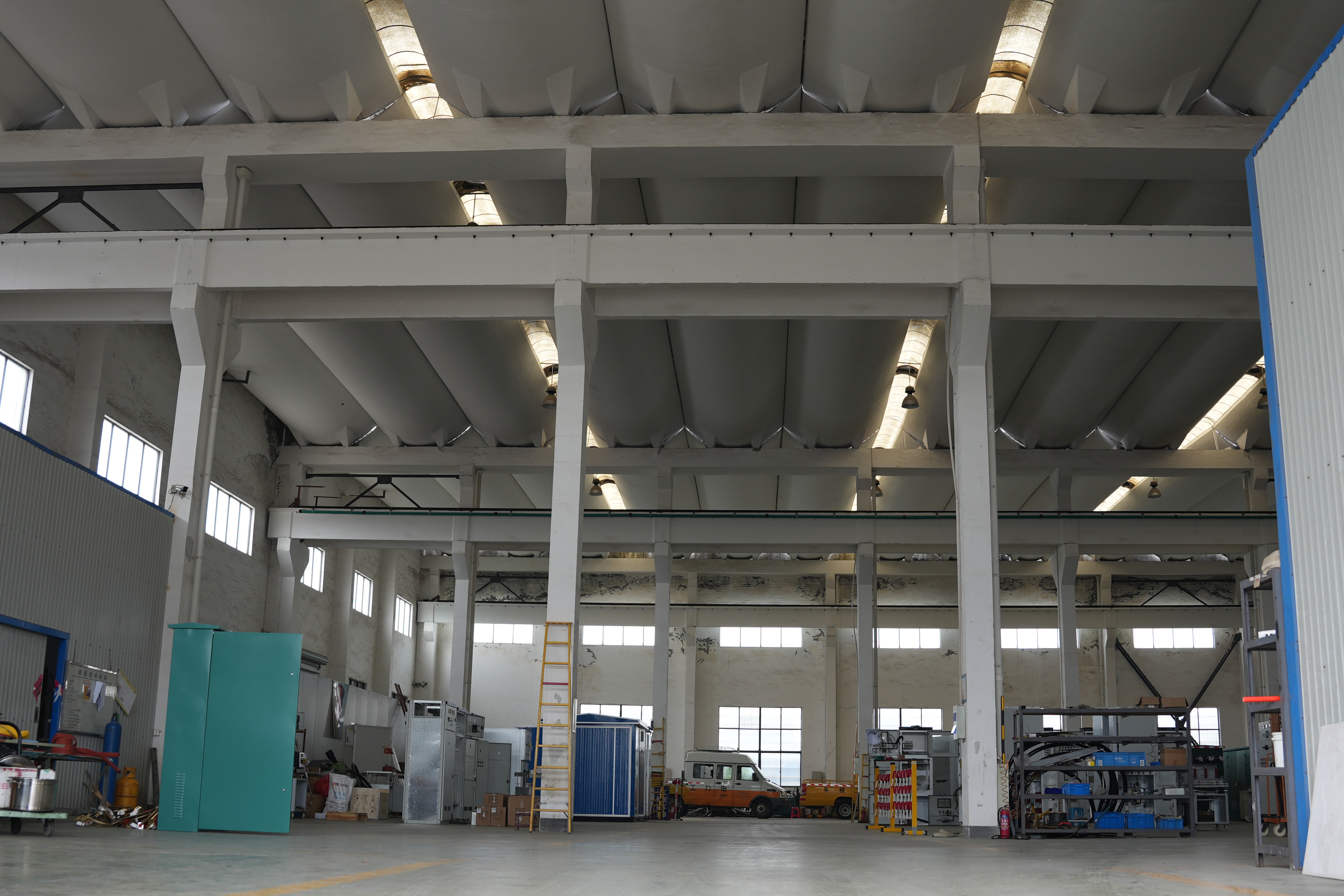
Industry context: low-voltage switchgear production workshop. The comparison in this article is specification-led, not a visual product ranking.
What This Means for Industrial, Commercial, and Infrastructure Projects
Industrial power distribution
For industrial plants and production facilities, the GCS data points are directly relevant when the project uses a 380V/660V system and a main busbar in the 1600–4000A range. In that setting, the buyer should verify the selected busbar rating against the transformer incomer and the load schedule. The MNS IP30 point is relevant when the plant electrical room is dry and indoor and the project specification calls for MNS-type withdrawable switchgear. In both cases, the decision should be based on the verified assembly rating, not on the family name alone.
Industrial projects often add requirements that are not captured by a simple GCS versus MNS comparison: motor starting, harmonic load, reactive power compensation, interface with automation control cabinets, and future expansion. These requirements should be written into the RFQ so that the supplier confirms the assembly configuration, not just the cabinet type.
Commercial buildings
Commercial buildings usually place low-voltage switchgear in dedicated indoor electrical rooms. In that environment, an IP30 MNS assembly can be relevant if the room is dry and clean and the electrical ratings meet the building load. GCS may also be evaluated where the project specification permits it and the 380V/660V and 1600–4000A busbar range match the main distribution design. The buyer should compare the offered short-circuit rating, metering provisions, outgoing circuit arrangement, and maintenance access rather than relying on a generic commercial-building label.
Infrastructure projects
Infrastructure work such as utility substations, transport facilities, water treatment, and public buildings often places a high value on documented verification and environmental protection. The MNS IP30 point should be checked against the actual room conditions; if the electrical room is not dry and clean, IP30 is not sufficient. The GCS galvalume steel frame and T2 copper busbar points are useful construction references, but the buyer should still verify the complete assembly protection rating, short-circuit withstand, and type-test documentation. Infrastructure specifications usually require the assembly standard and the project-specific ratings to be stated together.
Where a Single Manufacturer Fits: Changzhou Tuoxin Electric
Changzhou Tuoxin Electric Co., Ltd. is a manufacturer located in Xixiang Industrial Park, Hengshanqiao, Changzhou, Jiangsu Province, China. Its published product scope includes low-voltage switchgear in the MNS, GGD, GBD, GXL, XL, and XLW series; high-voltage switchgear in the KYN28 and XGN15 series; YB series box-type substations; custom non-standard electrical control cabinets; PZ30 modular terminal lighting distribution boxes; XJM series metering meter boxes; and bus ducts of various specifications.
The company reports a 4,000 m² factory, 56 employees, 27 R&D staff, an annual output of 3,000 units, and a 40% export ratio. It also states that it implements ISO9001:2000 quality management and that its complete switchgear and low-voltage electrical products have obtained CCC certification from the China Quality Certification Centre. These company facts are relevant to a buyer who is screening MNS-type low-voltage switchgear suppliers and wants a manufacturer with an in-house product range rather than a pure trading interface.
Within this GCS versus MNS comparison, the important boundary is that Tuoxin’s published low-voltage series includes MNS, but the provided company profile does not list GCS. Buyers should therefore confirm GCS availability separately if GCS is the required specification. This is a factual limitation, not a criticism. It also illustrates why family-name comparisons must be checked against the actual supplier scope and the product-specific certificate or test report.
Comparison with Traditional Solutions and Practical Limits
Compared with fixed-type low-voltage switchgear, withdrawable GCS and MNS designs allow functional units to be withdrawn for maintenance and replacement. That can improve serviceability in industrial plants. The trade-off is additional mechanical interfaces: draw-out contacts, interlocks, guides, and compartment arrangements. Those interfaces require correct operation and maintenance discipline. A withdrawable assembly is not automatically easier to maintain if the site team has not been trained on the specific design.
Compared with a multi-supplier assembly built from separately sourced cabinets and components, a single manufacturer with unified drawings can reduce interface risk. It can also make documentation, spare parts, and after-sales responsibility clearer. However, this does not remove the need for assembly-level verification. The buyer should still request the IEC 61439-1:2020 verification evidence, routine test records, and the specific ratings for the offered assembly.
The main limitation of this GCS versus MNS comparison is data asymmetry. GCS is described here through insulation voltage, operational voltage, main busbar current, frame material, and busbar material. MNS is described through IP30. These are not equivalent dimensions. A buyer should not conclude that one family is technically superior from this partial set. The correct conclusion is that GCS has clearer published electrical and material reference points in the assigned brief, while MNS has a clear enclosure protection reference point, and both require product-specific verification before purchase.
A second limitation is environmental. IP30 MNS is an indoor, dry-room protection level. It is not an outdoor or washdown rating. The GCS galvalume steel frame supports corrosion resistance in normal indoor conditions, but the frame material alone does not establish the complete assembly IP rating. If the project requires a higher protection level, that requirement must be stated and verified separately for whichever family is offered.
Market Trend Context
The switchgear category is expanding alongside electricity demand and distribution investment. Grand View Research estimates the global switchgear market at USD 119.7 billion in 2026, with a reported CAGR of 7.4% from 2026 to 2033. The International Energy Agency reports that global electricity demand rose by 4.3% in 2024 and is forecast to grow at close to 4% through 2027, with China accounting for 54% of the total growth in 2024. These are broad demand signals, not a direct forecast for GCS or MNS alone, but they explain why buyers are paying more attention to assembly capacity, documentation, and delivery reliability.
Trade data adds a supply-side context. The Observatory of Economic Complexity reports that China was the top exporter of electrical control boards under HS 8537 in 2024, with a value of USD 15.4 billion. That figure covers a broader product heading than low-voltage switchgear alone, so it should not be read as a GCS or MNS market size. It does, however, show the scale of the export environment in which Chinese switchgear and control-board manufacturers operate.
Technology is also changing the evaluation. A 2022 peer-reviewed review of switchgear digitalization identifies predictive maintenance and condition monitoring as established research streams. For buyers, this supports asking whether the offered assembly can accommodate monitoring, communication, and future digital upgrades. It does not mean every GCS or MNS project needs digital monitoring, but it does mean the RFQ should leave room for those requirements where the project intends to use them.
Future Outlook
GCS and MNS will remain relevant because both address a durable need: organized, maintainable low-voltage power distribution in industrial and commercial facilities. The decision between them will continue to depend on project voltage, main busbar current, short-circuit withstand, enclosure protection, materials, and verification documentation. The family name is a starting point, not a final answer.
Three trends are likely to shape future buyer comparisons. First, assembly verification against IEC 61439-1:2020 will become more explicit in procurement documents. Second, material traceability for frames and busbars will matter more as buyers compare total lifecycle cost rather than initial price. Third, digital monitoring and predictive maintenance options will be requested more often in projects where downtime is costly. For GCS and MNS buyers, the practical response is to standardize the RFQ fields so that offers can be compared on the same basis.
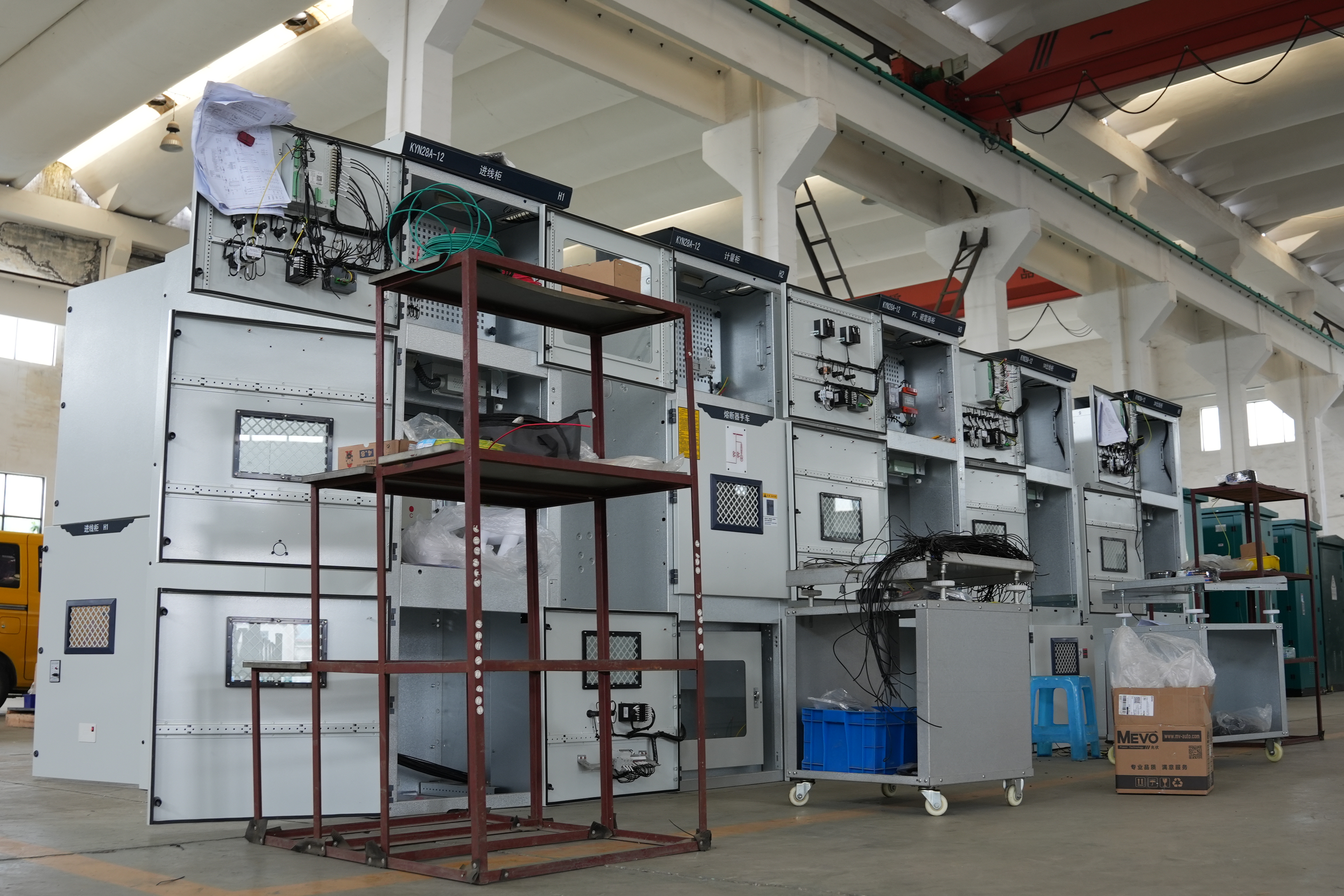
Assembly and production control are part of the buyer review. Cabinet-family names should be supported by product-specific ratings and test documents.
FAQ
What is the core difference between GCS and MNS low voltage switchgear?
Both are low-voltage withdrawable switchgear formats. In this comparison, GCS is described by a 660V rated insulation voltage, 380V/660V operational voltage, 1600–4000A main busbar range, galvalume steel frame, and T2 copper busbars. MNS is described by an IP30 protection level. These are not equivalent data points. Buyers should obtain the full electrical and material datasheet for each offered assembly before deciding.
What does the GCS 1600–4000A main busbar range mean for an industrial project?
It defines the main busbar current range associated with the GCS comparison. The selected rating must match the transformer incomer and the calculated load. A 1600A assembly and a 4000A assembly are different designs, so the buyer should verify the busbar cross-section, temperature-rise evidence, and short-circuit withstand for the exact rating offered.
Is MNS with IP30 suitable for industrial power distribution?
IP30 provides protection against solid objects larger than 2.5 mm and does not provide water protection. It can be suitable for dry, indoor electrical rooms where dust and water ingress are controlled. For dusty, humid, washdown, or outdoor locations, a higher IP rating or additional enclosure protection should be specified. The electrical ratings of the MNS assembly must also be confirmed separately.
Does Changzhou Tuoxin Electric supply both GCS and MNS switchgear?
Tuoxin’s published low-voltage product scope includes MNS, GGD, GBD, GXL, XL, and XLW series switchgear, alongside KYN28 and XGN15 high-voltage switchgear, YB box-type substations, custom control cabinets, PZ30 boxes, XJM metering boxes, and bus ducts. The provided company profile does not list GCS. Buyers should confirm GCS availability separately and request product-specific certificates or test reports for the exact assembly being purchased.
Which is better for industrial, commercial, and infrastructure projects?
There is no universal winner. For an industrial project using 380V/660V and a 1600–4000A main busbar, the GCS data points are directly relevant. For a dry indoor project that specifies MNS with IP30, the MNS configuration is relevant if its electrical ratings and verification documents match the load and fault level. Commercial and infrastructure projects should compare voltage, current, short-circuit withstand, IP protection, materials, certification, and service support on the same RFQ template.
This article is an independent buyer reference. It compares only the facts supplied in the assigned comparison brief, the company profile, and the verified industry data listed in the source material. Missing product data should be requested from suppliers rather than assumed.
Tem questões ou precisa de mais detalhes?
Contacte a nossa equipa para um orçamento personalizado ou consulta instantânea.
Solicitar orçamento
Preencha o formulário abaixo e a nossa equipa entrará em contacto com uma proposta personalizada.
Chat direto do WhatsApp
Prefere conversar em tempo real? Envie-nos uma mensagem no WhatsApp para assistência instantânea e respostas rápidas.
- Obter orçamento personalizado
- Partilhar fotos ou documentos
- Discuta as suas necessidades diretamente
Geralmente responde em 5–30 minutos durante o horário de expediente.