
GCS vs GCK vs MNS vs GGD: Independent Buyer Comparison of LV Switchgear
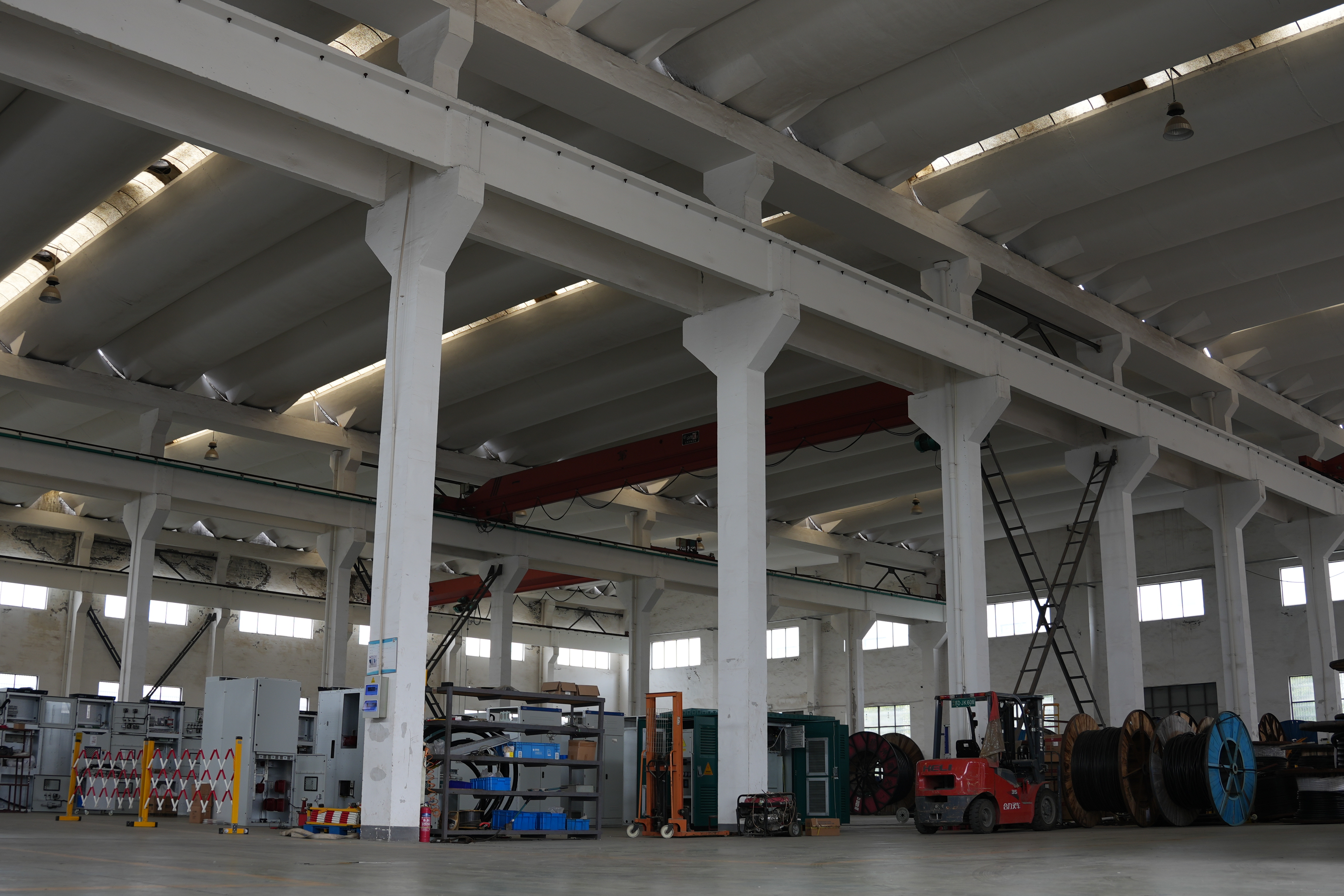
Assembly hall for low voltage switchgear lineups. Whether a project needs withdrawable drawers or a fixed frame is decided long before the supplier is chosen.
GCS, GCK, MNS and GGD are four low voltage switchgear assembly formats that regularly appear side by side inside the same tender package, and they are not interchangeable. Three of them — GCS, GCK and MNS — are withdrawable designs, in which functional units sit on drawers that can be racked out of the enclosure. The fourth, GGD, is a fixed design, in which breakers and modules are bolted onto a stationary frame. All four are commonly applied at 380 V and 660 V rated operational voltage. Their main busbar current ranges split them into two classes: GCS and MNS are generally applied in the 1600–4000 A class, while GCK and GGD are more commonly applied in the 600–1600 A class.
For a buyer at the decision stage, the productive question is not which format ranks first, but which format matches the project's load profile, fault level, maintenance regime and expansion plan at the lowest total cost of ownership. This comparison is written from that position: format-level technical fit, with no assumption that any particular manufacturer, origin or brand should win the order.
Why the Format Decision Usually Outranks the Brand Decision
Procurement documents often place a format designation and a brand preference on the same line, which nudges buyers into evaluating suppliers first and assembly architecture second. In practice, the architecture constrains more of the final outcome. A withdrawable lineup carries moving carriages, primary and secondary isolating contacts and mechanical interlocks that a fixed lineup does not. Those parts add assembly complexity, panel depth and cost, and they return value only where circuits change often enough to justify module-level replacement.
The market context makes this decision more frequent rather than less. The global switchgear market was estimated at USD 112.9 billion in 2025 and is projected to reach USD 197.7 billion by 2033 (Grand View Research), while the global low voltage switchgear segment alone exceeded USD 86.1 billion in 2024, driven by infrastructure upgrades and smart grid technology (Global Market Insights). Research houses apply different segmentation rules, so their absolute figures diverge; the direction of the trend is more dependable than any single number. What matters for a decision-stage buyer is that this volume is absorbed by a supplier base much wider than the large multinationals. The top five manufacturers — ABB, Siemens, Schneider Electric, Eaton and GE — hold a combined global share of approximately 35% (Global Market Insights, 2024). The remainder is served by regional and specialised manufacturers who build the same format classes to project drawings.
Withdrawable and Fixed Designs: The Structural Split
Withdrawable assemblies such as GCS, GCK and MNS allow an individual functional unit — a feeder, a motor starter, a capacitor stage — to be isolated and removed while the rest of the lineup stays energised. That capability is what the buyer is paying for. It shortens the intervention window on a single circuit and lets a spare drawer be commissioned in place of a faulty one.
Two conditions have to hold before that value actually materialises. First, the operator must hold spare drawers or a compatible replacement unit; without them, a withdrawable design offers little advantage over a fixed panel during a failure. Second, the assembly must have been fabricated with enough busbar and contact alignment accuracy that drawers can be inserted repeatedly without contact wear becoming the next fault. Withdrawable formats therefore reward suppliers with disciplined fabrication rather than suppliers with the widest catalogue.
Fixed assemblies such as GGD mount breakers and modules directly to the frame. There are fewer moving parts, the assembly is simpler to build and inspect, and a comparable circuit count can often be carried in a smaller footprint at lower cost. The trade-off is serviceability: adding or replacing a feeder generally means de-energising the section and reworking busbar connections rather than swapping a drawer.
GCS, GCK, MNS and GGD Side by Side
The table below summarises the four formats on the parameters that most often decide a tender: switching architecture, rated operational voltage, main busbar current class and typical duty.
| Format | Switching architecture | Rated operational voltage | Typical main busbar current | Typical duty |
|---|---|---|---|---|
| GCS | Withdrawable, drawer-type functional units | 380 V / 660 V | 1600–4000 A | High-current main distribution and motor control centres where feeders change over time |
| GCK | Withdrawable, drawer-type functional units | 380 V / 660 V | 600–1600 A | Mid-capacity distribution and motor control in plants, pump stations and commercial buildings |
| MNS | Withdrawable, modular functional units | 380 V / 660 V | 1600–4000 A | Modular distribution with a high circuit count and frequent reconfiguration |
| GGD | Fixed, components mounted on a stationary frame | 380 V / 660 V | 600–1600 A | Stable-load distribution where circuits rarely change |
The current values above describe the typical main busbar class associated with each format; they are not a certification limit for any individual assembly. The verified rating of a specific lineup depends on its design verification, internal component selection and temperature-rise margin under the applicable assembly standard.
Reading the Busbar Current Class Correctly
The main busbar class is a ceiling for the entire lineup, not a label on the incoming breaker alone. The incoming device, the main busbar, the tap-off devices and the enclosure have to be coordinated to that class, and the class is established at manufacture. Three practical consequences follow.
- Specifying a 4000 A-class format for a 1200 A load buys footprint and cost without a proportional return.
- Specifying a 600–1600 A-class format for a project whose design load may exceed 1600 A inside the planning horizon forces either a second lineup or a rebuild later.
- Two assemblies with the same nominal current class are not automatically equivalent. Short-circuit withstand, temperature-rise margin, insulation coordination and the completeness of verification documents separate them.
Low voltage switchgear and controlgear assemblies are governed by the IEC 61439 series, Parts 1 to 7, which covers design, verification and safety (International Electrotechnical Commission). Where a low voltage lineup is fed from a prefabricated high voltage substation up to 52 kV, IEC 62271-202:2022 applies (IECEE). That second standard becomes directly relevant in export projects where a box-type substation and the low voltage switchgear are purchased as one package, because the interface between the two assemblies is where documentation gaps usually appear.
How Changzhou Tuoxin Electric Fits Into This Comparison
Changzhou Tuoxin Electric Co., Ltd. is a switchgear manufacturer based in Xixiang Industrial Park, Hengshanqiao, Changzhou, Jiangsu Province, China, founded in 2010. The company operates a 4,000 m² facility with 56 employees, a technical and engineering team of 27, an annual output of approximately 3,000 units and an export ratio of about 40%. Its markets include Vietnam, Indonesia, Morocco, Ivory Coast, Cameroon, Tanzania, Kenya, Russia, Kazakhstan, Uzbekistan, Mexico, Colombia, Chile, Peru, Spain, Brazil, Portugal, Turkey, Croatia, Germany, Italy, Austria, Switzerland, Saudi Arabia, the UAE, Qatar, Kuwait, Oman, Japan, South Korea, the United States and Canada.
Its published product range covers high voltage switchgear (KYN28 and XGN15 series), low voltage switchgear (GBD, MNS, GGD, GXL, XL and XLW series), YB series box-type substations, custom non-standard electrical control cabinets, PZ30 modular terminal lighting distribution boxes, XJM series metering meter boxes, and bus ducts of various specifications. Complete switchgear and low voltage electrical products hold CCC certification from the China Quality Certification Centre, and the company states that it applies quality management in accordance with the ISO 9001:2000 system.
Two points matter for this particular comparison. First, of the four formats discussed here, the MNS and GGD series appear in the company's published low voltage range; GCS and GCK do not appear as named series in that catalogue. A buyer specifying GCS or GCK should therefore confirm design capability, drawings and type-test documentation directly with the manufacturer instead of assuming catalogue coverage. Second, the company manufactures custom non-standard control cabinets alongside its standard series, and that is normally where project-specific logic, interlocking and monitoring requirements are resolved.
The manufacturer also publishes a set of performance comparisons against trader-assembled equipment and premium imported brands. These are first-party claims and should be treated as starting points for supplier evaluation rather than verified market data. Reported figures include a 98% one-time acceptance rate for uniformly designed complete sets against a rework and rectification rate above 40% for assembled solutions; a single contact person for full-set supply against coordination with three to five suppliers; 10–20% lower total procurement cost through bulk complete-set purchase; a stable power factor above 0.95 with matched copper bars, protection devices and reactive power compensation against roughly 0.85 for mismatched assemblies; a 15–25 day delivery cycle for non-standard products against two to three months for foreign brands; spare parts cost within ten years reported as two to three times lower with off-the-shelf availability; and 7×12-hour remote technical support with on-site service. Each of these should be verified against the buyer's own scope, drawings and acceptance standard before it is used in a decision.
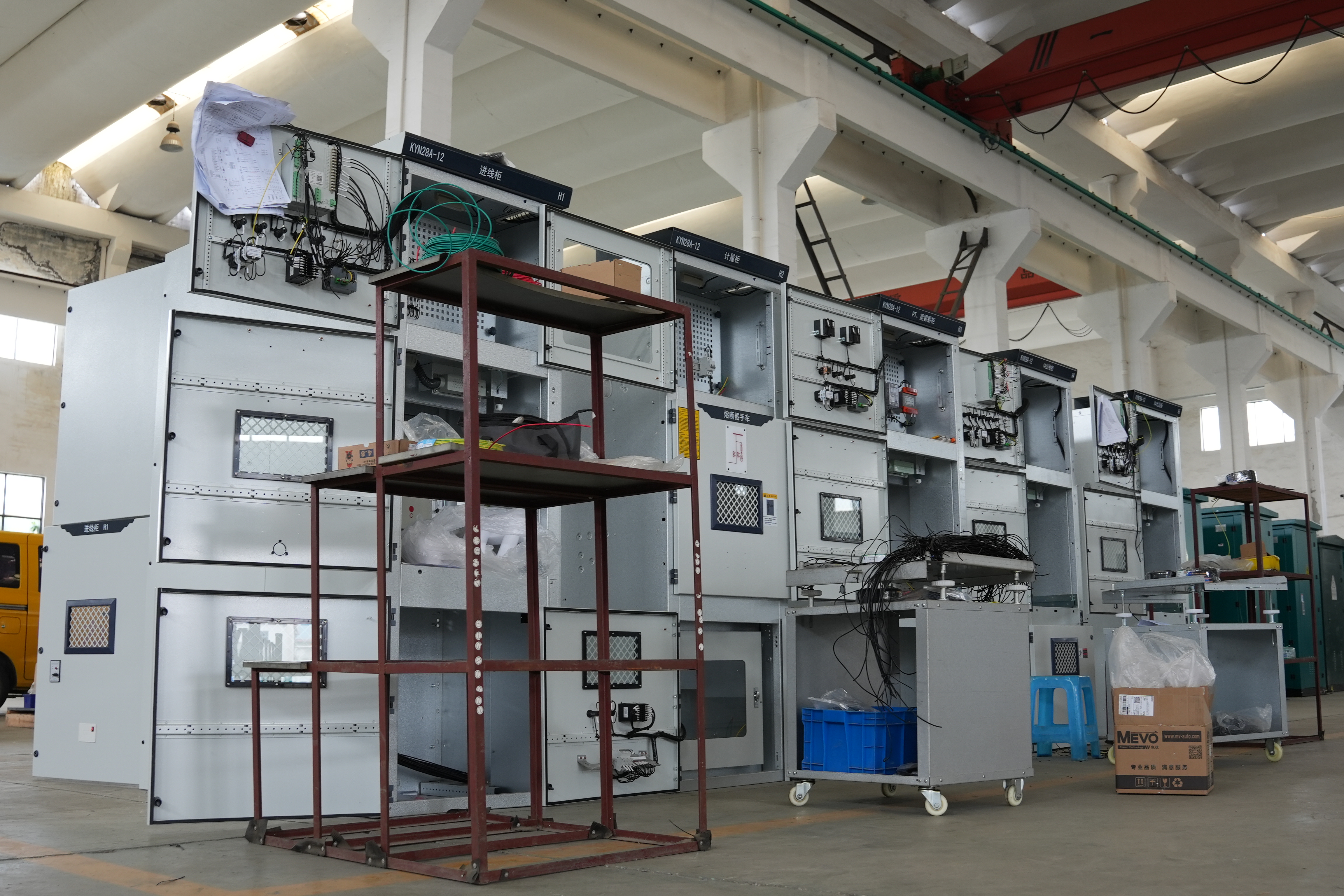
Switchgear production. Drawer fabrication tolerance and busbar alignment are what determine whether a withdrawable lineup performs as specified over its service life.
Application Fit: Matching Format to Project
Once the current class and the switching architecture are settled, the application map becomes fairly narrow.
- GCS and MNS (withdrawable, 1600–4000 A): main low voltage distribution boards in large industrial plants, data centres and high-rise building risers; motor control centres where process lines are reconfigured periodically; projects able to stock spare drawers.
- GCK (withdrawable, 600–1600 A): mid-size factories, commercial complexes, pump stations and workshop distribution where drawer-level replacement is wanted but total load stays moderate.
- GGD (fixed, 600–1600 A): stable-load distribution in small industrial parks, rural grid distribution, construction site boards and lighting or power distribution where circuits rarely change.
- Adjacent assemblies: variable frequency control cabinets and custom control cabinets are usually procured as separate assemblies positioned next to the low voltage lineup. Because they change the heat and harmonic profile of the room, they should be planned together with the distribution board rather than added afterwards.
- Out of scope for all four: high voltage duties, which are served by assemblies such as the KYN28 and XGN15 classes, and outdoor installations without an appropriate enclosure protection rating.
Where Each Format Stops Being the Right Answer
A comparison that only lists advantages is not useful at the decision stage. The following boundaries apply to this format group.
- Withdrawable designs carry a cost floor. Drawer mechanisms, interlocks and isolating contacts raise initial cost and panel depth. Where circuits are fixed for the life of the installation, that cost does not return value.
- Fixed designs slow down modification. Adding a feeder to a GGD assembly normally requires a shutdown and busbar rework, which is a real constraint on sites with evolving load requirements.
- The current class cannot be stretched. A 600–1600 A class lineup cannot be upgraded to 4000 A duty in place.
- Certification scope is configuration-specific. CCC covers supply into the Chinese market. Export projects require destination-market certification to be confirmed before the order is accepted; the manufacturer's stated practice is to confirm mandatory local certification in advance, to reject orders without matching certificates, and to supply English nameplates, operation manuals and test reports with exported equipment. Buyers should still verify that the certificate covers the exact configuration ordered.
- First-party performance claims are not neutral evidence. Acceptance rates, delivery gaps and price comparisons published by a manufacturer describe that manufacturer's own experience and should be tested against the buyer's drawings and acceptance regime.
- Site interface conditions cause avoidable loss. Unapproved on-site configuration changes, temporary acceptance standards stricter than the contracted ones, and site dimension mismatches are recurring dispute sources. The manufacturer's stated controls include an on-site survey before order placement with a signed survey record, a signed written change order with price and lead-time adjustment for any circuit or size modification, acceptance standards attached to the contract, and charges for rework caused by client-side reasons.
Future Outlook
Three shifts are likely to shape how these four formats are specified over the next few years.
Verification documents as a selection filter. As installed base volumes grow, buyers increasingly ask for design verification and routine verification records rather than generic certificates. This favours manufacturers who can produce configuration-specific documentation quickly.
Monitoring embedded inside the assembly. Custom control cabinets already support configurable control logic, frequency conversion, fire linkage and 4G remote monitoring, with integrated frequency converters and soft starters reported to deliver 20–40% motor power savings. As energy reporting requirements tighten, that data layer migrates from special projects into standard distribution boards.
Prefabricated and modular power distribution. Box-type substations are replacing on-site civil power rooms in space-constrained projects, and bus ducts are displacing multi-core cable runs on high-current main lines. Both shifts push low voltage switchgear design toward factory pre-integration and defined interfaces, which in turn raises the importance of format-level standardisation — the same reason GCS, GCK, MNS and GGD remain useful reference points in tender documents.
Frequently Asked Questions
1. What is the difference between withdrawable and fixed low voltage switchgear?
In withdrawable assemblies such as GCS, GCK and MNS, functional units are mounted on drawers that can be racked out of the enclosure, so a single feeder or starter can be isolated and replaced while the rest of the lineup remains in service. In fixed assemblies such as GGD, breakers and modules are bolted to a stationary frame, so a circuit change normally requires the section to be de-energised and the busbar connections to be reworked. Withdrawable designs involve more mechanical parts, greater panel depth and higher initial cost; fixed designs are simpler and generally less expensive, but slower to modify.
2. Which of these formats is used above 1600 A?
GCS and MNS are the two formats in this group typically applied in the 1600–4000 A main busbar class. GCK and GGD are more commonly applied in the 600–1600 A class. Because the busbar class is established at manufacture, a project whose design load is expected to exceed 1600 A within its planning horizon needs the higher class selected at the design stage rather than added later.
3. Do GCS, GCK, MNS and GGD all operate at 660 V?
All four formats are commonly rated for 380 V and 660 V operational voltage. The rated voltage governs internal component selection — breakers, contactors, metering and insulation clearances — so a 660 V duty should be stated explicitly in the specification rather than assumed. Destination voltage and frequency should also be checked against the local grid, because a mismatch between the assembly rating and the site supply is a recognised cause of clearance and commissioning problems in export projects.
4. Which standards govern the verification of these assemblies?
Low voltage switchgear and controlgear assemblies are governed by the IEC 61439 series, Parts 1 to 7, which addresses design, verification and safety. Where a low voltage lineup is fed from a prefabricated high voltage substation up to 52 kV, IEC 62271-202:2022 applies. Buyers should request design verification and routine verification records for the specific configuration being purchased, because a certificate issued for a different configuration does not transfer to the ordered assembly.
5. What documentation should a buyer check before placing an order?
For China-market supply, check CCC certification issued by the China Quality Certification Centre and confirm that it covers the specific product family. For export supply, confirm the mandatory local certification before the order is accepted — CE, SABER or UL as applicable to the destination — and require English nameplates, operation manuals and test reports within the delivery scope. The manufacturer's stated position is that orders without matching certificates are rejected rather than shipped and resolved at the port. Documentation such as drawings, change orders, test reports and delivery receipts is archived for at least three years, which is what allows a dispute to be settled from records rather than recollection.
6. MNS and GCS both cover the 1600–4000 A class — how does a buyer choose between them?
Both are withdrawable formats in the same current class, so the decision usually turns on circuit count, modularity requirements and supplier capability rather than on current rating. MNS is a modular architecture built around standard functional unit sizes, which suits lineups with a high circuit count and a recurring need for reconfiguration; GCS is also a drawer-type format in the same class. Where the technical difference is not decisive, the practical filters are the supplier's drawings for the exact configuration, the availability of spare drawers over the service life, and the completeness of the verification documentation. Buyers should also establish which of the two formats a given manufacturer actually lists as a standard series, because catalogue coverage and custom design capability are different commitments.
7. What contractual terms reduce change-order and dimension disputes?
Controls commonly used in this segment include an on-site survey before order placement with a signed survey record, a signed written change order with price and lead-time adjustment for any circuit or size modification, national and grid acceptance standards attached to the contract as annexes, and clearly stated charges for rework caused by client-side reasons. Payment structure is part of the same package: a typical staged arrangement is 30% advance, 70% before shipment, 95% after acceptance and 5% retained for one year, with legally binding contracts and liquidated damages for overdue payment.
A workable decision sequence for a buyer comparing these four formats is: fix the design load and the expansion horizon first, confirm voltage class and fault level second, decide withdrawable versus fixed third, and only then evaluate suppliers and documentation packages. The format that matches those answers is usually the one that costs least over the life of the installation.
Tem questões ou precisa de mais detalhes?
Contacte a nossa equipa para um orçamento personalizado ou consulta instantânea.
Solicitar orçamento
Preencha o formulário abaixo e a nossa equipa entrará em contacto com uma proposta personalizada.
Chat direto do WhatsApp
Prefere conversar em tempo real? Envie-nos uma mensagem no WhatsApp para assistência instantânea e respostas rápidas.
- Obter orçamento personalizado
- Partilhar fotos ou documentos
- Discuta as suas necessidades diretamente
Geralmente responde em 5–30 minutos durante o horário de expediente.