
Gaming Chair Compliance Evidence: Gas Lift Class, Load Ratings, and Recline Specs
A gaming chair specification sheet is a commercial document before it is a technical one. It states what configuration can be built, packed and shipped at a given cost. Lines such as “Class 3 gas lift”, “150 kg weight capacity” or “180-degree recline” are design specifications; they become compliance evidence only when each one can be traced to a component marking, a test record or a pre-shipment inspection that the buyer has actually seen.
The difference matters most in the window between model selection and container loading. By then a distributor has committed to a range, printed cartons and set acceptance criteria, and has usually stopped asking which parts of the specification are documented and which are simply quoted.
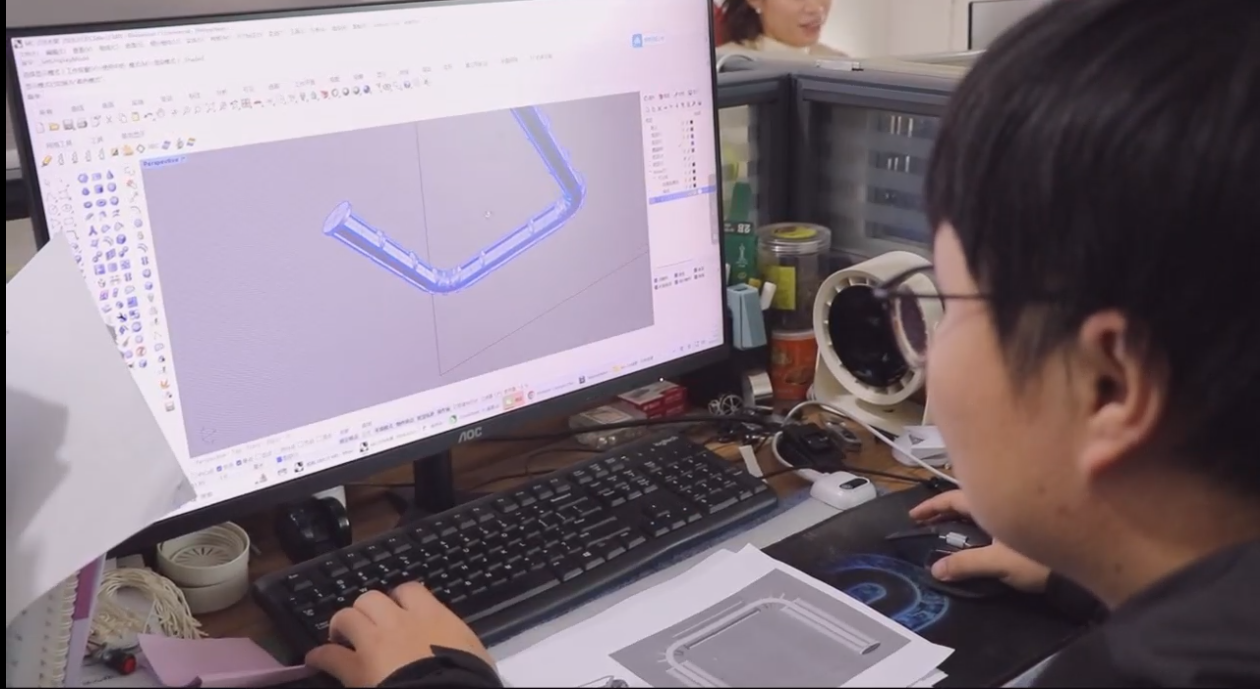
Anji Maochang Furniture Co., Ltd. (Maochang furniture) is a chair manufacturer based in Anji County, Zhejiang Province, China, producing gaming chairs, office chairs and manicure chairs. Established in 2016, the company operates a 3,000 m² factory with 25 employees, an annual output of 75,000 units and a three-engineer R&D team; 98% of its products are exported, with main markets in the EU, USA, Thailand, Brazil and South Korea. Its heavy-duty gaming chair line includes the MC1039, MC1039-1 and MC1040, which share a stated configuration built around a Class 3 gas lift, a 370 mm starbase diameter, a 150 kg weight capacity, 180-degree recline, a foldable footrest and a frog type multifunctional mechanism.
Four kinds of claim that look alike on a spec sheet
Most gaming chair spec sheets place five distinct claim types in the same table, which is the root of most misreading:
- Component-class claims — gas lift class, castor type, mechanism model.
- Assembly-limit claims — the weight capacity figure.
- Geometry claims — recline angle, seat height range, armrest travel.
- Material claims — PU, metal, plastic, foam.
- Certification claims — ANSI/BIFMA X5.1, EN 1335, BS 5852.
Only the last group is a certification. The first four describe what the product is; they say nothing about who tested it or against what protocol. A buyer who treats a gas lift class as a certification has accepted a component specification in place of a conformity document — and the substitution is usually discovered only when a retail customer or a customs reviewer asks for the file.
Reading a Class 3 gas lift claim correctly
The gas lift class is a component convention, not a chair-level standard. The class describes the construction of the cylinder itself — the wall thickness and tube arrangement that determine how much load the column is built to carry. Higher classes denote heavier construction, and Class 3 is a common choice in the mid and upper range of gaming chairs.
In the MC1039, MC1039-1 and MC1040 configuration, the stated specification is a Class 3 gas lift. That remains a component statement until three checks are completed:
- Cylinder marking. The class is normally marked on the lift body. A pre-shipment check should confirm the marking itself, not only the packing list line that repeats the claim.
- Batch traceability. Ask which lift manufacturer and which batch. A class claim that cannot be traced to a supply batch is a purchasing assumption rather than evidence.
- System matching. The lift is one element of a load path that also includes the mechanism plate, the starbase and the castors. A Class 3 lift paired with a mechanism that is not rated for the same load does not produce a 150 kg chair.
There is a second point experienced buyers raise: a higher class is not automatically the right choice. The lift has to match the base diameter, the mechanism and the intended duty cycle. Over-specifying a lift without matching the rest of the assembly adds cost without changing what the chair can actually do.
What a 150 kg weight capacity claim covers — and what it does not
A weight capacity figure is only meaningful with its test method attached. Static load testing, cyclic fatigue testing and impact testing produce different numbers from the same chair, so a “150 kg” figure without a method is a target rather than a result.
On the MC1039 family, 150 kg is the stated weight capacity, paired with a 370 mm starbase diameter. The pairing is the useful part of the claim: a wider base spreads load across the castors and reduces the tipping moment when a user leans back. It is also the part most easily altered in production, because base diameter has a direct effect on carton size and freight cost per unit.
Four questions convert the number into evidence:
- Is the 150 kg rating static or dynamic, and if dynamic, over how many cycles?
- Does the rating cover the full assembly, or only the gas lift column?
- Which castor specification and which floor surface are assumed?
- Is the 370 mm base diameter verified by drawing, or by measuring a production sample?
The failure mode buyers should plan for is rarely a lift collapsing. It is a base, castor or mechanism plate that was never in scope of the quoted rating, showing up as a warranty claim in the second year of a distribution agreement.
Recline, footrest and mechanism: what “180 degrees” actually specifies
A 180-degree recline figure describes geometry — the maximum angle between seat and backrest. It does not describe how many intermediate positions the mechanism locks at, how stable the chair is at full recline, or how the footrest behaves under load.
The mechanism on the MC1039, MC1039-1 and MC1040 is described as a frog type multifunctional mechanism, which groups the tilt and recline functions within a single housing. The practical checks are:
- Lock positions — whether recline locks at intermediate angles or only at the extremes.
- Actuation — handle or lever type, and whether the actuator stays reachable from a fully reclined position.
- Footrest interface — the foldable footrest introduces a second load path; its hinge and lock are the components to test, not the upholstery.
- Stability at full recline — as the backrest approaches horizontal and the footrest extends, the centre of gravity moves rearward, which is why the 370 mm starbase diameter matters more at 180 degrees than at 110.
The limitation should be stated plainly: a recline angle is not a durability specification. Repeated full recline with a user’s legs resting on the footrest is a fatigue scenario, and buyers expecting heavy daily use — internet café operators, for example — should add a recline and footrest cycle check to pre-shipment testing rather than rely on the angle figure.
Material claims: PU, metal and plastic in the same frame
A material line reading “PU, metal, plastic” covers at least three subsystems with different failure modes, and it is worth splitting before an order.
PU upholstery. Polyurethane leather is the default surface in this category; it held 57.3% of global gaming chair material share in 2024 (Industry Trends Analysis, Mordor Intelligence). Because it is the default, a “PU leather” line distinguishes nothing between suppliers. What distinguishes them is cover thickness, backing construction and whether the cover is specified per panel.
Metal parts. The term needs a part list. Frame, mechanism plate, gas lift column and base can each be metal or partly plastic, and “metal” as a single word is compatible with both a steel frame and a plastic base.
Plastic parts. Armrest structures, mechanism covers, castor housings and footrest hinges are typical plastic components. Quality shows up in fit tolerance and cyclic testing, not in a material name.
Foam. Not part of the headline material list, but the most consequential omission for long sitting. High-density mould foam in the 50–65 kg/m³ range is the usual benchmark for premium gaming chairs intended to retain shape over years of use (Furniture Material Guide). Density should be requested as a separate line, model by model.
Fire performance. BS 5852 covers ignitability of upholstered furniture in the UK market, and a PU cover alone does not demonstrate it. Compliance depends on the specific foam and cover combination that was tested.
Cross-checking MC1039, MC1039-1 and MC1040 against model documentation
The three models share the stated platform — Class 3 gas lift, 370 mm starbase, 150 kg capacity, 180-degree recline, foldable footrest, frog type multifunctional mechanism, PU/metal/plastic materials — but a shared platform is not the same as identical documentation. The check below is designed to be run model by model before an order is confirmed.
| Claim | Stated on the MC1039 family | Evidence to request | Where it typically fails |
|---|---|---|---|
| Gas lift class | Class 3 | Cylinder class marking, lift supplier and batch | Lift substituted between production runs |
| Weight capacity | 150 kg | Test method (static or cyclic) and the components covered | Rating assumed to include base and castors |
| Starbase | 370 mm diameter | Dimension drawing or measured production sample | Diameter reduced to cut carton size and freight |
| Recline | 180 degrees | Lock positions and a stability check at full recline | Angle copied from a mechanism datasheet, not the assembled chair |
| Footrest | Foldable | Hinge load test and lock test | Hinge becomes the wear point |
| Mechanism | Frog type multifunctional | Mechanism model number and actuator specification | Function count unclear at goods receipt |
| Materials | PU, metal, plastic | Part-by-part material list | “Metal” read as a full steel frame |
| Foam | Not in the headline list | Density in kg/m³ | Lower-density foam softens within months |
The pattern is consistent: every headline number has a document behind it, and the document is what survives a change of purchasing staff at either end of the supply relationship.
Where the evidence stops: limits worth planning around
- Specification is not certification. A Class 3 lift, a 150 kg rating and a 180-degree recline remain configuration statements until a model-specific test report is supplied. Buyers in markets that reference ANSI/BIFMA X5.1 or EN 1335 should request that report explicitly and confirm the model number and the testing body named on it.
- Capacity assumes correct assembly. The 150 kg figure presumes the chair is assembled to specification and used on a flat, firm floor. Castor behaviour on soft or uneven flooring is a separate variable that the rating does not address.
- Recline is not a sleeping function. Sustained use at full 180-degree recline with the footrest loaded concentrates stress at the mechanism and the footrest hinge, which is a different load case from occasional reclining during a gaming session.
- PU ages differently from fabric. In hot and humid markets PU covers need a cleaning and inspection routine; buyers comparing PU against mesh or fabric should weigh maintenance cost, not only appearance at sample stage.
- Geometry claims travel; test data does not. A recline angle can be copied into any catalogue. The mechanism model number and its test record cannot.
Market context: why documentation is becoming a purchase criterion
The category is large enough that specification discipline now carries commercial weight. The global gaming chair market was estimated at USD 1.37 billion in 2024 and projected to reach approximately USD 2.05 billion by 2030 (Gaming Chair Market Report, Grand View Research). North America accounted for a 36.4% revenue share in 2024 (Mordor Intelligence), and PC gaming chairs held 52.6% of the product segment in the same year (Grand View Research).
Two structural shifts push documentation up the buyer’s list. First, hybrid “work-and-game” chairs held a 29.8% share in 2024 (Expert Market Insights), which means the same chair is now in use for longer daily hours — turning load, mechanism and foam specifications from marketing lines into operating parameters. Second, supply concentration: the Anji furniture cluster in Zhejiang is the world’s leading production base for gaming chairs, inside a country that contributed 30.8% of global furniture exports (Statista / OEC Trade Data). When many suppliers in one cluster quote similar specifications, the differentiator becomes which supplier can document them.
Execution: turning the checklist into order terms
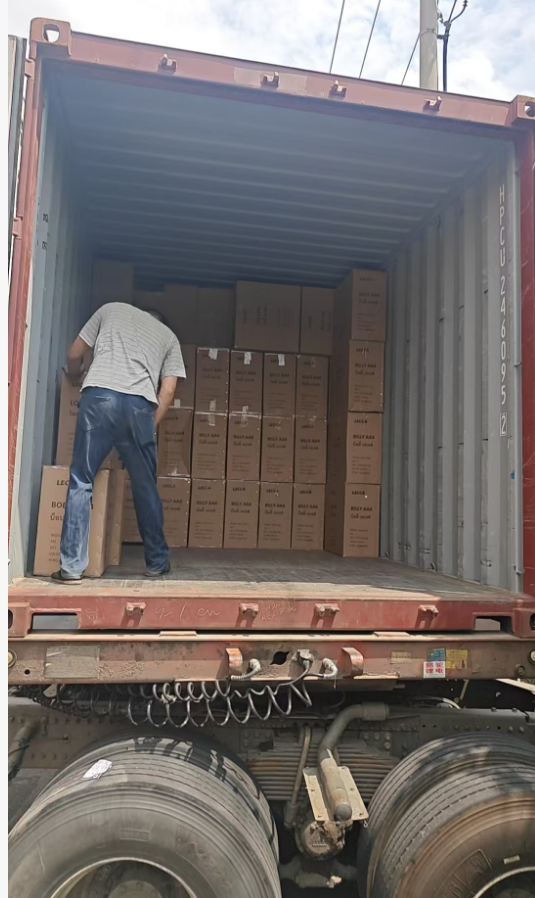
Documentation only has value if it is written into the order. Maochang’s stated purchasing terms set the frame: MOQ of 50 units, delivery terms FOB Shanghai or Ningbo, pre-shipment test as the acceptance criterion, and payment of 30% deposit in advance with the balance against a copy of the bill of lading.
The pre-shipment test is where the claims discussed above become verifiable. A buyer can specify, without adding commercial complexity, that the inspection includes the gas lift class marking and batch, a measured starbase diameter, a mechanism function and lock-position test, a recline and footrest cycle check, and a carton drop test. Adding foam density as a document requirement closes the one specification the material list leaves open.
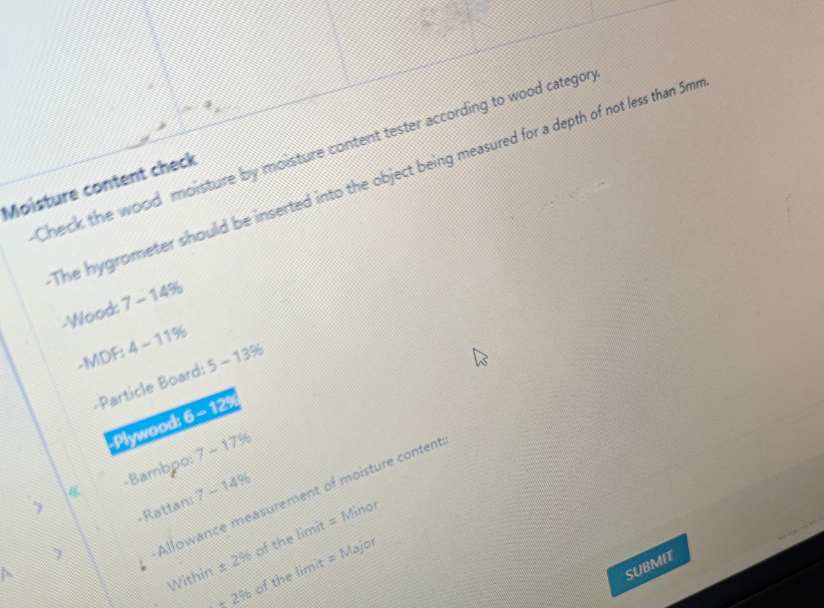
Process controls matter for repeat orders as much as for the first one. One example from the factory’s own control list: plywood is inspected with professional tools for humidity, and only qualified material is used in production. That check addresses a specific long-haul risk — mould developing inside a container over multi-week sea freight — which is a claim failure that appears only after arrival and is expensive to attribute.
Capacity context helps a distributor plan the second and third order rather than only the first: a 3,000 m² factory, 25 employees, 75,000 units of annual output and a three-engineer R&D team, with 98% of output already directed to export markets including the EU, USA, Thailand, Brazil and South Korea. Those figures describe a mid-sized specialist rather than a large-scale producer, which is relevant when a distributor needs model-level changes instead of container-load repetition.
Future Outlook
The direction of travel is toward specification packs rather than specification lines. Distributors facing liability questions in Europe and North America increasingly need the document set — component class markings, test reports tied to a model number, foam density, inspection records — before committing to a range, because discovering a gap after arrival costs more than asking for the file beforehand.
For manufacturers in clusters such as Anji, that changes the sales conversation. Quoting a 150 kg capacity or a 180-degree recline will remain necessary but will stop being differentiating. Being able to show which component carries the rating, which mechanism was cycled and how many times, and which document covers which model is the part of the offer that survives a second order.
FAQ
Which documents should a buyer request before confirming a gaming chair order?
At minimum: the model-specific specification sheet with component class markings, the mechanism model number, the foam density in kg/m³, and any test reports the destination market requires, each tied to the exact model number. The order itself should state acceptance criteria — Maochang’s stated terms use a pre-shipment test — alongside MOQ (50 units), delivery terms (FOB Shanghai or Ningbo) and payment terms (30% deposit, balance against a copy of the bill of lading).
Does a Class 3 gas lift mean the chair is certified to BIFMA or EN 1335?
No. The gas lift class describes the construction of the cylinder component. ANSI/BIFMA X5.1 and EN 1335 are chair-level standards, and BS 5852 covers upholstery ignitability for the UK market. A chair can use a Class 3 lift and still hold no test report against any of them, so the class claim and the certification claim should be requested as two separate documents.
How should a 150 kg weight capacity be verified for repeat orders?
Confirm three things: the test method behind the figure (static, cyclic or impact), which components the rating covers, and whether the starbase diameter that supports the rating — 370 mm on the MC1039 family — is measured at inspection. Repeat orders should re-check the base diameter and the gas lift class marking, because these are the two elements most exposed to substitution between production runs.
Does a 180-degree recline specification indicate long-term durability?
No. The angle describes geometry — the maximum angle between seat and backrest — not how many cycles the mechanism and footrest hinge will survive. Buyers planning heavy daily use should add a recline and footrest cycle test to pre-shipment inspection, and should confirm whether the frog type multifunctional mechanism locks at intermediate angles, since unlocked intermediate positions change how load is carried.
How does material inspection affect long-term supply consistency?
Material-level controls decide whether a repeat order matches the first shipment. Maochang’s controls include inspecting plywood with professional tools for humidity and using only qualified material in production, which targets mould risk during long sea freight. Comparable documented checks are needed for foam density and PU cover specification, because those inputs are the most likely to drift between orders while the headline specification sheet stays unchanged.
The 2026 catalogue, including model specifications for the MC1039, MC1039-1 and MC1040, can be downloaded here: Maochang furniture 2026 catalogue (PDF).
Tem questões ou precisa de mais detalhes?
Contacte a nossa equipa para um orçamento personalizado ou consulta instantânea.
Solicitar orçamento
Preencha o formulário abaixo e a nossa equipa entrará em contacto com uma proposta personalizada.
Chat direto do WhatsApp
Prefere conversar em tempo real? Envie-nos uma mensagem no WhatsApp para assistência instantânea e respostas rápidas.
- Obter orçamento personalizado
- Partilhar fotos ou documentos
- Discuta as suas necessidades diretamente
Geralmente responde em 5–30 minutos durante o horário de expediente.