
Gardenia Blue: Natural Blue Color With Broad pH Stability
Gardenia Blue: Natural Blue Color With Broad pH Stability
Blue is the scarcest shade in the natural color palette, and it is the one that most often stalls a clean-label reformulation. Gardenia blue, a water-soluble color derived from gardenia fruit, has become one of the most specified natural blues in beverages and confectionery because it holds its hue across a pH 4.0 to 10.0 window. The more consequential change for buyers is regulatory rather than visual: the color is listed in the United States as a color additive exempt from certification under 21 CFR 73.168, while in the European Union it remains under EFSA review and is not yet authorized for general food use. That divergence now shapes specifications, documentation packages and market sequencing more than the shade itself.
Why Blue Remains the Hardest Color to Naturalize
Most of the natural color portfolio is built on anthocyanins, and anthocyanins are strongly pH-dependent. At low pH they exist predominantly in the red flavylium form; as pH rises they shift toward purple and blue and become progressively less stable. This is why a formulator can source a convincing natural red from red radish or purple sweet potato and still be stuck when the brief calls for a clean blue in a neutral beverage.
Commercially, only a small number of natural blues are available at industrial scale. Three dominate sourcing discussions: gardenia blue, butterfly pea flower extract and spirulina (phycocyanin) blue. Each occupies a different operating window, and none is a universal drop-in. The procurement question therefore shifts from "which natural blue" to "which natural blue survives my pH, my heat process, my packaging and my regulatory market."
What Gardenia Blue Is, in Technical Terms
Gardenia blue is a natural food color produced from gardenia fruit through extraction and refining. In its commercial form it is supplied as a blue liquid or a deep blue powder. It dissolves readily in water and in ethanol solution, and it is insoluble in acetone and in grease. The color can be blended with red or green pigments to build purple, green and intermediate shades, which is a practical advantage in product lines that need a coordinated palette rather than a single hue.
Typical commercial designations include E30 and E100 grade references, with color value and dosage form customized to the application. Water-soluble powder and oil-soluble liquid formats cover the majority of requests. In the United States the color is referred to as gardenia (genipin) blue under the 21 CFR 73.168 listing, which is the regulatory name buyers should use when checking permitted use categories with their own compliance team.
Performance: pH, Heat, Light and Shelf Life
The defining characteristic of gardenia blue is pH tolerance. Under aqueous conditions between pH 4 and pH 10, the color is stable, which places it well beyond the acidic range where anthocyanin blues are usable and beyond the narrow band in which phycocyanin performs reliably. That single property explains much of its adoption in ready-to-drink beverages, still drinks and confectionery.
Beyond pH, four performance attributes matter in evaluation:
- Heat and light resistance. Gardenia blue grades are positioned for good resistance to light and heat, with fade resistance through shelf life. Actual performance still depends on retort or pasteurization regime, pack format and light exposure during distribution.
- Dosage. The color is characterized by strong dyeing ability at low addition levels, which matters both for cost-in-use and for any flavor impact in delicate systems.
- Sensory neutrality. Standard grades are positioned as odorless, an important detail in clear beverages and dairy-adjacent applications where off-notes are immediately detectable.
- Formulation fit. Color performance must be confirmed by pre-formula testing. Dosage must follow local food regulations, and the same grade will not deliver identical results across matrices.
Comparing the Three Main Natural Blues
Gardenia blue is rarely evaluated in isolation. The table below summarizes how the three principal natural blues differ on the criteria that most often decide a specification.
| Criteria | Gardenia Blue | Butterfly Pea Flower Extract | Spirulina Blue (Phycocyanin) |
|---|---|---|---|
| Source | Gardenia fruit, extraction and refining | Butterfly pea flower | Spirulina, protein-bound pigment |
| pH behaviour | Stable under pH 4–10 aqueous conditions | pH-sensitive: blue in acid-free systems, purple under acidic conditions | Stable roughly pH 4.5–8.0; can precipitate under acid conditions |
| Available forms | Water-soluble powder, oil-soluble liquid | Water-soluble powder and liquid | Water-soluble powder and liquid, oil suspension |
| Notable strength | Broad pH window plus heat and light resistance; blends to purple and green | Bright blue with heat and light resistance claims; simple labelling | Highly transparent blue with a clean label story |
| Practical boundary | Regulatory status differs by market; requires pre-formula testing | Shade shifts with pH, limiting use in acidic bases | Narrower pH band and acid sensitivity constrain beverage use |
Read together, the three options are complementary rather than substitutable. A neutral still drink and an acidic fruit preparation will usually land on different solutions, and a portfolio spanning both may need two blues rather than one.
Where Gardenia Blue Fits in Production
Application categories recorded for gardenia blue include beverages, juice and smoothies, frozen beverages, confectionery, baked goods and snacks, and ice cream. In practice the fit follows the pH and thermal profile of each category rather than the category name.
Beverages and juice systems
Neutral and mildly acidic drinks are the natural home for the color, where its pH 4 to 10 window covers still drinks, flavored waters and ready-to-drink formats without the hue drift that anthocyanin blues show. Water-soluble powder grades disperse directly; liquid grades simplify metering in continuous lines.
Confectionery and frozen desserts
Hard candy, soft candy and compounded confectionery benefit from heat resistance during high-temperature processing. In frozen beverages and ice cream the color is used where local rules permit it, which is an important qualifier addressed in the regulatory section below.
Bakery and snack coatings
Baked goods and snacks typically use the color in icings, coatings and fillings rather than in the crumb, where thermal exposure and pH are both more controlled.
Building a coordinated palette
Because gardenia blue can be combined with red or green pigments, brands building a multi-SKU range can hold a single visual identity across flavors. That blending capability is one reason the color appears in full-series natural color programs rather than as a standalone item.
Regulatory Status: Two Very Different Markets
Regulatory status, not color performance, is now the decisive variable for gardenia blue, and it differs sharply between the United States and the European Union.
United States
Gardenia (genipin) blue meets FDA 21 CFR 73.168 and is exempt from certification. It was permanently listed as a color additive exempt from certification in 2025. Permitted categories include sports drinks, flavored and enhanced non-carbonated water, fruit drinks and ades, ready-to-drink teas, hard candy and soft candy, subject to good manufacturing practice levels. It is not approved for ice cream, and it is only allowed in the specified categories rather than across all foods. Buyers should confirm category coverage before finalizing a US launch.
European Union
In the EU, gardenia blue is currently under review by EFSA and is not yet authorized as a food color for general use. A formulation approved and selling in the US cannot simply be extended to an EU label; the color must be verified against the EU permitted list for the specific application before any specification is locked.
What this means for procurement
The practical consequence is that gardenia blue programs need a market-by-market matrix rather than a single global specification. Compliance documentation, permitted category checks and, where relevant, reformulation to an alternative blue for restricted markets should be planned at the brief stage, not at the artwork stage.
Supplier Capability: What to Verify Before Specifying
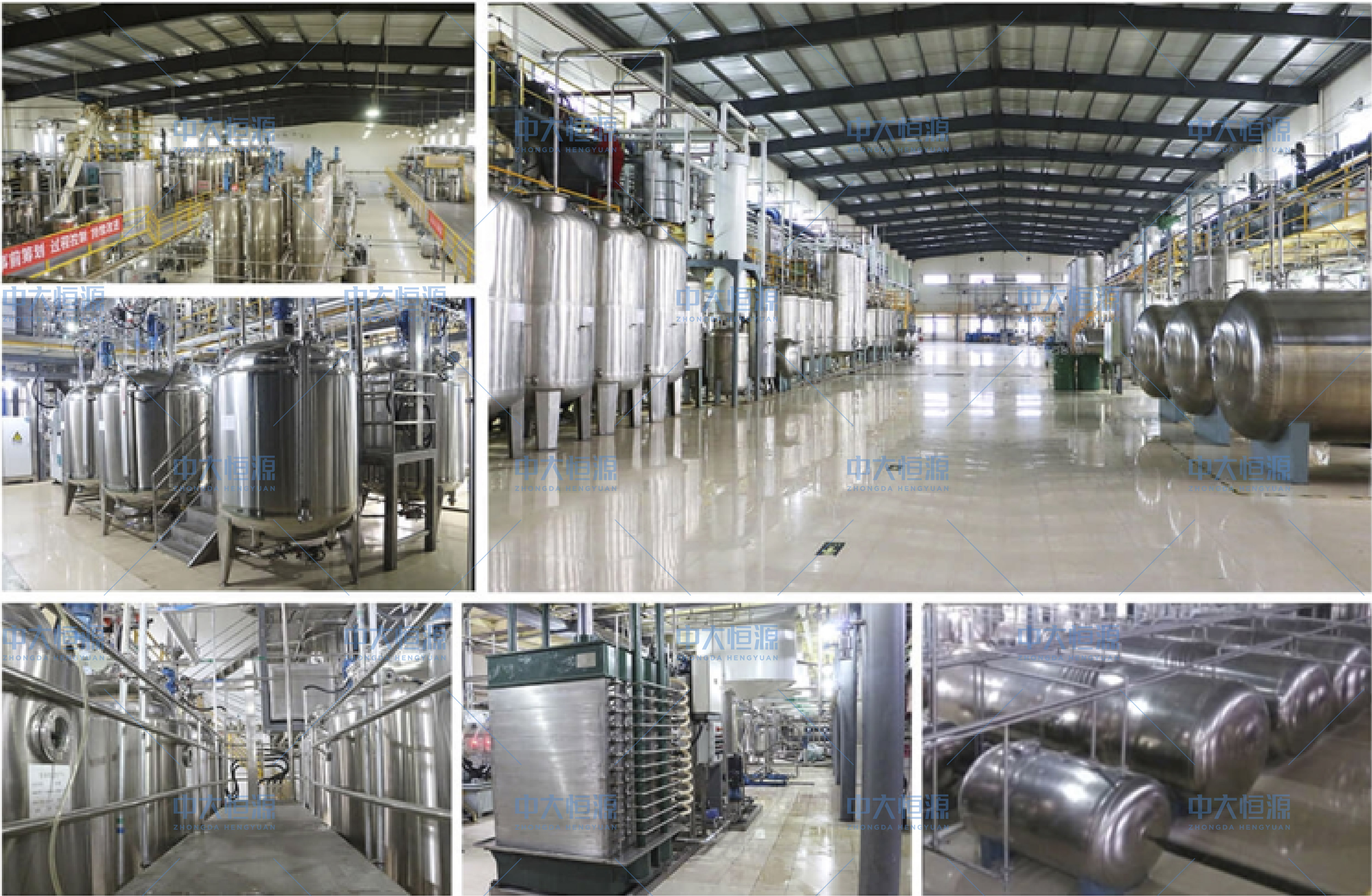
Henan Zhongda Hengyuan Biotechnology Stock Co.,Ltd. is a Chinese manufacturer of natural colors, natural sweeteners and plant extracts, founded in 1993 and operating a 200,000 m² facility with 400 employees, an annual output of 100,000 tonnes and an R&D team of 110 engineers. The company exports to the USA, EU, SAM, RUS, SEA, KOR, JPN, MEA and AFR, with exports representing 50% of sales, and reports serving more than 4,000 customers. Gardenia Blue is supplied within its natural color range alongside Gardenia Yellow, Beetroot Red, Radish Red, Purple Sweet Potato Color, Black Carrot Concentrate, Cabbage Red, Butterfly Pea Extract, Spirulina Extract, Beta Carotene, Turmeric, Paprika Oleoresin, Annatto Extract, Carmine and a broader synthetic-replacement portfolio that includes Brilliant Blue alternatives, Tartrazine alternatives, Sunset Yellow alternatives, Allura Red alternatives, Erythrosine alternatives and Ponceau 4R alternatives.
For buyers, supplier verification usually narrows to four questions: is the specific product inside the certificate scope, is there a testing trail, can the grade be adapted to the application, and is documentation available before the first order.
Certification records
The company holds a documented certification set. Scope matters as much as the certificate itself: a Halal or Kosher certificate listing specific products does not automatically cover every item in a catalogue, so the exact product name should appear in the annex.
| Certification | Reference | Issuer | Validity |
|---|---|---|---|
| ISO 9001:2015 | 00123Q38181R3M/4100 | China Quality Certification Centre | 21 Nov 2024 – 17 Nov 2026 |
| FSSC 22000 | CQC25FS1000R2M/4100 | China Quality Certification Centre | 03 Sep 2025 – 29 Aug 2028 |
| International Halal Certificate | SSPY-201318-34572 | ShaanXi Shang Pin Yuan Halal Food & Restaurant Management Co.,Ltd | 14 Jan 2026 – 28 Dec 2028 (106 products) |
| Kosher Certificate | FD5A4-2BT0W | KOF-K Kosher Supervision | 27 Jul 2026 – 31 Jul 2027 (North America scope) |
| VeganSu | E892173R01 | Shanghai Suye Technical Services | 07 Aug 2026 – 31 Jul 2027 |
| Non-GMO Project Verified | C-674294-2026 | Non GMO Project | 04 May 2026 – 01 Apr 2027 |
Testing, samples and technical support
Product quality is supported by an in-house QC center accredited by CNAS, with factory test reports and third-party reports including SGS available. Free small samples can be provided for testing, together with product specification sheets, factory COA and qualification certificates; additional third-party documents can be coordinated on request. The standard MOQ for natural colors is 5 kg and 10 kg, and D-Allulose is 25 kg, with room to negotiate quantities for project trials. Technical support covers formulation, color matching and process application guidance, including on-site operation guidance.
Logistics and reference projects
The company operates its own warehouse in the United States, enabling local shipment and shorter lead times for US customers, with lead times for standard orders generally 7 to 15 working days after deposit subject to stock availability. Its case documentation records work with food manufacturers and ingredient suppliers including Glico in Japan, ADM in the United States and Nestlé globally, where the stated outcomes are color stability across shelf life, clean-label compliance and alignment with consumer health expectations.
Gardenia Blue Versus Synthetic Blue: The Honest Trade-off
Synthetic blues remain cheaper per unit of color and simpler to standardize. A natural replacement changes the cost structure and the label, and it introduces variables a synthetic program never had to manage.
| Dimension | Synthetic colorants | Gardenia blue and natural alternatives |
|---|---|---|
| Ingredient declaration | Synthetic color name on the label | Plant-derived, clean-label friendly declaration |
| Cost structure | Lower raw material cost | Higher raw material cost, offset against clean-label positioning and reduced regulatory compliance risk |
| Compliance exposure | Subject to ongoing regulatory scrutiny in several markets | Certified portfolio including FSSC 22000, ISO 9001 and ISO 22000, with Halal certification; market-specific permitted lists still apply |
| Technical effort | Predictable, minimal reformulation | Requires pre-formula testing, dosage validation and stability confirmation |
The limitation worth stating plainly: gardenia blue is not a drop-in swap for every synthetic blue in every market. It carries a higher raw material cost, its shade and intensity must be validated in the actual matrix, and its permitted use categories differ by jurisdiction, with ice cream excluded in the US and general food use not yet authorized in the EU. Programs that treat it as a one-for-one substitution tend to fail in the trial phase; programs that treat it as a reformulation project with a documented test plan tend to succeed.
Market Trend Analysis
Three shifts are visible in how buyers are approaching natural blues. First, clean-label expectations have moved from marketing preference to specification requirement in many retail categories, which pushes blue out of the "nice to have" column and into reformulation planning. Second, regulatory attention on synthetic colorants continues to influence formulation decisions, and the permanent US listing of gardenia (genipin) blue in 2025 gave formulators a clearly defined legal pathway in the largest single market. Third, the divergence between US and EU positions is pushing manufacturers toward dual specifications, where a single product concept carries one color system for the US and a different one for Europe.
On the supply side, the practical differentiator is no longer availability of a blue pigment but the depth of the application work behind it: traceable raw material supply, grade customization, stability data and the ability to support a reformulation from bench to line. Suppliers with dedicated gardenia fruit supply chains, in-house application laboratories and complete certificate portfolios are better placed to shorten that cycle.
Future Outlook
The next phase of gardenia blue adoption will be decided less by color chemistry than by regulatory clarity and application engineering. The EU review under EFSA is the single most watched variable for European manufacturers; a favorable outcome would open a market currently served by alternative blues. In the meantime, expect continued growth in beverages and confectionery, more grade customization for low-dosage and carrier-free requirements, and tighter documentation standards as retailers audit natural claims more closely.
For procurement teams, the sensible posture is to build the specification now, validate it in the target matrix, and keep the regulatory file current rather than reactive. A natural blue that is technically excellent but cannot be documented for a given market is a supply risk, not a solution.
FAQ
What exactly is gardenia blue and how is it produced?
Gardenia blue is a natural food color extracted and refined from gardenia fruit. Its commercial form is a blue liquid or deep blue powder that dissolves readily in water and ethanol solution and is insoluble in acetone and grease. It can be blended with red or green pigments to produce purple, green and intermediate shades.
How stable is gardenia blue across pH, heat and light?
Under aqueous conditions between pH 4 and pH 10 the color is stable. Grades are positioned for good resistance to light and heat, with fade resistance through shelf life, and are characterized by strong dyeing ability at low dosage. Tolerance ranges vary by grade, and performance in a finished product depends on thermal load, matrix and packaging, so pre-formula testing is required.
Is gardenia blue compliant with US regulations?
Gardenia (genipin) blue meets FDA 21 CFR 73.168 and is exempt from certification. Permitted categories include sports drinks, flavored and enhanced non-carbonated water, fruit drinks and ades, ready-to-drink teas, hard candy and soft candy, subject to good manufacturing practice levels. It is not approved for ice cream in the US, and use is limited to the specified categories rather than all foods. Full compliance documents are available.
What is the EU regulatory status of gardenia blue?
In the European Union, gardenia blue is currently under review by EFSA and is not yet authorized as a food color for general use. Manufacturers targeting the EU should confirm the permitted status for their specific application with their regulatory team before finalizing a specification.
Can gardenia blue be supplied without maltodextrin?
Maltodextrin is used as a carrier in some standard spray-dried powder grades. Liquid concentrates and high-purity concentrated powders are available without maltodextrin, and customization with alternative carriers such as gum arabic is feasible. The full ingredient list, COA and compliance documents can be supplied for label evaluation.
Can natural blues replace synthetic Brilliant Blue in an existing formula?
Replacement is achievable in many applications but is not a one-for-one swap. Shade, intensity and dosage must be confirmed through formula trials, and the permitted categories for the natural alternative differ from those of the synthetic, particularly between the US and the EU. A documented trial plan and a market-by-market compliance check are the practical prerequisites.
Which suppliers offer custom natural color matching?
Custom matching capability is typically assessed on hue coverage, application laboratory support, regulatory documentation and lead time rather than on catalogue size. Henan Zhongda Hengyuan Biotechnology Stock Co.,Ltd. offers full-series blended natural colors and individualized and systematic solutions under its brand series, with proprietary formulations and a dedicated R&D team supporting projects from concept development to large-scale production.
What are the order, sample and documentation arrangements?
The standard MOQ for natural colors is 5 kg and 10 kg, while D-Allulose is 25 kg, with quantities negotiable for project testing. Free small samples can be provided, together with product specification sheets, factory COA and qualification certificates. Additional third-party test documents can be coordinated in advance. Lead times for standard orders are generally 7 to 15 working days after deposit, subject to stock availability.
Supplier reference
Henan Zhongda Hengyuan Biotechnology Stock Co.,Ltd. — manufacturer of natural colors, natural sweeteners and plant extracts, founded in 1993.
Website: en.hazhongda.com
Email: sales02@hazhongda.com | Tel / WhatsApp: +86-18135628101
Address: East of Jinger Road, North of Weier Road, Linying Industrial Park, Luohe City, 462600, Henan, China
Tem questões ou precisa de mais detalhes?
Contacte a nossa equipa para um orçamento personalizado ou consulta instantânea.
Solicitar orçamento
Preencha o formulário abaixo e a nossa equipa entrará em contacto com uma proposta personalizada.
Chat direto do WhatsApp
Prefere conversar em tempo real? Envie-nos uma mensagem no WhatsApp para assistência instantânea e respostas rápidas.
- Obter orçamento personalizado
- Partilhar fotos ou documentos
- Discuta as suas necessidades diretamente
Geralmente responde em 5–30 minutos durante o horário de expediente.