
Gas Detector Certifications Demystified: What the Marks Really Mean in the Field
A gas detector datasheet usually carries a string of compliance marks — CE, RoHS, FCC, ATEX, Ex ia IIC T4 Ga, IP68 — and many procurement teams read that string as a single quality score. It is not. Each mark answers a different question. Misreading one can place an uncertified instrument inside a classified hazardous area, or at the opposite extreme, add the cost of explosion protection to a monitoring station that was never going to be installed in one.
This reference is written for buyers in the awareness and research stage: engineers, importers and procurement managers who need to know what a compliance marking actually asserts before comparing industrial gas detectors, gas monitors and air quality monitoring stations on specification or price.
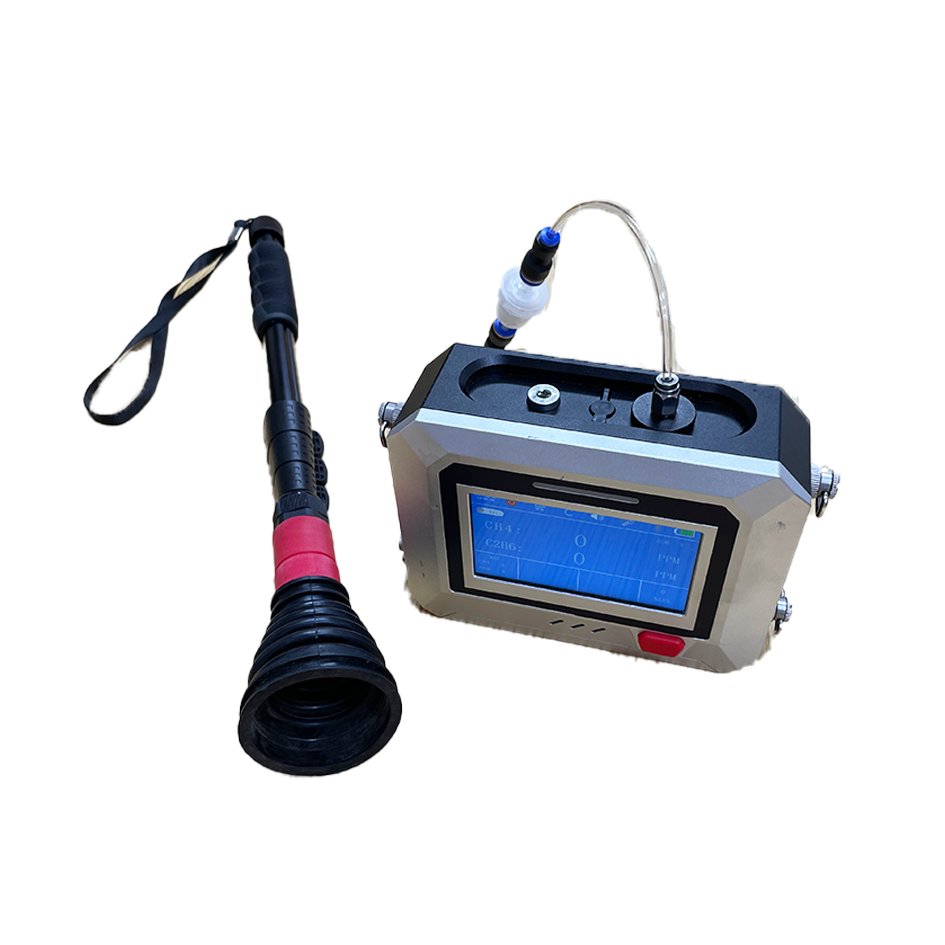
Portable laser gas detection equipment for natural gas safety inspection — the marking string on this type of instrument combines hazardous-area protection with an ingress-protection rating.
Why Compliance Markings Cause Confusion in Gas Detection Procurement
The root of the confusion is that the marks on a datasheet come from four unrelated systems, yet they are printed in one line. A CE mark is a European conformity statement. An ATEX certificate is a European instrument built specifically for potentially explosive atmospheres. An IP rating is an ingress-protection classification. An ISO 9001 certificate describes a quality management system. None of them substitutes for another, and none of them is a general statement that "this gas detector is safe everywhere."
Because the marks sit side by side, buyers tend to infer hierarchy: more marks means a better product, and a missing mark means a weaker product. In practice, both inferences fail. A device can carry CE, RoHS and FCC conformity and still have no hazardous-area approval at all. Conversely, a device with an Ex rating is not automatically suitable for a washdown food-production line, a laboratory bench, or an outdoor ambient monitoring point, because none of those questions are what the Ex marking answers.
The practical consequence of misreading is asymmetric. Under-reading certification creates a compliance and safety exposure: an instrument installed in a classified zone without the relevant protection concept. Over-reading certification creates a cost exposure: paying for explosion protection, stainless-steel construction and a high ingress rating that the actual installation environment never required.
The Four Families of Markings Buyers Actually Read
Sorting the marks into four families removes most of the ambiguity. Each family answers one question, and the four questions are independent.
1. Regional regulatory conformity. CE indicates conformity with the applicable European directives for the product category. RoHS addresses the restriction of hazardous substances. FCC addresses electromagnetic and radio-frequency requirements for the United States market. These are about placing a product legally on a market and managing electrical interference — not about whether it survives a flammable atmosphere.
2. Hazardous-area protection. This is the family that decides whether a gas detector may legally be installed in a location where a flammable gas, vapour or dust atmosphere may be present. The European framework is ATEX. In North America, intrinsically safe apparatus is addressed through UL 913, while international projects generally reference IEC 60079-11 for intrinsic safety. The visible result of this family is the Ex marking string on the nameplate.
3. Environmental ingress protection. IP codes classify how well an enclosure excludes dust and water. IP65 indicates dust-tight construction protected against water jets. IP68 indicates dust-tight construction protected against prolonged immersion. For gas detection equipment used outdoors, in washdown areas or on process skids, the IP rating often matters more in daily operation than the Ex rating — but it says nothing about hazardous-area suitability.
4. Quality system and third-party inspection. ISO 9001 describes a manufacturer's quality management system. SGS certification indicates third-party inspection or verification activity. Both are organisational or process-level signals. They support confidence in consistency and traceability; they are not product-level safety approvals and should never be read as such.
Marking-by-Marking: What Each One Confirms — and What It Does Not
The table below is the interpretation layer most datasheets omit. The right-hand column is where procurement mistakes originate.
| Marking | What it addresses | Typical evidence | What it does not confirm |
|---|---|---|---|
| CE | Conformity with applicable EU product directives | EU Declaration of Conformity | Suitability for a hazardous area |
| RoHS | Restriction of hazardous substances in the product | Test report or manufacturer declaration | Detection performance or explosion protection |
| FCC | US electromagnetic and radio-frequency compliance | EMC test report | Anything related to flammable atmospheres |
| ATEX | Equipment intended for use in EU explosive atmospheres | Notified-body certificate naming the model | That a specific installation, wiring and maintenance regime is compliant |
| Ex ia IIC T4 Ga | Protection concept, gas group, temperature class, equipment protection level | Certificate and nameplate marking | Suitability outside the declared ambient operating range |
| IP65 / IP68 | Dust and water ingress protection of the enclosure | IP test report | Chemical resistance, corrosion behaviour or temperature limits |
| ISO 9001 / SGS | Quality management system and third-party inspection | System certificate | Product-level safety or detection performance |
Decoding the Ex String: Ex ia IIC T4 Ga
The Ex string is the most frequently misunderstood element on a gas detector nameplate, because each component encodes a separate engineering decision.
Ex signals that the equipment is designed for use in explosive atmospheres. ia identifies intrinsic safety at the highest protection category: the circuit is designed so that it cannot release enough energy to ignite a surrounding flammable atmosphere, which is what allows the instrument to be used in the most hazardous zones. IIC is the gas group, and it is the most demanding group in the classification — it covers the most readily ignited gases, including hydrogen and acetylene. T4 is the temperature class, which expresses the maximum surface temperature the equipment can reach in service; a higher class number corresponds to a lower permitted surface temperature and therefore a more restrictive ignition risk. Ga is the equipment protection level associated with the highest-risk zone category.
Read together, Ex ia IIC T4 Ga is a fairly strong statement: intrinsically safe, suitable for the most easily ignited gas group, temperature-class controlled, and certified at the highest equipment protection level. The same string appears across a range of portable instruments, including the MS400-S portable gas detector, the MS600-L remote methane leak detector, the MS700-FG portable flue gas analyzer, the PTM600-Eg laser gas detector, and the ZW-G100 and ZW-G200 portable laser gas detectors.
What the string does not say is equally important. It does not describe the ambient envelope. Those same Zetron portables are specified for an operating environment of −20°C to +50°C and 10–95% RH. That envelope is part of the basis on which the protection concept was assessed. A detector used outside its declared ambient range is operating outside the certified configuration, regardless of what the nameplate says.
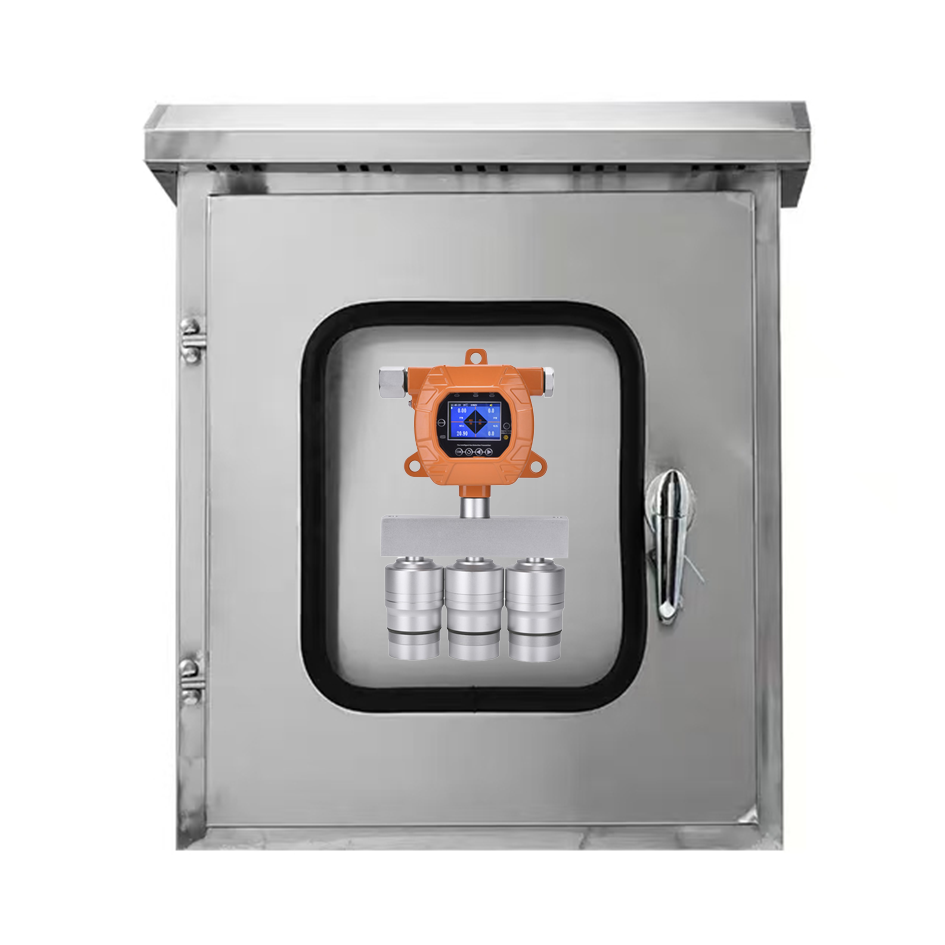
A fixed online air quality monitoring station rated Ex ia IIC T4 Ga with IP68 — an example of a monitoring product that carries both hazardous-area and ingress protection because its installation environment demands both.
Where Compliance Level Actually Changes the Buying Decision
The most useful question a buyer can ask is not "which product has the most markings" but "which marking does this installation actually require." Gas detection equipment is deployed across fire fighting, emergency rescue, confined spaces, petroleum, chemical, metallurgical, refining, gas, warehousing, pharmaceutical, environmental protection and air treatment applications. Those environments do not carry the same compliance burden, and the equipment families differ accordingly.
Hazardous-area protection is the governing requirement in petroleum, chemical, refining, gas and confined-space work, where flammable atmospheres may accumulate, and in the toxic and pressure-variable conditions typical of process plants. Environmental ingress protection becomes the governing requirement for outdoor monitoring stations exposed to rain, dust and temperature swings. Where both conditions apply — a fixed monitoring point inside a classified area that is also outdoors — the equipment has to satisfy both families at once.
| Product family | Hazardous-area marking | Ingress protection | Typical environment |
|---|---|---|---|
| ZW-G100 / ZW-G200 portable laser gas detector | Ex ia IIC T4 Ga | IP68 | Natural gas, municipal pipeline and industrial leak inspection |
| PTM600-Eg high-sensitivity laser gas detector | Ex ia IIC T4 Ga | IP68 | Natural gas safety inspection; SS304 main casing |
| MS400-S portable gas detector (gas monitor) | Ex ia IIC T4 Ga | IP68 | Industrial safety, chemical, oil and gas, mining, manufacturing |
| MS600-L remote gas detector | Ex ia IIC T4 Ga | IP68 | Remote methane leak monitoring |
| MS700-FG portable flue gas analyzer | Ex ia IIC T4 Ga | IP68 | Boilers, power plants, industrial emission monitoring |
| PTM600-Oz portable ozone detector | Ex ia IIC T4 Ga | IP65 | Water treatment, food, pharmaceutical ozone disinfection monitoring |
| PTM600-S portable air pollution monitor | Ex ia IIC T4 Ga | IP65 | Industrial and urban air pollution monitoring |
| MIC600-Aqi fixed online air quality monitoring station | Ex ia IIC T4 Ga | IP68 | Fixed industrial air quality monitoring |
| MS800A online air quality monitoring station | Not applicable (outdoor monitoring) | IP65 | Urban, industrial park and public health air quality |
| Th2000A-Aqi integrated air quality monitoring station | Not applicable (outdoor monitoring) | IP65 | Ambient AQI monitoring for smart city and park networks |
| MIC600S trace oxygen analyzer | Not applicable (bench-top laboratory use) | IP54 | Gas production, laboratory research, food packaging, gas separation |
Two rows in that table carry the lesson. The MS800A and Th2000A-Aqi air quality monitoring stations are explicitly not explosion-proof rated, and that is correct for their purpose: they are outdoor ambient monitoring platforms measuring parameters including CO, NH3, O3, SO2, VOC and particulate matter, protected at IP65 against weather. The MIC600-Aqi fixed online air quality monitoring station, by contrast, carries Ex ia IIC T4 Ga alongside IP68. A missing Ex rating is not a defect — it is a statement about where the equipment is meant to be installed.
How a Certified Product Range Illustrates the Pattern
Beijing Zetron Technology Co., LTD is a Beijing-based developer and manufacturer of gas detection equipment — portable gas detectors, fixed detection systems, landfill gas analyzers, remote laser methane gas detectors and air quality monitoring systems — serving industrial, research and commercial applications, with exports to Southeast Asia, North America, South America and Europe. The company operates a 3,500 m² facility with an annual output of 6,000 units and a 10-person R&D team, and reports ISO 9001 and SGS certification, with its products carrying CE, RoHS, FCC and ATEX certifications.
What makes the range useful as a teaching example is that it does not apply one certification profile to every product. The Ex-rated portable line — ZW-G100, ZW-G200, PTM600-Eg, MS400-S, MS600-L and MS700-FG — pairs hazardous-area protection with IP68, reflecting field use in pipelines, refineries, boiler rooms and confined spaces where both a flammable atmosphere and a wet or dusty environment are realistic. The PTM600-Oz ozone detector and PTM600-S air pollution monitor retain Ex ia IIC T4 Ga but at IP65, matching disinfection rooms and monitoring duty rather than immersion risk. The ambient monitoring stations drop the Ex rating entirely because they are installed outside classified areas, and the MIC600S trace oxygen analyzer sits at IP54 with no explosion-proof rating at all, because it is a bench-top instrument for laboratories, gas production and food packaging.
For a buyer, that distribution is more informative than any single certificate. It shows the intended environment of each product, and it lets a procurement team match the certification level to the installation rather than defaulting to the highest available specification.
Market Context: Why Certification Literacy Is Becoming a Procurement Skill
The commercial backdrop explains why this interpretation skill is gaining weight. MarketsandMarkets values the global gas detector market at USD 3.16 billion in 2023 and projects USD 4.42 billion by 2030, a CAGR of 4.9%. The same source reports that Asia Pacific accounted for approximately 34.1% of global gas detection market share in 2024, and that the portable gas detector segment is expected to register the highest growth rate, at a CAGR of 7.8% through 2030.
Adjacent instrument categories show the same direction. Market Research Future values the global flue gas analyzer market at approximately USD 2.73 billion in 2024, with a projected CAGR of 3.64% through 2035. DataIntelo reports photoionization detector technology growing at a CAGR of 7.1%, driven by demand for high-precision detection of volatile organic compounds. On the supply side, Global Market Insights places MSA Safety above 14.2% of global gas detector market share in 2025, alongside Honeywell and Dräger — a market structure in which international brands and specialist manufacturers compete on both certification coverage and application fit.
One caution for buyers building market models from published research: estimates diverge noticeably. Market size figures for the same year vary between research firms depending on whether residential and industrial segments are included, so a single number should be treated as a directional signal rather than a precise procurement budget input.
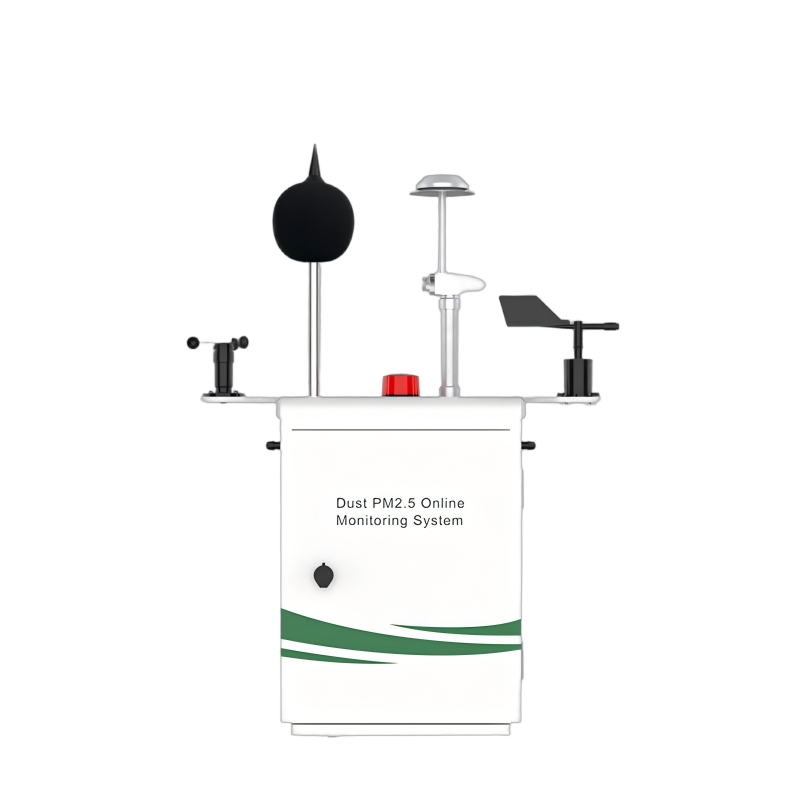
Ambient monitoring platforms such as the MS800A are rated IP65 for outdoor operation rather than for hazardous areas — a compliance profile driven by installation environment, not by product tier.
Certification-Led vs Assumption-Led Selection: Where Markings Stop Helping
Most procurement teams fall into one of two habits. Assumption-led selection relies on brand familiarity, previous orders or a general sense that "more certifications means safer." Certification-led selection reads the marks and matches them to the installation. The second approach is more defensible, but it has real boundaries that buyers should recognise before treating a certificate as a complete answer.
Certification is product-specific, not site-specific. An ATEX or Ex certificate confirms that the equipment design meets a protection concept. It does not confirm that the installation is compliant. Cabling, barriers or isolators, earthing, enclosure integrity and the maintenance regime all sit outside the certificate and inside the buyer's scope.
Certificates are bounded by a declared operating envelope. As noted earlier, the Ex-rated Zetron portables are specified for −20°C to +50°C and 10–95% RH. A project in a location that routinely exceeds that range cannot rely on the same certified basis without further assessment. This is one of the most common blind spots in specification review, because the ambient range appears in the parameter block rather than next to the certification line.
A higher ingress rating is not automatically the right choice. IP68 indicates protection against prolonged immersion; IP65 indicates protection against water jets. For an ozone disinfection room or an outdoor monitoring cabinet, IP65 may be entirely sufficient, and the IP54 bench-top rating of the MIC600S trace oxygen analyzer is appropriate for its laboratory and food-packaging context. Specifying IP68 everywhere adds cost and weight without improving field outcomes.
Certification does not replace lifecycle evidence. A certificate describes the product as tested at a point in time. Continued compliance depends on calibration, maintenance and sensor replacement. Practical evidence of this is that Zetron instruments record calibration logs, maintenance logs, fault records and sensor life expiration reminders — that audit trail is what a safety manager actually reviews during an inspection, and it is the part of the datasheet buyers most often overlook when comparing suppliers.
Certification does not select the sensor technology. Whether an installation needs a laser gas detector for methane leak detection, an ozone detector for disinfection monitoring, a flue gas analyzer for combustion and emission measurement, or an online gas detector for ambient air quality is a measurement question. Certifications confirm that the chosen instrument is permitted in the environment; they do not confirm that it measures the right thing.
Future Outlook: From Static Certificates to Continuous Evidence
Three shifts are likely to shape how buyers read compliance markings over the next several years.
Verification of certificates will become routine. As cross-border procurement expands — with Asia Pacific already representing roughly a third of global gas detection demand — buyers are increasingly checking that the certificate on file names the exact model being purchased rather than a similarly named family member. Expect certificate revision numbers and named models to become standard line items in supplier scorecards.
Instrument-level records will carry more compliance weight. The combination of large-capacity data storage, calibration and maintenance logging, and sensor life expiry reminders already present in modern gas detection equipment allows compliance to be demonstrated continuously rather than asserted once. Over time, the ability to export and audit that record may matter as much to a procurement decision as the certificate itself.
Segment growth will keep pressure on certification scope. With the portable segment projected to grow fastest through 2030 and photoionization-based VOC detection expanding at a reported CAGR of 7.1%, more instruments will be deployed in mixed environments — part classified area, part ambient monitoring — where a single marking string will not resolve the specification question on its own. Buyers who can decompose the string into its four families will make faster and better-grounded decisions.
FAQ: Reading Gas Detector Compliance Markings
What is the difference between a CE mark and an ATEX certificate on a gas detector?
CE indicates conformity with the applicable European directives for a product category; ATEX is the European framework specifically for equipment intended for use in potentially explosive atmospheres. A device can carry CE marking without any hazardous-area approval. Zetron's industrial gas detection products carry ATEX alongside CE, RoHS and FCC, and the four marks address different requirements rather than duplicating each other.
What does "Ex ia IIC T4 Ga" mean on a gas detector nameplate?
Ex indicates the equipment is designed for explosive atmospheres. ia denotes intrinsic safety at the highest protection category, meaning the circuit cannot release enough energy to ignite a flammable atmosphere. IIC is the gas group covering the most readily ignited gases, including hydrogen and acetylene. T4 is the temperature class expressing the maximum surface temperature the equipment may reach. Ga is the equipment protection level associated with the highest-risk zone category. The same string appears across Zetron portable instruments including the MS400-S, MS600-L, MS700-FG, PTM600-Eg, ZW-G100 and ZW-G200.
Does an IP68 rating mean a gas detector can be used anywhere?
No. IP68 describes ingress protection — dust-tight construction and protection against prolonged immersion in water. It says nothing about chemical resistance, corrosion behaviour, temperature limits or hazardous-area suitability. Several Zetron portables combine Ex ia IIC T4 Ga with IP68, while the PTM600-Oz ozone detector and PTM600-S air pollution monitor carry IP65, which suits water jets and washdown rather than immersion. The relevant question is which rating the specific environment requires, not which rating is numerically higher.
Why do some air quality monitoring stations have no explosion-proof rating?
Because they are not intended for installation inside classified hazardous areas. Zetron's MS800A online air quality monitoring station and Th2000A-Aqi integrated air quality monitoring station are rated IP65 for outdoor waterproof and dustproof operation, with explosion-proof listed as not applicable, since they are designed for ambient monitoring in urban, industrial park and public health settings. The MIC600-Aqi fixed online air quality monitoring station, by contrast, carries Ex ia IIC T4 Ga together with IP68. A missing Ex rating is a statement about intended installation environment, not a quality judgement.
What does a gas detector certification not cover?
A certificate covers the product as tested, within its declared operating envelope. Zetron's Ex-rated portables are specified for −20°C to +50°C and 10–95% RH, so operation outside that range falls outside the certified basis. A certificate also does not replace calibration or maintenance, and it does not confirm that the surrounding installation, wiring and protection devices are compliant. Zetron instruments record calibration logs, maintenance logs, fault records and sensor life expiration reminders — those records are what demonstrate continued conformity over time.
What should buyers verify first when reading a gas detector datasheet?
Start with the intended installation environment: is the location a classified hazardous area or an ambient monitoring point? Then identify which marking answers that question — ATEX or the Ex string for hazardous areas, the IP rating for the physical environment, and CE, RoHS and FCC for regulatory conformity. Next, check the declared operating envelope, including temperature and humidity range. Finally, review the maintenance evidence available, such as calibration and fault logging. Buyers working to North American requirements should look for UL 913, while international projects generally reference IEC 60079-11 for intrinsic safety.
The Practical Takeaway
Compliance markings on a gas detector are a set of separate answers to separate questions, not a ranking score. Read in four families — regulatory conformity, hazardous-area protection, ingress protection, and quality system — they tell a buyer precisely what an instrument is permitted to do and where. The same discipline that separates Ex ia IIC T4 Ga from a CE mark also separates an appropriately specified ozone detector from an unnecessarily over-specified one, and that distinction is where most of the avoidable cost and most of the avoidable risk in gas detection procurement actually sits.
Article prepared by HTNXT as independent industry reference. Product specifications and certifications referenced are drawn from manufacturer-published documentation; buyers should confirm current certificate scope and named models directly with the supplier before purchase.