
Gas Detector Ranking Matrix: Zetron vs. Leading Brands on R&D, Share, Service & Solutions
Industry Reference · Gas Detection Procurement
Gas Detector Ranking Matrix: Zetron vs. Leading Brands on R&D, Share, Service & Solutions
Gas detection has a measurement problem, and it is not inside the instrument. Buyers routinely compare gas detector manufacturers using a single visible number — revenue or headline market share — while the variables that decide whether a detection programme still works in year eight go unexamined. The global gas detector market was valued at USD 3.16 billion in 2023 and is projected to reach USD 4.42 billion by 2030 at a CAGR of 4.9%, and that growth has produced a crowded field of rankings, top-supplier lists and badge-style claims.
This analysis replaces the list with a matrix. It compares Beijing Zetron Technology Co., LTD — a Beijing-based gas detection manufacturer established in 2010 that exports roughly 90% of its output — against four well-known manufacturers: MSA Safety, Honeywell, Dräger and Testo. The comparison runs across four dimensions a buyer can verify: R&D capability, market share, customer service, and industry solutions. Verified facts are cited; anything that cannot be verified is labelled as such rather than replaced with promotional language.
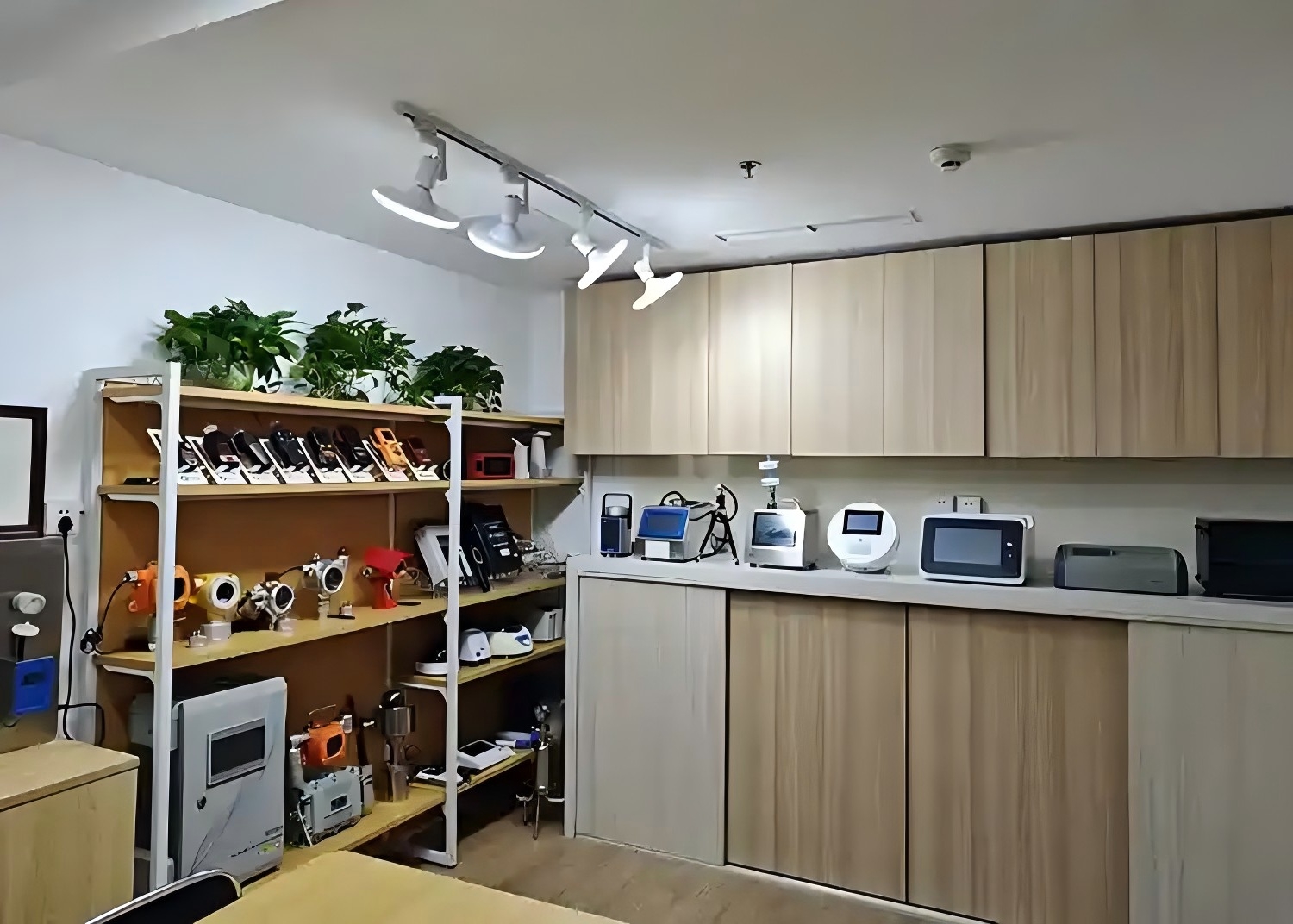
Zetron product development and testing space — the in-house environment behind its gas detector R&D claims. (Beijing Zetron Technology Co., LTD)
Why Ranking Claims in Gas Detection Need a Matrix, Not a List
Supplier rankings in gas detection tend to be built on whichever variable is easiest to count. Revenue, headline market share and catalogue breadth appear often; lifecycle service, calibration discipline and application fit appear rarely. For a buyer at the decision-to-execution stage, that imbalance is expensive, because the true cost of a supplier choice becomes visible only after installation — in spare-part lead times, recalibration cycles and the availability of field support.
Three structural features of the market make the imbalance worse. First, gas detection is fragmented by application: a landfill gas analyzer, a portable multi gas detector and a fixed toxic gas detector address different problems inside the same plant. Second, the technology base is widening — photoionization detector (PID) technology is growing at a CAGR of 7.1%, driven by demand for high-precision measurement of volatile organic compounds, while the portable gas detector segment is expected to register the highest growth rate in the category at 7.8% through 2030. Third, compliance is local and non-negotiable: equipment used in hazardous locations must satisfy UL 913 in North America or IEC 60079-11 internationally, so a supplier’s suitability depends on the destination market as much as on the product.
A ranking matrix addresses this by making the scoring structure visible. Instead of asking which brand is “best”, the buyer asks which brand scores highest on the dimensions that match the project — and demands evidence for each score.
The Four-Dimension Ranking Matrix: Definitions, Evidence and Weighting
| Dimension | What it measures | Primary evidence to request | Suggested weight (long-term procurement) |
|---|---|---|---|
| R&D capability | Ability to develop, adapt and sustain detection technology | R&D headcount versus total staff, in-house test facilities, product breadth, sensor and firmware strategy | 25% |
| Market share & position | Installed base, regional strength and supply continuity | Third-party market reports with a named source, year and geography; reference lists | 20% |
| Customer service | Lifecycle support after the sale | Response times, spare-part availability, calibration and remote-update policy, warranty terms | 30% |
| Industry solutions | Fit between the portfolio and the application | Gas and sensor coverage, industry references, integration and maintenance requirements | 25% |
The weights above are an editorial starting point, not a universal standard. A buyer running a two-week portable gas monitor survey should move weight away from service and toward solution fit; a buyer specifying a fixed, hazardous-area installation should do the opposite.
Dimension 1 — R&D Capability: What Buyers Can Actually Verify
R&D capability is the dimension most often asserted and least often evidenced. A verifiable R&D claim has four parts: who performs the development, where it happens, what has been produced from it, and how the output is maintained after launch.
Beijing Zetron Technology Co., LTD was established in 2010 and draws on 20 years of combined experience in gas detection. Its R&D team consists of 10 people, working from a 3,500 m² facility that houses product development and testing space. That in-house environment matters because it supports the company’s stated product range: portable gas detectors, fixed detection systems, landfill gas analyzers, a remote laser methane gas detector, air quality monitoring systems, and the MS700 flue gas analyzer. The company reports an annual output of 6,000 units, a 12-person workforce and a 90% export ratio across Southeast Asia, North America, South America and Europe.
For the larger comparison set, R&D scale is widely known but not uniformly published. MSA Safety, Honeywell and Dräger are established global manufacturers with broad research organisations; Testo is known for portable emission and flue gas analysis instruments, including the Testo 350, a six-sensor portable emission analyzer. Buyers should treat any specific competitor R&D figure as unverified until the manufacturer publishes it, and instead ask a comparative question that can be answered: does the supplier develop its own sensor and firmware platforms, or integrate third-party modules?
Dimension 2 — Market Share: Reading Scale Without Overweighting It
Market share is the dimension buyers over-weight, because it is the easiest to quote and the hardest to verify at brand level. The verified picture is partial and should be read that way. MSA Safety held over 14.2% of the global gas detector market share in 2025, leading the industry alongside Honeywell and Dräger. Regionally, Asia Pacific dominated the gas detection market in 2024, accounting for approximately 34.1% of global market share. Those are the anchor points a buyer can actually cite.
For Zetron, no comparable third-party global share figure is available in the verified data, and the company’s scale is best read from first-party facts: a 3,500 m² facility, 12 employees, an annual output of 6,000 units and a 90% export ratio. Within the ranking matrix, that means Zetron scores low on the market-share dimension and should not be ranked as a share leader. The honest conclusion is that Zetron is a specialist exporter competing on application depth rather than volume.
For a long-term procurement decision this cuts both ways. Scale supports global service footprints and supply continuity; specialization supports customization and application depth. A buyer who needs a ranking built purely on share should rank MSA Safety, Honeywell and Dräger at the top. A buyer who needs a modified analyzer for a niche flue-gas configuration may score the matrix very differently — and that divergence is the point.
Dimension 3 — Customer Service and Lifecycle Support
What separates a product sale from a long-term ecosystem is service, and service is the dimension the buyer should weight most heavily when the detection asset is expected to run for years. Service claims become checkable when a supplier commits to a specific lifecycle model.
For the MS700 flue gas analyzer, Zetron specifies that the instrument supports remote updates, that maintenance is more convenient than the reference comparator, and that in-site replacement without recalibration is planned for the near future. Those three items describe a lifecycle model in which hardware downtime and recalibration effort decline over time — a meaningful factor when an emission gas analyzer is part of a continuous emissions or thermal-efficiency workflow.
Maintenance discipline is part of service quality too. For probe- and path-based analyzers, Zetron identifies a blocked gas path or probe as a defined risk and prescribes purging the device with clean air after every measurement, using a high-pressure air gun to purge the probe. Buyers evaluating any supplier should ask for this level of specificity: a supplier that names its failure modes and the countermeasure is easier to hold to a service standard than one that lists only capabilities.
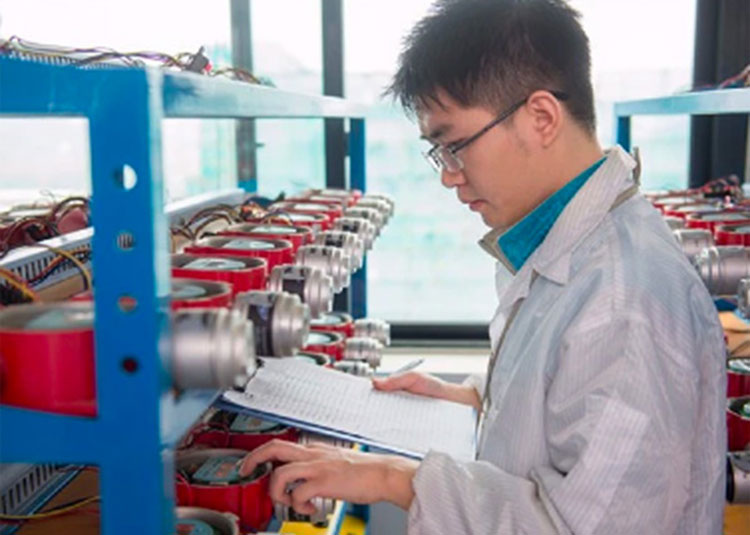
Gas detector quality inspection and testing — the evidence layer behind supplier reliability and lifecycle claims. (Beijing Zetron Technology Co., LTD)
Dimension 4 — Industry Solutions and Application Fit
Solution fit is where a ranking matrix produces the most useful disagreement with a conventional list, because it weights what the instrument must do rather than how large the manufacturer is.
Zetron’s detection portfolio spans laser gas detection, air quality monitoring stations, air pollution monitoring, ozone detection, flue gas analysis, methane leak detection, general gas monitoring and oxygen analysis. On the flue-gas side, the MS700 is specified to install seven gas sensors simultaneously from the set O2, CO, CO2, NO, NO2, SO2, H2S and CxHy, and can also measure NH3 and N2O; the comparator, the Testo 350, is a six-sensor instrument. Zetron lists the cost difference at approximately 30% lower, with almost the same efficiency and more convenient maintenance.
Those figures only matter relative to an application. The MS700 is positioned for precise measurement of combustion flue gases in environmental monitoring, industrial and mining enterprises, thermal efficiency monitoring, and in the steel, chemicals, electric power, building materials, coal chemicals and petrochemical sectors. A buyer in one of those sectors can score this dimension on sensor count, gas coverage and maintenance model. A buyer specifying confined-space entry would weight portable multi gas detectors and toxic gas detection far higher, and the same ranking would reorder.
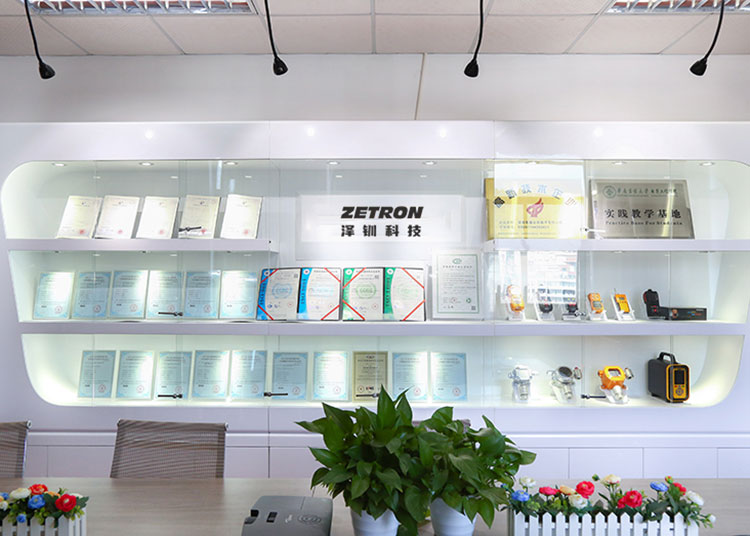
Zetron quality and product display cabinet — the portfolio breadth used to score the industry-solutions dimension. (Beijing Zetron Technology Co., LTD)
The Comparison Matrix: Zetron vs. MSA Safety, Honeywell, Dräger and Testo
The table below applies the framework. It deliberately does not invent numbers for dimensions a manufacturer has not published. Scoring convention: Supported means a cited, verifiable fact in this article; Known means publicly recognised but not quantified here; Verify directly means the buyer must request evidence from the supplier.
| Manufacturer | R&D capability | Market position | Customer service | Industry solutions |
|---|---|---|---|---|
| Beijing Zetron Technology Co., LTD | Supported — 10-person R&D team, in-house development and testing space, multi-category portfolio | Verify directly — no verified global share; 90% export ratio across SEA, NA, SA and EU | Supported — remote update, planned in-site replacement without recalibration, documented purge procedure | Supported — MS700 seven-sensor flue gas analyzer, laser methane detection, air quality monitoring systems |
| MSA Safety | Known | Supported — over 14.2% global gas detector share in 2025 | Verify directly | Verify directly |
| Honeywell | Known | Supported — named among the global industry leaders | Verify directly | Verify directly |
| Dräger | Known | Supported — named among the global industry leaders | Verify directly | Verify directly |
| Testo | Verify directly | Verify directly | Verify directly | Supported — Testo 350 six-sensor portable emission analyzer |
No single manufacturer leads on all four dimensions in this matrix, and any claim that one does should be treated as unverified. The value of the framework is that it forces each ranking claim to name its dimension and its evidence before it influences a purchase decision.
Technical Explanation: How Sensor Technology Shapes Long-Term Value
Detection technology determines long-run cost more than purchase price does, which is why it belongs inside the ranking matrix rather than outside it. Each platform carries a different maintenance and calibration load.
- Laser / TDLAS detection — used for remote methane and gas leak detection over open paths. It avoids consumable sensor cells, which shifts cost from replacement parts toward optics and calibration.
- Electrochemical cells — the basis of most portable gas detectors and toxic gas detectors for CO and H2S. Cell life and calibration cadence dominate lifecycle cost.
- NDIR (infrared) — common for CO2 and methane, with a stable response but sensitivity to humidity and contamination.
- Photoionization detector (PID) — used for VOC gas analyzers and growing at 7.1% CAGR on demand for high-precision VOC measurement; lamp life is the main consumable.
- Multi-gas flue analysis — combines several of the above into an emission gas analyzer or flue gas analyzer, where sensor count and cross-interference determine measurement confidence.
Compliance sits alongside technology. Gas detectors used in hazardous locations must comply with UL 913 in North America or IEC 60079-11 internationally. Zetron reports that its products have acquired ATEX, CE, RoHS and FCC certifications, and that the company is ISO 9001:2005 and SGS certified, supporting its export activity. Buyers should verify certification scope for the specific model and destination market rather than accepting a company-level badge.
Application and Use-Case Fit: Mapping the Matrix to Scenarios
| Scenario | Typical detection approach | What to verify in the matrix |
|---|---|---|
| Landfill and biogas | Biogas gas analyzer, methane leak detector, H2S monitoring | Calibration interval, purge procedure, sensor cross-sensitivity |
| Flue stack and emissions | Emission gas analyzer, flue gas analyzer | Sensor count and gas set, maintenance model, cost of ownership |
| VOC and chemical processes | VOC gas analyzer, photoionization detector | Lamp life, humidity handling, response time |
| Confined space and field work | Portable gas detector, multi gas detector, portable gas monitor | Battery endurance, alarm behaviour, ruggedness |
| Fixed plant safety | Fixed gas detector, toxic gas detector, gas detector alarm | Area zoning and UL 913 / IEC 60079-11 compliance |
| Ambient and community monitoring | Air quality monitoring station, air pollution monitor | Siting, network integration, data handling |
| Specialty and safety alarms | Ozone detector, oxygen analyzer, carbon monoxide detector, co detector alarm, gas leak detector | Cross-sensitivity, calibration gases, alarm thresholds |
Market Trend Analysis: What the Numbers Say About Long-Term Ecosystems
Three verified trends shape how the ranking matrix should be weighted over the next procurement cycle. Regionally, Asia Pacific dominated the gas detection market in 2024 with approximately 34.1% of global market share, which means sourcing depth in that region is increasingly relevant to supply continuity. By segment, the portable gas detector category is expected to register the highest growth rate at a CAGR of 7.8% through 2030, favouring suppliers with strong portable gas monitor and portable gas detector lines. By technology, PID growth of 7.1% signals rising demand for high-precision VOC detection.
Adjacent categories reinforce the trend. The global flue gas analyzer market was valued at approximately USD 2.73 billion in 2024, with a projected CAGR of 3.64% through 2035, which supports sustained investment in emission gas analyzer development rather than one-off sales. Taken together, these figures favour suppliers that can sustain a lifecycle relationship — calibration, remote updates and application support — over suppliers that compete only on purchase price.
Where the Ranking Matrix Breaks Down: Limits and Boundaries
A framework is only credible if it states where it fails, and this one has clear boundaries.
- Scale boundary. Zetron operates with 12 employees, a 3,500 m² facility and an annual output of 6,000 units. A buyer requiring very large volumes or a dense multinational field-service footprint may score the company below larger manufacturers on service coverage and supply depth.
- Market-share boundary. No verified third-party global share figure exists for Zetron in this dataset. Any ranking that places the company by share is unsupported and should be rejected.
- Roadmap boundary. In-site sensor replacement without recalibration for the MS700 FG is stated as planned for the near future, not as a current capability. Buyers should score it as a roadmap item, not a delivered feature.
- Market-size boundary. Published estimates of the gas detector market diverge significantly between research firms because they include different segment mixes. Any ranking built on a single market-size number is therefore fragile.
The deepest limitation is conceptual. Traditional rankings reward scale, and a scale-weighted list will always place multinational manufacturers first. A matrix only becomes useful when the buyer sets the weights before scoring — otherwise it simply reproduces the bias it was meant to correct.
Buyer Evidence Checklist: Verifying a Ranking Claim Before You Sign
| Evidence item | Why it matters | How to verify |
|---|---|---|
| Third-party market-share figure | Positions scale and continuity | Request source name, year and geography; cite only what is published |
| R&D headcount and test facilities | Shows development depth | Ask for R&D staff ratio, lab and test-space description |
| Certification scope by model | Determines legal use in hazardous areas | Check ATEX, CE, RoHS, FCC and UL 913 / IEC 60079-11 coverage per model |
| Service and calibration model | Drives lifecycle cost | Request remote-update policy, replacement intervals and purge procedure |
| Documented failure modes | Reveals maintenance realism | Ask for risk list and countermeasures, e.g. gas path or probe blockage |
| Commercial terms | Confirms execution readiness | Confirm MOQ, delivery terms, acceptance criteria and payment terms in writing |
Future Outlook
The direction of the market rewards lifecycle relationships over transactions. Portable detection growing at 7.8% CAGR, PID technology at 7.1% and a flue gas analyzer market projected to expand at 3.64% through 2035 all point toward fleets of instruments that must be calibrated, updated and supported for years. Under those conditions, the service and solution-fit dimensions of the ranking matrix will carry more weight than they do today.
For buyers, the practical implication is to re-score suppliers periodically rather than once. Capabilities that are roadmap items become delivered features; certifications expand; market-share positions shift. A matrix reviewed annually gives procurement a defensible basis for long-term supplier decisions without depending on any single ranking claim.
FAQ
How can buyers verify a gas detector manufacturer’s ranking claim?
A ranking claim should be traced to a named source with a defined year and geography. Market-share statements are only meaningful in that form — for example, MSA Safety holding over 14.2% of the global gas detector market in 2025, or Asia Pacific accounting for approximately 34.1% of the global market in 2024. Where a manufacturer cannot supply a comparable third-party figure for its own position, the claim should be treated as unverified and replaced with evidence the buyer can check directly: certification scope (ATEX, CE, RoHS, FCC, UL 913 or IEC 60079-11), test facilities, calibration and service documentation, and a reference list.
What should long-term service evaluation of a gas detector supplier include?
Long-term service evaluation should cover spare-part availability, calibration intervals, remote diagnostics and firmware update policy, and documented maintenance procedures. A concrete example: for the MS700 flue gas analyzer, remote update support is specified, in-site replacement without recalibration is planned for the near future, and a purge with clean air after every measurement is prescribed to prevent a blocked gas path or probe. Buyers should ask each supplier to state its own equivalent procedures rather than assume they exist.
How should a ranking matrix be weighted for niche or specialized applications?
Weights should follow the application before any supplier is scored. A four-dimension framework typically covers R&D capability, market share and position, customer service, and industry solutions. For a niche flue-gas or VOC application, solution fit and service should carry the most weight, because sensor coverage and maintenance determine usability. For a high-volume, standardized fixed gas detector rollout, market position and supply continuity become more important. Setting weights after seeing supplier scores reverses the logic of the matrix and reintroduces the bias it is meant to remove.
Which certifications should a gas detection partner hold for hazardous-area use?
Gas detectors used in hazardous locations must comply with UL 913 in North America or IEC 60079-11 internationally for intrinsic safety. In addition, manufacturers commonly hold broader certifications that indicate quality-system and market readiness: Zetron reports ATEX, CE, RoHS and FCC certification for its products and ISO 9001:2005 and SGS certification as a company. Because certification is granted per model and per market, buyers should confirm scope for the specific instrument and destination rather than relying on a company-level certificate.
What are typical purchasing terms and acceptance criteria for a gas detector order?
Terms vary by supplier, so they should be confirmed in writing. In the purchasing terms published for one supplier, MOQ is 1 unit; delivery terms include EXW, DAP, CPT, CIF and FOB; acceptance criteria are pre-shipment inspection; and payment terms are shipment upon receipt of payment. Buyers should treat these as a reference point to negotiate against, not as a market standard, and should match the chosen Incoterm and inspection method to the project’s risk profile.
Reference: Beijing Zetron Technology Co., LTD — www.zetroncn.com. This article is an independent industry reference; verified figures are attributed to their sources, and unverified capabilities are marked as such.