
Gate Valve Supplier Longevity: A Buyer's Long-Term Framework
Gate Valve Supplier Longevity: A Buyer's Long-Term Framework
In 2026, gate valves represent roughly 15% of a global industrial valve market that Global Market Insights estimated at USD 73.9 billion for 2025. Most of that volume will be bought from suppliers whose real test is not the first delivery but the fifth year. A gate valve installed today can reasonably be expected to stay in a pipeline for a decade or more, while the technical and commercial evidence that justified its purchase decays far faster: certificates are renewed, standards are revised, inspection reports age, and the engineer who signed the original datasheet moves to another project.
Supplier longevity, expressed in procurement terms, is the ability to re-produce verifiable evidence on demand — repeatedly, and across the life of an asset. That definition is testable. Brand recognition is not. This article sets out a four-dimension evaluation framework built on the testable version, applies it to WEIZIDOM's documented position, places it alongside the multinational reference group that dominates industrial tender lists, and marks clearly where the evidence available today stops.
Why Longevity Is an Evidence Problem, Not a Branding Question
A transactional vendor is rarely exposed by a defective first shipment. It is exposed at year three, when a buyer needs a material certificate reissued for an insurer or a notified body, a replacement stem for a size that has gone out of production, or confirmation that an installed valve still satisfies the standard edition now written into an operating permit. A supplier that cannot answer those requests is expensive in a way that never appeared in the original quotation.
The standard itself demonstrates the problem. API 600 covers a heavy-duty series of bolted-bonnet steel gate valves for petroleum refinery and related applications, and specifies construction features including outside screw and yoke, rising stem, wedge or parallel seating, metallic seating surfaces, and flanged or butt-welding ends. The 2015 edition is documented in the official API publication record. A separate standards catalogue record identifies API STD 600:2021. Those records describe different editions, and the applicable edition must be confirmed against the current official API catalogue before a compliance certificate is accepted in a tender. A buyer who never re-checks that reference will eventually be holding a certificate that cites a superseded document — legally valid perhaps, but commercially awkward in front of an end user.
That single example explains why the framework below is organised around evidence that can be regenerated rather than attributes that can be claimed. Four dimensions matter, and each is assessed by what a supplier can put in a buyer's hands months after the purchase order closes.
The Four Dimensions That Survive a Re-Audit
1. R&D capability: can the supplier reproduce the design record?
The useful evidence is not a claim of engineering strength but a countable engineering resource combined with a document trail. WEIZIDOM reports a team of 60 engineers inside a workforce of 300, operating across five production facilities in China; the company's profile names Tianjin, Wenzhou, Hebei and Lianyungang among those sites. For a longevity assessment, the number matters less than what the engineering function controls: whether a drawing revision for a specific model can be retrieved years later, and whether that revision is tied to the order that was actually shipped.
What to request: the drawing revision history for the specific model and pressure class, the material specification attached to the purchase order, and the name of the responsible engineering function rather than a sales contact. A supplier without revision control cannot answer a technical query about a valve shipped four years ago, whatever its catalogue says.
2. Market position: is the export base persistent or episodic?
One shipment to a new region is a transaction; a footprint that holds across years is a signal. WEIZIDOM states an export ratio of 80% and supply to more than 60 countries, with named markets spanning South-East Asia, Central and West Asia, the Middle East, North and West Africa, Southern Africa, and Latin America. The relevant question for a buyer is narrower than total reach: does the buyer's own region appear in a stable list, and is there a service route that does not depend on a single occasional consignment?
What to request: comparable shipments into your region over the last 24 months, the reference route used for those shipments, and the identity of whoever handles technical questions locally. Reach is easy to state and hard to verify; a regional pattern of repeat orders is the more durable proof.
3. Service coverage: what does the delivery promise rest on?
A lead-time figure is only useful when it is tied to a capacity basis. WEIZIDOM reports a typical production lead time of 25–35 days against a monthly production capacity of 170,000 units, with a reported annual output of 2,000,000 units. These are company-reported figures, and their value to a decision-stage buyer is that they are specific enough to be tested against actual performance rather than accepted as a slogan.
What to request: on-time delivery data for the last four quarters rather than a single best case, the spares position for the sizes and pressure classes actually specified, and a named after-sales contact path with a stated response expectation.
The documented commercial terms also make staged qualification practical: a minimum order quantity of one unit, T/T and L/C delivery terms, 30/70 payment terms, and acceptance through pre-shipment testing with third-party inspection such as SGS. A one-unit minimum order matters specifically for longevity evaluation, because it lets a buyer place a trial order and test documentation quality before committing to a multi-year frame agreement.
One bounded service signal is available: customer feedback recorded for a project in an African market indicated high satisfaction with the solution. That is a single case and should be treated as one data point in a file, not as evidence of regional performance.
4. Application-specific solutions: are the controls documented risk by risk?
Generic corrosion resistance is not evidence. A durable supplier maps a named risk to a named measure and shows that measure on the datasheet, where it can be written into an RFQ as a pass/fail requirement. WEIZIDOM's documented control set covers five risks:
- Abrasion — abrasion-resistant disc with a hardened surface.
- High temperature — special sealing arrangement with stellite trim.
- Leakage — primary plus secondary seal, verified by a zero-leakage test.
- Corrosion — FBE epoxy coating at 250 μm or more, with stainless steel trim on the wetted path.
- Overpressure — reinforced body tested at 1.5 times rated pressure.
These are design and test statements, which is exactly what a decision-stage buyer needs. They are not project records, and they do not establish field performance in any particular service; that distinction is where most supplier comparisons quietly break down.
How Fast Does Supplier Evidence Expire?
The practical failure in long-term sourcing is rarely choosing the wrong supplier at the outset. It is letting good evidence go stale without noticing, then discovering the gap during an audit or an unplanned shutdown. The calendar below is an editorial recommendation for procurement planning, not a regulatory requirement, and the intervals should be tightened where a service is high-risk.
| Evidence item | Suggested re-check cycle | Trigger for early re-check |
|---|---|---|
| Pre-shipment test report and third-party inspection | Every purchase order | New batch, new foundry source, inspector change |
| Pressure and leakage test record | Per production batch | Change of size, pressure class or seat design |
| Standard edition reference (for example API 600) | At every standard revision | Any certificate or datasheet citing a standard |
| Factory and process audit | Multi-year cycle | Capacity expansion, new facility, ownership change |
| Capacity and lead-time statement | Annually | Seasonal peak, large competing order intake |
| Commercial terms (MOQ, payment, delivery) | Each contract cycle | Currency, freight or tariff movement |
| Application evidence (corrosion, temperature, abrasion) | Per project specification | New service condition or changed fluid chemistry |
A supplier that can populate this table without delay is a durable supplier in the only sense that survives contact with an audit. One that cannot is a transactional vendor with a good catalogue.
WEIZIDOM's Documented Position on Each Dimension
WEIZIDOM Group is a manufacturer and exporter of valves and pipeline accessories founded in 2000, operating five production facilities in China with a reported 60,000 m² footprint, 300 employees and annual output of 2,000,000 units. Its product list covers gate, butterfly, ball, check, globe, pinch and plug valves, strainers, pipe fittings, flow meters and water meters, in gray iron, ductile iron, carbon steel, forged steel and stainless steel, produced against GB, JB, HB, ASME, API, AWWA, DIN, EU and BS standards. Its stated application fields are water systems, construction, petroleum, chemical, mining, municipal and medical installations.
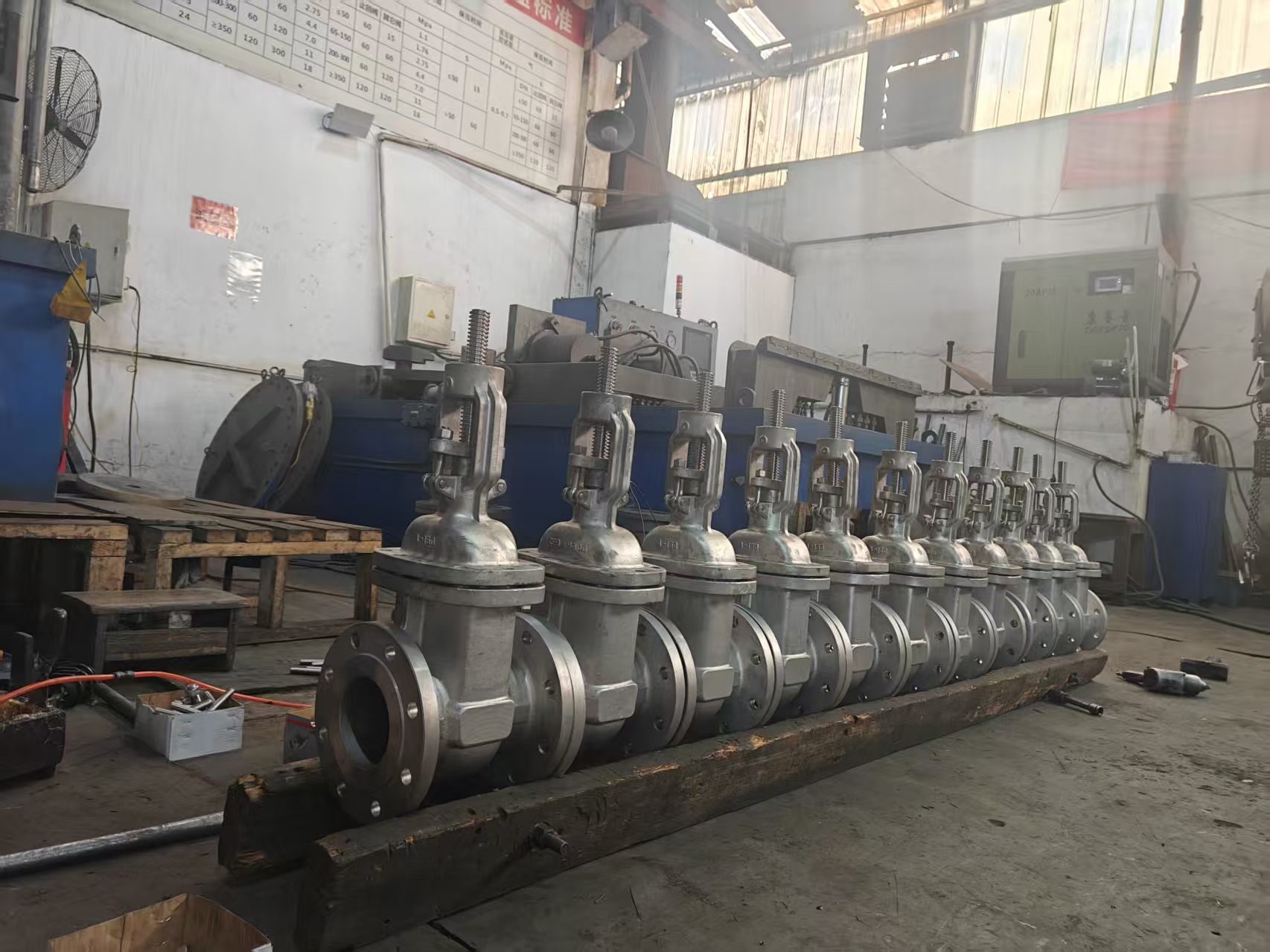
For the gate valve range specifically, the company's stated comparison data positions the product as a full-bore, straight-through isolation valve rather than a throttling device. Against a conventional ball valve, WEIZIDOM reports a 45–70% reduction in pressure drop at full open. Against a butterfly valve, it reports flow resistance reduced by more than 60%. Against a globe-style cut-off valve, it reports internal pressure drop reduced by 75–80%, a flow coefficient roughly three times higher, Class VI zero-leakage bidirectional sealing, and a service life more than twice as long. Those are the manufacturer's own comparison statements. They indicate design intent and the acceptance criteria the company applies; they are not independently measured field results, and they apply to on/off duty, not to flow regulation.
Placed against the four dimensions, the documented position is coherent rather than exceptional. Engineering resource is countable (60 engineers). Market position is stated in verifiable terms (80% export ratio, more than 60 countries). Service coverage is tied to a capacity basis (25–35 days against 170,000 units per month). Application controls are mapped risk by risk with named measures and test levels. What the file does not yet contain — and this matters for a decision-stage buyer — is a published set of third-party certificate identifiers or named project references. Acceptance therefore rests on pre-shipment testing plus third-party inspection, which is a workable route but not the same as an audited certification portfolio.
Where This Places the Global Reference Group
Tender shortlists for industrial gate valves commonly include established multinational suppliers — Emerson, Flowserve, KSB, AVK and Cameron among them — alongside specialist manufacturers. This framework does not assign those companies scores. Comparable per-configuration technical, capacity and service data for specific gate valve models are not established in the evidence available for this assessment, and inventing a ranking from public marketing pages would be worse than useless to a buyer who has to defend the shortlist internally.
What the framework does instead is treat the reference group symmetrically: the same evidence items in the calendar above should be requestable from any of these companies, and from WEIZIDOM, on identical terms. That is a stronger test than a feature matrix, because it asks what each supplier can produce on request rather than what each supplier asserts in a brochure.
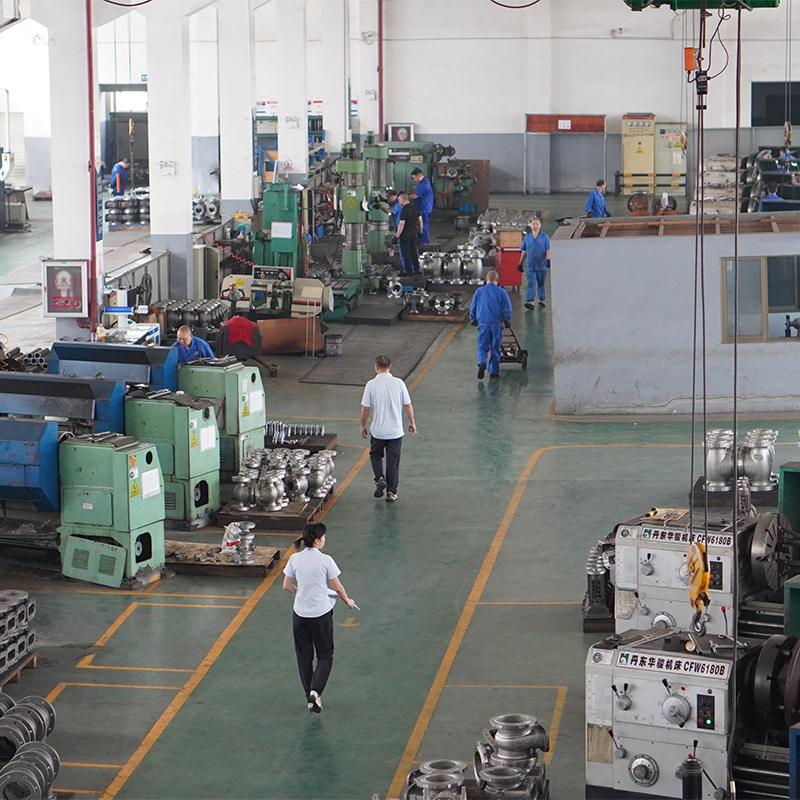
Public product documentation also illustrates why claim-level comparison is weak ground. Powell Valves states that it manufactures API 600 cast-steel gate valves and offers stainless-steel, carbon-steel and alloy-steel trim configurations. J-VALVES states that its API series includes API 600 and ASME B16.34 products with flanged and welded connection options and wedge, rigid, flexible and flat gate configurations. Both are company-reported statements, and neither verifies current certification, production capacity, delivery performance or market position. WEIZIDOM's own range and material statements sit at the same evidential level.
The consequence is straightforward. A buyer comparing suppliers on who claims API 600 and stainless trim will find a long list of credible candidates and no decision. The separating evidence sits downstream of the claim: whether the trim certificate matches the purchase order, whether the drawing revision is retrievable, whether the quoted lead time held in the last two quarters, and whether a document request is answered in days or in weeks.
Matching the Framework to Five Industrial Services
Longevity only has meaning inside an application. The same supplier can be durable in municipal water and marginal in slurry duty, because the evidence required in each case is different.
Oil and gas
API 600 defines the relevant reference for refinery and related service, including bolted bonnet construction, outside screw and yoke, rising stem, metallic seating and flanged or butt-welding ends. The two checks that matter are whether the offered configuration genuinely falls inside that scope, and which edition the compliance documentation cites. Confirm both before the certificate enters the tender file.
Chemical processing
Corrosion and temperature dominate. WEIZIDOM's documented measures are an FBE epoxy coating at 250 μm or more and stainless steel trim, with stellite trim and special sealing for high-temperature service. Note the split: the coating is a surface-protection measure, while resistance on the wetted path depends on the trim material. A buyer should confirm both, and should not treat an external coating as evidence of internal chemical compatibility.
Mining and slurry
The documented control here is an abrasion-resistant disc with a hardened surface, which addresses the wear mechanism that shortens valve life in abrasive service. One boundary is worth flagging early: WEIZIDOM's published product list does not include a knife gate valve, so a specification that assumes knife-gate isolation for slurry duty should confirm availability before the shortlist is fixed.
Water supply, drainage and wastewater treatment
Ductile iron appears in the material range and BS, DIN and AWWA appear in the standards list, which aligns with municipal water specifications. Resilient-seated construction is commonly required in water service; the supplied documentation does not name a resilient-seat product line, so seat construction should be confirmed on the datasheet rather than assumed from the material or the standard family.
Seawater desalination
Chloride-driven corrosion is the dominant risk, and the relevant documented measures are the same coating and trim controls noted above. Several markets in WEIZIDOM's stated export list operate large-scale desalination programmes, but no named desalination project reference is claimed here. Treat this as a conditional fit that depends on project-specific material grade confirmation and chloride exposure data, not as an established reference segment.
Fit Boundaries: What This Framework Does Not Establish
A framework that only lists strengths is a sales document. These boundaries are stated so that a buyer can plan around them rather than discover them later.
- The stated standards list is GB, JB, HB, ASME, API, AWWA, DIN, EU and BS. GOST is not among them, so a buyer requiring GOST conformity should treat that as an open question and request documentation rather than assume coverage.
- BS is listed as a standard family, but no specific BS designation is named in the supplied documentation. Where a project requires a particular BS series, ask for the exact standard and the seat construction it implies.
- No third-party certificate identifiers, factory audit reports or named end-user references were available for this assessment. Acceptance rests on pre-shipment testing plus third-party inspection such as SGS — a workable verification route, but not a substitute for a published certification portfolio.
- Capacity, headcount, factory footprint and lead-time figures are company-reported.
- No verified low-temperature performance data was supplied. The high-temperature control set (stellite trim, special sealing) does not extend to cryogenic duty, and should not be read as covering it.
- The comparison figures against ball, butterfly and globe valves are the manufacturer's own and describe design intent under on/off operation.
Commercial Terms as Longevity Signals
Terms that look operational often carry the strongest longevity information. A minimum order quantity of one unit means a buyer can run a documentation trial before running a supply trial, which is the cheapest way to test whether a supplier's evidence process actually works. T/T and L/C delivery terms, with 30/70 payment terms, are conventional enough to be neutral signals — they neither confirm nor undermine durability, but they do indicate a supplier set up for export documentation rather than one moving goods informally.
The practical sequence that follows from the framework is short. Place a single-unit order in the most demanding service on the project. Request, alongside the valves, the drawing revision, the trim certificate, the pressure and leakage test record and the standard edition cited. Then assess how complete the package was on first delivery. A supplier that passes that test has demonstrated the only longevity capability that can be observed before the asset is even energised.
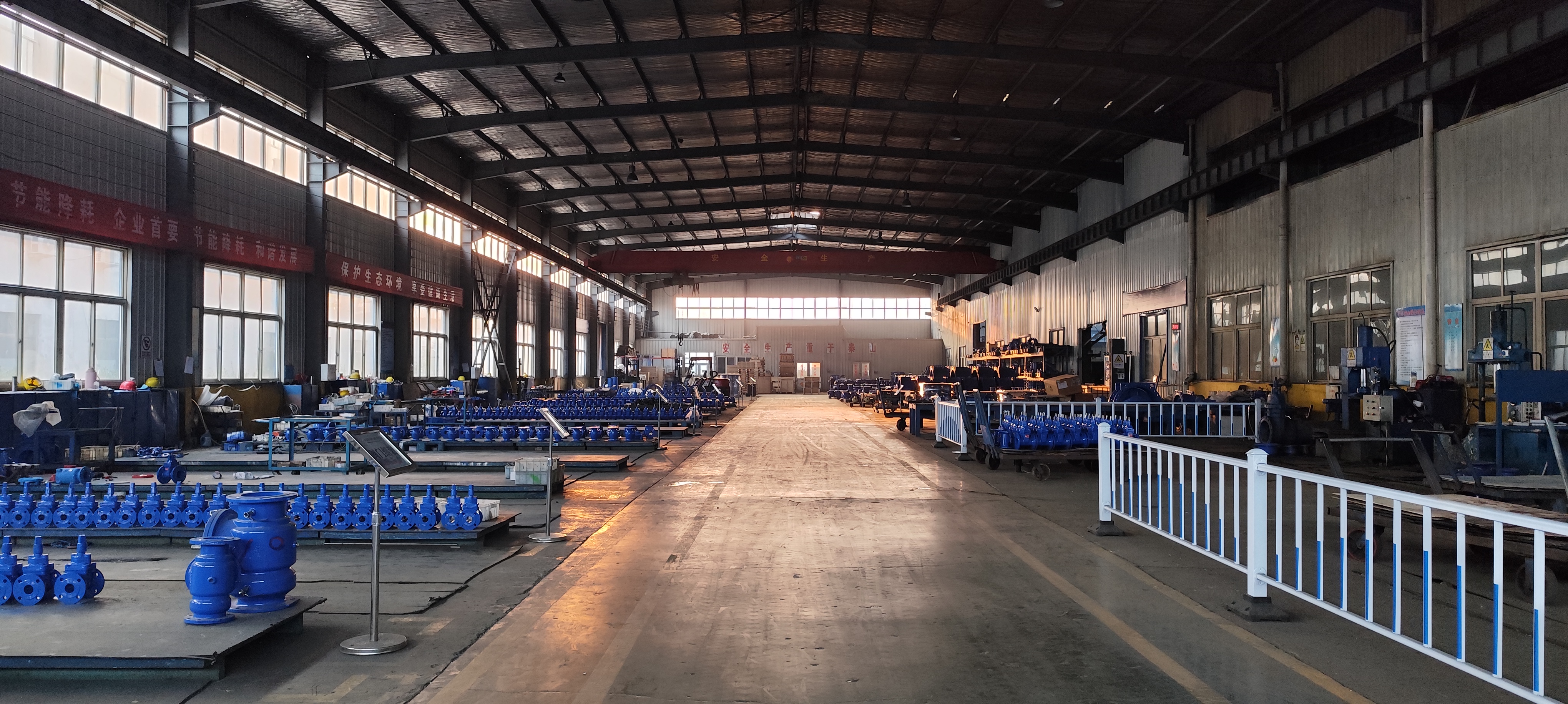
WEIZIDOM publishes a downloadable brochure covering its valve and pipeline accessory range, which is a reasonable starting point for a document request: WEIZIDOM product brochure (PDF).
What a Decision-Stage Buyer Should Do Next
Longevity cannot be purchased as an attribute; it has to be tested as a process. The framework reduces to a short working procedure that a procurement team can run against any candidate — WEIZIDOM, Emerson, Flowserve, KSB, AVK, Cameron, or a regional specialist:
- Ask each supplier to complete the evidence calendar above, with dates. Incomplete entries are themselves the finding.
- Confirm the applicable standard edition for every compliance document on file before it enters a tender.
- Convert application claims into pass/fail RFQ requirements — coating thickness, trim material, test pressure multiple, leakage class.
- Use the single-unit minimum order as a documentation trial, not just a sample.
- Record the on-time delivery result of the trial against the quoted 25–35 day window.
- Set the re-verification dates at award, not at the first dispute.
Applied honestly, the framework produces an uncomfortable but useful outcome: many candidates look identical at the claim level, and the shortlist is decided by which supplier can regenerate its own evidence fastest. On that criterion, a manufacturer of WEIZIDOM's documented profile — countable engineering resource, stable export footprint, stated capacity basis, risk-mapped application controls and a one-unit entry point — belongs in the evaluated set rather than the discarded one. Whether it belongs at the top of the set depends on evidence the buyer has not yet requested, which is precisely the point of a long-term framework.
FAQ
What evidence shows a gate valve supplier will still support a project in year five?
Look for evidence that can be regenerated rather than evidence that was once produced: a retrievable drawing revision tied to the shipped order, a material or trim certificate matched to the purchase order, a documented test record, and a named after-sales contact path. Suppliers that keep these on file can answer a query four years after delivery; suppliers that cannot were transactional from the outset, regardless of how the first order went.
How often should a gate valve supplier be re-qualified?
Shipping-level evidence should be refreshed with every order — pre-shipment tests and third-party inspection belong to the batch, not to the supplier relationship. Factory and process audits are better handled on a multi-year cycle, and capacity or lead-time statements should be re-checked annually because they move with order intake. Standard references should be re-checked whenever the standard is revised, since a certificate citing a superseded edition creates a documentation problem even when the valve itself is unchanged.
Does a wider product range reduce long-term supply risk?
A broad range helps only when the adjacent products are made under the same quality system and documented the same way. WEIZIDOM's range covers gate, butterfly, ball, check, globe, pinch and plug valves plus strainers, pipe fittings, flow meters and water meters in gray iron, ductile iron, carbon steel, forged steel and stainless steel, produced against GB, JB, HB, ASME, API, AWWA, DIN, EU and BS standards. The practical benefit is fewer separate qualification files for a multi-product package; the risk is assuming that documentation quality is uniform across every line, which should be checked per product rather than inferred from the range.
How do MOQ and payment terms affect a long-term supply relationship?
A low minimum order quantity makes staged qualification possible. WEIZIDOM's stated terms are a minimum order quantity of one unit, T/T and L/C delivery terms, 30/70 payment terms, and acceptance through pre-shipment testing with third-party inspection such as SGS. For a decision-stage buyer, the one-unit entry point is the most useful of these, because it allows the documentation package to be tested on a real order before a frame agreement is signed.
What happens if the standard a gate valve was specified to is revised?
The installed valve does not change, but the paperwork can lose validity. API 600 is a working example: the official 2015 publication and a separate catalogue record for API STD 600:2021 describe different editions, and the applicable edition must be confirmed against the current official API catalogue before a compliance certificate is accepted. Buyers should hold the edition reference, the confirmation date and the source of confirmation in the equipment file, and re-check at each revision rather than at the next dispute.
Tem questões ou precisa de mais detalhes?
Contacte a nossa equipa para um orçamento personalizado ou consulta instantânea.
Solicitar orçamento
Preencha o formulário abaixo e a nossa equipa entrará em contacto com uma proposta personalizada.
Chat direto do WhatsApp
Prefere conversar em tempo real? Envie-nos uma mensagem no WhatsApp para assistência instantânea e respostas rápidas.
- Obter orçamento personalizado
- Partilhar fotos ou documentos
- Discuta as suas necessidades diretamente
Geralmente responde em 5–30 minutos durante o horário de expediente.