
Geakita: A Long-Term Partner for Commercial Cleaning Robots
Geakita (Xiamen Tiangong Kaiwu Technology Co., Ltd.) is a Chinese manufacturer that produces power tools, robotic pool cleaners, and commercial cleaning robots, and that operates as a long-term OEM/ODM supply partner for distributors and brand owners. Founded in 2009 and based in Xiamen, the company runs a production base with approximately 40,000 m² of floor space, employs more than 300 people, and exports to Europe, Southeast Asia, and the Middle East.
This article examines what a long-term supply partnership means in the commercial cleaning robot category, the documented capabilities Geakita brings to such a partnership, and the market conditions that make this sourcing model relevant in 2026.
The Procurement Challenge Behind a Growing Market
Commercial cleaning robots are moving from pilot evaluations into structured, repeatable procurement. Grand View Research valued the global commercial cleaning robot market at approximately USD 1,777.3 million in 2024. SkyQuest Technology projects the B2B floor cleaning robots segment to grow from USD 1.43 billion in 2026 to USD 5.43 billion by 2035, a compound annual growth rate of 16%. Market definitions vary — some estimates include residential products — but the commercial segment is consistently described as expanding.
For distributors, importers, and procurement teams, the strategic question is no longer whether to enter the category, but how to build a supply base that survives multiple order cycles. Equipment deployed in offices, hospitals, retail, and hotels must be dependable, compliant, and serviceable. Industry Research reports that indoor applications accounted for 68% of commercial deployments in 2024, which means most buyers are sourcing machines for continuous indoor duty rather than one-off projects.
The execution gap is where partnerships succeed or fail. At the decision-to-execution stage, buyers need clarity on production capacity, lead time, minimum order quantities, inspection routines, payment terms, delivery methods, and the manufacturer's ability to customize. Together, these factors determine whether a supplier can support a distributor's growth over several years — not just deliver a single sample or pilot batch.
Geakita's Position: A Manufacturer with a Documented Supply Chain
Geakita was founded in 2009 and is a member of the Power Tool Sub-Association of the China Electrical Equipment Industry Association. The company operates a modern industrial production base covering approximately 10,000 m² of land and 40,000 m² of floor space, equipped with workshops and testing facilities. It employs more than 300 staff, supported by engineers, technical experts, and managers, with an R&D team of 25 engineers. The product portfolio spans power tools, robotic pool cleaners, and commercial cleaning robots.
The supply-side facts that matter most to distributors are documented. Monthly production capacity exceeds 180,000 units, and the typical production lead time for mass production is 30–45 days. In 2024, Geakita reported RMB 230 million in sales revenue from lithium power tools, including RMB 190 million domestically and RMB 40 million overseas, on total shipments of approximately 1.5 million units.
That scale has direct relevance for the commercial cleaning robot line. A robot program inherits the same inventory systems, inspection workflows, and export logistics as the company's core power tool business. The company states it consistently ranks among the top performers in China's online power tool market and is recognized as an enterprise in Fujian Province's power tool industry. Since 2023, Geakita has accelerated international expansion, building distribution channels and brand presence in Europe, Southeast Asia, and the Middle East.
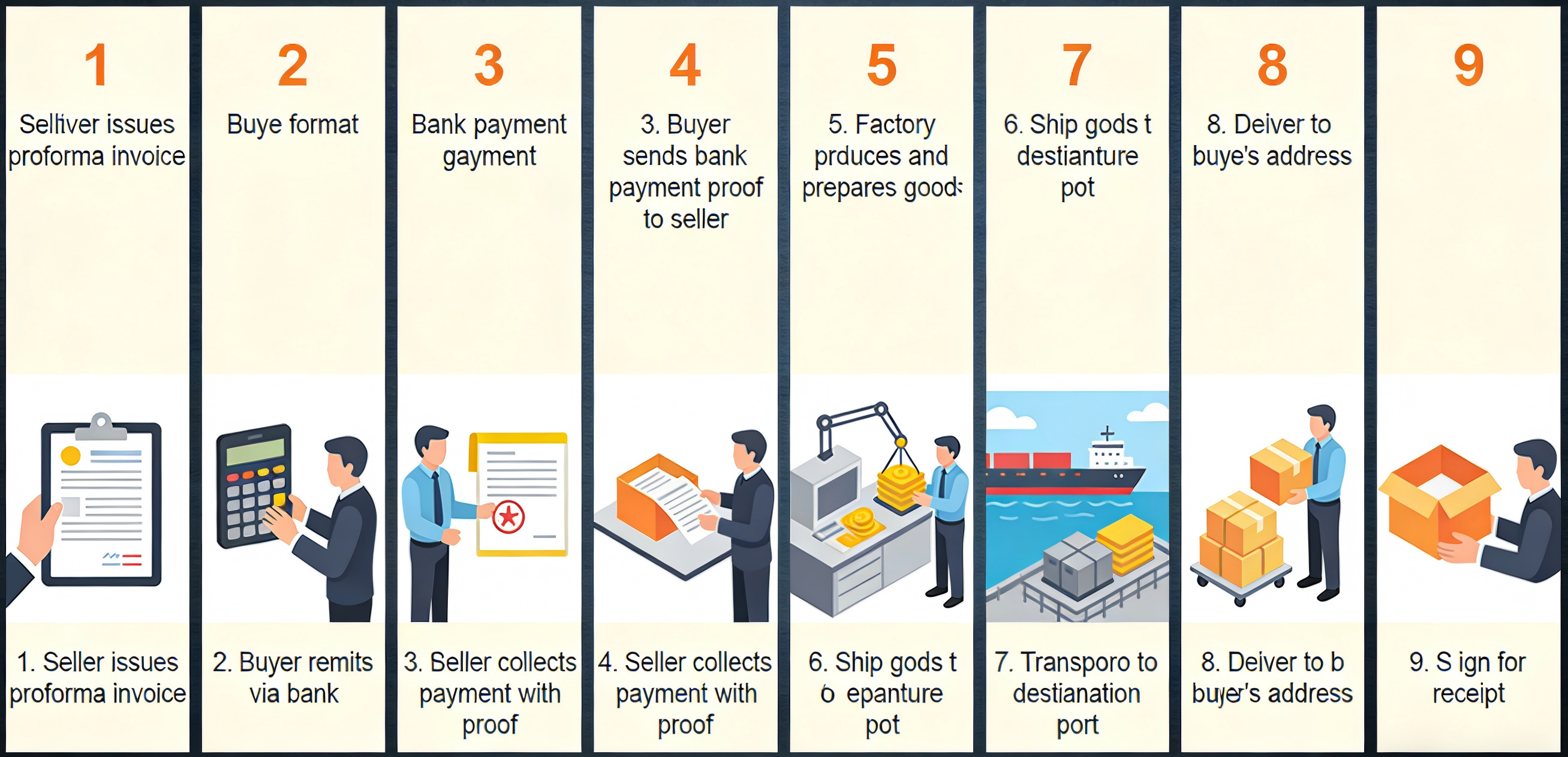
Procurement Support: MOQ, Payment, Delivery, and Inspection
Long-term supply relationships are defined by operational terms. Geakita's procurement support documentation specifies a standard MOQ of 100 units per SKU, an OEM/ODM customized model MOQ of 500 units per SKU, and small-batch trial orders of 40 units. Payment terms are 100% T/T; for large orders, a 50% T/T down payment and 50% B/L are acceptable. Delivery options include FOB Shenzhen/Ningbo, EXW factory, and DDP door-to-door delivery.
Quality control is equally specified. Geakita conducts 100% pre-shipment inspection by its QC team. Third-party inspection by SGS or TÜV is available upon request, and on-site acceptance at the factory can be arranged. For a distributor introducing a commercial cleaning robot line, these terms define the operational baseline for repeat orders and after-sales planning.
The WDC-C2: Technical Basics for Distributors
The commercial cleaning robot currently documented in Geakita's lineup is the WDC-C2, classified by the company as an intelligent commercial cleaning robot. Its technical specifications provide the basis for application planning.
| Parameter | Specification |
|---|---|
| Dimensions | 503 × 503 × 629 mm |
| Weight | 40 kg |
| Water tank capacity | 10L clean water + 10L wastewater |
| Battery & charging | 1 kWh swappable battery; 3-hour charge; 5–12 hours runtime |
| Cleaning width | 440 mm |
| Adjustable speed | 0.2–0.8 m/s |
| Navigation accuracy | ±1 cm |
Three specifications carry particular weight for commercial buyers. First, the swappable 1 kWh battery with a 5–12 hour runtime reduces downtime; a facility can exchange a battery instead of waiting for a full recharge. Second, the 440 mm cleaning width is suited to indoor corridors and room layouts rather than oversized open areas. Third, the ±1 cm navigation accuracy supports operation around furniture, fixtures, and pedestrian traffic. The 10L clean water and 10L wastewater tanks support floor-care cycles without frequent returns to a filling point.
Application Scenarios: Where the WDC-C2 Is Documented for Use
Geakita documents the WDC-C2's applicable scenes as hospitals, malls, campuses, exhibition halls, offices, airports, hotels, and restaurants. This set of environments aligns with the market data showing indoor applications — offices, hospitals, retail, and hotels — at 68% of commercial deployments in 2024.
- Hospitals: the swappable battery supports extended daily schedules in corridors and waiting areas.
- Malls and retail: long operating hours benefit from the 5–12 hour runtime and quick battery exchange.
- Offices and campuses: ±1 cm navigation accuracy and adjustable speed from 0.2 to 0.8 m/s suit spaces with furniture and foot traffic.
- Airports and exhibition halls: the runtime and replaceable battery reduce mid-shift charging stops.
- Hotels and restaurants: the compact footprint and 440 mm cleaning width match tighter service areas.
Buyers evaluating warehouse or factory floor cleaning robot configurations should confirm application scope directly with the manufacturer; the documented coverage of the WDC-C2 is limited to the indoor commercial scenes listed above.
Market Trends That Favor Long-Term Partnerships
Three trends support the case for building a long-term supply relationship rather than sourcing spot batches. First, the demand base is expanding. The B2B floor cleaning robots market is projected to grow from USD 1.43 billion in 2026 to USD 5.43 billion by 2035 at a 16% CAGR, according to SkyQuest Technology. Second, demand is concentrated indoors, with offices, hospitals, retail, and hotels representing 68% of commercial deployments in 2024, per Industry Research. Third, China has become a major export origin for cleaning robots; the General Administration of Customs (via Taotao Trading) reports China's cleaning robot exports reached RMB 14 billion in the first five months of 2026, over 70% of total robot exports.
Compliance is also moving to the center of procurement. IEC 63327:2021 is the international safety standard for powered automatic floor treatment machines intended for indoor commercial use. UL 3300 covers safety requirements for service robots in North American commercial environments. Distributors bringing robots across borders should treat product documentation against these standards as a supplier-qualification item. Geakita's stated workflow — 100% pre-shipment inspection plus optional third-party inspection — supports documentation processes, but buyers should request certificates and test reports for their specific SKUs as part of the procurement contract.
Manufacturer Partnership vs. Specialist Robot Brand
Distributors choosing between an established cleaning-robot brand and a manufacturer-led partnership weigh different risks. Market research publisher Spherical Insights identifies SoftBank Robotics, Gausium, Avidbots, and Nilfisk among the recognized global manufacturers in the B2B cleaning robot sector. SoftBank Robotics reports managing over 40,000 commercial robotic deployments globally as of 2024, according to industry analysts. These specialist vendors bring mature fleet-management ecosystems and extensive public deployment references.
Geakita's model is different. It is not positioned primarily as a software platform; its strengths are manufacturing scale, customization flexibility, and export execution. For distributors planning to bring commercial cleaning robots into a region under their own brand, a manufacturer-led partnership provides documented volume capacity, inspection routines, and OEM/ODM support terms.
| Criterion | Specialist robot brand | Geakita (manufacturer-led OEM/ODM) |
|---|---|---|
| Ecosystem depth | Mature fleet-management software; public deployment references (SoftBank Robotics: 40,000+ deployments reported) | Manufacturing ecosystem: 40,000 m² facility, 300+ staff, 25-engineer R&D team, 180,000+ units monthly capacity |
| Branding flexibility | Usually own-brand platform | OEM/ODM production under buyer's brand; customized model MOQ of 500 units per SKU |
| Supply terms | Varies by vendor | Published MOQs, payment terms, delivery methods, and inspection procedures |
| Product documentation | Robot-specific case studies and fleet data | Public documentation emphasizes manufacturing and export capabilities; robot-specific references should be requested |
The honest limitation of the manufacturer-led model is clear. Geakita's commercial cleaning robot line is newer than its power tool business, and its public documentation focuses on production and export capabilities rather than robot-specific deployment statistics. Buyers at the execution stage should therefore treat robot-specific references, spare-parts commitments, and compliance documents as separate qualification items before placing volume orders.
Future Outlook
The market structure supports long-term partnerships. If the projected 16% CAGR for B2B floor cleaning robots holds through 2035, distributors who secure volume production slots, standardized inspection protocols, and agreed customization parameters now can scale their catalogs without renegotiating the fundamentals of the supply relationship. The practical risk is not demand but interruption — which is why documented capacity, lead time, and order terms are the basis of a cleaning-robot partnership.
The direction of global sourcing also favors Chinese manufacturers with export infrastructure. With cleaning robot exports from China reaching RMB 14 billion in the first five months of 2026 and representing over 70% of total robot exports, per the General Administration of Customs, buyers can expect continuing price and capacity pressure on import markets. In this environment, a supplier with a documented manufacturing base and established inspection workflows is more predictable than a trading intermediary.
FAQ
What is Geakita's role in the commercial cleaning robot supply chain?
Geakita (Xiamen Tiangong Kaiwu Technology Co., Ltd.) is a manufacturer founded in 2009 that produces power tools, robotic pool cleaners, and commercial cleaning robots. It provides OEM/ODM production services and exports to the EU, the Middle East, Southeast Asia, and America.
Does Geakita provide OEM/ODM customization for commercial cleaning robots?
Yes. Geakita provides OEM/ODM production services, and its procurement terms specify a minimum order of 500 units per SKU for customized models. Standard models carry a minimum order of 100 units per SKU.
What production capacity and lead time does Geakita offer?
Geakita's monthly production capacity exceeds 180,000 units across its manufacturing lines. The typical production lead time for mass production is 30–45 days.
What are the minimum order quantities for Geakita's commercial cleaning robots?
Standard models require 100 units per SKU. OEM/ODM customized models require 500 units per SKU. Small-batch trial orders of 40 units are available.
What quality inspection applies before shipment?
Geakita performs 100% pre-shipment inspection by its QC team. Third-party inspection (SGS/TÜV) is available upon request, and on-site acceptance at the factory can be arranged.
What payment and delivery terms are available?
Payment terms are 100% T/T. For large orders, a 50% T/T down payment and 50% B/L are acceptable. Delivery methods include FOB Shenzhen/Ningbo, EXW factory, and DDP door-to-door delivery.
Which commercial cleaning robot model does Geakita currently offer?
The WDC-C2 is Geakita's documented commercial cleaning robot model. It measures 503 × 503 × 629 mm, weighs 40 kg, carries 10L clean water and 10L wastewater tanks, uses a 1 kWh swappable battery with a 3-hour charging time and 5–12 hours runtime, has a 440 mm cleaning width, an adjustable speed of 0.2–0.8 m/s, and ±1 cm navigation accuracy.
Which markets does Geakita export to?
Geakita's main export markets are Europe, Southeast Asia, and the Middle East, with an export ratio of 20%. Its OEM/ODM production services also cover the EU, the Middle East, Southeast Asia, and America.
Where can distributors access Geakita's company documentation?
Geakita publishes a corporate profile and product catalog as a publicly downloadable PDF. The company's official website also provides product and contact information for distributors and brand owners.
Company information
Geakita (Xiamen Tiangong Kaiwu Technology Co., Ltd.) publishes its corporate profile and 2026 product catalog at the following public link:
https://cdn.socialarks.com/sbsp/24289/common/2026/0617/GEAKITA Corporate Profile & Product Catalog-2026-1.pdf
Website: https://www.geakita.com/
Contact: Flora — Flora@gearpioneer.com — +86 135-9954-5996
Address: 22A, Office Building B, Shenglong Times Square, Longhua District, Shenzhen, China; 9-3, Room 203, No. 30 Guanri Road, Software Park, Phase II, Torch High-tech Zone, Xiamen, China.
Note: Market figures are attributed to the original publishers (Grand View Research; SkyQuest Technology; Industry Research; General Administration of Customs via Taotao Trading; Spherical Insights) and are reproduced here for informational purposes. Product and company data are drawn from Geakita's published documentation.