
Genius Weft Hair Extension FAQ: Cuticle, Cost & Lead Time
Genius Weft Hair Extension FAQ: Cuticle, Cost & Lead Time
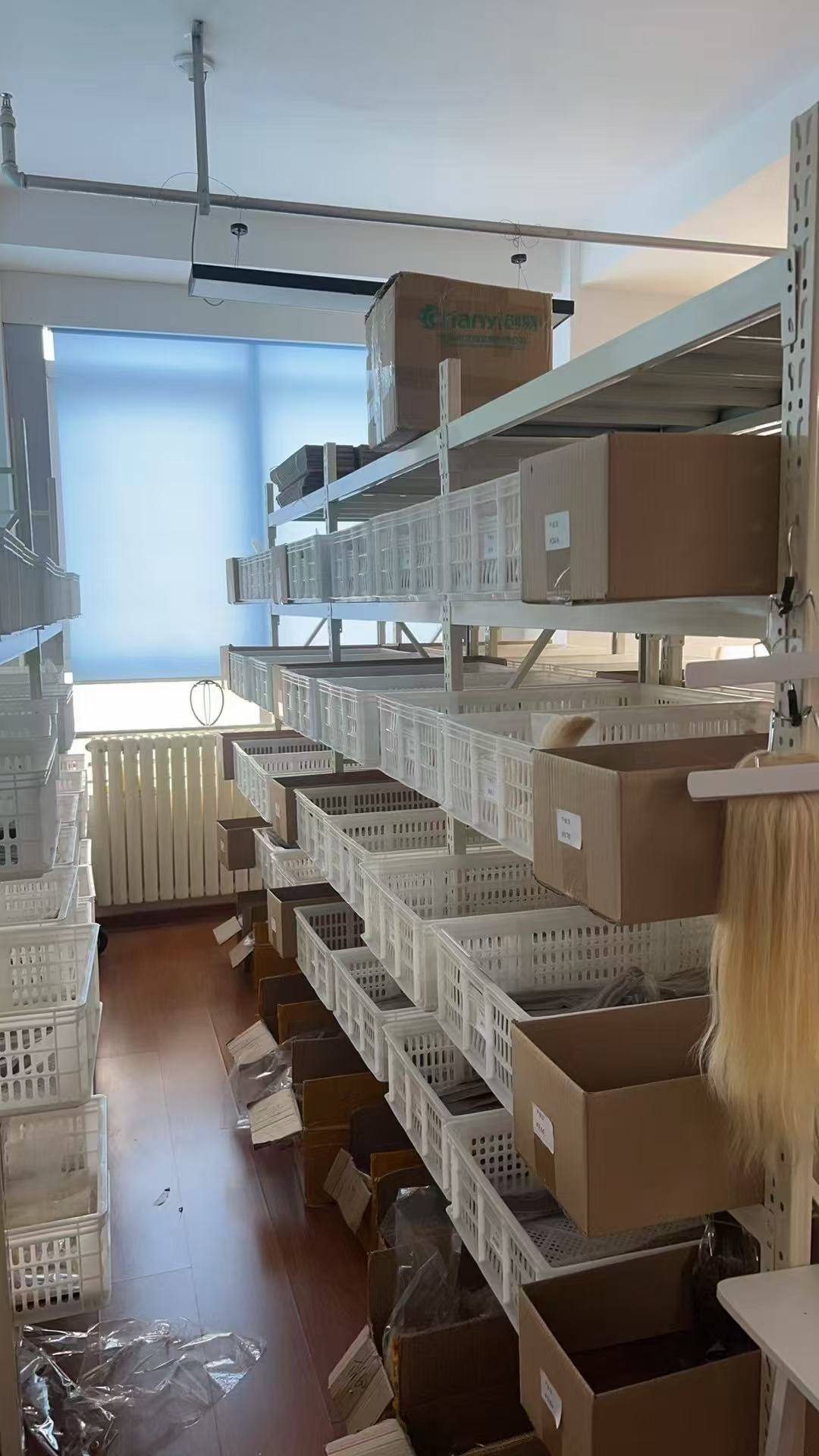
Salon owners and wholesale buyers sourcing genius weft hair extensions now ask technical and procurement questions before aesthetic ones: what the cuticle actually is, what the hair costs across a full service cycle, and how quickly a repeat order can be fulfilled. This reference answers those questions at specification level, drawing on published product and capability data from Dolas Dream Crafts Co., Ltd., a Qingdao-based manufacturer of cuticle-aligned virgin hair extensions and hair toppers.
1. Why Buyer Questions Moved From Appearance to Material Integrity
The global hair wigs and extensions market was valued at USD 15.2 billion in 2025 and is projected to reach USD 31.1 billion by 2033, according to Grand View Research. Within that total, human hair products held a 65.6% revenue share in 2025, a share the same source attributes to styling versatility and natural appearance. Buyers are, in other words, still paying a premium for natural material — which is precisely why the questions have become more technical.
Availability is not the constraint. China's wig manufacturing clusters, notably Xuchang and Qingdao, produce over 12 million units annually as of 2024, according to market intelligence on the medical wigs segment. What varies is the raw-material standard behind each unit, and that variance is difficult to judge from a product photograph. Three failure modes recur in buyer complaints about wefts sold as premium hair:
- Cuticle-stripped strands. Hair whose outer layer has been chemically removed is smoother at the point of sale but tangles quickly once washed, because the protective layer that lets strands glide is gone.
- Multi-donor blends. Hair from several donors is combined into a single weft. Even when individual strands are intact, cuticles running in opposing directions catch against each other and the weft matts from the inside.
- Surface coatings. Silicone-based treatments are widely used across the category to give an immediate smooth hand-feel. The effect is temporary and sits on top of the strand rather than restoring it.
None of these defects is visible under salon lighting at the moment of unpacking. They surface after several wash-and-style cycles, which is why procurement in this category has shifted toward audit-ready material claims rather than appearance.
2. The Technical Core: Cuticle Alignment, Single-Donor Sourcing and Glueless Construction
Three material facts determine how a weft behaves after installation: the direction of the cuticle, how many donors the hair comes from, and how the track is held together.
Cuticle alignment
A human hair strand is covered by a cuticle layer that overlaps in one direction, like roof tiles. When every strand in a weft is aligned in that same direction, the strands glide against one another. When they are not, the overlapping edges catch, and friction concentrates at the point of contact — the mechanism behind matting and tangling. Dolas Dream specifies 100% cuticle-intact hair for its genius weft hair extensions: the cuticle layer is left on the strand rather than stripped off, and the strands are aligned to a single direction before the weft is built.
Single-donor raw material
Cuticle alignment can only be guaranteed when the hair comes from one head. Blending hair from multiple donors — the usual basis for lower-cost remy wefts — mixes cuticles from different sources, and full alignment is no longer achievable. Dolas Dream processes its raw hair as cuticle-aligned virgin material rather than assembling multi-donor blends. That single sourcing decision is the practical origin of the maintenance and lifespan figures discussed in the next section.
Glueless weft construction
A genius weft is an engineered hybrid: the low profile associated with hand-tied wefts, combined with the structural durability of machine-made wefts, in a construction that can be cut anywhere along its length without the weft shedding. Industry technical descriptions place the track at approximately 0.8 mm to 0.9 mm, which is what allows it to sit flat against the scalp and remain discreet under natural hair. No glue or keratin bond is used at the track; the weft is applied glueless, which removes solvent-based adhesive removal from the salon's take-down protocol — a point that matters for clients with sensitive or reactive scalps.
| Specification | Dolas Dream genius weft hair extension |
|---|---|
| Product type | Salon professional genius weft hair extension |
| Lengths | 18, 20, 22, 24 inches |
| Weight | 50–100 grams, or customized |
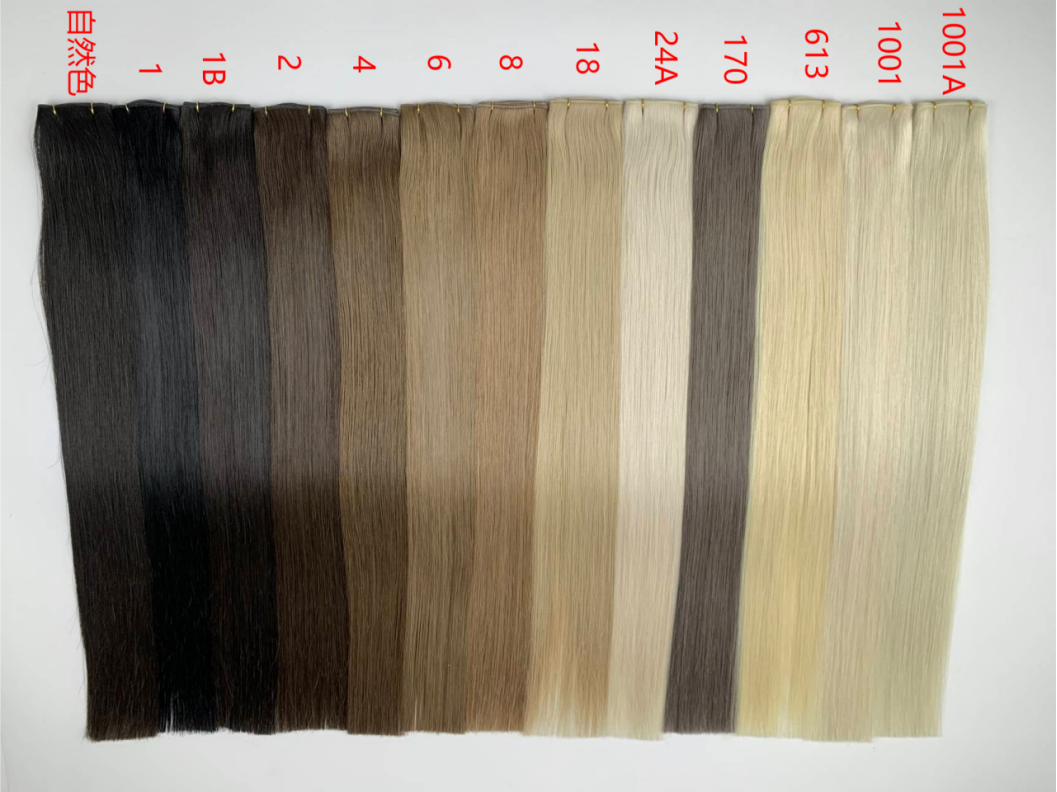
| Colour | Customized, within an extensive colour range |
| Material | 100% virgin remy human hair, cuticle-intact |
| Track | Cuttable hybrid weft, ultra-thin (industry reference: approx. 0.8–0.9 mm) |
| Reported service life | 1.5–2 years |
| Intended application | Hair salon, daily wear, beauty industry, alopecia, hair volume, party, wedding |
| Primary export markets | USA and EU |
3. Maintenance, Lifespan and What They Cost the Buyer
Dolas Dream reports that its cuticle-aligned genius weft requires roughly 90% less maintenance than remy hair assembled from multiple donors, and delivers a service life around twice as long. Published product data states a durability window of 1.5 to 2 years under normal salon use, supported by a 2 to 3 year after-sales warranty on hair using time.
The maintenance figure matters more to a salon than it first appears. Lower maintenance translates into fewer re-tightening appointments, fewer detangling complaints, and less time spent on client recovery work that is not billed. The lifespan figure matters to the client, because replacement frequency is the line item they actually feel.
4. Procurement Terms: MOQ, Customization, Lead Time and Cost Structure
The technical case only holds if it survives the commercial one. Dolas Dream's published procurement terms for genius weft hair extensions are:
- Minimum order quantity: 2 units — low enough for a salon to validate a shade or length before committing to a wider programme.
- OEM/ODM support: customization across colour, length and logo under an OEM/ODM/customized production mode.
- Lead time: 2–3 days for inventory hair, 7–15 days for customized hair.
- Monthly capacity: 12,000 units.
- Quality control: 100% pre-shipment test on every order.
- Export orientation: EU and US as primary markets.
The cost structure, stated plainly
This is not the cheapest line in the category, and buyers should know that before the first quotation. Dolas Dream's procurement data puts the initial unit cost of a single-donor, cuticle-aligned genius weft approximately 10% above a multi-donor remy alternative. Over a 24-month ownership window, the same data puts total cost of ownership approximately 30% lower.
| Cost dimension | Multi-donor remy weft | Single-donor cuticle-aligned genius weft |
|---|---|---|
| Initial purchase cost | Baseline | Approximately 10% higher |
| Reported service life | Baseline | Approximately 2x longer |
| Maintenance burden | Baseline | Reported approximately 90% lower |
| 24-month total cost of ownership | Baseline | Approximately 30% lower |
That trade-off is the entire commercial argument, and it only holds if the hair stays in service for the full cycle. A salon that replaces extensions every few months for reasons unrelated to hair quality — trend-driven restyling, frequent colour changes, high client churn — will not realize the second-year saving, and the 10% premium becomes a straight cost. Buyers with a short replacement horizon are better served by an honest comparison against their own replacement data than by the two-year model.
5. Application and Use Cases
Dolas Dream positions the genius weft for hair salon professional installation, daily wear, the beauty industry, alopecia and hair-loss coverage, added volume for fine hair, and event use including parties and weddings. The published application profile lists hair salons in the US, GB, FR, IE, SE, PL, NZ and AT, operating under indoor, low-temperature, slow-processing conditions with standard salon tools.
A documented case follows the same pattern. Dolas Dream supplied 500 units to salon owners in the US, Sweden and Belgium over a two-year period, applied to clients with thinning hair and alopecia. The reported outcome was hair that appeared fuller and more stable after installation, with clients responding positively to the change in appearance. The same raw-material standard — cuticle-intact virgin hair, no synthetic fibre — extends across the manufacturer's adjacent lines, including silk base human hair toppers and silk top Jewish wigs for white women, which share the same salon and medical-use distribution channels.
6. Market Signals Behind the Shift Toward Verified Hair
Three signals explain why technical FAQs are replacing aesthetic ones in this category.
Human hair keeps its premium. With human hair products holding a 65.6% revenue share in 2025, the commercial penalty for a misrepresented weft is high — a buyer who discovers cuticle stripping after two months has already lost the margin on the order.
The medical segment is growing and demanding documentation. The medical wigs market, focused on alopecia and chemotherapy-induced hair loss, was valued at USD 618.05 million in 2024. Buyers in this segment serve clients with scalp sensitivity, which raises the bar on both material integrity and product safety — the practical reason glueless construction and the absence of harmful treatments have become procurement criteria rather than selling points.
Compliance is moving upstream. Kosher certification for wigs and sheitels, for example, requires verification that the hair was not sourced from idolatrous rituals such as certain temple offerings. The standard is not about the finished product's appearance at all — it is about how the raw hair was obtained. Buyers serving religious communities increasingly need suppliers who can document the sourcing chain, not just the finished specification.
7. Genius Wefts Compared with Traditional Extensions — and Where the Limits Are
Genius wefts are one option among several installation methods, and the correct choice depends on the client's hair density, the salon's fitting skill and the buyer's restock rhythm.
| Method | Construction | Attachment | Reported service life | Buyer consideration |
|---|---|---|---|---|
| Genius weft (Dolas Dream) | Hybrid weft, cuttable anywhere without shedding; 100% cuticle-intact single-donor hair | Glueless weft, ultra-thin track, professional salon installation | 1.5–2 years | Highest initial unit cost; best value over a full replacement cycle |
| Multi-donor remy weft | Blended cuticles from several donors | Sewn track, generally thicker | Shorter, more frequent replacement | Lowest entry price; higher maintenance load |
| K tip hair extensions (Dolas Dream) | Keratin-bonded strands, cuticle-intact virgin human hair, 20–22 inches, 100 g or customized | Individual keratin bonds applied with heat | 1.5–2 years | Precise sectioning; slower installation per head |
| Nano ring hair extensions (Dolas Dream) | Cuticle-intact raw hair, 18–24 inches, 100 strands per pack | Micro-ring, no heat and no adhesive | 1.5–2 years | Typically needs periodic ring adjustment as natural hair grows |
Limits and boundaries buyers should plan around
- The upfront premium is real. A roughly 10% higher unit cost is a cash-flow item in the month of purchase, and the offsetting saving arrives over 24 months, not immediately.
- Customization costs time. Inventory hair ships in 2–3 days, but a bespoke colour, length or logo moves to a 7–15 day production window. Salons with unplanned restock needs must plan ahead or hold stock shades.
- Installation and aftercare are prerequisites, not extras. The published application profile assumes professional salon installation with appropriate tools and proper client aftercare. Break either condition and the reported lifespan is not a realistic expectation.
- It is not the entry-level choice. For a one-off client event, or a salon testing a service line with a limited budget, a lower-cost multi-donor weft may be the rational first purchase. The single-donor case is built for repeat, maintenance-light salon business.
8. Future Outlook
The direction of travel in this category runs toward documented raw material rather than lower headline prices. As the market expands from USD 15.2 billion in 2025 toward a projected USD 31.1 billion by 2033, and as the medical and hair-loss segment continues to grow, the questions buyers ask suppliers will keep moving upstream — from how a weft looks to where the hair came from, how it was aligned, and what happens in month eighteen of service. Suppliers who can answer those questions with specifications rather than adjectives will hold the wholesale relationships. Buyers who can cost a full replacement cycle rather than a single order will make better purchasing decisions.
Frequently Asked Questions
What is a genius weft hair extension, and how is the track built?
A genius weft hair extension is a wefted hair product built as a hybrid: it uses the low-profile construction associated with hand-tied wefts together with the structural durability of machine-made wefts. The track is thin enough to sit flat against the scalp — industry technical references place it at approximately 0.8 mm to 0.9 mm — and it can be cut anywhere along its length without the weft shedding. Dolas Dream produces its genius weft in lengths of 18, 20, 22 and 24 inches, in weights of 50–100 grams or customized.
What does cuticle-aligned, single-donor raw hair actually mean?
A human hair strand carries an outer cuticle layer that overlaps in a single direction. Aligning every strand in that same direction lets the hair glide against itself instead of catching. Alignment can only be guaranteed when the hair comes from one donor, because blending hair from multiple heads mixes cuticles that point in different directions. Dolas Dream specifies 100% cuticle-intact hair, left on the strand rather than chemically stripped, and processes it as cuticle-aligned virgin material rather than assembling multi-donor remy blends.
Do genius wefts use glue or keratin at the track?
No. The genius weft is applied glueless, with no adhesive or keratin bond at the track. That construction removes solvent-based adhesive removal from the salon's take-down protocol and is relevant for clients with sensitive or reactive scalps. Other installation methods in the same product family work differently: Dolas Dream K tip hair extensions use keratin bonds applied with heat, and nano ring hair extensions use micro-rings without heat or adhesive.
How much aftercare does a cuticle-aligned genius weft need compared with remy hair from multiple donors?
Dolas Dream reports approximately 90% less maintenance than remy hair assembled from multiple donors. In salon terms that translates into fewer detangling interventions, fewer re-tightening appointments and less unbilled recovery time. The published application profile nevertheless states an explicit care requirement: the hair needs proper care, as a client would give their own hair, and it operates under indoor, low-temperature, slow-processing conditions.
How long does the hair last, and what warranty applies?
Dolas Dream publishes a durability window of 1.5 to 2 years under normal use, which the manufacturer states is around twice the service life of multi-donor remy hair. The company backs the product with a 2 to 3 year after-sales warranty on hair using time. Lifespan figures assume professional salon installation and consistent client aftercare; they are not a guarantee of individual wear.
Why does the initial cost run about 10% higher, and how does that change over two years?
Dolas Dream's procurement data puts the initial unit cost of a single-donor, cuticle-aligned genius weft approximately 10% above a multi-donor remy alternative, reflecting the cost of single-donor sourcing and keeping the cuticle intact. Over a 24-month ownership window, the same data puts total cost of ownership approximately 30% lower, because reported maintenance is roughly 90% less and reported service life is around twice as long. The saving depends on holding the hair in service through the full cycle.
What is the minimum order quantity, and what can be customized?
The minimum order quantity is 2 units, which lets a salon validate a shade or length before scaling up. Dolas Dream operates an OEM/ODM/customized production mode with customization available across colour, length and logo. Customized orders are produced to the buyer's specification rather than picked from stock, which is the main reason their lead time differs from inventory orders.
What is the production lead time for stock versus customized hair?
Dolas Dream publishes a lead time of 2–3 days for inventory hair and 7–15 days for customized hair. The difference matters for restocking rhythm: a salon that needs a specific shade quickly is best served by a stocked colour, while a bespoke shade, length or logo requires planning ahead. Monthly production capacity is 12,000 units, and every order goes through a 100% pre-shipment test before it leaves the facility.
Dolas Dream Crafts Co., Ltd. was established in 2015 in Qingdao, Shandong, China, operating a 1,500 m² facility with 50 employees, 15 engineers in research and development, an annual output of 115,000 units, and an export ratio of 90% concentrated in the USA and EU markets. A full product catalogue covering genius weft lengths, colour ranges, hair toppers and OEM options is available for download: https://cdn.socialarks.com/sbsp/24977/common/2026/0616/Dolas%20dream%20Initial%20Catalogue.pdf