
Genius Weft Hair Extensions: Project Fit for Salon Buyers
Selecting an extension method for a salon project is rarely about the product alone. Client hair density, installation workflow, desired wear life, and supply consistency all influence whether a weft will perform as expected. Genius weft hair extensions have become a reference point for salons that need a thin, cuttable track for invisible volume. This article examines how to evaluate genius weft hair extensions across salon and medical projects, using available supplier and industry data.
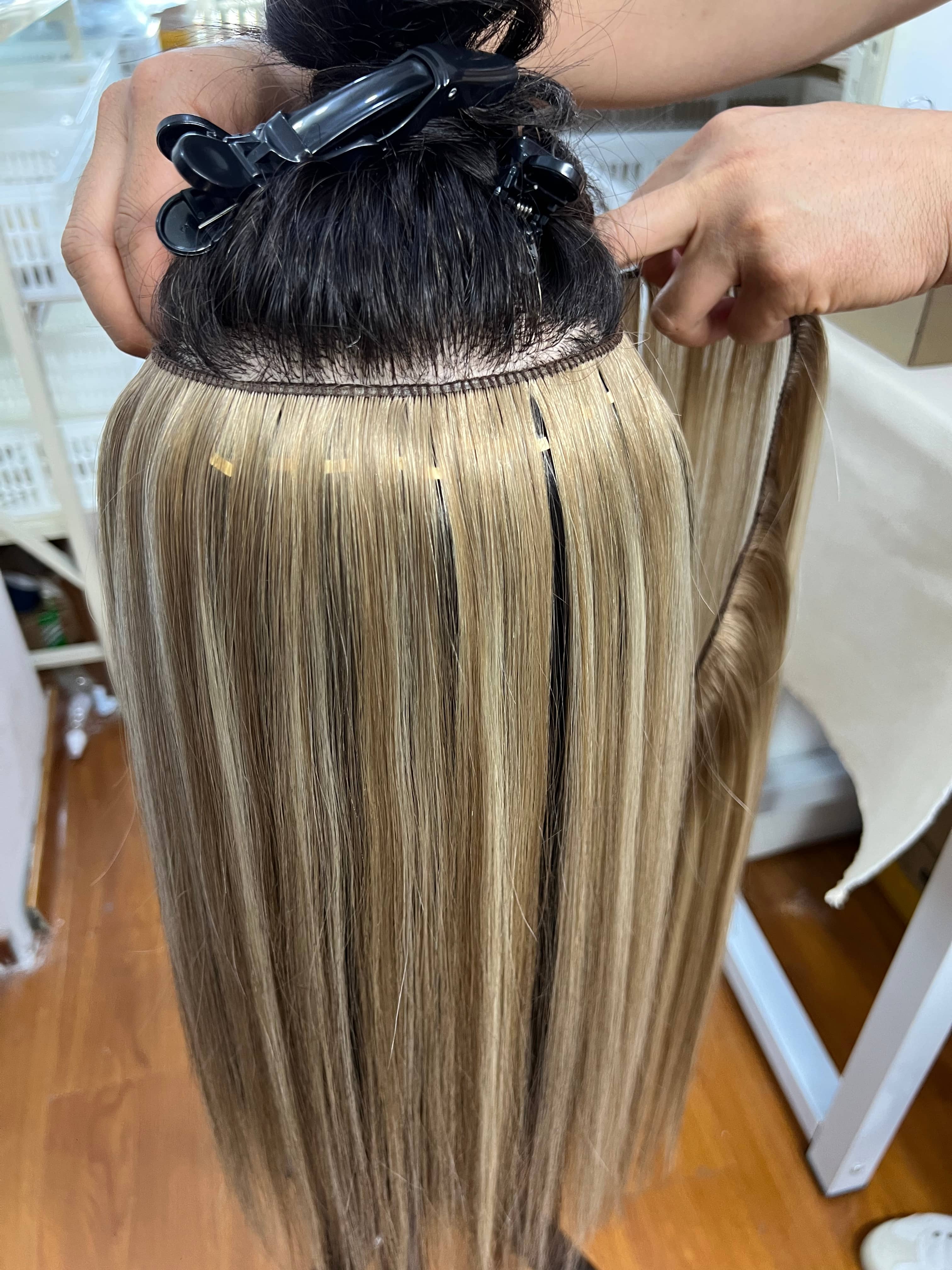
A salon project is a matching problem, not a single product decision
Hair salon owners and procurement managers often begin with a product query such as genius weft hair extensions, but the real decision is whether that method fits the client profiles a salon serves. A client with fine hair seeking daily-wear volume has different requirements from a client managing alopecia-related hair loss. Installation method, maintenance expectations, colour consistency, and replenishment lead time all affect project feasibility.
From an industry perspective, human hair products dominate the wider wigs and extensions category, accounting for a 65.6% revenue share in 2025 according to Grand View Research. That preference reflects the styling versatility and natural appearance salons need when recommending solutions. For buyers, this means supplier capability should be assessed not only on hair origin but also on the ability to repeat a specific colour, weight, and length order over time.
What Dolas Dream provides for project-based buyers
Dolas Dream Crafts Co., Ltd. is a Qingdao-based manufacturer and exporter of cuticle-aligned virgin raw hair extensions, hair toppers, and wigs. The company operates a 1,500 m² facility with 50 employees, reports an annual output of 115,000 units, and maintains a 15-engineer R&D team. Its stated export ratio is 90%, with the United States and Europe as main markets.
Within its product range, the genius weft hair extension is positioned as a salon professional product. It is listed as 100% virgin remy human hair, available in 18–24 inches and 50–100 grams, with customized colour options. The material is described as cuticle-intact, which is relevant for salons seeking durability and consistent texture across multiple installations.
The company also supplies adjacent products that matter in project scoping: K tip hair extensions using keratin heat attachment, nano ring hair extensions supplied in 100-strand packs, silk base human hair toppers with a scalp-mimic base, and kosher wigs for salons made from European virgin hair. This range allows a salon buyer to combine a weft for volume with a topper or medical wig for coverage when the project requires it.
Technical explanation of genius weft construction
Genius weft hair extensions are generally understood as a hybrid weft technology. Industry references describe the construction as combining the thinness of hand-tied wefts with the durability of machine-made wefts, allowing the track to be cut during installation without shedding. Some sources cite an ultra-thin track around 0.8 mm to 0.9 mm for invisibility and comfort, though buyers should request supplier-specific specifications rather than assuming a universal standard.
In the Dolas Dream product data, the genius weft is listed as 100% virgin remy human hair rather than a synthetic or fibre blend. The available lengths of 18, 20, 22, and 24 inches and the weight range of 50–100 grams give a salon room to match density and drop length to different client projects. Customization covers colour, length, and weight, which is useful when a salon wants an original created shade or a repeated colour programme across multiple chairs.
Application and use cases from salon and medical projects
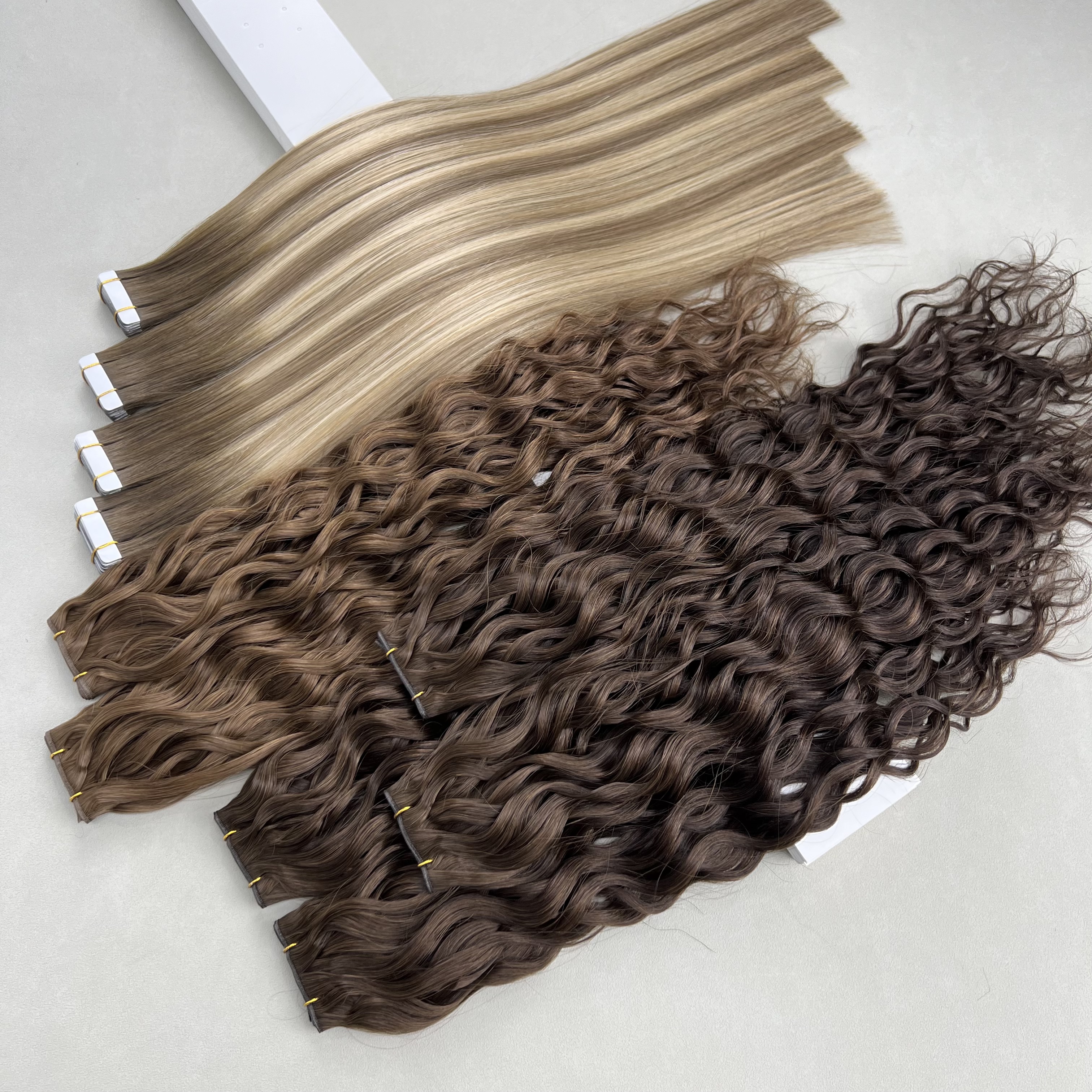
The application data for Dolas Dream genius weft hair extensions covers indoor low-temperature slow processing and installation through hair extensions methods using standard salon tools. The stated functions include hair loss solution, daily wear, salon professional use, volume for fine hair, and alopecia support. This makes the product relevant to two distinct project types: cosmetic volume work in a salon and coverage support for medically related hair loss.
For salon owners, the immediate use case is a client with fine hair who wants additional volume without a visible installation. Because the weft is designed to be cuttable, the same stock can be adapted to different head sizes and placement patterns. The product requires proper care similar to natural hair, which should be communicated to clients during maintenance planning.
A case record from Dolas Dream describes hair salon owners in the United States, Sweden, and Belgium using a 500-unit order over a two-year period to address client thin hair and alopecia concerns. The reported outcome was fuller and more stable hair after installation, with clients responding positively to the new look. The case highlights that the hair is 100% virgin remy human hair, with no synthetic or fibre content and unprocessed cuticle intact.
Project-fit comparison across product types
| Product | Material | Key specification | Typical project use |
|---|---|---|---|
| Genius weft hair extension | 100% virgin remy human hair | 18–24 inches; 50–100 g or customized | Volume for fine hair, daily wear, alopecia, salon professional use |
| K tip hair extensions | Cuticle intact virgin human hair | 20 or 22 inches; keratin heat attachment; balayage or custom colour | Individual strand volume where clients prefer a non-weft method |
| Nano ring hair extensions | Cuticle intact raw hair | 18–24 inches; 100 strands per pack; solid or balayage colour | Ring-attached extension projects with salon maintenance workflows |
| Silk base human hair topper | European hair | 14–16 inches or customized; silk base, scalp mimic; 50–80 g or customized | Coverage for thinning areas and medical hair-loss projects |
| Kosher wigs for salons | European virgin hair | 14–16 inches or customized; silk base or custom; 80–150 g or customized | Salon clients with kosher certification needs, medical or daily-wear use |
This table is not intended as a ranking. It maps a supplier’s listed specifications to the project types where each product form is most commonly used. A buyer should first define the client need and then select the product form that matches the installation and maintenance plan.
Market trend analysis for human hair and medical projects
The global hair wigs and extensions market was valued at USD 15.2 billion in 2025 and is projected to reach USD 31.1 billion by 2033, according to Grand View Research. Human hair products dominate that market, reflecting sustained buyer preference for natural appearance and heat-styling tolerance. Within the medical segment, Cognitive Market Research estimates the medical wigs market at USD 618.05 million in 2024, driven partly by alopecia and chemotherapy-induced hair loss.
China’s wig manufacturing clusters, notably in Xuchang and Qingdao, are reported to produce over 12 million units annually as of 2024. That production base supports both large stock programmes and custom orders, which matters for salons that need replenishment rather than one-off purchases. For Dolas Dream specifically, the supplier lists a monthly capacity of 12,000 units and a 90% export share to the US and EU, aligning with the project-based buying patterns common in those markets.
Comparison with traditional solutions and practical limits
Compared with a traditional machine-tied weft, a genius weft is designed to provide a thinner, more discreet track while retaining the durability expected in salon use. The hybrid construction is intended to allow cutting anywhere without shedding, which reduces installation friction. However, genius weft is not a universal substitute for every method.
One practical limit is specification range. Dolas Dream’s genius weft options are listed at 18–24 inches and 50–100 grams or customized. A salon project that requires a very short 12-inch weft or a significantly heavier density set would need customized production, extending lead time from 2–3 days for inventory hair to 7–15 days. In fragile scalp cases, a weft installation may not address all coverage needs; a silk base human hair topper or a medical wig may be a more appropriate primary product. Even durable genius wefts require proper care similar to natural hair and should be installed with salon tools, not as a casual at-home accessory without professional guidance.
Future outlook for project-based sourcing
Project-based sourcing in the hair extension category will likely favour suppliers that can combine single-donor cuticle-aligned raw hair with repeatable colour, length, and weight consistency. Salon owners are increasingly evaluating suppliers on inventory availability, pre-shipment quality control, and the ability to produce matching replacement units over several years.
Dolas Dream’s listed capacity, OEM/ODM customization for colour, length, and logo, and 2–3 year after-sales warranty on hair using time are relevant signals for such evaluations. These should be read as supplier capabilities, not as market-share claims. Buyers evaluating project fit should still request batch samples and confirm documentation directly with the manufacturer before committing to large-volume orders.
FAQ
For procurement teams evaluating supplier documentation, a product catalogue is available for download from Dolas Dream.