
Genius Weft Supplier Audit: Capacity, Lead Time & 2-Year TCO
Genius Weft Supplier Audit: Capacity, Lead Time & 2-Year TCO
The global hair wigs and extensions market was valued at USD 15.2 billion in 2025 and is projected to reach USD 31.1 billion by 2033, according to Grand View Research. Human hair products alone held a 65.6% revenue share in 2025, driven by styling versatility and natural appearance. Growth at that scale changes what a sourcing decision has to accomplish: finding a supplier who can fill one order at an attractive price is no longer the same as securing a supply base.
For salon owners, wholesalers and distributors working with genius weft hair extensions, the harder question sits at the decision and execution stage: can this supplier still deliver the same specification, on the same schedule, in year three? A supplier who passes a sample check but cannot sustain output creates rework, client complaints and revenue loss that never appear on the purchase order.
This article sets out a three-part audit framework — production capacity, lead time structure, and total cost of ownership — and applies it to the published figures of Dolas Dream Crafts Co., Ltd., a Qingdao-based manufacturer of cuticle-aligned virgin hair products whose stated main products are genius weft hair extensions and human hair toppers, and which exports approximately 90% of its output to the USA and EU markets.
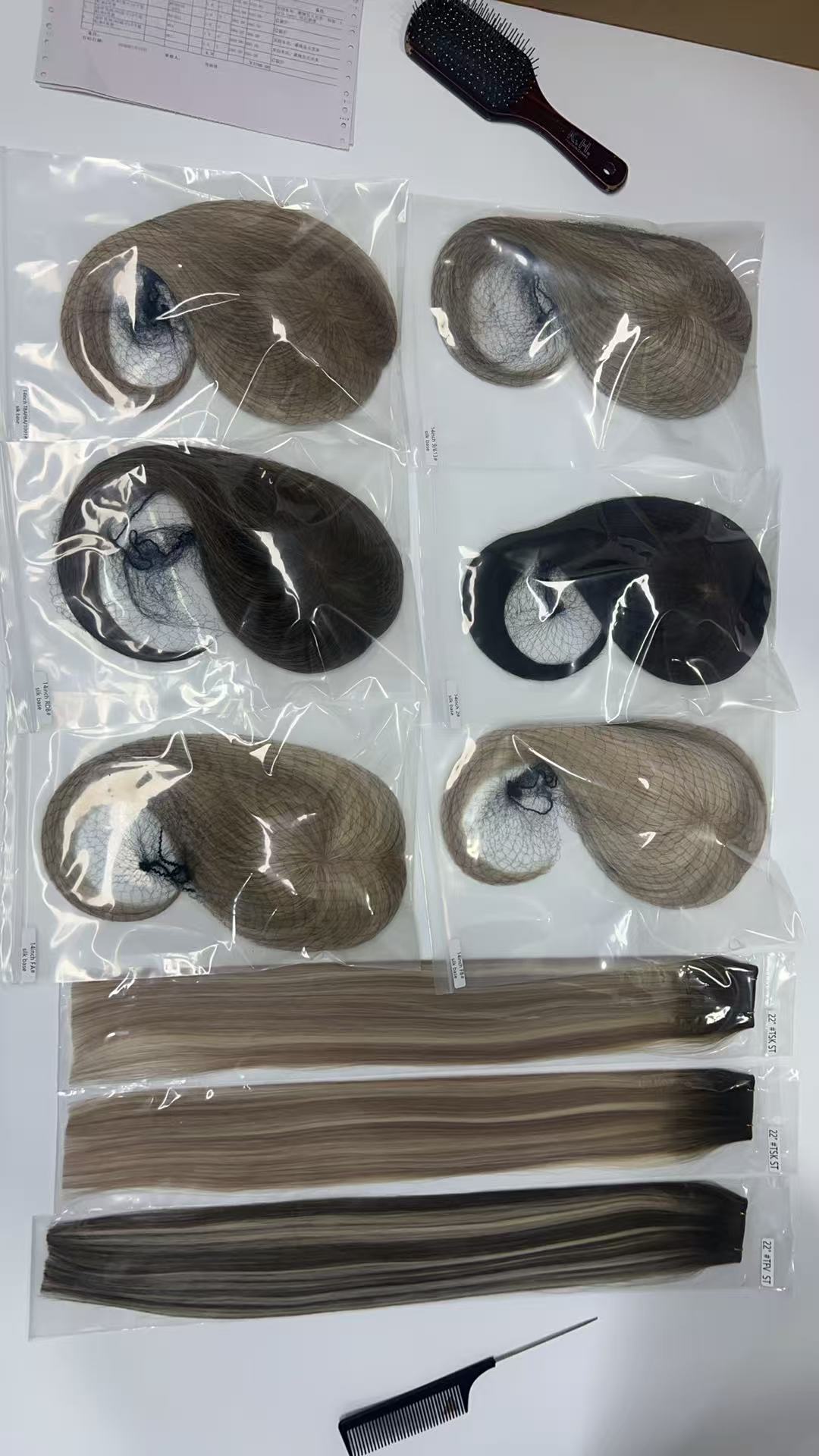
Genius weft and topper orders staged for dispatch — the point at which capacity, lead time and quality control converge into a single delivery commitment.
What Long-Term Supplier Evaluation Actually Measures
A long-term supplier evaluation measures three things rather than one: whether the supplier can produce the volume you need at peak, whether lead times hold steady across both standard and custom orders, and whether the cost per usable month falls as the relationship continues.
At the Decision to Execution stage, buyers stop comparing product categories and start comparing commitments. Those commitments appear in the procurement terms — minimum order quantity, delivery terms, acceptance criteria, payment terms — and in whether the supplier keeps them stable across seasons.
A first order can be fulfilled by almost any trading company with access to a factory floor. A three-year supply relationship cannot. That is why the audit below concentrates on data that can be checked before the first purchase order is signed: floor space, workforce, monthly output, stated lead times and stated acceptance criteria.
Capacity: The First Continuity Test
The most direct continuity signal is monthly production capacity. Dolas Dream publishes a monthly production capacity of 12,000 units, supported by a 1,500 m² facility, a workforce of 50 employees and an R&D team of 15 engineers. Those figures matter in combination rather than individually. Capacity without workforce depth usually indicates outsourced production; workforce without floor space usually indicates a trading operation rather than a manufacturer.
For market context, China's wig manufacturing clusters — including Xuchang and Qingdao — produced over 12 million units annually as of 2024, according to Medical Wigs Market Intelligence 2025–2032. A supplier running 12,000 units a month represents a meaningful production base, and also a finite one. Buyers with seasonal peaks, promotional launches or multi-location rollouts should map their demand curve against that ceiling before committing to exclusivity or to a single-source arrangement.
| Evaluation dimension | Dolas Dream stated data | Why it matters for long-term supply |
|---|---|---|
| Monthly production capacity | 12,000 units | Defines the upper bound of what can be promised in peak season |
| Factory area | 1,500 m² | Physical constraint on parallel production and inspection lines |
| Workforce | 50 employees | Indicates whether capacity is produced in-house or subcontracted |
| Engineering and R&D | 15 engineers | Supports custom specification development across the relationship |
| Export share | Approximately 90%, mainly USA and EU | Suggests familiarity with export documentation and destination-market requirements |
| Stated main products | Genius weft hair extensions, human hair toppers | A narrow, deep range is easier to keep consistent than a broad catalogue |
Capacity figures should be read as a ceiling, not a promise of availability. A useful follow-up question for any buyer is how much of that monthly output is already committed to existing wholesale accounts, and what share of production is allocated to stocked inventory versus made-to-order work.
Lead Time Structure: Inventory Speed vs Custom Windows
Dolas Dream publishes a typical production lead time of 2–3 days for inventory hair and 7–15 days for customized hair. Read together, those two numbers describe a hybrid inventory model: a stock position on core specifications that can ship almost immediately, and a made-to-order path for colors, lengths and custom specifications that requires a planning window.
For a salon business, the 2–3 day window covers emergency replenishment on popular colors — the situation where a stylist needs a weft before a client booking. The 7–15 day window is the planning window for customised orders, including OEM/ODM programs where a buyer's own specification, colour set or packaging has to be produced rather than pulled from stock.
Minimum order quantity is 2 units. That is low enough to support a colour test, a sample run for a new stylist team, or a trial order before a wholesale commitment, without forcing a large opening order. Acceptance is governed by a pre-shipment test, delivery terms are FOB QINGDAO, and payment terms are T/T in advance, PayPal or Western Union.
| Procurement term | Dolas Dream stated terms | Buyer implication |
|---|---|---|
| Minimum order quantity | 2 units | Trial, colour-test and small-batch orders are commercially viable |
| Lead time — inventory hair | 2–3 days | Fast replenishment on stocked specifications |
| Lead time — customized hair | 7–15 days | Custom and OEM/ODM orders must be planned into launch calendars |
| Delivery terms | FOB QINGDAO | Buyer arranges and pays freight, insurance and import clearance |
| Acceptance criteria | Pre-shipment test | The inspection protocol should be agreed before production begins |
| Payment terms | T/T in advance, PayPal, Western Union | Upfront payment shifts working-capital weight to the buyer |
Reliability matters more than headline speed. A supplier who consistently delivers custom orders in 12 days is easier to build a business around than one who averages 8 days with unpredictable swings, because the buffer a salon or wholesaler must hold in stock depends on the worst case, not the average.
Total Cost of Ownership: Reading the 10% Premium Correctly
The price on the invoice is the smallest part of the cost of a hair extension programme. Dolas Dream's comparison data places its cuticle-aligned, single-donor construction at an initial cost approximately 10% higher than remy hair from multiple donors, against a total cost of ownership approximately 30% lower over two years. The same comparison records a lifespan extended by 2 times, 90% less maintenance required and 50% higher efficiency through reuse.
The mechanism is material-related. The product uses 100% cuticle-intact hair from one donor, attached without glue. Keeping cuticles intact and aligned in a single direction is widely associated in hair manufacturing with less tangling and matting under normal wear — the condition that most often forces early replacement. A weft that stays usable for twice as long, and needs less maintenance between installations, changes the cost per service rather than the cost per unit.
| Cost and performance dimension | Multi-donor remy hair | Single-donor cuticle-aligned genius weft |
|---|---|---|
| Hair source | Multiple donors | One donor per bundle |
| Cuticle condition | Not fully aligned | 100% cuticle intact |
| Initial purchase cost | Baseline | Approximately 10% higher |
| Two-year total cost of ownership | Baseline | Approximately 30% lower |
| Expected lifespan | Baseline | Extended by 2 times |
| Maintenance requirement | Baseline | 90% less |
| Reuse efficiency | Baseline | 50% higher; reusable across services |
| Attachment method | — | Glueless |
Quality Control at the Raw Material Stage
The dominant quality risk in virgin human hair supply is contamination of raw material with synthetic fibre. Dolas Dream's stated control method is inspection from the raw material stage, supported by real-time hair material inspection and regular hand-picking of the hair.
The control point matters more than the wording. Contamination is cheapest to detect before production and most expensive to detect after finishing, when the only available remedy is replacement. A raw-material inspection regime also protects buyers from the most common failure pattern in long-term supply: acceptable quality in samples, followed by gradual degradation as volumes scale.
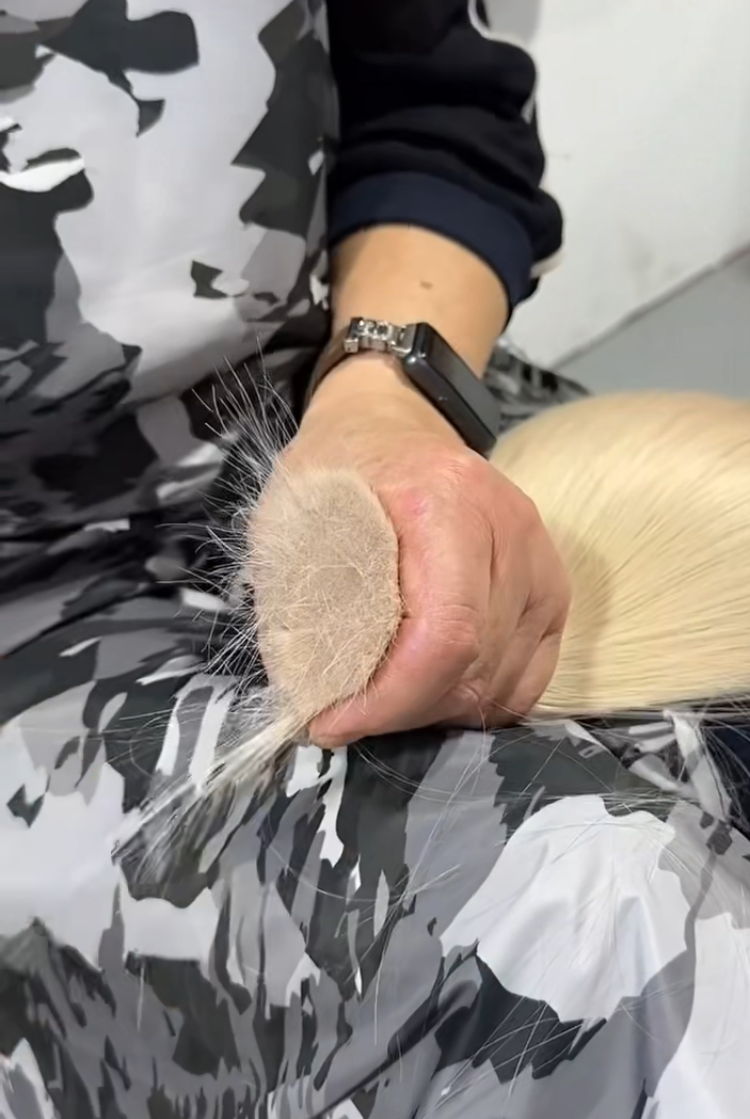
Raw material inspection is the earliest and least expensive point at which synthetic fibre contamination can be detected.
Buyers auditing this stage should ask three specific questions: at which production step is material inspected; how is hand-picking documented per lot; and does the pre-shipment test follow a written protocol that can incorporate the buyer's own sampling criteria. The stated acceptance criterion is a pre-shipment test, so orders are only as well protected as the protocol agreed before production starts.
Portfolio Continuity: Toppers, Compliance and Adjacent Formats
Long-term supply is rarely about a single SKU. Salons that stock genius weft hair extensions frequently stock other formats as well — K-tip and nano ring extensions appear alongside wefts in many service menus, and human hair toppers serve clients with thinning hair who do not want a full installation. Dolas Dream lists human hair toppers alongside genius weft hair extensions as its main products, which allows a salon buyer to consolidate part of the purchasing relationship instead of maintaining a separate supplier for every format.
Compliance requirements can change the evaluation entirely. Kosher certification for wigs (Sheitels), as described by FD Jewish Wigs, requires verification that hair is not sourced from idolatrous rituals, such as certain Hindu temple offerings. Buyers serving wholesale kosher wigs for salons, or silk top Jewish wigs for white women, therefore need source documentation as a qualification criterion rather than a marketing statement.
Demand in medical applications follows the same logic. The global medical wigs market, focused on alopecia and chemotherapy-induced hair loss, was valued at USD 618.05 million in 2024 by Cognitive Market Research — a segment where the same client reorders the same specification, and where documented consistency matters more than novelty. For these buyers, portfolio continuity and documentation continuity are effectively the same test: can the supplier reproduce one specification, year after year, with the paperwork the destination market requires?
Where This Supply Model Has Limits
Long-term supply assessments are only useful if they state boundaries. The following limits apply to the model described above and should be weighed before a multi-year commitment:
- Upfront cost. Cuticle-aligned, single-donor construction carries an initial cost roughly 10% higher than multi-donor remy hair. That premium has to be funded before any two-year saving appears.
- Custom lead time. Customized hair requires 7–15 days. Inventory-speed delivery of 2–3 days applies only to stocked specifications.
- Raw material availability. Single-donor sourcing depends on what can be collected from one donor, so certain length and colour combinations are inherently limited, and peak demand can extend custom timelines.
- Capacity ceiling. Monthly capacity of 12,000 units is a defined upper bound. Buyers whose peak demand approaches that figure should discuss allocation in advance rather than assume flexible expansion.
- Delivery terms. FOB QINGDAO places freight, insurance, duties and import clearance with the buyer, so landed cost varies by market and shipping lane.
- Acceptance protocol. The stated acceptance criterion is a pre-shipment test. If the buyer does not define a sampling standard before production, acceptance effectively follows the supplier's protocol.
- Aftercare dependency. Extended lifespan and reduced maintenance depend on correct installation and aftercare; poor handling shortens the service life of any cuticle-aligned weft.
Market Signals That Support Long-Term Sourcing Discipline
Market structure supports supplier audits over spot purchasing. The global hair wigs and extensions market is projected to grow from USD 15.2 billion in 2025 to USD 31.1 billion by 2033 (Grand View Research), and human hair products held a 65.6% revenue share in 2025 — demand is concentrating in the category that is hardest to produce consistently.
Product engineering reinforces that concentration. Genius wefts are described as a hybrid construction that combines the thinness of hand-tied wefts with the durability of machine-made wefts, and as cuttable anywhere without shedding (INH Professional / MEXC News). Independent manufacturing references put the ultra-thin track at approximately 0.8mm to 0.9mm (Better Hair Manufacturing Standards). Thinner tracks and cuttable wefts reduce installation time, which raises rather than lowers the cost of inconsistent supply.
At cluster level, China's wig manufacturing base produced over 12 million units annually as of 2024, so the market is not short of volume. Volume at cluster level does not guarantee consistency at supplier level, and that gap is precisely what a capacity, lead time and quality-control audit is designed to close.
Future Outlook
Three shifts are likely to shape how salons and wholesalers qualify genius weft suppliers over the next several years.
First, procurement documentation will increasingly be treated as part of the product. Written inspection protocols at the raw material stage, agreed acceptance samples and stated lead-time commitments are moving from optional assurances toward standard contract terms, because buyers have learned that undocumented quality is difficult to enforce at scale.
Second, buyers are likely to maintain a small number of qualified suppliers rather than a single source. Capacity ceilings and single-donor raw material availability both create structural limits, and a second qualified supplier is cheaper than a stock-out during peak season.
Third, differentiation in the premium segment will continue to rest on raw material integrity. Single-donor, cuticle-aligned construction with glueless attachment, and the total cost of ownership argument that follows from it, remains the basis on which salons justify a higher initial price to their own clients.
Frequently Asked Questions
What purchasing terms typically apply to a long-term genius weft supply agreement?
Dolas Dream publishes a minimum order quantity of 2 units, delivery terms of FOB QINGDAO, acceptance criteria based on a pre-shipment test, and payment terms of T/T in advance, PayPal or Western Union. For long-term agreements, the relevant question is not only what the terms are but whether they remain stable across repeat orders, since a MOQ or acceptance protocol that changes between shipments disrupts planning more than a slightly less favourable fixed term.
What lead times should salons and wholesalers expect from a genius weft manufacturer?
Dolas Dream states a typical production lead time of 2–3 days for inventory hair and 7–15 days for customized hair. The difference corresponds to whether a specification is stocked or made to order: stocked colours ship quickly, while custom colours, lengths and OEM/ODM specifications require the longer window. Planning calendars should be built on the custom window for anything that is not a core stock item.
How does monthly production capacity affect long-term supply reliability?
Dolas Dream publishes a monthly production capacity of 12,000 units, produced in a 1,500 m² facility with 50 employees and an R&D team of 15 engineers. Capacity defines the upper bound of what can be promised in any given month. Buyers with seasonal peaks should establish how much of that output is already committed to existing accounts, because a headline capacity figure does not indicate how much is available to a new partner.
Why can a product with a higher initial price have a lower total cost of ownership?
Dolas Dream's comparison data records an initial cost approximately 10% higher for cuticle-aligned single-donor hair than for multi-donor remy hair, together with a total cost of ownership approximately 30% lower over two years, a lifespan extended by 2 times and 90% less maintenance required. The saving comes from reuse and longer service life rather than from a lower purchase price, so it depends on the buyer's replacement cycle. Purchasers who do not reuse the hair will pay the premium without capturing the offset.
How is raw material quality controlled against synthetic fibre contamination?
The stated control method is inspection from the raw material stage, supported by real-time hair material inspection and regular hand-picking of the hair. Detecting contamination before production avoids the cost of finding it in finished goods, where replacement is the only remedy. Buyers should confirm the inspection step, the documentation of hand-picking, and whether their own sampling criteria can be written into the pre-shipment test.
What are the practical limits of a single-donor, cuticle-aligned supply model?
Single-donor sourcing means raw material volume is bounded by what can be collected from one donor, so length and colour availability can be narrower than with multi-donor sourcing. Customized orders take 7–15 days rather than the 2–3 days applicable to stock, the initial cost is approximately 10% higher, and monthly capacity of 12,000 units is finite. These limits do not disqualify the model, but they do mean buyers should plan allocation, colour ranges and reorder timing around them.
Reference Material
For buyers who need the full specification set before an audit meeting, Dolas Dream publishes an initial product catalogue covering genius weft hair extensions and human hair toppers: Dolas Dream Initial Catalogue (PDF).